
Workplace accommodations for deaf individuals are the practical adjustments, tools, policies, and communication methods that enable employees with hearing loss or deafness to perform essential job functions, participate fully in meetings, and advance on equal footing with hearing colleagues. In workplace accessibility, accommodations are not favors or special treatment; they are core business practices that remove barriers created by environments designed around spoken communication. I have helped organizations audit hiring workflows, meeting culture, and office technology for accessibility, and the same pattern appears repeatedly: most barriers come from assumptions, not from the job itself. A talented employee can analyze data, manage clients, lead teams, operate equipment, or build software without hearing every spoken word in a room, provided the workplace supports communication in reliable ways.
Deaf is a broad term that can include people who are culturally Deaf and use sign language, people who are hard of hearing, late-deafened adults, and employees with fluctuating hearing levels. Their accommodation needs vary. One person may rely on American Sign Language, another on real-time captions, another on amplified audio, and another on written follow-up after verbal discussions. That is why the top workplace accommodations for deaf individuals should be understood as a flexible system, not a single device. Effective workplace accessibility combines communication access, physical safety, digital usability, scheduling practices, and manager training. It also intersects with established legal standards such as the Americans with Disabilities Act in the United States, the Equality Act in the United Kingdom, and Web Content Accessibility Guidelines for digital content.
This hub article covers workplace accessibility comprehensively because employers and employees usually begin with one question, then quickly realize they need a complete framework. What accommodations work best in meetings? How should interviews be handled? Are captions enough, or is an interpreter needed? How do emergency alerts work for deaf staff? What should remote teams change? The answers depend on job duties, communication preferences, and the speed and accuracy required in each setting. The most effective workplaces build accessibility into everyday operations rather than reacting only when a problem escalates. When that happens, productivity improves, retention rises, and inclusion becomes visible in daily work instead of remaining a policy statement on an intranet page.
Communication accommodations that make daily work possible
The most important workplace accommodations for deaf individuals are communication accommodations, because communication barriers affect nearly every part of employment: interviewing, onboarding, supervision, collaboration, training, performance reviews, and informal networking. In practice, I have seen employers make major improvements by standardizing three things: visual access to information, multiple communication channels, and predictable follow-up. For employees who use sign language, qualified interpreters are often essential for interviews, orientation sessions, training events, disciplinary meetings, and company-wide presentations. A qualified interpreter is not simply someone who knows basic signs; the role requires accuracy, confidentiality, and the ability to interpret specialized vocabulary in real time.
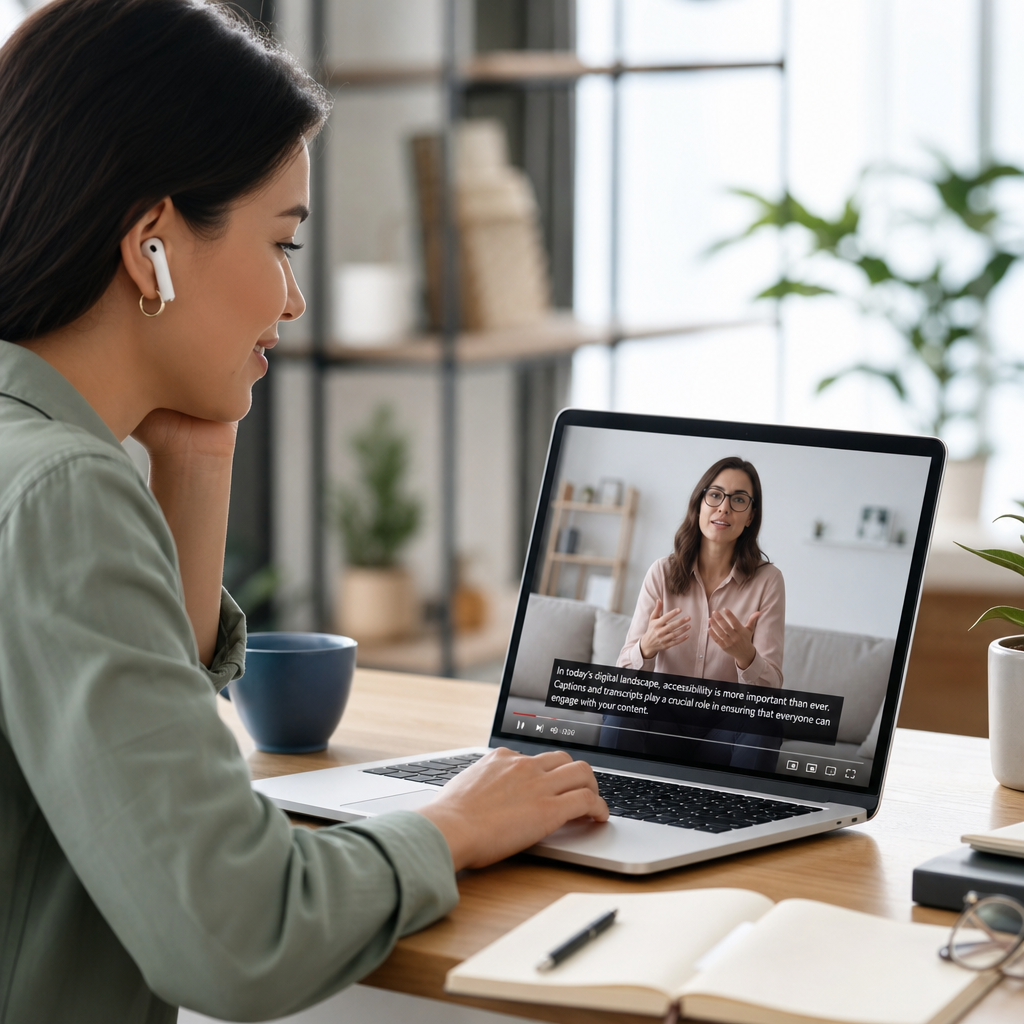
For employees who do not use sign language, Communication Access Realtime Translation, usually called CART, can provide live captions during meetings and presentations. CART differs from basic auto-captions because a trained captioner produces higher accuracy, especially with technical terminology, names, and fast-paced discussion. Auto-captions on platforms like Microsoft Teams, Zoom, and Google Meet are useful and often better than nothing, but they should not be treated as universally sufficient. If a compliance training, safety briefing, legal discussion, or performance conversation requires precision, human-supported captioning is usually the stronger accommodation. In many organizations, the best approach is to offer both captions and interpreters when group settings include varied communication preferences.
Everyday communication also improves when employers normalize written summaries, agendas, and chat-based participation. Sending an agenda before a meeting allows a deaf employee to prepare terminology and questions. Assigning one speaker at a time improves both interpretation and caption accuracy. Sharing action items afterward prevents information loss. In hybrid offices, using collaborative notes in tools like Google Docs, Microsoft OneNote, or Confluence gives everyone a visible reference point. These practices help deaf employees directly, but they also improve clarity for hearing colleagues, multilingual teams, and anyone working across time zones.
Meeting accessibility, collaboration norms, and inclusive culture
Accessible meetings are where workplace accessibility becomes visible. A company may have a disability policy, but if meetings are still run with people talking over each other, faces turned away from the camera, and no agenda, deaf employees remain excluded. The top workplace accommodations for deaf individuals in meetings include live captions, qualified interpreters when needed, strong lighting, visible faces, turn-taking rules, and written follow-up. Seating layout matters in conference rooms; circular or U-shaped arrangements support sightlines for lip reading, signing, and visual cues. In video meetings, participants should keep cameras on when possible, use good front lighting, mute when not speaking, and identify themselves before commenting if interpreters or captions are in use.
Managers should also understand that accessibility is cultural as much as technical. If side conversations happen constantly, if jokes are shared verbally and never explained, or if decisions are made in hallway conversations, formal accommodations will not solve the deeper exclusion. One of the most effective interventions I have implemented is a meeting protocol that requires materials in advance, a designated facilitator, a shared document for questions, and a recap distributed within twenty-four hours. This reduced misunderstandings for deaf employees and cut repeat meetings for everyone. Inclusion often looks like process discipline.
| Workplace situation | Recommended accommodation | Why it works |
|---|---|---|
| Job interview | Interpreter or CART, written schedule, visual check-in process | Supports equal access from first contact and reduces communication errors |
| Team meeting | Live captions, agenda, one-speaker rule, meeting notes | Improves comprehension, participation, and accountability |
| Training session | Captioned video, interpreter, accessible slides, transcript | Ensures technical content is available in multiple formats |
| Emergency alert | Visual alarms, text alerts, desktop and mobile notifications | Provides immediate warning without relying on sound |
| Customer-facing role | Chat tools, relay services, text-based workflows | Enables responsive service without excluding the employee |
Inclusive culture extends beyond formal meetings. Deaf employees should not have to spend energy reminding colleagues to face them, repeat key points, or add captions to videos. Those behaviors should be part of workplace accessibility standards. Training managers and teams on deaf awareness is often a high-value accommodation because it multiplies the impact of every tool. A short, practical session covering communication preferences, interpreter etiquette, caption limitations, and accessible meeting norms can prevent months of friction.
Technology, equipment, and digital workplace accessibility
Technology accommodations are central to modern workplace accessibility because communication now happens across email, messaging apps, project platforms, learning systems, and video calls. For deaf individuals, the top accommodations often include caption-enabled meeting platforms, amplified or compatible telecommunication devices for hard-of-hearing users, video relay services, instant messaging tools, visual notification systems, and accessible collaboration software. Microsoft Teams and Zoom both support live captions and transcripts, while Slack, Google Chat, and similar platforms provide text-first communication channels that can reduce dependence on spontaneous verbal exchanges. When configured thoughtfully, these tools make teams faster and more inclusive.
However, technology is only effective when it is selected, tested, and supported properly. I have seen employers purchase assistive devices that no one knew how to connect, maintain, or request. A hearing loop system, for example, can be transformative for employees who use telecoils in hearing aids, but only if the meeting room is equipped correctly and staff know when to activate it. Likewise, captioning quality depends on microphone placement, room acoustics, speaker discipline, and internet stability. Accessibility should be part of procurement and IT governance, not an afterthought handled informally by a sympathetic manager.
Digital workplace accessibility also includes documents, videos, and internal systems. Training videos should be accurately captioned, not merely auto-captioned and ignored. Podcasts or audio-only updates should have transcripts. Internal forms and HR portals should avoid embedding critical instructions in inaccessible media. If a workflow relies on audio notifications, there must be visual or text alternatives. WCAG principles such as perceivable content, adaptable structure, and alternatives for time-based media are directly relevant here. Many organizations focus narrowly on external websites and overlook the accessibility of intranets, learning platforms, and employee apps, even though those systems shape daily work more than the public site does.
Safety, emergency planning, and physical environment adjustments
Safety accommodations are among the most important and most neglected workplace accommodations for deaf individuals. In many facilities, emergency procedures still assume that everyone will hear alarms, announcements, or shouted instructions. That assumption is dangerous. Accessible workplaces use visual fire alarms, strobe alerts, vibrating alert devices where appropriate, SMS-based emergency systems, desktop pop-up notifications, and clearly documented evacuation procedures. Supervisors should confirm that deaf employees know how alerts will appear in every location they use, including restrooms, break rooms, warehouse floors, and remote work settings where severe weather or local emergencies may apply.
Physical environment adjustments also matter outside emergencies. Good lighting supports lip reading and sign communication. Reduced background noise benefits hard-of-hearing employees using hearing aids or cochlear implants. Transparent masks may be useful in some health or customer-service settings where lip reading is important, though they have limits for fogging and visibility. In open offices, acoustic treatments and quieter meeting spaces can significantly improve communication accuracy. Even small changes, such as ensuring the speaker is not standing with a bright window behind them, can affect whether a conversation is accessible.
Safety planning should be individualized. A deaf employee in a manufacturing setting may need visual machine alerts and text-based instructions, while a remote employee may need emergency escalation procedures that do not rely on phone calls alone. Employers should avoid generic checklists and instead review tasks, locations, and communication flows. Accessibility in safety is not optional paperwork; it is risk management. When accommodations are built into drills, signage, and response protocols, employees can act quickly under pressure instead of improvising around inaccessible systems.
Hiring, onboarding, career growth, and legal process
Workplace accessibility begins before day one. Recruitment systems should clearly state how candidates can request accommodations, and hiring managers should know how to respond promptly. Interview accommodations may include interpreters, CART, captioned video interviews, extra time for multi-panel interviews, written copies of case exercises, or alternative communication methods for phone screens. Replacing a phone screen with a video call that has captions or with a structured written screening can remove an unnecessary barrier without changing the actual qualification standard. That distinction matters: accommodations change the method of access, not the performance expectation of the role.
Onboarding is another critical stage. Deaf employees should receive accessible orientation materials, introductions to communication norms, and setup for all approved accommodations before the first week becomes chaotic. This includes account configuration for captions and transcripts, emergency alert enrollment, access to interpreters or captioning vendors, and guidance for managers on scheduling accessible meetings. In my experience, the most successful onboarding plans assign responsibility clearly among HR, IT, facilities, and the direct manager. When ownership is vague, accessibility tasks fall through the cracks.
Career growth requires attention too. Many deaf employees receive accommodations for basic job tasks but are overlooked when leadership programs, networking events, off-site training, or stretch assignments arise. That is a common failure in workplace accessibility. If a company invests in development, those opportunities must be accessible in the same way everyday work is accessible. Performance reviews, mentoring sessions, conferences, and promotion interviews may all require accommodations. The legal process around accommodations should be interactive, documented, and responsive, with confidentiality respected. But legal compliance should be the floor, not the strategy. The real goal is sustainable participation and advancement.
How employers can build an accommodation system that lasts
The strongest accommodation programs are systematic. Employers should start by identifying communication-heavy workflows, documenting request procedures, selecting reliable vendors for interpreting and CART, and creating meeting standards that work by default. They should train managers on how to discuss accommodations respectfully, review digital tools for caption and transcript capabilities, and test emergency notifications from the perspective of deaf users. Metrics help. Track accommodation fulfillment time, caption quality issues, accessible training completion, and employee feedback on inclusion. What gets measured gets maintained.
For employees and HR teams trying to prioritize, the top workplace accommodations for deaf individuals usually fall into seven categories: interpreters, real-time captions, captioned and transcribed media, text-based communication channels, visual alerts, accessible meeting protocols, and manager and team training. The right combination depends on the person and the job, but these categories cover most workplace accessibility needs across office, retail, healthcare, education, and industrial settings. Budget concerns are real, yet many accommodations are low-cost compared with turnover, hiring delays, compliance complaints, or lost productivity caused by avoidable miscommunication.
Workplace accessibility succeeds when employers stop viewing accommodations as isolated purchases and start treating them as infrastructure. Deaf employees should be able to receive information, contribute expertise, stay safe, and grow professionally without constantly translating the workplace for everyone else. If you are building an accessibility and inclusion program, use this hub as your starting point: audit communication, fix meeting practices, strengthen technology, review safety systems, and make hiring and development accessible from the start. Those changes create a workplace where deaf individuals can do their best work, and where the organization becomes clearer, safer, and more effective for everyone.
Frequently Asked Questions
What are the most effective workplace accommodations for deaf individuals?
The most effective workplace accommodations for deaf individuals are the ones that directly remove communication barriers in daily work. In many cases, that includes qualified sign language interpreters for interviews, trainings, team meetings, performance reviews, and other high-stakes conversations. Real-time captioning services, also called CART, can also be extremely valuable for meetings, presentations, webinars, and company-wide events. For employees who do not use sign language as their primary language, written communication tools, live transcription apps, email follow-ups, instant messaging platforms, and visual alerts may be the most practical accommodations.
Other highly effective adjustments include video relay service for phone communication, amplified or captioned telephones where appropriate, visual emergency alarms, and meeting practices that make communication more accessible. Examples include sharing agendas in advance, making sure only one person speaks at a time, facing the employee when speaking, and providing written summaries after meetings. In open offices or fast-paced environments, employers may also need to adjust workflows so critical information is not delivered only through spoken announcements. The best accommodation plan is individualized because deaf and hard of hearing employees do not all communicate in the same way or use the same tools.
Are workplace accommodations for deaf employees legally required?
In many workplaces, yes. Employers are generally required to provide reasonable accommodations to qualified employees with disabilities, including deafness and hearing loss, unless doing so would create an undue hardship. This principle applies to many employment stages, including hiring, onboarding, training, day-to-day job performance, meetings, and advancement opportunities. The key legal idea is equal access. If a workplace is structured around spoken communication, the employer may need to modify the environment, provide communication support, or use accessible technology so the employee can perform essential job functions and participate fully.
That said, accommodations are not one-size-fits-all and are not automatically limited to one specific solution. An employer should engage in an interactive process with the employee to understand communication preferences, job duties, and practical options. For example, one employee may request an interpreter for recurring team meetings, while another may prefer CART captioning, text-based communication, or visual alert systems. Treating accommodations as a routine part of accessibility compliance and workplace inclusion is both a legal and operational best practice. It reduces risk, improves productivity, and supports equal opportunity in a meaningful way.
How can employers make meetings more accessible for deaf team members?
Accessible meetings usually combine the right tools with the right communication habits. Employers can start by asking the employee what works best, such as a sign language interpreter, live captioning, a note taker, or a combination of supports. Agendas, slide decks, and background documents should be shared in advance so the employee has context before the meeting begins. During the meeting, speakers should identify themselves, speak one at a time, avoid covering their mouths, and face the group whenever possible. This helps employees who rely on visual cues, captioning, or lip reading follow the discussion more accurately.
Technology also matters. Video meetings should use platforms that support high-quality live captions and spotlighting for interpreters. In-person rooms should be arranged so sightlines are clear and lighting is strong enough for visual communication. It is also helpful to pause after key points, allow extra time for interpreted or captioned communication, and avoid side conversations that are difficult to track. After the meeting, sharing notes, action items, and decisions in writing ensures nothing is missed. These practices do not just help deaf employees; they improve clarity and efficiency for the entire team.
What assistive technology helps deaf employees succeed at work?
A wide range of assistive technology can support deaf employees, depending on the job and communication style involved. Common tools include real-time captioning platforms, speech-to-text apps, video relay services, videophones, captioned telephones, and messaging systems that reduce reliance on voice calls. Visual alert systems are also important in many workplaces. These can include flashing doorbell indicators, desktop alerts, emergency notification lights, and visual paging systems that replace or supplement audio-only announcements. For remote and hybrid work, accessible conferencing software with accurate captions and interpreter integration is especially important.
Some employees also benefit from specialized hardware or software tailored to their roles. For example, customer-facing employees may use text-based support channels instead of phone-only systems. Office staff may rely on chat platforms and collaborative project tools to keep communication visible and documented. In manufacturing, healthcare, education, or logistics settings, visual signaling tools may be critical for safety and coordination. The most successful technology choices are made by matching the tool to the actual communication demands of the position rather than assuming one product will solve every barrier. Training, support, and regular review are also essential so the technology remains effective over time.
How should an employee request accommodations for deafness at work?
An employee should request accommodations in a clear, practical way that connects the need for support to specific job tasks or workplace situations. The request can often be made to a supervisor, human resources representative, disability accommodations coordinator, or another designated contact. In many cases, it helps to describe the barriers being experienced, such as missing spoken information in meetings, difficulty accessing training videos, or inability to respond to audio-only alerts. The employee can also suggest accommodations that have worked before, such as interpreters, captioning, visual alarms, written instructions, or alternative communication methods.
Once the request is made, the next step should be an interactive discussion about what is effective, reasonable, and timely to implement. Employees do not need to frame accommodations as special treatment. They are asking for accessible conditions that allow them to do their job and participate equally. It is often useful to keep communication in writing, document requests and responses, and follow up if accommodations are delayed or incomplete. A strong accommodation process is collaborative, respectful, and focused on removing barriers. When employers respond proactively, deaf employees are better positioned not only to perform essential job functions, but also to contribute fully, build relationships, and advance in their careers.