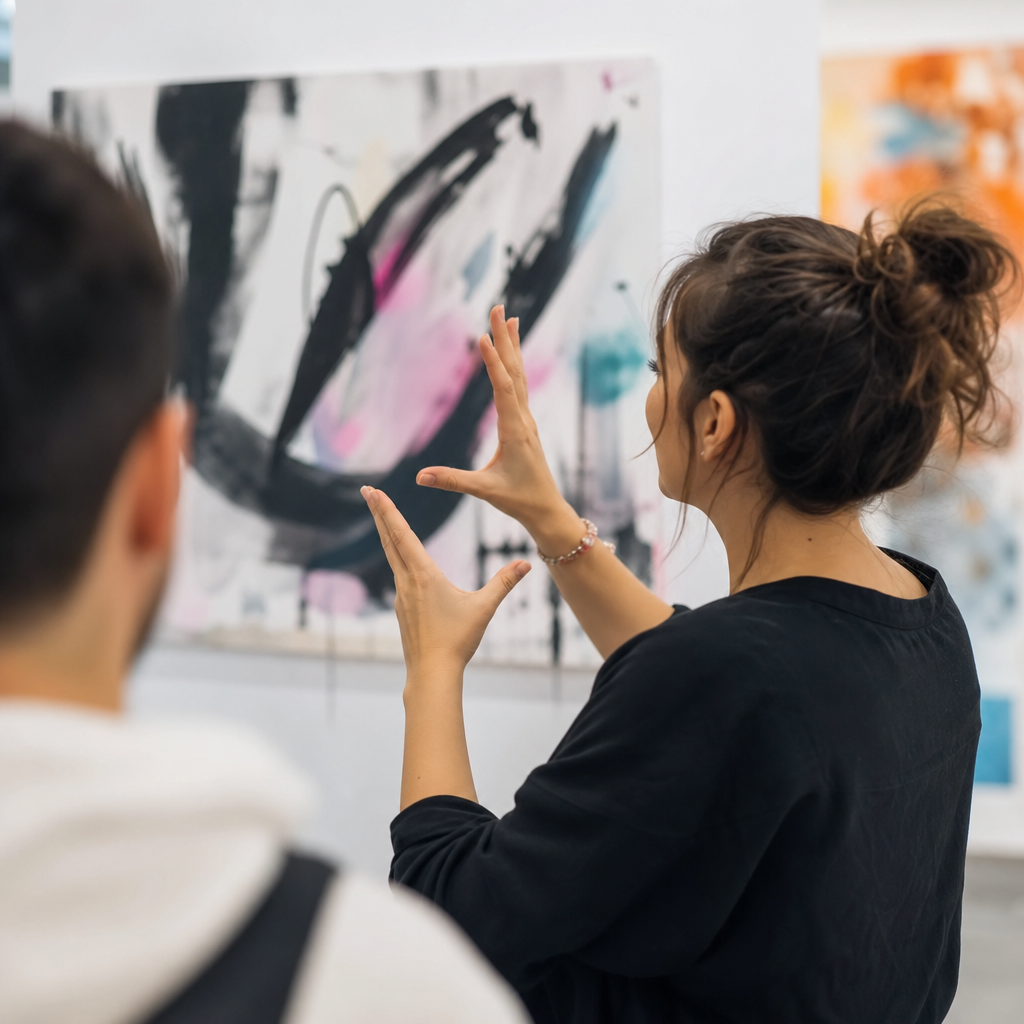

Visual communication shapes how Deaf people build relationships, signal belonging, and navigate everyday interactions in homes, schools, workplaces, and public spaces. In Deaf culture, visual communication does not simply mean “using signs instead of speech.” It refers to a full social system that prioritizes sightlines, facial expression, body movement, touch cues, spatial awareness, and shared norms for gaining attention, taking turns, telling stories, and showing respect. As someone who has worked with Deaf community organizations and interpreted in mixed hearing and Deaf settings, I have seen repeatedly that social success depends less on goodwill alone and more on understanding these visual rules in practice. People who miss them often appear rude, distracted, or controlling without intending to.
This matters because community life is built through communication habits. In hearing-majority spaces, people can speak while looking away, call from another room, or overlap casually in conversation. In many Deaf spaces, those habits break access. A person cannot participate fully if the signer is backlit, blocked, too far away, or speaking while hands are occupied and face is hidden. Visual communication therefore supports inclusion, safety, identity, humor, and trust. It also connects directly to larger themes in Deaf culture and identity: language transmission, collective values, interdependence, and pride in a way of being that is not centered on sound.
As a hub for Community and Social Norms, this article explains how visual communication works in social settings, why these norms developed, where misunderstandings happen, and what respectful participation looks like. It covers attention-getting, conversational flow, spatial organization, storytelling, technology, etiquette in mixed groups, and common adaptations in schools, events, and public life. If you want to understand Deaf social interaction clearly, start here: visual communication is not an accessory to community life. It is the structure that makes community possible.
Why Visual Communication Sits at the Center of Deaf Community Life
Visual communication sits at the center of Deaf community life because signed languages are fully visual-spatial languages, and community norms formed around making those languages accessible and socially rich. American Sign Language, British Sign Language, Langue des Signes Française, and other signed languages use handshape, movement, location, palm orientation, facial grammar, mouth movements, timing, and body posture to convey meaning. Remove visual access and you remove grammar, tone, and often the relationship itself. That is why Deaf community spaces are often arranged differently from hearing spaces: chairs in circles instead of rows, stronger lighting, fewer sightline obstacles, and social pacing that allows everyone to see before information moves on.
These norms also reflect history. For generations, Deaf people created clubs, schools, sports leagues, churches, and advocacy groups where visual access could be assumed rather than negotiated. In those spaces, community members refined shared expectations about how to enter a conversation, how to interrupt appropriately, how to include a late arrival, and how to signal group attention without shouting. The result is not a set of arbitrary rules. It is a practical communication ecology developed through lived experience. Understanding that ecology helps hearing relatives, educators, employers, and service providers avoid common mistakes, especially the assumption that adding an interpreter solves every access issue. It does not. The room, the lighting, the timing, and the social behavior still matter.
Attention-Getting, Turn-Taking, and the Flow of Conversation
One of the most important social norms in Deaf settings is how people get attention. Because calling someone’s name from across the room is ineffective for many Deaf people, communities use visual or tactile strategies: a light tap on the shoulder, a wave within the person’s visual field, a stomp on a floor that carries vibration, flashing the room lights briefly, or asking a nearby person to relay attention visually. Context determines what is appropriate. A shoulder tap may be normal in a crowded reception line but intrusive in a formal meeting if a wave would work. The key principle is simple: gain attention before communicating, and do so in a way that preserves dignity.
Turn-taking is also more deliberate than many hearing people expect. In spoken conversation, overlap often signals enthusiasm. In signed conversation, overlap can block comprehension because two visual streams compete for the same channel. Skilled signers therefore manage turns with eye gaze, pauses, body shifts, and clear closure markers. Group conversations may momentarily slow while participants reorient physically. That pause is not awkwardness; it is access management. In mixed groups, hearing participants often talk over interpretation or begin speaking before a Deaf person has visually reconnected with the conversation. When that happens, information is lost immediately.
A useful rule in social settings is “one visual speaker at a time, with shared sightlines.” Hosts can support this by arranging seating in a semicircle, reducing clutter between participants, and avoiding activities that force people to look down constantly while conversation continues. In community dinners I have helped organize, even small choices, such as placing candles low enough not to glare and asking servers not to stand between speakers, noticeably improved participation.
How Space, Lighting, and Seating Shape Social Access
Physical environment is social infrastructure in Deaf settings. Good visual communication depends on room layout, light direction, distance, and background contrast. Signers need enough space for arm movement and enough light on faces to read expression accurately. A bright window behind a signer can wash out facial details. A long conference table can push participants too far apart. A noisy restaurant may be difficult for hearing people, but a dark restaurant with obstructed sightlines can be equally inaccessible for Deaf diners even when no one relies on sound.
Seating arrangement often determines who can belong to a conversation. Circles and open semicircles work well because they let everyone monitor the whole group. Rows are poor for social exchange because people must turn repeatedly and lose visual continuity. In classrooms, this is one reason U-shaped seating has long been valued in Deaf education. It supports direct peer interaction instead of routing everything through a front-facing authority figure. In family homes, open-plan spaces can help, but only if people do not communicate room to room without visual contact.
| Setting | Common Barrier | Better Visual Practice | Why It Works |
|---|---|---|---|
| Family dinner | People talking while serving food and looking down | Pause conversation during serving, then resume when faces are visible | Restores eye contact and prevents missed content |
| Classroom | Rows facing the teacher only | Use U-shaped seating with clear interpreter placement | Supports peer discussion and full visual access |
| Work meeting | Dim lights for slides | Keep ambient light on faces and share materials in advance | Allows signing, interpretation, and note review |
| Social event | Crowded standing clusters | Create wider circles and avoid backlighting | Makes turn-taking and attention-getting easier |
These adjustments are modest, but their effect is significant. They signal that access is a baseline expectation, not a special request. In Deaf community spaces, that expectation is a social norm, and people notice quickly when environments support it well.
Facial Expression, Body Language, and Shared Meaning
In visual communication, facial expression is not decorative. It carries grammar, attitude, intensity, and interpersonal nuance. Raised brows can mark a yes-no question in many signed languages. Body lean can show role shift in storytelling. Eye gaze can indicate whether a signer is addressing one person, the full group, or a quoted character. Hearing observers sometimes reduce this to “being expressive,” but that misses the linguistic and cultural point. In Deaf social settings, a flat face, hidden mouth, or constant visual distraction can remove critical meaning.
Body language also conveys social stance. Leaning out of a visual circle may suggest withdrawal. Signing while walking away closes the interaction abruptly. Looking at a phone while someone signs is similar to turning your back while a person speaks. These are not minor etiquette details. They shape whether others experience you as present, trustworthy, and respectful. I have seen new staff members in Deaf-serving programs unintentionally alienate clients simply by continuing to write notes while a person was signing, instead of pausing and giving full visual attention.
At the same time, direct eye contact in Deaf culture often functions differently than in hearing-majority norms. Sustained visual attention is necessary, not aggressive. Hearing people who have been taught that prolonged eye contact is impolite may look away too often and appear disengaged. Successful interaction requires recalibrating those assumptions.
Storytelling, Humor, and the Social Transmission of Culture
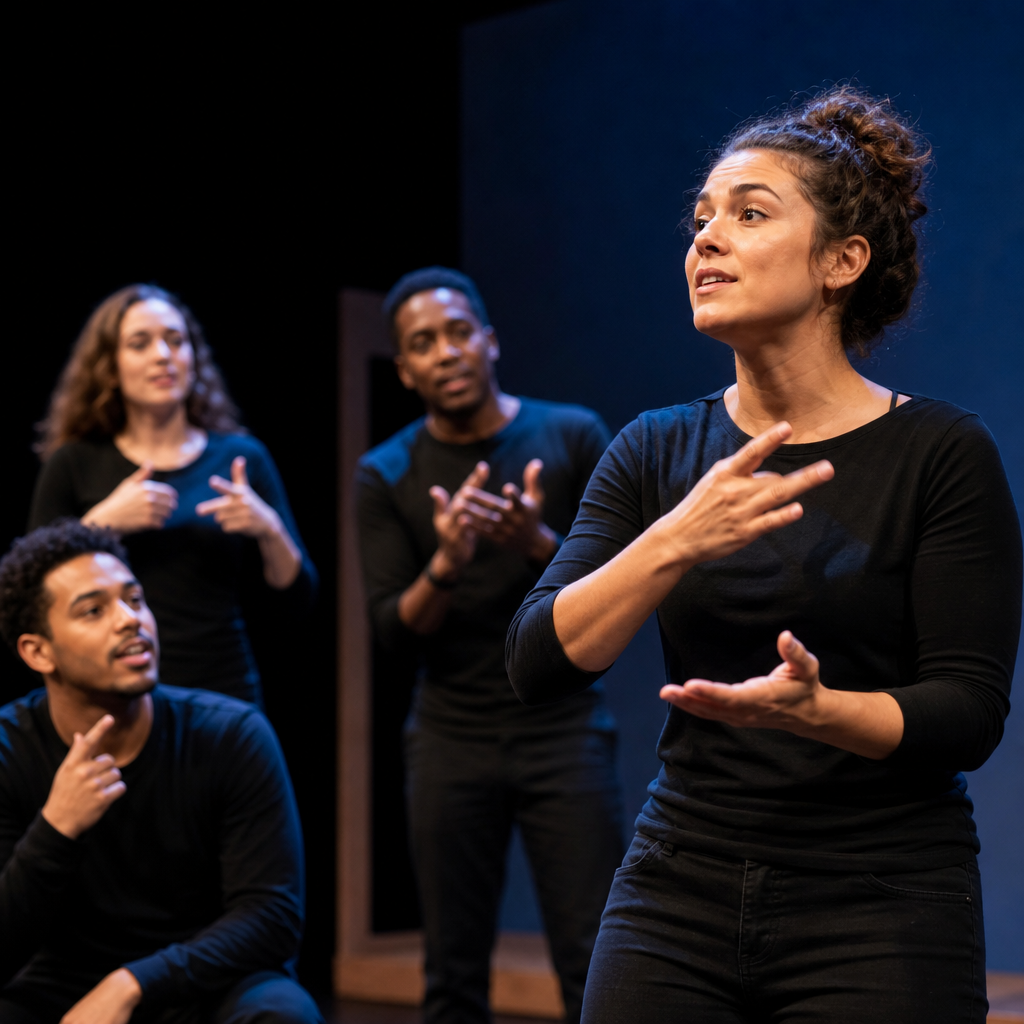
Community norms are learned not only through instruction but through stories, jokes, and everyday social observation. Deaf storytelling is often highly visual, using role shift, constructed action, spatial mapping, rhythm, and dramatic timing. A strong storyteller can make a room feel cinematic without any sound at all. These performances do more than entertain. They transmit values about resilience, language pride, school experiences, family misunderstandings, and the humor of navigating a hearing world.
Humor is especially important in social bonding. Many Deaf jokes rely on visual irony, exaggerated mimicry, or shared experiences such as bad interpreters, inaccessible announcements, or hearing people who overestimate lipreading. When newcomers understand the joke structure, they begin to understand the community’s lived reality. When they do not, they may miss not just the punchline but the social commentary underneath it.
This is why community events, Deaf clubs, vlogs, and informal gatherings remain so important even in the era of texting and video calls. They provide spaces where social norms are modeled naturally across generations. Young Deaf people learn how elders manage group attention, how peers negotiate mixed-language interaction, and how identity is performed visually with confidence rather than apology.
Mixed Deaf and Hearing Settings: Inclusion, Friction, and Better Practice
Many social environments today are mixed: Deaf, hard of hearing, hearing, signing, non-signing, late-deafened, cochlear implant users, and interpreters sharing one space. These settings can be rich, but they also produce friction when hearing norms dominate unconsciously. The most common problems are side conversations during interpreted discussion, poor interpreter placement, rapid topic shifts, talking while eating or driving, and assuming lipreading can fill the gaps. Research and professional practice consistently show that lipreading alone provides incomplete information, often far below full sentence accuracy, especially with unfamiliar vocabulary or obscured faces.
Better practice is concrete. Face the group before speaking. Identify topic changes clearly. Pause for interpretation lag. Keep hands away from your mouth. Do not begin walking people down hallways while continuing a complex conversation. If an interpreter is present, place them where the Deaf participant can see both the interpreter and the main speaker with minimal head movement. In social gatherings, assign a host who understands access and can cue turn-taking, repeat missed comments, or redirect people into a visible formation. Inclusion is rarely accidental; it is usually organized.
Technology helps but does not erase social norms. Video relay, captions, messaging apps, and video platforms have expanded connection dramatically. During the pandemic, many Deaf professionals noted that some online meetings became easier than in-person meetings because gallery view and chat created structured visual access. Yet online fatigue, lag, poor camera framing, and bad lighting still caused problems. The same principle applies on screen and off screen: communication works best when visual access is designed deliberately.
Why These Norms Matter Beyond Access
Visual communication in social settings is about far more than transmitting information. It shapes identity, belonging, and mutual accountability. When people honor visual norms, Deaf participants do not have to spend energy chasing access or repairing preventable misunderstandings. They can focus on relationships, humor, debate, learning, and leadership. That shift is profound. It moves a person from tolerated presence to full participation.
For families, these norms can strengthen connection at home. For schools, they improve peer culture and classroom equity. For workplaces, they reduce friction and make collaboration more efficient. For community organizations, they protect the cultural integrity of Deaf spaces while welcoming newcomers responsibly. The practical lesson is straightforward: if you want stronger social inclusion under the broader Deaf Culture and Identity topic, start by improving visual communication norms in real environments.
The main takeaway is clear. Community and social norms in Deaf life are built around visibility, attention, shared space, expressive accuracy, and intentional inclusion. Learn how attention is gained, how turns are managed, how rooms are arranged, and how stories and humor carry culture. Then apply those lessons consistently. Review your next meeting, family gathering, classroom, or event through a visual-access lens and make one concrete change today.
Frequently Asked Questions
1. What does visual communication mean in social settings, especially within Deaf culture?
Visual communication in social settings means far more than replacing spoken words with sign language. Within Deaf culture, it describes a complete social framework built around what can be seen, noticed, and shared in a space. That includes signing, of course, but it also includes facial expression, eye gaze, body posture, movement, touch cues, timing, proximity, and awareness of who is visually included in a conversation. In practice, visual communication helps people establish connection, show attentiveness, manage turn-taking, and communicate emotion with clarity and respect.
In homes, schools, workplaces, and public spaces, this visual system shapes how interactions unfold. People may arrange seating so everyone has a clear sightline, use a light tap or wave to gain attention, pause conversations when visual access is interrupted, and rely on expressive storytelling that uses the face and body as part of the message. These are not random habits; they are social norms that help preserve access and participation. In that sense, visual communication is not just a communication method. It is a way of organizing social life so that relationships, inclusion, and understanding can happen more naturally and fully.
2. Why are sightlines, facial expressions, and body language so important in Deaf social interaction?
Sightlines, facial expressions, and body language are central because they carry information that spoken cultures often distribute through sound, tone, and vocal rhythm. If someone cannot clearly see the person communicating, important meaning is lost. A blocked view can interrupt not only the words being signed but also the emotional tone, conversational cues, and social signals that make interaction smooth and meaningful. That is why visual access is treated as a basic requirement, not a minor preference.
Facial expressions and body language also serve grammatical, emotional, and relational functions. A raised eyebrow, a shift in posture, a pause, or a change in movement can signal a question, emphasis, humor, seriousness, or turn-taking. These cues help create shared understanding and make conversations more dynamic and precise. In social settings, they also show engagement. Looking at someone, responding visibly, and using the body expressively communicate respect and presence. When people understand the importance of these visual elements, they are better able to create interactions that feel inclusive rather than fragmented or effortful.
3. How does visual communication influence relationship-building and a sense of belonging?
Visual communication plays a major role in how trust, closeness, and group identity are formed. Relationships develop more easily when people can communicate without constant barriers, misunderstandings, or exclusion from side conversations. In Deaf social spaces, shared visual norms help everyone stay connected to the group. People make room for one another visually, ensure attention is established before communicating, and often include others by physically reorienting the interaction so no one is left out. These practices reinforce the message that everyone present matters.
Belonging also grows through shared cultural expectations around expression and participation. Storytelling, humor, collective attention, and visual responsiveness all contribute to a feeling of community. When people understand how to enter a conversation appropriately, how to signal interest, and how to maintain visual inclusion, social interaction becomes more welcoming and less isolating. This is especially important in mixed environments where Deaf people may otherwise be expected to adapt to spaces designed around sound. Visual communication creates a social environment where Deaf ways of connecting are not treated as secondary, but as fully valid, effective, and culturally rich.
4. What are some common visual communication norms for gaining attention and taking turns respectfully?
In visual communication, gaining attention respectfully is an important social skill. Because calling out from across a room may not be effective or relevant, people often use methods such as a gentle tap on the shoulder, a wave within the person’s visual field, a flicker of room lights in appropriate settings, or a vibration or movement that alerts someone visually or physically. The method depends on the environment and the relationship, but the principle is the same: get attention clearly and respectfully before beginning the interaction. This helps avoid confusion and ensures the other person is ready to receive the message.
Turn-taking also follows visual norms. People typically look for signals that someone has finished signing before responding, and they monitor eye gaze and body orientation to understand who is addressing whom. Interruptions can happen, but they are often managed through visible cues rather than overlapping sound. In group settings, participants may naturally pause when someone’s line of sight is blocked or when visual attention shifts. Respect in these interactions comes from maintaining access, not rushing past it. Understanding these norms can make a major difference in schools, meetings, family gatherings, and public events, where inclusive communication depends on more than just whether signing is present.
5. How can hearing people make social spaces more accessible and respectful for visual communication?
Hearing people can support visual communication by starting with environment and attention. Good lighting, unobstructed sightlines, and seating arrangements that allow people to see one another clearly make a real difference. It also helps to avoid speaking or signing while looking away, walking off, covering the face, or standing in shadow. In group settings, one person speaking at a time, clear turn-taking, and making sure the Deaf person can see who is participating all improve access. If an interpreter is present, it is still important to engage directly with the Deaf person rather than treating the interpreter as the primary conversational partner.
Respect also means learning and following basic visual norms rather than expecting Deaf people to constantly adjust. That includes getting attention appropriately, waiting until visual focus is established, and recognizing that facial expression and body movement are integral parts of communication, not exaggerations or extras. Just as importantly, hearing people should understand that accessibility is social as well as technical. Inclusion is not achieved only by providing interpretation or captions; it is also created through awareness, patience, and willingness to adapt the pace and structure of interaction. When hearing people value visual communication as a legitimate and complete social system, they help create spaces where Deaf people can participate fully, build stronger relationships, and feel genuine belonging.