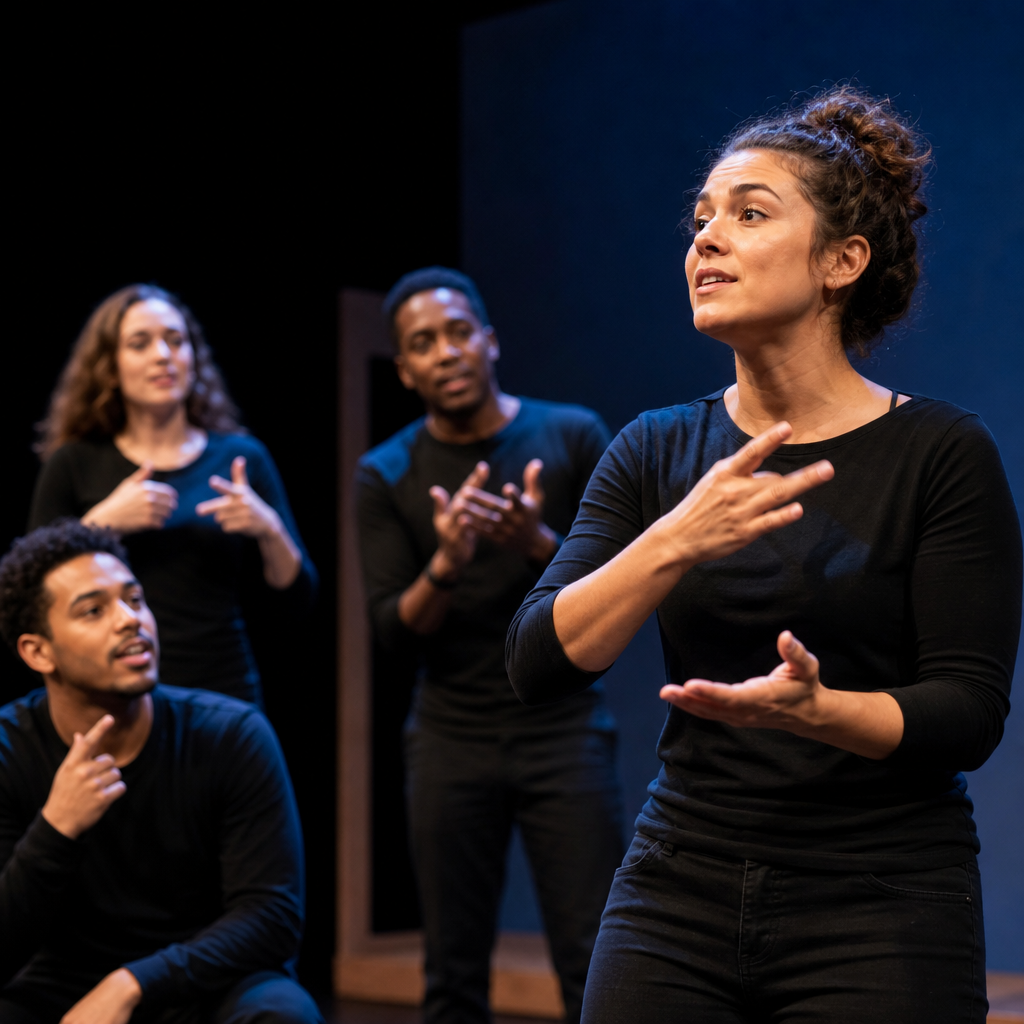
Group conversations in Deaf culture are dynamic, highly visual exchanges shaped by shared language, attention norms, and a strong sense of community responsibility. For hearing people, newcomers, parents of Deaf children, interpreters, and even late-deafened adults, understanding what to expect in Deaf group settings reduces anxiety and prevents common mistakes. In practice, these conversations are not simply spoken-group rules translated into sign language. They operate through visual access, coordinated turn-taking, spatial awareness, and explicit inclusion strategies that make communication possible for everyone present.
Deaf culture refers to the social values, behaviors, traditions, and communication practices that develop within Deaf communities, especially those centered on signed languages such as American Sign Language, British Sign Language, or Auslan. Group conversations matter because they are where culture becomes visible. You see how people get attention, how they manage overlapping comments, how they make sure everyone can see the signer, and how they negotiate humor, disagreement, and storytelling. After years of working around Deaf events, classrooms, interpreted meetings, and community gatherings, I have learned that the most important shift is this: access is not an extra courtesy. It is the foundation of the interaction.
This hub article covers the core social norms behind Deaf group communication, from seating and eye gaze to turn-taking and side conversations. It also explains why these norms exist and how they support participation. If you understand these patterns, you will navigate Deaf social spaces with more confidence and respect. You will also be better prepared to explore related topics across Deaf culture and identity, including communication etiquette, community values, Deaf events, interpreting dynamics, and the difference between medical views of hearing loss and cultural belonging. Group conversations are one of the clearest windows into how Deaf communities organize social life.
Why visual access shapes every group conversation
The first thing to expect in Deaf group conversations is that visibility drives the entire structure. In spoken groups, people can look away and still hear. In Deaf groups, looking away often means missing content. That reality changes room setup, pacing, interruptions, and even where people place drinks or bags. A circle, semicircle, or open arrangement is common because it gives everyone a clear sightline. Good lighting matters. Backlighting from bright windows can make signing hard to read. A person standing in front of a visual obstruction, or signing while walking away, reduces access immediately.
Visual access also explains why Deaf people may pause a conversation to reposition chairs, move to a better-lit area, or wait until everyone is looking. In hearing spaces, such pauses can seem unnecessary. In Deaf spaces, they are efficient because they prevent repeated breakdowns later. At community dinners, for example, larger round tables often support easier participation than long banquet tables. In classrooms and meetings, facilitators who understand Deaf norms avoid speaking or signing while participants are reading handouts, because reading and watching cannot happen simultaneously. The same principle applies during interpreted events, where slides, interpreters, and speakers must be positioned to reduce visual strain.
How people get attention and start the exchange
Attention-getting is direct, practical, and usually considered normal rather than rude. In spoken culture, calling a name may be enough. In Deaf culture, people use a light tap on the shoulder, a wave within the visual field, a stomp that creates floor vibration, or a flicker of the room lights when addressing a larger group. The method depends on distance, environment, and familiarity. A shoulder tap is common one-to-one. A broad wave may work across a room. In a meeting or social event, one person may raise both hands slightly until others notice and pass the attention along.
What matters is efficiency without aggression. Repeatedly blocking someone’s signing space, grabbing abruptly, or touching unnecessarily can feel intrusive. At the same time, waiting passively for a perfect opening often fails because people cannot respond to what they have not seen. Newcomers sometimes under-signal because they fear offending others. In reality, a clear and appropriate attention-getter is often more respectful than making the group work harder to discover your intention. If you attend a Deaf social gathering, expect these cues to happen often and quickly. They are part of maintaining access, not breaking etiquette.
Turn-taking, pacing, and the role of eye gaze
Turn-taking in Deaf group conversations is more visibly managed than in many hearing groups. Eye gaze does substantial work. People monitor who is looking, who is finishing a thought, and who appears ready to respond. A signer may hold the final sign slightly, use a questioning expression, or shift body orientation to offer the floor. Another participant may briefly raise a hand, lean forward, or signal agreement before taking a turn. Because everyone depends on sight, the transition between speakers often looks more deliberate than spoken overlap.
That does not mean Deaf conversations are slow. Many are fast, animated, and full of humor. The difference is that overlap is handled visually. If two people begin at once, one will usually yield quickly, often with a small gesture. In larger circles, a strong facilitator may be present informally, helping maintain flow by pointing to the next signer or summarizing the thread. I have seen this clearly at Deaf association meetings where several signers wanted the floor. The most effective groups did not suppress energy; they simply made speaker changes visible enough that people could follow them.
Another norm to expect is the relationship between gaze and politeness. Looking at the signer is not optional in the way casual listening can be for hearing people. It signals attention and respect. Looking down at a phone, flipping through papers, or turning to a side task can exclude you from the exchange and may appear dismissive. If you must glance away, many signers naturally pause or repeat briefly once your attention returns. That repetition is not a flaw. It is a built-in access strategy.
Inclusion, side conversations, and community responsibility
One of the strongest values in Deaf group interaction is shared responsibility for inclusion. People often ensure that newcomers know the topic, that someone arriving late gets a quick summary, or that a person blocked from view is brought back into the discussion. This can look more explicit than hearing small talk, but it reflects a practical ethic: information should not remain locked away from those present. At Deaf events, someone may stop signing for a second and gesture for another person to shift seats so an elder, child, or late arriver can see. These small adjustments are social care in action.
Side conversations require special attention because they can fracture visual access quickly. In spoken groups, multiple parallel conversations can coexist in the same acoustic space. In signed groups, several visual conversations happening at once compete for the same attention channel. Side talk still happens, especially among friends, but it can be more disruptive if it blocks sightlines or pulls focus from a central exchange. In interpreted meetings, side comments are especially sensitive because they can burden interpreters and leave others uncertain about what is primary. Good group members manage this actively by pausing, regrouping, or deciding whether a separate conversation should move elsewhere.
| Situation | Common Deaf norm | Why it matters |
|---|---|---|
| Someone joins late | Brief visual recap or topic cue | Prevents exclusion and confusion |
| View is blocked | Reposition chairs or ask people to shift | Restores equal access |
| Two people start signing | One yields with a gesture or pause | Keeps turn-taking clear |
| Large room needs attention | Wave, light flicker, or passed attention signal | Creates a shared visual focus |
| Side conversation emerges | Pause, separate physically, or return to one thread | Reduces visual competition |
Storytelling, feedback, and expressive participation
Group conversations in Deaf culture often include rich storytelling, and that can surprise people who expect simple information exchange. Signed storytelling uses space, role shift, facial grammar, timing, and embodied perspective in ways that are highly engaging in a group. A strong storyteller may map characters around the room, change posture to show dialogue, and use pauses strategically to heighten suspense or humor. In community settings, that style is not performance for performance’s sake. It is a communicative strength of visual language.
Feedback is also more visible. Listeners may nod, mirror affect, laugh silently or visibly, sign short backchannel responses, or react with facial expressions that show surprise, agreement, or skepticism. Hearing newcomers sometimes think expressive reactions are interruptions. Usually they are signs of engagement. The key is timing. Productive feedback supports the current signer without stealing focus. This is one reason Deaf group conversations can feel vivid and emotionally transparent. You do not just hear approval or confusion; you see it across the room.
Humor deserves mention because it is central to social bonding. Deaf humor often draws on shared experiences with misunderstanding, access barriers, exaggerated visual situations, name signs, or cultural contrasts with hearing norms. If you are new, observe before joining in. Humor can be direct, but the best participation comes from understanding context rather than copying style. As with any community, trust matters.
What hearing people, families, and professionals should do
If you are entering a Deaf group as a hearing person, parent, teacher, service provider, or colleague, the most useful approach is to prioritize access before expression. Sit or stand where you can be seen. Keep your hands away from your face. Do not speak while looking elsewhere if an interpreter or Deaf participant needs visual coordination. In mixed groups, avoid starting to talk when people are still watching a signer. Wait until the visual turn has ended. If you know some sign, use it clearly and at a natural pace rather than overacting every movement.
Professionals should also understand that inclusion is environmental, not just interpersonal. In meetings, provide seating that supports sightlines. Share materials in advance so participants are not forced to read while watching discussion. When interpreters are present, place them near the main speaker or visual content. The National Association of the Deaf and interpreter training standards consistently emphasize direct communication, proper pacing, and access planning. Those principles are not technical extras. They determine whether the group can function well.
Families with Deaf children can apply these norms at home. Turn off visual clutter during important discussions, make sure the child can see whoever is signing or speaking through an interpreter, and establish clear ways to gain attention from room to room. Small changes create participation. A Deaf child who is consistently included in family group conversation gains language, confidence, and identity support at the same time.
Common misunderstandings and how to avoid them
The most common misunderstanding is labeling direct visual behavior as rude. A tap, wave, stare for attention, or explicit seat adjustment can feel unusually forward to hearing newcomers. In Deaf contexts, these behaviors are often the polite option because they solve access problems openly. Another mistake is assuming silence means disengagement. Deaf spaces can be visually lively even when acoustically quiet, and the reverse is also true in interpreted settings. Focus on participation patterns, not sound level.
People also underestimate fatigue. Watching signed conversation, reading captions, monitoring interpreters, and tracking group gaze all require sustained visual attention. Long meetings without breaks are exhausting. Strong facilitators build in pauses and summarize transitions. Finally, avoid treating Deaf group norms as universal in exactly the same form everywhere. Local communities differ by age, school background, race, language, and national context. Still, the core pattern remains consistent: visual access, coordinated attention, and mutual responsibility shape successful interaction.
Understanding group conversations in Deaf culture gives you more than etiquette tips. It shows how a community builds connection by designing communication around visibility, participation, and respect. Expect direct attention-getting, deliberate turn-taking, expressive feedback, and active inclusion. Notice how room layout, eye gaze, and pacing support comprehension for everyone involved. These norms are practical, not ornamental, and they reveal core values within Deaf culture and identity.
As the central guide to community and social norms, this article offers the framework you need before diving into related topics such as Deaf event etiquette, interpreters in social spaces, family communication habits, and the role of storytelling in cultural transmission. The main benefit is simple: when you understand how Deaf group conversations work, you stop reading behavior through hearing assumptions and start recognizing the logic behind it. Use that perspective at your next class, meeting, family gathering, or community event, and you will communicate more respectfully from the first interaction.
Frequently Asked Questions
1. How are group conversations in Deaf culture different from spoken group conversations?
Group conversations in Deaf culture are not just spoken conversation rules transferred into sign language. They are organized around visual access, shared attention, and the expectation that everyone should be able to follow what is happening. In many Deaf group settings, people position themselves so sightlines are clear, lighting is workable, and as many participants as possible can see both the current signer and the reactions of others. That means seating, body orientation, hand use, pacing, and even room arrangement matter more than many hearing newcomers expect.
Another major difference is that turn-taking is often more visibly managed. In spoken groups, people may overlap briefly and still understand one another through sound. In Deaf groups, overlapping signs can instantly reduce clarity because visual information gets blocked or divided. As a result, participants often use eye gaze, pauses, body shifts, facial expressions, and small attention-getting strategies to mark when one person is finishing and another is beginning. This can make the interaction look highly animated, but it is also structured and cooperative.
There is also a strong cultural value placed on inclusion. If one person misses a detail because they looked away, someone may quickly catch them up. If a new person enters the group, the conversation may pause long enough to acknowledge them and restore shared access. For hearing people, parents, interpreters, and late-deafened adults, this means the most important rule is not simply “wait your turn,” but “help maintain visual access for everyone.” Once you understand that principle, many behaviors in Deaf group conversation make immediate sense.
2. What should I expect when joining a Deaf group conversation for the first time?
If you are joining a Deaf group conversation for the first time, expect the interaction to feel more visibly coordinated than many hearing social settings. People may adjust where they sit or stand, make sure you are within the visual circle, or pause the conversation so you can orient yourself. This is not awkwardness; it is part of making the interaction accessible. In Deaf culture, it is normal to organize the space around communication needs rather than treating communication as something that should happen despite the space.
You should also expect direct visual engagement. People may look at you steadily when you are signing, and they may expect you to do the same when others are communicating. Looking away too often, blocking your face, signing while turned aside, or speaking to one person while excluding visual access to others can signal disinterest or make communication harder. Newcomers sometimes misread this sustained eye contact or visual focus through a hearing cultural lens, but in Deaf settings it is generally a sign of attention and respect.
Conversation pace can vary. Some moments may move quickly, especially among fluent signers who share background knowledge and community references. Other moments may pause so information can be clarified, repeated, or visually reestablished for everyone. It is also common for side information, reactions, and brief clarifications to be woven into the interaction in ways that still support the group’s shared understanding. If you are unsure what is happening, the best approach is to stay visually attentive, observe how people manage turns, and be comfortable asking for repetition or clarification. Most Deaf group participants appreciate genuine effort far more than forced confidence.
3. How do people get attention politely in Deaf group settings?
Attention-getting in Deaf culture is practical, visual, and usually very direct by hearing standards. In a group conversation, people may wave within someone’s line of sight, lightly tap a shoulder, tap a table or floor to create vibration, or use a visual cue to indicate they want to contribute. These actions are not rude when used appropriately. They are functional tools that replace calling someone’s name across a room or interrupting with voice. The key is to match the method to the situation and use only the amount of attention-getting needed.
In a seated group, a light tap on a table may alert several people at once. In a closer interaction, a gentle shoulder tap may be the simplest option. If someone is already looking your direction, a small hand raise, posture shift, or change in facial expression may be enough to signal that you want a turn. What matters is not avoiding attention-getting altogether, but using it in a way that preserves visual flow and respects the group. Exaggerated waving, repeated tapping, or physically intrusive behavior can feel disruptive if a smaller cue would have worked.
For newcomers, the most useful mindset is to stop measuring politeness only by sound-based norms. In hearing environments, touching someone or visibly signaling across a room may feel unusually bold. In Deaf environments, failing to get attention clearly can create confusion and exclusion. Politeness comes from clarity, timing, and consideration. If you are unsure, watch how Deaf participants do it with one another. Their methods will show you when to use a broad cue, when to use a subtle one, and how to enter the conversation without cutting off visual access for others.
4. What are common mistakes hearing people or newcomers make in Deaf group conversations?
One of the most common mistakes is failing to maintain visual accessibility. This includes speaking while looking down, turning away while signing, covering the mouth or face, standing where the light is poor, or positioning yourself so some group members cannot see you. Even well-meaning newcomers sometimes focus so much on what they want to say that they forget the group must be able to see the message clearly. In Deaf conversations, how you physically present communication is inseparable from the communication itself.
Another frequent mistake is misunderstanding turn-taking. Hearing newcomers may begin signing while another person is still signing, assume that fast interjections are fine, or speak aloud on the side while visual conversation is still happening. In visually based communication, overlapping contributions can quickly become inaccessible. Similarly, some hearing participants rely too much on an interpreter or one Deaf person to manage all group access, instead of taking responsibility for their own clarity, pacing, and inclusion practices.
People also make social mistakes by treating Deaf group interaction as something fragile or overly formal. In reality, Deaf conversations can be lively, humorous, blunt, warm, and highly expressive. Newcomers sometimes become so afraid of offending someone that they withdraw, avoid participation, or act stiffly. Others go the opposite direction and assume any signed setting is casual enough to ignore etiquette. The better approach is to be attentive, adaptable, and open to correction. If you miss something, ask. If you accidentally block a view or interrupt visually, adjust and move on. Most mistakes are manageable when you show respect, observe community norms, and demonstrate that inclusion matters to you.
5. How can parents, interpreters, late-deafened adults, and hearing allies participate respectfully and confidently?
The most effective way to participate respectfully is to prioritize access before performance. You do not need perfect signing or total cultural fluency to be welcomed into many Deaf group spaces, but you do need to show that you understand the group’s communication needs. That means choosing a good visual position, waiting until people can see you, using clear attention-getting strategies, and making sure you are not creating barriers with your body, voice, or timing. Confidence grows when you stop trying to imitate spoken-group habits and start responding to the visual structure of the interaction.
For parents of Deaf children, this often means learning to observe how Deaf adults naturally create inclusion. Notice how they bring someone up to speed, how they make room for a child or newcomer to see, and how they balance efficiency with shared understanding. For interpreters, respectful participation includes not dominating the interaction, not becoming the center of the group, and recognizing that interpretation supports communication but does not replace direct cultural awareness. For late-deafened adults, it can be especially helpful to give yourself time to adapt to visual pacing and to accept that this is a shift in communication style, not a personal failure.
For hearing allies in general, the best approach is simple: be visually attentive, stay teachable, and let Deaf norms guide your behavior in Deaf spaces. If you do not understand a cue, ask politely. If someone corrects your positioning or timing, treat that as useful information, not criticism. Over time, what first feels unfamiliar becomes natural. Group conversations in Deaf culture are deeply community-oriented, and when you participate in ways that support shared access, you are not just following etiquette. You are contributing to the conversation in the way Deaf culture values most: making sure everyone has a fair chance to see, understand, and belong.