
Deaf culture is a living, language-rich community shaped by shared experience, visual communication, social norms, history, and pride, and understanding it is essential to understanding what it means to be Deaf beyond the medical idea of hearing loss. When people ask, “What is Deaf culture?” they are really asking how a group of people transformed exclusion into identity, built institutions around sign languages, and created values that center access, expression, and mutual support. I have seen this difference clearly in schools, interpreting settings, and community events: people who looked isolated in hearing-first environments became fully expressive, funny, direct, and socially connected the moment they entered Deaf space. That shift matters because Deaf culture influences education, family life, arts, leadership, technology, and civil rights. It also challenges a common misconception. Deafness is not only an audiological condition measured in decibels; for many people, Deafness is a cultural identity connected to a language, a history, and a community. Throughout this article, Deaf with a capital D refers to that cultural identity, while deaf may refer more broadly to hearing status. This distinction is widely used in Deaf Studies, though not every person chooses the same label. Knowing the difference helps parents, educators, employers, healthcare providers, and allies make better decisions. It also helps Deaf people see their experience represented accurately, not reduced to a deficit model.
Deaf culture is unique because it is built primarily around visual rather than auditory ways of communicating and organizing social life. In practical terms, that affects everything from how introductions happen to how stories are told, how rooms are arranged, how attention is gained, and how trust is built. Sign languages are the clearest example. American Sign Language, British Sign Language, and French Sign Language are distinct natural languages with their own grammar, syntax, and regional variation; they are not signed versions of spoken English, and they did not arise as invented pantomime. Linguists such as William Stokoe established decades ago that signed languages have the full structure expected of human language. That fact is foundational, because language is at the center of culture. Shared language supports shared humor, collective memory, artistic forms, and intergenerational teaching. Deaf culture therefore deserves the same respect given to other linguistic minorities. Its importance is practical as well as philosophical: when Deaf people have full language access early, educational and social outcomes improve. When they are denied access, the effects can be lifelong. A hub article on Deaf culture must start there, because every related topic—identity, education, accessibility, family support, interpreting, and representation—depends on whether Deaf people can participate in society on equal terms.
What Deaf culture is and what it is not
Deaf culture is the set of shared beliefs, behaviors, values, artistic traditions, institutions, and communication norms developed by Deaf people over time. It is not defined solely by hearing level. Some culturally Deaf people are profoundly deaf from birth; others became deaf later, use hearing technology, or navigate multiple identities. Membership is shaped by participation, language, and community connection, not by a single medical threshold. In my experience, this is the point hearing audiences most often miss. They expect culture to follow bloodline or nationality, but Deaf culture often grows through community adoption. Many Deaf children are born to hearing parents, yet they become part of Deaf culture through schools for the Deaf, adult mentors, clubs, sports, faith communities, and online networks.
It is equally important to say what Deaf culture is not. It is not a refusal of technology, not hostility toward hearing people, and not a monolithic viewpoint. There are Deaf people who use cochlear implants, hearing aids, speech, lipreading, sign language, or several methods together. There are DeafBlind people, late-deafened adults, and hard of hearing people whose relationship to Deaf identity differs. Some embrace the term disabled; others prefer linguistic minority framing; many use both depending on the context. Those differences are real, but they do not cancel Deaf culture. Every established culture contains internal diversity while maintaining recognizable values and norms.
The central role of sign language
If one feature defines Deaf culture most clearly, it is sign language. A sign language is a complete natural language expressed through handshape, movement, location, palm orientation, facial expression, and body position. In ASL, facial grammar can mark a yes-no question, conditional clause, or emphasis. Space can show who did what to whom. Classifiers can depict size, shape, movement, and arrangement with remarkable efficiency. These are not add-ons to speech. They are part of the language system itself.
Because sign language is visual, it also shapes how knowledge is shared. Deaf children often learn through direct visual demonstration, storytelling, and observation in ways that hearing institutions have historically undervalued. Fluency allows complex thought, academic learning, emotional nuance, and identity development. Research from language acquisition and education consistently shows that early accessible language exposure is critical for cognitive and social development. For Deaf children, that means access to sign language should never be treated as optional backup while waiting to see whether spoken language will be enough. Delayed language access creates risks that are far more serious than learning more than one language.
Core values and social norms in Deaf communities
Deaf culture is important partly because it offers a coherent social framework that promotes belonging. Common values include direct communication, visual accessibility, reciprocity, collective responsibility, and respect for signed languages. Directness is often misunderstood by hearing people as bluntness. In Deaf spaces, however, clarity is efficient and considerate because visual communication works best when information is complete and explicit. It is normal to explain why you are leaving, ask personal context-setting questions early, or provide details that hearing norms might leave implied.
Visual accessibility is another central value. Good lighting, clear sightlines, circular seating, and turn-taking that allows everyone to see the signer are not minor preferences; they are the conditions that make full participation possible. Attention-getting norms reflect this logic too. A light tap on the shoulder, a wave, a stomp that causes floor vibration, or flicking lights briefly can all be culturally appropriate depending on the setting. These behaviors are sometimes labeled rude by outsiders who do not understand the communication need behind them.
| Aspect | Common hearing norm | Common Deaf cultural norm |
|---|---|---|
| Getting attention | Call a name from across the room | Wave, tap, or use light/vibration |
| Conversation setup | Quick greeting, minimal background | Longer introductions with context and connections |
| Room arrangement | Rows focused on a speaker | Circle or open sightlines for shared visibility |
| Information sharing | Assume people overhear updates | Share updates directly so nobody misses access |
History, institutions, and collective memory
Deaf culture did not emerge accidentally. It was built through institutions and resistance. Schools for the Deaf played a major role by bringing Deaf children together, often for the first time, where they could acquire sign language and develop peer networks. In the United States, the American School for the Deaf, founded in 1817, is a landmark institution. Gallaudet University remains globally significant as a center of Deaf higher education, research, and leadership.
History also includes discrimination. The 1880 Milan Conference promoted oralism and discouraged sign language in education, harming generations of Deaf students. Many were punished for signing in school, despite sign language being their most accessible path to learning. That history matters because current debates about mainstreaming, technology, and educational placement still reflect older power struggles over who decides what Deaf children need. Another defining event was the 1988 Deaf President Now movement at Gallaudet, which demanded Deaf leadership at a Deaf university. Its success became a civil rights milestone, showing that representation and self-determination are not symbolic issues; they affect policy, expectations, and opportunity.
Deaf identity, belonging, and intersectionality
Identity within Deaf culture is rarely simple, and that complexity is one reason this topic deserves careful treatment. A Deaf person may identify through language, race, ethnicity, gender, nationality, religion, sexuality, disability, or migration history all at once. Black Deaf culture, for example, has its own linguistic history tied to segregated schooling in the United States, including documented features of Black ASL. Indigenous Deaf people, immigrant Deaf communities, and DeafBlind communities bring additional perspectives and practices that enrich the larger culture.
Belonging often develops over time. A child with no Deaf relatives may feel “different” for years, then encounter Deaf adults and discover a framework that finally makes sense of their experience. I have watched that moment happen in community gatherings: someone learns they do not need to apologize for needing visual access, and their whole posture changes. That is why Deaf role models matter. They show younger people that Deaf life can include professional success, family, humor, leadership, and joy, not only coping.
Why Deaf culture matters in education, work, and public life
Deaf culture has practical importance because institutions routinely fail when they treat deafness only as an individual impairment. In education, students do best when language access is reliable, teachers understand Deaf learning needs, and peers can communicate naturally. Inclusion without access is not inclusion. A Deaf student placed in a mainstream classroom without qualified interpreting, captioning, visual teaching strategies, and social support may be physically present yet educationally excluded. By contrast, bilingual-bicultural approaches that value sign language alongside written or spoken national languages often produce stronger identity development and better engagement.
In workplaces, understanding Deaf culture improves everything from meetings to safety. Interpreters need preparation materials, one speaker at a time, and sightlines. Captioning helps, but automated systems still make errors with names, jargon, and accents. Managers who know basic Deaf norms communicate more effectively and avoid costly misunderstandings. In healthcare, the stakes are even higher. Lipreading is not a reliable substitute for language access, and writing notes is often inadequate for informed consent or complex diagnosis. Qualified sign language interpreters, patient-facing visuals, and direct communication protocols are standards, not luxuries.
Arts, storytelling, and the future of Deaf culture
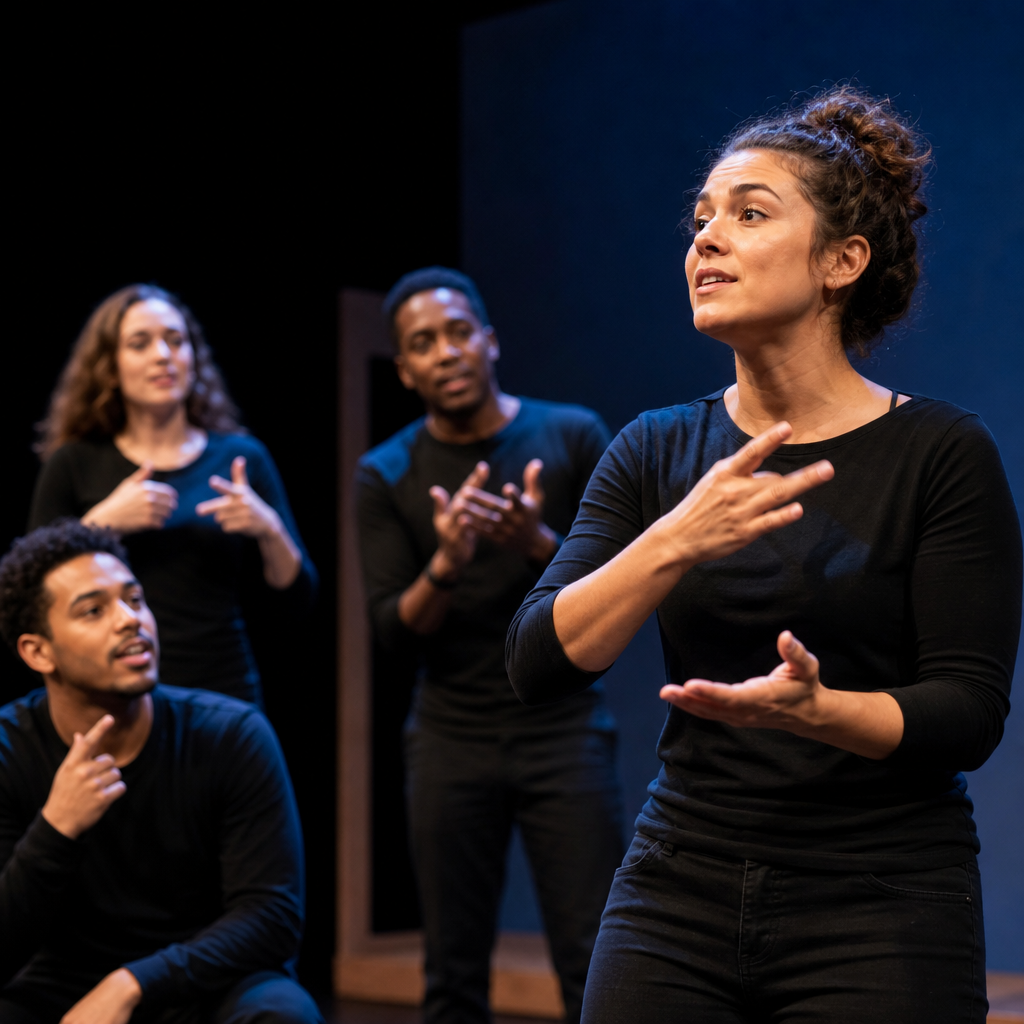
Deaf culture is also important because it contributes original art forms and ways of seeing the world. Signed poetry, visual vernacular, Deaf theater, film, and storytelling use movement, rhythm, facial expression, timing, and spatial design in ways spoken-language art cannot replicate. Organizations such as the National Theatre of the Deaf helped bring this creativity to wider audiences, while contemporary Deaf filmmakers and performers continue expanding the field online and on stage. Humor is another major cultural marker. Deaf jokes often play with visibility, mistaken assumptions by hearing people, interpreter mishaps, or the experience of navigating inaccessible systems.
Looking ahead, Deaf culture will continue to adapt, not disappear. Video relay services, smartphones, captioning platforms, and social media have changed how Deaf people connect across geography. At the same time, technology does not replace community. A cochlear implant cannot teach cultural norms. Auto-captions cannot preserve signed literature. Real inclusion still depends on respecting Deaf people as authorities on their own lives. The key lesson is simple: Deaf culture is unique because it is built around a visual language community, and it is important because that community preserves human diversity, protects language rights, and creates belonging where society too often offers only accommodation. If you support Deaf culture—by learning, hiring, designing for access, and valuing sign language—you help build a world where Deaf people do not have to fight to be fully seen.
Frequently Asked Questions
What is Deaf culture, and how is it different from simply being unable to hear?
Deaf culture is much more than the medical fact of hearing loss. It refers to a shared community, identity, and way of life built around visual communication, especially sign languages, common experiences, social traditions, and a strong sense of belonging. In a medical framework, deafness is often defined as something a person lacks. In a cultural framework, being Deaf can mean being part of a language-rich minority community with its own history, values, humor, norms, and institutions.
This distinction matters because many Deaf people do not see themselves as broken or incomplete. Instead, they see themselves as members of a cultural and linguistic group. The capitalized word “Deaf” is often used to describe this cultural identity, while lowercase “deaf” may refer more generally to the audiological condition. Not every deaf person identifies as culturally Deaf, but for many, Deaf culture provides the context that gives meaning to their experiences.
Understanding Deaf culture helps shift the conversation away from limitation alone and toward community, resilience, and identity. It explains why sign language, Deaf schools, Deaf social spaces, and shared customs are so important. In other words, to understand what it means to be Deaf in a cultural sense, you have to look beyond hearing levels and recognize a vibrant community shaped by communication, pride, and mutual support.
Why is sign language so central to Deaf culture?
Sign language is central to Deaf culture because it is not merely a tool for translation; it is the foundation of communication, connection, and cultural expression. Natural sign languages such as American Sign Language, British Sign Language, and many others around the world are complete languages with their own grammar, structure, and ways of conveying meaning. They are not simplified versions of spoken languages. For many Deaf people, sign language is the most direct, accessible, and expressive way to communicate.
Because Deaf culture is rooted in visual experience, sign language shapes how people tell stories, share jokes, teach children, organize communities, and pass down traditions. Facial expression, movement, rhythm, and the use of space all carry meaning. This creates forms of communication that are rich, nuanced, and deeply tied to Deaf identity. In many Deaf spaces, sign language is also a marker of belonging, much like a heritage language in any other cultural community.
Sign language also plays a major role in preserving Deaf history and autonomy. Communities have fought hard for the right to use and teach sign languages, especially in the face of historical efforts to suppress them. That history gives sign language enormous cultural significance. It represents access, dignity, and the right to participate fully in education, family life, work, and public life. To understand why Deaf culture is unique, it is essential to understand that sign language is not peripheral to the culture; it is at its core.
What values and social norms make Deaf culture unique?
Deaf culture is shaped by values and social norms that grow out of visual communication and shared lived experience. One of the most important is the emphasis on access. In Deaf spaces, people tend to prioritize clear sightlines, good lighting, direct communication, and inclusive group interaction so that everyone can follow what is happening. Behaviors that might seem unusual in hearing settings, such as tapping someone on the shoulder, waving to get attention, or flashing lights to alert people, are normal and respectful within Deaf culture because they support visual access.
Another defining value is directness. Many Deaf people communicate in a straightforward and efficient way, especially because visual languages often rely on clarity and immediacy. This can sometimes be misread by hearing people as bluntness, when in fact it is often simply a cultural preference for open and clear communication. Storytelling, shared information, and strong community networks are also important. News, advice, and resources often circulate through relationships, making mutual support a core part of Deaf social life.
Deaf culture also places deep value on collective identity, language pride, and respect for lived experience. Social gatherings, Deaf clubs, schools, sports events, performances, and advocacy spaces have historically played a major role in building community. Many Deaf people grow up navigating barriers in hearing-centered environments, so spaces where communication flows naturally can feel especially meaningful. These social norms and values are a big reason Deaf culture is often described as close-knit, resilient, and distinct.
Why is Deaf culture important for education, identity, and well-being?
Deaf culture is important because it gives many Deaf people something essential: a framework for identity, language access, and belonging. When Deaf children and adults have access to Deaf role models, sign language, and community, they are more likely to develop a strong sense of self and a clearer understanding of their place in the world. Without that cultural connection, many experience isolation, especially in environments where communication is limited or where deafness is treated only as a problem to fix.
In education, Deaf culture matters because language access is the foundation of learning. Students thrive when they can communicate fully and directly with teachers and peers. Exposure to sign language and Deaf perspectives can support academic development, social confidence, and emotional health. It also helps counter damaging assumptions that deafness automatically means delay, deficiency, or reduced potential. When education respects Deaf culture, it recognizes Deaf students as capable learners with linguistic and cultural strengths.
On a broader level, Deaf culture supports mental and emotional well-being by affirming that Deaf lives are valuable and complete. It offers a sense of continuity with history, community support during challenges, and a positive identity that resists stigma. This is one reason cultural understanding matters not only for Deaf people, but also for families, educators, healthcare providers, and society as a whole. Recognizing Deaf culture can lead to better inclusion, better communication, and more respectful relationships.
How has Deaf culture turned exclusion into identity and pride?
Deaf culture has developed in part through a long history of exclusion from hearing-dominated institutions, but what makes it remarkable is how that exclusion was transformed into collective identity, creativity, and pride. For generations, Deaf people faced barriers in education, employment, public life, and even family communication. Sign languages were often dismissed or actively suppressed. Yet Deaf communities responded by building their own spaces, traditions, leadership structures, schools, artistic practices, and networks of support.
Out of those efforts came a strong cultural identity rooted in shared experience. Deaf people created communities where communication was accessible, where stories and values could be passed down, and where being Deaf was not viewed as lesser. Activism also played a major role. Movements for language recognition, educational rights, interpreting access, and representation helped strengthen a sense of pride and collective purpose. These struggles were not only about services; they were about recognition, equality, and the right to exist on one’s own terms.
Today, Deaf pride reflects the idea that Deafness can be a source of culture, insight, and connection rather than only hardship. It honors the achievements of Deaf leaders, artists, educators, and advocates, as well as the everyday strength of communities that have built meaningful lives in a world not always designed for them. That is one of the clearest reasons Deaf culture is unique and important: it shows how people can transform marginalization into language, solidarity, identity, and enduring cultural power.