
Deaf culture is a rich social, linguistic, and historical tradition shaped by shared experience, signed languages, community institutions, and values that center visual communication. It is not simply a medical response to hearing loss, nor is it defined by limitation. In practice, Deaf culture refers to the customs, norms, art, humor, history, and collective identity developed by Deaf people across generations. I have seen this distinction matter in classrooms, interpreting settings, and community events, where the difference between viewing deafness as a condition and understanding Deaf people as a cultural and linguistic minority changes everything from etiquette to policy. For anyone exploring Deaf culture and identity, this foundation matters because it affects education, family life, accessibility, social belonging, and how institutions serve Deaf people.
A key starting point is the distinction often made between lowercase deaf and uppercase Deaf. Lowercase deaf usually refers to the audiological condition of not hearing fully. Uppercase Deaf refers to people who identify with a community, language, and culture built around deaf experience. Not every deaf person identifies as Deaf, and not every Deaf person has the same background, communication style, or technology preference. Some grow up in Deaf families and sign from birth. Others discover the community later in life after mainstream schooling, cochlear implants, or years of isolation. Deaf culture therefore includes common values without requiring one single life story. That nuance is essential if you want an accurate answer to the question, what is Deaf culture?
At its core, Deaf culture is organized around signed language, especially national sign languages such as American Sign Language, British Sign Language, Langue des Signes Française, and many others. These are complete natural languages with their own grammar, syntax, and regional variation; they are not manually coded versions of spoken languages. Shared language creates more than communication access. It supports social trust, storytelling, intergenerational teaching, political advocacy, and humor that depends on movement, facial expression, timing, and visual perspective. In my experience, people understand Deaf culture much better once they realize that language is the center of the community rather than a secondary accommodation.
Deaf culture also matters because misconceptions remain common. Many hearing people still assume that all deaf people lip-read well, that signing is universal, or that technology removes all barriers. In reality, lip-reading is limited, sign languages differ by country and region, and hearing aids or cochlear implants do not create equal access in noisy classrooms, public services, or fast-moving group conversations. Understanding Deaf values, traditions, and community life helps families, educators, employers, and service providers respond respectfully. It also helps deaf and hard of hearing people who are new to the community find language for their own experiences and a pathway into belonging.
What defines Deaf culture
Deaf culture is defined by a shared visual orientation, collective history, and a sense of belonging rooted in signed communication. Like other cultures, it includes norms about behavior, identity, storytelling, humor, art, and social responsibility. What makes it distinct is that these norms evolved in response to a world designed primarily for hearing people. Over time, Deaf communities built schools, clubs, sports leagues, theaters, advocacy organizations, and informal networks that made connection possible. In the United States, institutions such as Gallaudet University, the National Association of the Deaf, state schools for the Deaf, and local Deaf clubs have played major roles in preserving community life.
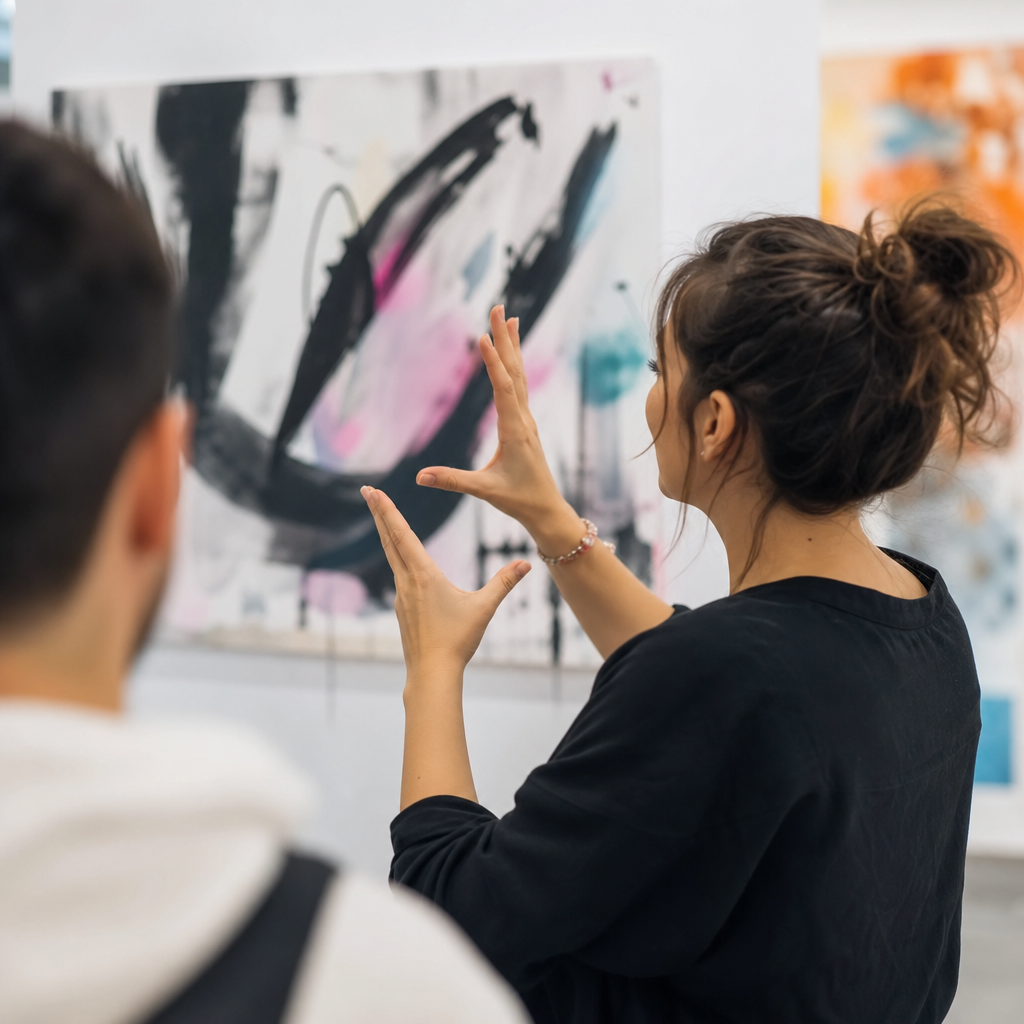
Visual communication is one of the most important cultural features. In Deaf spaces, people value clear sightlines, direct attention-getting strategies, and full participation in conversation. That means tapping a shoulder lightly, waving within sight, flashing lights, or stomping the floor to create vibration are normal and polite when used appropriately. Seating arrangements often favor circles or open lines of sight so everyone can follow the discussion. Good lighting matters. Side conversations that block visual access are disruptive in a way hearing people may not immediately recognize. These norms are practical, but they also express a deeper value: communication should be shared, visible, and accessible to everyone present.
Another defining feature is the idea that deafness itself is not inherently tragic. This perspective is often called a cultural model rather than a medical model. The cultural view does not deny real barriers. It says the main problem is not the person, but the environment, the communication mismatch, and the exclusion built into systems. For example, a Deaf employee is not less capable because a meeting lacks captions or an interpreter; the barrier is the inaccessible meeting. This shift in viewpoint influences advocacy, education, and self-esteem. It is one reason many Deaf adults strongly support early sign language exposure for children, including children who also use speech, hearing technology, or both.
Language, identity, and belonging
Signed language is the backbone of Deaf identity because it enables natural communication and cultural continuity. Research in linguistics has long established that sign languages use phonology, morphology, syntax, and discourse structure, even though they are expressed visually rather than acoustically. American Sign Language, for example, uses handshape, movement, palm orientation, location, and nonmanual markers such as facial expression to create meaning. It has idioms, wordplay, regional signs, and historical change just as spoken languages do. When Deaf children have fluent access to sign language early, they gain a strong base for cognitive development, family bonding, and later literacy. Delayed language exposure, by contrast, can have lasting consequences.
Identity within Deaf culture is layered. Some people identify as culturally Deaf, some as hard of hearing, some as deafblind, and some as part of both Deaf and other cultural communities, including Black, Latino, Indigenous, immigrant, LGBTQ+, or religious communities. There are also Deaf people who use spoken language regularly, Deaf people who do not sign fluently, and hearing children of Deaf adults who grow up connected to Deaf norms. Community belonging is therefore not measured by one trait alone. Fluency in sign, participation in community spaces, respect for cultural norms, and shared lived experience all contribute. In my experience, the strongest communities make room for varied entry points while still protecting the language and values that sustain them.
Belonging often grows through what many describe as finally being able to communicate without strain. A deaf child mainstreamed in a hearing school may spend years missing side comments, jokes, and rapid exchanges. The first time that child enters a signing environment where every conversation is accessible, the emotional impact can be profound. Adults who discover the Deaf community later frequently describe a similar sense of relief. They are not only receiving information more easily; they are experiencing a social environment where they do not have to constantly adapt to hearing norms. That feeling of ease is one reason Deaf spaces remain so important even as digital tools and accessibility technologies improve.
Core values and everyday norms
Several values consistently appear across Deaf communities. Direct communication is one. Because signed conversation depends on clarity and visual attention, Deaf people often communicate in ways hearing newcomers may perceive as blunt. In context, this directness is usually respectful and efficient, not rude. Information sharing is another value. Practical details that hearing people might treat as private or minor, such as where an event is, who will interpret, or whether lighting is poor, can be essential to access. Collective responsibility also runs deep. People frequently help newcomers connect with interpreters, teach basic signs, explain etiquette, or relay announcements so no one is left out.
Time and social interaction can operate differently in Deaf settings as well. Greetings and farewells are often longer because they carry relational importance and because visual conversation cannot happen while easily walking away at the same pace as spoken chat. Name signs, storytelling, and community news are also part of daily culture. Name signs are culturally assigned identifiers used within sign languages; they are not random nicknames and generally should not be self-created without community context. Storytelling may include vivid role shifting, visual humor, and references to shared experiences such as interpreter mishaps, school memories, or the challenges of navigating hearing institutions.
Respect in Deaf culture often means ensuring visual inclusion. Turning away while signing, covering your mouth while someone is speechreading, walking through a signed conversation without acknowledgment, or failing to provide an interpreter at a formal event can all signal exclusion. By contrast, practices such as maintaining sightlines, repeating missed information, using captions, and pausing to regain shared attention demonstrate respect. These are not minor etiquette points. They reflect a broader principle that access is social, not optional. Once hearing families, teachers, and managers understand that principle, their relationships with Deaf people usually improve immediately because communication becomes a shared responsibility rather than an individual burden.
Traditions, institutions, and community life
Deaf culture is sustained through traditions passed on in homes, schools, organizations, and public gatherings. Residential schools for the Deaf historically played a major role, especially before widespread digital communication. While these schools have complex histories and vary in quality, many Deaf adults describe them as places where they first acquired fluent sign language, built lifelong friendships, and encountered Deaf role models. Community institutions later extended that experience through alumni networks, sports tournaments, church groups, advocacy meetings, theater productions, and social events. Today, online platforms also serve as gathering spaces, but in-person Deaf events still carry a unique intensity because visual communication works best when everyone shares the same mode naturally.
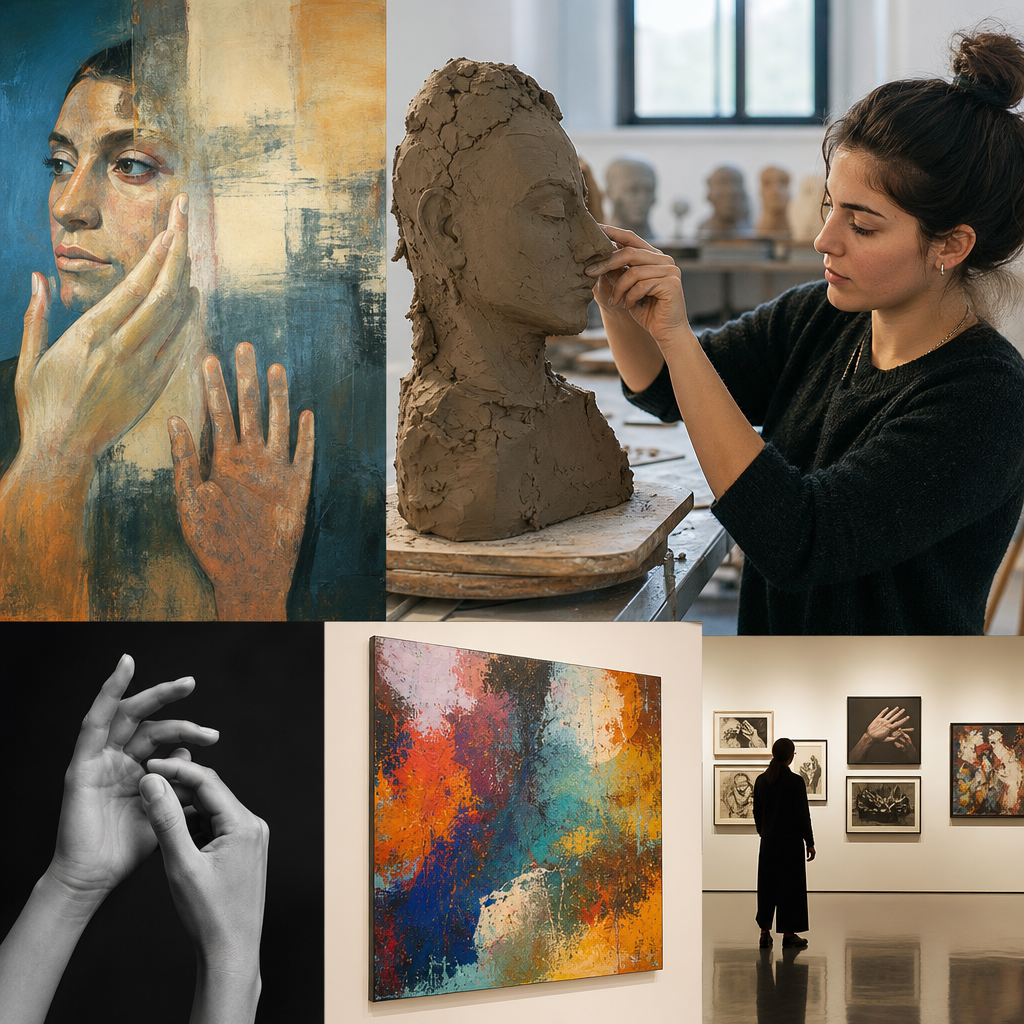
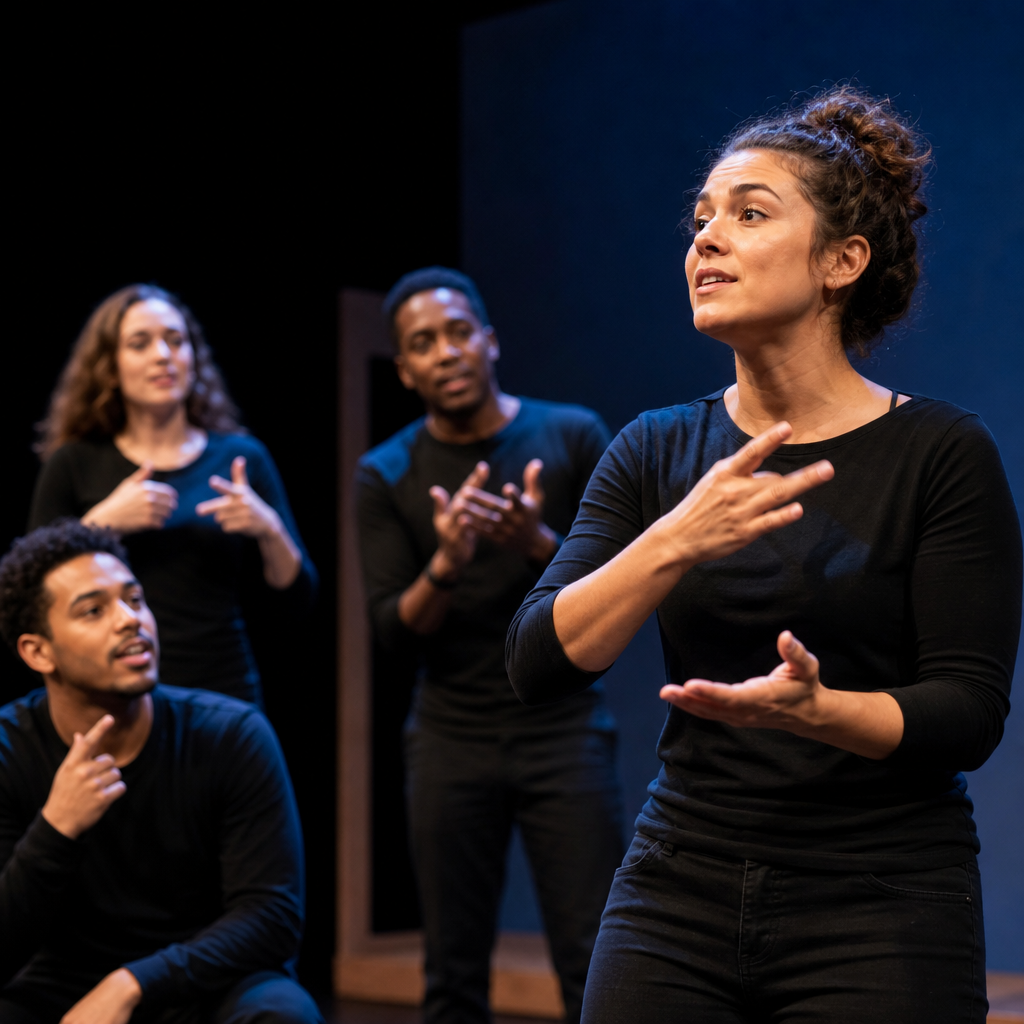
Arts and storytelling are central traditions. Deaf theater companies such as Deaf West Theatre have shown how signed performance can reshape mainstream narratives by integrating visual poetics, spatial staging, and bilingual production. Poetry in sign language relies on rhythm, symmetry, movement, facial grammar, and the use of physical space in ways spoken poetry cannot. Deaf visual art often explores themes of oppression, language pride, identity conflict, and resistance to audism, a term for discrimination that privileges hearing and spoken language over Deaf people and sign languages. Humor is another important tradition, frequently built around visual misunderstandings, exaggerated facial expression, role play, and the shared absurdities of inaccessible hearing environments.
| Community feature | Why it matters | Real-world example |
|---|---|---|
| Signed language | Creates full access and cultural continuity | ASL storytelling at a Deaf festival connects children with elders |
| Visual norms | Support equal participation in groups | Circular seating and clear lighting at meetings improve inclusion |
| Deaf institutions | Preserve history and leadership | Schools for the Deaf and Gallaudet develop networks and advocacy |
| Shared traditions | Strengthen identity and belonging | Name signs, Deaf theater, and community sports build continuity |
Community life also includes activism. Deaf President Now at Gallaudet University in 1988 remains one of the most recognized examples, demonstrating the demand for Deaf leadership in Deaf institutions. The protest helped shift public understanding of Deaf people from passive recipients of services to active decision-makers. More broadly, legal and policy advances tied to disability rights, language access, captioning, relay services, and interpreter provision have been shaped by sustained advocacy from Deaf organizations. These efforts continue because access gaps remain in healthcare, emergency communication, education, employment, and media. Deaf culture is therefore not only about heritage; it is also about collective action in the present.
Misconceptions, diversity, and respectful engagement
One of the biggest misconceptions is that Deaf culture is the same everywhere. In reality, Deaf communities are global but locally shaped. Different countries have different sign languages, educational histories, political conditions, and social norms. Even within one country, race, class, immigration status, and geography influence access to language and community. Another misconception is that technology has made Deaf culture less necessary. I have worked with many people who use hearing aids, cochlear implants, speechreading, captions, and sign language together. Technology can be valuable, but it does not replace community, eliminate language deprivation risk, or solve the need for accessible relationships and institutions.
Respectful engagement starts with asking how a person prefers to communicate and then following through consistently. For families with deaf children, one of the most evidence-based and humane steps is to provide early accessible language, including sign language, rather than waiting to see whether speech technology alone will succeed. For educators, it means understanding that inclusion is not achieved merely by physical placement in a classroom; language access, trained interpreters, Deaf role models, and social participation all matter. For employers and service providers, it means planning access in advance through interpreters, captions, visual alerts, and communication-friendly environments rather than treating accommodation as an afterthought.
Learning about Deaf culture also requires humility. Hearing people do not need to become experts overnight, but they should avoid assuming that one deaf person speaks for all. The best approach is to learn the local sign language, spend time in community spaces when invited, read Deaf authors, and listen to Deaf perspectives on education, technology, and identity. Small actions matter: face the person when talking, keep your hands away from your mouth, ensure good lighting, use accurate captions, and never exclude someone from side information. These practices show respect because they recognize Deaf people as full participants in social and civic life, not as peripheral observers.
Why Deaf culture matters today
Understanding Deaf culture means recognizing a living community built on language, shared values, and collective resilience. Deaf people are not defined solely by hearing status. They are members of a cultural world with its own norms, history, art, humor, and institutions. When schools, families, workplaces, and public systems understand that reality, they make better decisions: children receive accessible language earlier, adults gain fairer access to services, and communities preserve knowledge that would otherwise be lost. The practical benefit is clear communication, but the deeper benefit is dignity. People thrive when they can participate fully without being forced to abandon their language or identity.
The central lesson is simple. Deaf culture is not a barrier to inclusion; it is a pathway to it. Signed languages, visual norms, Deaf-led institutions, and community traditions offer proven ways to build access and belonging. They also challenge hearing society to think more carefully about what communication really requires. If you are exploring Deaf culture and identity, use this hub as your starting point, then continue by learning from Deaf voices, studying sign language, and supporting environments where Deaf people can lead. That is how understanding turns into respect, and respect turns into genuine inclusion for everyone involved today.
Frequently Asked Questions
1. What is Deaf culture, and how is it different from simply having hearing loss?
Deaf culture is a shared social, linguistic, and historical identity built by Deaf people over generations. It includes values, traditions, community norms, storytelling, humor, art, and ways of communicating that center visual experience. While hearing loss is a medical or audiological description, Deaf culture is about belonging, connection, and identity. This distinction is important because many Deaf people do not see themselves as broken or defined by lack. Instead, they understand themselves as members of a cultural and linguistic community with its own rich heritage.
In everyday life, this difference shapes how people approach education, interpreting, social interaction, and self-identification. A medical perspective may focus on what a person cannot hear, while a cultural perspective focuses on language access, inclusion, and community participation. For many people, being Deaf is not only about hearing levels but also about shared experiences, signed language, and active involvement in Deaf spaces and institutions. That is why discussions about Deaf culture often emphasize pride, representation, and cultural continuity rather than limitation.
2. Why are signed languages so central to Deaf culture?
Signed languages are at the heart of Deaf culture because they are fully developed natural languages that support communication, identity, education, and community life. They are not simplified versions of spoken languages, nor are they just collections of gestures. Languages such as American Sign Language, British Sign Language, and many others have their own grammar, structure, history, and regional variation. Within Deaf communities, signed languages make it possible to communicate directly, richly, and efficiently in a way that aligns with visual ways of interacting with the world.
The importance of signed language goes beyond communication alone. It also carries cultural memory, humor, storytelling traditions, and social norms. In Deaf spaces, language is often tied to shared values such as eye contact, visual attentiveness, clarity, and full access to information. When Deaf people have strong access to signed language, they are better able to participate in education, family life, friendships, and community institutions. This is one reason language access is such a central issue in conversations about Deaf culture: it affects not only practical communication but also belonging, identity formation, and intergenerational connection.
3. What are some core values and traditions commonly found in Deaf communities?
Although Deaf communities are diverse and not every person shares the same experience, several values appear consistently across many Deaf cultural settings. One of the most important is the value placed on direct, accessible communication. Visual clarity matters, which can influence everything from seating arrangements to lighting to the way conversations are managed in group settings. Eye contact, expressive communication, and making sure everyone has access to the flow of information are often treated as signs of respect. Another common value is collectivism, or the idea that community support and shared understanding are deeply important.
Traditions within Deaf culture often include storytelling, signed performances, community gatherings, Deaf clubs, advocacy work, sports events, and celebrations of Deaf history and achievement. Humor also plays a major role, often reflecting shared experiences with misunderstanding, accessibility barriers, and cultural pride. Name signs, introductions that include one’s school or community connections, and strong ties to Deaf educational institutions can also be important in some contexts. These customs help preserve history and reinforce social bonds. Together, such values and traditions create a sense of continuity that connects individuals to a broader Deaf world.
4. Is Deaf culture the same everywhere, or does it vary across regions and communities?
Deaf culture is not the same everywhere. It exists in many forms across countries, regions, language communities, and social groups. Different Deaf communities may use different signed languages, have distinct educational histories, and develop their own local traditions, humor, and norms. For example, the experiences of Deaf people in one country may be shaped by different laws, school systems, technology access, and community institutions than those in another. Even within the same country, regional variation can influence vocabulary, storytelling styles, and patterns of community life.
At the same time, there are broad themes that connect many Deaf communities, including the importance of visual communication, language access, cultural pride, and resistance to being defined only through a medical lens. It is best to think of Deaf culture as both shared and diverse. There are common values that create solidarity, but there is no single universal Deaf experience. Factors such as race, ethnicity, gender, age, additional disabilities, and family background also shape how people experience Deaf identity. A thoughtful understanding of Deaf culture recognizes both the strong common threads and the meaningful differences within the community.
5. How can hearing people respectfully engage with and support Deaf culture?
Hearing people can support Deaf culture by approaching it with respect, curiosity, and a willingness to learn rather than assume. One of the best starting points is recognizing Deaf people as members of a linguistic and cultural community, not simply as individuals with a disability. Learning basic sign language, using qualified interpreters when needed, maintaining eye contact, and making sure communication is visually accessible are practical ways to show respect. It is also important to understand that access is not a favor; it is a fundamental part of inclusion in schools, workplaces, healthcare settings, and public life.
Respectful engagement also means listening to Deaf perspectives on issues that affect Deaf lives. Hearing people should avoid speaking over Deaf individuals, making pity-based assumptions, or treating technologies like hearing aids or cochlear implants as the defining solution for everyone. Instead, they can support Deaf-led organizations, read work by Deaf writers, attend Deaf cultural events when invited, and advocate for policies that improve communication access and educational equity. The most meaningful support comes from recognizing Deaf people as experts in their own experiences and valuing the culture, language, and community they have built.