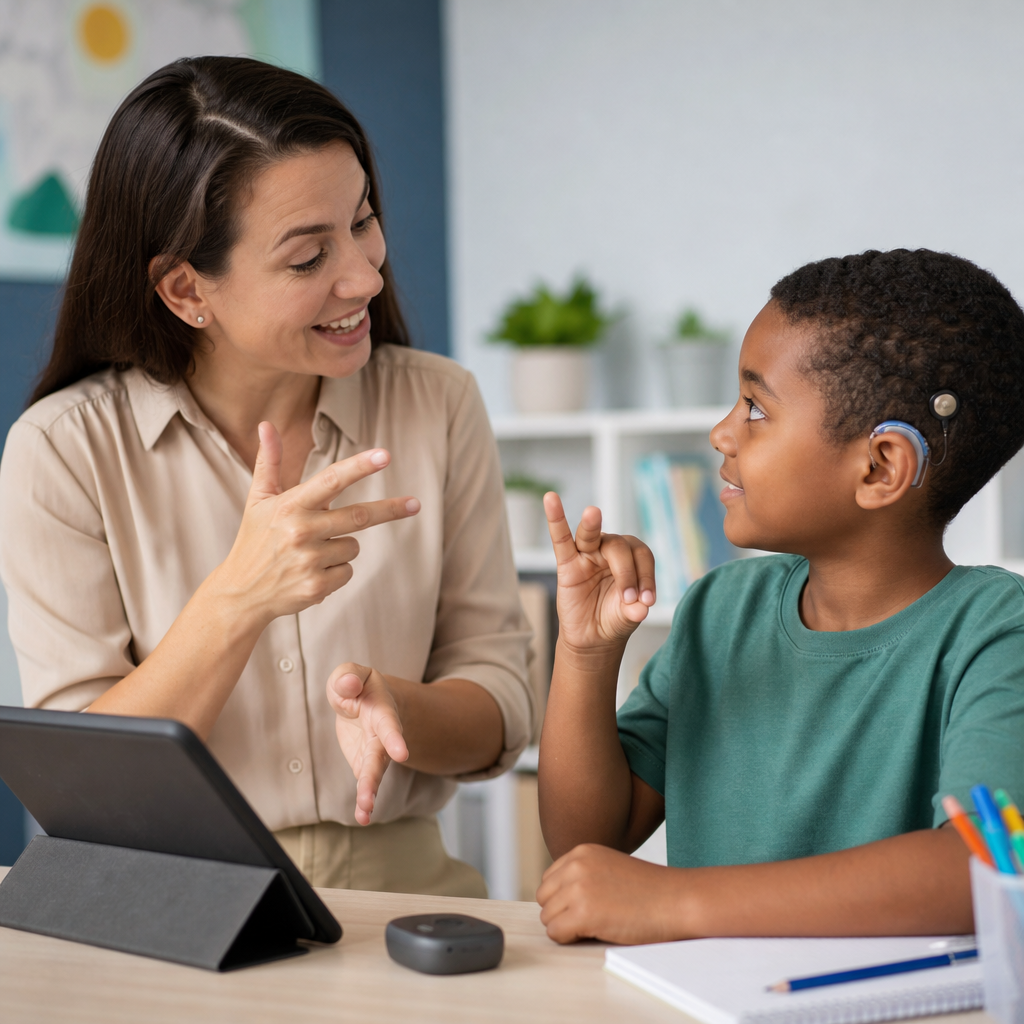
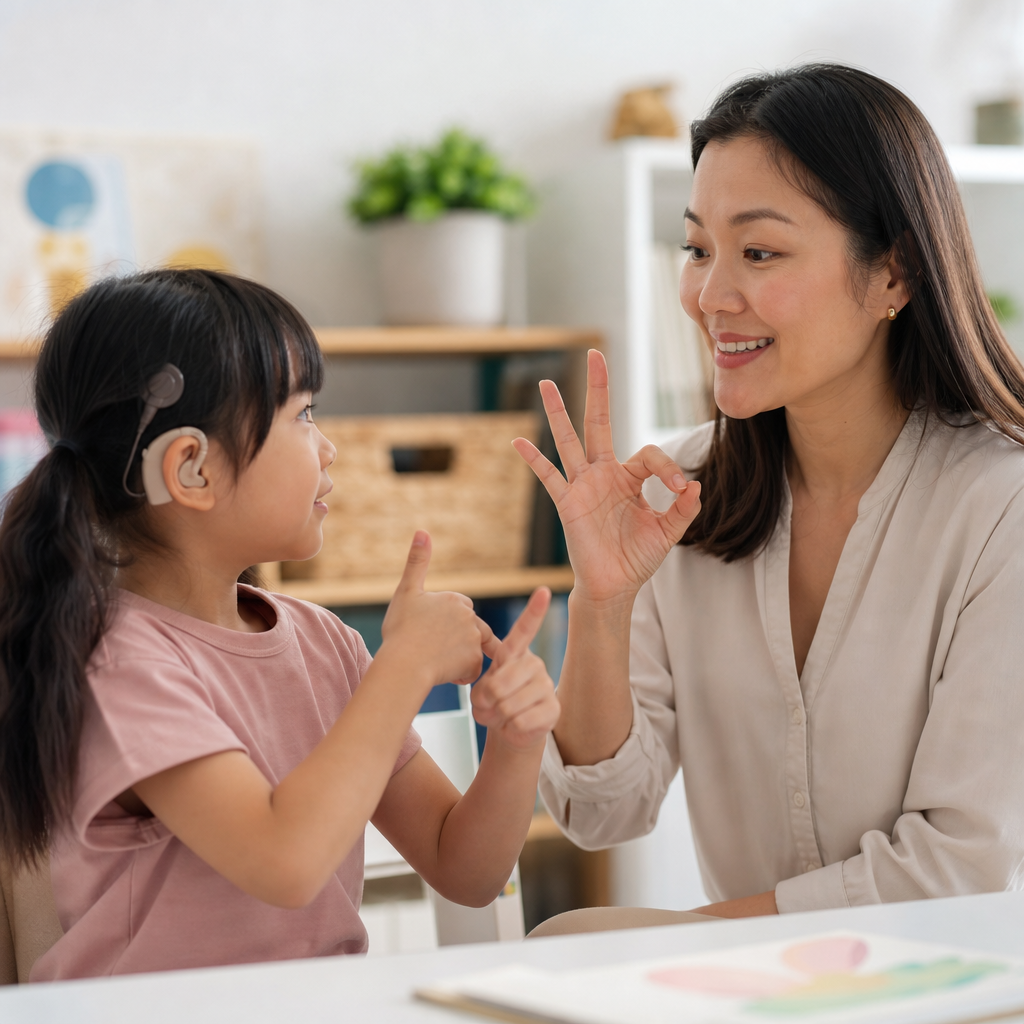
Choosing communication methods for your deaf child is one of the most important decisions a family will make, because it shapes language access, learning, relationships, and daily confidence from infancy through adolescence. Communication methods are the approaches a child uses to understand and express language, including sign language, spoken language, cued systems, bilingual strategies, and multimodal combinations. In practice, families rarely choose a method once and never revisit it; they test what gives a child the fullest access to language, school, community, and emotional connection. I have worked with families who arrived certain they wanted one path, then adjusted after seeing how their child responded to amplification, visual input, early intervention, and peer interaction.
This topic matters because deaf children need complete language exposure early, not eventually. Research on language deprivation has made that point unmistakable: delayed access to an accessible first language can affect literacy, executive function, academic progress, and mental health. Parents are often pressured to treat communication as a debate rather than a practical matching process between child, family, and environment. A better approach asks direct questions. Can the child access language consistently at home and at school? Can caregivers use the method well enough every day? Does the approach support both immediate bonding and long-term learning? The strongest decisions come from clear information, realistic expectations, and a willingness to build a communication plan that can evolve.
Start with language access, not ideology
The first principle is simple: choose a communication approach your child can access reliably from the earliest possible moment. Deafness exists across a wide spectrum, from mild to profound hearing levels, unilateral to bilateral loss, and stable to progressive conditions. A child’s audiogram, hearing technology, visual attention, additional disabilities, and temperament all affect communication outcomes. Access is the key term. If a child cannot perceive enough spoken language even with well-fitted hearing aids or a cochlear implant, relying only on speech may restrict language growth. If parents cannot sign beyond a few household words, a sign-only plan may also fall short unless the family commits to learning quickly and consistently.
Accessible language must be available all day, not just during therapy or school. I advise parents to observe ordinary routines: breakfast, bath time, playgrounds, doctor visits, bedtime stories, and car rides. If communication works only in quiet clinic rooms, it is not working well enough. Home language exposure should be rich, repetitive, and emotionally natural. For many families, that means combining methods while maintaining one clear language goal, such as strong American Sign Language exposure alongside spoken English development through amplification. The objective is not to win an argument about philosophy; it is to prevent gaps in comprehension and expression during the years when the brain is building language most rapidly.
Understanding the main communication options
Parents usually encounter several categories of communication methods. American Sign Language is a complete natural language with its own grammar, widely used in Deaf communities in the United States and parts of Canada. Spoken-language approaches emphasize listening and speech through hearing aids, cochlear implants, auditory-verbal therapy, or auditory-oral education. Manually coded English systems represent English visually but are not the same as ASL. Cued Speech uses handshapes and placements near the mouth to clarify phonemes visually. Total communication typically means using multiple supports, often speech plus signs, fingerspelling, print, gestures, and visual cues, though the term is interpreted differently by schools and providers.
No option guarantees identical outcomes for every child. ASL can provide immediate visual language access and strong community connection, but families need instruction and regular practice. Listening and spoken language can be highly effective for some children, especially with early identification, well-managed technology, intensive therapy, and favorable auditory access, yet progress varies widely. Cued Speech can support precise access to spoken language phonology and literacy for committed families, but qualified providers are less common. Total communication sounds flexible, but sometimes becomes inconsistent if adults use incomplete signing and speech simultaneously without mastery of either. Parents should ask providers not only what method they recommend, but also what evidence, training, and daily implementation support they can provide.
How hearing technology affects communication decisions
Hearing aids, cochlear implants, bone conduction devices, remote microphone systems, and captioning tools can dramatically improve access, but they do not eliminate the need for a thoughtful language plan. Hearing aids amplify sound; they do not restore typical hearing. Cochlear implants provide access to sound through electrical stimulation, yet outcomes depend on factors including age at implantation, consistent device use, mapping quality, therapy, neural integrity, and family follow-through. Even children who perform well in structured listening sessions may miss speech in noise, at a distance, or when fatigued. Classrooms, cars, cafeterias, and sports settings are acoustically demanding, which is why accommodations remain important even for strong spoken-language users.
In family consultations, I recommend separating technology expectations from identity assumptions. A cochlear implant is a medical and educational tool, not a guaranteed communication solution or a statement against sign language. Similarly, choosing ASL does not mean rejecting devices that may improve environmental awareness or speech access. The practical question is what your child perceives consistently enough to build fluent language. Objective measures matter here. Parents should review aided audiograms, speech perception testing, Ling six sound checks, datalogging, and classroom functional listening results. If the child’s access is uneven, adding or preserving a visual language pathway is a protective decision, not a pessimistic one.
Matching methods to family capacity and school realities
The best communication method is one a family can use well, every day, across real situations. Parents should honestly assess time, training access, transportation, work schedules, other children’s needs, and the availability of qualified teachers or therapists. I have seen families thrive with ASL because grandparents, siblings, and babysitters learned together through community classes and Deaf mentors. I have also seen spoken-language plans succeed because caregivers were exceptionally consistent with device checks, auditory practice, reading aloud, and follow-up appointments. Problems usually arise when a plan looks ideal on paper but collapses under daily pressure.
School placement strongly influences communication success. An inclusive mainstream classroom may work well when interpreting, captioning, remote microphones, and deaf education support are in place. A bilingual program may offer direct instruction in ASL and English literacy, plus Deaf peers and language models. Oral programs can be effective when staff expertise is deep and auditory access is carefully monitored. Parents should ask specific questions rather than accepting broad labels.
| Question | Why it matters | What a strong answer sounds like |
|---|---|---|
| How is language access measured? | Methods must be monitored, not assumed | We use formal language assessments, classroom observation, and listening checks each term |
| Who are my child’s language models? | Children need fluent input | Your child has daily access to certified teachers, interpreters, or native signers |
| How are accommodations handled in noise? | Many deaf children miss information in typical classrooms | We use remote microphones, visual supports, captioned media, and seating plans |
| What happens if progress stalls? | Families need flexibility | We reconvene quickly, review data, and adjust the communication plan without delay |
These questions help parents compare programs with evidence instead of marketing language. A school that cannot explain how it verifies access is asking you to rely on trust alone. For a child’s education, that is not enough.
Resources for parents: building a practical support network
As a hub for resources for parents, this topic should point families toward systems, not isolated tips. Start with early intervention services in your state or region, because they connect families to deaf educators, speech-language pathologists, audiologists, family mentors, and developmental assessments. Ask whether providers have direct experience with deaf children rather than general pediatric backgrounds alone. National and regional organizations can also help families compare philosophies and services. Useful starting points often include Hands & Voices, the Alexander Graham Bell Association, the American Society for Deaf Children, the National Deaf Center, state schools for the deaf, local Deaf community groups, and hospital-based cochlear implant or pediatric audiology programs.
Parents also need home-learning resources. Look for ASL classes taught by fluent signers, auditory skill activities guided by pediatric audiologists or listening and spoken language specialists, captioned children’s media, visual storybooks, fingerspelling games, and parent support groups where families can ask practical questions about school meetings, device trouble, or social challenges. Build a binder or digital folder with the audiogram, Individualized Education Program or 504 documentation, therapy goals, technology manuals, interpreter contacts, and progress notes. This article functions as a hub because the next level of learning usually branches into focused topics: understanding IEP rights, choosing schools, supporting literacy, working with interpreters, evaluating hearing technology, and connecting with Deaf adults who can model successful communication pathways.
Making and revisiting the decision over time
Choosing communication methods for your deaf child is not a one-time verdict; it is an informed plan that should be reviewed as the child grows. Good decisions are data based and child centered. Watch whether your child initiates conversation, understands new vocabulary, follows group instruction, tells stories, and builds friendships. Review language assessments, not just speech accuracy. A child who pronounces words clearly may still miss meaning; a child who signs beautifully may still need better access to print or spoken classroom discussion. The aim is broad competence: language, literacy, academic learning, identity, and social belonging.
Parents should give themselves permission to adjust course. Adding sign language after implantation is not failure. Increasing speech goals after strong aided access emerges is not betrayal. Combining methods can be an intentional strategy when done with clarity and skilled support. The common mistake is waiting too long because adults hope limited access will somehow become enough. If you are unsure, seek a second opinion from a pediatric audiologist, teacher of the deaf, Deaf mentor, or speech-language professional with true deaf education experience. Then choose the path that gives your child the fullest language access now, while keeping future options open. Start building that support network today, and review the plan regularly with people who can measure progress honestly.
Frequently Asked Questions
1. What does “choosing a communication method” for a deaf child really mean?
Choosing a communication method means deciding how your child will consistently access language and express themselves at home, in school, and in the wider world. This can include sign language, spoken language, cued systems, bilingual approaches, or a multimodal combination that uses more than one method. The goal is not simply to pick a technique, but to ensure your child has full, reliable access to language as early as possible. That access affects speech and language development, literacy, learning, emotional regulation, social connection, and self-confidence over time.
For many families, this decision feels bigger than it sounds because it touches everyday routines as well as long-term identity and education. A communication method influences how parents bond with their child, how siblings interact, how information is shared at school and medical appointments, and how a child builds friendships. It also shapes whether a child can easily understand what is happening around them without constantly working to fill in missing information. In other words, the decision is not only about communication style. It is about access, participation, and belonging.
It is also important to understand that this is rarely a one-time choice. Many children’s needs evolve as they grow, technology changes, and educational environments shift. A family may begin with one approach and later add another to strengthen communication across settings. That flexibility is normal and often beneficial. The most successful decisions are usually guided by the child’s actual access to language, not by ideology or pressure from others.
2. How do families decide which communication approach is best for their deaf child?
The best communication approach is the one that gives your child the strongest, most dependable access to language and meaningful interaction. Families often start by looking at several practical factors: the child’s hearing level and listening access, whether hearing technology is being used, the child’s age, any additional developmental or learning needs, the family’s ability to learn and use a method consistently, and the communication demands of the child’s school and community. These factors matter because a method is only effective if it works in real life, every day, across many situations.
Families should also consider how easily the child can understand language without guesswork. If a child is missing large parts of spoken conversation, especially in noisy or fast-moving environments, then adding visual language access may be essential. If a child is thriving with spoken language but benefits from visual supports, a multimodal strategy may be helpful. If a child responds strongly to sign language and learns quickly through visual input, that may be an important sign that visual communication should play a central role. The key question is always: “Can my child fully access language right now?”
It is wise to make this decision with support from qualified professionals, including pediatric audiologists, early intervention providers, speech-language pathologists, teachers of the deaf, and, when possible, Deaf adults who can share lived experience. Parents often gain the clearest perspective when they hear from both clinical specialists and members of the Deaf community. This combination can help families evaluate not only developmental outcomes, but also social inclusion, cultural identity, and the practical reality of daily communication.
Most importantly, families should remember that choosing an approach does not require perfection on day one. It requires commitment to language access, observation, and adjustment. If your child is not progressing, seems frustrated, or lacks full understanding in common situations, that is useful information, not failure. Reassessing and adapting is part of responsible decision-making.
3. Is it okay to use more than one communication method with a deaf child?
Yes, many deaf children benefit from using more than one communication method, and this is often called a multimodal or bilingual approach, depending on the combination being used. In real life, communication needs are not always the same across all settings. A child may use sign language at home or with Deaf peers, spoken language in some classroom situations, visual supports during therapy, and captioning or assistive technology in group settings. Using multiple methods can expand access rather than confuse it, especially when the child receives consistent, rich language input.
The biggest advantage of combining methods is flexibility. Children move through different environments every day, and each one places different demands on attention, listening, and visual access. A child who does well with spoken language in a quiet room may still struggle on the playground, in a busy classroom, in the car, or during sports and group activities. Adding sign language, cued support, captions, or other visual strategies can reduce communication breakdowns and help a child stay connected and confident.
That said, using more than one method works best when families are intentional. The goal should not be to offer random supports occasionally, but to provide meaningful and consistent language access. For example, if parents say they want sign language included, they should also think about how often it will actually be used, who will learn it, and whether the child will have fluent models. If a family chooses spoken language support, they should also monitor whether the child truly understands conversation across everyday conditions, not just in ideal listening situations.
Children do not suffer from having access to language in multiple forms. What harms development is limited access to language overall. When families stay focused on communication success rather than labels, a combined approach can be highly effective. The right mix depends on the child, the family, and the environments where communication happens most.
4. How can parents tell whether a communication method is really working?
A communication method is working when your child can understand and express language clearly, consistently, and with growing independence. This includes more than hitting developmental milestones or responding well in therapy sessions. It means your child can follow everyday conversations, ask questions, share ideas, learn new concepts, build relationships, and participate in family life without constantly missing information. A method that looks good on paper but leaves a child guessing or exhausted is not providing full access.
Parents can watch for several strong signs of success. Is your child learning new words or signs regularly? Can they tell you what they want, what they feel, and what they remember? Do they understand stories, routines, and instructions without repeated confusion? Are they able to interact comfortably with siblings, relatives, teachers, and peers? Do they show curiosity, confidence, and engagement rather than frustration, withdrawal, or frequent communication breakdowns? These day-to-day observations are extremely valuable.
There are also warning signs that a method may need to be adjusted. A child may appear quiet, inattentive, or behaviorally frustrated because they are not fully understanding what is being said. They may rely heavily on imitation, nod without true comprehension, miss humor or detail in conversations, or fall behind in vocabulary and literacy. Some children become skilled at masking communication gaps, especially in structured settings, so families should look beyond surface compliance and ask whether the child is genuinely accessing language.
Regular evaluation is important. That can include language assessments, audiology follow-up, educational progress reviews, and direct input from professionals who understand deaf children’s communication development. It is also helpful to compare your child’s communication success across settings, not just in one familiar environment. If access breaks down often at school, in groups, or during transitions, your child may need additional supports or a broader communication plan. Revisiting the method is not a sign that the original decision was wrong. It is a sign that you are responding to your child’s real needs.
5. Will choosing one communication method limit my child’s future opportunities?
Parents often worry that one choice will permanently close doors, but in most cases, what matters most is not the label of the method but the quality and consistency of language access. A child who has strong language foundations early in life is generally in a much better position to learn, adapt, and expand communication options later. By contrast, a child who experiences language deprivation or inconsistent access may face greater challenges academically, socially, and emotionally, regardless of which method was originally chosen.
This is why experts often encourage families to think in terms of opportunity rather than restriction. If a method gives your child reliable access to communication, supports family relationships, and promotes ongoing language growth, it is helping build future options. Many deaf children grow up using different strategies in different contexts and continue refining those choices as they mature. As children get older, they can also take a more active role in expressing what works for them, what feels natural, and where they need more support.
It is also worth remembering that no single approach guarantees success, and no method automatically prevents it. Outcomes depend on how early communication access begins, how consistently the approach is used, whether the child has skilled language models, and whether adults stay responsive to the child’s changing needs. Families who remain flexible, informed, and child-centered often give their children the strongest foundation for school success, self-advocacy, relationships, and identity development.
Rather than asking, “What choice will lock in my child’s future?” it is often more helpful to ask, “What gives my child the fullest access to language and connection right now, and how will we keep evaluating that over time?” That mindset supports growth. Communication planning should be seen as a living process, one that evolves with your child and helps them build confidence, competence, and a sense of belonging in every stage of life.