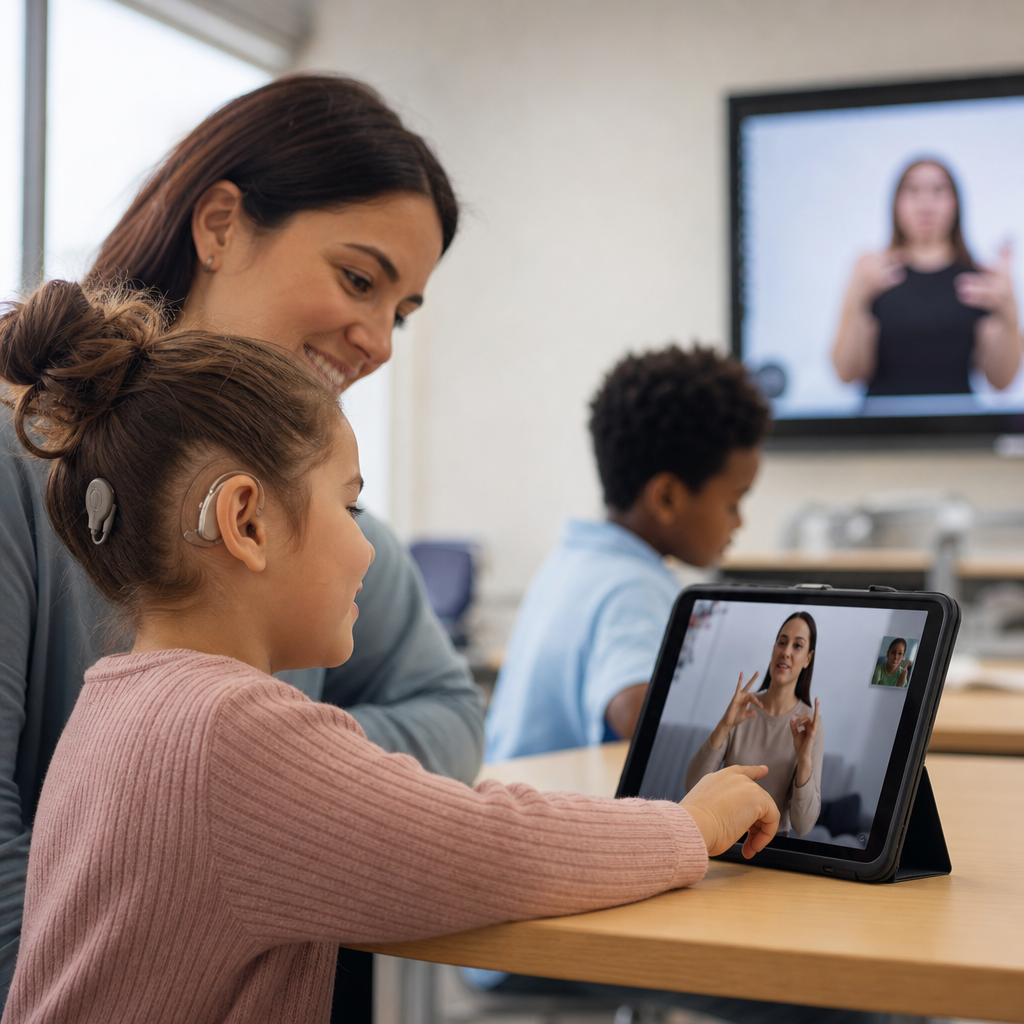

Choosing the best online courses for learning ASL starts with understanding what American Sign Language is, how it differs from English, and what a serious learner actually needs from digital instruction. ASL is a complete natural language with its own grammar, syntax, regional variation, and cultural norms rooted in Deaf communities across the United States and parts of Canada. It is not a signed version of English, and that distinction matters when evaluating online courses. A strong course teaches handshapes, movement, palm orientation, facial grammar, receptive comprehension, and Deaf culture together, because fluency depends on all of them. I have reviewed language platforms, university-backed classes, membership programs, and creator-led lessons, and the gap between polished marketing and real learning outcomes is wide. Some programs are excellent for building vocabulary but weak on syntax. Others offer outstanding cultural context but little structured practice. For students, parents, educators, interpreters-in-training, and professionals in healthcare or customer service, the right ASL course can save months of frustration and build practical communication skills faster. This hub explains how to compare online ASL courses, which formats suit different goals, what tools support retention, and where each learning path fits within a broader education plan.
What makes an online ASL course effective
The best online courses for learning ASL share a few nonnegotiable features. First, they are taught or guided by qualified Deaf instructors or by teams with deep involvement in Deaf education. That matters because ASL is inseparable from community use, and instruction that ignores cultural norms often teaches unnatural signing. Second, effective courses prioritize video quality. Learners must clearly see handshape contrast, movement path, body shift, and nonmanual markers such as eyebrow position and mouth morphemes. Grainy video or poor camera framing makes accurate perception harder and can lock in bad habits.
Third, a useful course follows a progression. Beginners need structured sequencing: fingerspelling, numbers, introductions, basic sentence patterns, wh-questions, classifiers, time indicators, and everyday conversation. Intermediate learners need more than extra vocabulary; they need syntax drills, receptive practice with varied signers, and feedback on signing space, rhythm, and grammatical facial expressions. Advanced students need discourse-level comprehension, storytelling, depiction, and exposure to regional and stylistic variation. Courses that simply post random themed lessons feel productive at first but rarely produce durable language ability.
Assessment is another differentiator. In my experience, students overestimate their ASL level when courses rely only on passive watching. Strong programs include quizzes based on signed prompts, recording assignments, live practice, or instructor critique. Even basic self-recording can reveal recurring issues such as dropped signs, weak eye gaze, or English word order. Finally, the best courses make room for community interaction. Language retention improves when learners sign with real people, join discussion groups, or attend live sessions where comprehension pressure is real rather than simulated.
Best online ASL course formats for different learners
No single format is best for everyone, because learners come to ASL with different goals, budgets, and timelines. Self-paced platforms work well for busy adults who need flexible scheduling. They usually combine video lessons, flashcards, quizzes, and short practice clips. This format is convenient and affordable, but it depends heavily on self-discipline and often provides limited personalized feedback. It is a strong starting point for beginners who need consistency more than intensity.
Live cohort-based classes are often the best choice for learners who want accountability and conversation practice. Community colleges, adult education providers, Deaf schools, and specialized sign language programs frequently run online classes over Zoom or similar platforms. These classes typically offer scheduled homework, instructor corrections, and interaction with classmates. They are especially effective for developing receptive skills because learners must follow varied signing speeds and styles in real time.
University extension courses occupy a useful middle ground. They tend to be more rigorous than app-based learning and more accessible than full degree programs. Many include graded assignments and curricula aligned with introductory ASL standards. For parents of Deaf children, aspiring interpreters, and educators seeking continuing education, these courses often provide the most dependable structure. Private tutoring, meanwhile, is ideal for learners with specific goals such as workplace communication, performance coaching, or exam preparation. A tutor can correct subtle errors faster than any app.
| Format | Best For | Main Strength | Main Limitation |
|---|---|---|---|
| Self-paced platform | Busy beginners | Flexible scheduling | Limited feedback |
| Live online class | Students needing accountability | Real-time practice | Fixed schedule |
| University extension | Serious long-term learners | Structured curriculum | Higher cost |
| Private tutoring | Targeted professional goals | Personalized correction | Can be expensive |
Top course categories and standout providers
When people search for the best online courses for learning ASL, they usually want names, not theory. The most reliable options generally fall into four categories: university or college courses, Deaf-led independent programs, large language learning platforms with ASL tracks, and subscription libraries built around topic lessons. University-backed offerings from community colleges and continuing education departments are often the safest choice for academic structure. They usually progress from ASL 1 through ASL 4, cover receptive and expressive skills, and assign recorded assessments. If you want a transcript, transfer credit, or instructor accountability, start there.
Deaf-led independent programs often provide the best balance of authentic language use and practical teaching. Many experienced Deaf educators now run membership sites, cohort courses, or lesson libraries that go far beyond vocabulary lists. The strongest ones include conversational modeling, cultural explanation, fingerspelling drills, and downloadable study guides. These courses can feel more natural than institutional classes because they teach the language as it is used, not just as it appears in textbook units. Before enrolling, check whether the curriculum is level-based or only topic-based.
Large platforms and apps have mixed value. Some are useful as supplementary tools for repetition, especially for beginners learning numbers, family terms, or common phrases. However, many app-style products underteach grammar and overuse isolated signs without enough sentence context. That can create a false sense of progress. If a platform promises fluency in a few weeks, treat that as a warning sign. A good supplementary tool supports a real course; it does not replace one. For learners who need practice between classes, high-quality YouTube channels run by Deaf instructors can also be valuable, though they work best when paired with a structured syllabus.
How to evaluate curriculum, teaching quality, and cultural accuracy
A course can look impressive and still be a poor fit, so evaluation matters. Start with the instructor profile. Look for Deaf instructors, certified teachers, experienced interpreters working under Deaf-led direction, or programs affiliated with reputable educational institutions. Then inspect the curriculum outline. A solid beginner course should include introductions, pronouns, yes-no and wh-questions, topic-comment structure, basic classifiers, negation, numbers, time signs, and daily routines. If the outline is only themed vocabulary such as food, colors, and animals, it is too shallow to stand alone.
Next, review how the course teaches receptive skills. ASL learners often struggle more with understanding other signers than with producing memorized signs. Good courses expose students to multiple signers, camera angles that preserve clarity, and natural signing speed after initial scaffolding. They also explain nonmanual signals directly. Raised eyebrows for yes-no questions, furrowed brows for wh-questions, role shift in storytelling, and spatial referencing are grammar, not decoration. If a course treats facial expression as optional, it is not teaching ASL accurately.
Cultural accuracy is equally important. Respectful instruction covers attention-getting norms, name signs, turn-taking, and the difference between Deaf identity and hearing assumptions about deafness. It should avoid presenting ASL as a novelty skill or reducing Deaf culture to a short side note. I also recommend checking whether the program encourages community engagement, such as virtual Deaf events, conversation hours, or local meetups. Courses that connect students to real language communities produce better outcomes because they shift learning from memorization to interaction.
Learning tools that improve ASL retention between classes
Even the best online courses for learning ASL work better when paired with the right tools. The first is self-recording. Using a phone or webcam, record short assignments such as introductions, daily routines, or retells of simple stories. Then compare your video with the instructor model. This is one of the fastest ways to catch handshape errors, weak movement, or English-influenced word order. In my own evaluations of student progress, those who recorded themselves regularly improved more quickly in clarity and confidence.
Second, use spaced repetition for high-frequency signs, fingerspelling patterns, and number recognition. Digital flashcards can help, but they should use video or animated sign clips rather than static images whenever possible. ASL is movement-based, and still pictures often hide critical distinctions. Third, prioritize receptive drills. Watch short signed clips without captions, summarize the meaning, then replay them. This trains visual parsing and reduces dependence on written English. Learners who skip receptive practice usually plateau early.
Fourth, join live practice spaces. Conversation groups, tutoring sessions, office hours, and virtual socials create the productive pressure needed for retrieval. Finally, use a reputable dictionary and reference set. Tools from recognized organizations, university ASL resources, and respected sign databases are useful for checking variation, but remember that dictionaries show signs, not always full grammar in action. The most effective study stack is simple: one structured course, one reference source, self-recording, and recurring live practice. More tools do not automatically mean faster progress; coherent practice does.
Choosing the right ASL course for your goal and budget
The right course depends on why you are learning. If your goal is everyday communication with a Deaf family member, choose a beginner-friendly program with practical dialogue, fingerspelling practice, and live interaction. Parents often benefit from family-centered classes offered by schools for the Deaf, early intervention programs, or community organizations because the vocabulary is immediately useful. If you are learning ASL for school credit, transfer requirements, or interpreter preparation, prioritize accredited or institutionally recognized courses with graded assessments and multi-level progression.
Professionals in healthcare, education, retail, and public service should be careful about overly narrow “ASL for work” mini-courses. These can help with domain vocabulary, but they are not substitutes for a real language foundation. In clinical and service settings, misunderstandings carry consequences, so basic conversational competence and cultural understanding matter as much as memorized workplace terms. For budget-conscious learners, a practical route is to combine one affordable self-paced course with free Deaf-led video resources and occasional tutoring. That often costs less than a premium subscription and delivers better results.
Price should be weighed against contact hours, feedback quality, and curriculum depth. A cheap course with no correction can be expensive in the long run if it reinforces bad habits. A higher-priced class with weekly feedback may save months of relearning. Before enrolling, ask direct questions: Who teaches the course? Is there a level pathway beyond beginner content? How are receptive skills assessed? Is cultural content integrated throughout? Can students get feedback on their own signing? Those answers usually reveal the true value faster than any sales page.
The best online courses for learning ASL are the ones that treat ASL as a real language, not a collection of signs to memorize. Strong programs are taught with cultural accuracy, structured from beginner to advanced concepts, built around high-quality video, and supported by meaningful feedback. They also recognize a simple truth I have seen repeatedly: students improve fastest when they combine instruction with self-recording and real interaction. If you only remember one rule, make it this one: choose courses that develop receptive and expressive skills together. Vocabulary alone is not fluency.
As a hub for courses and learning tools, this guide points to the standards that matter most when comparing options across the broader Education and Learning Resources category. Use it to narrow your choices, avoid weak app-based shortcuts, and build a study plan that matches your goals, schedule, and budget. Whether you want family communication, academic progress, or professional development, the right ASL course can create a clear path forward. Start by selecting one structured program, commit to regular practice, and sign with real people as early as possible.
Frequently Asked Questions
What should I look for in the best online courses for learning ASL?
The best online courses for learning ASL should teach American Sign Language as a true language rather than as a list of isolated signs. That means the course should cover ASL grammar, sentence structure, facial expressions, classifiers, non-manual markers, and the visual-spatial nature of communication. A strong program should also explain that ASL is not simply English on the hands. If a course relies too heavily on word-for-word English translations without teaching how ASL actually works, it may not provide the foundation serious learners need.
It is also important to look for instruction led by qualified Deaf educators or experienced ASL teachers with deep knowledge of the language and Deaf culture. High-quality online ASL courses usually include clear video demonstrations, multiple camera angles, comprehension practice, receptive and expressive exercises, and opportunities to review lessons repeatedly. Structured progression matters as well. Beginners benefit from a course that starts with foundational vocabulary and everyday communication, then gradually moves into grammar, conversation skills, storytelling, and cultural awareness.
Finally, the best course will match your goals. If you want to communicate with Deaf friends or family members, practical conversation practice may be the top priority. If you are preparing for interpreting, education, healthcare, or community work, you may need a more rigorous curriculum with feedback, live practice, and cultural competency components. In short, a worthwhile online ASL course should be accurate, immersive, culturally informed, and designed to help you actually use the language in real interactions.
Can you really learn ASL effectively through an online course?
Yes, you can absolutely build a strong foundation in ASL through an online course, especially if the course is well designed and you approach it consistently. Because ASL is a visual language, video-based learning can work very well when lessons are clear, paced appropriately, and focused on real communication. Many online courses make it easy to replay signs, compare subtle differences in handshape or movement, and practice receptive skills at your own pace. For beginners, that flexibility can be a major advantage.
That said, effective ASL learning online depends on more than passively watching lessons. To make real progress, you need regular practice producing signs, understanding others signing at natural speed, and learning how grammar, facial expression, and body movement work together. The most effective online courses include quizzes, signing assignments, conversation prompts, and ideally some form of live interaction or feedback. Without practice and correction, it is easy to memorize vocabulary while missing the deeper structure of the language.
Online learning works best when paired with immersion and community exposure whenever possible. Joining Deaf events, attending virtual or local ASL practice groups, and watching Deaf creators can help reinforce what you learn in a course. In other words, an online course can be an excellent starting point and even a powerful long-term learning tool, but the strongest results usually come from combining formal digital instruction with real-world language use and cultural engagement.
Why does it matter whether an ASL course is taught by Deaf instructors?
It matters because ASL is inseparable from Deaf culture, lived experience, and community norms. Deaf instructors often bring native or near-native fluency, cultural authority, and authentic usage that help students learn ASL as it is actually used rather than as a simplified academic subject. They can teach not only vocabulary and grammar, but also conversational etiquette, cultural context, identity, regional variation, and the subtle non-manual features that are essential to meaning.
Courses taught by Deaf educators also tend to provide a more accurate understanding of what respectful communication looks like in Deaf spaces. Learning ASL is not just about forming signs correctly. It is also about understanding eye contact, turn-taking, attention-getting strategies, introductions, name signs, and the community values that shape communication. These elements are often overlooked in lower-quality courses, yet they are critical if your goal is meaningful interaction rather than memorization.
This does not mean only Deaf instructors can be effective teachers, but it does mean the strongest courses usually center Deaf voices, perspectives, and expertise. If a course ignores Deaf culture or treats ASL as a simple communication hack, that is a warning sign. A serious learner should prioritize instruction that respects ASL as a complete language and recognizes the Deaf community as the cultural home of that language.
How long does it take to learn ASL with an online course?
The timeline depends on your goals, study habits, and the depth of the course. If your goal is basic conversational ability, you may be able to learn everyday vocabulary, simple sentence patterns, and common social exchanges within a few months of consistent study. If you practice several times a week and actively review what you learn, an online course can help you become comfortable with introductions, family terms, questions, routines, and simple back-and-forth conversations relatively quickly.
Becoming genuinely proficient takes longer. ASL has its own grammar, syntax, spatial structure, and cultural expectations, so fluency involves much more than memorizing signs. You need time to develop receptive skills, improve your expressive clarity, recognize signing styles from different people, and understand how non-manual signals affect meaning. For many learners, this is a long-term process that unfolds over many months or even years, especially if they are aiming for professional-level communication.
The key is consistency. Short, regular practice sessions are usually more effective than occasional cramming. Watching lessons, signing in front of a mirror, recording yourself, practicing with partners, and engaging with Deaf content can all speed up progress. A good online course gives you structure, but your improvement will depend on how often you use the language. In practical terms, expect basic communication to come first, while confidence, accuracy, and fluency develop through steady exposure and ongoing interaction.
Are free ASL online courses good enough, or should I pay for one?
Free ASL resources can be very useful, especially for beginners who want to explore the language before committing to a full program. There are excellent free videos, practice channels, community resources, and introductory lessons available online. These can help you learn the alphabet, numbers, common greetings, beginner vocabulary, and some basic cultural concepts. For casual learners, free materials may be enough to get started and build interest.
However, free resources often have limitations. Many lack a clear learning path, comprehensive grammar instruction, feedback, or enough depth to support long-term progress. Some also vary in quality and may present signs without context, outdated usage, or incomplete explanations. This can create confusion, especially for learners who do not yet know how to evaluate accuracy. A paid course is often worth considering if it offers a structured curriculum, professionally produced lessons, guided progression, cultural instruction, interactive practice, and access to experienced teachers.
The best choice depends on your goals. If you want to pick up a few basic signs, free resources may be sufficient. If you are serious about building real communication skills, interacting respectfully with Deaf communities, or using ASL in a personal or professional setting, a well-designed paid course is often the better investment. In many cases, the smartest approach is to use free resources for extra practice while relying on a high-quality course for structure, accuracy, and deeper language development.