
Choosing the right ASL course starts with knowing what American Sign Language is, what it is not, and what kind of learning experience will actually help you communicate with Deaf people in real situations. ASL is a complete natural language with its own grammar, syntax, regional variation, and cultural context. It is not signed English, and it is not simply a list of hand signs matched to spoken words. That distinction matters because many beginners enroll in programs that promise quick results but teach vocabulary without structure, culture, or receptive skills. I have evaluated online classes, community college programs, private tutoring options, and university sequences, and the pattern is consistent: learners progress fastest when a course balances language mechanics, visual comprehension, live practice, and Deaf cultural knowledge. As a hub topic under Education and Learning Resources, this guide covers the core decisions behind ASL courses and learning tools so you can compare options confidently and choose a path that fits your goals, schedule, budget, and preferred learning style.
Start With Your Goal, Timeline, and Learning Context
The best ASL course for one learner can be the wrong choice for another because course quality depends partly on fit. Before comparing providers, define your reason for learning. A parent of a Deaf child needs immediate functional communication at home. A healthcare worker may need patient interaction skills and medical vocabulary. A college student may need transfer credits and graded assessments. Someone learning for personal enrichment may prioritize conversation groups and affordability over formal certification. When I help learners choose a course, I ask three questions first: What situations will you use ASL in, how soon do you need usable skills, and how much feedback do you need to stay consistent?
Your timeline shapes the right format. Intensive live courses build momentum quickly, but they require schedule discipline and can overwhelm beginners who need more repetition. Self-paced courses are flexible and often cheaper, yet many students stall because ASL demands active production and visual feedback, not passive watching. Learning context matters too. If you live near a Deaf community center, the ideal course may be one that pairs class time with in-person events. If you are rural or managing shift work, a strong online course with live office hours and recorded practice review may be the better choice. Clear goals make every later decision easier, from selecting a beginner sequence to choosing supplementary learning tools.
Know What a High-Quality ASL Course Includes
A strong ASL course teaches five things together: vocabulary, grammar, receptive comprehension, expressive production, and cultural competence. If any one of these is missing, progress slows. Good courses introduce signs in meaningful contexts instead of isolated lists. They teach nonmanual markers such as facial expressions, head movement, and body shift because these carry grammatical meaning. They include sentence types, topic-comment structure, classifiers, role shifting, time indicators, and space use. They also require students to understand signing from different signers at different speeds, because real conversations do not look like slow dictionary demonstrations.
The instructor profile is another key quality signal. Deaf instructors often bring linguistic authenticity, lived cultural context, and natural signing models that hearing-led courses sometimes lack. That does not mean every hearing instructor is ineffective; many are highly qualified interpreters or educators. But the best programs are transparent about instructor credentials, teaching experience, and language background. Look for courses aligned with established educational frameworks such as ACTFL proficiency expectations, college ASL sequences, or interpreter training prerequisites. Reliable providers explain what you will be able to do at the end of the course, not just what units you will finish. If a course promises fluency in a few weeks, treat that as a warning sign, not a benefit.
Compare Course Formats Before You Enroll
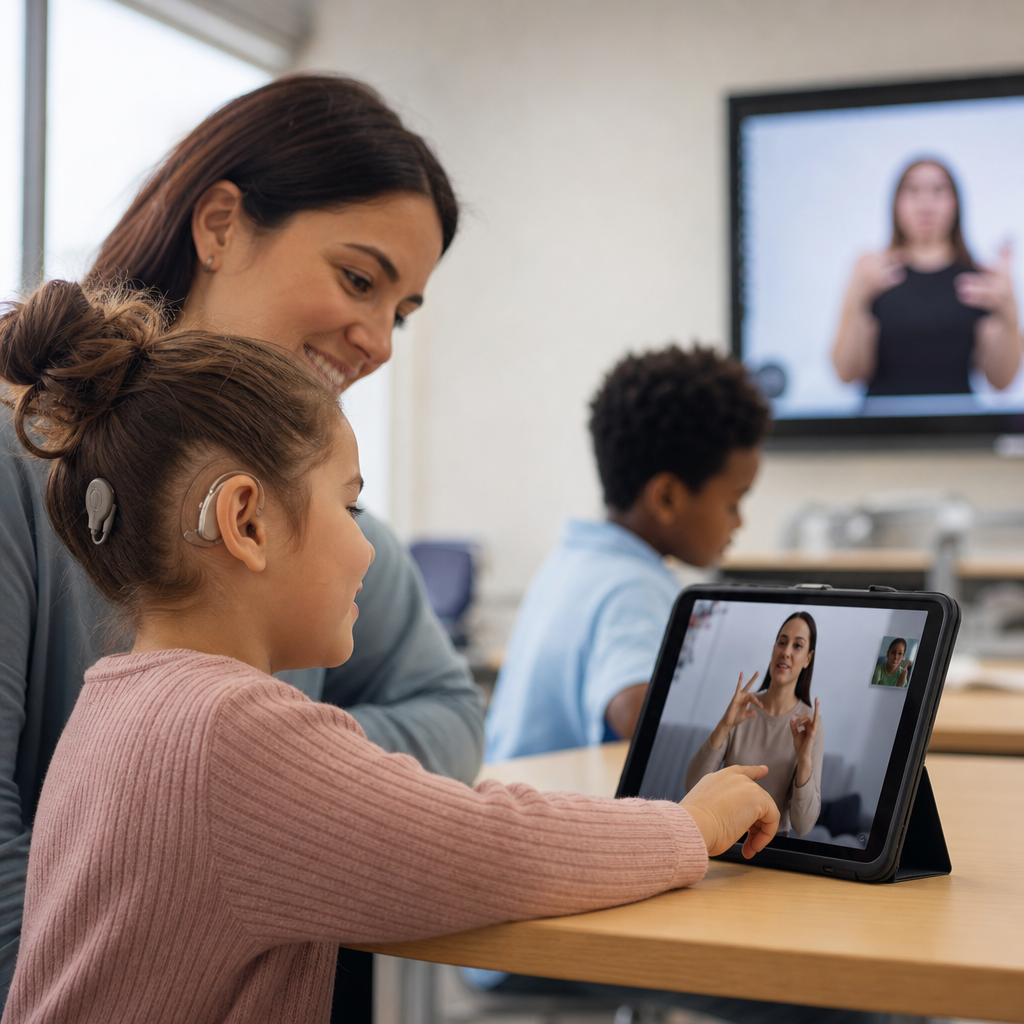
ASL courses usually fall into four categories: in-person classes, live online classes, self-paced online courses, and private tutoring or coaching. In-person classes are often strongest for accountability and peer interaction. You learn to maintain eye contact, track turn-taking, and navigate visual attention in a room, all of which matter in signed communication. Live online classes can be excellent when they use small groups, high-quality video, and structured breakout practice. They remove travel barriers and often give access to Deaf instructors outside your local area.
Self-paced programs work best as entry points or supplements, especially for fingerspelling drills, vocabulary review, and repeated exposure to beginner sentence patterns. However, they are rarely enough on their own because learners need correction on handshape, movement, palm orientation, location, and grammar. Private tutoring can accelerate progress dramatically when goals are specific, such as preparing for an ASL placement test or improving conversational fluency. The tradeoff is cost and instructor variability.
| Format | Best For | Main Advantage | Common Limitation |
|---|---|---|---|
| In-person class | Beginners needing structure | Strong accountability and natural interaction | Fixed schedule and travel time |
| Live online class | Remote learners and working adults | Access to qualified instructors anywhere | Video quality affects comprehension |
| Self-paced course | Flexible review and budget-conscious learners | Learn anytime and replay lessons | Limited feedback and lower completion rates |
| Private tutoring | Targeted skill building | Personalized correction and pace | Higher cost per hour |
When comparing formats, ask how much live signing practice is included each week. In my experience, students who get at least two meaningful interactive sessions weekly retain more and gain confidence faster than students who only watch lessons. Format should serve function. Choose the delivery method that makes regular practice realistic, not the one that sounds most convenient on paper.
Evaluate Curriculum, Assessment, and Progression
Curriculum design separates serious ASL education from casual content libraries. A reliable beginner course should move from everyday communication into structured grammar while building receptive skill from day one. That means introducing greetings, introductions, numbers, family, routines, and common questions alongside sentence order, negation, yes-no questions, wh-questions, and directional verbs. Intermediate courses should add classifiers, spatial referencing, temporal sequencing, narratives, and more nuanced conversational repair strategies. Advanced courses often focus on discourse, regional variation, specialized vocabulary, and sustained interaction.
Assessment matters because it reveals whether a program measures actual communication or only recognition. Strong courses use recorded video submissions, live interviews, receptive quizzes based on unscripted signing, and practical tasks such as introducing yourself, describing a room, or retelling a short event in ASL. Weak courses rely mainly on matching exercises or English-based multiple choice tests. Those can check memory, but they do not prove expressive ability. Ask whether the course includes rubrics for handshape accuracy, movement, grammar, and nonmanual signals. Transparent grading criteria help learners improve systematically.
Progression should also be explicit. You should know what comes after ASL 1, whether there is an ASL 2 or conversational lab, and how the course connects to broader learning tools such as tutoring, immersion events, or signing clubs. As a hub topic, Courses and Learning Tools works best when the course is not treated as a one-time product. The strongest providers create a pathway from beginner exposure to practical communication, using sequenced modules and milestones rather than disconnected lessons.
Look Closely at Learning Tools, Community Access, and Support
The course itself is only part of the learning system. Good ASL programs pair instruction with useful learning tools. The most effective tools I have seen include spaced repetition flashcards with video, slow-motion playback for handshape study, fingerspelling recognition drills, searchable sign libraries that show full-sentence context, and video journals where students record themselves weekly. Tools are helpful only when they reinforce proper language structure. A sign dictionary is useful for lookup, but it cannot replace a curriculum because signs change meaning based on context, movement, and grammar.
Community access is equally important. ASL is a living language used within a cultural community, so the best courses provide or recommend ways to interact respectfully with Deaf signers. That may include Deaf coffee chats, virtual conversation sessions, local events, or school-hosted practice labs. Learners improve rapidly when they move from classroom drills to authentic but supported interaction. One student I worked with plateaued for months in a self-study app, then improved noticeably after attending weekly Deaf-led online socials where she had to follow turn-taking and real pacing.
Support systems often determine completion. Check whether the provider offers instructor feedback turnaround times, discussion spaces, office hours, peer practice matching, accessibility features, and technical guidance for camera setup and lighting. ASL learning depends heavily on visual clarity. A course with poor platform design, tiny video windows, or no correction channels will create frustration even if the lesson content is sound.
Check Cost, Credentials, and Red Flags Before Committing
Price should be evaluated against contact hours, instructor access, and learning outcomes, not just the headline fee. A low-cost subscription may seem attractive, but if it offers little feedback or no live interaction, learners often end up paying again for tutoring later. By contrast, a community college course or Deaf-led cohort program may cost more upfront yet deliver stronger foundation skills and transferable credit. Ask for a breakdown: number of lessons, live hours, practice expectations, included resources, and refund terms.
Credentials deserve careful review. Reputable programs usually describe instructor education, ASL teaching background, interpreting or Deaf studies experience where relevant, and institutional affiliation. If a course prepares students for academic placement, interpreter training, or workplace use, it should state that clearly and realistically. Be cautious with broad claims such as “become fluent fast,” “learn ASL in a weekend,” or “master signing with no practice partner.” ASL fluency takes sustained exposure, production, feedback, and community contact.
There are also content red flags. Avoid courses that rely heavily on English word order without explaining ASL grammar, teach signs without facial grammar, use outdated terminology for Deaf people, or present exact one-to-one translations for every sentence. Another warning sign is overreliance on fingerspelling when a concept has a standard sign. Good instruction explains when regional variation exists and when multiple forms are acceptable. Trust courses that acknowledge nuance instead of pretending ASL is universally fixed or perfectly simplified for beginners.
Choosing the right ASL course comes down to matching a credible program with your real communication goals and then supporting it with the right learning tools and community practice. Start by defining why you want ASL, where you will use it, and how much structure you need. Then evaluate course quality through curriculum depth, live interaction, instructor credentials, assessment methods, and access to feedback. The strongest courses teach ASL as a language, not as a list of gestures, and they prepare you to understand and be understood in authentic settings.
If you remember one principle, make it this: the best ASL course is the one that gives you consistent visual input, regular expressive practice, informed correction, and respectful connection to Deaf culture. Format matters, but substance matters more. A live online class with excellent feedback can outperform a flashy app, and a community-based course can outperform a larger platform if it creates real accountability and conversation opportunities. Cost matters too, but value is measured by progress, retention, and usable skill.
Use this hub as your starting point for Courses and Learning Tools, then compare programs with a critical eye before enrolling. Review the syllabus, test the platform, verify instructor background, and ask how practice works outside class. If a course can clearly show how you will build vocabulary, grammar, receptive skill, and cultural understanding over time, you are likely looking at a strong option. Choose carefully, commit to regular practice, and start signing with real people as early as possible.
Frequently Asked Questions
1. What should I look for in an ASL course if I want to learn real communication skills?
The most important thing to look for is whether the course teaches American Sign Language as a complete language rather than as a word-for-word substitute for English. A strong ASL course will focus on grammar, sentence structure, facial expressions, body language, receptive skills, and conversational practice, not just isolated vocabulary lists. Because ASL has its own syntax and visual rules, a course that only teaches signs matched to English words can leave students unable to understand or participate in real conversations with Deaf signers.
You should also look for a course that includes live interaction, feedback, and opportunities to practice with fluent signers. Video lessons can be helpful, but real progress usually happens when you are expected to watch, interpret, respond, and adjust in real time. Courses taught by qualified Deaf instructors or highly experienced ASL educators often provide stronger language modeling and more authentic cultural context. In addition, the best programs explain why certain expressions, movement patterns, and non-manual markers matter, so you are not just memorizing signs but actually learning how meaning is built in ASL.
Finally, review the course structure before enrolling. A good ASL course should clearly state its level, goals, pacing, and teaching philosophy. If a program promises fluency in an unrealistically short time or relies heavily on phrases without teaching how the language works, that is a sign to be cautious. The right course should help you build communication habits that transfer to real-world interaction, not just help you recognize a few signs in isolation.
2. Why is it important to understand that ASL is not signed English?
This distinction is essential because it affects the quality of your learning from the very beginning. American Sign Language is a natural language that developed within the Deaf community, with its own grammar, word order, idiomatic patterns, and visual logic. Signed English systems, by contrast, are designed to represent English more directly. While those systems may be useful in some settings, they are not the same as ASL, and confusing the two can lead to misunderstandings about how Deaf people actually communicate.
If a beginner enrolls in a course that treats ASL as English on the hands, the student may learn signs but still struggle to follow native signers. That happens because real ASL uses much more than hand shapes. Meaning depends on movement, space, timing, facial grammar, classifiers, and non-manual signals. Someone who has only been taught sign-for-word English patterns may feel frustrated when conversations do not look like what they studied. In other words, the issue is not just terminology. It directly affects comprehension, expression, and confidence.
Understanding this difference also helps you choose a course that respects Deaf culture and language authenticity. The best ASL programs teach learners to think visually and conceptually rather than translate every sentence from spoken English. That approach produces stronger communication skills and a more accurate understanding of the language. If your goal is to connect with Deaf people in genuine, everyday situations, learning ASL on its own terms is far more effective than learning a system that only imitates English structure.
3. How can I tell whether an ASL course is beginner-friendly but still high quality?
A beginner-friendly ASL course should make the language accessible without oversimplifying it. That means it should introduce foundational vocabulary, fingerspelling, numbers, everyday topics, and basic conversation patterns in a manageable way, while also teaching core principles of ASL grammar and visual communication. A high-quality beginner course does not overwhelm students, but it also does not hide the fact that ASL is a rich, fully developed language that requires practice and patience.
Look for signs of thoughtful instructional design. A well-built course usually progresses from simple to more complex material, includes repetition without becoming mechanical, and offers clear explanations of visual features such as eye gaze, facial expressions, and use of space. It should also include receptive practice, because understanding others is just as important as producing signs yourself. If a course only asks you to copy signs from an instructor without testing comprehension or encouraging interaction, it may not give you the full foundation you need.
Another good indicator is the type of support built into the learning experience. Quality beginner courses often include feedback on signing, chances to review common errors, and opportunities to ask questions about usage and context. They may also include cultural guidance about introductions, attention-getting, turn-taking, and respectful interaction in Deaf spaces. When a course combines accessible pacing with accurate language instruction and cultural awareness, it is much more likely to prepare beginners for real growth instead of giving them a false sense of progress.
4. Should I choose an online ASL course, an in-person class, or a live virtual program?
The best format depends on your learning style, schedule, budget, and access to qualified instruction, but the key issue is not format alone. It is whether the course gives you consistent exposure to fluent ASL, meaningful interaction, and corrective feedback. An in-person class can be excellent because it allows for direct engagement, immediate practice, and natural visual communication in a shared space. For many learners, that environment makes it easier to stay focused and build confidence.
Online self-paced courses can also be useful, especially for learners who need flexibility or want extra repetition. They work best when they are organized clearly, use high-quality video, and teach more than just vocabulary memorization. However, self-paced programs have limitations if they do not include feedback or live practice. Without interaction, it can be difficult to know whether your signing is clear, whether your facial grammar is accurate, or whether you are truly understanding what you see.
Live virtual programs often offer a strong middle ground. They can provide the convenience of online learning with the benefits of real-time communication, guided conversation, and direct instructor support. If you choose a virtual course, make sure it is designed specifically for visual language learning, with good camera framing, clear signing models, and active student participation. Ultimately, the right choice is the one that allows you to practice regularly, receive input from skilled signers, and stay engaged long enough to build real communicative ability.
5. How do I avoid ASL courses that make unrealistic promises or teach ineffective methods?
One of the clearest warning signs is language that focuses on speed over substance. Be cautious of courses that promise fluency in a few weeks, guaranteed mastery with minimal practice, or easy conversational ability through memorized phrases alone. Learning ASL takes time because you are not only learning vocabulary but also developing visual processing, expressive control, receptive understanding, and cultural awareness. Quick-result marketing can be appealing, but it often leads students into programs that skip the structure and practice needed for real communication.
You should also watch for courses that rely heavily on direct English translation, random sign lists, or entertainment-style content without clear educational progression. If the material does not explain ASL grammar, sentence structure, non-manual markers, and context, it may leave you with fragmented knowledge. Likewise, if the instructor’s qualifications are unclear, if there is little or no mention of Deaf culture, or if there are no opportunities for feedback, those are valid reasons to investigate further before enrolling.
A better approach is to evaluate the course the way you would evaluate any serious language program. Check who teaches it, what learning outcomes are promised, how students practice, and whether the curriculum reflects authentic ASL use. Read reviews carefully, especially comments about instructor feedback, clarity, pacing, and real-world usefulness. The best courses are usually honest about the effort required. They do not sell shortcuts. Instead, they offer a structured path that helps learners build accurate, respectful, and lasting communication skills over time.