
Choosing between free and paid ASL learning resources is one of the first major decisions new signers make, and it shapes how quickly, accurately, and confidently they learn. American Sign Language, or ASL, is a complete natural language with its own grammar, syntax, regional variation, and cultural context; it is not simply English on the hands. That distinction matters because the best ASL learning resources do more than teach vocabulary lists. They help learners understand facial grammar, nonmanual markers, classifiers, receptive comprehension, fingerspelling speed, turn-taking, and Deaf community norms. After working with adult beginners, parents of Deaf children, and hearing professionals who needed workplace signing skills, I have seen the same pattern repeatedly: people waste months when they choose resources based only on price instead of fit.
This article evaluates free vs paid ASL learning resources so learners can decide what is actually worth it. It also serves as a hub for the wider topic of courses and learning tools, covering online classes, apps, video libraries, textbooks, tutoring, practice groups, and community-based learning. Free options can be excellent for exploration, daily review, and exposure to multiple signers. Paid options often provide structure, feedback, accountability, and progression, which are the elements most self-taught learners eventually realize they need. The real question is not whether free or paid is universally better. The better question is which resource solves your current learning problem: starting, staying consistent, correcting mistakes, building fluency, or preparing for real conversations.
For searchers asking the short version, here is the direct answer: free ASL resources are worth using for early exposure, vocabulary building, and supplemental practice, while paid ASL resources are worth paying for when you need a sequenced curriculum, expert correction, live interaction, or credentials. Most successful learners combine both. A beginner might use free YouTube lessons and an ASL dictionary, then enroll in a structured course once they need grammar guidance and feedback. An intermediate learner might keep a paid tutor but rely on free Deaf creator content for receptive practice. Value comes from matching the tool to the stage, not from assuming expensive always means better or free always means shallow.
What Free ASL Learning Resources Do Well
Free ASL learning resources lower the barrier to entry, and that matters because many learners are unsure whether they can commit long term. A free starting point lets you explore the language before spending money. The strongest free options usually fall into five groups: dictionary sites, video lessons, Deaf creator channels, community practice spaces, and public library materials. ASL dictionaries such as Signing Savvy and Handspeak help with quick sign lookup, though they should be used carefully because single-word lookup can hide grammar differences. Video platforms offer introductory lessons on topics such as alphabet, numbers, family signs, colors, and beginner phrases. Public libraries often provide access to language platforms, captioned media, and even community education listings at no direct cost.
Free resources are also ideal for repetition. In my experience, beginners need far more review than they expect, especially for fingerspelling recognition and minimal visual differences between signs. A paid class may meet once or twice a week, but free resources fill the gap between sessions. Learners can replay a lesson ten times, slow videos down, mirror signs, and quiz themselves daily. That kind of high-frequency contact is one reason motivated self-starters can make impressive early progress with little or no budget. Free content also exposes students to different signing styles, ages, and backgrounds, which is useful because real-world ASL is not delivered by one polished instructor in one controlled studio.
The limitations are equally important. Free content often lacks sequence, assessment, and correction. A learner may know one hundred isolated signs but still be unable to understand a basic introduction signed at natural speed. Some free videos teach contact signing or English word order without clearly explaining the difference from ASL structure. Others are made by hearing creators with uneven fluency. Quality control is inconsistent, and beginners usually cannot judge accuracy on their own. That is why free resources are best treated as supplements or trial materials unless the source is clearly reputable, Deaf-led, and designed as a coherent curriculum rather than disconnected clips.
When Paid ASL Resources Are Actually Worth the Money
Paid ASL learning resources are worth it when they save time, prevent fossilized mistakes, and create a path from exposure to functional skill. The biggest advantage is structure. A well-designed course teaches in sequence: core vocabulary, sentence patterns, receptive practice, nonmanual markers, classifiers, conversational repair, and cultural expectations. Instead of jumping randomly from food signs to workplace signs to song interpretation, learners build one layer on another. That sequencing dramatically improves retention. In classroom settings and paid online programs, I have seen students with less raw study time outperform self-taught learners simply because their instruction followed a logical progression.
Feedback is the second major reason to pay. ASL is visual and spatial, so small inaccuracies matter. Handshape, palm orientation, movement, location, and facial expression all affect meaning. Learners frequently misproduce signs without realizing it. A recorded app cannot always catch that. A live teacher or tutor can. Paid tutoring through platforms, private instructors, or community colleges often provides the fastest improvement per hour because a skilled instructor immediately corrects production errors and explains why they matter. If your goal involves interpreting pathways, communicating with Deaf family members, classroom success, or client-facing work in healthcare or education, feedback is not optional; it is foundational.
Paid resources also tend to include accountability tools that free materials lack. Deadlines, homework, attendance, graded assignments, office hours, and peer interaction keep learners engaged after the initial excitement fades. This is especially valuable for busy adults. Many people do not fail because ASL is too hard; they fail because inconsistent study breaks visual memory and receptive momentum. Paying for a course can create productive pressure to show up and practice. That does not mean every paid option is good. Expensive apps with shallow content, courses taught by underqualified instructors, or programs that promise fluency in a few weeks are poor investments. Cost alone does not create value. Outcomes do.
Comparing Common ASL Course and Learning Tool Options
The best way to judge free vs paid ASL learning resources is to compare them by outcome, not by marketing claims. Ask what each tool teaches well, where it falls short, and which learner it serves. The table below summarizes the patterns I see most often across courses and learning tools.
| Resource type | Typical cost | Best use | Main strength | Main limitation |
|---|---|---|---|---|
| YouTube lessons and creator videos | Free | Exploring basics, review, cultural exposure | Accessible, repeatable, broad variety of signers | Uneven quality, little feedback, weak sequencing |
| ASL dictionary sites | Free or low-cost | Looking up individual signs | Fast reference for vocabulary checks | Does not teach grammar or conversational use |
| Mobile apps | Free to subscription | Daily drills, habit building | Convenient microlearning and reminders | Can overemphasize isolated words |
| Community college or university courses | Paid | Structured beginner to advanced study | Curriculum, assessments, interaction, credentials | Higher cost and fixed schedule |
| Private tutoring | Paid | Fast correction and personalized goals | Immediate feedback and customized practice | Cost per hour can be high |
| Deaf community events and practice groups | Free to low-cost | Real-world receptive and expressive practice | Authentic communication and cultural learning | Can overwhelm true beginners without support |
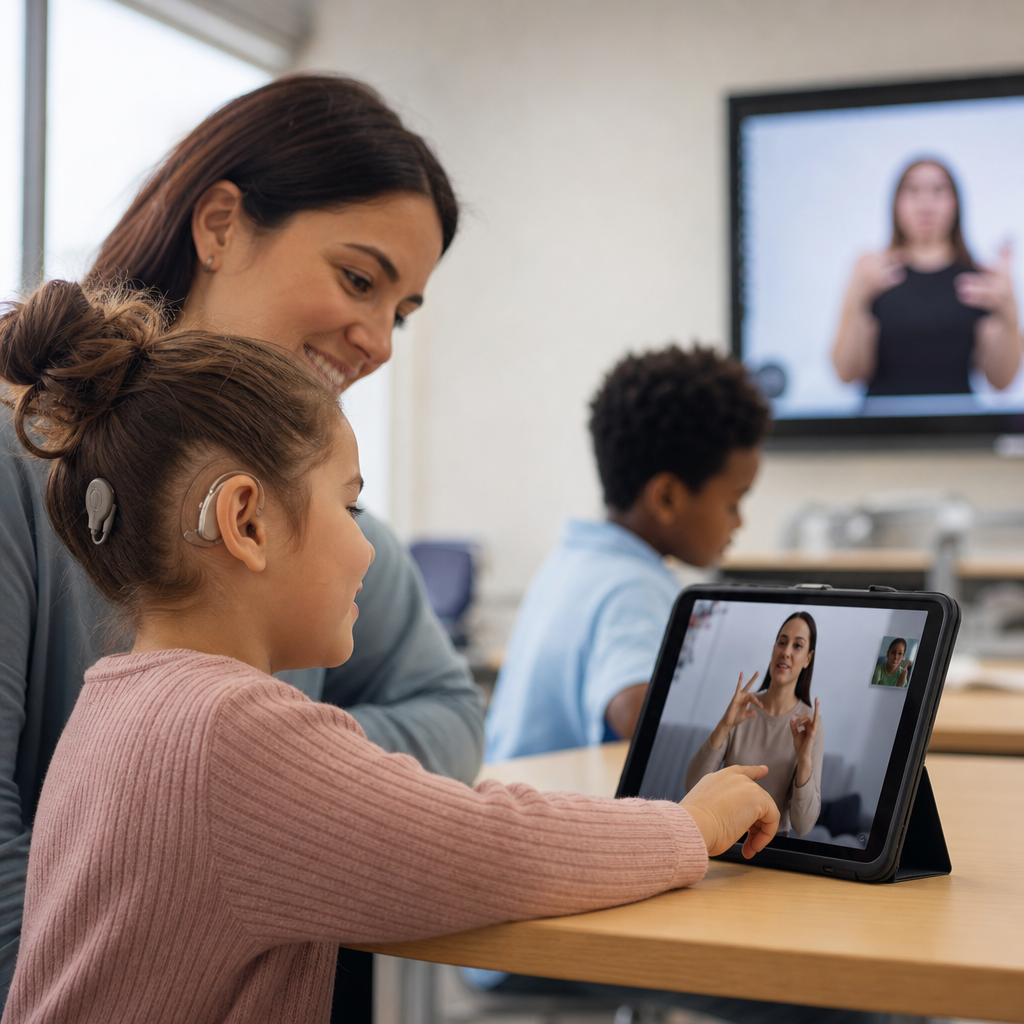
For example, a parent learning to communicate with a newly identified Deaf child usually benefits from a paid foundational course plus free daily review videos. A college student fulfilling a language requirement may need a credit-bearing class because grades and formal progression matter. A nurse learning intake questions and patient interaction basics may combine workplace-specific tutoring with free receptive practice from Deaf educators online. Each case has a different success metric, so the best ASL course or learning tool depends on the job it needs to do.
How to Evaluate Quality Before You Commit
Whether a resource is free or paid, quality can be screened using a few reliable criteria. First, check who teaches it. Deaf instructors bring native or near-native lived language experience and cultural authority that is especially valuable in ASL education. Hearing instructors can also be excellent, but their qualifications should be clear: formal training, strong community ties, advanced fluency, and a teaching role within recognized programs. Second, examine whether the resource teaches grammar, not just vocabulary. If every lesson is a list of English words with one sign each, the program is incomplete. Third, look for receptive practice with multiple signers and speeds. Real comprehension develops from watching, not only producing.
Fourth, evaluate feedback and assessment. Even if you prefer self-study, some checkpoint is essential. That could mean tutor reviews, live sessions, recorded submissions, or quizzes built around signed prompts rather than English translation alone. Fifth, inspect cultural content. Good ASL learning resources explain eye gaze, attention-getting, name signs, turn-taking, Deaf space norms, and why direct translation from English often fails. Finally, watch for red flags. Be cautious with programs that use terms like universal sign language, promise fluency in thirty days, rely heavily on music-signing as instruction, or avoid showing natural conversation. Those signals usually indicate a product designed for clicks rather than language competence.
Recognized standards help here. The ACTFL proficiency framework is not ASL-specific, but it provides a useful way to think about novice, intermediate, and advanced performance. Reputable courses often align implicitly with that progression by distinguishing memorized phrases from spontaneous communication. Tools such as Marco Polo style video exchange, Zoom tutoring, and LMS platforms like Canvas can support learning well when the pedagogy is strong. But platform polish should never be confused with teaching quality. I have seen plain-looking courses produce better signers than slick apps because the instruction was accurate, cumulative, and interactive.
The Smartest Approach for Most Learners
For most people, the smartest approach is a blended one: use free ASL learning resources to expand practice time and paid resources to build competence. Start free if you are testing interest, learning the manual alphabet, or building a daily study habit. Move to paid instruction once you hit the predictable ceiling of self-study: trouble understanding native signers, uncertainty about grammar, confusion between similar signs, or lack of confidence in conversation. If budget is limited, buy the piece you cannot easily replace. Usually that means feedback, not content. Free videos can teach many signs, but they cannot tell you that your facial grammar is flattening a yes-no question into a statement.
A practical plan looks like this. In month one, use free videos from reputable Deaf educators, a trusted dictionary, and short daily fingerspelling drills. In months two through four, join a structured course or tutoring program to establish grammar and correct production. Throughout, attend community events when appropriate, mostly to observe at first and then to participate. Keep using free resources for reinforcement, but let a qualified instructor shape your foundation. That balance gives you affordability without sacrificing accuracy. If you are choosing your next ASL course or learning tool, define your goal, vet the teacher, and pay where precision matters most. Done well, that mix saves money, speeds progress, and leads to real communication.
Frequently Asked Questions
1. Are free ASL learning resources good enough for beginners?
Free ASL learning resources can be an excellent starting point for beginners, especially if the goal is to build initial exposure, learn the manual alphabet, recognize common everyday signs, and decide whether long-term study is the right fit. Many free tools, including videos from Deaf creators, nonprofit educational content, beginner dictionaries, and public social media lessons, make ASL more accessible than ever. For someone who is just getting started, that access matters. It lowers the barrier to entry and allows learners to begin practicing immediately without making a financial commitment.
That said, free resources often vary widely in quality, structure, and accuracy. ASL is not just a collection of handshapes matched to English words. It includes its own grammar, sentence structure, non-manual markers such as facial expressions, body movement, and cultural norms within the Deaf community. Many free resources do a decent job teaching isolated vocabulary but fall short when it comes to teaching how signs function in full communication. A beginner who relies only on random short lessons may end up memorizing signs without understanding when to use them, how to modify them, or how facial grammar changes meaning.
Another challenge is consistency. Free materials are often scattered across websites, apps, and video platforms, which can make learning feel fragmented. One source may teach one variation of a sign, while another source shows a regional variation without explanation. That does not mean the content is wrong, but it can be confusing for new learners who do not yet have the context to evaluate differences. In addition, free resources may not provide feedback, and feedback is one of the most important parts of language learning. Without it, learners can develop habits related to handshape, movement, or signing space that become harder to correct later.
In practical terms, free resources are good enough for building curiosity, exposure, and early momentum. They are often worthwhile for learning basic signs, fingerspelling practice, receptive practice, and getting familiar with Deaf-led content. However, most learners eventually benefit from something more structured if they want to move beyond beginner-level vocabulary and into real communication. The best approach for many people is to use high-quality free resources as a foundation, then add structured coursework, tutoring, or community-based practice when ready.
2. What do paid ASL resources usually offer that free resources do not?
Paid ASL resources typically offer structure, progression, accountability, and feedback, which are some of the biggest gaps in free learning materials. A well-designed paid course usually follows a logical sequence, starting with core foundations and gradually introducing more complex vocabulary, sentence patterns, receptive skills, expressive skills, and cultural knowledge. That organization matters because ASL learning is cumulative. Students need more than random lessons; they need a clear path that helps them understand how pieces of the language connect.
One of the most valuable advantages of paid resources is expert instruction. High-quality paid programs are often created or taught by qualified Deaf instructors or experienced ASL educators who understand both the language and effective teaching methods. This can make a major difference in accuracy. Instead of just showing a sign, a strong instructor explains context, grammar, register, regional variation, and common beginner mistakes. Learners are less likely to leave with the false impression that ASL is simply word-for-word English expressed through hand movements.
Paid resources also often include opportunities for direct feedback. This can take the form of live classes, recorded assignment reviews, tutoring sessions, or interactive assessments. Feedback helps learners correct handshape errors, unclear movement, improper palm orientation, missing facial grammar, and unnatural sentence construction. In language learning, catching those issues early can dramatically improve long-term progress. It is difficult to overstate how useful it is to have a skilled signer tell you not just what you did wrong, but how to fix it.
Another advantage is comprehensiveness. Paid programs may include receptive practice, expressive drills, quizzes, conversation practice, cultural modules, and community guidance all in one place. Some also offer progress tracking, certificates, office hours, or access to signing groups. While not every paid resource is worth the cost, the best ones save time and reduce confusion by creating a more complete learning environment. In many cases, what learners are really paying for is not just content, but a more reliable system for becoming competent and confident.
3. How can I tell if a paid ASL course is actually worth the money?
The most important sign that a paid ASL course is worth the money is that it is rooted in language accuracy and Deaf expertise. Start by looking at who created or teaches the course. Ideally, the instruction should be led by Deaf educators or by highly qualified ASL professionals with a strong connection to the Deaf community and a clear understanding of ASL as a full language. If a course treats ASL like a simple sign-for-word code, that is a red flag. A worthwhile program should address grammar, sentence structure, non-manual signals, cultural norms, and real communication, not just vocabulary memorization.
Next, look closely at the course structure. Strong paid resources usually have a clear curriculum with defined learning outcomes, lessons that build on one another, and materials designed for both receptive and expressive development. If the sales page is vague and only promises that you will “learn ASL fast” without showing what is covered, that should raise concern. A good course should explain whether it includes beginner foundations, conversational practice, fingerspelling, classifiers, grammar instruction, and some exposure to Deaf culture. The more transparent the program is about its teaching method, the easier it is to judge its value.
Feedback and interaction are also major indicators of quality. A paid course becomes more valuable when it offers live practice, instructor review, student community access, or chances to ask questions. If the program is simply a collection of pre-recorded videos with no support and no practice component, it may not offer enough advantage over free content to justify the price. That does not mean self-paced courses are useless, but they should still provide clear instruction, quality demonstrations, and some way to reinforce learning effectively.
Finally, consider whether the course aligns with your goals. A resource that is worth the money for one learner may not be worth it for another. If you want casual exposure, a full tuition-based program may be unnecessary. If you want to communicate confidently with Deaf friends, support a child learning ASL, or build a serious foundation for interpreting or professional use, investing in stronger instruction usually makes sense. Read reviews carefully, watch sample lessons when available, and prioritize quality over hype. The best paid resources are the ones that improve accuracy, save time, and connect you more meaningfully to the language and community.
4. Is it better to combine free and paid ASL resources instead of choosing just one?
For many learners, a combination of free and paid ASL resources is the smartest and most cost-effective approach. Free resources are excellent for increasing exposure, reviewing concepts, practicing fingerspelling, exploring multiple signers, and reinforcing what you learn in formal study. Paid resources, on the other hand, often provide the structure, sequencing, and expert guidance needed to make sure that learning stays accurate and progressive. When used together thoughtfully, the two can complement each other very well.
For example, a learner might use a paid beginner course as the main learning path and then use free videos from Deaf creators for extra receptive practice. That setup provides both stability and variety. The course gives a reliable framework, while the free content helps the learner get used to different signing styles, signing speeds, and natural use of the language. This is especially helpful because real-world ASL is not delivered by one teacher in one controlled format. Exposure to a range of signers can strengthen comprehension and reduce dependency on classroom pacing.
The key is to use paid resources as the anchor and free resources as the supplement, rather than mixing random materials without a plan. Without a core framework, learners can easily collect signs from multiple sources and end up with a shallow, inconsistent understanding. ASL includes regional and personal variation, so seeing differences is normal, but beginners benefit from having trusted guidance to interpret those differences correctly. A structured course or tutor can help explain why one signer uses one version and another signer uses a different one.
This blended approach also helps learners manage budget concerns. Not everyone needs to invest heavily right away. Sometimes the best path is to begin with free resources, identify learning gaps, and then pay specifically for what is missing, such as grammar instruction, conversation practice, or one-on-one coaching. In other cases, learners may take a paid class and rely on free tools for daily review. The most worthwhile setup is the one that supports steady progress, real comprehension, and respectful engagement with the language and Deaf community.
5. What should learners avoid when choosing ASL learning resources?
Learners should avoid any resource that presents ASL as a direct translation of English without acknowledging ASL grammar, syntax, and non-manual features. This is one of the most common and most damaging problems in beginner materials. If a resource focuses only on matching English words to hand signs, it creates the false impression that learning ASL is just about memorizing equivalents. In reality, ASL has its own linguistic structure, and learners need resources that teach how meaning is built through movement, facial expression, word order, and spatial use.
It