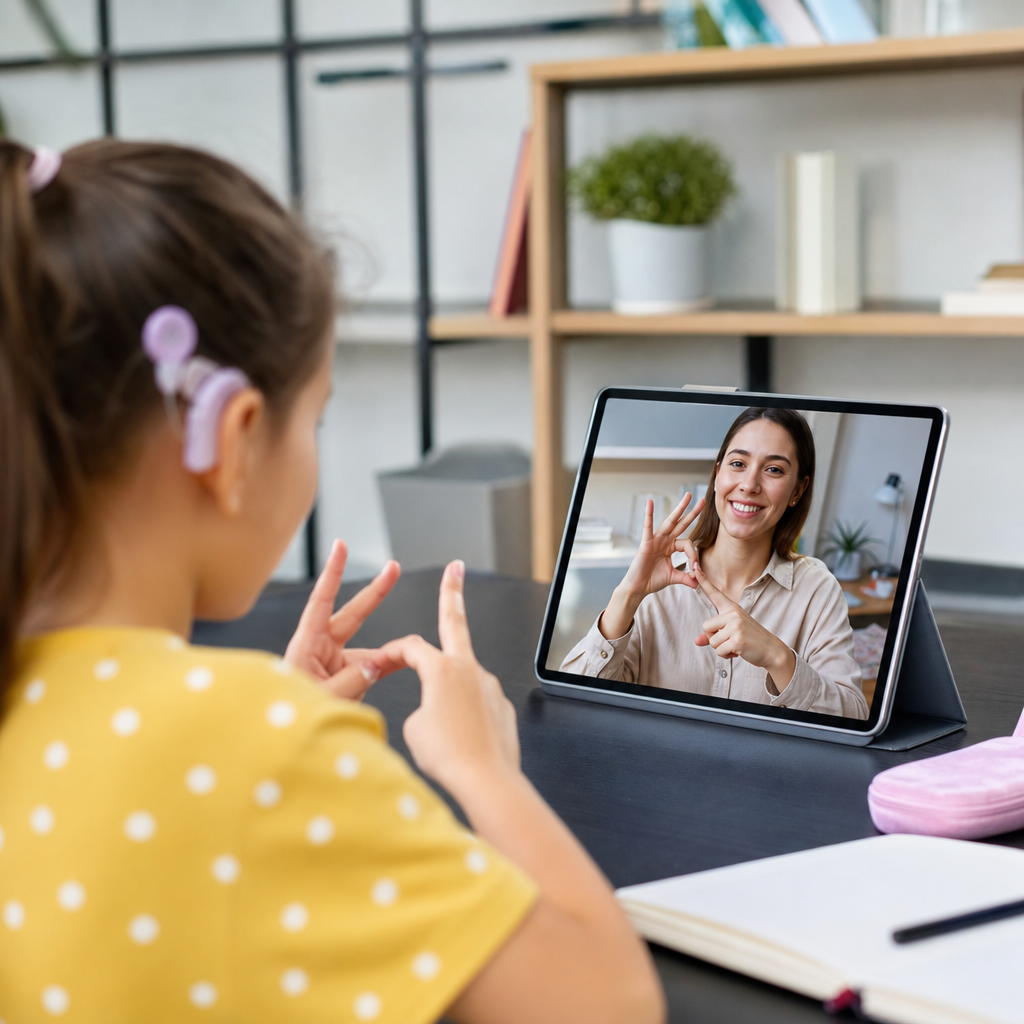
Creating an inclusive classroom for Deaf learners starts with a simple truth: access is not a bonus feature of good teaching, but the foundation of it. In schools, the term Deaf may refer to students who identify culturally and linguistically with Deaf communities, students with varying degrees of hearing loss, and students who use different communication methods, including sign language, spoken language, cued speech, or a combination. An inclusive classroom is one where these students can participate fully in instruction, discussion, assessment, and social life without constantly compensating for barriers that hearing classmates do not face.
Teaching Deaf students well matters academically, socially, and legally. When access is weak, students miss directions, side comments, peer discussion, and the background knowledge that ties lessons together. Those small gaps compound quickly. I have seen classrooms where a child appeared distracted, when the real problem was that the teacher spoke while facing the board, leaving the student with fragments instead of complete meaning. Inclusive practice fixes that by designing communication, materials, and routines so understanding does not depend on hearing alone.
This topic also matters because Deaf learners are not a single group. Some students arrive fluent in American Sign Language, British Sign Language, or another national sign language. Others use hearing aids, cochlear implants, FM or DM systems, captioning, speechreading, or interpreters. Some are deafblind and need tactile access. Some have additional learning differences that affect language development, working memory, or processing speed. Effective inclusion begins when educators stop treating deafness as one uniform need and start planning around each learner’s language, access tools, identity, and strengths.
As a hub article on teaching Deaf students, this guide covers the core components every educator should understand: communication access, classroom setup, lesson delivery, literacy, assessment, technology, collaboration with specialists and families, and school culture. Whether you teach in elementary school, secondary school, college, or adult education, the same principle applies. Students learn best when instruction is explicit, visually accessible, linguistically appropriate, and socially welcoming. The goal is not merely placement in a mainstream room. The goal is meaningful participation, strong achievement, and a classroom where Deaf learners can lead, ask, challenge, create, and belong.
Understand Deaf learners before planning instruction
The first step in creating an inclusive classroom for Deaf learners is gathering a precise learner profile. In practice, that means identifying the student’s preferred language, communication mode, amplification or assistive technology, interpreter use, caption needs, literacy level, and any additional disabilities. Review the individualized education program or equivalent support plan, but do not stop there. Those documents often list services without explaining how access actually works during fast classroom interaction. Ask direct questions: How does the student receive new vocabulary? What helps during group work? What creates fatigue? What should teachers avoid?
It is equally important to understand the difference between hearing access and language access. A student with a cochlear implant may detect sound but still miss nuance in noisy rooms. A student who speechreads well may still lose meaning when several classmates speak at once. A student who signs fluently may need direct instruction in written English because sign languages have their own grammar and structure. Inclusion improves when educators recognize that audibility, comprehension, and language development are related but not identical issues.
Deaf identity and family background also shape the classroom experience. Some students come from Deaf families and have strong early language exposure. Many others are born to hearing parents and may have experienced delayed access to language before school. That history affects vocabulary growth, background knowledge, self-advocacy, and confidence. Teachers who understand this do not mistake access gaps for lack of ability. They teach explicitly, check understanding often, and assume competence while providing the support needed to show it.
Build communication access into every part of the day
Communication access is the core of inclusive teaching for Deaf students. Start with teacher habits. Face the class when speaking, avoid talking while writing on the board, pause before giving key directions, and repeat peer comments before responding. Use clear turn-taking rules so only one person speaks at a time. In my experience, these routines improve access not only for Deaf learners but also for multilingual students and anyone who benefits from structure.
If an interpreter is present, speak directly to the student, not to the interpreter. Share lesson materials, slides, specialist vocabulary, and videos in advance so the interpreter can prepare accurate terminology. Remember that interpreted communication includes a slight processing lag. Build in wait time after asking questions, and do not move on the instant a hearing student raises a hand. When several students speak rapidly, the interpreter must prioritize clarity over speed, so the teacher’s moderation matters.
Captioning should be standard for all video and audio content. Auto-captions can help, but they are not reliable enough for high-stakes instruction without review. Specialized terms, names, equations, and accents are often transcribed poorly. For live events, use CART or another professional real-time captioning service when possible. Also provide written summaries, visual agendas, and key vocabulary lists. These supports reduce cognitive load because Deaf learners do not have to reconstruct missing pieces while also learning new content.
| Classroom area | Barrier | Inclusive fix |
|---|---|---|
| Whole-class teaching | Teacher speaks while facing away | Face students, pause, and pair speech with visuals |
| Discussion | Multiple students talk at once | Use one-speaker rules and restate comments |
| Video | No accurate captions | Use reviewed captions and provide transcripts |
| Group work | Fast overlapping conversation | Assign turn-taking roles and shared written notes |
| Assessment | Language in questions obscures content knowledge | Simplify wording without lowering rigor |
Design the physical environment for visual learning
Inclusive classrooms for Deaf learners are designed visually. Seating should allow a clear sightline to the teacher, interpreter, board, captions, and classmates. Horseshoe or semicircle arrangements often work better than rows because students can see who is speaking. Lighting matters more than many teachers realize. Avoid standing in front of bright windows, which creates backlighting and makes facial expressions, speechreading, and signs harder to see. Keep the interpreter in a consistent, visible position close to the main instructional display.
Noise control matters even when students use sign language, because many Deaf and hard of hearing learners use residual hearing, amplification, or spoken language support. Carpets, acoustic panels, tennis balls on chair legs, and closed doors can improve listening conditions. The National Deaf Children’s Society and classroom acoustics guidance commonly emphasize reducing reverberation and background noise because speech signals degrade quickly in echoing rooms. In science labs, gyms, cafeterias, and assemblies, access usually worsens, so additional planning is essential.
Visual signaling also helps. Flashing lights for alarms, visual timers, projected instructions, and written transition cues allow students to track the flow of the lesson without relying on incidental sound. During practical demonstrations, pause before beginning so all eyes are on the key action. If students must watch an experiment, a signed explanation, and written notes simultaneously, they will miss something. Sequence information carefully: explain, pause, demonstrate, then discuss.
Adapt teaching methods without lowering expectations
Strong teaching for Deaf learners is explicit, multimodal, and academically ambitious. Begin lessons with clear objectives and preteach essential vocabulary, especially in subjects dense with abstract terms such as science, mathematics, and history. Use visuals, models, anchor charts, timelines, and worked examples. In literacy lessons, connect new words to signs, pictures, morphology, and context sentences. In mathematics, make sure language does not obscure the operation being taught; terms such as product, quotient, fewer than, and at least require direct explanation.
Check understanding frequently, but do it in ways that reveal genuine comprehension. Asking, “Do you understand?” rarely produces useful information. Instead, ask students to summarize the direction, sequence the steps, identify the claim, or show the process on a mini whiteboard. This matters because Deaf learners often become skilled at appearing to follow along even when access has been partial. Immediate formative assessment helps teachers catch those gaps before they harden into larger misunderstandings.
Reading and writing instruction deserves particular attention. Many Deaf students can achieve high literacy, but progress depends on rich language exposure, explicit teaching, and consistent access. Teachers should not assume that printed English structures are naturally acquired from speech. Use direct instruction in syntax, cohesive devices, figurative language, and academic discourse. Pair reading with discussion, annotation, and background knowledge building. When students write, evaluate the target skill carefully. A science task should primarily assess scientific reasoning, not unintentionally penalize a student for language patterns that reflect sign language influence unless the objective is formal written English.
Use technology and support services effectively
Technology can transform access when it is chosen and managed well. Common supports include hearing aids, cochlear implants, FM or DM systems, sound-field systems, captioned media, speech-to-text apps, note-taking platforms, and interactive whiteboards. The key is matching the tool to the task. An FM system may work well for direct instruction but not for noisy group discussion. Live captions may support lectures but still miss subject-specific vocabulary if no glossary is provided. Tools help most when teachers test them in real classroom conditions rather than assuming setup equals success.
Support services also need coordination. Teachers of the deaf, educational audiologists, speech-language pathologists, interpreters, captioners, and special educators each address different parts of access and learning. The most effective schools schedule regular communication among them. For example, if a history teacher plans a unit on industrialization, the interpreter may need names and technical terms in advance, the teacher of the deaf may preteach vocabulary, and the speech-language pathologist may support complex narrative structures. Inclusion becomes stronger when support is integrated into instruction, not added as a last-minute fix.
Students should also be taught to manage their own access tools. That includes checking batteries, reporting microphone failures, asking for captions, requesting repeats, and choosing the best seating position. Self-advocacy is not an optional extra. It is a core educational outcome because no classroom, college seminar, or workplace will be barrier-free by accident. Students who can explain what access looks like for them are better prepared for long-term success.
Support participation, relationships, and belonging
Academic access alone does not create an inclusive classroom. Deaf learners also need full participation in peer relationships, informal discussion, and class identity. Social exclusion often happens in small moments: jokes missed during transitions, group work dominated by fast speakers, or clubs where no one thinks to add captions or interpreters. Teachers can prevent this by modeling inclusive discussion norms, assigning collaborative roles, and teaching classmates how to communicate respectfully, such as gaining attention visually, speaking one at a time, and maintaining eye contact.
Representation matters too. Include Deaf authors, scientists, artists, and leaders in the curriculum. Students should see deafness presented not only through a medical lens but also as part of language, culture, invention, and civic life. In one school I supported, staff introduced biographies of Deaf figures during literacy and social studies units, and the shift was noticeable. Deaf students saw themselves reflected in the curriculum, while hearing classmates began to view communication differences as a normal part of human diversity rather than as a problem to solve.
Families are essential partners. Some want strong sign language support, others prioritize spoken language development, and many want both. Teachers should communicate clearly about classroom expectations, access methods, progress, and challenges without assuming every family has the same background knowledge about deaf education. When schools provide interpreters for meetings, share visual examples of classroom routines, and explain why specific accommodations are used, family trust grows and student outcomes usually improve.
Assess fairly and improve practice continuously
Fair assessment for Deaf learners measures the intended knowledge or skill, not avoidable barriers in language access. Review test directions, item wording, audio requirements, and timing. If a listening task is central to the standard, document that clearly; if it is not, replace it with an accessible equivalent. For content-area assessments, simplify unnecessary linguistic complexity while preserving academic rigor. Many teachers discover that what looked like a content weakness was actually a vocabulary or syntax barrier.
Progress monitoring should combine data sources: classroom work, reading samples, language observations, assessment results, and student feedback. Ask students which strategies help them most and where they still miss information. That feedback is often more actionable than generic accommodation lists. Inclusion is not a one-time setup. It is an iterative process of planning, observing, adjusting, and collaborating. Teachers who do this consistently create classrooms where Deaf learners are not merely present, but genuinely able to thrive.
Creating an inclusive classroom for Deaf learners requires more than goodwill. It requires deliberate design, strong communication practices, accessible materials, coordinated services, and a belief that Deaf students belong in rigorous learning environments. The central lesson is straightforward: when language and communication are fully accessible, students can show their real abilities. When access is partial, even talented learners are forced to spend energy decoding the classroom instead of engaging with ideas.
The most effective approach is to think holistically. Know each student’s language and technology profile. Build visual clarity into the room. Caption media, plan interpreter access, and structure discussion so information is not lost in overlap. Teach vocabulary, reading, and writing explicitly. Review assessments for hidden language barriers. Support friendships, identity, and self-advocacy with the same seriousness given to grades. These practices strengthen learning for Deaf students and often improve teaching quality for the whole class.
As a hub for teaching Deaf students, this article provides the foundation for every related topic, from classroom accommodations and literacy strategies to assistive technology and collaboration with families. Use it as a checklist for your current practice, identify one barrier you can remove this week, and build from there. Inclusion becomes real through consistent decisions made lesson by lesson, conversation by conversation, until access is no longer exceptional, but standard.
Frequently Asked Questions
What does an inclusive classroom for Deaf learners actually look like in practice?
An inclusive classroom for Deaf learners is one where communication access is built into everyday teaching, not added only when problems arise. In practice, this means the student can follow instruction, participate in discussions, access peer interaction, and demonstrate learning without constantly working around barriers. An inclusive environment considers seating, lighting, visual access, classroom acoustics, pacing, technology, and communication supports from the start. For example, the teacher faces the class when speaking, avoids talking while writing on the board, shares key instructions in written and visual formats, and makes sure interpreters, captioning, or assistive listening tools are available when needed.
It also means recognizing that Deaf learners are not a single group with identical needs. Some students use American Sign Language or another signed language, some rely on spoken language, some use hearing technology, and others use a combination of methods depending on the situation. A truly inclusive classroom responds to the individual student rather than making assumptions based on hearing level alone. The goal is full participation: the student should be able to engage academically, socially, and emotionally with the same sense of belonging and respect as any other learner.
How can teachers communicate effectively with Deaf students if they use different communication methods?
The most effective starting point is to ask and learn how each student prefers to communicate. Deaf learners may use sign language, spoken language, lip-reading, cued speech, written supports, visual aids, or a mix of approaches. Teachers should collaborate with the student, family, interpreters, teachers of the deaf, and support staff to understand what works best in class discussions, small-group work, assessments, and informal interactions. This avoids the common mistake of assuming one accommodation will meet every need across every setting.
Effective communication also depends on classroom habits. Speak clearly at a natural pace, face the student, and avoid covering your mouth. Provide written agendas, vocabulary lists, discussion prompts, and step-by-step instructions. Use visuals consistently, including slides, diagrams, anchor charts, and live captions when available. During class discussion, establish turn-taking so only one person speaks at a time and identify speakers clearly. If an interpreter is present, speak directly to the student, not to the interpreter. These practices improve access not only for Deaf learners, but for multilingual students, students with language-processing differences, and the class as a whole.
What are the most important classroom accommodations for Deaf learners?
The most important accommodations are the ones that remove communication barriers and allow the student to fully access instruction. These may include qualified sign language interpreters, real-time captioning, note-taking support, visual alerts, preferential seating, hearing assistive technology such as FM or DM systems, captioned videos, and written summaries of lessons. Teachers should also think about environmental supports, such as reducing background noise, improving lighting, and arranging seating so the student can see the teacher, interpreter, and classmates easily. Small changes in setup can have a major effect on comprehension and participation.
Just as important, accommodations should be used consistently and evaluated regularly. A support that works during direct instruction may not be enough during science labs, group projects, assemblies, or field trips. Teachers should review whether the student is actually receiving timely, accurate access to content and peer interaction. Inclusion is not achieved by checking off a list of services; it requires attention to how the student experiences the school day in real time. When accommodations are thoughtful, individualized, and consistently implemented, Deaf learners are far better positioned to succeed academically and socially.
How can teachers make class discussions and group work more inclusive for Deaf students?
Class discussions and collaborative activities can be especially challenging when many people are talking quickly, interrupting one another, or shifting attention around the room. To make these moments more inclusive, teachers should create clear discussion routines. Encourage students to raise hands or use an agreed signal before speaking, identify the speaker, and pause long enough for interpreting or captioning to keep up. In group work, assign roles, provide written goals, and make sure the Deaf student can visually access all members of the group. Circular or semicircular seating arrangements are often much better than rows for supporting interaction.
Teachers should also teach hearing peers how to communicate respectfully and effectively. That includes looking at the Deaf student while speaking, not talking over others, repeating or rephrasing comments when needed, and being patient with natural timing differences in interpreted or captioned communication. Inclusion is strengthened when classmates understand that access benefits everyone and that communication is a shared responsibility. With strong norms and intentional planning, Deaf students can take leadership roles, contribute ideas confidently, and build meaningful peer relationships instead of being left at the margins of conversation.
Why is cultural awareness important when creating an inclusive classroom for Deaf learners?
Cultural awareness matters because many Deaf students do not view deafness only as a medical condition or disability, but also as part of a rich linguistic and cultural identity. For students who identify with Deaf communities, sign language, shared social experiences, and Deaf cultural values may be central to who they are. Teachers who understand this are better able to create respectful learning spaces. That includes using identity-affirming language, avoiding deficit-based assumptions, and recognizing that Deaf students bring valuable perspectives, not just support needs, into the classroom.
In practical terms, cultural awareness can shape curriculum, relationships, and expectations. Teachers can include Deaf authors, professionals, historical figures, and community perspectives in classroom materials. They can model respect for signed languages as complete languages, not lesser substitutes for speech. They can also avoid treating the Deaf student as a spokesperson for all Deaf people, while still welcoming their voice if they want to share their experience. When a classroom honors both access and identity, Deaf learners are more likely to feel safe, understood, and empowered to participate fully. That is the heart of real inclusion: not just being present in the room, but being recognized as a full member of the learning community.