
Technology tools for deaf students in education have moved from niche accommodations to core infrastructure for accessible learning, and schools that understand this shift build classrooms where deaf and hard of hearing learners can participate fully, demonstrate knowledge accurately, and progress with far fewer avoidable barriers. In education accessibility, “deaf students” includes learners who use sign language, spoken language, cochlear implants, hearing aids, captioning, or a mix of communication approaches. “Technology tools” covers hardware, software, platforms, and classroom systems that improve access to instruction, discussion, assessment, and campus life. This topic matters because access is not the same as placement. A student can sit in a general education classroom and still miss rapid discussion, multimedia content, side comments, safety announcements, and feedback unless the learning environment is intentionally designed. I have seen schools invest heavily in devices yet overlook basics such as microphone discipline, caption quality, interpreter visibility, and note-sharing workflows. The result is inconsistent access. When education teams choose the right tools and use them well, deaf students gain clearer language input, stronger independence, better social connection, and more accurate opportunities to show what they know across K–12 and higher education settings.
Core classroom access tools that make instruction understandable
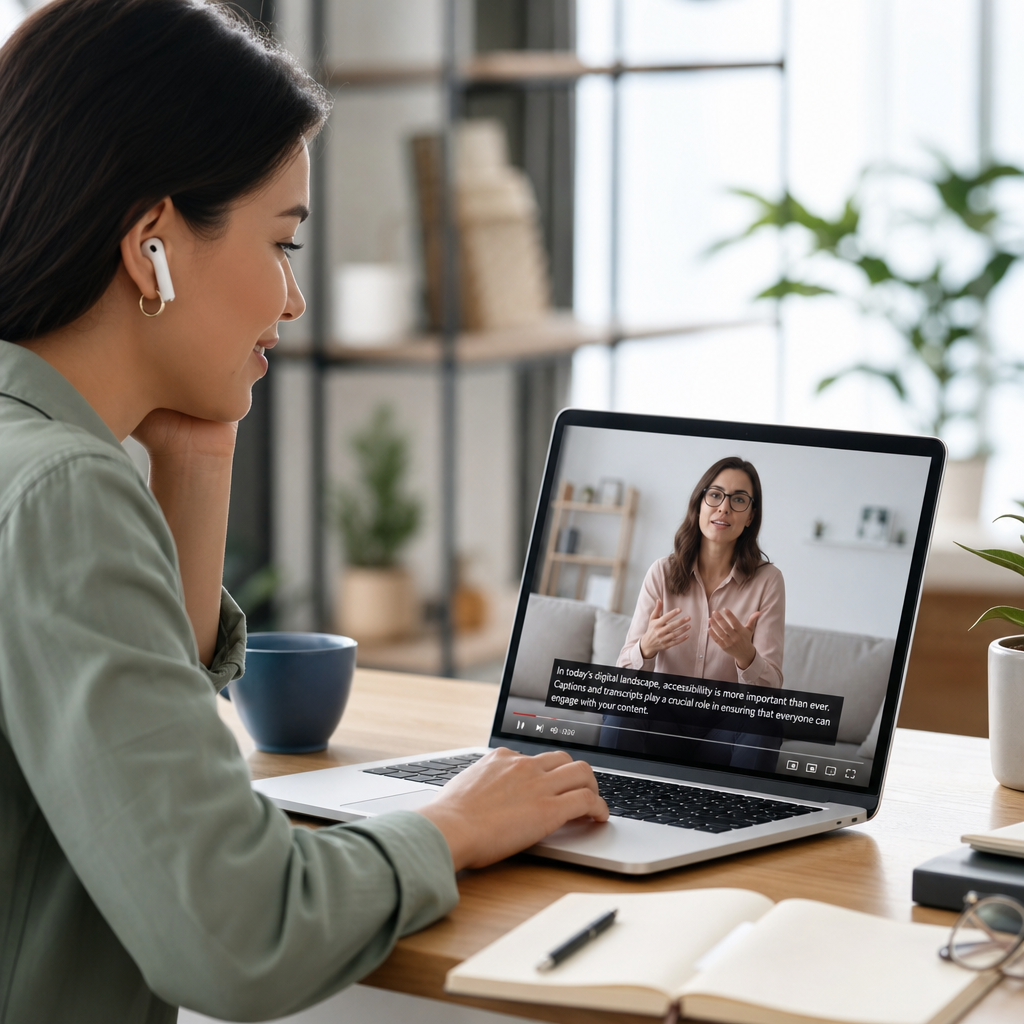
The first priority in education accessibility is direct access to teacher talk, peer discussion, and instructional media. For many deaf students, that starts with captioning. High-quality captions convert spoken language into readable text in real time or after recording. In live settings, schools use CART, Communication Access Realtime Translation, or automatic speech recognition tools built into platforms such as Google Meet, Microsoft Teams, Zoom, and PowerPoint Live. CART generally delivers higher accuracy, especially for technical vocabulary, fast speech, and multiple speakers. Automatic captions are improving quickly, but they still struggle with names, accents, overlapping speech, and classroom noise. In practice, I advise schools to use human captioning for lectures, assemblies, IEP meetings, and high-stakes content, then use automatic captions as a secondary support or interim layer.
Classroom audio distribution also matters, even for students with residual hearing. Remote microphone systems, often called FM or DM systems, send a teacher’s voice directly to hearing aids or cochlear implant processors. Brands such as Phonak Roger and Oticon EduMic are common because they reduce the effects of distance, reverberation, and background noise. A teacher may sound clear at six feet and unintelligible at twenty feet; a remote microphone narrows that gap. These systems work best when every speaker uses the microphone or passes a student mic during discussion. Without that habit, access breaks down during exactly the moments when collaborative learning is supposed to happen.
Visual presentation tools are equally important. Interactive whiteboards, shared digital slides, and live note displays give deaf students another route into classroom content. If the teacher speaks while facing the board, lipreading becomes impossible, so mirrored notes and posted outlines help preserve meaning. Video content must include accurate captions, and signed educational media from sources such as PBS LearningMedia or specialized deaf education libraries can be valuable when sign language is the student’s primary language. Simple choices improve access immediately: face the class when speaking, repeat peer comments, provide keywords in advance, and ensure interpreters or caption feeds are visible without forcing the student to choose between the board and the access service.
Communication and language tools beyond the lecture
Education accessibility is broader than hearing a lecture. Deaf students need smooth communication during group work, office hours, hallway interactions, counseling sessions, and extracurricular activities. Speech-to-text apps such as Ava, Live Transcribe on Android, and built-in transcription on iOS can support spontaneous conversation. These tools are not perfect, but in one-on-one situations they often bridge quick exchanges effectively. I have seen them help during science labs, library visits, and after-school advising, where arranging a full interpreting service for every short interaction may not be practical. However, schools should never treat these apps as a complete replacement for interpreters or CART when a student needs those services under an accommodation plan.
For students who use sign language, video relay and video remote interpreting can expand access to communication with staff and family members. Video relay services allow signed phone calls through an interpreter, while video remote interpreting connects users with interpreters through a device when an onsite interpreter is unavailable. Both can be useful, but reliable internet, camera placement, and screen size determine whether the interaction is actually accessible. A small tablet across a crowded room is rarely enough. The image must be large, stable, and well lit so the student can catch fingerspelling, facial grammar, and rapid turn-taking.
Language access also depends on literacy supports and bilingual design. Many deaf students navigate both a signed language and written English, and technology can help bridge them. Digital glossaries with images, plain-language definitions, and teacher-recorded explanation videos reduce vocabulary barriers in subjects such as biology, algebra, and civics. Learning management systems like Canvas, Moodle, and Google Classroom can house these resources consistently so students do not depend on memory alone. Clear structure matters: assignment instructions should be chunked, dated, and paired with examples. Accessibility improves when communication is stored, searchable, and reviewable instead of delivered once and then lost.
Learning platforms, note-taking, and assessment supports
Accessible education depends on systems, not isolated tools. Learning platforms should make every lesson easier to preview, follow, and review. A strong setup includes captioned recordings, downloadable slides, transcripts, visual rubrics, assignment checklists, and shared notes. Note-taking is a major issue because deaf students often split attention among the teacher, interpreter, captions, slides, and classmates. In many schools, a peer note-taker or paid note-taking service still helps, but digital workflows have improved the process. Shared documents in Google Docs, OneNote Class Notebook, and Microsoft OneDrive let teachers post guided notes before class and fill them in during instruction. This reduces the impossible demand that students read captions or watch an interpreter and take complete notes at the same time.
Assessment tools also need review. Timed listening tasks, oral directions given without text backup, and video questions without captions create invalid results because they measure access barriers rather than subject mastery. Accessible assessment means providing written directions, captioned multimedia, interpreter-friendly timing, and quiet rooms with proper device setup. Some students need test content signed; others need clarification protocols to ensure wording is understood without changing what is being measured. In college settings, disability service offices often coordinate these adjustments, but K–12 teachers make daily decisions that matter just as much. A quick quiz projected with spoken instructions only can disadvantage a deaf student even when formal accommodations exist.
Teachers should also understand analytics within digital platforms. If a deaf student repeatedly replays a lecture clip, misses discussion board deadlines, or opens assignment pages far more often than peers, that pattern may signal access friction rather than poor motivation. Reviewing platform data alongside student feedback can reveal whether captions are inaccurate, instructions are too language-dense, or live sessions move faster than the access tools can support. Good education accessibility includes continuous troubleshooting, not a one-time device purchase.
Choosing the right tools for different educational settings
No single technology works for every deaf student, because hearing levels, language background, age, classroom demands, and personal preference differ widely. Tool selection should match the learner and the environment. In early childhood programs, visual schedules, captioned story videos, classroom soundfield systems, and family communication apps can be more useful than advanced transcription software. In elementary settings, teachers often need simple, repeatable tools: remote microphones, shared visual instructions, and recorded mini-lessons with captions. Middle school introduces faster transitions and more group discussion, so portable captioning, collaborative note systems, and clear notification tools become more important. In high school and college, students benefit from stronger self-advocacy features, including accommodation portals, recording access, interpreter scheduling systems, and lecture capture platforms.
| Educational setting | Most effective tools | Main reason they help |
|---|---|---|
| Early childhood | Visual schedules, captioned story media, soundfield systems | Builds routine, language exposure, and attention to visual cues |
| Elementary school | Remote microphones, guided notes, captioned videos | Improves direct instruction access and reduces missed directions |
| Middle school | Speech-to-text apps, LMS checklists, shared documents | Supports fast transitions, group work, and independent review |
| High school | CART, lecture capture, accommodation dashboards | Handles advanced content, varied teachers, and self-management |
| Higher education | Interpreter scheduling, captioned recordings, transcript archives | Supports complex lectures, office hours, and independent study |
Budget, staff skill, and infrastructure also shape decisions. A school with weak Wi-Fi may struggle with cloud-based captioning. A district may own remote microphone systems but fail to train substitute teachers. A university may provide captions for lectures but not for student-made presentation videos posted later in the course. The right question is not “What is the best tool?” but “What combination of tools reliably delivers access in this context?” That practical framing usually leads to better outcomes.
Implementation, training, and common mistakes schools should avoid
Technology tools succeed only when implementation is disciplined. The most common failure I see is assuming access is automatic once equipment has been purchased. In reality, every tool has operational requirements. Microphones must be charged, paired, and worn correctly. Captions must be turned on before instruction starts. Video content must be checked for accuracy before class, not while students wait. Interpreters need sightlines to the teacher, slides, and students. Teachers need to repeat comments from the back of the room and avoid speaking while covering their mouths or walking away. These are not minor details; they determine whether the accommodation works.
Training should include teachers, paraprofessionals, IT teams, disability service staff, and the students themselves. Deaf students should know what each tool can and cannot do, how to report breakdowns quickly, and how to request adjustments without stigma. Staff should understand legal and practical standards under laws such as the Americans with Disabilities Act, Section 504, and the Individuals with Disabilities Education Act in the United States. Those laws do not prescribe one product, but they do require effective communication and appropriate access. Schools should document workflows for live captioning requests, accessible event planning, emergency messaging, and substitute teacher coverage.
Another mistake is treating all deaf students as one group. A student who relies on spoken English through cochlear implants may prioritize remote microphones and clear acoustics. A student whose strongest language is American Sign Language may need interpreting, signed media, and visual pacing that allows attention shifts. Some students want every video captioned but do not use hearing devices. Others use hearing technology successfully in quiet rooms but need text support in seminars or labs. Education accessibility improves when schools ask direct questions, test tools in real conditions, and revisit plans as coursework changes.
Building an inclusive education accessibility strategy that lasts
The most effective schools treat technology tools for deaf students as part of a wider education accessibility strategy rather than a narrow special service. That means accessible procurement, platform standards, course design rules, and accountability. When districts buy new classroom software, caption support, transcript export, and keyboard navigation should be part of the purchasing checklist. When universities create online modules, captioning and transcript review should be built into production timelines. When faculty receive teaching evaluations, accessibility practices should be included alongside course organization and communication. These choices turn access from an exception into a standard operating expectation.
Hub-level planning also means connecting related topics: accessible classroom acoustics, inclusive video production, universal design for learning, interpreter coordination, disability documentation, and emergency communication. Schools that link these areas usually spend money more efficiently because they solve root problems rather than patching symptoms. For example, better lecture capture with searchable transcripts helps deaf students, multilingual learners, students with attention differences, and any student reviewing difficult material before an exam. Better captioning policies improve not only instruction but also orientation videos, parent communication, career services, and campus events. Accessibility scales when it is treated as academic quality.
Technology tools for deaf students in education work best when schools focus on reliable communication, not gadgets. The essentials are clear: provide accurate captions, support sign language and spoken language needs, use remote microphones where appropriate, structure learning platforms so materials are reviewable, and train staff to use every tool consistently. Match tools to the student, the task, and the setting. Check what happens during real lessons, not just demonstrations. Most important, involve deaf students in every decision because they know where access actually breaks. If you are building an education accessibility plan, audit one course, one platform, and one classroom workflow this week, then improve the barriers you can measure first.
Frequently Asked Questions
What are the most important technology tools for deaf students in education today?
The most important technology tools for deaf and hard of hearing students are the ones that improve access to instruction in real time, support clear communication, and reduce the amount of energy students must spend trying to follow what is happening in class. In practice, that usually includes live captioning tools, CART or professional real-time transcription services, FM or DM systems that send a teacher’s voice directly to a student’s hearing device, video relay and video remote interpreting platforms, visual alert systems, speech-to-text apps, captioned video platforms, and learning software designed with accessibility in mind. For students who use sign language, access to qualified interpreters and high-quality video tools can be just as essential as any hardware device. For students who use spoken language, hearing aids, cochlear implants, and classroom audio distribution systems may be central to daily learning.
It is also important to understand that there is no single “best” tool for every deaf student. Some learners depend primarily on American Sign Language or another signed language, while others use listening and spoken language, captioning, or a combination of supports. A student may benefit from captioning during whole-group instruction, an FM or DM system during lectures, a note-taking tool during discussions, and a visual alert system for announcements or alarms. The strongest educational technology plans are flexible, individualized, and tied to the student’s actual communication preferences, academic demands, and classroom environment rather than assumptions about deafness. When schools treat these tools as essential instructional infrastructure instead of optional add-ons, access improves across the entire learning experience.
How do captioning and transcription tools help deaf students succeed in the classroom?
Captioning and transcription tools help deaf students by turning spoken information into readable text, which makes classroom instruction, discussions, videos, and announcements more accessible. This matters because so much teaching still happens through speech: lectures, side comments from teachers, class discussions, peer presentations, recorded lessons, and multimedia content. Without reliable text access, students can miss key information, especially when multiple people are talking, the speaker is moving around the room, audio quality is poor, or specialized vocabulary is being used. Real-time captions and transcription services give students a way to follow content as it happens rather than trying to reconstruct meaning afterward.
These tools also support accuracy, independence, and stronger academic performance. When a student can read what is being said, they are more likely to catch directions, participate in discussions, take accurate notes, and retain new vocabulary and concepts. Captions are especially valuable in subjects with dense language demands such as science, social studies, and literature. They also help when teachers use prerecorded videos, since videos without quality captions can create immediate barriers. It is worth noting, however, that not all captioning is equal. Auto-generated captions can be helpful, but they often make mistakes with names, technical terms, fast speech, and overlapping conversation. For high-stakes instruction, assessments, and complex classroom communication, schools should prioritize high-accuracy captioning, review edited captions on instructional videos, and make sure text access is integrated into daily teaching rather than used only when problems arise.
How do hearing aids, cochlear implants, and classroom audio systems fit into educational accessibility?
Hearing aids and cochlear implants can be powerful tools, but in education they should be viewed as part of a broader access system rather than a complete solution by themselves. These devices may help students detect and process sound, but they do not remove all barriers in a typical classroom. Background noise, distance from the teacher, reverberation, multiple speakers, masks, poor acoustics, and rapid discussion can still make spoken information hard to access. That is why classroom audio technologies such as FM or DM systems are so important. These systems transmit the teacher’s voice directly to the student’s hearing device, improving the signal-to-noise ratio and making speech clearer than it would be through room sound alone.
Educational accessibility works best when schools understand both the strengths and limitations of auditory technology. A student may hear better with hearing aids or a cochlear implant and still need captions, preferential seating, visual supports, note-taking assistance, or interpreting services. Teachers should also recognize that listening fatigue is real. Deaf and hard of hearing students who rely heavily on auditory access often spend significant mental energy trying to track speech, especially over a full school day. By pairing hearing technology with captioning, visual materials, written instructions, and well-managed classroom acoustics, schools create a learning environment where students can focus more on understanding and less on constantly trying to catch what was said. In other words, hearing technology supports access, but accessibility is achieved through layered design.
What should schools consider when choosing technology tools for deaf and hard of hearing students?
Schools should start by recognizing that accessibility decisions must be student-centered, not product-centered. The first question is not “What device should we buy?” but “How does this student best access communication, instruction, and assessment throughout the day?” That means considering the student’s language use, communication preferences, age, grade level, hearing profile, learning environment, and the demands of specific classes. A student in a lecture-heavy high school setting may need different supports than a young child in an interactive elementary classroom. The school should also consider whether the student needs access during group work, assemblies, online learning, field trips, extracurricular activities, and emergency situations, not just during direct teacher instruction.
Beyond individual fit, schools should evaluate reliability, ease of use, compatibility with existing devices, training needs, privacy and security, and whether staff can implement the tool consistently. Even strong technology can fail if teachers do not know how to use microphones correctly, upload captioned materials, face the class when speaking, or troubleshoot common issues. Collaboration matters here. The best decisions usually involve the student, family, teachers, deaf educators, interpreters, audiologists, speech-language professionals when appropriate, and special education or accessibility staff. Schools should also review whether a tool actually improves access in practice by collecting feedback and adjusting supports over time. Effective accessibility is not a one-time purchase; it is an ongoing process of matching tools, instruction, and communication supports to real educational needs.
Can technology replace interpreters, teachers of the deaf, or other human support services?
Technology can significantly improve access, but it does not fully replace qualified human support services. Interpreters, teachers of the deaf, educational audiologists, captioners, and other specialists bring judgment, language fluency, instructional understanding, and contextual awareness that technology alone cannot consistently provide. For example, live captioning software may struggle with overlapping speech, subject-specific terminology, or fast-paced classroom interaction. Automated tools also do not advocate for the student, explain communication breakdowns, or adapt support strategies in the same way a trained professional can. Likewise, interpreters do far more than convert words from one language to another; they manage meaning, timing, classroom dynamics, and access to nuance in ways software cannot reliably replicate.
The most effective approach is usually a combination of human expertise and well-chosen technology. A student may use an interpreter during instruction, captions for videos, a visual alert system for announcements, and an FM or DM system in certain settings. Another student may rely on spoken language support, assistive listening technology, and transcription tools with occasional specialist input. Technology should be seen as a force multiplier that strengthens access, not as a shortcut that removes essential support. When schools try to replace human services solely to save money or simplify logistics, students often experience gaps in comprehension, participation, and academic performance. When schools combine technology with qualified professionals and inclusive teaching practices, deaf and hard of hearing learners are far more likely to participate fully, show what they know accurately, and move through school with fewer preventable barriers.