Planning deaf-friendly events starts with a simple principle: access must be designed in from the beginning, not patched in after tickets go on sale. In the context of public spaces and events, deaf-friendly means people who are Deaf, deaf, hard of hearing, late-deafened, or using different communication methods can participate with equal comfort, safety, and dignity. That includes language access, visual communication, acoustics, sightlines, registration systems, emergency procedures, and staff behavior. I have worked on conferences, community festivals, museum programs, and civic meetings where accessibility succeeded because it was treated as an operational requirement, not a special request. This matters for legal compliance, reputation, and attendance, but more importantly it shapes whether people feel welcome enough to return. A truly inclusive event removes avoidable barriers before guests encounter them. That is the standard this guide uses.
Public spaces and events create a unique accessibility challenge because they combine movement, crowds, information sharing, and time pressure. A deaf-friendly venue is not only one with an interpreter on stage. It is a place where announcements can be read, questions can be asked without hearing advantage, wayfinding is clear, lighting supports visual communication, and support staff know what to do when a guest says, “I missed that.” This hub article covers the full planning process for public-facing events, from choosing a venue to publishing post-event recordings. It also connects the larger Accessibility and Inclusion topic to practical event operations. If you organize conferences, performances, classes, exhibitions, markets, hearings, or celebrations, these standards will help you design an experience that works better for everyone.
Understand the audience, communication needs, and event format
The first planning task is identifying who will attend and how information will be exchanged during the event. Deaf attendees are not a single group. Some use sign language as their primary language. Some rely on speechreading, assisted listening, captioning, note-taking, or text-based communication. Some communicate bilingually across sign, spoken, and written language. Because of that range, event planning should start with an access intake process. Registration forms should ask what accommodations are needed, using specific options such as sign language interpretation, real-time captioning, reserved sightline seating, written materials in advance, hearing loop availability, and text-only contact support. Leave open text fields because listed options never cover every need.
Event format changes the access plan. A keynote in a dark auditorium needs different controls than a networking reception or outdoor festival. Panel discussions create turn-taking and crosstalk issues; workshops require visible facilitators and writable surfaces; performances may need creative caption placement; public meetings require accessible audience participation methods. I learned early that the biggest planning mistake is assuming one service solves everything. Interpreters are essential in many settings, but if the room lighting is poor, stage blocking is careless, and last-minute announcements are spoken only over a PA system, access still fails. Build the plan around the actual communication moments attendees will face: check-in, navigation, session content, Q&A, breaks, social interaction, vendor conversations, and emergency updates.
Choose venues that support visual access and predictable movement
Venue selection determines whether accessibility work is easy or expensive. For deaf-friendly events, prioritize spaces with strong sightlines, even lighting, low visual clutter around speakers, readable digital displays, and clear circulation paths. Circular or fan-shaped seating often supports visual communication better than long banquet rows because attendees can see speakers, interpreters, and each other. Avoid rooms where presenters stand in front of bright windows, because backlighting makes speechreading and sign language harder. For stages, ensure there is space for interpreters near the speaker, not hidden off to the side. For standing events, create quieter, well-lit conversation zones with seating so people can communicate without constant interruption.
Public spaces also need visible wayfinding. Use large, high-contrast directional signs at every decision point: entrance, registration, restrooms, session rooms, exits, captioned viewing areas, sensory break spaces, and help desks. Digital signage should repeat spoken announcements such as schedule changes or room moves. If the venue has an assistive listening system, confirm compatibility and coverage. Hearing loops are often the simplest option for telecoil users, while FM and infrared systems require device distribution and collection workflows. Ask the venue for technical specifications in writing and test them before event day. Many venues list accessibility features broadly, but I have repeatedly found loops disconnected, microphones routed incorrectly, and display monitors unreadable from audience seating. Verification is nonnegotiable.
Provide layered communication access, not a single accommodation
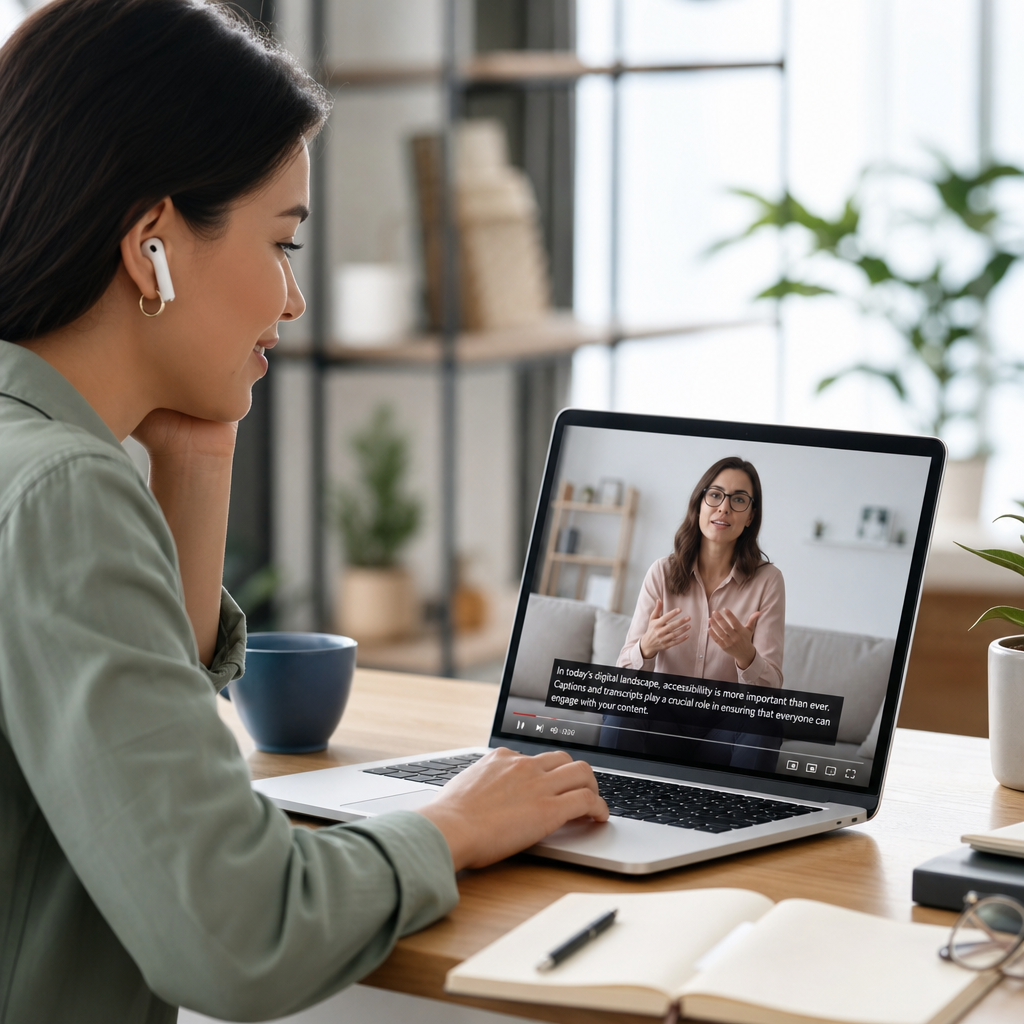
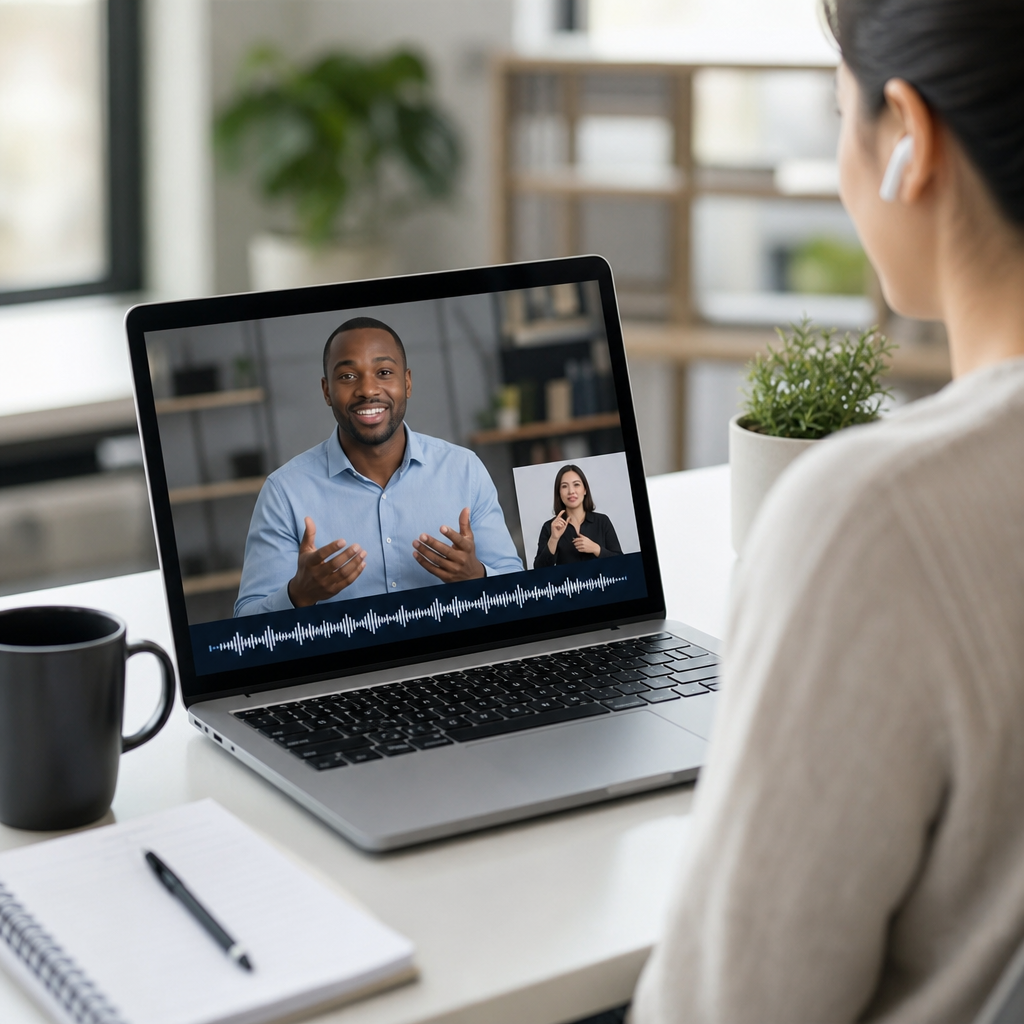
Effective deaf-friendly event planning uses multiple communication channels at once. The standard package for many public events should include professional sign language interpretation when requested or when audience composition indicates likely need, real-time captioning for spoken content, visual presentation support, and written summaries for key logistics. Real-time captioning, often delivered through CART, is especially valuable because it serves deaf and hard of hearing attendees, nonnative speakers, people in noisy environments, and those processing technical vocabulary. Captions should be visible in-room on a large display and, when possible, on personal devices through a secure link. Do not rely on auto-captioning for high-stakes live events such as legal proceedings, medical talks, or policy forums.
Match communication access to the event type and risk level. For a city council hearing, public comments, names, agenda items, and votes must all be visible in text. For a museum tour, guides should use portable microphones connected to listening systems and pause in well-lit positions for interpretation. For a concert or theater event, caption design needs rehearsal because timing, placement, and readability affect comprehension. For conferences, publish session materials early so interpreters and captioners can prepare terminology. If speakers use acronyms, names, or industry jargon, send glossaries in advance. Access quality improves dramatically when language professionals can study the content rather than decode it live with no context.
| Event element | Recommended access support | Why it matters |
|---|---|---|
| Main stage presentations | Interpreters, CART, large caption display, strong lighting | Supports sign users, caption users, and speechreading |
| Panels and Q&A | Moderated turn-taking, roving microphones, live captions | Reduces crosstalk and makes audience questions visible |
| Networking areas | Quiet zones, round tables, text contact options | Improves face-to-face communication in social settings |
| Outdoor events | Mobile screens, visual alerts, written schedules | Compensates for variable sound and dispersed crowds |
| Emergency announcements | Screen alerts, strobes where appropriate, trained staff | Ensures urgent information is not audio-only |
Design registration, ticketing, and pre-event communication for clarity
Accessibility begins before anyone arrives. Registration pages should describe available accommodations in plain language, explain deadlines for requests, and provide a direct text-based contact method such as email, SMS, or web form. Avoid “call for assistance” as the only option. Include exact details: whether interpretation is available for all plenaries or by request, whether CART will be projected on screens, whether assistive listening devices require ID pickup, and whether post-event recordings will include captions. This information helps people decide whether the event is workable. Ambiguous accessibility statements create uncertainty, and uncertainty depresses attendance.
Confirmation emails should repeat logistics in writing: check-in location, session times, maps, transportation details, emergency contact methods, and links to agendas or slides. If attendees request accommodations, confirm them individually rather than sending generic assurances. I recommend maintaining an access run sheet that assigns each accommodation to a staff owner, vendor, and backup plan. For example, if an interpreter is delayed, who informs the attendee, who adjusts the schedule, and who updates the front desk? Public event teams often handle AV cues with precision but leave accommodation fulfillment informal. That imbalance creates preventable failures. Accessibility requests should sit in the same planning system as catering, security, and speaker management because they are core event operations.
Train staff to communicate visibly, respectfully, and without guesswork
Staff preparation often determines whether access features actually work. Every frontline worker should know how to greet deaf attendees, how to get attention appropriately, where visual information is posted, how to connect someone with an interpreter or device, and how to avoid common mistakes. Good practice is simple: face the person when speaking, keep hands away from your mouth, use normal pacing, confirm understanding, and switch to writing or typing when needed. Bad practice includes shouting, talking while turning away, pointing vaguely toward the stage, or insisting that a companion answer instead. These errors are common at check-in desks, security lines, and concession points.
Build scenario-based training into event rehearsals. Ask staff to practice what happens when a session room changes, when a caption screen fails, when a deaf attendee asks a vendor a question in a loud hall, or when an evacuation order is issued. Assign accessibility captains for each zone with authority to solve problems quickly. If volunteers are involved, give them concise job aids with maps, icon explanations, and text templates for common questions. Staff should also understand cultural nuance. Not every deaf person wants the same approach, and assumptions can be patronizing. The correct response is to ask, “How can I best communicate with you right now?” then follow that lead. Respectful flexibility beats scripted certainty.
Make programming, staging, and audience participation fully visible
Once guests are inside, programming decisions shape whether they can participate equally. Speakers should use microphones consistently because captions and listening systems depend on clean audio input. Moderators must manage turn-taking, repeat audience questions, identify speakers by name, and stop side conversations. Presenters should describe visual content briefly, avoid speaking while facing slides, and pause for interpretation where needed. If videos are shown, they must have accurate captions burned in or enabled through the playback system. Check this during technical rehearsal. I have seen major events advertise accessibility, then play uncaptioned sponsor reels because no one verified media assets in advance.
Audience participation needs visual structure. For Q&A, use microphones for every question, display questions submitted by text, and ensure interpreters can see both audience and presenters. For workshops, arrange seating so participants can see one another. For awards, ceremonies, and public announcements, display names and outcomes on screens instead of speaking them once and moving on. Social programming deserves the same attention. Trivia nights, tours, fairs, and receptions often exclude deaf guests through fast verbal instructions and poor lighting. A deaf-friendly event writes rules on screens, keeps hosts visible, and creates interaction formats that do not reward only the quickest listener in the room.
Plan safety, emergencies, and post-event access as part of inclusion
Emergency communication is one of the clearest tests of whether an event is genuinely accessible. Audio alarms alone are not enough in public event settings. Coordinate with the venue on visual alarms where installed, screen-based emergency messages, staff runner procedures, and designated support roles for guiding attendees who may miss spoken instructions. Printed emergency cards in seat pockets or welcome packets can help in conference settings. For outdoor events, use large LED boards, app notifications, and trained zone staff to relay urgent updates. Emergency planning should cover severe weather, evacuation, medical incidents, and lost-child procedures. If your plan assumes everyone can hear a shouted instruction, it is incomplete.
Inclusion also continues after the event ends. Post-event recordings should include accurate captions, and any transcripts should be edited for readability before publication. Share slides, handouts, and key decisions in writing, especially for civic or educational events where attendees may need to revisit details. Review feedback specifically from deaf and hard of hearing participants, not only overall satisfaction scores. The strongest event teams treat each program as a learning cycle. Track accommodation requests, no-show rates, device usage, caption quality issues, and staff response times. Over time, these data points help you budget more accurately and standardize access instead of rebuilding it each time. If you want your public spaces and events to be truly inclusive, start every planning process with communication access, verify every promise operationally, and keep improving with each event.
Frequently Asked Questions
What does it actually mean for an event to be deaf-friendly?
A deaf-friendly event is one where access is built into the planning process from the start so Deaf, deaf, hard of hearing, and late-deafened attendees can participate fully, safely, and comfortably. It goes far beyond adding a single accommodation at the last minute. In practice, it means thinking through how people will receive information before, during, and after the event. That includes clear registration forms that ask about communication preferences, qualified sign language interpreters when needed, real-time captioning, strong visual wayfinding, readable schedules, good lighting, uncluttered sightlines, and emergency procedures that do not rely only on sound. It also means recognizing that not all deaf or hard of hearing people communicate in the same way. Some attendees may use sign language, some may rely on captioning, some may use hearing aids or cochlear implants, and others may prefer written communication or speechreading. A truly deaf-friendly event respects those differences and plans for multiple access methods rather than assuming one solution works for everyone.
When should accessibility planning begin for a deaf-friendly event?
Accessibility planning should begin at the earliest stage of event design, ideally before the venue is booked, the agenda is finalized, or tickets go on sale. Starting early gives organizers the best chance to make thoughtful decisions about budget, staffing, room layout, technology, and communication access instead of scrambling to patch gaps later. For example, if interpreters or captioners are needed, they often must be booked well in advance. If the venue has poor lighting, obstructed views, or weak display screens, those issues are easier to avoid by choosing a different space than by trying to fix them on event day. Early planning also helps with attendee communication. Registration systems can include questions about access needs, promotional materials can clearly state what accommodations will be available, and staff can be trained on inclusive communication before guests arrive. In short, deaf-friendly access is not an add-on service. It is part of event infrastructure, and the earlier it is built in, the better the experience will be for everyone.
What accommodations should organizers consider for Deaf and hard of hearing attendees?
The right accommodations depend on the event format and the needs of attendees, but several core elements should always be considered. Communication access is central. That may include sign language interpreters, CART or live captioning, speech-to-text support for breakout sessions, captioned video content, and written summaries of key announcements. Visual communication is equally important. Agendas, schedule changes, speaker names, room assignments, and instructions should be displayed clearly on screens and signage, not announced only over a microphone. Physical setup matters too. Seating should allow attendees to see interpreters, presenters, screens, and one another without strain. Lighting should be bright enough for signing and speechreading without glare. Background noise should be reduced where possible, especially in networking spaces. Organizers should also think about registration desks, Q&A formats, panel discussions, and emergency alerts. Staff should know how to face attendees when speaking, use plain language, write things down when needed, and avoid covering their mouths. A strong accessibility plan combines technology, layout, communication design, and staff awareness so access is consistent across the entire event experience.
How can event staff be trained to support deaf-friendly communication?
Staff training is one of the most overlooked parts of event accessibility, yet it has a major impact on whether attendees feel welcome and respected. At a minimum, staff should understand that deaf and hard of hearing people are not a single group with identical needs. Training should cover basic communication practices such as facing the person when speaking, keeping hands away from the mouth, using normal speech rather than exaggerated lip movements, repeating or rephrasing information when necessary, and offering to write things down. Staff should also know how to work effectively with interpreters and captioners, including allowing time for interpretation, identifying speakers clearly, and avoiding talking over one another during panels or audience questions. They should be familiar with the event’s access features so they can accurately direct attendees to captioned sessions, interpreter seating areas, visual information boards, and quieter spaces. Emergency procedures deserve special attention. Staff must know how to communicate urgent information visually and directly, not just through alarms or shouted instructions. Well-trained staff help turn accessibility from a checklist item into a reliable, respectful experience throughout the event.
How do you make sure emergency procedures and event logistics are accessible too?
Emergency access and day-of-event logistics should be treated as essential parts of deaf-friendly planning, not separate concerns. Safety information must be available in visual as well as auditory formats. That means emergency alarms should be paired with flashing alerts or other visual notification systems where possible, and staff should be prepared to give clear face-to-face directions during evacuations or shelter procedures. Printed and digital materials should show exits, meeting points, and emergency contacts in plain, easy-to-find language. During the event, logistical updates such as room changes, delayed sessions, speaker substitutions, or meal announcements should be displayed on screens, apps, text alerts, or signage rather than communicated only over loudspeakers. It is also important to test how information flows in real time. If a presenter changes rooms, can attendees who rely on visual communication find out immediately? If a session is crowded, can people still maintain sightlines to interpreters and screens? Strong logistics planning anticipates these practical issues before they become barriers. Accessible events are not only easier to understand; they are safer, calmer, and more equitable for everyone attending.