
Common stereotypes about deaf people are widespread, outdated, and damaging because they reduce a diverse community to a handful of false assumptions that shape education, employment, media representation, and everyday social interactions.
When people say “deaf,” they often mean very different things. Deaf with a capital D commonly refers to people who identify with Deaf culture, including shared language, community history, and cultural norms. Lowercase deaf is often used as a broader audiological description of hearing loss. Hard of hearing may describe people with partial hearing, and hearing-impaired is often rejected because it frames people primarily through deficit. These distinctions matter because stereotypes flatten them, treating all deaf people as identical and ignoring different communication preferences, technologies, identities, and lived experiences.
I have worked on accessibility and representation issues long enough to see the same myths repeat across classrooms, workplaces, newsrooms, and entertainment. A caption is omitted because someone assumes a deaf viewer would not be part of the audience. A hiring manager assumes communication will be too difficult. A teacher underestimates literacy potential because a child signs. A film script turns a deaf character into a symbol of tragedy or inspiration instead of a complete person. These are not harmless misunderstandings. They influence policy, access, and dignity.
This topic matters because stereotypes are rarely just opinions. They become habits in casting decisions, customer service, school placement, and emergency communication planning. They also affect how deaf people are treated in families and friendships, where low expectations can be as limiting as physical barriers. Misrepresentation and stereotypes are central issues in media, representation, and awareness because they determine who gets heard, who gets believed, and whose needs are planned for in advance. To understand why these myths are harmful, it helps to examine the most common ones, the realities behind them, and the practical consequences they create.
The stereotype that all deaf people communicate the same way
One of the most persistent myths is that all deaf people use sign language, lip-read fluently, write notes, or prefer exactly the same accommodation. In practice, communication among deaf and hard of hearing people is highly varied. Some use American Sign Language, British Sign Language, Auslan, Langue des Signes Française, or other national sign languages. Some rely on spoken language with hearing aids or cochlear implants. Some use cued speech, tactile signing, real-time captioning, text, or a mix depending on context. There is no universal method, and assuming one creates immediate barriers.
This stereotype is harmful because institutions often build one narrow solution and call it inclusion. I have seen events provide an interpreter but no captions, assuming every deaf attendee signs. I have also seen clinics expect lip-reading even though lip-reading accuracy is limited; research often cites that only a fraction of spoken English is visible on the lips. Masks during the COVID-19 pandemic exposed how fragile these assumptions were. Effective access begins by asking the person what works for them, then planning accordingly.
The stereotype that deafness is only a medical problem to be fixed
Another common stereotype treats deafness solely as a defect, tragedy, or medical failure. That view centers hearing as the norm and ignores the cultural and social dimensions of Deaf life. Medical care, hearing technology, speech therapy, and audiology can all be valuable, but they are not the full story. Many deaf people do not define themselves by loss. They define themselves by language, relationships, community, and adaptation. Framing deafness only as something broken leads to policies that prioritize normalization over meaningful access.
The harm becomes clear in education and family decision-making. Parents may be told, directly or indirectly, that sign language will limit a child, despite substantial evidence that accessible language exposure is critical for cognitive and social development. The World Health Organization and many language development experts stress the importance of early communication access. When adults chase a “fix” while delaying fully accessible language, children bear the cost. The better approach recognizes technology and therapy as tools, not measures of human worth.
The stereotype that deaf people are less capable or less intelligent
Perhaps the most destructive assumption is that deaf people are less intelligent, less educated, or less competent because communication may look different. This confusion of language access with cognitive ability has a long history. Standardized testing, oralist schooling, and low expectations have all reinforced it. Yet intelligence is not determined by hearing status. What often affects outcomes is access: access to language, interpreters, captioning, inclusive teaching, and environments designed to remove friction rather than create it.
In workplaces, this stereotype shows up when qualified candidates are screened out before interviews, or when managers assign less visible work based on assumptions about communication. In schools, it appears when students are steered away from advanced coursework despite strong performance. Real-world evidence points the other way. Deaf professionals work successfully as attorneys, software engineers, teachers, physicians, researchers, artists, entrepreneurs, and executives. The deciding factor is not whether they can hear. It is whether systems provide equal access to information and participation.
The stereotype that sign languages are not real languages
Many people still believe sign languages are simplified gestures, visual mime, or spoken language acted out with the hands. That is false. Sign languages are fully developed natural languages with their own grammar, syntax, morphology, and regional variation. American Sign Language is not signed English. British Sign Language is different from ASL, despite both being used in majority English-speaking countries. Linguist William Stokoe’s work in the twentieth century helped establish what Deaf communities already knew: sign languages are structurally complete languages.
Misunderstanding this point causes direct harm. If educators or policymakers view signing as a lesser substitute, they are more likely to deprioritize qualified interpreters, bilingual education, or Deaf-led instruction. Media creators may also script sign language inaccurately or treat it as decorative rather than meaningful dialogue. Once sign language is recognized as a language, the standard changes. Accuracy matters. Fluency matters. Native signers and certified interpreters matter. Representation improves when creators stop treating sign as a prop and start treating it as language.
The stereotype that deaf people cannot enjoy music, film, or rich social lives
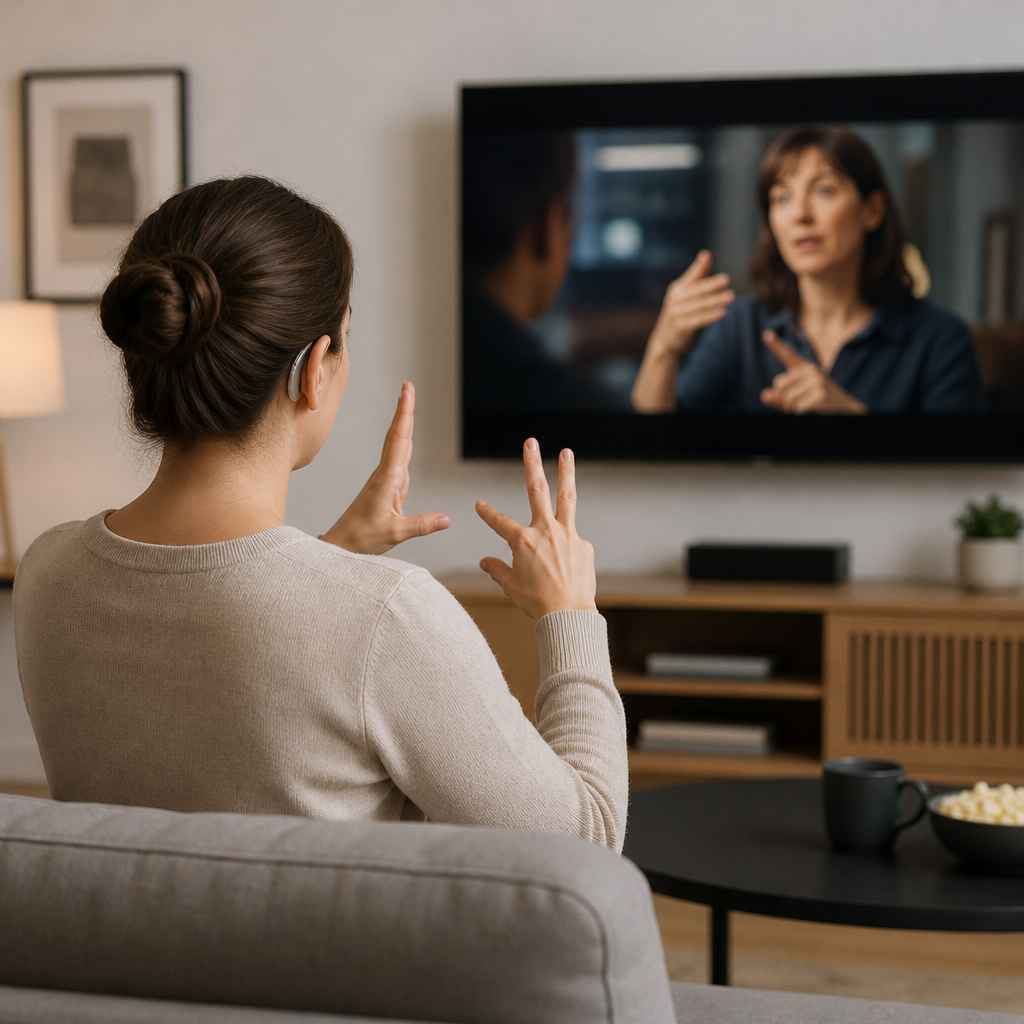
This stereotype survives because many hearing people define enjoyment through sound alone. In reality, deaf people engage with music, film, humor, and social connection in varied and often highly creative ways. Some experience music through vibration, rhythm, visual performance, lyrics, memory, and bass frequencies. Others simply prefer different forms of art. Film becomes more accessible through captions that preserve dialogue, sound cues, and speaker identification. Social life expands when environments support clear communication instead of demanding effortless adaptation from one person.
Media often gets this wrong by portraying deaf characters as isolated, joyless, or permanently cut off from culture. That framing ignores thriving Deaf theater, signed poetry, comedy, festivals, sports communities, and online spaces. It also ignores practical design choices that broaden participation for everyone. Open captions at public screenings, visual alerts at venues, good lighting, and moderated turn-taking in group discussion make a measurable difference. The real barrier is usually not deafness itself. It is an environment designed with only hearing people in mind.
How stereotypes show up in media and why representation so often fails
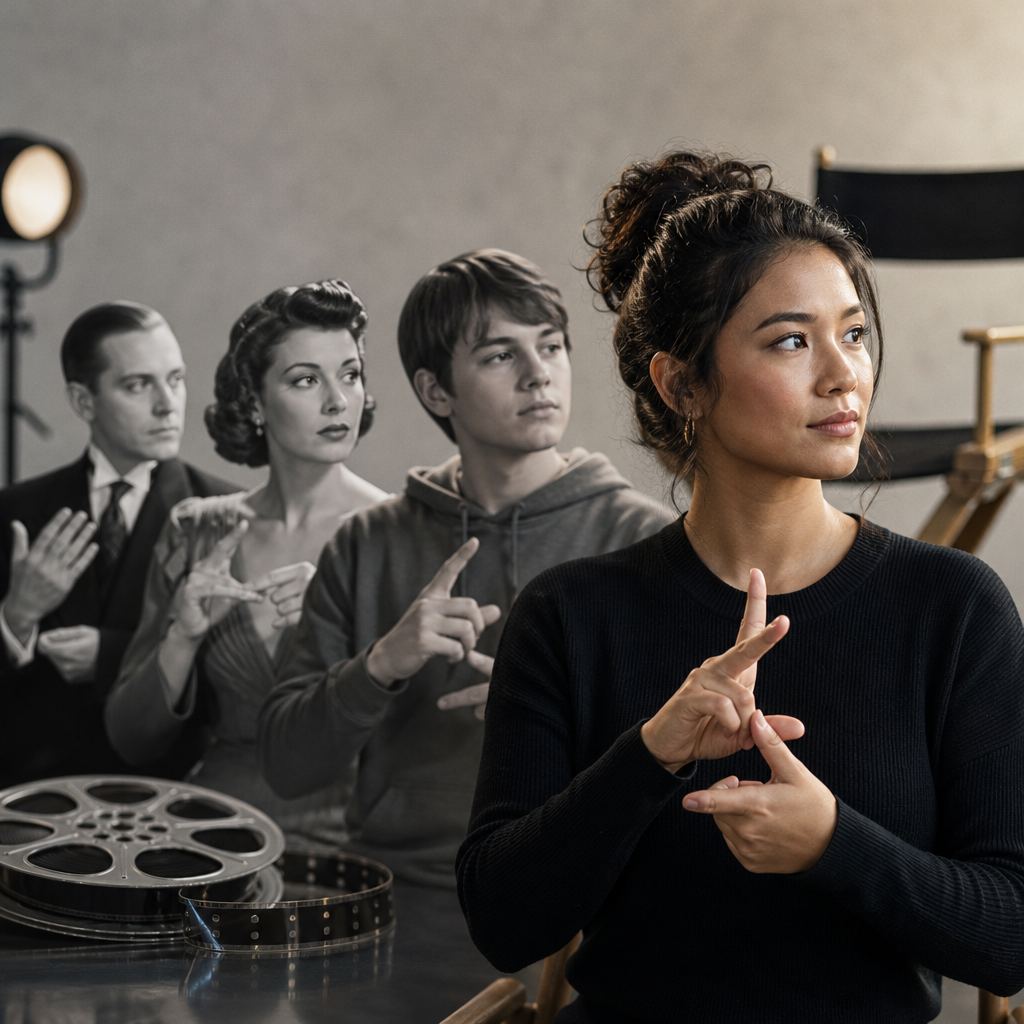
Media misrepresentation deserves special attention because it trains audiences what to expect before they ever meet a deaf person. Common patterns include the “tragic disabled character,” the “heroic overcomer,” the “silent mystery,” and the “inspirational lesson for hearing people.” These templates flatten personality and redirect attention away from ordinary humanity. They also encourage non-disabled creators to tell stories about deafness without involving Deaf consultants, writers, performers, or crew members who can catch inaccuracies before they harden into public memory.
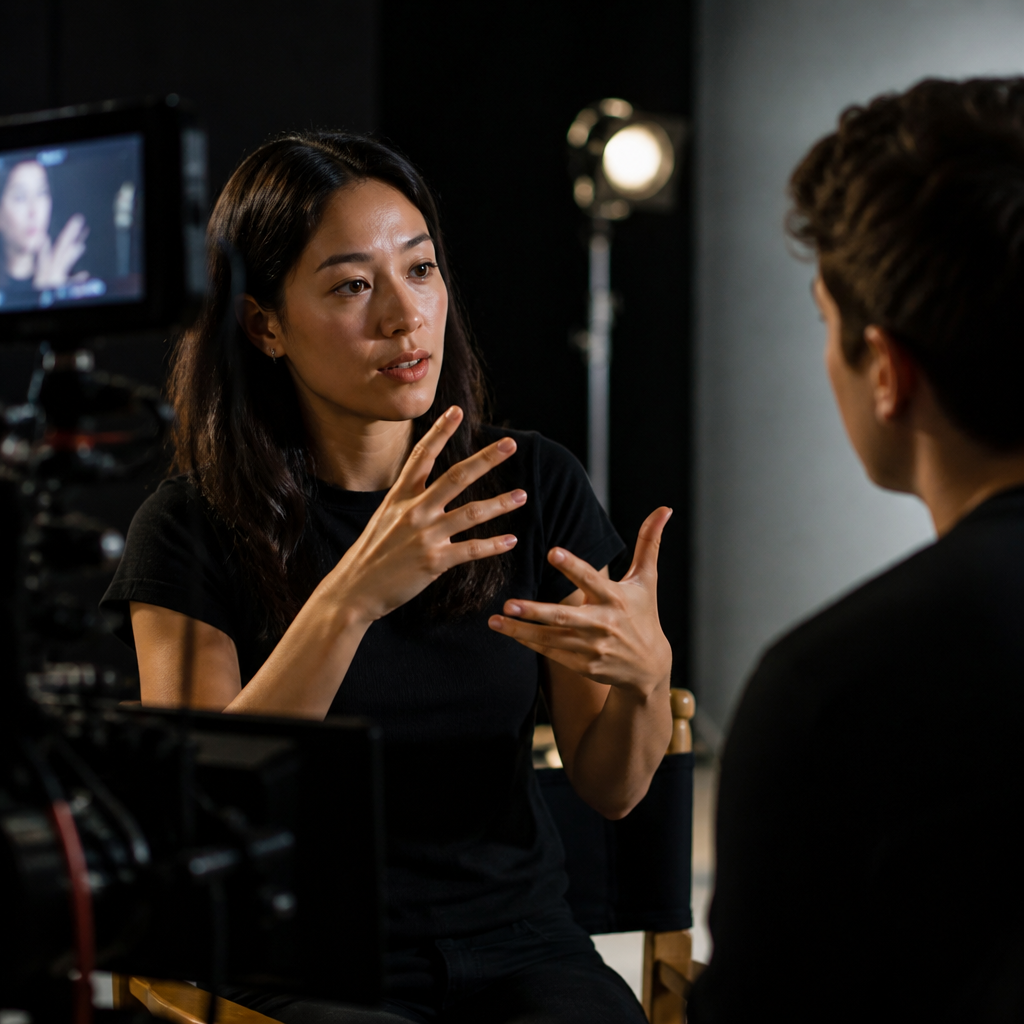
Authentic representation is more than casting one deaf actor. It requires cultural competence throughout development, production, marketing, and accessibility delivery. I look for a basic standard: is the deaf character allowed complexity unrelated to hearing status, and are communication realities shown accurately? Productions that succeed usually invest in Deaf talent behind the scenes, realistic signing, proper captioning, and scripts that avoid making deafness the entire plot. The difference is visible. Audiences get a person instead of a stereotype, and public understanding improves rather than regresses.
The practical harm stereotypes cause in school, work, healthcare, and public life
Stereotypes are harmful because they shape concrete outcomes. In education, a child may be denied bilingual language access or placed with staff who cannot communicate effectively. In employment, a manager may exaggerate accommodation costs even though many adjustments are inexpensive and some are funded through public or vocational programs. In healthcare, communication failures can affect consent, diagnosis, medication instructions, and follow-up care. In emergencies, spoken-only alerts can leave deaf residents without essential information during fires, storms, or public safety incidents.
The pattern is not random. It follows from the idea that deaf people are exceptions who must adapt privately instead of citizens and consumers who should be included by design. The table below shows how common assumptions translate into real barriers and better alternatives.
| Stereotype | Real-world impact | Better practice |
|---|---|---|
| “Lip-reading is enough” | Missed information in meetings, classrooms, and medical visits | Offer captions, interpreters, notes, and clear turn-taking |
| “One accommodation fits all” | Access plans fail because they ignore individual communication needs | Ask preferences in advance and confirm logistics |
| “Deaf workers are too difficult to hire” | Qualified applicants are excluded and teams lose talent | Use accessible interviews and evaluate actual job skills |
| “Signing means lower literacy” | Students face reduced expectations and fewer opportunities | Support strong language access and evidence-based teaching |
| “Captions are optional extras” | Audiences miss content, especially in noisy or public settings | Build accurate captions into standard publishing workflow |
How to challenge harmful stereotypes and build accurate awareness
Reducing stereotypes requires more than good intentions. It requires changing habits in language, planning, hiring, publishing, and storytelling. Start by replacing assumptions with direct questions: What communication method do you prefer? Do you want captions, an interpreter, both, or something else? In content production, include deaf people early, not as last-minute reviewers. In schools and workplaces, treat accessibility as infrastructure. That means budget lines, workflows, procurement standards, and accountability, not ad hoc favors granted only when someone complains.
Accurate awareness also depends on better sources. Follow Deaf creators, journalists, educators, and advocates. Learn the difference between disability rights and cultural identity, and understand that many people move across both frameworks depending on context. Use recognized standards where relevant, including captioning quality guidance, interpreter certification expectations, and digital accessibility principles such as WCAG. Most important, widen the range of stories being told. Deaf people should appear in media as parents, neighbors, leaders, experts, friends, villains, romantics, comedians, and ordinary protagonists, not just as symbols of adversity.
Common stereotypes about deaf people are harmful because they convert ignorance into systems that exclude, underestimate, and misrepresent real people. The central lesson is simple: deafness does not produce one identity, one ability level, or one communication method. Diversity within deaf communities is the rule, not the exception. Once that is understood, better decisions follow in media, education, employment, healthcare, and public design.
For anyone working in media, representation, and awareness, this hub topic should guide every related article on misrepresentation and stereotypes. Challenge one-dimensional portrayals, verify language and accessibility choices, and center deaf perspectives before publishing or producing. Better representation is not a cosmetic improvement. It is a practical step toward equal participation. Review your assumptions, update your processes, and make your next piece of content more accurate than the last.
Frequently Asked Questions
1. What are some of the most common stereotypes about deaf people?
Some of the most common stereotypes include the idea that all deaf people use sign language, that all deaf people can read lips, that deafness automatically means someone cannot speak, that deaf people are less capable academically or professionally, and that they all share the same identity or life experience. These assumptions are inaccurate because deaf people are not a single, uniform group. Hearing levels, communication preferences, education, access to technology, cultural identity, and personal background can vary widely from one person to another.
For example, some people identify as Deaf with a capital D, meaning they see themselves as part of a cultural and linguistic community with its own history, values, and signed language. Others may identify as deaf in a broader audiological sense and may or may not feel connected to Deaf culture. Some use American Sign Language or another signed language, some speak, some use hearing aids or cochlear implants, some rely on captions, and some use a mix of methods depending on the setting. Stereotypes flatten all of that diversity into a single story, which leads to misunderstanding and exclusion.
2. Why are stereotypes about deaf people harmful, even when they seem harmless or well-meaning?
Stereotypes are harmful because they shape expectations, behavior, and opportunities. Even when they are framed as jokes, compliments, or casual assumptions, they can still limit how deaf people are treated in school, at work, in healthcare, and in everyday social situations. A person who assumes that a deaf colleague cannot participate fully in meetings may leave them out of key conversations rather than arranging captions or an interpreter. A teacher who underestimates a deaf student may lower expectations instead of providing equal access to instruction. In both cases, the problem is not deafness itself, but the barriers created by other people’s assumptions.
These stereotypes also have emotional and social effects. Constantly being misunderstood, talked down to, or expected to explain basic facts about deafness can be exhausting. It can make routine interactions more stressful and reinforce a sense of isolation. Harm also happens at the cultural level: when media repeatedly portrays deaf people as helpless, inspirational by default, or defined only by loss, it narrows public understanding and makes it harder for people to recognize deaf individuals as complex, independent, and diverse human beings. In short, stereotypes are harmful because they replace real people with simplistic ideas.
3. Is it true that all deaf people use sign language or can read lips?
No. This is one of the most persistent and misleading myths. Not all deaf people use sign language, and not all deaf people can read lips effectively. Communication choices depend on many factors, including age of language exposure, family background, education, geography, personal identity, and access to resources. Some deaf people grow up signing from an early age and are fluent in a signed language. Others may communicate primarily through spoken language, written language, captioning, assistive technology, or a combination of approaches.
Lip-reading is also often misunderstood. Many people assume it is a simple substitute for hearing, but in reality it is difficult, tiring, and often incomplete. A large portion of spoken language is not visible on the lips, and understanding can be affected by lighting, facial hair, speed of speech, accents, masks, and whether the speaker is looking directly at the person. That means lip-reading is not a guaranteed or universal solution. Assuming every deaf person can “just read lips” shifts responsibility away from accessibility and onto the individual. A better approach is to ask what communication method works best and then make practical adjustments, such as using captions, speaking clearly, writing things down, or arranging interpretation when needed.
4. What is the difference between Deaf and deaf, and why does that distinction matter?
The distinction between Deaf and deaf matters because it reflects more than hearing level; it can also reflect identity, culture, and community. Lowercase deaf is often used in an audiological sense to describe a person’s level of hearing. Capital-D Deaf commonly refers to people who identify with Deaf culture, which may include shared language, community traditions, social networks, and a sense of belonging rooted in lived experience rather than just medical diagnosis. This distinction helps explain why deafness is not only a medical issue but can also be a cultural and linguistic identity.
Understanding this difference is important because stereotypes often treat deafness only as a deficit or problem to be fixed. That viewpoint misses how many Deaf people see themselves: not as broken hearing people, but as members of a community with its own strengths, norms, and heritage. At the same time, not every deaf person identifies as Deaf, and not every person uses labels in the same way. The most respectful approach is not to assume. Let people define themselves, and follow the language they use for their own identity. Doing so leads to more accurate conversations and greater respect for the full range of deaf experiences.
5. How can hearing people avoid reinforcing harmful stereotypes about deaf people?
The best starting point is to replace assumptions with curiosity, respect, and accessibility. Instead of guessing how a deaf person communicates or what they can do, ask politely what they prefer. Focus on access needs rather than limitations. For example, ask whether captions, an interpreter, written notes, or another accommodation would be helpful. Speak directly to the deaf person rather than to a companion or interpreter. Avoid treating deafness as something automatically tragic, inspirational, or defining. Like anyone else, deaf people have individual personalities, skills, preferences, and boundaries.
It also helps to challenge the larger systems that keep stereotypes in place. Support accurate media representation, inclusive hiring practices, accessible events, and educational environments that respect signed languages and Deaf culture. Learn basic etiquette, such as facing the person when speaking, not covering your mouth if they rely on visual cues, and being patient if communication needs to be adjusted. Most importantly, listen to deaf people themselves. Their perspectives are the best source of understanding. When hearing people move from assumption to informed respect, they help create environments where deaf people are seen as full participants rather than as stereotypes.