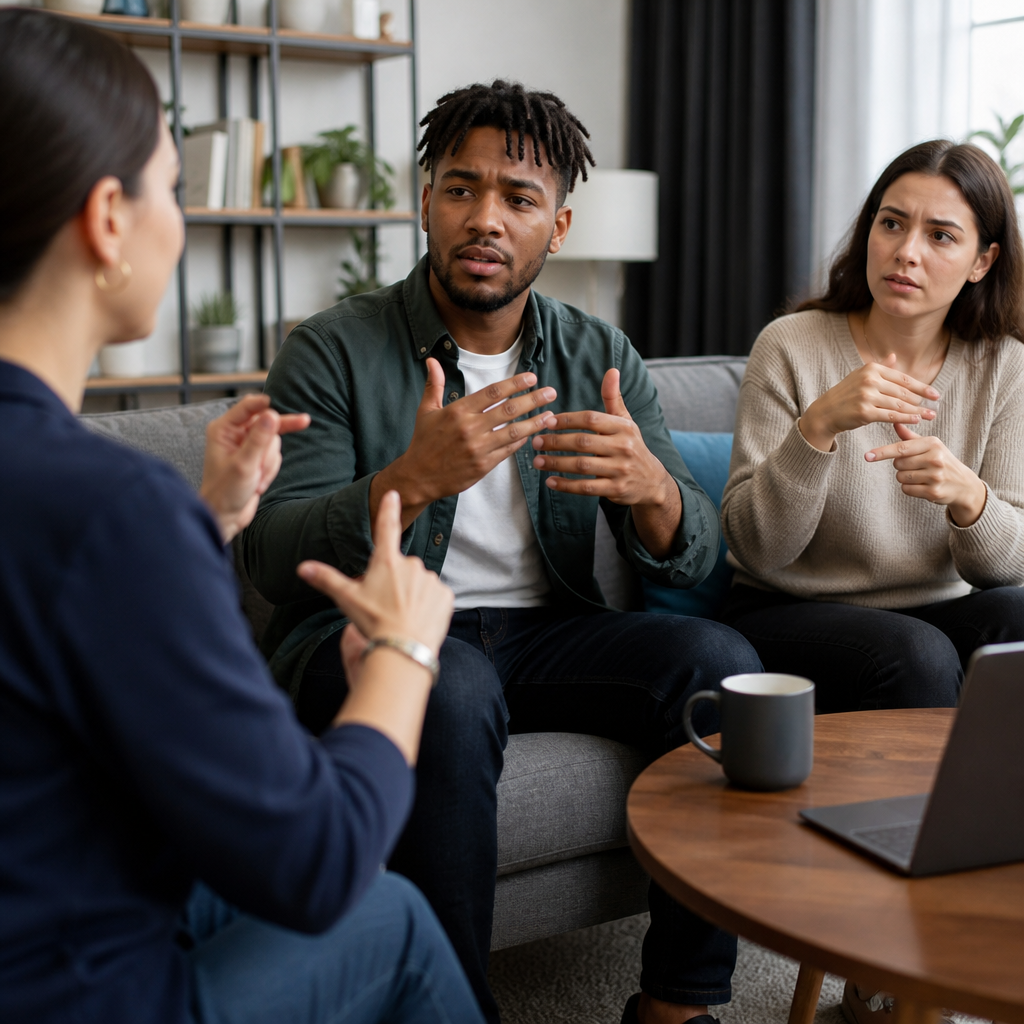
Major news events do not land in a vacuum for Deaf audiences; they arrive through interpreters, captions, social feeds, community networks, and a long history of being included late or not at all. Deaf community reactions to major news events are shaped by access, trust, cultural identity, and lived experience with institutions that often communicate for hearing people first. In this context, “Deaf community” refers broadly to people who are culturally Deaf, hard of hearing, late-deafened, DeafBlind, and signing communities that rely on visual language and accessible public information. “Major news events” includes elections, natural disasters, pandemics, criminal cases, protests, wars, celebrity deaths, policy announcements, and viral media moments that dominate public attention. This topic matters because news is not just content; it is infrastructure for safety, civic participation, and belonging. When access is delayed, inaccurate, or missing, Deaf people lose more than convenience. They can miss evacuation orders, public health guidance, legal developments, and the shared national conversation that shapes how communities respond.
I have worked with accessibility teams during breaking-news coverage, and the same pattern appears again and again. Hearing viewers judge speed and exclusivity, while Deaf viewers first ask whether the information is understandable, complete, and delivered in the right language mode. A live press conference with no qualified interpreter on screen is not accessible because a transcript appears an hour later. Auto-captions that misrender names, medications, or locations can turn urgent reporting into dangerous misinformation. Even when access exists, Deaf audiences often evaluate tone and quality differently: Was the interpreter visible enough? Were captions synchronized? Did anchors speak over interpretation? Did outlets consult Deaf sources, or only talk about Deaf people? These details drive trust. They also explain why Deaf community reactions to news events often spread first through local Deaf clubs, advocacy organizations, interpreter networks, and creators on TikTok, YouTube, Instagram, and Facebook who repackage fast-moving stories into reliable visual summaries.
Why access quality shapes the first reaction
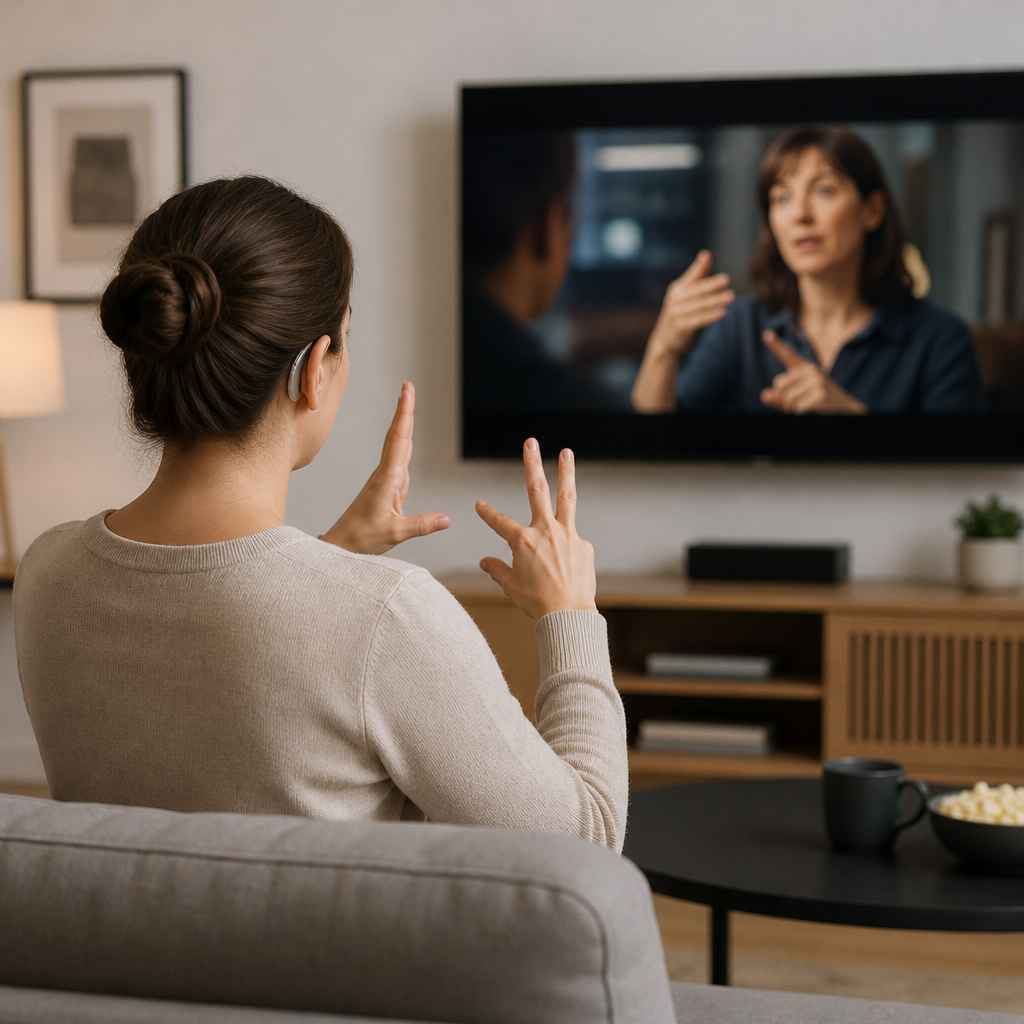
The first Deaf reaction to a major news event is usually practical: Can I access this right now? In emergency communication, quality means qualified sign language interpretation, accurate real-time captioning, readable graphics, and platform compatibility across television, livestreams, and mobile devices. U.S. guidance under the Americans with Disabilities Act and Federal Communications Commission captioning rules established important baselines, but legal compliance does not guarantee usable coverage. During hurricanes, wildfires, and tornado outbreaks, viewers routinely report interpreters cropped out of the frame, captions hidden by banners, and split-screen layouts that make fingerspelling unreadable. Those are not minor production flaws. For Deaf viewers, they determine whether place names, road closures, shelter locations, and boil-water advisories are comprehensible.
Natural disasters show this clearly. When emergency managers place interpreters in a small inset box, handshape detail disappears on phones, where much breaking news is consumed. By contrast, best practice is a dedicated visible interpreter window, plain-language scripting, synchronized captioning, and repeated key instructions. Deaf people often praise local stations that understand this visual hierarchy because those outlets reduce cognitive strain during stressful moments. The reaction is not simply gratitude; it is relief mixed with scrutiny. Communities remember which officials planned ahead and which ones added access after public criticism. That memory carries into future events, affecting whether official channels are trusted during the next crisis.
Public health crises and the demand for direct communication
Pandemic coverage exposed the gap between information being available and information being meaningfully accessible. During COVID-19, Deaf communities in many countries pushed for interpreters at every government briefing, captioning on every platform, and plain-language explanations of concepts such as community spread, asymptomatic transmission, vaccine efficacy, booster timing, and masking guidance. Reactions were complex because public health messaging changed as evidence evolved. Hearing audiences often experienced this as normal scientific revision. Many Deaf viewers experienced it through fragmented access, especially when short clips traveled widely without the full interpreted context. That increased reliance on trusted Deaf doctors, Deaf public health advocates, and bilingual sign-language communicators who could explain what changed and why.
This is one reason community-created explainers became central. A strong example is how Deaf health educators used American Sign Language videos to clarify PCR testing, quarantine periods, and vaccine side effects in visual, repeatable formats. These videos often outperformed official briefings in clarity because they were built for Deaf users from the start. Reactions to major health news therefore included more than agreement or skepticism. They included judgments about linguistic respect, cultural competence, and transparency. If a government delayed interpretation or posted inaccessible charts, many Deaf viewers read that as a signal that they were an afterthought. If an agency partnered with Deaf organizations and released simultaneous ASL content, reaction improved because the communication recognized Deaf people as primary stakeholders, not secondary recipients.
Politics, elections, and the civic participation lens
Political news triggers especially strong reactions because access barriers directly affect democratic participation. Election debates, concession speeches, court rulings, legislative votes, and policy rollouts all carry consequences for education, employment, healthcare, disability rights, and interpreter funding. Deaf audiences pay close attention to whether campaigns provide interpreters at rallies, whether televised debates offer high-quality captions, and whether policy journalists explain disability implications rather than treating them as side notes. Reactions are often sharpened by history. Many Deaf voters have seen disability access discussed only in symbolic terms, while practical needs such as language deprivation prevention, school placement, vocational rehabilitation, and telecommunications access receive limited sustained coverage.
Coverage of disability policy also reveals a recurring issue: hearing reporters quote hearing experts first. When news breaks around special education law, cochlear implant regulation, social service cuts, or interpreter shortages, Deaf readers notice who is framed as authoritative. If Deaf advocates, Deaf attorneys, or Deaf educators are missing, coverage feels extractive. Conversely, when outlets include Deaf analysis, community reaction is more engaged and less defensive. The community response to elections often spreads through voter guides in sign language, state association webinars, and issue-based explainers that translate dense policy into practical questions: Will this affect relay services? Will school districts cut interpreters? Will Medicaid changes reduce hearing technology access? News earns credibility when it answers those questions directly.
How reactions vary by event type
Not every major news story generates the same kind of Deaf community response. Breaking emergencies produce urgent access checks. Political stories trigger civic analysis. Criminal cases often lead to debates about media framing, courtroom interpretation, and whether Deaf victims, witnesses, or defendants are portrayed accurately. Entertainment news involving Deaf actors or sign language moments may produce pride, skepticism, or frustration depending on whether representation is authentic. International conflicts tend to raise concerns about multilingual access, trauma reporting, and the visibility of Deaf refugees or Deaf civilians. The strongest hub coverage on news and current events recognizes these different patterns instead of treating “the Deaf perspective” as one fixed opinion.
| Event type | Common Deaf community reaction | What accessible news must provide |
|---|---|---|
| Natural disaster | Immediate concern about safety instructions and local updates | Visible interpreters, synchronized captions, repeated location-specific guidance |
| Public health alert | Demand for clear definitions, timelines, and trusted experts | Plain-language explainers, ASL videos, accessible charts and summaries |
| Election or policy shift | Focus on rights, services, and long-term impact | Context on disability implications, Deaf sources, captioned debates |
| Criminal justice case | Scrutiny of framing, interpreter use, and legal accuracy | Terminology precision, courtroom access context, balanced sourcing |
| Cultural or celebrity news | Interest in representation quality and public awareness | Background on Deaf culture, authentic voices, avoidance of stereotypes |
Social media as a parallel newsroom
For many Deaf people, social media is not a supplement to the news; it is a parallel newsroom that filters, translates, and fact-checks mainstream coverage. Deaf creators frequently summarize live events in sign language within minutes, then answer community questions in comments: What happened? What does this term mean? Is this source reliable? That responsiveness matters because mainstream outlets rarely build two-way communication for Deaf audiences. During major events, Deaf users often compare official statements with posts from advocacy groups such as the National Association of the Deaf, local Deaf service agencies, schools for the Deaf, and independent interpreters with subject expertise. This network can correct errors quickly, but it also carries risk when unverified claims spread in polished signing videos.
The healthiest reaction pattern appears when mainstream reporting and community channels reinforce each other. For example, a local station may publish captioned coverage of a flooding emergency, while Deaf creators add signed summaries, map explanations, and updates on accessible shelters. That ecosystem works because each piece solves a different problem. Mainstream outlets gather on-the-ground facts. Community communicators translate, contextualize, and address likely questions. Problems arise when newsrooms treat social engagement as enough to excuse poor primary access. Posting a transcript on X or Facebook does not replace accessible live delivery. Deaf audiences notice when institutions outsource accessibility to the community itself, and reactions are predictably critical.
Representation, framing, and the emotional layer of news
Deaf community reactions to major news events are also emotional reactions to how the story is framed. News language can reinforce stereotypes quickly. Terms like “hearing impaired” may be rejected by many culturally Deaf people, while narratives that depict Deaf individuals as inspirational simply for participating in ordinary life often feel patronizing. In crisis stories, the media sometimes treats Deafness as the central tragedy rather than the access failure surrounding the event. I have seen coverage praise a city for “including” an interpreter while ignoring that the interpreter arrived only after community pressure. Deaf audiences read that framing immediately, and the response is often sharper than editors expect.
This is why precision matters. If a story involves a Deaf witness, reporters should explain whether communication occurred through ASL, another sign language, lipreading, writing, or an interpreter. If a public official signs poorly for a photo opportunity, Deaf viewers will notice. If an outlet clips a signed statement without verifying translation, trust erodes fast. Emotional reaction is shaped by these specifics because Deaf communities have decades of experience seeing themselves misunderstood in public narratives. Respectful framing does not require praise or exceptionalism. It requires competent reporting, culturally literate sourcing, and the discipline to let Deaf people define their own experience.
What strong hub coverage should include
As a hub under media, representation, and awareness, a strong page on news and current events should connect recurring themes rather than chase isolated headlines. Readers need guidance on emergency broadcasting standards, live captioning quality, interpreter ethics, political communication access, social media verification, and representation pitfalls in breaking coverage. It should also point toward deeper articles on specific event categories, such as disaster communication, election accessibility, public health briefings, courtroom interpreting, and Deaf creators covering the news. That internal structure mirrors how audiences actually navigate the topic: they start with one headline, then discover the same access issues repeating across contexts.
The practical benefit is clarity. Once readers understand the patterns behind Deaf community reactions to major news events, individual stories become easier to interpret. They can ask better questions of every outlet and official source: Was access simultaneous? Was the language accurate? Were Deaf experts included? Was the visual design usable? Did the story treat Deaf people as subjects with agency or as symbols? Those questions improve media literacy for hearing and Deaf readers alike. Follow those threads as you explore related articles in this subtopic, and you will evaluate news coverage with far more precision, especially when the next major event breaks.
Frequently Asked Questions
Why can Deaf community reactions to major news events differ from mainstream reactions?
Deaf community reactions are often shaped by a very different information environment. When major news breaks, hearing audiences may absorb updates instantly through live broadcasts, radio, podcasts, alerts, and conversations around them. Deaf audiences, by contrast, may need to wait for accurate captions, qualified sign language interpretation, text-based summaries, or trusted community members to explain what happened in an accessible and culturally relevant way. That delay alone can change the emotional and practical response to a news event.
Just as important, many Deaf, hard of hearing, late-deafened, and DeafBlind people bring lived experience with communication barriers, inaccessible emergency messaging, and institutions that have historically treated access as optional or secondary. As a result, major news is not only about the event itself; it is also about whether the information is reaching people clearly, respectfully, and in time to matter. Reactions may include frustration, skepticism, solidarity, activism, grief, or rapid community organizing, especially if the event exposes familiar failures in public communication.
Cultural identity also plays a role. For culturally Deaf people in particular, news is often processed through shared values around language access, community interdependence, and representation. That means reactions can be collective rather than purely individual, with people discussing events through Deaf social media spaces, group chats, local organizations, interpreters, and advocacy networks. In short, Deaf community responses are not simply delayed versions of hearing responses; they are often shaped by distinct histories, access needs, and cultural frameworks.
How do captions and sign language interpreters influence Deaf community responses during breaking news?
Captions and interpreters do much more than relay words. They determine whether Deaf audiences can access critical details at the same speed and depth as everyone else. During breaking news, even small failures in captioning or interpretation can have major consequences. Auto-generated captions may lag, mistranscribe names and locations, or miss tone and urgency. Interpreters may be absent, visually minimized on screen, poorly lit, or replaced by people who are not qualified for high-pressure public communication. When that happens, Deaf viewers are left trying to piece together incomplete information during already stressful moments.
On the other hand, when captions are accurate and interpreters are skilled, visible, and integrated from the start, trust tends to rise. Accessible coverage allows Deaf people to respond in real time, verify facts, follow official guidance, and participate in public conversation without relying on secondhand summaries. This can reduce isolation and help people feel recognized as part of the intended audience rather than an afterthought. It also affects emotional response, because access to tone, pacing, and nuance can shape whether an event feels confusing, urgent, reassuring, or alarming.
There is also a strong cultural dimension here. For many Deaf viewers, a qualified sign language interpreter is not just a technical accommodation but a bridge into information in a primary or preferred language. That can make coverage feel more direct and more trustworthy. At the same time, communities are highly attentive to the quality of interpretation and quick to notice when institutions treat accessibility as symbolic rather than functional. So captions and interpreters often influence not only comprehension, but also the broader reaction to how seriously Deaf people are being included in the public response.
Why is trust such a major factor in how Deaf people respond to major news events?
Trust matters because access alone does not guarantee confidence in the message. Many Deaf people have long experience with delayed alerts, inaccurate captions, unqualified interpreters, inaccessible press conferences, and official updates that assume everyone can hear. Over time, those repeated gaps can create understandable caution toward institutions, broadcasters, and emergency systems. When a major news event occurs, Deaf audiences may evaluate not only what is being said, but who is saying it, whether they have been reliable before, and whether Deaf people were included from the beginning.
This is one reason community-based information networks are so influential. Deaf people often cross-check official news with updates from Deaf advocates, local organizations, interpreters they trust, Deaf journalists, and peer networks on social media. These channels can provide context, clarify misunderstandings, and flag accessibility failures in real time. In many cases, they also translate institutional language into clearer, more actionable communication. That layered process can make reactions more measured, more critical, or more collective than outside observers might expect.
Trust is also tied to respect. If a public agency only adds interpretation after complaints, or if media outlets publish inaccessible updates during a crisis, Deaf audiences may see that as evidence that their safety and participation were not prioritized. Conversely, when officials build accessibility into communication from the outset, use qualified professionals, and communicate consistently across formats, they send a message that Deaf people are full members of the public. That can significantly shape how the community reacts, engages, and mobilizes during major events.
Are Deaf community reactions the same across all Deaf, hard of hearing, late-deafened, and DeafBlind people?
No. The term “Deaf community” is useful, but it should never be treated as if it describes one uniform experience. People differ in language preference, communication style, technology use, education, race, age, disability identity, geography, and relationship to Deaf culture. A culturally Deaf signer may follow events primarily through sign language media and community networks, while a late-deafened adult may rely more on captions, transcripts, hearing aids, or cochlear implant-compatible technology. A DeafBlind person may need tactile interpretation, braille access, screen reader-friendly updates, or other specialized communication supports that are rarely included in mainstream reporting.
These differences matter because they shape both access and emotional response. Someone who receives high-quality information quickly may react with urgency and engagement, while someone facing communication barriers may feel confusion, anger, or exclusion first. People also vary in how much they trust institutions, whether they have prior experience with emergency systems, and how strongly they identify with Deaf cultural spaces. For some, community discussion is central to processing major events. For others, the response may be more individual or filtered through family, workplace, or disability networks.
It is also important to remember that Deaf people, like all people, are influenced by politics, religion, class, regional culture, and personal history. There is no single Deaf viewpoint on war, elections, public health emergencies, natural disasters, or criminal justice. What often creates a recognizable pattern is not identical opinion, but shared awareness of access barriers and shared memory of being left out of urgent communication. The most accurate way to understand Deaf community reactions is to recognize both common structural issues and real diversity within the population.
What should journalists, public officials, and media organizations understand about covering major news for Deaf audiences?
The most important point is that accessibility cannot be added after the fact. If interpreters, captions, transcripts, visual explainers, and accessible digital updates appear late, Deaf audiences may miss essential context during the most critical moments. In fast-moving situations, delayed access can affect safety, understanding, and public participation. Media organizations and officials should plan from the beginning for multiple forms of communication, including high-quality live captioning, qualified sign language interpreters, readable on-screen graphics, accessible websites, and rapid text-based updates that are easy to share.
They should also understand that quality matters as much as presence. A tiny interpreter box, error-filled captions, jargon-heavy statements, or social video without text does not create meaningful access. Deaf audiences notice when accessibility tools are poorly executed, and those failures can undermine credibility quickly. Newsrooms and agencies should work with trained professionals, test accessibility workflows in advance, and consult Deaf, hard of hearing, and DeafBlind stakeholders when designing communication practices. Good access is not just a legal or technical issue; it is a matter of public trust and equal inclusion.
Finally, coverage should reflect Deaf people as participants in the story, not only as audiences in need of accommodation. That means including Deaf experts, advocates, and community members in reporting; recognizing the role of Deaf social networks in information sharing; and understanding that reactions may be shaped by a long history of exclusion from public communication. When journalists and officials grasp that context, their reporting becomes more accurate, more humane, and more useful. In major news events, inclusive communication is not a niche concern. It is part of responsible public information.