
Deaf identity in a hearing world is the ongoing process of understanding deafness not simply as a medical condition, but as a cultural, linguistic, social, and personal reality that shapes how people belong, communicate, and move through daily life. The distinction matters. Lowercase deaf often refers to the audiological fact of hearing loss, while uppercase Deaf commonly points to membership in a community built around shared language, values, history, and experience. Many people use both terms, use neither comfortably, or move between identities over time. In practice, identity is rarely fixed. It is influenced by family background, access to sign language, education, technology, race, class, geography, and how a person is treated by institutions and by other people.
I have seen this tension repeatedly in work across accessibility, education, and communication planning: the hearing world often assumes deafness is defined by what someone cannot hear, while Deaf people often define themselves by what they can access, express, and contribute through visual language and community. That difference changes everything from classroom design to healthcare visits. It also explains why Deaf identity and pride matter well beyond personal self-esteem. Identity shapes mental health, educational outcomes, civic participation, and whether a person feels pressured to assimilate or empowered to advocate. It affects whether a child grows up seeing deafness as a defect to hide or a human difference with history and value.
A hearing world is not just a world where most people hear. It is a world whose systems are built around sound: spoken announcements, phone calls, audio-first customer service, classroom discussion norms, workplace meetings, entertainment, emergency alerts, and social expectations about eye contact, turn-taking, and attention. For Deaf people, this creates constant negotiation. Some adapt by lip reading, using hearing aids or cochlear implants, speaking, signing, captioning, texting, or combining methods depending on the setting. None of those choices alone determines identity. Deaf identity emerges from lived experience, not from a single device, communication mode, or decibel threshold.
Deaf pride grows when people learn Deaf history, gain access to language, meet other Deaf adults, and see their experience represented as valid rather than tragic. It is strengthened by the recognition that sign languages are full natural languages with grammar, nuance, humor, and regional variation. It is also strengthened by legal and social progress, including disability rights laws, captioning standards, and interpreter access, though those gains remain uneven. As a hub for Deaf identity and pride, this article explains how identity forms, why it can be complicated, where pride comes from, and how hearing institutions can respond with respect instead of paternalism.
How Deaf Identity Forms
Deaf identity forms at the intersection of language access, relationships, and environment. A deaf child born to Deaf signing parents may develop a strong cultural identity early because communication at home is fluent from the beginning. By contrast, a deaf child born to hearing parents may spend years without full language access if adults delay sign exposure in favor of speech-only approaches. Research across language development has consistently shown that early accessible language is essential for cognitive growth, literacy, and social development. The core issue is not whether spoken language is attempted, but whether the child has complete access to language during critical developmental years.
Schooling also plays a decisive role. Mainstream education can offer inclusion and local participation, but many Deaf students report isolation when they are the only deaf person in class, depend on inconsistent interpreters, or miss incidental information shared before and after lessons. Schools for the Deaf often provide direct access to sign language, Deaf peers, and Deaf adult role models, which can strengthen belonging and confidence. Neither setting is automatically better in every case. The decisive factor is whether the student has full communication access, meaningful peer connection, and adults who respect Deaf ways of being rather than treating them as second-best substitutes for hearing norms.
Family attitudes matter just as much as formal education. When parents learn sign language, connect with Deaf mentors, and set high expectations, children are more likely to build a healthy identity. When families frame deafness as shameful, something to fix, or a barrier to normal life, children often internalize that message. I have watched access decisions in early childhood echo for years: a family that embraces visual communication often produces a child who participates confidently, while a family focused only on normalization can unintentionally teach the child that acceptance depends on appearing as hearing as possible. That pressure is exhausting and rarely sustainable.
Language, Community, and Belonging
Language is central to Deaf identity because it is the main route into culture, humor, memory, and social trust. American Sign Language, British Sign Language, Auslan, Langue des Signes Française, and other sign languages are not manual versions of spoken languages. They have their own syntax, morphology, discourse structure, and visual-spatial logic. That matters because when a Deaf person signs, they are not using a fallback system. They are often using their most natural and expressive language. This is one reason many Deaf people describe sign language access as liberation rather than accommodation.
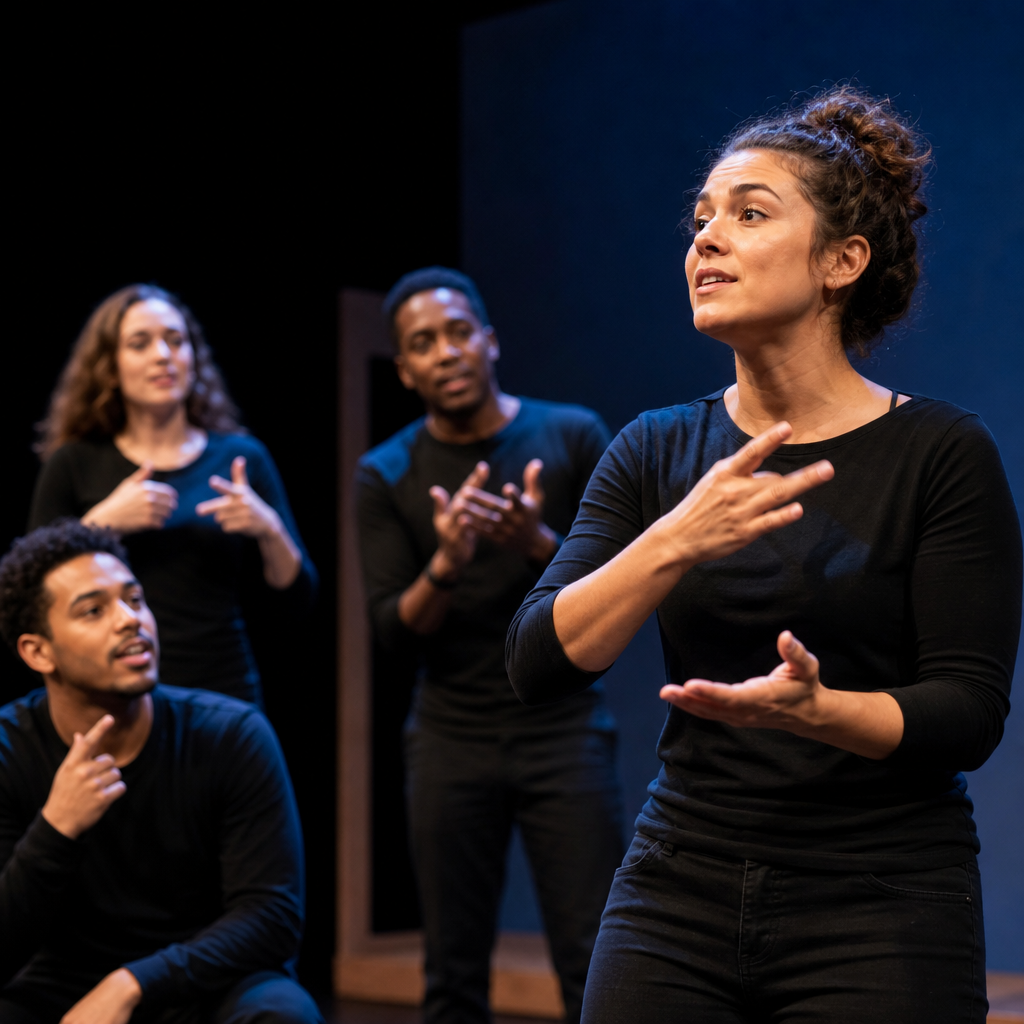
Community turns language into belonging. Deaf clubs, sports leagues, theater groups, online spaces, conferences, and alumni networks have long served as places where Deaf people can communicate directly without adapting to hearing expectations every minute. These spaces also transmit values: visual attention-getting norms, the importance of clear sightlines, shared stories about audism, and the expectation that access is a collective responsibility, not a personal inconvenience. In hearing spaces, Deaf people are often asked to request access repeatedly. In Deaf spaces, access is built into the room from the start. That contrast explains why community can feel restorative.
Belonging is especially important for people whose identities are layered. Black Deaf, Latino Deaf, Indigenous Deaf, queer Deaf, immigrant Deaf, and late-deafened people may each navigate both solidarity and exclusion within broader Deaf and hearing communities. Deaf identity is not monolithic. A signing environment can still reproduce racism, class bias, or gendered assumptions. At the same time, intersectional communities have created powerful spaces of affirmation and advocacy. Strong Deaf identity does not require perfect agreement within the community. It requires enough shared understanding that deafness is recognized as a lived culture and not reduced to deficit.
Technology, Medicine, and Identity Choices
Technology changes access, but it does not erase identity. Hearing aids, cochlear implants, FM systems, captioning apps, video relay service, visual alert systems, and speech-to-text tools can expand participation dramatically. I have seen captioning transform meetings, and I have seen a skilled interpreter make a complex training instantly more equitable. Yet the presence of technology does not make the hearing world neutral. Devices work differently across environments, users, and expectations. Background noise, fatigue, poor microphone use, low-quality captions, and untrained staff can turn a supposedly accessible setting back into a barrier within minutes.
Cochlear implants often sit at the center of public misunderstanding. They are not a cure for deafness and do not produce identical hearing to that of a hearing person. Outcomes vary by age of implantation, anatomy, therapy, device mapping, additional disabilities, family support, and educational access. Many implanted people identify as Deaf, some identify as hard of hearing, and some move between communities. The key mistake is assuming that medical intervention settles cultural identity. It does not. Identity depends on language, relationships, and self-understanding, not merely on access to sound through technology or clinical treatment.
| Factor | Can support Deaf identity | Can create tension |
|---|---|---|
| Sign language access | Direct communication, community connection, cultural continuity | Delayed exposure can cause language gaps and isolation |
| Hearing aids or implants | Expanded auditory access in some settings | Pressure to appear hearing or abandon signing |
| Mainstream schooling | Local inclusion and broad peer contact | Social isolation and inconsistent access services |
| Schools for the Deaf | Deaf peers, role models, visual learning environment | Limited local availability or family distance |
| Captioning and interpreting | Improved access to education, work, media, healthcare | Poor quality can create false confidence in access |
The most respectful approach is choice anchored in full information. Families and adults should understand the benefits and limits of each tool, the evidence on language development, and the value of contact with Deaf adults. A child can use hearing technology and learn sign language. An adult can prefer spoken communication and still identify with Deaf culture. The false binary between medical support and cultural belonging has harmed generations of people. The better standard is access without erasure: use tools that help, while protecting language rights, social connection, and the person’s authority over their own identity.
Barriers in a Hearing-Centered Society
The biggest challenge Deaf people face is often not deafness itself but audism: the assumption that hearing and speaking are inherently superior, more intelligent, or more normal than signing and visual communication. Audism appears in obvious forms, such as refusing interpreters, and in subtle ones, such as praising a Deaf person for being “so articulate” because they speak clearly. It also appears in policy. Workplaces may rely on conference calls without captions, hospitals may overuse family members instead of qualified interpreters, and public events may treat accessibility as optional unless someone complains. These are design failures, not individual shortcomings.
Employment reveals this clearly. Deaf workers are frequently screened out by phone-based hiring, inaccessible onboarding, or interviewers who mistake communication differences for incompetence. Once hired, they may be excluded from hallway conversations, impromptu updates, or networking events where career advancement often happens. The fix is practical and well established: provide interpreters when needed, caption meetings, share written agendas and summaries, use accessible messaging platforms, and train managers not to equate spoken speed with expertise. When these measures are implemented consistently, performance improves because information flows more reliably for everyone, not only Deaf staff.
Healthcare is another critical site of inequality. Miscommunication during consent, diagnosis, medication counseling, or emergency care can have serious consequences. Writing notes back and forth is often inadequate for nuanced medical discussion, especially when a patient’s primary language is a sign language rather than written English. In many countries, disability law and interpreting standards already require effective communication, yet compliance remains uneven. Trust increases when providers ask patients about preferred communication methods in advance, book qualified interpreters, use teach-back techniques, and avoid assuming that a companion can interpret accurately. Respectful access is a safety issue, not a courtesy.
Deaf Pride, Representation, and Allyship
Deaf pride is the positive affirmation that deafness can be a complete life, that sign languages are legitimate, and that Deaf people do not need to become hearing to be successful, educated, or fulfilled. Pride does not deny barriers. It rejects the idea that barriers define human worth. In practice, pride is often built through visibility: meeting Deaf professionals, seeing Deaf actors cast in Deaf roles, reading Deaf history, attending signed performances, or watching public institutions include interpreters and captions as a default. Representation matters most when it moves beyond inspiration and shows Deaf people exercising authority, humor, competence, and ordinary complexity.
Historical memory is part of that pride. The suppression of sign language after the 1880 Milan Conference, the long struggle for educational access, the growth of Deaf President Now in 1988 at Gallaudet University, and the expansion of captioning and telecommunications access all remind Deaf communities that rights were organized, not granted spontaneously. These milestones are more than symbolic. They show how collective action converts identity into structural change. When younger Deaf people learn this history, they often understand pride not as branding, but as stewardship of a community that fought to survive policies designed to marginalize its language.
Hearing allies are useful when they follow Deaf leadership. Good allyship means learning the basics of visual communication, facing the person when speaking, not blocking sightlines, supporting caption and interpreter budgets before being asked, and avoiding the impulse to speak over Deaf people in policy discussions about their own lives. It also means rejecting pity. The most effective allies I have worked with understand that access should be planned into systems, contracts, events, and digital products from the beginning. If you are building programs, publishing content, teaching classes, or managing teams, audit your communication environment and remove barriers now.
Building Identity With Confidence
Deaf identity in a hearing world is strongest when people have language, community, history, and the freedom to define themselves without coercion. Some will identify proudly as Deaf from early childhood. Others will arrive there later after years of mainstreaming, medical intervention, or partial access. Some will remain hard of hearing, oral, bilingual, bicultural, or fluid across settings. The goal is not to force one model. The goal is to ensure every deaf person can build an identity on access rather than deprivation. That starts with early sign exposure, informed family support, accessible education, fair employment, qualified interpreting, and representation that treats Deaf life as ordinary and valuable.
For readers exploring Deaf identity and pride, the central takeaway is simple: deafness is not merely the absence of hearing. It is a human experience shaped by language, design, power, and belonging. When institutions stop asking Deaf people to fit hearing systems and start building visual, flexible, communication-rich environments, identity becomes less defensive and more expansive. Use this hub as a starting point for deeper reading on Deaf culture, sign language, audism, education, technology, and community history. Then take one concrete step today: improve access in your home, classroom, workplace, or organization, and let Deaf voices lead what comes next.
Frequently Asked Questions
What is the difference between deaf and Deaf?
The difference between deaf and Deaf is more than spelling. In many discussions, lowercase deaf refers to the audiological condition of hearing loss. It describes hearing levels and may be used in medical, educational, or legal contexts. Uppercase Deaf, by contrast, often refers to cultural identity and community membership. A Deaf person may identify with a shared language such as American Sign Language, a common history, social norms, artistic traditions, and collective experiences shaped by navigating a hearing-centered world.
That said, identity is not always fixed or simple. Some people identify as deaf, some as Deaf, some as both, and some prefer terms such as hard of hearing, late-deafened, or deafblind depending on their experience. A person born into a Deaf family may grow up with strong cultural ties from childhood, while someone who loses hearing later in life may develop identity in a different way. The most accurate approach is to understand that these terms carry personal, social, and cultural meaning, not just clinical definition. Listening to how individuals describe themselves is essential.
Why do many people say deafness is a cultural and linguistic identity, not just a medical condition?
Many people describe deafness as a cultural and linguistic identity because hearing loss alone does not explain how Deaf people live, communicate, build relationships, and form community. In a strictly medical model, deafness is often framed as a deficit to be corrected, treated, or accommodated. While medical care and access tools can be important, that view can miss the reality that many Deaf people do not see themselves as broken. Instead, they understand their lives through language, social connection, and belonging.
For many in the Deaf community, sign language is central. It is not a substitute for spoken language, but a complete language with its own grammar, nuance, and expressive power. Around that language grows a culture: shared stories, humor, values, norms around eye contact and attention, community events, activism, and a rich history of education and advocacy. Seeing deafness in this broader way helps explain why identity matters so deeply. It shifts the question from “What is wrong with this person’s hearing?” to “How does this person experience the world, and what community and language shape that experience?” That perspective is often more respectful, more accurate, and more human.
How does Deaf identity develop in a hearing world?
Deaf identity often develops through experience, exposure, and reflection rather than through one single moment. In a hearing world, many deaf or hard of hearing people grow up surrounded by spoken language norms, hearing institutions, and expectations built around sound. Some are raised in Deaf families and learn sign language early, giving them immediate access to community and cultural belonging. Others are born into hearing families with little knowledge of deafness, and their identity may take longer to form, especially if they are not introduced early to Deaf role models, sign language, or accessible communication.
Identity can be shaped by school settings, communication access, family attitudes, technology use, friendships, and encounters with both inclusion and exclusion. A person might initially understand themselves through a medical lens, then later discover Deaf culture and feel a strong sense of recognition. Another person may move fluidly between Deaf and hearing spaces and identify with both. Because hearing society often treats spoken communication as the default, many deaf people spend time negotiating expectations, explaining access needs, and deciding how they want to present themselves. Deaf identity in that environment is often both personal and political: personal because it involves self-understanding, and political because it is affected by power, access, language rights, and social attitudes.
Can someone use hearing technology and still identify as Deaf?
Yes. Using hearing technology does not automatically determine whether someone is Deaf, deaf, hard of hearing, or culturally connected to the Deaf community. Hearing aids, cochlear implants, captioning tools, alert systems, and other technologies are forms of access. They can help people navigate environments designed around hearing, but they do not erase culture, language, or lived experience. A person may use hearing technology every day and still identify strongly as Deaf, use sign language, participate in Deaf community life, and view deafness as an integral part of who they are.
This is an important point because identity should not be reduced to devices or assumptions about how much someone can hear. Technology affects communication options, but it does not define belonging. Some Deaf people embrace multiple communication methods, including sign, speech, lipreading, and technology-based supports. Others prefer sign language as their primary mode. There is no single “correct” Deaf experience. Treating identity as larger than equipment helps avoid oversimplified ideas that technology either “fixes” deafness or cancels out Deaf culture. In reality, many people build identities that include both access tools and cultural pride.
How can hearing people be more respectful and supportive of Deaf identity?
Hearing people can be more respectful and supportive by starting with the understanding that Deaf identity is valid on its own terms. That means not assuming deafness is always a tragedy, not treating Deaf people as inspirational simply for existing, and not deciding for them what communication style or life path is best. Respect begins with asking preferences, using the terms people use for themselves, and recognizing that access is a basic right rather than a special favor.
In practice, support includes making communication accessible and shared. Face the person when speaking, avoid covering your mouth, use clear language, and do not rely on shouting. Learn how to work effectively with interpreters. Use captions whenever possible in meetings, classes, videos, and public events. Be willing to write things down or switch communication modes when needed. If you have the opportunity, learning sign language can also be a meaningful way to bridge communication and show respect for Deaf culture as a language community, not just a group with a disability.
Just as important, hearing people should challenge hearing-centered assumptions in workplaces, schools, healthcare, and social settings. Inclusion is not only about individual courtesy; it is also about changing systems so Deaf people do not have to fight for access at every step. When hearing people understand Deaf identity as cultural, linguistic, social, and personal, they are better equipped to build genuine relationships and more equitable environments.