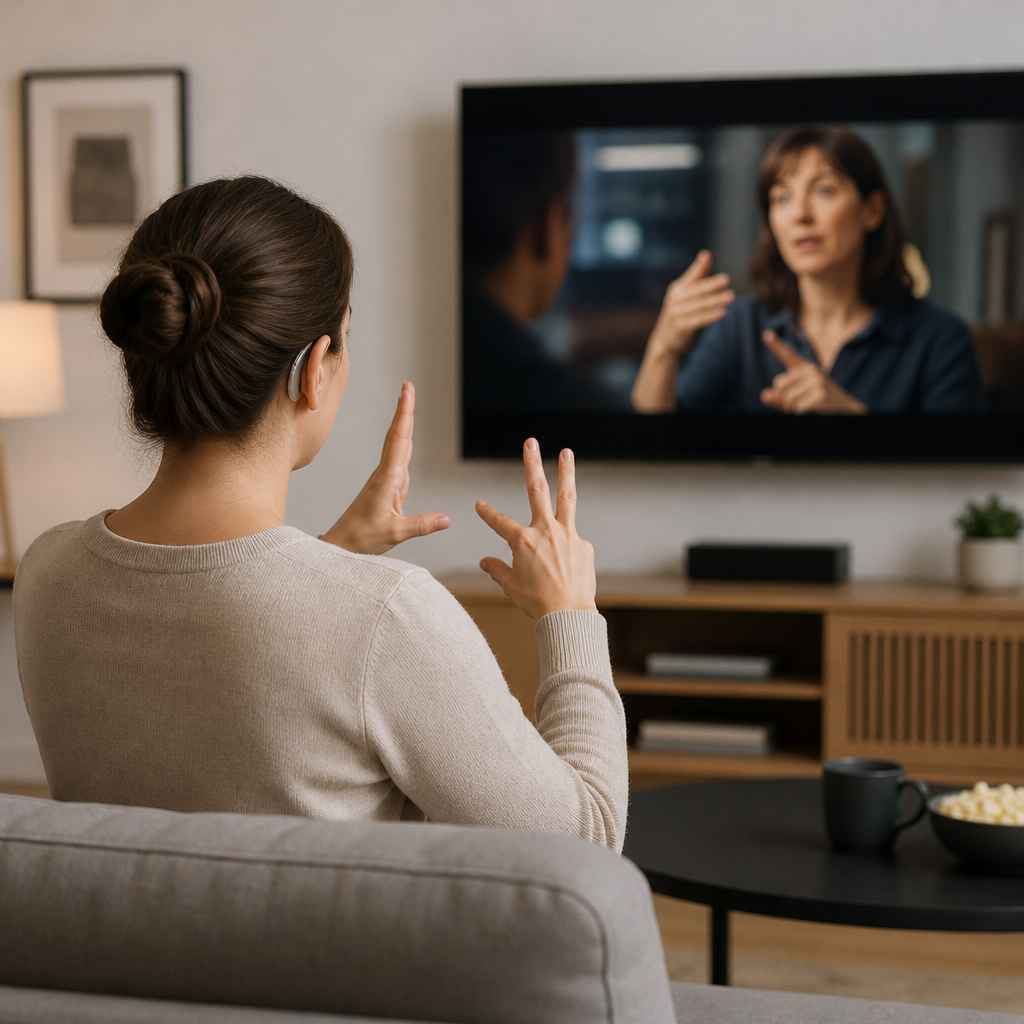

Deaf leaders are reshaping culture, policy, business, and media, proving that influence is not defined by hearing status but by vision, skill, and persistence. In the broad conversation about media, representation, and awareness, the topic of influencers and public figures matters because visibility changes expectations: when audiences see Deaf people leading companies, creating art, winning elections, and building communities, they stop treating deafness as a limitation and start recognizing it as part of human diversity. I have worked on accessibility-focused content and public awareness campaigns long enough to see a consistent pattern: representation is most powerful when it moves beyond inspiration and shows concrete leadership, expertise, and measurable impact. That is exactly where Deaf leaders who are making a difference deserve focused attention.
In this context, Deaf refers to people who identify culturally, linguistically, medically, or personally with deafness or significant hearing loss, while leaders includes activists, executives, artists, educators, athletes, elected officials, creators, and entrepreneurs whose work influences public understanding or institutional decisions. Public figures are not limited to celebrities. A school superintendent improving interpreter access, a journalist normalizing captions, or a social media creator explaining Deaf culture can shape attitudes just as strongly as a film star. Influencers also operate across platforms now: television, film, publishing, academia, nonprofit leadership, podcasts, YouTube, TikTok, and live events all contribute to who gets seen and heard in the public sphere.
This hub article covers that full landscape. It explains what makes Deaf leadership distinctive, highlights major categories of influence, names notable figures, and identifies the standards that separate meaningful representation from token visibility. It also serves as a foundation for deeper articles on specific people, industries, and campaigns. For readers exploring influencers and public figures within Deaf representation, the central question is simple: who is changing the conversation, and how are they doing it? The answer spans civil rights, entertainment, digital media, education, sports, and business. Across each area, the strongest leaders do more than tell personal stories. They build systems, open doors, shift language, and create practical access that lasts beyond their individual fame.
Why Deaf leadership matters in media and public life
Deaf leadership matters because media visibility affects everything from hiring assumptions to classroom inclusion to public policy. When Deaf people are represented only through charity appeals or medicalized narratives, audiences absorb a distorted view. They may assume Deaf individuals need rescue rather than equal access, or that spoken communication is the only valid path to success. By contrast, when Deaf leaders appear as experts, decision-makers, and cultural authorities, they broaden what competence looks like. That change is not abstract. It influences which stories producers greenlight, which candidates employers trust, and which accommodations institutions prioritize.
One reason this issue is so consequential is that representation often determines resource allocation. In my experience reviewing accessibility initiatives, organizations act faster when a visible leader makes the need concrete. Nyle DiMarco, for example, used mainstream fame from modeling and television to push public conversations about bilingual education for Deaf children. Marlee Matlin has spent decades challenging the entertainment industry to cast Deaf actors authentically and to stop treating accessibility as optional. Haben Girma, the first Deafblind graduate of Harvard Law School, has influenced how companies think about digital inclusion by tying accessibility directly to civil rights and innovation. These leaders matter not because they are exceptions, but because they reveal what has always been possible when barriers are removed.
Influencers and public figures: the main categories
Deaf public figures operate in several overlapping groups, and understanding those groups helps readers follow the wider ecosystem. Some leaders are advocates first, using law, public speaking, or organizing to improve rights and access. Others are artists and entertainers whose visibility changes how Deaf people are imagined onscreen and onstage. Another group consists of digital creators who educate audiences daily through short-form video, interviews, and community storytelling. There are also athletes, educators, authors, and executives whose leadership may be less celebrity-driven but equally important in shaping public understanding.
These categories overlap because influence today is multi-channel. A performer may also run a nonprofit. A lawyer may become a bestselling author and keynote speaker. A teacher may build a large online following and influence policy from the ground up. The most effective Deaf leaders are usually strong translators between worlds. They can communicate with Deaf communities, hearing audiences, media institutions, and policymakers without reducing Deaf culture to a simplistic message. That bridging role is one reason hub coverage is necessary. Readers looking into influencers and public figures need a map, not a random list of names.
| Category | What they influence | Notable examples | Why it matters |
|---|---|---|---|
| Advocates and legal leaders | Policy, rights, accessibility standards | Haben Girma, Claudia Gordon | They turn access into enforceable practice |
| Actors and entertainers | Public perception, casting norms, storytelling | Marlee Matlin, Nyle DiMarco, Troy Kotsur, Lauren Ridloff | They normalize Deaf talent in mainstream media |
| Digital creators | Everyday awareness, language learning, community education | Cheyenna Clearbrook, Kevin McKee | They reach audiences directly without gatekeepers |
| Educators and authors | Knowledge, identity, historical understanding | I. King Jordan, Sara Nović | They give context beyond headlines |
| Athletes and public role models | Youth aspiration, resilience, visibility | Terence Parkin, Derrick Coleman | They expand who is seen as elite and capable |
Artists and entertainers who changed mainstream representation
Entertainment has outsized power because it reaches people who may never seek out a disability rights article or Deaf studies course. Marlee Matlin remains one of the most consequential Deaf public figures in modern media. Her Academy Award win for Children of a Lesser God was historically significant, but her long-term influence is even larger. She has consistently pushed for better captions, more authentic casting, and more nuanced storytelling, whether in film, television, or children’s programming. Her career demonstrated that Deaf actors are not limited to one type of role, and that point still matters in an industry that too often treats access as an add-on.
Troy Kotsur’s Oscar-winning performance in CODA marked another major turning point. The film brought signed language, Deaf family dynamics, and Deaf actors into a level of mainstream conversation that many advocates had been demanding for years. Lauren Ridloff’s work in The Walking Dead and Marvel’s Eternals extended that visibility into genre entertainment, where Deaf characters had historically been rare or flattened into symbols. Nyle DiMarco, through reality television, fashion, documentaries, and advocacy, connected entertainment fame to public education. The significance of these figures lies not only in awards or screen time, but in the precedent they set: major productions can and should build access and authenticity into the core of storytelling.
Advocates, policy leaders, and legal changemakers
Some of the most influential Deaf leaders are best understood through the policies and systems they improve. Haben Girma is a leading example because her work makes accessibility tangible. She has advised organizations on inclusive design, digital access, and communication equity, often grounding her arguments in the Americans with Disabilities Act and in practical user experience. Her public speaking succeeds because it avoids vague slogans. She explains how inaccessible websites, poorly designed kiosks, or uncaptioned media exclude people from education, commerce, and civic participation. That specificity is what moves institutions from awareness to action.
Claudia Gordon, the first Deaf Black female attorney in the United States, has had major influence in law and government. Her work across disability policy and public service illustrates a core truth: representation inside institutions matters because decisions about access are often made far from the people affected by them. I. King Jordan also remains central to any serious discussion of Deaf leadership. As the first Deaf president of Gallaudet University, he became a defining figure in the legacy of Deaf President Now, the 1988 movement that transformed both campus governance and the wider disability rights landscape. That protest is not just history; it remains one of the clearest examples of Deaf-led activism changing institutional power in a visible, durable way.
Digital creators and educators expanding awareness every day
Social platforms have radically widened the field of Deaf public influence. A generation ago, mainstream gatekeepers determined which Deaf stories reached broad audiences. Today, creators can publish directly, teach sign language basics, explain etiquette, review accessibility, and challenge misconceptions in real time. That shift matters because public understanding is often shaped by repeated small exposures, not one high-profile event. A creator who posts consistent, accurate content about Deaf culture may influence more day-to-day behavior than a major celebrity interview.
Creators such as Kevin McKee have built audiences by making Deaf communication visible, funny, and relatable, while also correcting assumptions about lipreading, interpreters, and everyday access. Others use TikTok, Instagram, and YouTube to explain why captions help more than Deaf viewers, how visual alerts work at home, or why sign languages are complete languages with their own grammar. The best digital influencers do not simply perform identity for engagement. They teach context, credit Deaf community knowledge, and model respectful interaction. In practical terms, they help hearing audiences learn what not to do, from speaking while looking away to assuming one Deaf person can represent every communication preference. They also create community pathways for Deaf young people who may not have local role models.
Business, sports, and cross-sector leadership
Deaf leadership is not confined to advocacy or media. It is equally visible in business, athletics, and cross-sector innovation, where results can be measured through products, teams, hiring, and public performance. Derrick Coleman’s NFL career became important not only because he played at the highest level, but because his visibility challenged the assumption that Deaf athletes belong only in niche spaces. Swimmer Terence Parkin, an Olympic and Deaflympics competitor, offered another model of elite performance. These figures mattered to young audiences because they tied Deaf identity to discipline, excellence, and ambition rather than limitation.
In business and entrepreneurship, Deaf leaders often solve accessibility problems with unusual precision because they know the friction points firsthand. That includes founders developing captioning tools, consultants improving workplace communication, and executives advocating for inclusive meeting practices such as live transcription, visual agendas, and interpreter planning. I have seen organizations make more durable accessibility improvements when Deaf professionals are involved in decision-making from the start rather than brought in after complaints. The same principle applies across sectors: leadership is strongest when Deaf people hold authority over budgets, timelines, hiring, and strategy. Public awareness improves when audiences understand that access is not charity. It is infrastructure, and Deaf leaders are often the people best equipped to design it well.
What meaningful representation looks like
Not every visible Deaf public figure advances representation equally. Meaningful representation has several clear markers. First, it includes authenticity: Deaf roles should go to Deaf actors whenever possible, and public conversations should include Deaf experts rather than relying entirely on hearing intermediaries. Second, it includes linguistic respect. American Sign Language, British Sign Language, and other sign languages are not gesture systems derived from spoken languages; they are full languages with distinct grammar and culture. Third, it includes access in the production and distribution process, such as captions, interpreters, visual design, and reasonable accommodations for interviews, events, and workplaces.
It also requires nuance. Deaf communities are not monolithic. Some people sign, some speak, some do both, some use cochlear implants, some do not, and some identify as hard of hearing rather than Deaf. Strong leaders acknowledge those differences without erasing Deaf culture. For readers using this page as a hub, that is the key filter to apply when evaluating influencers and public figures: look for people whose work expands understanding, creates access, and leaves systems better than they found them. Follow their films, books, speeches, and digital channels. Support accessible media. Share accurate stories. The more audiences reward substantive Deaf leadership, the more institutions will recognize that inclusion is not a trend but a standard.
Frequently Asked Questions
Why do Deaf leaders matter so much in conversations about representation and social change?
Deaf leaders matter because visibility shapes what society believes is possible. When people regularly see Deaf professionals leading organizations, influencing policy, creating acclaimed art, building successful businesses, and speaking on major public issues, outdated assumptions begin to break down. Deafness stops being framed as a limitation and starts being understood as one aspect of a person’s identity, experience, and perspective. That shift is powerful because it changes expectations in schools, workplaces, government, media, and community life.
Deaf leaders also bring expertise that is often missing from mainstream decision-making. They understand access barriers firsthand, whether those barriers involve communication, education, healthcare, employment, or media representation. Because of that lived experience, they often advocate for solutions that are more practical, inclusive, and effective. Their leadership does not only benefit Deaf communities; it improves systems for everyone by pushing institutions to communicate more clearly, plan more accessibly, and think more broadly about equity. In that sense, Deaf leadership is not symbolic. It is a force that produces measurable cultural and structural change.
In what fields are Deaf leaders making the biggest impact today?
Deaf leaders are making a major impact across a wide range of fields, and that breadth is part of what makes their influence so important. In politics and public policy, Deaf advocates and elected officials are helping shape laws, accessibility standards, civil rights protections, and public awareness campaigns. Their work often centers on communication access, equal opportunity, education reform, and disability rights, but many also contribute to broader issues affecting the public at large. Their presence in government shows that Deaf leadership belongs in civic life at every level.
In business and entrepreneurship, Deaf founders and executives are creating companies, launching services, and developing products that reflect innovation as well as inclusion. Some build Deaf-centered ventures, while others lead in industries where deafness is not the central focus at all. In media, film, television, journalism, and digital content, Deaf creators are expanding representation and challenging the long history of hearing people defining Deaf stories. In the arts, Deaf performers, writers, and visual artists are reshaping how audiences understand language, expression, and identity. In education, nonprofit leadership, technology, and community organizing, Deaf professionals are creating opportunities for the next generation. The biggest impact is not limited to one sector; it is the fact that Deaf leaders are excelling across many sectors at once.
How does seeing Deaf public figures change public attitudes about deafness?
Seeing Deaf public figures changes public attitudes by replacing stereotypes with real examples of leadership, talent, and authority. For many people, exposure to Deaf individuals in positions of influence may be limited, and that lack of visibility can allow misconceptions to survive. When audiences see Deaf people leading companies, directing films, delivering speeches, shaping policy, or building large followings, they are confronted with a more accurate and complete picture. Deafness is no longer viewed through a narrow lens of struggle or dependency. Instead, it becomes associated with capability, creativity, resilience, and expertise.
This kind of visibility also has a ripple effect. Employers may become more open to hiring Deaf professionals into leadership roles. Educators may raise expectations for Deaf students instead of underestimating them. Media producers may realize that Deaf stories deserve authenticity and complexity. Families of Deaf children may feel more hopeful when they can point to successful role models. Public figures help normalize the idea that Deaf people belong anywhere decisions are being made. That normalization is one of the most effective ways to reduce bias and expand opportunity over time.
What challenges do Deaf leaders still face, even as they gain more recognition?
Despite growing recognition, Deaf leaders still face significant barriers that hearing leaders often do not have to think about. Communication access remains one of the most persistent challenges. Meetings without interpreters, events without captions, inaccessible phone-based systems, and assumptions about how communication should happen can create unnecessary obstacles. Even highly accomplished Deaf professionals may be forced to spend extra time and energy arranging access that should already be standard. That burden can affect productivity, visibility, and advancement.
There are also broader cultural challenges. Deaf leaders may encounter low expectations, tokenism, or the assumption that they are speaking only about disability-related issues rather than offering insight on business, politics, education, or culture more broadly. In media, they may still have to push for authentic representation instead of being filtered through hearing perspectives. In professional environments, networking opportunities can be less accessible, especially when communication happens informally in ways that exclude sign language users or those who rely on accommodations. Recognition has improved, but equal footing is still not guaranteed. That is why continued advocacy, policy change, and institutional accountability remain essential alongside celebration of Deaf success.
How can readers support Deaf leaders and help create more inclusive opportunities?
Supporting Deaf leaders starts with taking Deaf expertise seriously and making room for Deaf voices in meaningful ways. That means following Deaf creators, hiring Deaf professionals, inviting Deaf speakers, promoting Deaf-owned businesses, and citing Deaf experts in public discussions. It also means not treating inclusion as a charitable gesture. The goal is not simply to “include” Deaf people after decisions have already been made, but to ensure Deaf individuals are present where ideas are formed, policies are shaped, and leadership is recognized. Real support involves access to influence, not just visibility.
Readers can also help by advocating for practical accessibility measures in their own workplaces, schools, and communities. Captioned content, qualified interpreters, accessible events, inclusive hiring practices, and communication flexibility all make a difference. Just as important is the willingness to challenge stereotypes when they appear. If people continue to assume that leadership looks or sounds only one way, progress will stall. By learning from Deaf leaders, amplifying their work, and expecting institutions to remove barriers rather than defend them, readers can help create a culture where Deaf leadership is not seen as exceptional because of deafness, but respected for its impact, vision, and results.