
Do’s and don’ts when interacting with Deaf individuals shape whether communication feels respectful, awkward, inclusive, or exhausting. In Deaf culture, communication is not only about exchanging information; it also reflects identity, access, attention, and social norms built around visual connection. A Deaf person may use American Sign Language, another national sign language, spoken language, lipreading, hearing technology, writing, or a mix of methods depending on context. “Deaf” with a capital D often refers to cultural identity and community affiliation, while “deaf” can describe audiological hearing level. That distinction matters because not every deaf person shares the same preferences, and respectful interaction begins by avoiding assumptions. I have worked with Deaf colleagues, interpreters, and community organizations long enough to see the same pattern repeatedly: small habits from hearing people can either remove barriers quickly or create them instantly. This topic matters in schools, workplaces, healthcare settings, retail spaces, families, and online communities because social inclusion depends on everyday behavior, not just formal accommodation policies.
For a hub article on community and social norms, the central point is simple: good interaction starts with direct, visual, person-centered communication. Many hearing people worry about saying the wrong thing, so they either overcompensate or avoid engagement altogether. Both responses can feel dismissive. The better approach is to learn practical do’s and don’ts: how to get attention politely, where to stand, how to work with interpreters, what questions are intrusive, and why eye contact and turn-taking matter. These norms are not arbitrary etiquette rules. They developed because visual language requires line of sight, clear lighting, and shared attention. Understanding these basics improves access immediately and helps hearing people participate more appropriately in Deaf spaces. It also prepares readers to explore related subtopics such as Deaf event etiquette, interpreter use, inclusive workplaces, school communication, friendship norms, and common myths about sign language and hearing loss.
Understand Deaf culture before focusing on etiquette
The first do is recognize that Deaf culture is a linguistic and social community, not a problem to solve. Many Deaf people do not view deafness primarily through a medical lens. Instead, they center language, shared experiences, and visual ways of being together. That perspective changes interaction. If you approach a Deaf individual as someone deficient, your body language, word choice, and decisions often become patronizing without you realizing it. If you approach them as a person with a different communication norm, your behavior becomes more collaborative and respectful.
The first don’t is assume one Deaf person represents all Deaf people. Some sign fluently. Some prefer speech. Some use cochlear implants or hearing aids; others do not. Some are comfortable with interpreters in every setting, while others prefer texting or direct written communication. In practice, the most respectful opening is a direct question such as, “What’s the best way to communicate with you right now?” That question is efficient, polite, and adaptable in professional and social environments. It prevents avoidable friction and signals that access is a shared priority rather than the Deaf person’s burden alone.
Do get attention visually and don’t start talking from another room
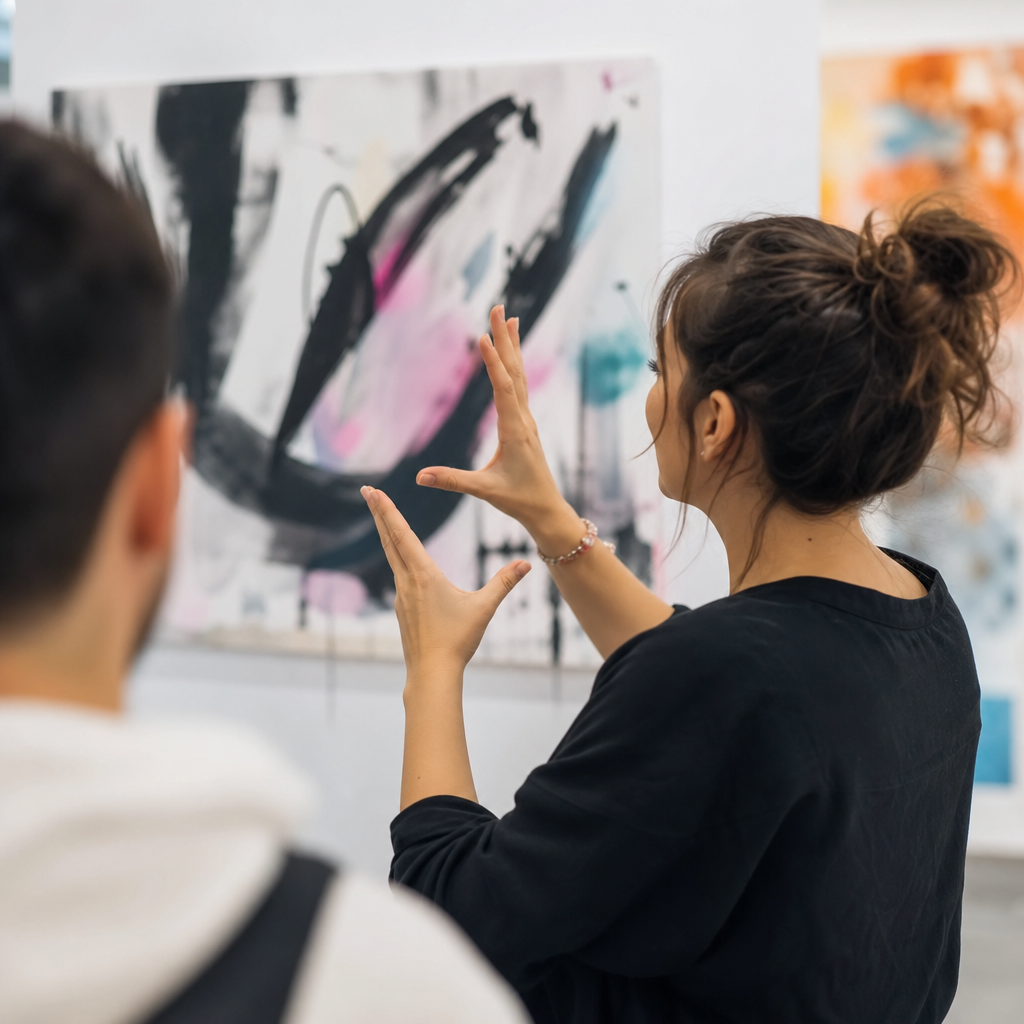
Because Deaf communication depends heavily on vision, gaining attention appropriately is one of the most important social norms. Do wave within the person’s visual field, tap a shoulder lightly if appropriate, or flick a nearby light in a home or small meeting room when culturally acceptable. In group settings, a gentle tap passed from one person to another is common. These actions are normal, not rude, because they replace the auditory cues hearing people use automatically.
Don’t shout from behind, speak while walking away, or begin a conversation when the person is looking elsewhere. Volume usually does not solve an access issue. I have seen hearing staff in reception areas repeat the same sentence louder and louder while the Deaf visitor still cannot see their face. The fix is almost always visual, not louder speech. Position yourself where you can be seen, wait for mutual attention, and then communicate. This small change dramatically reduces confusion in customer service, classrooms, and family interactions.
Do communicate directly and don’t talk through companions
One of the clearest markers of respect is direct communication. If a Deaf person is with an interpreter, friend, spouse, or colleague, speak to the Deaf person, not the hearing companion. Say “How can I help you?” rather than “Can you ask her what she needs?” Maintain eye contact with the Deaf person while the interpreter voices or signs. This is standard professional practice in healthcare, education, legal settings, and employment, and it preserves agency.
Don’t reduce a Deaf adult to a bystander in their own conversation. Hearing people often do this unintentionally in restaurants, clinics, and retail counters by handing information to the nearest hearing person. The effect is alienating. Direct engagement improves accuracy too. The Deaf person is the source of the information, the decision-maker, and the one best positioned to confirm whether communication is working.
Do support clear visual communication and don’t obstruct the message
Good visual communication depends on environment as much as intention. Do face the person, keep your mouth visible if speechreading is being used, and stand in decent lighting. Remove obstacles such as masks without clear panels when policy permits alternatives, hands covering your mouth, or bright backlighting that turns your face into a silhouette. In meetings, make sure only one person speaks at a time and identify speakers when needed. For virtual calls, turn on captions, use a stable camera, and frame your upper body clearly if signing is involved.
Don’t assume lipreading will fill the gaps. Even skilled speechreaders catch only part of spoken English because many sounds look identical on the lips. Beards, poor lighting, accents, speed, and side angles reduce accuracy further. When I train teams, I advise them to treat speechreading as supplemental, not primary, unless the Deaf person specifically says otherwise. If a point matters, confirm it in writing, captions, or signed interpretation.
| Situation | Do | Don’t |
|---|---|---|
| Getting attention | Wave, tap lightly, or use visual signals | Shout from behind or another room |
| Using an interpreter | Speak directly to the Deaf person | Address the interpreter as the conversation partner |
| Group conversation | Take turns and identify speakers | Talk over each other |
| Speechreading context | Face forward in good light | Cover your mouth or look away while talking |
| Clarifying meaning | Rephrase or write it down | Repeat the same words faster and louder |
Do use interpreters correctly and don’t treat them as extras
Qualified sign language interpreters are communication professionals, not helpers who simply “know some signs.” Do book interpreters with adequate notice for interviews, trainings, medical appointments, public events, and performance settings. In the United States, interpreter provision may be required under the Americans with Disabilities Act depending on the setting. In the United Kingdom, organizations often use registered British Sign Language interpreters through NRCPD-listed professionals. Similar standards exist in other countries. Preparation matters: share agendas, technical vocabulary, names, and presentation materials in advance so interpretation is accurate.
Don’t ask family members, especially children, to interpret sensitive information. That creates privacy, accuracy, and power problems. Also don’t assume one interpreter is enough for long, complex sessions. Conferences, legal proceedings, and daylong trainings often require team interpreting because the cognitive load is high. If an interpreter is present, pause naturally, avoid side comments, and understand that the interpreter must hear or see every speaker clearly. Respecting interpreter logistics is part of respecting Deaf participants.
Do choose accessible language habits and don’t fake understanding
Plain language helps everyone, and it is especially valuable in cross-modal communication. Do use concise sentences, define jargon, and confirm key details such as times, addresses, deadlines, medication instructions, or policy changes. If something is not understood, rephrase instead of merely repeating. For example, if “We need this by close of business” does not land, say “Please send it by 5:00 p.m. today.” Specific wording reduces ambiguity.
Don’t nod along when you are lost, and don’t expect the Deaf person to do the same. Misunderstandings compound quickly when both sides pretend clarity. I have seen this in workplace onboarding, where a new Deaf employee receives partial information in a noisy orientation and then gets blamed for missing a procedure never made accessible. The better norm is mutual verification: summarize the plan, write down action items, and invite questions without making the person feel demanding.
Do respect identity, names, and personal questions
Identity etiquette matters as much as communication mechanics. Do follow the person’s preferred terms, whether that is Deaf, hard of hearing, deafblind, late-deafened, signer, or another descriptor. If you are introduced to a sign name, treat it respectfully as part of community identity. In many Deaf communities, sign names are socially meaningful and often connected to a person’s traits, role, or initials. Do not invent one for yourself or assign one casually unless you understand the cultural norm involved.
Don’t lead with intrusive questions about medical history, “how much” someone can hear, or why they “don’t just” use a device, implant, or app. Hearing technology is not interchangeable, not universally effective, and not culturally neutral. Some people welcome those conversations; many do not, especially with strangers. A useful rule is the same one that applies in any community: if the question would be too personal in an ordinary first meeting, it is probably too personal here as well.
Do participate appropriately in Deaf social spaces and don’t center hearing norms
Deaf social norms often look different from hearing norms because visual access changes how people gather and connect. Do expect more explicit turn-taking, visual attention checks, and physically arranged spaces that support sightlines, such as circles or U-shaped seating. At Deaf events, people may leave more slowly because conversations continue while moving visually from group to group. Attention-getting across a room may be more direct than hearing people expect. None of this is impolite; it is adaptive and communal.
Don’t treat Deaf spaces like educational exhibits where every person is available to answer basic questions for hearing visitors. If you attend a Deaf event, follow the lead of organizers, learn a few relevant signs if appropriate, and avoid dominating the room with spoken conversation. Likewise, don’t assume accessibility ends once an interpreter is hired. Videos need captions, emergency instructions need visual alerts, and informal networking needs communication access too. Inclusion fails when access covers only the stage and ignores the social life around it.
Do build long-term inclusive habits and don’t stop at good intentions
The strongest relationships with Deaf individuals come from systems, not one-off politeness. Do normalize captions on all videos, accessible meeting agendas, visual alert options, and communication preference fields in forms and customer records. In workplaces, train managers on meeting equity, interpreter coordination, and technology such as CART, captioned conferencing platforms, and relay services. In schools and community programs, include Deaf perspectives in planning rather than consulting only after problems appear. These practices reduce friction for everyone and make inclusion routine rather than exceptional.
Don’t assume kindness alone is enough. People can mean well and still exclude others through preventable habits. Community and social norms are learned through repetition, feedback, and adjustment. The main benefit of understanding do’s and don’ts when interacting with Deaf individuals is not perfection; it is trust. When hearing people communicate directly, visually, and without condescension, Deaf people spend less energy managing barriers and more energy participating fully. Start with one practical step today: ask about communication preference, make the environment visible, and respond accordingly. That is how respectful access becomes everyday culture.
Frequently Asked Questions
1. What is the best way to get a Deaf person’s attention respectfully?
The most respectful way to get a Deaf person’s attention is to use clear, visual, and non-startling methods. In many situations, a gentle wave within the person’s line of sight works well. If you are nearby, a light tap on the shoulder is also widely accepted. In group settings, people may flick a room light briefly, wave to someone else who is closer, or create a visible cue that can be passed along. The key is to think visually rather than verbally. Calling out from behind, assuming they will hear you, or grabbing them abruptly can feel ineffective at best and rude at worst.
It also helps to be aware of context. If the person is deeply focused, looking away, or engaged in another conversation, give them a moment and use a method that suits the environment. For example, in a quiet one-on-one interaction, a shoulder tap may be ideal, while across a room, a wave is more appropriate. Respectful attention-getting is about access, not drama. The goal is simply to let the person know you want to communicate without making them work harder than necessary to figure out that you are trying to speak to them.
2. Is it okay to speak normally with a Deaf person, or should I change how I communicate?
It is usually fine to speak naturally, but you should be flexible and responsive to the communication method the Deaf person prefers. Not all Deaf people communicate in the same way. Some use American Sign Language or another sign language as their primary language. Others may use spoken language, lipreading, hearing aids, cochlear implants, writing, texting, speech-to-text apps, or a combination of methods depending on the situation. The most important “do” is to ask or observe what works best rather than making assumptions.
If the person is lipreading, face them directly, keep your mouth visible, and speak clearly at a natural pace. Shouting usually does not help and can distort your mouth movements. Looking down, covering your mouth, chewing gum, or talking while turning away makes communication much harder. If the person uses sign language and you do not sign, you can still communicate effectively through writing, typing, gestures, or an interpreter if one is present. A respectful interaction does not depend on perfect technique; it depends on willingness, patience, and attention to access.
It is also important to remember that “Deaf” can refer not only to hearing level but also to cultural identity. For many Deaf people, sign language and visual communication are central parts of community and culture. That means communication is not just about transferring facts. It is also about inclusion, eye contact, turn-taking, and treating the person as the expert on what helps them understand you best.
3. What are common mistakes hearing people make when interacting with Deaf individuals?
One of the most common mistakes is assuming all Deaf people are the same. Hearing people may assume every Deaf person lipreads, speaks, uses the same sign language, or wants help in the same way. In reality, Deaf individuals have diverse communication preferences, cultural backgrounds, and experiences. Another frequent mistake is talking to a companion, interpreter, or family member instead of directly to the Deaf person. Even when an interpreter is present, your attention, eye contact, and speech should be directed to the Deaf individual, not the interpreter.
Other common “don’ts” include exaggerating your mouth movements, shouting, speaking from another room, or continuing to talk while looking away. These habits often make communication less clear, not more. Hearing people may also give up too quickly if a misunderstanding happens. Repeating the same sentence louder is often less useful than rephrasing it with simpler wording or writing it down. Environmental issues matter too. Poor lighting, visual distractions, and covering your face can create unnecessary barriers.
Another mistake is treating Deafness only as a problem to be fixed. Comments that focus on pity, inspiration, or medical solutions can come across as dismissive of Deaf identity and culture. Many Deaf people do not want to be reduced to their hearing status. Respectful interaction means approaching the person as a whole human being, not as a communication challenge. Curiosity can be welcome when it is polite, but intrusive questions, patronizing praise, and assumptions about limitation are best avoided.
4. How should I behave when an interpreter is part of the conversation?
When an interpreter is present, the most important rule is simple: talk to the Deaf person, not to the interpreter. Maintain eye contact with the Deaf individual, use first-person language such as “What do you think?” instead of “Can you ask them what they think?” and treat the exchange as a direct conversation. The interpreter’s role is to facilitate communication, not to become the participant you are addressing. This small shift in behavior makes a major difference in whether the interaction feels respectful and natural.
You should also speak at a normal pace unless asked to slow down, and allow for the natural rhythm of interpreted conversation. There may be a slight delay as the message is signed or voiced, so avoid interrupting or changing topics too quickly. In longer or more complex discussions, pause when needed and be open to clarification. If visual materials, names, or technical terms come up, it can help to provide context or written support so everyone can stay aligned.
Do not assume the interpreter can make decisions, summarize personal views, or handle side conversations for you. If you need to share something, direct it to the Deaf person. If seating or room setup is involved, make sure the Deaf individual has a clear sightline to both the interpreter and anyone speaking. Good interpreted communication depends not just on language access but also on visual access, pacing, and mutual respect.
5. What does respectful, inclusive communication with Deaf individuals look like in everyday life?
Respectful, inclusive communication begins with awareness that access should not be an afterthought. In everyday life, this means making sure the Deaf person can see you before you begin speaking or signing, using good lighting, reducing unnecessary visual barriers, and being willing to adapt. In one-on-one situations, it may mean facing the person directly and confirming understanding naturally. In group settings, it often means managing turn-taking more carefully so that only one person speaks at a time and topic shifts are clear. Visual communication depends heavily on being able to track who is communicating and when.
Inclusion also means not excluding Deaf individuals from side comments, jokes, or fast-moving group interactions. Hearing people sometimes forget how often access can disappear in casual moments. Repeating key information, summarizing group reactions, using captions when sharing media, and choosing communication tools thoughtfully can help prevent that isolation. If a misunderstanding happens, respond calmly rather than awkwardly. A simple rephrase, gesture, or written note is often enough to keep the interaction moving respectfully.
Perhaps most importantly, respectful communication is grounded in attitude. Be patient without being patronizing. Be open without being invasive. Ask what works instead of assuming. If you make a mistake, correct it and move on without making the Deaf person manage your discomfort. The strongest “do” is to approach the interaction with genuine respect for Deaf people as individuals and, when relevant, as members of a rich linguistic and cultural community. When visual access, direct communication, and flexibility are prioritized, conversations become far more comfortable, effective, and inclusive for everyone involved.