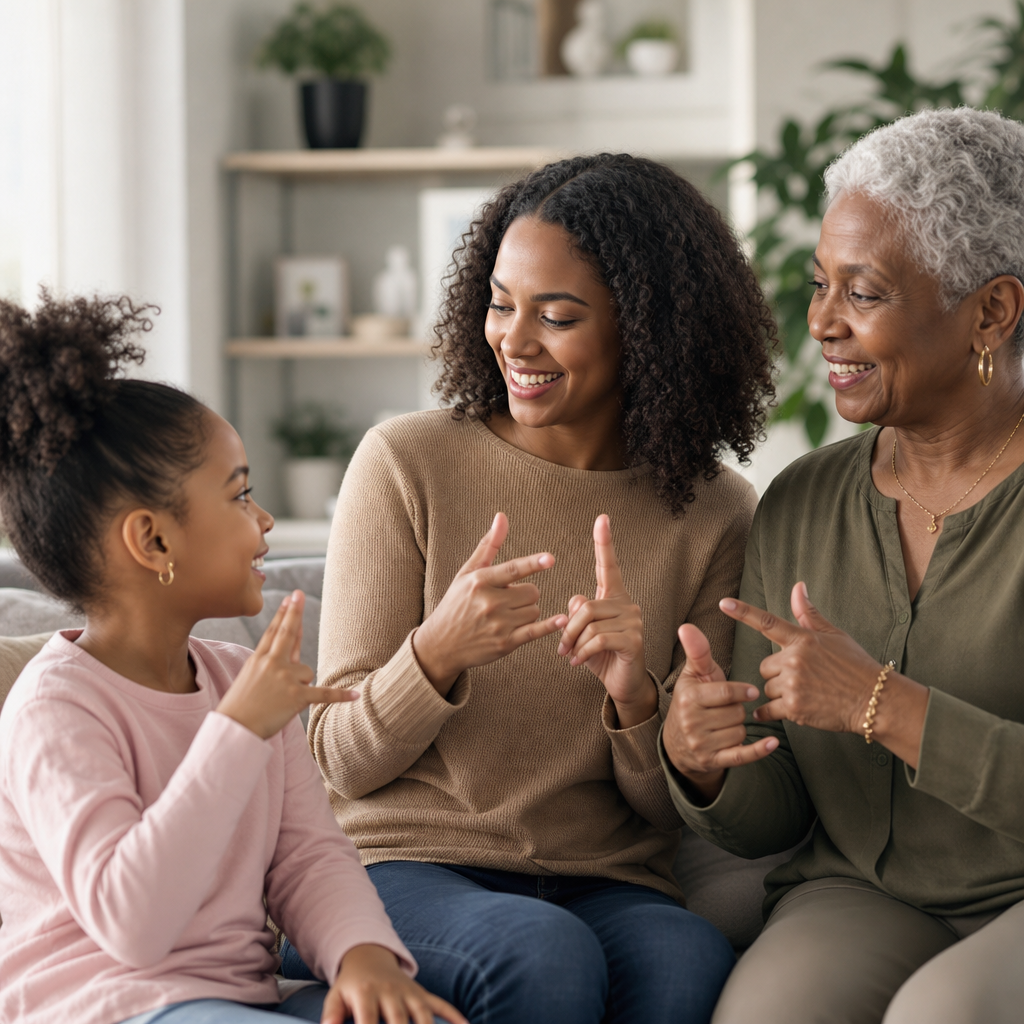
Deaf culture is the shared language, history, values, social norms, and creative expression built by Deaf people across generations, and it is passed down not mainly through bloodlines but through community contact, schools, clubs, storytelling, and signed language itself. Many readers first assume culture moves from parent to child within a household, yet in Deaf communities the pattern is different because most Deaf children are born to hearing parents who do not already know a signed language. That fact makes the question especially important: if families often begin without the language or traditions, how does Deaf culture survive, grow, and remain distinct? After years of working around Deaf education, interpreting environments, and community events, I have seen that transmission happens wherever Deaf people gather consistently and share norms in action. A child watching elders sign across a crowded room, learning visual turn-taking, or seeing pride in a name sign is absorbing culture as surely as a child hearing bedtime stories at home.
To understand how Deaf culture is passed down, it helps to define key terms clearly. Deaf with a capital D usually refers to people who identify with the cultural and linguistic community centered on a signed language such as American Sign Language, British Sign Language, or Langue des Signes Française. deaf with a lowercase d often refers to the audiological condition of hearing loss without necessarily implying cultural identification. Neither term ranks a person as better or worse; they describe different aspects of identity. Deaf culture is not simply “life without hearing.” It is a culture with its own etiquette, humor, literature, art, social institutions, and ways of organizing communication in visual space. It includes norms such as direct eye contact, clear visual access, attention-getting through light taps or flashing lights, and openness about practical details that hearing cultures may treat more privately. These are learned behaviors, reinforced through repeated interaction and modeled by respected community members.
This topic matters because cultural transmission shapes language development, educational outcomes, self-esteem, and belonging. Research from Gallaudet University and other institutions has repeatedly shown that early access to a fully accessible language supports stronger cognitive, social, and academic development. For Deaf children, especially those born into hearing families, access to Deaf role models can prevent isolation and language deprivation. It also helps hearing relatives understand that deafness is not only a medical issue to manage but a human experience connected to a community. As the hub for the broader subject of Deaf Culture and Identity, this article explains what Deaf culture is, where it comes from, who carries it forward, and how today’s technologies and policies are changing the channels through which it is inherited.
What Deaf Culture Is and What Holds It Together
Deaf culture is best understood as a language-based minority culture rather than a disability support network alone. Its core is shared signed language, because language carries worldview, memory, humor, and social rules. In the United States, ASL is not signed English; it has its own grammar, syntax, morphology, classifiers, and discourse patterns. Similar distinctions exist elsewhere. British Sign Language and Auslan are historically related to each other but not to ASL, and none of them are universal. That matters because culture follows language communities. A Deaf person may travel internationally and still recognize familiar visual behaviors, yet local traditions, histories, and political struggles differ.
Several features hold Deaf culture together over time. One is visual orientation: people arrange seating in circles, preserve sightlines, and negotiate communication through light, movement, and touch. Another is shared history, including the long fight against oralist education after the 1880 Milan Conference, where educators endorsed speech-only methods and marginalized sign languages in schools. That historical memory still influences how many Deaf adults talk about language rights today. A third feature is collective storytelling. Deaf jokes, personal narratives, and signed performances teach values about resilience, mutual aid, and pride. Finally, institutions matter. Residential schools for the Deaf, Deaf clubs, churches with sign access, sports leagues, theater groups, advocacy organizations, and universities such as Gallaudet have all served as cultural anchors. When people say Deaf culture is “passed down,” they mean these linguistic and social patterns are taught, copied, adapted, and defended through such settings.
Why Transmission Looks Different in Deaf Communities
Deaf culture is unusual because relatively few Deaf children are born to Deaf parents. Estimates commonly cited in Deaf studies place the figure around 5 to 10 percent, meaning roughly 90 to 95 percent are born into hearing families. In many minority cultures, home is the first and strongest site of transmission. In Deaf culture, home may become one site, but often only after parents learn to sign, meet Deaf adults, and shift expectations around communication. When that happens early, the effect is profound: children gain language, identity models, and a sense that they are not alone. When it does not happen, schools and community spaces may become the first places where a Deaf child encounters peers and adults who share their communication mode.
This difference explains why cultural transmission in Deaf life is often described as horizontal and intergenerational rather than strictly hereditary. Children learn from peers a few years older, from residential-school dorm supervisors, from Deaf teachers, coaches, artists, and elders at community events. I have watched teenagers explain visual etiquette to younger children in ways that looked effortless but carried deep cultural meaning: wait until everyone can see, do not sign while looking away, and make sure the whole group has the context before changing topic. Those lessons rarely appear in formal curricula, yet they shape belonging. In practical terms, Deaf culture survives because community members repeatedly create spaces where newcomers can observe fluent signing and participate without apology.
How Language Carries Culture Across Generations
Signed language is the main vehicle of Deaf cultural inheritance. Vocabulary, grammar, and storytelling techniques do more than convey information; they encode community values. Name signs are a clear example. A name sign is typically given by a Deaf person who knows the individual, and it reflects social recognition, personal traits, or practical visual features. Receiving one often marks entry into community life. Story genres do similar work. ABC stories, classifier-rich narratives, number stories, and visual vernacular performances train memory, spatial reasoning, and artistic expression while linking young signers to older traditions.
Language transmission also happens through correction and modeling. Fluent signers adjust a child’s handshape, show how role shift works, or demonstrate how facial grammar changes a question into a statement. In hearing families learning to sign, Deaf mentors often become essential because they provide natural models that classes alone cannot replicate. This is why early intervention programs that include Deaf adults are so effective. They help parents see signed language used for ordinary life: discipline, jokes, chores, affection, argument, and storytelling. Culture becomes real when language is lived, not merely studied from flashcards. Without consistent access to fluent signing, children may still communicate, but they can miss the deeper cultural patterns that come from participating in a language community every day.
The Role of Families, Schools, and Community Institutions
Families, schools, and community institutions each carry part of the work, and the strongest outcomes usually appear when all three reinforce one another. Deaf-parented families often provide the richest early language environment because signed communication begins from birth. Hearing families can absolutely nurture Deaf cultural identity too, but they usually need support, training, and contact with Deaf adults. Schools then either strengthen that foundation or weaken it. Historically, residential schools for the Deaf were central transmission hubs because students lived together, signed constantly, and met Deaf staff and alumni. Many adults still trace their deepest cultural education to dorm life, sports trips, school assemblies, and late-night conversations after formal classes ended.
Community institutions expand that learning into adulthood. Deaf clubs once played a major role before social media changed meeting patterns. They hosted dances, meetings, card games, political organizing, and cross-generational friendships. Although many clubs have declined, newer spaces have emerged: online signing channels, Deaf-led nonprofits, film festivals, coffee chats, and advocacy events. The key function remains the same. Institutions create repeated contact, and repeated contact allows norms to stick.
| Transmission site | What is passed down | Typical example |
|---|---|---|
| Family | Early language, identity attitudes, daily routines | Parents signing bedtime stories and household rules |
| School | Peer norms, fluent language models, shared history | Students learning ASL storytelling and Deaf history |
| Community groups | Networks, leadership habits, traditions | Deaf club events, sports leagues, church gatherings |
| Media and online spaces | Contemporary slang, activism, broader access | Deaf creators on YouTube, TikTok, and livestreams |
Stories, Art, and Social Norms as Cultural Teachers
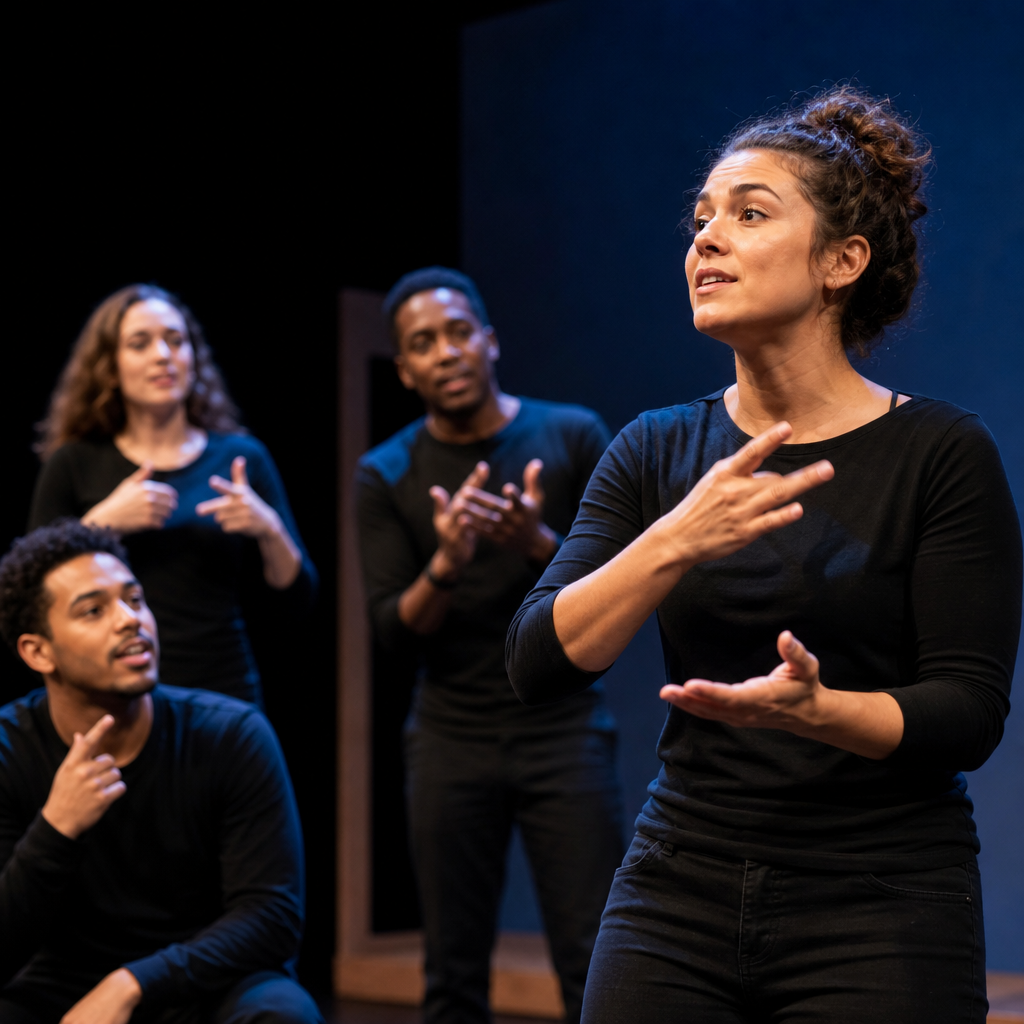
Not all transmission is formal or even verbal. Some of the most powerful lessons come through stories, humor, theater, poetry, and everyday etiquette. Deaf humor often plays with visual misunderstanding, exaggerated facial expression, interpreter mishaps, or hearing people’s assumptions. To outsiders, a joke may seem simple; to insiders, it reinforces community knowledge about access barriers and shared resilience. Signed poetry and visual vernacular do similar work artistically. They transform movement, rhythm, and space into cultural memory. Performers such as Clayton Valli helped establish signed poetry as a serious art form, showing younger generations that their language could carry aesthetic prestige as well as everyday conversation.
Social norms also teach belonging. In Deaf spaces, it is polite to ensure everyone can see before starting, to share contextual information directly, and to leave lingeringly because farewells often involve multiple signed exchanges. Newcomers learn by observation. A hearing parent might first notice that people wave across rooms, stamp on floors to create vibration, or flash lights to call attention. Those behaviors are not random accommodations; they are markers of a visual culture. When children grow up seeing these norms modeled by respected adults, they internalize them naturally. That is how culture lasts: ordinary actions become expected, repeated, and meaningful.
How Technology Is Changing Deaf Cultural Transmission
Technology has transformed, but not replaced, the way Deaf culture moves between generations. Video relay services, smartphones, captioning, videophones, and social platforms have expanded access to signed communication beyond geographic hubs. A Deaf teenager in a rural town can now watch elders discuss Deaf history on YouTube, join livestreamed events, or build friendships through video messages. During the videophone boom, many older Deaf adults described it as revolutionary because it restored spontaneous signed conversation at a distance after generations of text-bound telecommunications. That shift mattered culturally as much as practically.
Still, technology has limits. Algorithms favor short clips over deep mentorship, and online spaces can flatten local traditions into generic content. Access tools such as cochlear implants, hearing aids, and speech-to-text apps also change family choices, sometimes for the better and sometimes at the cost of reduced sign exposure if professionals present spoken-language-only paths. The balanced view is straightforward: technology supports transmission when it increases language access and community contact; it weakens transmission when it isolates Deaf children from fluent signers or frames signing as unnecessary. The most successful families and programs treat digital tools as additions, not substitutes, for sustained human relationships in signed environments.
Why Deaf Culture Still Needs Protection and Active Participation
Deaf culture persists because people actively protect it. It is not guaranteed by biology, and it can be disrupted by language deprivation, poor educational policy, or the assumption that hearing norms should always dominate. Protection does not mean rejecting technology, medicine, or hearing relatives. It means safeguarding the conditions under which Deaf children and adults can thrive: early accessible language, Deaf leadership, strong schools, interpreter quality, historical education, and social spaces where signing is normal rather than exceptional. When those conditions are present, culture is not fragile. It grows.
The clearest takeaway is that Deaf culture is passed down through connection. Language, stories, institutions, and visual norms move from elders to youth, from peers to peers, and from community to families willing to learn. If you want to understand Deaf culture more deeply, start by prioritizing signed language, seeking Deaf-led perspectives, and supporting places where Deaf people gather and teach one another. That is how identity becomes inheritance, and how each generation receives more than access alone: it receives a living culture worth carrying forward.
Frequently Asked Questions
1. How is Deaf culture passed down if most Deaf children are born to hearing parents?
One of the most important things to understand about Deaf culture is that it is not transmitted mainly through family bloodlines in the way many people expect. Because most Deaf children are born to hearing parents, many do not grow up in homes where signed language, Deaf history, and Deaf social norms are already present from birth. Instead, Deaf culture is often passed down through contact with other Deaf people and through entry into Deaf spaces. That can happen in schools for Deaf students, early intervention programs that include sign language, community organizations, Deaf clubs, sports teams, summer camps, churches, advocacy groups, and now digital spaces where Deaf people connect through video and signed communication.
In practice, this means a Deaf child may first encounter a larger cultural identity when meeting Deaf adults, older Deaf peers, and fluent signers who model not just language but also values, humor, etiquette, and a sense of belonging. These role models show how Deaf people navigate the world, celebrate visual communication, and preserve a shared history. In many cases, culture is handed down through mentorship: older community members teach younger ones how to sign naturally, how to participate in community life, and why Deaf identity matters. So while family can play a role, especially in Deaf families who already sign, the broader Deaf community is often the primary bridge that carries culture from one generation to the next.
2. Why does signed language play such a central role in passing Deaf culture through generations?
Signed language is much more than a communication tool in Deaf communities. It is one of the main vehicles through which culture itself is preserved and shared. Language carries stories, jokes, social rules, emotional nuance, identity, and collective memory. In Deaf culture, signed languages such as ASL and other national sign languages create direct access to all of those things in a fully visual form. Through signing, younger generations learn how Deaf people express ideas, tell stories, perform humor, show respect, debate issues, and connect with one another in ways shaped by Deaf experience.
Signed language also preserves cultural style. Facial expression, body movement, rhythm, timing, and visual storytelling techniques all contribute to a distinctly Deaf way of communicating. These features are often learned best by spending time with fluent signers across age groups, not just through formal lessons. A child or young adult may learn vocabulary in a classroom, but cultural depth often comes from conversations at gatherings, shared stories, casual interactions, and watching skilled signers communicate naturally. In that way, signed language acts as both archive and living practice. It carries history forward while allowing each generation to add its own creativity, vocabulary, and point of view.
3. What role have Deaf schools, clubs, and community spaces played in preserving Deaf culture?
Deaf schools, clubs, and community spaces have historically been some of the most powerful institutions for intergenerational cultural transmission. For many Deaf people, especially in earlier generations, these spaces were where they first met others like themselves and discovered that deafness was not simply a medical condition but part of a rich social and cultural world. In Deaf schools, students often encountered fluent sign language, Deaf peers, and sometimes Deaf teachers or staff who embodied shared traditions and expectations. Beyond academics, these schools frequently became centers where customs, values, leadership habits, storytelling styles, and community bonds were formed and passed along.
Deaf clubs and community organizations played a similar role outside the classroom. They offered places where Deaf adults could gather, socialize, organize events, discuss politics, celebrate achievements, and welcome younger members into community life. In those settings, culture was transmitted informally through everyday interaction: watching how elders told stories, learning community history, understanding social etiquette, and seeing how Deaf people built networks of mutual support. Even though the role of traditional clubs has changed in many places, the underlying function remains. Whether in physical spaces or online communities, Deaf people continue to create environments where younger generations can experience cultural continuity, learn from elders, and participate in a shared identity that extends beyond the family home.
4. How do storytelling and shared history help keep Deaf culture alive across generations?
Storytelling is one of the strongest ways Deaf culture remains vibrant over time. Every culture depends on stories to preserve memory, values, and identity, and Deaf culture is no exception. Through signed stories, personal narratives, performances, humor, and historical accounts, older generations pass on lessons about resilience, language pride, community struggles, and major milestones in Deaf life. These stories may include memories of school life, experiences with discrimination, battles for language access, important Deaf leaders, technological changes, and joyful accounts of community connection. When younger Deaf people encounter these narratives, they gain more than information; they inherit perspective.
Shared history matters because it gives context to present-day identity. It helps explain why access to signed language is so deeply valued, why representation matters, and why many Deaf people emphasize community ties. Storytelling also reinforces collective pride by showing that Deaf people have always created art, institutions, humor, activism, and strong social networks despite barriers. In visual storytelling traditions, meaning is often conveyed through expressive performance, role shifting, timing, and imagery that make the history memorable and emotionally powerful. As those stories are retold, adapted, and reinterpreted by each generation, they keep the culture alive while allowing it to grow.
5. Can Deaf culture still be passed down today through modern technology and changing social environments?
Yes, and this is an increasingly important part of how Deaf culture continues across generations. While traditional pathways such as schools, local clubs, and in-person gatherings remain valuable, technology has expanded the reach of community transmission in major ways. Video calling, social media, online classes, livestreams, Deaf creators, digital archives, and virtual events allow Deaf people to connect across cities, countries, and generations in signed language. A young Deaf person who may not have a strong local Deaf network can now watch fluent signers, learn community history, engage with Deaf-led discussions, and discover cultural content online that might once have been difficult to access.
At the same time, technology does not replace the culture; it becomes another channel through which culture is carried. Deaf values, humor, language patterns, advocacy traditions, artistic forms, and social norms can all be shared in digital spaces, especially because signed language is well suited to video communication. Modern environments have also broadened who can participate in passing culture forward, including Deaf educators, parents who learn to sign early, interpreters who support access, and global Deaf networks that expose younger generations to a wider range of experiences. The methods may evolve, but the core process remains the same: Deaf culture survives because Deaf people continue to meet, sign, teach, remember, and create together.