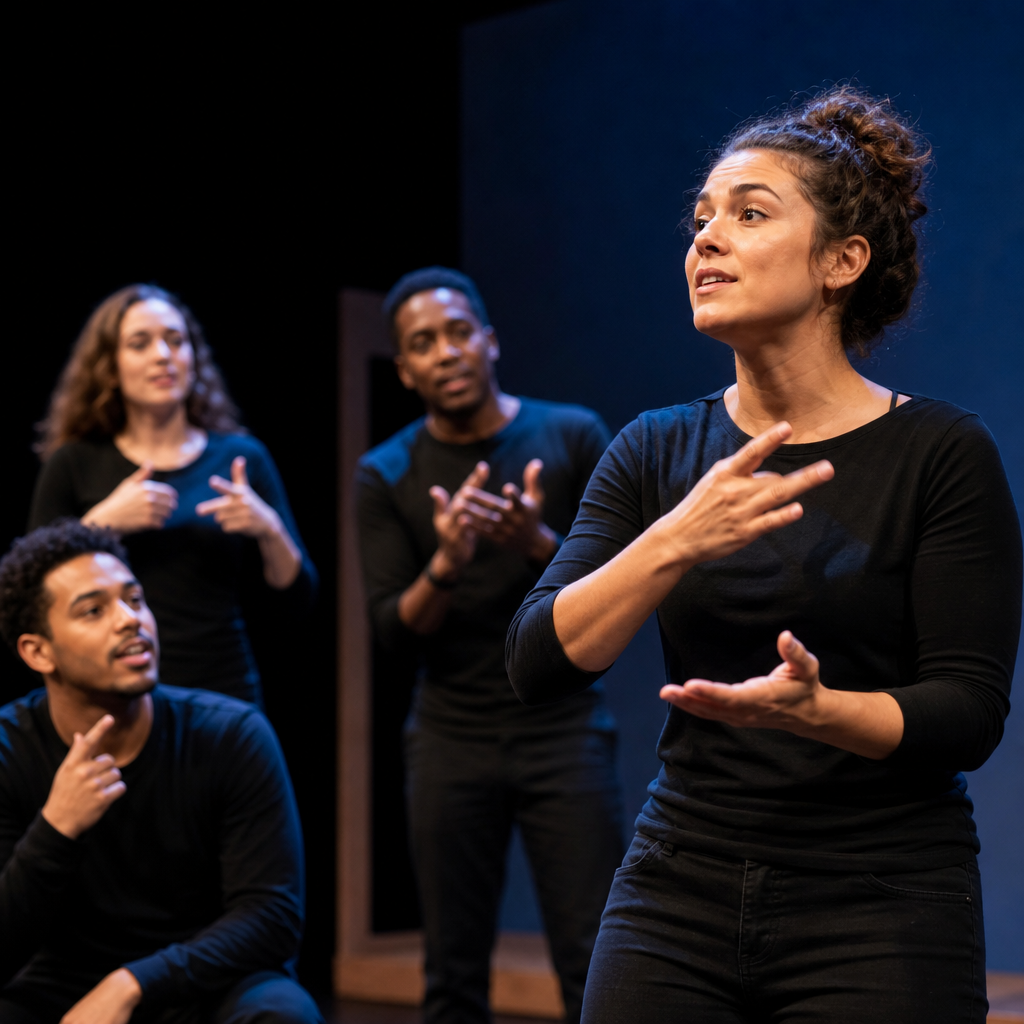

Deaf identity is formed over time through language, relationships, access, and lived experience, not through hearing level alone. In practice, I have seen people arrive at a strong sense of Deaf identity through very different paths: a child born to Deaf signing parents, a teenager who loses hearing and discovers community later, or an adult who finally meets other Deaf people after years of isolation. Although these paths differ, they often raise the same questions. What does it mean to be Deaf? How do language choices shape belonging? Why do some people feel pride while others feel conflict? Answering those questions matters because identity influences mental health, education, advocacy, family connection, and participation in community life.
In this context, Deaf usually refers to more than an audiological condition. Lowercase deaf often describes hearing status, while uppercase Deaf commonly points to cultural affiliation, especially connection to sign language, shared history, social norms, and community institutions. Hard of hearing, late-deafened, oral deaf, signing deaf, DeafBlind, and cochlear implant user are not interchangeable labels, and many people move among them or combine them. Identity is therefore dynamic. It can deepen, shift, or expand as people gain language access, meet peers, enter schools, become parents, or engage with activism.
Deaf pride grows when a person stops seeing deafness only as loss and starts recognizing it as a valid way of being in the world. That shift is not automatic. It develops through everyday experiences: learning a signed language, understanding Deaf history, finding role models, recognizing barriers as social rather than personal, and building confidence in communication choices. This article serves as a hub for Deaf Identity and Pride by explaining the main forces that shape identity over time, the tensions people often navigate, and the reasons pride remains central to Deaf culture and self-determination.
Identity Starts With Access to Language
The strongest predictor of healthy Deaf identity is early, consistent access to language. That statement is supported by decades of work in language acquisition and deaf education, and it matches what community members observe firsthand. Children need a fully accessible language from infancy. For many Deaf children, that means sign language exposure at home and school. When language is accessible, children can ask questions, express emotion, understand rules, and build relationships without delay. When language is not accessible, the effects can spill into literacy, social development, and self-esteem.
This is why identity often starts before a child can name it. A Deaf child in a signing household may absorb the idea that communication is natural, not a struggle. A child raised with limited access may instead internalize confusion or the belief that they are always catching up. That difference matters. Identity is partly the story a person tells about themselves, and language determines whether that story can be formed clearly. Sign languages such as ASL, BSL, Auslan, and LSF are complete natural languages with their own grammar. They are not simplified versions of spoken languages, and recognizing that fact is foundational to Deaf pride.
Language access also affects family bonds. Many hearing parents are told to focus exclusively on speech outcomes, yet speech training alone does not guarantee fluent communication at home. Families who add sign language early usually create broader access, especially during illness, fatigue, distance, or noisy environments. In my experience, adults who describe strong Deaf identity often point back to a moment of communication relief: the first fluent conversation, the first classroom where they fully understood, or the first time they did not need to pretend.
Family, School, and Peer Groups Shape Belonging
Identity is reinforced or weakened by the environments where a Deaf person spends time. Family is the first setting, but school and peer networks often become equally powerful. Deaf children born to Deaf parents frequently gain cultural knowledge naturally through dinner-table conversation, storytelling, humor, turn-taking norms, and community events. Deaf children born to hearing parents, who make up the large majority, may need those experiences to be intentionally created. When they are not, the child can grow up with hearing-centered expectations but little real access to hearing life.
School placement often becomes a turning point. Mainstream education can provide academic opportunity, but it can also produce social isolation if interpretation, captioning, teacher training, or peer inclusion are weak. A student may technically be present and still miss side conversations, group work, announcements, and emotional nuance. By contrast, schools for the Deaf often offer direct communication, Deaf adult role models, student leadership, and a sense that being Deaf is ordinary rather than exceptional. That does not make one setting universally better, but it explains why many adults say their identity changed dramatically after meeting Deaf peers.
Peer groups matter because identity becomes real through interaction. A teenager who is always the only Deaf person in the room may focus on fitting in. The same teenager at a Deaf camp or community event may discover quick visual communication, shared jokes, and relief from constant explanation. That shift can be profound. Belonging is not abstract; it is the everyday experience of being understood without extra labor. Pride often begins there.
Medical Models and Cultural Models Create Different Narratives
One reason Deaf identity develops unevenly is that society presents competing narratives about deafness. The medical model frames deafness primarily as impairment to be treated, managed, or corrected. In clinical settings, the focus often falls on audiograms, devices, speech perception scores, and intervention timelines. Those tools have value, but they do not explain culture, language, or community. The cultural model understands Deaf people as a linguistic and cultural minority whose needs center on access, rights, and social participation.
Most Deaf people encounter both models, and many hold a practical balance between them. A person can use hearing aids or cochlear implants and still identify strongly as Deaf. Technology does not erase culture. What matters is whether devices increase options without requiring a person to reject sign language, community, or self-respect. Problems arise when the message attached to technology is that success means appearing as hearing as possible. I have seen that message create shame, especially when outcomes are mixed, as they often are in real life.
Understanding the difference between these narratives helps explain why Deaf pride can feel political. When barriers are treated as personal deficits, the individual is blamed for not coping well enough. When barriers are recognized as access failures, responsibility shifts toward schools, workplaces, healthcare systems, and public institutions. That reframing is central to mature identity. It allows a person to say, accurately, that many difficulties linked to deafness are produced by exclusion, not by inferiority.
Common Pathways in Deaf Identity Development
Although no two people are identical, recurring patterns appear in how Deaf identity forms. Researchers have described developmental stages in several ways, but lived experience usually follows a less tidy route, with overlap, reversals, and long pauses. A person may reject Deafness in childhood, become curious in college, and claim pride in adulthood. Another may identify strongly as Deaf early on, then reassess after moving into hearing-dominated work. The point is not to force a linear model; it is to recognize common transitions that help people make sense of change.
| Stage or Pattern | Typical Experience | Identity Effect |
|---|---|---|
| Early access | Sign language, Deaf role models, direct communication | Confidence and positive cultural belonging |
| Isolation | Mainstream setting, limited peer contact, heavy speech pressure | Confusion, masking, delayed pride |
| Discovery | Meeting Deaf peers, attending events, learning history | Relief, curiosity, rapid identity growth |
| Integration | Balancing family, work, technology, and community ties | Stable, nuanced self-definition |
In practical terms, discovery is often the turning point. Someone who has spent years lip-reading may realize, after learning sign, how much effort was hidden in daily communication. Someone with a cochlear implant may stop treating Deaf community as a fallback option and instead see it as a source of language richness and solidarity. Someone who became deaf later in life may grieve hearing loss while also building a new identity that is not based on comparison with the past.
Identity development also includes conflict. Some people feel caught between hearing and Deaf spaces. Others face gatekeeping, racism, class barriers, or lack of access to formal sign language instruction. These realities should be acknowledged directly. Deaf pride is not created by denying difficulty. It is created by understanding history, gaining communication tools, and deciding that Deaf life has value on its own terms.
History, Community, and Activism Build Pride
Deaf pride becomes stronger when people learn that Deaf communities have a long history of organization, art, education, and resistance. Historic milestones matter because they counter the false idea that Deaf people are defined only by accommodation needs. In the United States, the 1988 Deaf President Now movement at Gallaudet University remains one of the clearest examples. Students demanded Deaf leadership at the world’s most prominent Deaf university and won. The event was not just symbolic. It showed that representation, language access, and institutional power are linked.
Community institutions also shape pride. Deaf clubs, sports leagues, theater, signed poetry, interpreting standards, advocacy groups, and online networks provide spaces where Deaf norms are centered. In these spaces, visual attention strategies, direct communication, storytelling, and signed humor are not marked as different. They are normal. That normalization changes self-perception. A person who has always adapted to hearing expectations can finally see Deaf ways of communicating as efficient, expressive, and socially rich.
Activism adds another layer. Campaigns for captioning, interpreter access, bilingual education, accessible healthcare, and workplace accommodation teach that rights are collective, not merely personal favors. Many people move from private frustration to public confidence when they learn how legal frameworks such as the Americans with Disabilities Act, the Equality Act in the UK, or national accessibility laws can be used. Pride grows when people recognize both the history behind those rights and their responsibility to extend access for others.
Identity Continues to Change Across Adulthood
Deaf identity does not stop forming after adolescence. It changes with work, relationships, parenting, aging, and technology. A young adult who felt fluent and confident in a Deaf school may enter a workplace with poor meeting access and have to renegotiate self-advocacy. A hearing partner may need to learn sign language for the relationship to feel equitable. A Deaf parent may become more politically engaged after navigating school systems for a child. These are identity events because they alter how a person understands belonging, power, and responsibility.
Technology can support or complicate this process. Video relay services, live captioning, hearing aids, cochlear implants, visual alert systems, and messaging platforms have all expanded communication options. At the same time, technology can tempt institutions to underinvest in human access, assuming an app replaces interpreters or bilingual education. It does not. The best outcomes happen when tools are used as additions, not substitutes, for direct language access and community connection.
For late-deafened adults, identity formation can be especially layered. They may carry a strong hearing-world identity while grieving change in communication, work, or family roles. Some do not initially identify with Deaf community because they associate deafness with loss. Yet many find that access to sign language, captioned social spaces, and Deaf mentors reduces isolation and opens a new sense of self. In adulthood, pride often looks less like a label and more like competence: knowing what access you need, asking for it clearly, and refusing shame.
What Supports a Healthy Deaf Identity
Healthy Deaf identity is supported by five consistent factors: full language access, positive role models, peer connection, accurate history, and practical rights knowledge. Families can help by learning sign language early, seeking Deaf mentors, and making communication natural at home rather than optional. Schools can help by ensuring qualified interpreters, captioning, visual access, Deaf studies content, and leadership opportunities. Employers can help by planning access before problems occur, using CART or interpreting services appropriately, and treating inclusion as routine operations.
Individuals can strengthen identity by participating in community events, reading Deaf history, following Deaf creators, and reflecting on which labels genuinely fit. There is no single correct identity performance. Some people are strongly culturally Deaf. Some identify as deaf and disabled. Some move between spoken and signed worlds every day. The common thread is agency. A healthy identity allows a person to choose communication methods, affiliations, and goals without being forced to apologize for Deafness.
That is why Deaf Identity and Pride deserves to be treated as a core topic within Deaf Culture and Identity, not a side issue. Identity affects education outcomes, mental health, family relationships, and civic participation. It explains why language deprivation is so damaging, why community connection is protective, and why representation matters in schools, media, and policy. Most of all, it clarifies a truth that many Deaf adults learn through experience: Deaf identity is not discovered in a single moment. It is built over time, strengthened through access and community, and sustained through pride. If you are exploring this topic, keep learning from Deaf people, engage with Deaf-led resources, and make access the starting point.
Frequently Asked Questions
What does it mean to have a Deaf identity?
Having a Deaf identity usually means seeing deafness as more than an audiological condition. It involves how a person understands themselves in relation to language, culture, community, communication, and lived experience. For many people, Deaf identity is tied to shared values, visual ways of communicating, access needs, and a sense of belonging with other Deaf people. It is not defined by hearing level alone, and it does not depend on whether someone is profoundly deaf, hard of hearing, late-deafened, oral, signing, or somewhere in between.
In real life, Deaf identity develops through experience. A person may begin with a medical understanding of hearing loss and later come to see themselves through a cultural lens after meeting other Deaf adults or learning sign language. Someone else may grow up in a Deaf family and understand Deaf identity from childhood as something natural, positive, and deeply rooted in daily life. In both cases, Deaf identity is shaped by how a person communicates, who they relate to, whether they have access to community, and how they make meaning of their life. That is why Deaf identity is best understood as an evolving sense of self rather than a fixed label.
Is Deaf identity determined by how much hearing a person has lost?
No. Hearing level may influence a person’s experiences, but it does not by itself determine Deaf identity. Two people with the same hearing test results can have very different identities depending on their family background, language access, education, community connections, and personal experiences. One person may identify strongly as Deaf because they use sign language and are active in Deaf spaces, while another with a similar hearing profile may identify as hard of hearing, late-deafened, disabled, hearing, or may still be figuring it out.
This matters because identity is social and personal, not just clinical. Audiograms measure sound detection, but they do not capture whether a child had full language access early in life, whether a teenager found acceptance in Deaf peer groups, or whether an adult spent years isolated before discovering Deaf community. Deaf identity often becomes stronger when people gain communication access, recognize shared experiences, and find language that reflects their reality. In other words, hearing level can be part of the story, but it is never the whole story.
How do language and communication shape Deaf identity over time?
Language and communication are central to how Deaf identity forms because they affect belonging, self-expression, and access to the world. When a person has full access to language, whether through a signed language, spoken language with effective support, or a combination of approaches, they are better able to build relationships, understand themselves, and participate in community. For many Deaf people, learning sign language can be a turning point because it provides not only communication access but also a direct connection to Deaf culture, history, and shared ways of being.
Over time, communication experiences can either strengthen or delay identity development. A child who grows up with signing Deaf parents may develop a clear and positive Deaf identity early because communication is natural and abundant from the start. By contrast, a teenager who loses hearing later may initially feel disconnected, especially if communication becomes effortful at home or school. If that teenager later meets Deaf peers, learns sign language, or experiences fully accessible environments, their self-understanding may change significantly. Identity often deepens when people move from struggling to communicate to being fully seen, understood, and included.
Can someone develop a strong Deaf identity later in life?
Yes. Many people develop a strong Deaf identity in adolescence or adulthood, sometimes after years of feeling isolated, misidentified, or caught between worlds. This can happen after hearing changes, after meeting Deaf friends or mentors, after learning sign language, or after entering spaces where communication is finally accessible. For some, the shift is gradual. For others, it feels immediate and life-changing because they are encountering a level of understanding and belonging they had not experienced before.
Developing Deaf identity later in life does not make it less real or less valid. In fact, late identity formation is common because many people are not given early access to Deaf role models, Deaf culture, or signed language. Some are raised with the message that they should try to fit into hearing norms, only later discovering that there is another framework for understanding themselves. Once they gain access to community and language, they may reinterpret earlier experiences such as fatigue, exclusion, misunderstanding, or pressure to perform as hearing. That reflection often becomes an important part of identity formation, helping them build a grounded and confident sense of who they are.
What factors most influence how Deaf identity is formed over time?
Several factors consistently shape Deaf identity over time, including early language access, family attitudes, educational environment, peer relationships, access to Deaf community, communication success or frustration, and exposure to Deaf role models. Family plays a major role because acceptance and communication at home can support healthy identity development, while limited access or negative attitudes can create confusion or disconnection. Education matters too. A school environment that values accessibility, language development, and Deaf perspectives can help a person feel capable and included, whereas an environment focused only on “fixing” hearing difference may narrow the way they see themselves.
Relationships and lived experience are just as important. People often form a stronger Deaf identity when they meet others who share similar experiences and when they can participate in spaces without constantly struggling to keep up. Positive encounters with Deaf mentors, interpreters, signing peers, or accessible communities can validate feelings that previously had no clear name. At the same time, identity is rarely linear. It may shift across childhood, adolescence, college, work, parenting, or changes in hearing status. What remains consistent is that Deaf identity grows through experience, connection, and access. It is formed over time through the meaning a person makes of their life, not by a single test result or category.