Communication apps are becoming one of the most important accessibility tools in the deaf community, because they turn everyday barriers into manageable interactions across work, school, healthcare, and social life. In this context, communication apps include text-to-speech tools, speech-to-text captioning apps, relay and video calling platforms, messaging systems, transcription services, multilingual interpretation tools, and alert-based apps that help people exchange information without depending on hearing. Accessibility means more than simply adding captions or a chat box. It means designing communication so a deaf or hard of hearing person can participate fully, independently, and in real time.
I have worked with teams evaluating accessibility software for education, customer service, and remote collaboration, and one lesson is consistent: the best communication apps do not just replicate hearing-first systems. They solve specific friction points, such as missed announcements, inaccessible phone calls, delayed interpretation, poor caption accuracy, and notifications that assume users will hear them. That practical shift matters because communication is not a single task. It is a chain of moments, from booking an appointment to joining a meeting to responding to an emergency alert.
The future of communication apps for accessibility matters because deaf users are now interacting across more channels than ever before. A single day may involve a Zoom meeting with live captions, a clinic portal message, a sign language video call, a workplace chat platform, and a smart doorbell alert on a phone or watch. If those tools are fragmented, the burden falls on the user to bridge gaps manually. If they are integrated and designed well, the tools reduce cognitive load and increase autonomy. That is why this topic sits at the center of technology and tools for the deaf community: communication apps are no longer optional add-ons. They are infrastructure.
This hub article explains where communication apps are heading, which features matter most, how different app categories solve different problems, and what organizations should evaluate before adopting them. It also provides a foundation for deeper articles on live captioning, relay services, assistive messaging, accessibility APIs, and inclusive mobile design. The future is not one universal app. It is an ecosystem built around accuracy, customization, privacy, interoperability, and user control.
Why communication apps are now core accessibility infrastructure
Communication apps have moved from convenience products to essential access systems because digital communication now mediates basic participation. For deaf users, a missed call is not just a missed call. It can mean a missed interview, a delayed prescription, an inaccessible landlord update, or a safety issue. In the past, many accessibility solutions were reactive. Users requested an interpreter, asked for meeting notes, or relied on family members to relay spoken information. Modern apps increasingly make access immediate. Live captions on mobile devices, automatic video transcripts, visual alert systems, and integrated messaging reduce the need to negotiate access every time.
This shift has been accelerated by remote work, telehealth, online learning, and cloud collaboration. Platforms such as Zoom, Microsoft Teams, Google Meet, and Webex normalized live captions and transcripts for mainstream users, which in turn raised expectations for accuracy and speed. For deaf professionals, that mainstreaming matters. Once captions become a standard feature rather than a special accommodation, they are easier to request, improve, and measure. The same pattern applies to voicemail transcription, smart notification systems, and customer support chat.
There is also a legal and operational reason these apps matter. Employers, schools, healthcare systems, and public services are under increasing pressure to provide effective communication access. In the United States, the ADA, Section 504, Section 508, and FCC-related relay obligations all shape implementation decisions. In the UK and EU, accessibility standards and digital service regulations create similar expectations. An app that offers captions but fails in medical terminology, low bandwidth conditions, or multilingual settings may still fall short of meaningful access.
The main categories of communication apps for deaf accessibility
No single category solves every communication barrier. The most effective accessibility strategy uses several app types together, each serving a distinct role. Real-world deployment usually starts by mapping communication scenarios rather than shopping for a generic accessibility product.
| App category | Primary function | Common examples | Key accessibility value |
|---|---|---|---|
| Live captioning apps | Convert speech to on-screen text in real time | Google Live Transcribe, Ava, Otter, built-in meeting captions | Supports meetings, classes, and in-person conversations |
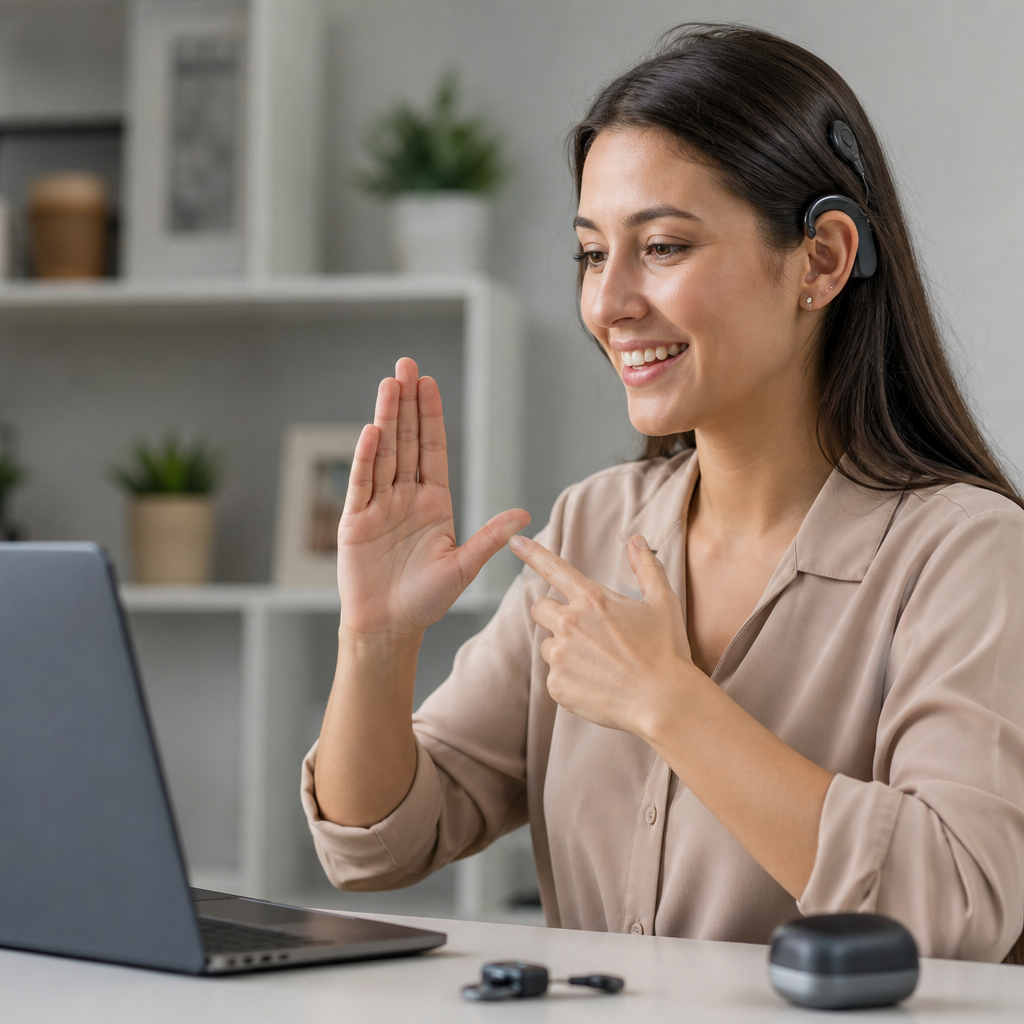
| Video relay and signed communication apps | Connect users through interpreters or direct signing video | Sorenson, Convo, Zoom video, FaceTime | Enables natural sign-based communication and phone access |
| Messaging and chat apps | Provide text-first communication channels | WhatsApp, Signal, Teams, Slack | Removes dependence on voice calls for routine coordination |
| Speech-to-text and transcription tools | Create searchable transcripts from audio or video | Otter, Trint, Microsoft transcription tools | Improves review, documentation, and long-form content access |
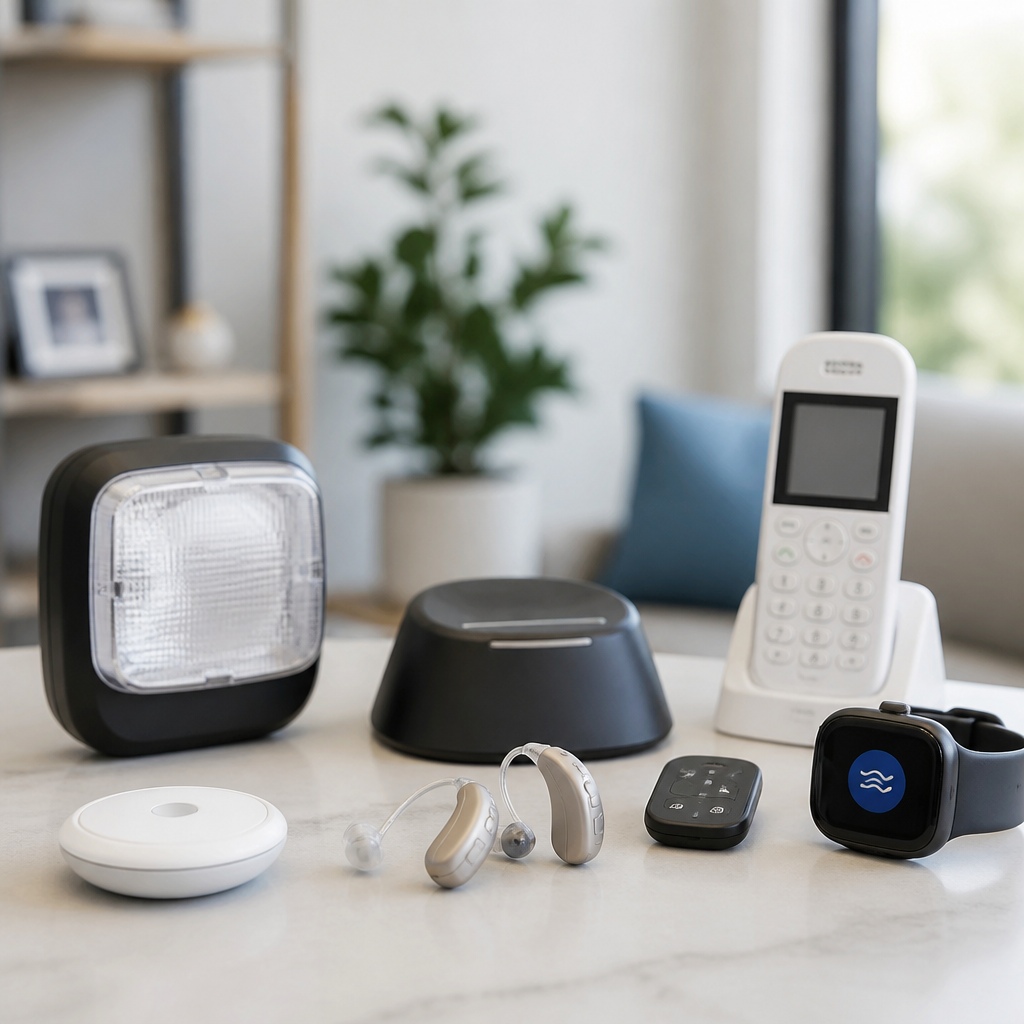
| Alert and notification apps | Turn sounds into visual, haptic, or connected alerts | Ringer apps, smart home alert systems, wearable notifications | Surfaces doorbells, alarms, announcements, and calls |
Each category addresses a different point in the communication chain. Live captioning apps help during a conversation. Transcription tools help after it. Messaging apps replace voice dependency. Video relay services bridge traditional phone systems. Alert apps cover the environmental signals hearing users often take for granted. Accessibility improves fastest when these categories work together and sync across devices.
What the best communication apps do differently
The strongest communication apps are not defined by marketing claims about inclusion. They are defined by how they perform under real conditions. In evaluations I have run, five criteria separate truly useful apps from partially accessible ones: accuracy, latency, customization, interoperability, and failover options.
Accuracy is the most obvious factor, but it is often misunderstood. An app can score well in a controlled demo and still perform poorly with accents, overlapping speakers, specialized terms, or poor microphones. In healthcare settings, for example, medication names and anatomy terms can be mistranscribed. In education, subject vocabulary such as algebraic notation or historical names often breaks generic speech models. That is why domain adaptation, custom vocabulary support, and transcript editing matter.
Latency is just as important as raw accuracy. If captions are technically correct but appear several seconds late, turn-taking becomes awkward and users lose context. Real-time communication requires low-latency rendering, speaker separation, and stable performance when bandwidth drops. Video relay platforms face a similar challenge. A sharp image with choppy motion can make signed communication harder, because sign languages depend on movement, facial expression, and timing.
Customization is another dividing line. Deaf users are not a single audience with identical needs. Some rely on ASL or another sign language as a primary language. Others prefer text. Some are late-deafened and use speech heavily. Some are multilingual. The best apps let users adjust caption size, contrast, vibration patterns, transcript exports, contact preferences, and interpreter workflows. Accessibility is strongest when users can shape the interface around how they communicate, not the other way around.
Interoperability is becoming more important every year. A useful app should integrate with calendars, conferencing platforms, operating system accessibility settings, CRM systems, learning platforms, and notification APIs. If a workplace uses Teams, a school uses Google Classroom, and a clinic uses Epic MyChart, communication breaks down unless accessibility tools can move across those environments. Open APIs, standard export formats, and device syncing are not secondary features. They are what turn isolated tools into a reliable ecosystem.
How artificial intelligence is changing communication accessibility
Artificial intelligence is reshaping communication apps most visibly through automatic speech recognition, machine translation, speaker diarization, and predictive context models. The practical benefit is speed. Captions that once required expensive human support can now be generated instantly on phones, laptops, and embedded devices. Transcripts can be searched by topic, summarized, and linked to action items. For deaf users, that means more spontaneous access to conversations that previously required planning.
However, AI improves accessibility only when paired with human-centered design. Automatic captions are useful, but they are not a substitute for qualified sign language interpreters in every setting. In legal proceedings, mental health services, or complex technical meetings, machine output may miss nuance, emotion, or critical terminology. I have seen teams overestimate AI because demos looked impressive, then discover that a noisy conference room or an unfamiliar accent reduced reliability sharply. The future is hybrid. AI handles scale and immediacy, while human support remains essential where precision and nuance are high stakes.
Another major change is context-aware assistance. Newer systems can identify speakers, detect meeting topics, distinguish commands from conversation, and improve output based on user history. If a user regularly discusses software engineering, oncology, or legal compliance, the app can prioritize relevant vocabulary. This is valuable, but it introduces privacy questions. Apps that learn user context must explain data handling clearly, offer consent controls, and limit unnecessary retention. Accessibility cannot come at the cost of surveillance.
Design trends shaping the next generation of apps
Several design trends are defining the future of communication apps for accessibility. First is multimodal communication. Instead of forcing users into text or voice alone, leading apps combine captions, chat, sign-friendly video, visual cues, haptics, and transcript storage in one flow. This is especially useful in group settings where people switch modes quickly. A user may watch captions during a meeting, ask a question in chat, and review the transcript afterward.
Second is on-device processing. Privacy rules, bandwidth limitations, and response speed are pushing more transcription and alert functions onto the device itself. Apple, Google, and major chipset makers have all increased support for local AI processing. When speech recognition happens on-device, response can be faster and sensitive conversations may stay private. The tradeoff is that smaller devices may struggle with long sessions or specialized vocabulary without cloud assistance.
Third is deeper integration with wearables and smart environments. Smartwatches can mirror captions, trigger haptic alerts, and provide discreet notifications during meetings or while commuting. Connected home systems can route doorbells, smoke alarms, appliance tones, and baby monitors into visual and vibration alerts. This matters because accessible communication is not limited to person-to-person conversation. It includes environmental awareness, which is a communication channel in its own right.
Fourth is language flexibility. Future apps will need to support not only multiple spoken languages but also culturally appropriate sign language workflows and regional terminology. ASL is not interchangeable with BSL, Auslan, or LSF. Apps that claim universal accessibility but ignore linguistic diversity will not meet real user needs. Better products recognize language preference at setup, support localized caption models, and make interpreter access easier rather than burying it in account settings.
How organizations should choose communication apps
Organizations often buy communication apps based on feature lists instead of use cases, and that is where accessibility programs fail. A better approach starts with task mapping. Identify where communication breaks: incoming calls, live meetings, emergency alerts, customer support, telehealth visits, classroom lectures, field work, or front-desk interactions. Then test tools against those moments with actual deaf or hard of hearing users.
Procurement should include measurable criteria. Ask about caption word error rates in noisy environments, support for custom vocabulary, interpreter integration, transcript export formats, mobile parity, encryption, retention controls, and compatibility with existing platforms. Request live demos using your own terminology, not vendor scripts. A hospital should test clinical conversations. A university should test lectures with multiple speakers. A retailer should test frontline customer interactions.
Training is equally important. Even the best app fails if colleagues do not know how to support accessible communication. Staff should learn basic practices such as speaking one at a time, using quality microphones, confirming transcript accuracy when details matter, and enabling captions by default rather than only on request. Accessibility works best when process and technology reinforce each other.
What comes next for the deaf community and communication apps
The future of communication apps for accessibility is not about replacing human connection with software. It is about removing preventable friction so deaf users can communicate on equal terms across every major setting. The next wave of progress will come from better caption accuracy, stronger sign-friendly video, smarter notifications, privacy-preserving AI, and tighter integration across devices and platforms. Apps that treat accessibility as a core design requirement will outperform tools that bolt it on later.
For readers exploring technology and tools for the deaf community, communication apps are the hub because they touch everything else: education access, workplace inclusion, telehealth usability, emergency preparedness, and independent living. The most effective strategy is to evaluate tools by scenario, test them with real users, and build a stack rather than chase a mythical one-size-fits-all solution. Start by auditing your current communication barriers, identify the app categories that match them, and use that shortlist to guide deeper research across this subtopic.
Frequently Asked Questions
1. Why are communication apps becoming so important for accessibility in everyday life?
Communication apps are becoming essential because they help remove barriers that have historically made everyday interactions harder for deaf and hard of hearing people. In practical terms, these apps make it easier to navigate work meetings, classroom discussions, medical appointments, customer service conversations, public transportation updates, and social situations without relying entirely on in-person interpreters or informal workarounds. Tools such as speech-to-text captioning apps, text-to-speech systems, relay services, video calling platforms, messaging apps, and visual alert tools all support more direct, flexible, and independent communication.
Their importance is growing because modern life increasingly depends on fast, digital, and mobile communication. When accessibility is built into the same platforms people already use, inclusion becomes more realistic and consistent. Instead of waiting for special accommodations in every setting, users can access support on demand through a smartphone, tablet, or computer. That shift matters because accessibility works best when it is immediate, reliable, and integrated into daily routines rather than treated as an exception.
These apps also improve participation, not just convenience. They help people join conversations more fully, respond in real time, follow spoken information more accurately, and communicate across different languages and communication preferences. As the technology improves, communication apps are moving from being helpful add-ons to being core accessibility infrastructure.
2. What kinds of communication apps are shaping the future of accessibility?
The future of accessibility is being shaped by a broad ecosystem of communication tools rather than one single type of app. Speech-to-text captioning apps are among the most influential because they convert spoken language into readable text during meetings, lectures, appointments, and casual conversations. These tools are becoming faster and more accurate, which makes them especially useful in dynamic environments where immediate access to spoken information is critical.
Text-to-speech tools are also important because they allow typed messages to be spoken aloud clearly, helping users communicate with people who may not know sign language or who are in situations where typing is easier than speaking. Relay and video calling platforms continue to play a central role by connecting users with interpreters or text-based services during phone calls and video conversations. These services are especially valuable in professional, legal, and healthcare settings where clarity and accuracy are essential.
Messaging systems, live transcription services, multilingual interpretation tools, and alert-based apps are expanding what accessibility can look like. Messaging apps support asynchronous communication, which can be easier and more inclusive than voice-first systems. Multilingual tools help bridge language gaps in diverse workplaces and communities. Alert apps add another layer of accessibility by turning alarms, announcements, or spoken cues into visual or vibrating notifications. Together, these technologies create a more flexible communication environment that can adapt to different settings, preferences, and needs.
3. How will communication apps improve access in workplaces, schools, and healthcare settings?
In workplaces, communication apps can make collaboration more accessible by supporting real-time captioning in meetings, clearer messaging across teams, and more inclusive customer interactions. Employees can follow discussions more accurately, contribute without missing key information, and communicate with coworkers or clients using the method that works best for them. This leads to better productivity, fewer misunderstandings, and a stronger sense of inclusion. As organizations become more aware of digital accessibility, communication apps are likely to become a standard part of workplace technology rather than a niche accommodation.
In schools, these apps can improve access to lectures, classroom discussions, group projects, and administrative communication. Students benefit when spoken instruction is captioned, recorded, transcribed, or translated into multiple communication formats. That support can improve comprehension, participation, and academic confidence. Teachers and institutions also benefit because digital tools can help create more consistent and scalable accessibility practices across classrooms, whether learning is in person, hybrid, or fully online.
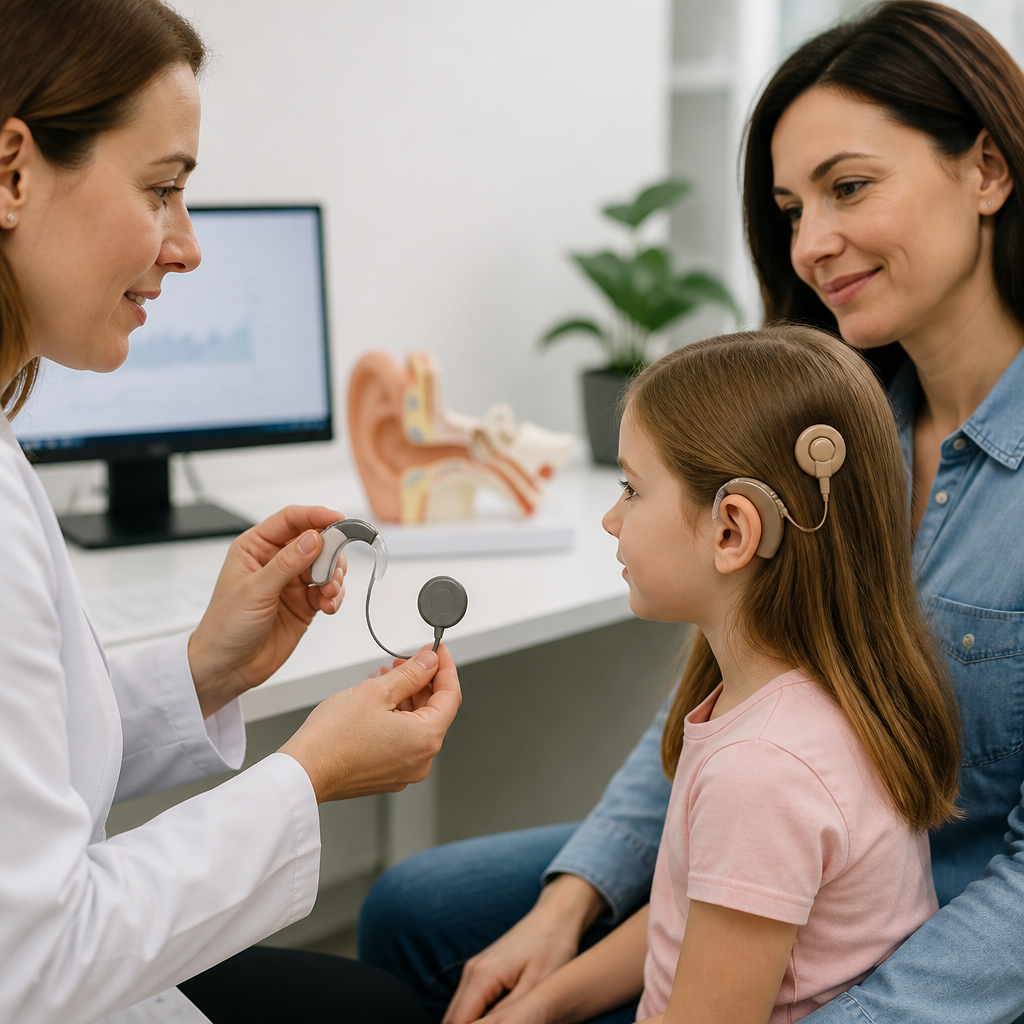
In healthcare, the impact may be even more significant because communication quality directly affects safety, trust, and informed decision-making. Captioning apps, relay services, transcription tools, and video communication platforms can help patients understand diagnoses, treatment instructions, consent information, and follow-up care. They also help providers communicate more clearly without depending on rushed assumptions or incomplete exchanges. While apps do not replace every professional accessibility service, they can greatly improve access when used thoughtfully, especially in urgent, remote, or routine care situations.
4. What features should people look for when choosing an accessibility-focused communication app?
Accuracy should be one of the first priorities, especially for speech-to-text and transcription tools. If captions are delayed, inconsistent, or frequently incorrect, the app may create confusion instead of access. Users should also consider how well an app performs in real-world conditions such as background noise, multiple speakers, video calls, accents, and technical vocabulary. Reliability matters just as much as innovation because accessibility tools need to work consistently when communication is important.
Ease of use is another major factor. The best communication apps are intuitive, quick to set up, and practical in everyday situations. Features such as customizable text size, high-contrast displays, saved transcripts, visual alerts, vibration notifications, multilingual support, and compatibility with other devices can make a meaningful difference. Integration with workplace platforms, classroom tools, telehealth systems, and mainstream messaging services is also valuable because it reduces friction and helps accessibility fit naturally into existing routines.
Privacy and security should not be overlooked, particularly for apps used in healthcare, education, or employment. Users should check whether conversations are stored, how data is encrypted, and whether transcripts are shared with third parties. Cost, customer support, and platform availability are also worth reviewing. A strong accessibility app should not only offer advanced features but also provide dependable performance, transparent policies, and flexibility for different communication preferences.
5. What does the future of communication apps for accessibility look like over the next few years?
The future will likely be defined by smarter, faster, and more personalized tools. Artificial intelligence is already improving automatic captioning, voice recognition, language translation, and context awareness. Over the next few years, communication apps are expected to become better at identifying speakers, handling complex conversations, recognizing specialized vocabulary, and adapting to individual user preferences. This means accessibility tools should become more natural and less disruptive to use in professional, academic, medical, and social environments.
Another major trend is convergence. Instead of needing separate apps for messaging, captioning, alerts, transcription, interpreting, and calling, users may increasingly find these features combined within the same platforms. That integration can simplify communication and reduce the burden of switching between tools. Accessibility is also likely to become more embedded in mainstream apps, which is important because inclusion improves when people can use the same systems as everyone else rather than being isolated into separate products.
At the same time, the future is not just about technology becoming more advanced. It is also about design becoming more inclusive. The most meaningful progress will come from building apps with input from deaf and hard of hearing users, prioritizing privacy, ensuring affordability, and making accessibility features available by default rather than as premium extras. If that happens, communication apps will continue evolving from helpful tools into foundational systems that support equal participation across every part of daily life.