
Common mistakes in portraying Deaf characters usually begin long before casting, because representation is shaped by who writes, who directs, who signs on screen, and who is invited to review the final story. In media, Deaf representation refers to how Deaf people, Deaf culture, signed languages, hearing technology, education, identity, and everyday life are depicted across film, television, streaming, theater, publishing, games, and advertising. The distinction between Deaf and deaf matters: many people use lowercase deaf to describe audiological hearing loss, while uppercase Deaf often refers to cultural identity tied to community, shared history, and signed language. That difference is not academic. It changes how a character would communicate, move through institutions, interpret sound, and relate to family. I have reviewed scripts and scene treatments involving Deaf characters, and the same avoidable errors appear repeatedly: characters reduced to inspirational symbols, sign language used as visual decoration, technology presented as cure, and deafness treated as tragedy rather than lived reality.
Why does this matter? Because media trains audiences in what to expect from people they may never meet closely. A misleading portrayal can affect classroom assumptions, workplace behavior, medical conversations, and even casting decisions in later productions. Accurate Deaf representation in media also improves storytelling. It creates stronger conflict, clearer stakes, and more believable character motivation. Viewers notice when a supposedly Deaf character responds unrealistically to sound cues, signs in impossible ways, or exists only to teach hearing characters empathy. Better portrayals are possible when creators understand that Deaf experience is diverse, not monolithic. Some Deaf people use American Sign Language, British Sign Language, or other signed languages; some speak; some lip-read; many do not rely on lip-reading because it is limited and exhausting; some use hearing aids or cochlear implants; some reject the idea that they need fixing. A credible hub article on Deaf representation in media must address these distinctions directly, because most portrayal mistakes come from flattening that complexity into a single stereotype.
This guide examines the most common errors, why they happen, and how to avoid them in practice. It also frames the broader standards that make Deaf characters feel authentic on screen and on the page. If you create media, edit scripts, market stories, or teach representation, these principles will help you build work that is more accurate, more ethical, and far more compelling.
Treating Deafness as a Plot Device Instead of a Full Identity
The most common mistake is building a Deaf character around deficiency rather than identity. In weak scripts, deafness exists only to trigger pity, create convenient misunderstanding, or motivate a hearing protagonist’s moral growth. The Deaf character becomes the obstacle, lesson, or symbol. This is poor writing and inaccurate representation. Real people are shaped by work, humor, class, race, gender, religion, family history, education, and personality as much as by hearing status. Deaf identity intersects with all of those. When a script asks only, “How does this character overcome deafness?” it starts from the wrong premise. A better question is, “Who is this person, and how does their Deaf experience influence how they navigate the world?”
Consider how often media frames a Deaf child’s story entirely around whether parents choose speech therapy, sign language, mainstream schooling, or implants. Those are real decisions, but if they consume the whole narrative, the child stops being a person and becomes a family debate. Balanced portrayal shows preferences, frustrations, talents, friendships, and agency. It also distinguishes external barriers from internal lack. The problem is often inaccessible design, uninformed hearing people, or institutions that fail to adapt, not deafness itself. The social model of disability is useful here: many limitations arise from environments that exclude. A Deaf lawyer blocked by a court that fails to provide qualified interpreters is not limited in the same way a script might suggest. The institution is.
Using Sign Language Inaccurately or as Decorative Performance
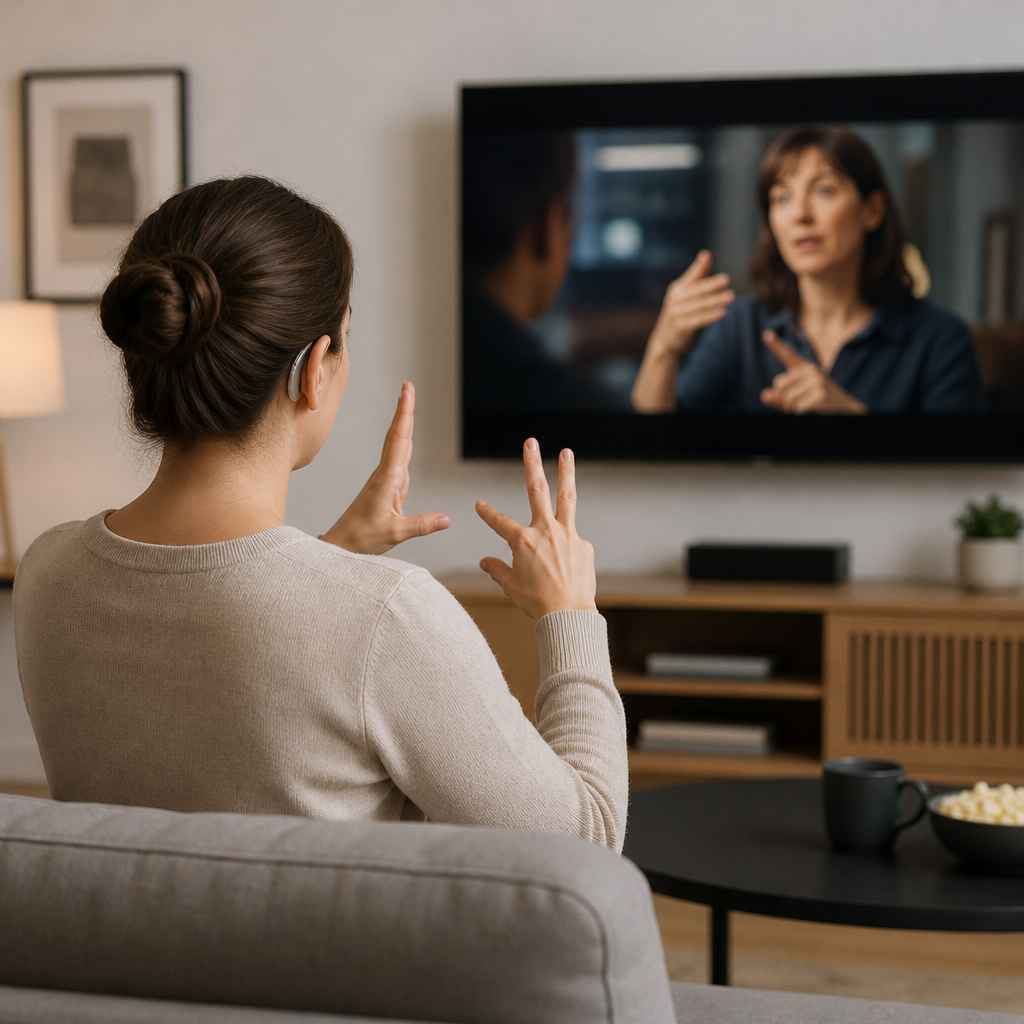
Another major mistake in Deaf representation in media is treating sign language as a generic set of gestures. Signed languages are full languages with grammar, syntax, regional variation, register, and cultural norms. American Sign Language is not manual English. British Sign Language is not mutually intelligible with ASL. A character cannot simply wave their hands while spoken dialogue carries the real meaning. Yet many productions still coach hearing actors to memorize signs phonetically without understanding sentence structure, eye gaze, facial grammar, role shifting, or spatial referencing. The result looks wrong immediately to fluent signers and often confuses hearing audiences as well.
Authentic signed performance depends on more than handshape. Facial expression carries grammatical information. Timing matters. Turn-taking looks different. Interpreted interactions have pacing realities that scripts should honor. Camera blocking matters too. If the edit cuts away from the signer at the key line, the production is effectively muting the character’s language. I have seen scenes where a Deaf character signs emotionally while the camera stays on the hearing listener’s reaction; that choice tells the audience whose interiority matters. Better direction lets signed language lead the scene. Productions should work with Deaf consultants, fluent sign masters, and if possible Deaf actors from development through postproduction.
Writers should also avoid the lazy device where a hearing character “miraculously” understands complex signing after minimal exposure. Functional proficiency takes time. Even strong lip-reading does not make communication effortless. If the story includes interpreted dialogue, show the interpreter accurately: first-person rendering, professional boundaries, lag time, and the reality that not every setting has equal access to qualified services.
Miscasting and Excluding Deaf Talent Behind the Camera
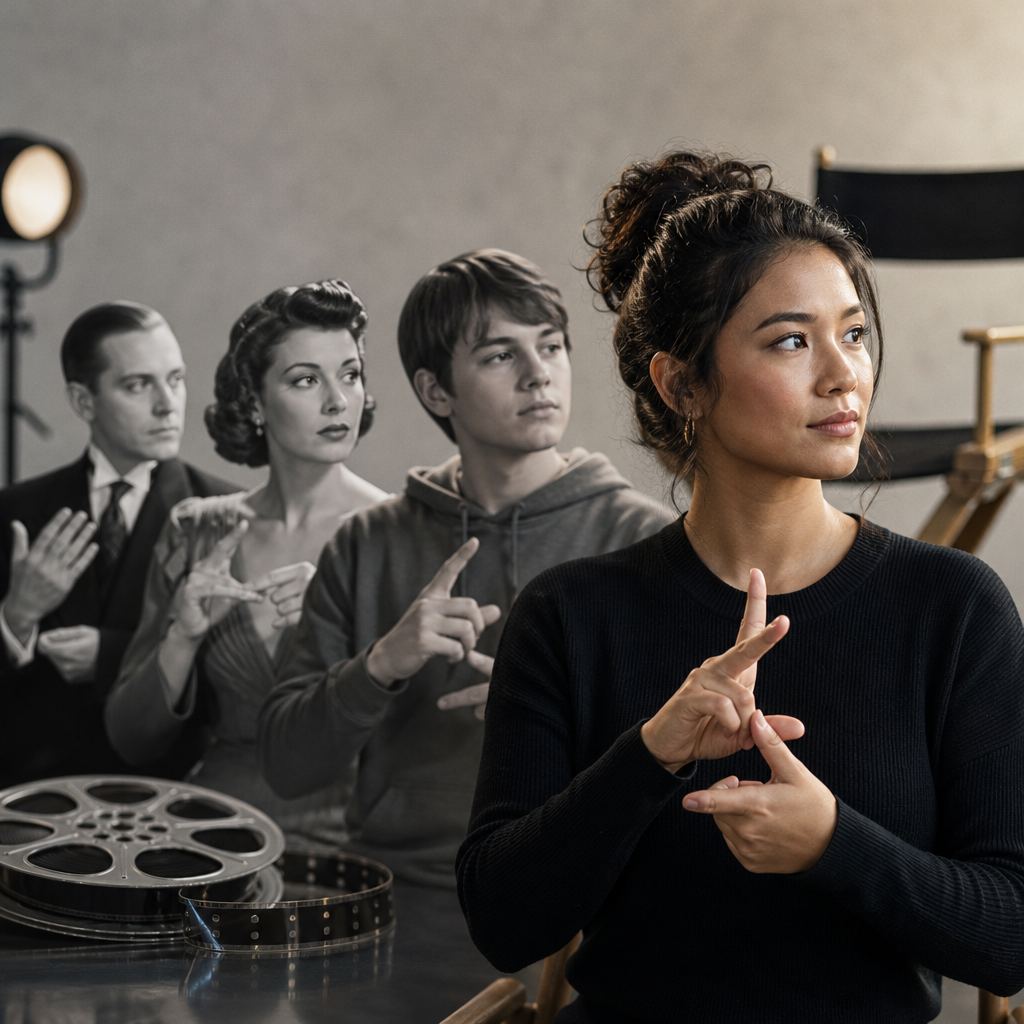
Many representation problems begin with casting. Hiring hearing actors for Deaf roles has long been defended as a business decision, but it usually weakens authenticity. Deaf performers bring lived knowledge of timing, body language, communication negotiation, and community detail that cannot be fully simulated. Their presence also changes the working environment, often improving accessibility for everyone involved. The issue extends beyond lead roles. If the writers’ room, production office, costume department, and editorial team include no Deaf professionals, basic errors multiply. Phones, alarms, doorbells, classroom layouts, rehearsal methods, and social habits are misrepresented because no one in the room recognizes the problem.
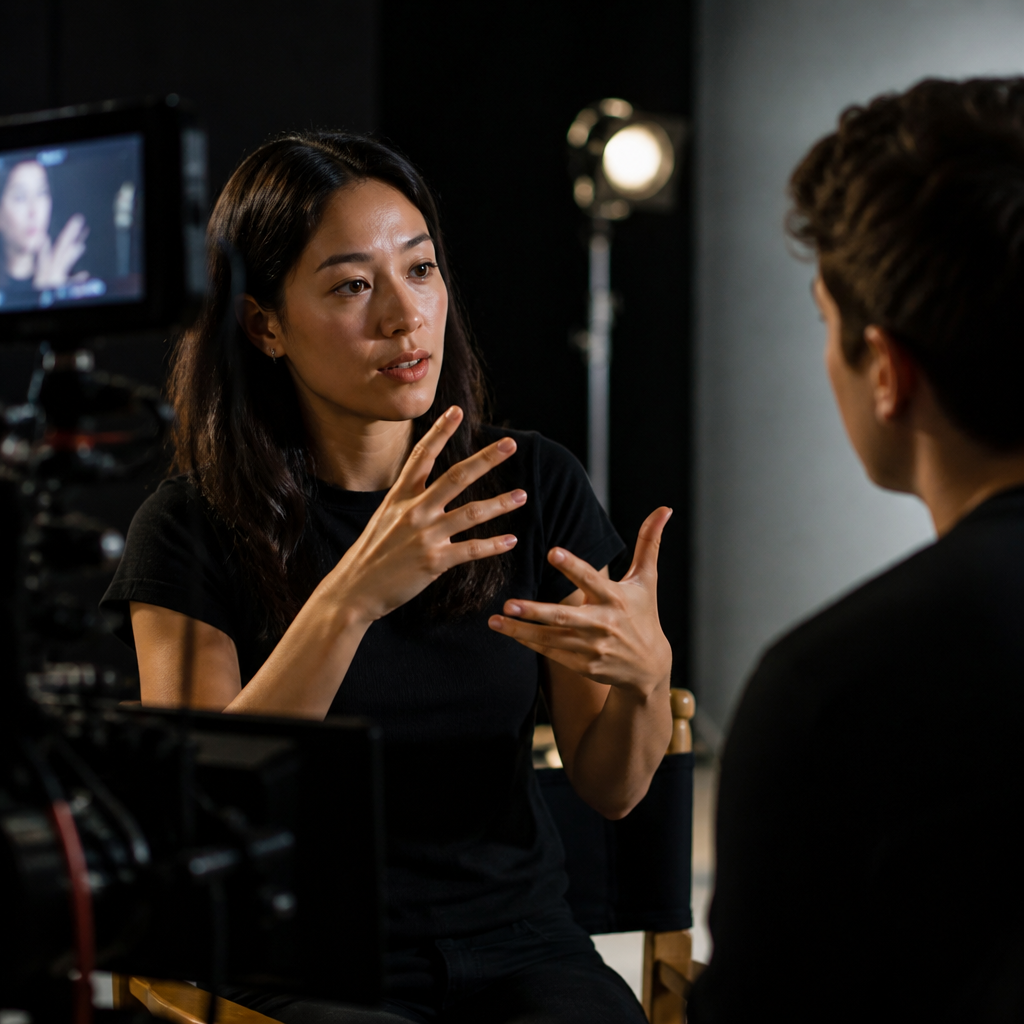
Good productions build access into the workflow, not as a late accommodation. That means captioned dailies, qualified interpreters, visual cueing systems, call sheets designed for accessibility, and enough schedule time for bilingual rehearsals. The value is creative as much as ethical. Deaf crew members often catch details hearing teams miss, such as whether a school scene reflects oralist assumptions, whether a family dinner realistically mixes speech and sign, or whether a character with one Deaf parent and one hearing parent would code-switch differently. The industry has examples of stronger outcomes when Deaf talent is central rather than peripheral.
| Mistake | Why It Fails | Better Practice |
|---|---|---|
| Hearing actor cast as fluent signer | Signing appears memorized and unnatural | Cast Deaf actors or highly fluent signers with consultants |
| Generic “sign language” in script | Ignores real languages and grammar | Name the language and write with native input |
| Implant as instant cure | Misleads audiences about outcomes | Show variability, training, and ongoing limits |
| Deaf character exists to inspire hearing lead | Reduces agency and complexity | Build independent goals, flaws, and relationships |
| Camera cuts away during signing | De-centers the character’s language | Frame signing clearly and let visual dialogue carry scenes |
Presenting Technology as Magic, Miracle, or Moral Choice
Media often mishandles hearing aids, cochlear implants, captioning, relay services, and alert systems. The worst version is the miracle reveal: device activated, music swells, and the character suddenly hears perfectly, emotionally completing themselves. That is false. Hearing technology can be helpful, life changing, frustrating, expensive, inconsistent, or all four at once. Cochlear implants do not restore typical hearing; they provide access to sound in ways that vary by age of implantation, auditory history, mapping, rehabilitation, environment, and personal goals. Hearing aids amplify but do not resolve every communication barrier. Background noise remains difficult. Fatigue remains real. Maintenance, batteries, insurance, and upgrades matter.
Another mistake is framing technology as a moral divide: good Deaf characters embrace devices and speech, while resistant characters are portrayed as bitter, backward, or manipulated by the community. That binary ignores reality. People make choices based on comfort, identity, language access, medical advice, schooling, and social context. There is no single ethical pathway. A nuanced portrayal might show a teenager using captions constantly, hearing aids selectively, and sign language as their most natural expressive mode. It might also show disagreement within a family without turning either side into a caricature. Accurate storytelling recognizes that access tools are practical systems, not personality tests.
Reducing Deaf Culture to Trauma, Isolation, or Saintliness
Another frequent error is assuming Deaf life is defined by loneliness. Some Deaf people do experience isolation, especially in families without shared language, but Deaf community life can also be vibrant, funny, politically engaged, and highly social. Deaf clubs, schools, sports, theater, advocacy groups, and online networks have long sustained community ties. Media that ignores this can leave audiences believing Deaf characters exist in permanent separation from others. The opposite stereotype is just as limiting: the impossibly wise, patient Deaf character whose silence makes them spiritually pure. This “saintly sufferer” trope strips away ordinary human contradiction.
Show culture in concrete ways instead. A realistic story may include visual attention-getting strategies, signed storytelling, direct communication norms, name signs, Deaf humor, or debates over language and education. It may show frustration with inaccessible public announcements or with hearing people who insist on speaking while turning away. It may also show mundane competence: ordering food through an app, using captions in a gym, parenting a hearing child, or managing a workplace meeting with an interpreter. Everyday details do more for authentic Deaf representation in media than dramatic speeches ever will.
Forgetting Intersectionality, Genre, and Historical Context
Deaf characters are often written as if deafness overrides every other identity marker. That shortcut erases race, ethnicity, class, sexuality, immigration status, age, and geography. A Black Deaf teenager in an urban public school may navigate authority, code-switching, and access differently from a white Deaf retiree in a rural area. A Deaf immigrant may use a signed language other than ASL and face additional barriers in healthcare or legal settings. Historical setting matters too. Deaf education has been shaped by oralism, residential schools, mainstreaming, and shifting disability law. In the United States, the Americans with Disabilities Act changed expectations around access, but compliance remains uneven. In the United Kingdom, Equality Act duties shape services differently. Specificity strengthens credibility.
Genre changes the portrayal challenge. In crime dramas, creators often misuse deafness as vulnerability or as a convenient reason to miss clues. In horror, silence is frequently aestheticized while ignoring actual Deaf communication strategies. In romance, the hearing partner is too often rewarded for minimal effort, as though learning a few signs proves exceptional devotion. Better genre writing asks what the character would really know, notice, fear, or desire. A Deaf detective may be unusually observant visually. A Deaf parent in a thriller would likely have layered alert systems. A romantic subplot should include the practical intimacy of communication, not just symbolic gestures.
How to Build Accurate Deaf Characters and Better Media Coverage
Writers and editors can avoid most mistakes by changing process early. Start with research from Deaf creators, organizations, memoirs, interviews, and language experts. Then define the character’s communication profile specifically: signed language, spoken language, caption reliance, assistive technology, education background, family hearing status, and relationship to Deaf identity. Ask what access barriers appear in each setting and how the character solves them. Write scenes where communication itself shapes rhythm and stakes without becoming the whole point. If this page serves as your hub for Deaf representation in media, related coverage should include signed language accuracy, cochlear implant myths, Deaf casting, interpreter realism, disability tropes, accessibility in film production, and notable works created by Deaf artists.
For journalists and critics, better coverage means evaluating not only whether a story includes a Deaf character, but how that character is framed. Who has agency? Is signed language visible and accurate? Are interpreters used correctly? Does the story recognize community, policy, and access? Does it cast Deaf talent? Representation is not a box to tick. It is a set of craft choices with measurable consequences for audience understanding. When those choices are handled well, Deaf characters stop feeling symbolic and start feeling fully alive.
Strong Deaf representation in media is not achieved by adding a Deaf character and hoping authenticity follows. It comes from precise language, informed casting, accurate signing, realistic technology, and a clear understanding that Deaf people are not narrative lessons for hearing audiences. The most common mistakes are consistent: flattening identity into tragedy, using sign language decoratively, overpromising what devices can do, excluding Deaf talent from creative control, and ignoring culture, intersectionality, and history. Each of these errors weakens both ethics and storytelling.
The payoff for getting it right is substantial. Audiences receive more truthful depictions. Deaf viewers see experiences, frustrations, and joys that feel recognizable rather than distorted. Hearing viewers learn to distinguish access barriers from personal deficits. Producers gain richer scenes, sharper conflicts, and more memorable characters. In other words, accuracy is not a constraint on creativity; it is the foundation of better creative work.
If you are developing coverage under Media, Representation & Awareness, use this article as the starting point and build outward into the specific issues it identifies. Review your scripts, classrooms, articles, and campaigns with these standards in mind. The next time you encounter a Deaf character on screen or on the page, ask a simple question: does this portrayal reflect a real person, or just a familiar hearing assumption? Start there, and the quality of representation will improve.
Frequently Asked Questions
What are the most common mistakes creators make when portraying Deaf characters?
One of the biggest mistakes is treating Deafness as a plot device instead of a fully lived identity. Many stories reduce a Deaf character to inspiration, tragedy, isolation, or a lesson for hearing characters, rather than presenting them as complete people with goals, relationships, humor, flaws, and agency. Another common problem is assuming all Deaf people share the same experience. In reality, Deaf communities are diverse in language use, education, race, family background, technology choices, and personal identity. Some people identify culturally as Deaf, some use the term deaf in a more audiological sense, some sign fluently, some do not, and some move between multiple communication methods depending on context.
Creators also often make avoidable language mistakes, especially by treating signed languages as universal or as simple word-for-word versions of spoken language. Signed languages have their own grammar, structure, and cultural context. A portrayal can quickly lose credibility if signing is inaccurate, unnatural, or clearly shaped by hearing assumptions. Another frequent mistake is centering hearing reactions above Deaf perspective. If every scene involving a Deaf character is really about how difficult, inspiring, confusing, or educational that character is for hearing people, the story misses the point. Authentic portrayal requires attention to Deaf point of view, not just Deaf presence.
There is also a production-level mistake that starts before the script is finalized: excluding Deaf people from the creative process. Problems often begin in development, when Deaf consultants, writers, performers, and cultural reviewers are brought in too late or not at all. By then, stereotypes may already be built into the structure of the story. Strong representation usually comes from involving Deaf professionals early, listening when they raise concerns, and being willing to revise scenes, dialogue, and visual storytelling choices to reflect real Deaf experience rather than familiar media shortcuts.
Why does the distinction between “Deaf” and “deaf” matter in storytelling?
The distinction matters because it reflects more than hearing level; it can signal identity, culture, language, and community. In many contexts, “Deaf” with a capital D refers to a cultural identity connected to Deaf community life, signed languages, shared history, and social experience. By contrast, “deaf” may be used in a more clinical or descriptive way to refer to hearing status. Not every person who is deaf identifies as Deaf, and not every Deaf person has the same relationship to sign language, spoken language, hearing technology, or community institutions. When storytellers ignore this distinction, they risk flattening a complex population into a single generic type.
In practical terms, this affects character development. A culturally Deaf character who grew up signing, attended a Deaf school, and participates in Deaf community spaces may navigate the world very differently from a late-deafened adult, a hard of hearing person, or someone raised orally in a hearing family with limited exposure to Deaf culture. Their views on cochlear implants, interpreters, education, accessibility, family communication, and identity may differ significantly. These differences are not minor details; they shape worldview, conflict, relationships, and the texture of everyday life.
Using the distinction thoughtfully also helps avoid tokenism. Instead of writing “a Deaf character” as if that label explains everything, creators can ask better questions: What language does this person use most naturally? How did their family communicate with them growing up? Do they see themselves as part of Deaf culture? Have they experienced mainstreaming, residential Deaf education, or both? How do they handle accessibility in work, romance, and friendship? These questions lead to richer, more specific storytelling and reduce the chance of defaulting to stereotypes or overly broad assumptions.
How can writers and directors portray signed language authentically on screen?
Authentic portrayal of signed language starts with recognizing that signed languages are complete languages, not visual substitutes for speech. That means creators should not write signing as if it is merely spoken English expressed with the hands. Dialogue, pacing, emotion, humor, and emphasis may work differently in signed communication, and visual composition matters enormously. Facial expression, eye gaze, body position, timing, and physical space all contribute meaning. If a production ignores these elements, the result can feel artificial even to viewers who do not sign fluently, and it will almost certainly ring false to Deaf audiences.
Writers and directors should collaborate with fluent signers, Deaf consultants, dialogue coaches, and if possible Deaf writers or directors who understand how scene dynamics change when sign language is central. Camera placement matters. Editing matters. Blocking matters. If the camera cuts away during key signs, frames hands poorly, or prioritizes reaction shots over communication, it can undermine the language itself. Similarly, performers need enough training and rehearsal time to sign naturally. Memorizing signs phonetically without understanding them often leads to stiff delivery, incorrect grammar, or emotional mismatch between body language and meaning.
Subtitles and interpretation choices also affect authenticity. Captions should reflect meaning clearly without erasing tone, nuance, or the identity of who is communicating. In multilingual scenes involving signed and spoken language, creators should think carefully about whose perspective the audience is meant to share. Is the viewer meant to understand everything at once, or experience moments of access and exclusion similar to the characters? There is no single rule for every project, but the best results come when language is treated as an essential storytelling system rather than decorative representation. That requires expertise, time, and a willingness to let visual language shape the story instead of forcing it into hearing-centered conventions.
Is casting a Deaf actor enough to ensure authentic representation?
No. Casting a Deaf actor is important, especially for Deaf roles, but it is only one part of authentic representation. A production can cast well and still fail if the script relies on stereotypes, the signing is poorly integrated, the character lacks depth, or the broader creative team dismisses Deaf input. Representation is shaped at every level: writing, directing, cinematography, editing, accessibility planning, marketing, and post-production review. If Deaf professionals are excluded from these stages, a strong casting choice may end up carrying the burden of fixing structural problems that should have been addressed much earlier.
That said, casting Deaf actors does matter greatly because lived experience informs performance in ways that are difficult to replicate. Deaf actors often bring insight into physicality, rhythm, social nuance, code-switching, and communication dynamics that hearing performers and creators may overlook. They may notice when a scene feels emotionally false, when a family interaction does not reflect realistic communication patterns, or when a moment framed as dramatic is actually based on a hearing misconception. Their contributions can improve not just accuracy but dramatic quality.
The strongest approach is to pair authentic casting with meaningful inclusion behind the scenes. Hire Deaf writers, consultants, ASL masters or sign language coaches where appropriate, and accessibility coordinators. Create an environment where Deaf cast and crew can contribute without having to fight for basic access. Invite feedback early enough that it can change the work, not merely polish it. In other words, authentic casting should be part of a larger commitment to authenticity, not a symbolic gesture that allows the rest of the production to remain unchanged.
How can creators avoid stereotypes while still showing real challenges Deaf people face?
The key is balance, specificity, and point of view. Avoiding stereotypes does not mean pretending Deaf characters never face barriers. It means showing those barriers accurately and in context, without turning Deafness into the character’s entire emotional function. Real challenges may include inaccessible environments, poor family communication, discrimination, lack of interpreters, educational inequities, or frustration with hearing assumptions. These experiences are valid and important to depict. The problem arises when stories frame Deaf life as nothing but limitation, suffering, or heroic overcoming.
A more truthful approach is to show both friction and fullness. A Deaf character might deal with exclusion at work and still have a rich social life, strong opinions, cultural pride, ordinary routines, and storylines unrelated to hearing status. They can be romantic, funny, ambitious, petty, brilliant, stubborn, vulnerable, or messy. They can make mistakes that have nothing to do with being Deaf. They can also experience joy in community, language, visual expression, friendship, and self-definition. This range is what protects a portrayal from becoming one-dimensional.
Creators should also be careful with recurring stereotype patterns: the isolated Deaf person waiting to be “fixed,” the superhuman lip-reader, the magical signer who bridges every communication gap effortlessly, the tragic child of hearing parents, or the noble figure who exists mainly to teach hearing characters empathy. If a challenge appears in the story, ask who or what is actually creating that challenge. Often the issue is not Deafness itself but a lack of access, understanding, or accommodation. That shift in framing can make a major difference. It moves the narrative away from pity and toward realism, while still allowing meaningful conflict and emotional depth.