
Celebrating Deaf pride in everyday life means recognizing Deaf identity as a cultural, linguistic, and social strength, not as a deficit to be fixed. Deaf identity refers to how a person understands their relationship to deafness, sign language, community, history, and the hearing world. Deaf pride is the active expression of that identity through language choices, self-advocacy, community participation, art, education, and daily habits that affirm belonging. In my work with accessibility planning and Deaf-centered communication, I have seen that pride often becomes most visible not at formal events, but in ordinary moments: choosing an interpreter for a medical visit, teaching a child to sign at breakfast, requesting captioning at work, or introducing oneself by signing first.
The distinction between lowercase deaf and uppercase Deaf matters here. Lowercase deaf typically describes the audiological condition of hearing loss. Uppercase Deaf usually refers to cultural affiliation with the Deaf community, especially communities rooted in signed languages such as American Sign Language, British Sign Language, or Langue des Signes Française. Not every deaf person identifies as Deaf, and not every Deaf person has the same hearing level, communication preference, or life experience. Some people are late-deafened, hard of hearing, DeafBlind, cochlear implant users, oral, signing, or multilingual across spoken and signed languages. Pride does not require one pathway. It requires respect for lived experience and the right to define oneself.
This topic matters because identity shapes health, education, employment, family relationships, and self-esteem. Research in deaf education and public health has repeatedly shown that language access influences cognitive development, academic outcomes, and social inclusion. When Deaf children receive accessible language early, whether through sign, speech, or both, they are better positioned to build literacy, confidence, and stable relationships. When adults have interpreters, captions, visual alerts, and direct communication, they navigate institutions with less friction and greater autonomy. Celebrating Deaf pride in everyday life is therefore practical as well as symbolic. It changes how homes are designed, how meetings are run, how schools teach, and how communities include.
As a hub topic under Deaf Culture and Identity, Deaf identity and pride connects to nearly every related conversation. It links to the history of Deaf schools, the importance of signed languages, the role of Deaf clubs and community networks, the legacy of activism such as the Deaf President Now movement at Gallaudet University in 1988, and ongoing debates around technology, mainstream education, and representation. A strong hub page should answer the foundational questions clearly: What is Deaf pride, where does it come from, how is it expressed, what barriers challenge it, and what can families, educators, employers, and allies do today? Those are the practical questions people bring to search, and they are the same questions that surface in real life.
What Deaf Pride Means in Practice
Deaf pride is the conviction that Deaf ways of being are complete, valuable, and worthy of public respect. In practice, that includes valuing signed languages as full natural languages with their own grammar, syntax, and cultural norms. Linguist William Stokoe’s work on American Sign Language in the 1960s was a turning point because it challenged the false idea that sign was only gesture. Today, sign linguistics is well established, and that matters because language legitimacy is tied directly to identity legitimacy. When a child sees ASL or another signed language treated seriously in school and public life, that child receives a message about their worth.
Pride also appears in interpersonal norms. Many Deaf communities place importance on direct communication, visual attention, clear introductions, and shared information. For hearing outsiders, these norms can be misunderstood as bluntness or overexplanation. In reality, they are efficient adaptations to a visual language environment. I have watched meetings improve immediately when presenters stop speaking while looking at slides, pause for interpretation, and make eye contact before changing topics. Those small adjustments are not etiquette trivia. They communicate that Deaf participants belong in the room as full participants rather than afterthoughts.
Another practical dimension is rejecting the assumption that success means approximating hearing behavior. Some Deaf people use speech, hearing aids, or cochlear implants; others do not. Pride is not measured by technology choices. It is measured by agency, access, and self-definition. A Deaf software engineer who signs at home, uses captions at work, and wears implants can be deeply rooted in Deaf culture. So can a Deaf artist who is fully visual and never voices. The common thread is not conformity. It is ownership of identity without apology.
Language, Community, and Belonging
Language is often the center of Deaf belonging because it carries humor, memory, values, and social connection. Signed languages are not universal; ASL differs from BSL, Auslan, and other national sign languages. Even within one language, regional variation, Black ASL, generational signing styles, and school-based influences matter. That diversity is a strength. It shows that Deaf culture is alive, adaptive, and shaped by real communities rather than abstract policy.
Community spaces remain essential even in the digital era. Historically, Deaf clubs, residential schools, sports leagues, churches, and social events created places where Deaf people could communicate freely without explanation. Many traditional clubs declined as mainstreaming increased and social life moved online, yet the need for connection did not disappear. It shifted. Today, belonging may form through Deaf creators on social media, local advocacy groups, alumni networks, theater companies, interpreting programs, or virtual sign language meetups. The medium changes, but the function stays the same: community provides language-rich interaction and a shared frame of reference.
Family life is equally important. Most Deaf children are born to hearing parents, and many parents start with little knowledge of deafness or sign language. The most successful families I have worked alongside did one thing early: they prioritized accessible communication immediately instead of waiting for uncertainty to resolve itself. They learned basic signs, sought out Deaf mentors, used visual routines, and made home communication possible from day one. Pride begins there. A child who can fully communicate at home learns that their needs are normal and their identity is welcome.
Everyday Expressions of Deaf Identity
Everyday Deaf pride is visible in routines, aesthetics, and choices that center visual communication. At home, that may include doorbells linked to flashing lights, vibrating alarms, open sightlines, circular seating for conversation, or family rules about tapping shoulders and gaining visual attention before speaking. In schools and offices, it includes real-time captioning, qualified interpreters, agenda sharing before meetings, and policies that prevent side conversations during interpreted events. These are not specialty accommodations for rare situations. They are basic design decisions that make participation possible.
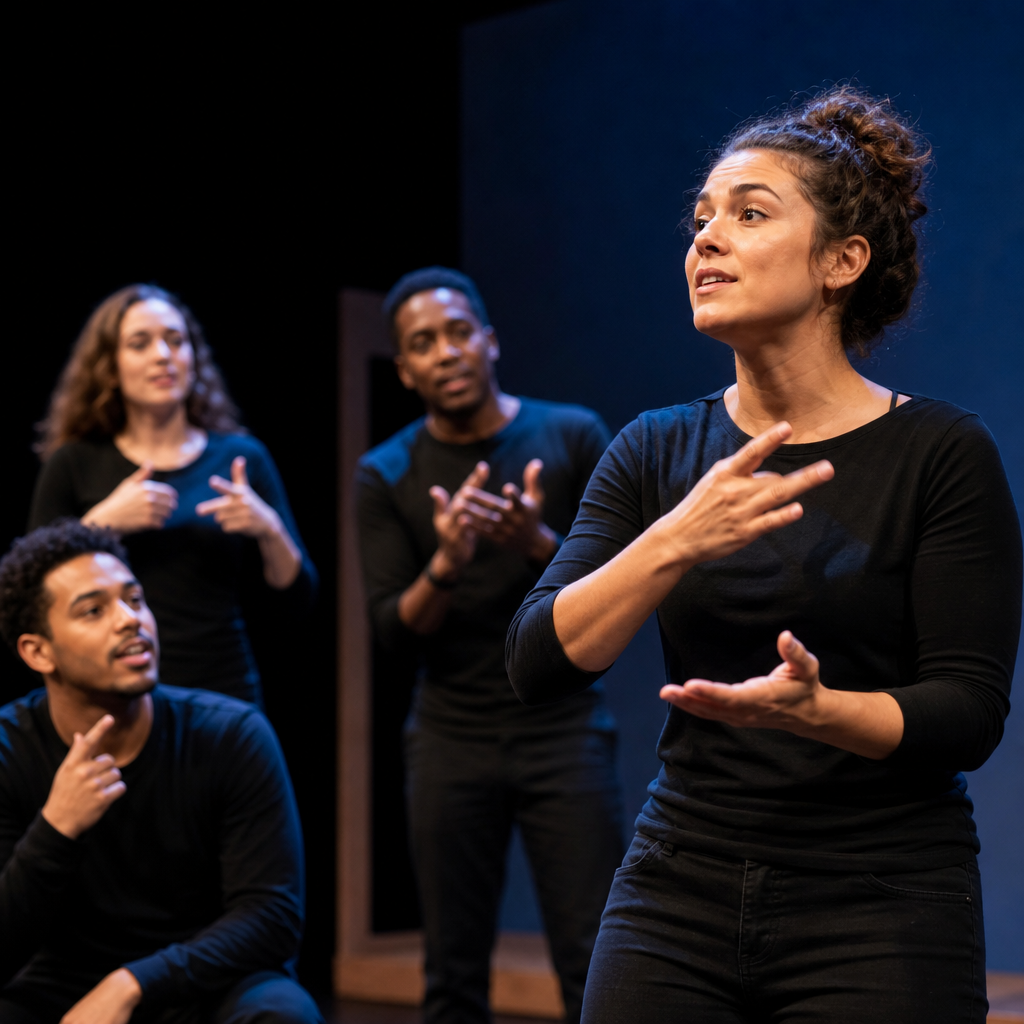
Representation matters too. Deaf pride grows when people see Deaf actors, writers, athletes, teachers, and leaders represented accurately. Productions such as Children of a Lesser God, the film CODA, and Deaf West Theatre’s work brought wider attention to Deaf stories, though representation is strongest when Deaf people control the storytelling. In organizational settings, I have found that a single Deaf trainer or manager can shift culture faster than a stack of awareness materials because colleagues learn directly from lived expertise.
Fashion, art, and naming practices also express pride. Some people wear clothing featuring sign language graphics, Deaf event logos, or slogans that celebrate visual culture. Name signs, when given appropriately within community norms, can symbolize connection and recognition. Deaf visual art often emphasizes hands, eyes, movement, and themes of communication access, isolation, or resistance. These forms are not decorative extras. They are cultural signals that make identity visible in public space.
| Everyday setting | Common barrier | Deaf-pride response | Practical result |
|---|---|---|---|
| Home | Missed auditory cues | Use visual alerts and shared signing routines | Greater safety and smoother family communication |
| School | Limited direct language access | Provide interpreters, captions, and Deaf role models | Stronger learning and identity development |
| Workplace | Meetings built around spoken speed | Plan turn-taking, captions, and advance materials | Better participation and fewer misunderstandings |
| Healthcare | Reliance on lipreading or family members | Request qualified interpreters and written follow-up | More accurate informed consent and safer care |
| Public life | Inaccessible events and announcements | Ask for captioning, interpreters, and visual signage | Fuller civic inclusion |
History, Activism, and the Roots of Pride
Modern Deaf pride did not appear spontaneously. It was built through resistance to exclusion and through the preservation of sign language across generations. One major historical fault line was the 1880 Milan Conference, where educators endorsed oralism and sidelined sign language in many schools. The consequences were severe: generations of Deaf children were denied direct language access and Deaf teachers lost influence. Yet sign survived in dormitories, homes, and community networks. That survival is central to Deaf pride because it demonstrates resilience under institutional pressure.
The Deaf President Now protest at Gallaudet in 1988 remains a defining example of collective power. Students demanded a Deaf university president, greater Deaf representation, and structural respect. Their success had effects far beyond one campus. It gave many Deaf people a public language of self-determination and showed hearing institutions that inclusion without leadership is incomplete. Similar activism continues today around captioning standards, interpreter quality, emergency communication, educational access, and media representation.
Legal frameworks matter, but they do not automatically create belonging. In the United States, the Americans with Disabilities Act supports access in employment, public services, and public accommodations. Section 504 and the Individuals with Disabilities Education Act shape educational rights. Other countries have their own accessibility and language recognition laws, with varying strength. In practice, rights still often depend on whether individuals know how to request accommodations and whether institutions understand their obligations. Pride strengthens advocacy because people who value their identity are more likely to demand access as a right rather than accept exclusion as routine.
Challenges, Tensions, and Misconceptions
Deaf pride is powerful, but it exists alongside real tensions. One common misconception is that embracing Deaf identity means rejecting hearing people or technology. That is false. The real issue is whether communication choices expand autonomy or narrow it. A device can be useful. It can also be oversold as a substitute for language access, community, or cultural connection. I have seen families invest enormous hope in technology while delaying sign exposure, only to realize later that no device removes the need for fully accessible communication. Early language access should never be postponed.
Another challenge is internal diversity. Deaf people differ by race, class, nationality, gender, education, and additional disabilities. Black Deaf, Indigenous Deaf, immigrant Deaf, LGBTQ+ Deaf, and DeafBlind communities may navigate barriers that mainstream Deaf narratives overlook. A serious discussion of pride must therefore include intersectionality in concrete terms: who gets represented, who gets hired, whose sign varieties are respected, and who has access to elite institutions or interpreters. Pride that ignores inequality becomes branding rather than community building.
Mainstream settings can also create identity strain. A deaf child who is the only signing student in a school may feel pressure to act hearing enough to fit in. An adult professional may become exhausted from constant self-advocacy. This is why community contact matters. Pride is easier to sustain when people can regularly interact with others who share language and experience. Identity is not only an internal feeling; it is reinforced by environments that reflect it back.
How to Support Deaf Pride Every Day
Supporting Deaf pride starts with communication access, but it should not end there. Families can learn sign language, seek Deaf mentors, and build routines that do not depend on hearing. Educators can prioritize direct instruction access, use captioned media by default, and expose students to Deaf adults in varied careers. Employers can budget for interpreting and captioning as standard operating costs, not exceptions, and train managers to run visually accessible meetings. Healthcare providers can stop relying on lipreading, which is often inaccurate, and document accommodation preferences before appointments.
Allies should also examine assumptions. Do not praise a Deaf person for seeming hearing, and do not treat sign language as optional enrichment. If you organize events, ask about access early, hire qualified interpreters, and ensure lighting and sightlines support visual communication. If you create content, caption it accurately and avoid reducing Deaf stories to inspiration. The most respectful stance is simple: presume competence, ask what access works, and follow through consistently.
Celebrating Deaf pride in everyday life ultimately means building spaces where Deaf people do not have to shrink, translate themselves constantly, or trade identity for access. Deaf identity is sustained through language, community, history, design, and self-definition. Pride appears in homes that sign freely, schools that respect visual learning, workplaces that plan access properly, and public culture that recognizes Deaf people as experts in their own lives. If you want to support this in practical terms, start with one setting you influence today and make it fully accessible, visible, and welcoming.
Frequently Asked Questions
What does Deaf pride mean in everyday life?
Deaf pride in everyday life means treating Deaf identity as something valuable, whole, and deeply connected to culture, language, and community. It is not just a feeling of personal confidence. It shows up in practical daily choices, such as using sign language openly, requesting interpreters or captions without apology, supporting Deaf-led spaces, and teaching others that deafness is not simply a medical condition. For many people, Deaf pride includes honoring Deaf history, celebrating shared experiences, and recognizing the creativity, resilience, and insight that come from navigating both Deaf and hearing environments. In everyday terms, it can look like choosing communication methods that feel natural, displaying visual accessibility in work or home settings, participating in Deaf events, and rejecting the idea that success depends on appearing as hearing as possible. At its core, Deaf pride is about belonging, self-definition, and living in a way that respects Deaf ways of being.
How is Deaf identity different from just having hearing loss?
Hearing loss describes an audiological condition, but Deaf identity is much broader and more personal. It reflects how someone understands their place in relation to deafness, sign language, Deaf community, culture, history, and the hearing world. Not every person with hearing loss identifies as Deaf, and not every Deaf person has the same relationship to language, technology, family background, or community involvement. Some people are raised in Deaf families and grow up with strong cultural connections from childhood. Others discover Deaf community later in life and begin to develop a new understanding of themselves through sign language and shared experience. Deaf identity is shaped by lived experience, not by test results alone. That is why conversations about Deaf pride often focus on language access, cultural recognition, and community belonging rather than only on diagnosis or treatment. Understanding this difference helps people move away from deficit-based thinking and toward a more accurate view of Deaf life as culturally rich and socially meaningful.
What are some practical ways to celebrate Deaf pride at home, work, or school?
Celebrating Deaf pride can be woven into ordinary routines in ways that are both meaningful and sustainable. At home, this might include prioritizing sign language in family communication, creating visually accessible spaces with good lighting and clear sightlines, and sharing Deaf books, films, artwork, or history with children and relatives. At work, it can mean normalizing access requests, using captions in meetings and video content, advocating for interpreters when needed, and encouraging communication practices that do not depend entirely on sound, such as visual alerts, shared notes, and inclusive turn-taking. At school, celebrating Deaf pride may involve recognizing sign languages as full languages, including Deaf role models in curriculum, supporting Deaf clubs or cultural programs, and making sure students do not have to choose between academic success and communication access. Across all settings, one of the strongest expressions of Deaf pride is self-advocacy: clearly naming what access looks like, expecting respect, and refusing to treat accommodation as a favor. Small daily habits matter because they reinforce the message that Deaf people deserve environments built for real participation, not just minimal inclusion.
Why is sign language so important to Deaf pride?
Sign language is central to Deaf pride because it is much more than a tool for communication. It carries culture, humor, values, storytelling traditions, social norms, and a shared sense of identity. For many Deaf people, sign language provides direct, natural, and fully expressive communication in a way that spoken-language-based systems may not. When sign language is respected and used openly, it affirms that Deaf ways of communicating are complete and legitimate, not secondary substitutes. This matters on both a personal and community level. Personally, access to sign language can strengthen confidence, connection, and emotional expression. Socially, it helps preserve Deaf culture across generations and creates spaces where Deaf people can interact without constantly adapting to hearing expectations. Even within the wide diversity of Deaf experiences, the recognition of sign language as a language of pride, community, and belonging remains deeply important. Supporting sign language in everyday life is one of the clearest ways to honor Deaf identity and challenge the misconception that spoken communication is the only standard for participation or success.
How can hearing people respectfully support Deaf pride?
Hearing people can support Deaf pride by approaching Deaf identity with respect, curiosity, and a willingness to change their own habits rather than expecting Deaf people to do all the adapting. A strong first step is recognizing that Deafness is not inherently a problem to solve. Instead, it should be understood as part of a cultural and linguistic experience that deserves respect. Hearing allies can learn basic sign language, use captions consistently, face people when speaking, reduce communication barriers in meetings and gatherings, and ask what access is needed instead of making assumptions. It also helps to seek out Deaf-created books, art, training, and leadership rather than relying only on hearing perspectives about Deaf life. In professional settings, respectful support includes budgeting for interpreting and accessibility from the beginning, not as an afterthought. In personal settings, it means being patient, visually attentive, and open to different communication rhythms. Most importantly, hearing people should listen when Deaf people describe their own experiences. Real support for Deaf pride is not performative. It is shown through everyday decisions that value Deaf language, autonomy, expertise, and full participation.