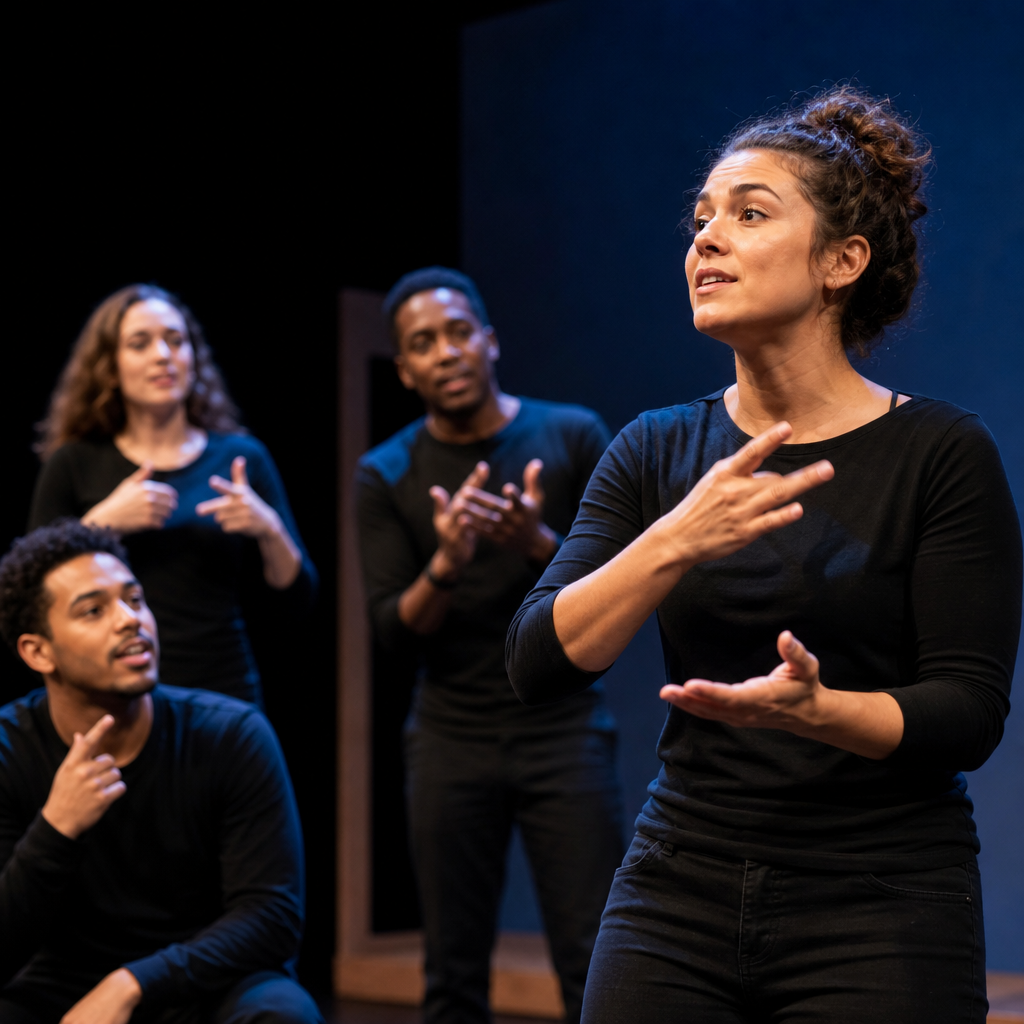
Deaf identity is shaped as much by social experience as by hearing level, and that distinction matters for anyone trying to understand Deaf culture, belonging, and pride. In practice, identity develops through everyday interactions: family communication, school placement, friendships, access to sign language, experiences of discrimination, and participation in Deaf community spaces. When people ask what Deaf identity means, the clearest answer is this: it is a person’s sense of self in relation to deafness, language, culture, and community. Some people identify primarily as culturally Deaf, some as hard of hearing, some as late-deafened, and some move between identities over time. That range is normal.
I have seen this most clearly in community education settings, where two people with similar audiograms can describe completely different lives. One may grow up with Deaf parents, learn sign language from birth, attend Deaf events, and feel strong cultural pride. Another may be the only deaf person in a hearing family, receive little accessible communication, and spend years feeling isolated before finding community as an adult. Their ears may measure similarly, but their social worlds do not. Social experience is the engine that gives identity emotional meaning.
This topic matters because identity influences mental health, educational outcomes, language development, self-advocacy, and social participation. Research across deaf education and public health consistently shows that early accessible language supports cognitive and social development, while chronic communication barriers can contribute to stress and exclusion. Identity also affects practical decisions: whether someone seeks interpreters, joins Deaf organizations, embraces assistive technology, or frames deafness as a disability, a culture, or both. For families, educators, clinicians, and employers, understanding how social experiences shape Deaf identity leads to better communication and better policy.
Within Deaf Culture and Identity, Deaf Identity and Pride functions as a hub because it connects nearly every other subtopic. Language access, Deaf schools, mainstream inclusion, audism, community traditions, technology, and representation all feed into how people see themselves. A strong identity is not about denying complexity. It is about having the language, community, and confidence to understand one’s place in the world. Social experience can support that process, delay it, or distort it. The sections below explain how this happens and why it matters.
Why social experience matters more than audiology alone
Audiology describes hearing thresholds. Identity describes belonging, meaning, and self-understanding. Confusing the two is one of the most common mistakes in discussions about deafness. Hearing level can affect communication choices, but it does not automatically determine whether someone feels culturally Deaf, socially isolated, medically defined, bilingual, or proud. Social experiences provide the context that turns a hearing status into a lived identity.
Consider school environments. A child in a mainstream classroom may have excellent speech therapy, advanced hearing technology, and strong grades, yet still spend lunch periods unable to follow rapid group conversation. Another child in a Deaf school may face academic challenges but experience constant direct communication, shared norms, and role models who demonstrate successful Deaf adulthood. Those day-to-day conditions teach very different lessons about self-worth. One environment may say, often subtly, try harder to fit hearing expectations. The other may say, you already belong.
Identity also changes over time because social conditions change. Many late-identified deaf adults describe a turning point when they met other deaf people, learned sign language, or attended a Deaf event for the first time. What changed was not their ears but their social frame. They moved from being an isolated individual managing a deficit to being part of a community with history, humor, norms, and collective pride. That shift is profound and often life-changing.
Family communication is the first identity environment
Family is usually the first place where deaf children learn whether communication is easy, exhausting, valued, or postponed. More than 90 percent of deaf children are born to hearing parents, a widely cited demographic fact in deaf education. That means many families begin with little knowledge of sign language, Deaf culture, or accessible communication strategies. The outcome depends less on parental hearing status than on what families do next. Families who learn to sign, secure early intervention, use visual attention strategies, and prioritize direct communication create a foundation for secure identity. Families who rely on guesswork, inconsistent access, or speaking about the child rather than with the child can unintentionally create distance.
In my experience, adults often remember not just whether communication happened, but how it felt. Were family dinners inclusive, with one person speaking at a time and visual access maintained? Did parents interpret jokes, explain overheard conversations, and make sure the child understood household decisions? Or did the child sit through partial information and constant catch-up? Those patterns teach a child whether their access needs are reasonable and whether their presence is fully considered.
Deaf children with Deaf parents often benefit from immediate language access and cultural transmission, but hearing families can also foster strong Deaf identity when they commit to communication equity. Fluency in sign language, positive attitudes toward deafness, contact with Deaf adults, and realistic advocacy in schools all help. The key principle is simple: identity grows best when a child does not have to fight for basic inclusion at home.
Education, peers, and the messages children receive
Schools are identity laboratories. They shape language access, peer networks, expectations, and role visibility for years at a time. Historically, Deaf schools have played a central role in preserving signed languages, community traditions, and collective memory. Mainstream settings can offer academic opportunities and local inclusion, but they often vary dramatically in communication access. Neither setting guarantees a healthy identity on its own. What matters is whether the child has full access to information, genuine peer relationships, and adults who understand deafness beyond accommodation paperwork.
Peer interaction is especially important. Identity develops in conversation with others, and deaf students need spaces where they can communicate easily enough to joke, argue, flirt, collaborate, and fail without the burden of constant interpretation. If every interaction requires extra labor, a student may internalize the idea that social connection is work rather than ease. By contrast, seeing classmates, teachers, coaches, or alumni who sign confidently and live successful lives expands a student’s sense of possible futures.
| Social setting | Common identity message | Likely effect on Deaf pride |
|---|---|---|
| Deaf school with strong language access | Deafness is normal and shared | Often strengthens cultural confidence and belonging |
| Mainstream school with weak access | You must adapt alone | Often increases isolation and self-doubt |
| Mainstream school with skilled support and Deaf mentors | Your access needs are legitimate | Can support a stable, bicultural identity |
| Program focused only on speech conformity | Success means appearing hearing | May weaken pride or delay identity development |
These outcomes are not theoretical. They appear in student narratives again and again. A young person may leave one school feeling broken and another feeling capable, even when academic content is similar. The social curriculum, not just the official curriculum, shapes identity.
Language access, sign language, and the path to belonging
Language access is the single most consistent factor in healthy Deaf identity development. This is not ideology; it is developmental reality. Children need fully accessible language early to build cognition, emotional regulation, and social understanding. For many deaf people, sign language provides the most direct and complete access, especially in visually oriented environments. When sign language is available, identity often develops alongside competence: a person can express humor, negotiate conflict, ask complex questions, and connect with shared cultural references. That competence supports pride.
Without full language access, identity often forms around frustration. People may know they are different before they have words to explain how or why. In adolescence, that gap can become painful. Teenagers compare themselves to peers, and if communication remains filtered through delay, fatigue, or dependence on others, self-concept suffers. This is one reason many adults describe learning sign language later in life as emotionally transformative. It is not simply acquiring vocabulary. It is acquiring a mode of selfhood that feels natural and socially alive.
Bilingual realities also matter. Many deaf people use a signed language and a written or spoken majority language in different contexts. Healthy identity does not require rejecting one for the other. In fact, many people build strong bicultural identities, moving between Deaf and hearing spaces with skill. Pride grows when communication choices are framed as resources rather than tests of authenticity.
Community, audism, and the making of Deaf pride
Deaf pride usually emerges through contact with community and through resistance to negative social messages. Community offers practical benefits: shared language, networking, mentorship, humor, political organizing, and cultural events. It also offers symbolic repair. A person who has spent years being treated as deficient may enter a Deaf gathering and see the opposite social logic at work. Visual communication is effortless. Interpreters are expected. Stories about miscommunication are met with recognition rather than confusion. That experience can reset identity quickly.
At the same time, many deaf people develop identity in response to audism, the belief that hearing and speaking are inherently superior. Audism appears in policies and in ordinary behavior. It shows up when schools prohibit signing, when professionals talk to companions instead of directly to deaf patients, when captions are missing, or when deaf success is praised only when it imitates hearing norms. These experiences communicate that acceptance is conditional. Pride forms partly by rejecting that condition.
Representation matters here too. Deaf actors, writers, scholars, athletes, and leaders provide visible alternatives to deficit-based narratives. Institutions such as the National Association of the Deaf in the United States, the World Federation of the Deaf, and local Deaf clubs have long helped convert private frustration into shared advocacy. Pride is not abstract positivity. It is the practiced belief that Deaf lives are complete, valuable, and worthy of direct access.
Identity is diverse, intersectional, and still evolving
There is no single Deaf identity template, and any serious discussion must account for diversity within the community. Race, ethnicity, gender, class, immigration history, additional disabilities, and geography all shape access to community and language. Black Deaf, Indigenous Deaf, immigrant Deaf, LGBTQ+ Deaf, and DeafDisabled people may navigate multiple systems of exclusion at once, and their identity formation reflects those realities. A hub article on Deaf Identity and Pride must make that explicit: pride is not uniform, and belonging is not equally distributed.
Technology adds another layer. Hearing aids, cochlear implants, remote interpreting, video relay services, captioning, and social media can expand access, but they do not settle identity questions. I have worked with implant users who are deeply involved in Deaf community life and non-signers who later embraced Deaf identity after discovering accessible spaces online. Technology is a tool, not an identity verdict. What matters is whether it increases agency and communication without erasing cultural belonging.
Identity can also remain fluid. Some people claim Deaf identity early and consistently. Others move from medicalized views of deafness to cultural pride over decades. Some prefer hard of hearing or deaf with a lowercase d while still participating in aspects of Deaf culture. These distinctions are meaningful, but they should not be policed carelessly. Healthy communities make room for complexity while still defending the core principle that direct access, respect, and self-definition are nonnegotiable.
Building stronger Deaf identity through everyday practice
Strong Deaf identity is built through repeated social experiences that confirm access, dignity, and connection. Families can start by learning sign language, using visual communication habits, and introducing children to Deaf adults early. Schools can improve outcomes by ensuring qualified interpreters, captioned media, Deaf mentors, and classrooms designed for visual participation. Employers can normalize accessible meetings, direct communication, and promotion pathways that do not reward only spoken fluency. Clinicians can stop treating deafness solely as an audiological problem and instead ask whether the person has full communication access and community support.
For deaf individuals themselves, identity often grows through practical steps: attending Deaf events, following Deaf creators, taking sign language classes, seeking counseling that respects deaf experience, and connecting with peers who share similar histories. Pride does not require perfection, and it does not require one official life path. It requires enough access and community to understand that deafness is not a personal failure. It is a human variation lived within social systems that can either exclude or empower.
The core lesson is straightforward. Social experiences shape Deaf identity because identity forms in relationships, institutions, and language environments, not in isolation. When people have direct communication, role models, and community, pride becomes possible. When they face chronic barriers, identity may narrow around struggle. If you want to support Deaf Identity and Pride, focus on the social conditions that make belonging real: accessible language, respectful education, visible community, and the freedom for deaf people to define themselves.
Frequently Asked Questions
1. What does it mean to say that Deaf identity is shaped by social experience, not just hearing level?
When people talk about Deaf identity, they are not simply describing how much a person can or cannot hear. They are describing how that person understands themselves in relation to language, community, culture, and everyday life. Hearing level may influence communication needs, but social experience often has a deeper impact on identity formation. Two people with very similar hearing levels can have very different identities depending on how they were raised, whether they had access to sign language, how their families communicated with them, what kind of schools they attended, and whether they felt accepted or isolated.
This distinction matters because identity is built through relationships and repeated experiences. A child who grows up with fluent sign language access, meaningful communication at home, Deaf role models, and regular participation in Deaf spaces may develop a strong sense of Deaf pride and belonging. Another child with the same degree of hearing loss may grow up in an environment focused only on speech, with limited access to other deaf people, and may feel disconnected, confused, or caught between worlds. In other words, identity is not automatically produced by audiology; it develops through social context.
Understanding Deaf identity in this way helps people move beyond medical assumptions. It shifts the conversation from “How deaf is this person?” to “What experiences have shaped this person’s sense of self?” That is a much more accurate and respectful way to understand Deaf culture, belonging, and personal identity.
2. How do family communication and early language access influence Deaf identity?
Family communication is one of the most powerful influences on Deaf identity because it shapes a child’s earliest experiences of connection, trust, and self-worth. When deaf children can fully communicate with parents, siblings, and caregivers—especially through accessible language from an early age—they are more likely to feel understood, included, and emotionally secure. That foundation can strongly support healthy identity development. It tells the child, from the beginning, that they belong and that their way of communicating is valid.
Early access to sign language is especially important. Language is not just a tool for exchanging information; it is how children build thought, relationships, confidence, and cultural awareness. If a deaf child has rich access to sign language early in life, they are more likely to develop strong communication skills and a clearer sense of self. They may also be better positioned to connect with Deaf culture later, because they already have access to one of its central features: a shared visual language. For many people, sign language is not only practical but also deeply tied to identity, pride, and community membership.
By contrast, limited communication at home can have lasting effects. If a child constantly misses conversations, cannot easily express emotions, or feels left out of family interactions, they may experience frustration, loneliness, or uncertainty about where they fit. This does not mean that every deaf person with delayed language access will have the same identity outcome, but it does mean that communication barriers can shape self-perception in significant ways. The broader lesson is simple: when families prioritize accessible communication, they are not only supporting language development, they are also helping build the conditions for a stronger, healthier sense of identity.
3. What role do school placement, friendships, and peer groups play in the development of Deaf identity?
School is often where Deaf identity becomes more socially visible because it is one of the first places where children compare themselves with others, form friendships, and learn how they are seen by the world around them. School placement can affect identity in major ways. A deaf student in a mainstream setting may have access to hearing peers and broader social integration, but they may also face communication barriers, fatigue from constant accommodation, or feelings of being different if support is limited. In contrast, a student in a Deaf school or a signing program may gain easier communication access, stronger peer connection, and more exposure to Deaf norms, language, and role models.
Friendships matter just as much as formal educational placement. Identity is reinforced through shared experiences, mutual understanding, and the feeling of being able to communicate naturally. Deaf children who have friends with whom they can interact freely—whether those friends are deaf, signing, or genuinely accessible hearing peers—often develop a stronger sense of confidence and belonging. Peer groups help answer important identity questions: Who understands me? Where do I feel relaxed? Where do I have to work harder just to be included? The answers can influence whether a person feels aligned with Deaf culture, hearing culture, both, or neither in a stable way.
Exposure to Deaf adults and Deaf peers is also important because it expands what a young person believes is possible. Seeing other deaf people living full, successful, expressive lives can counter stereotypes and reduce internalized stigma. It can also make Deaf identity feel less like a limitation and more like a meaningful social and cultural position. In this way, schools and friendships do much more than shape education; they help shape the emotional and social framework through which deaf people understand themselves.
4. How do discrimination, exclusion, and access barriers affect a person’s sense of Deaf identity?
Discrimination and exclusion can have a profound effect on Deaf identity because they shape how a person is treated, how visible their difference feels, and how they interpret their place in society. Repeated experiences of being left out of conversations, denied accommodations, underestimated, or expected to adapt constantly to hearing norms can create stress and frustration. For some people, these experiences lead to shame, isolation, or a sense that they must hide parts of themselves in order to fit in. For others, those same barriers become a catalyst for political awareness, community connection, and pride in Deaf identity.
Access barriers are especially important because they make identity issues concrete in everyday life. Captioning, interpreters, visual communication, and direct language access are not abstract preferences; they determine whether a person can participate fully in education, work, healthcare, family events, and public life. When access is consistently denied or treated as optional, the message received is often that deaf people must work harder just to be present. That can deeply affect self-image and belonging. On the other hand, environments that provide real access communicate respect, equality, and recognition.
Many deaf people come to understand their identity more clearly through these social experiences. Discrimination can reveal that the problem is not deafness itself, but the attitudes and systems that fail to accommodate human difference. That realization often shifts identity away from a deficit-based view and toward a cultural or rights-based perspective. In that sense, difficult social experiences can become part of a broader journey toward self-understanding, advocacy, and solidarity with the Deaf community.
5. Why is participation in Deaf community spaces so important for belonging, pride, and self-understanding?
Deaf community spaces matter because they offer something many deaf people do not consistently experience elsewhere: effortless communication and shared understanding. In Deaf spaces, people often do not have to explain why visual access matters, why sign language is central, or why certain social situations are exhausting. That ease can be transformative. It allows people to relax, express humor and emotion more freely, and experience themselves not as outsiders needing accommodation, but as full participants in a community that reflects their way of being in the world.
These spaces also help turn identity into something lived and relational rather than abstract. A person may know they are deaf in a physical sense for years before they fully understand what Deaf identity means socially or culturally. Community participation can provide that missing context. Through conversations, storytelling, events, shared language, history, and collective values, people learn that Deaf identity can include resilience, cultural knowledge, pride, creativity, and interdependence. They also see that there is no single way to be deaf; identity can be shaped by race, class, gender, family background, education, and personal experience.
Just as importantly, Deaf community spaces give people the opportunity to build positive identity through connection rather than opposition. Instead of defining themselves only through struggle with inaccessible hearing environments, they can define themselves through belonging, language, and shared cultural life. That is why community involvement is often such a meaningful part of identity formation. It helps people move from simply recognizing deafness as a condition to understanding Deafness as a social, cultural, and deeply personal source of meaning.