
Deaf culture is not defined by the absence of hearing; it is defined by a shared language, history, values, and social life that turn a medical label into a living community. When people ask, “What is Deaf culture?” the most accurate answer is that it is a cultural and linguistic minority built around signed languages, collective experience, and institutions created by Deaf people for Deaf people. Community is central because it is where language is transmitted, identity is affirmed, stories are preserved, and practical knowledge is exchanged. I have seen this firsthand in Deaf schools, advocacy meetings, interpreting settings, and social events where newcomers quickly move from isolation to recognition simply by being in a space where signing is the norm.
The distinction between deaf and Deaf matters. Lowercase deaf usually refers to the audiological condition of hearing loss. Uppercase Deaf refers to people who identify with Deaf culture and often use a signed language such as American Sign Language, British Sign Language, or another national sign language. Not every deaf person identifies as Deaf, and not every Deaf person has the same hearing level, educational background, or communication preference. That nuance is important because Deaf culture is not a diagnosis. It is a social world with norms, traditions, humor, art, leadership, and a long record of resilience in response to exclusion from mainstream systems.
This topic matters because many public discussions still frame deafness only through a medical lens focused on correction, treatment, or accommodation. That view misses the reality that for millions of people, Deaf life is not simply about access needs. It is about belonging. Community affects language acquisition, mental health, educational outcomes, employment networks, civic participation, and family relationships. Research from the World Federation of the Deaf, Gallaudet University, and public health literature repeatedly shows that access to language and community supports stronger development than isolation does. To understand Deaf culture, you have to understand why community is not an optional extra. It is the foundation of cultural continuity.
What Is Deaf Culture? Core Features and Why Community Comes First
Deaf culture is a set of shared practices and beliefs shaped by visual communication and common experience. Its core features include signed language, collective history, social norms, cultural pride, and institutions such as schools for the Deaf, clubs, theaters, sports associations, advocacy groups, and online networks. In practical terms, Deaf culture teaches people how to navigate a hearing-majority world while protecting spaces where Deaf ways of being are centered rather than treated as secondary. That is why community comes first. Culture does not survive in abstraction. It survives when people gather, sign, mentor, argue, celebrate, and organize together.
One of the clearest examples is language transmission. Many Deaf children are born to hearing parents who do not already sign. Without contact with Deaf adults and peers, those children may experience delayed language exposure, even when families are loving and committed. In strong Deaf communities, children meet fluent signers, gain natural models, and learn the unspoken rules of interaction: maintaining visual attention, using lighting thoughtfully, signaling across distance, and valuing direct communication. Those lessons are cultural as much as linguistic. I have watched families become more confident after attending Deaf community events because they finally saw communication working smoothly in real time.
Community also protects against the deficit narratives that often surround deafness. In hearing-centered settings, deaf people are frequently expected to adapt alone. In Deaf-centered spaces, the opposite happens: the environment adapts visually, and Deaf people are not treated as exceptions. That shift changes self-perception. A child who struggles in an inaccessible classroom may thrive at a Deaf camp or school because the issue was never ability. It was access, expectations, and the presence or absence of peers. This is why Deaf culture should be understood as a community-based identity with language at its heart, not as a simple response to hearing loss.
Language as the Backbone of Deaf Community
Signed languages are complete natural languages with their own grammar, syntax, morphology, and regional variation. American Sign Language is not signed English. British Sign Language is distinct from ASL. French Sign Language, Auslan, and many other signed languages developed in their own historical contexts. Linguists have documented these systems for decades, and the National Association of the Deaf and similar organizations worldwide emphasize that sign languages are the bedrock of cultural life. When people share a language, they can build institutions, literature, humor, and intergenerational memory. That is exactly what Deaf communities have done.
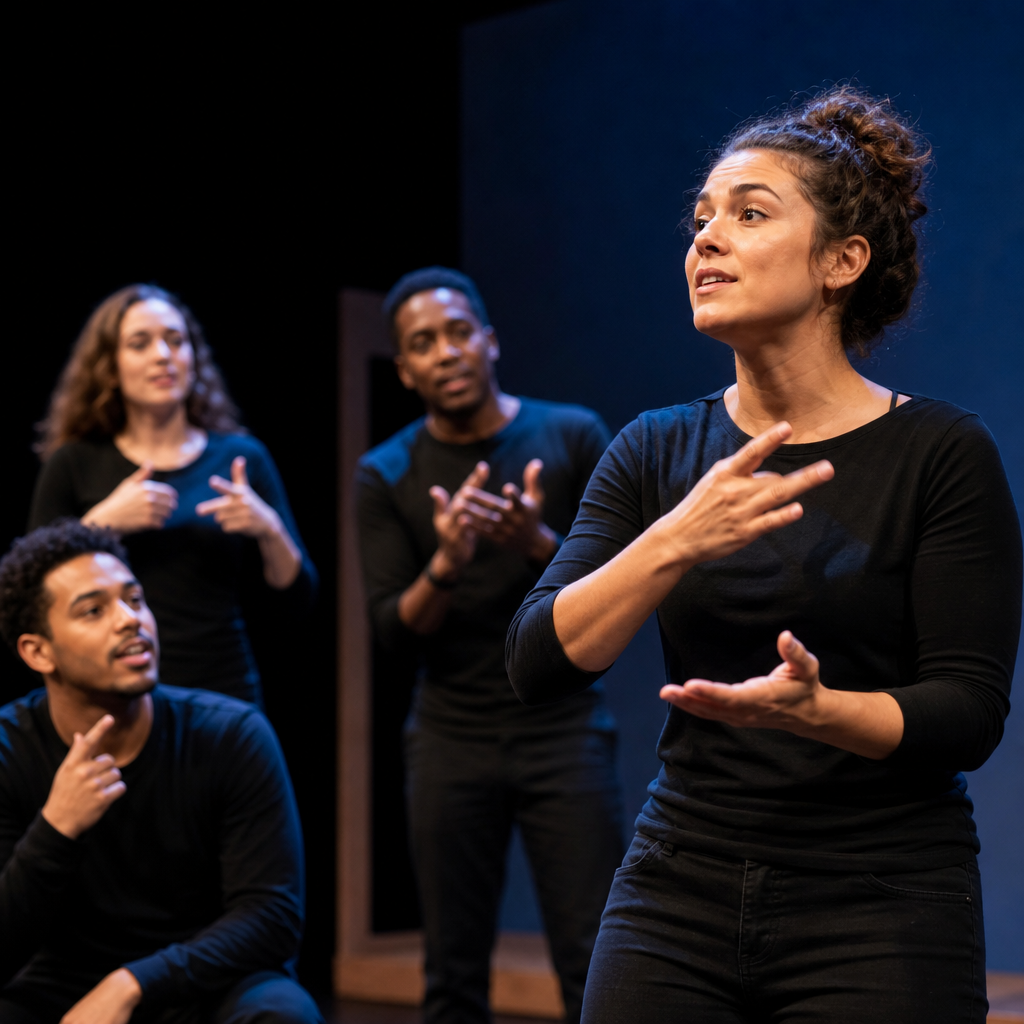
Language does more than enable conversation. It shapes attention, etiquette, and storytelling. Deaf communication is often visually rich and spatially precise. Facial expression carries grammatical information, not just emotion. Turn-taking works differently than in spoken conversation because eye gaze and body orientation matter. Name signs, playful signing styles, and community-specific references deepen bonds over time. These patterns are difficult to grasp from textbooks alone. They become natural through participation in community spaces where fluent signers model them constantly.
For families, educators, and service providers, the lesson is straightforward: early and consistent access to a signed language is not a backup plan. It is a developmental necessity for many deaf children and a gateway into community. Even children who use hearing technology may benefit from sign language because devices do not guarantee full access in every environment. Background noise, distance, fatigue, and uneven outcomes are real factors. The strongest approach is usually bilingual and flexible, with communication choices guided by the child’s actual access rather than ideology.
Shared Values, Norms, and Everyday Social Life
Every culture has norms that seem ordinary from the inside and highly visible from the outside. In Deaf culture, visual accessibility is a shared value, so room layout, lighting, sightlines, and turn-taking are social concerns, not minor details. People tap shoulders, wave, flick lights, or stomp lightly on a floor to get attention depending on the setting. Directness is often appreciated because it reduces ambiguity in a visual language environment. Information sharing is also highly valued. In many Deaf networks, people exchange detailed practical information quickly because access barriers make community knowledge especially useful.
Social life in Deaf culture has historically centered on schools for the Deaf, Deaf clubs, churches, sports leagues, theater groups, and national conferences. Although some traditional clubs declined after telecommunications and mainstreaming expanded, the community did not disappear. It adapted. Today, Deaf social life exists both in person and online through video platforms, social media, virtual classes, and livestreamed events. What remains constant is the importance of spaces where signing is natural and Deaf people are not required to explain themselves before participating.
These norms also create accountability. Community can be warm and welcoming, but it is not shapeless. Members debate education policy, interpreting quality, representation, and the impact of new technologies. They also challenge misinformation from outside institutions. That internal conversation is a sign of cultural strength. Healthy communities are not defined by total agreement; they are defined by shared investment in the future.
Education, History, and the Institutions That Hold Culture Together
To understand why community matters so much in Deaf culture, it helps to know the history. Deaf schools were often the first places where many deaf children encountered fluent sign language and a large peer group. Those schools became engines of identity formation, leadership development, and cultural transmission. Gallaudet University in the United States became a major symbol of Deaf intellectual life, especially during the 1988 Deaf President Now movement, which demonstrated the political power of organized community and remains a landmark in disability rights and Deaf self-determination.
History also includes exclusion. The 1880 Milan Conference endorsed oralist education and contributed to the suppression of signed languages in many schools. Generations of Deaf people experienced punishment for signing or were denied full language access in classrooms. That history explains why many Deaf adults are skeptical when institutions promise inclusion without Deaf leadership. Community memory is shaped by real policies and real consequences. When people defend Deaf schools, sign language instruction, or Deaf-led organizations today, they are not clinging to nostalgia. They are responding to historical evidence about what supports language, learning, and belonging.
| Institution or movement | Why it matters to Deaf culture | Community impact |
|---|---|---|
| Schools for the Deaf | Provide language-rich environments and peer networks | Support identity, literacy, and leadership development |
| Deaf clubs and associations | Create social, civic, and mentoring spaces | Preserve traditions and share practical knowledge |
| Gallaudet University | Center of Deaf scholarship and public leadership | Amplifies Deaf perspectives nationally and globally |
| Deaf President Now | Affirmed Deaf governance and representation | Strengthened activism across generations |
| National advocacy organizations | Promote policy change and civil rights enforcement | Improve access in education, media, and employment |
Today, inclusive education can work well when it includes qualified teachers of the Deaf, interpreters, captioning, peer connection, and access to Deaf role models. But placement alone does not equal inclusion. A deaf student who is the only signer in a school may receive accommodations and still feel socially isolated. Community fills the gap by connecting students to mentors, camps, youth programs, and adult networks that classroom supports alone cannot replace.
Identity, Belonging, and the Diversity Within Deaf Culture
There is no single Deaf experience. Deaf culture includes people of different races, ethnicities, nationalities, genders, religions, political views, and communication styles. Some grow up in multigenerational Deaf families and acquire sign language from birth. Others discover the community as teenagers or adults after years of mainstream education. Some use cochlear implants or hearing aids and identify strongly as Deaf. Others prefer spoken language and maintain a looser relationship to the community. DeafBlind people, late-deafened adults, and hard of hearing people may overlap with Deaf spaces in different ways. A useful hub article must say this clearly: Deaf culture is unified by shared community, but it is not culturally uniform.
Belonging often develops through recognition. Many people describe their first Deaf event as the moment they realized they did not have to work so hard to follow everything around them. That relief is powerful. It can also be complicated. Newcomers may feel behind in sign fluency or unsure of etiquette. Community institutions matter because they create pathways in. Introductory sign classes taught by Deaf instructors, family programs, mentorship, Deaf-centered media, and local gatherings help people move from observer to participant. Identity is not handed over instantly. It is built through repeated contact, shared language, and mutual contribution.
The healthiest understanding of Deaf culture avoids rigid gatekeeping while still respecting linguistic and historical realities. Not every deaf person will identify as culturally Deaf, and that choice should be acknowledged. At the same time, public institutions should not erase Deaf culture by pretending all hearing loss experiences are identical. Precision matters. Cultural identity, communication access, and technology use intersect, but they are not the same thing.
Challenges, Modern Change, and How to Support Deaf Community
Deaf culture continues to evolve. Video relay services, captioning tools, smartphones, and social platforms have expanded communication and made community more reachable across distance. At the same time, major challenges remain: uneven early language access, shortages of qualified interpreters, employment discrimination, inaccessible healthcare, and education systems that still underestimate the importance of Deaf adult role models. Technology can help, but it cannot replace community infrastructure. A captioned appointment is useful; a trusted Deaf health advocate who can explain how to navigate the system is often transformative.
Support begins with practical choices. Families should learn sign language early and meet Deaf adults. Schools should hire Deaf educators and create peer networks, not just individual accommodations. Employers should provide qualified interpreters, captioning, and promotion pathways rather than limiting deaf employees to basic compliance measures. Media organizations should include Deaf creators, not only consultants. Researchers and policymakers should involve Deaf stakeholders from the start. The principle is simple: nothing about Deaf life works well when Deaf people are treated as an afterthought.
For readers exploring Deaf culture and identity, the main takeaway is clear. Community is the reason Deaf culture endures across generations, technologies, and policy shifts. It carries language, history, values, humor, and resistance. It gives people a place to belong and a framework for interpreting their own experience. If you want to understand what Deaf culture is, start with the community that sustains it. Learn from Deaf-led organizations, attend local events, study signed language with Deaf teachers, and keep building connections that make access real.
Frequently Asked Questions
Why is community so important in Deaf culture?
Community is central to Deaf culture because it is the place where language, identity, and belonging come together. Deaf culture is not simply about not hearing; it is about participating in a shared social world shaped by signed languages, common experiences, and values that have been built across generations. In Deaf communities, people do more than communicate efficiently. They pass on stories, humor, traditions, social norms, and a collective understanding of what it means to live in a world that often centers hearing people. That shared space turns an individual experience into a cultural identity.
Community also gives Deaf people access to affirmation that may not always be available in wider society. Many Deaf individuals are born into hearing families, which means they may not grow up surrounded by others who share their language or life experience. Deaf community spaces, whether in schools, clubs, advocacy organizations, social gatherings, or online networks, provide opportunities to meet others who understand those experiences firsthand. In that environment, people often find confidence, connection, and a stronger sense of self. This is one reason community is not just helpful in Deaf culture; it is foundational.
How does shared language strengthen Deaf community life?
Shared language is one of the strongest forces holding Deaf communities together. Signed languages such as American Sign Language are full, complex natural languages with their own grammar, expression, and cultural richness. They do far more than enable communication. They create a space where Deaf people can exchange ideas directly, tell stories vividly, debate, joke, teach, and build relationships without the barriers that often exist in spoken-language-dominated settings. Language is where culture lives, and in Deaf communities, signed language is often the heart of cultural continuity.
Because many Deaf children are not born into signing households, community settings often become essential places for language transmission. Through interaction with Deaf adults, peers, elders, and mentors, people learn not only vocabulary and fluency but also conversational norms, storytelling traditions, etiquette, and cultural values. Shared language allows knowledge to move naturally across generations. It also reinforces pride. When a person can communicate fully and be fully understood, it strengthens identity and creates a powerful sense of inclusion. In this way, language does not just support the community; it actively builds and sustains it.
What role do Deaf schools, organizations, and social spaces play in preserving Deaf culture?
Deaf schools, community organizations, and social spaces have historically been among the most important institutions in Deaf culture. They are places created by Deaf people and shaped around Deaf ways of communicating and connecting. In these environments, signed language is often centered rather than treated as secondary, and Deaf cultural knowledge is shared in everyday life. These spaces have long served as hubs for education, leadership development, advocacy, friendship, and cultural preservation.
Deaf schools in particular have played a major role in bringing young people into contact with peers and adults who share their language and experiences. For many, these schools have been the first place where being Deaf feels normal rather than isolating. Organizations and clubs extend that experience into adulthood by offering forums for activism, arts, sports, mentoring, and civic life. Social spaces, both in person and online, help maintain networks that connect people across regions and generations. Together, these institutions preserve traditions, support collective memory, and ensure that Deaf culture remains a living, evolving community rather than a concept defined from the outside.
How does community help shape Deaf identity?
Community plays a major role in helping people understand Deafness as a cultural identity rather than only a medical condition. In many mainstream settings, Deafness is framed mainly in terms of loss, limitation, or something to be fixed. Within Deaf community life, the perspective is often very different. Deafness is understood as part of a shared human experience tied to language, history, creativity, resilience, and collective pride. That shift in perspective can be transformative, especially for someone who has had limited exposure to other Deaf people.
Identity is shaped through interaction. By meeting Deaf role models, learning community history, participating in traditions, and using signed language in meaningful relationships, people begin to see themselves as part of something larger. They learn that Deaf culture includes values such as direct communication, visual attentiveness, mutual support, and respect for shared experience. This process can be especially important for Deaf children and adults who may have felt alone or misunderstood in hearing-centered environments. Community gives context to personal experience and helps turn that experience into identity, confidence, and belonging.
Why does Deaf community matter for the future of Deaf culture?
The future of Deaf culture depends on strong, active community networks because culture survives through people, relationships, and institutions. Traditions are not preserved automatically. They are maintained when language is taught, history is remembered, stories are shared, and new generations are welcomed into the community. Deaf culture continues because Deaf people create spaces where that transmission can happen, whether through schools, families, advocacy groups, cultural events, digital platforms, or everyday social interaction.
Community also matters for the future because it supports collective action. Deaf communities have long advocated for language rights, access, education, media representation, and social inclusion. These efforts are stronger when people are connected and organized. At the same time, the community allows culture to grow and adapt. New technologies, changing educational models, and broader public awareness are all shaping Deaf life, but community provides the continuity that keeps those changes grounded in Deaf values and perspectives. In short, the future of Deaf culture is not secured by definition alone. It is secured by the ongoing life of the community itself.