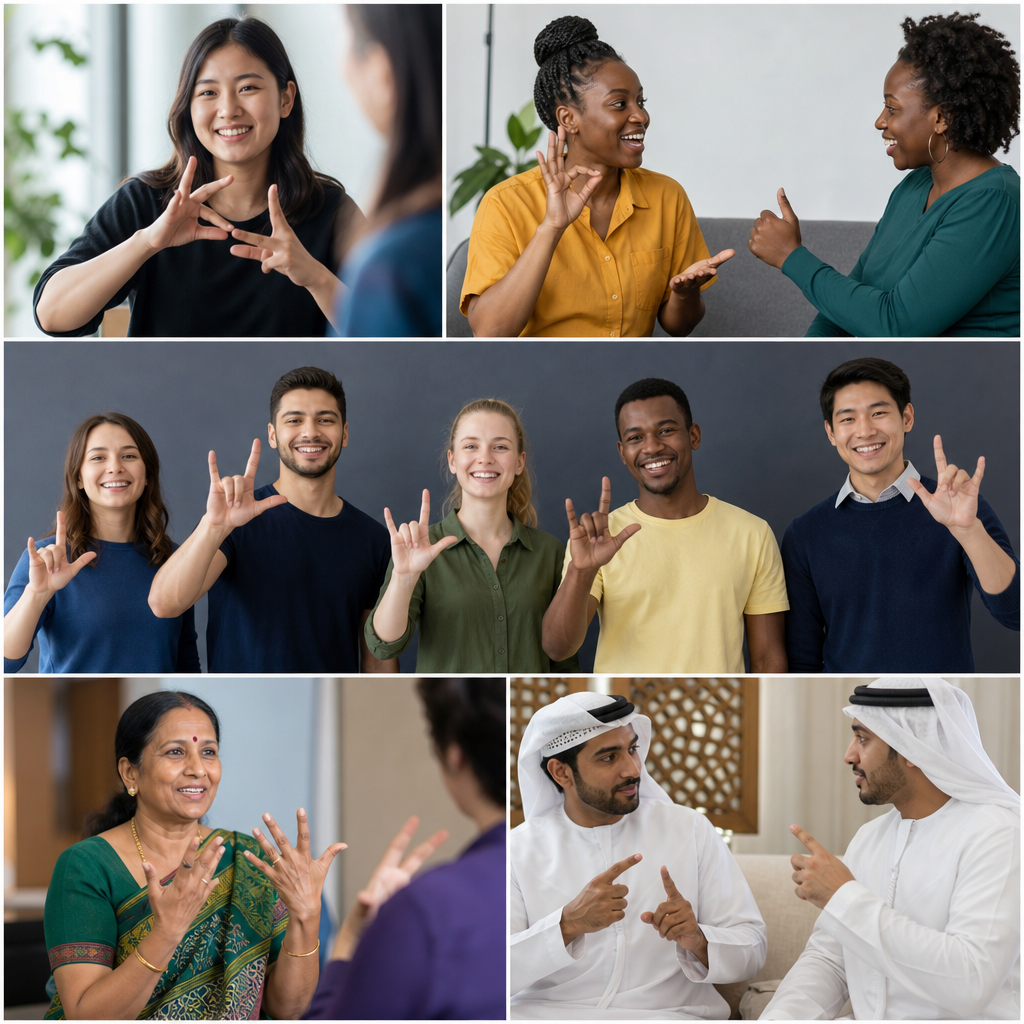
Deaf culture around the world is both shared and deeply local, shaped by sign languages, educational systems, community institutions, technology, and the ways Deaf people define identity on their own terms. In practice, Deaf culture refers to the values, social norms, history, art, humor, and collective experience that grow within Deaf communities, especially where signed languages are central. It is not simply a medical response to hearing loss. It is a cultural framework with its own traditions, leadership structures, and forms of belonging. Across many countries, I have seen the same pattern repeat: when Deaf people have access to sign language, peer networks, and community spaces, culture becomes visible immediately in conversation style, storytelling, advocacy, and pride. That is why this topic matters. Understanding what Deaf culture is helps parents, educators, employers, interpreters, policymakers, and hearing allies make better decisions. It also helps explain why Deaf people in different regions may share certain experiences while still expressing identity in very different ways.
A useful starting point is the distinction between deaf and Deaf. Lowercase deaf often describes the audiological condition of not hearing or hearing very little. Uppercase Deaf commonly refers to people who identify with a linguistic and cultural minority rooted in signed language and community participation. Not every deaf person identifies as Deaf, and not every Deaf person has the same hearing level, communication preference, or life story. Some are born into multigenerational Deaf families and acquire sign language from birth. Many others are born to hearing parents and encounter Deaf culture later through school, social groups, sports clubs, theater, or online networks. There are also hard of hearing people, late-deafened adults, DeafBlind people, and cochlear implant users who may participate in Deaf spaces in different ways. Any serious overview of Deaf culture must hold this complexity without flattening it into a single narrative.
Globally, Deaf culture is built on a few recurring foundations: signed language as a full natural language, visual modes of communication, strong community bonds, and the transmission of norms across generations. Yet these foundations operate differently in Japan than in Kenya, in Brazil than in Sweden, and in the United States than in India. National policy, interpreter availability, disability law, teacher training, and attitudes toward oralism all shape daily life. So does the status of local sign languages. American Sign Language, British Sign Language, French Sign Language, Japanese Sign Language, Kenyan Sign Language, and many others are distinct languages with their own grammar, lexicon, and histories. They are not universal. The idea of a single global sign language is one of the most common misconceptions this article needs to correct.
What Deaf Culture Means in Everyday Life
At its core, Deaf culture is a way of organizing social life around visual access, mutual respect, and shared experience. In everyday settings, that can mean maintaining eye contact while signing, using light taps or waving to gain attention, arranging seating in circles so everyone can see, and ensuring information is visually accessible. It also includes norms about introductions, direct communication, and storytelling. In many Deaf communities, people exchange more background context when first meeting because social networks are tightly interconnected through schools, clubs, and organizations. That is not nosiness; it is a practical and relational way of locating connection.
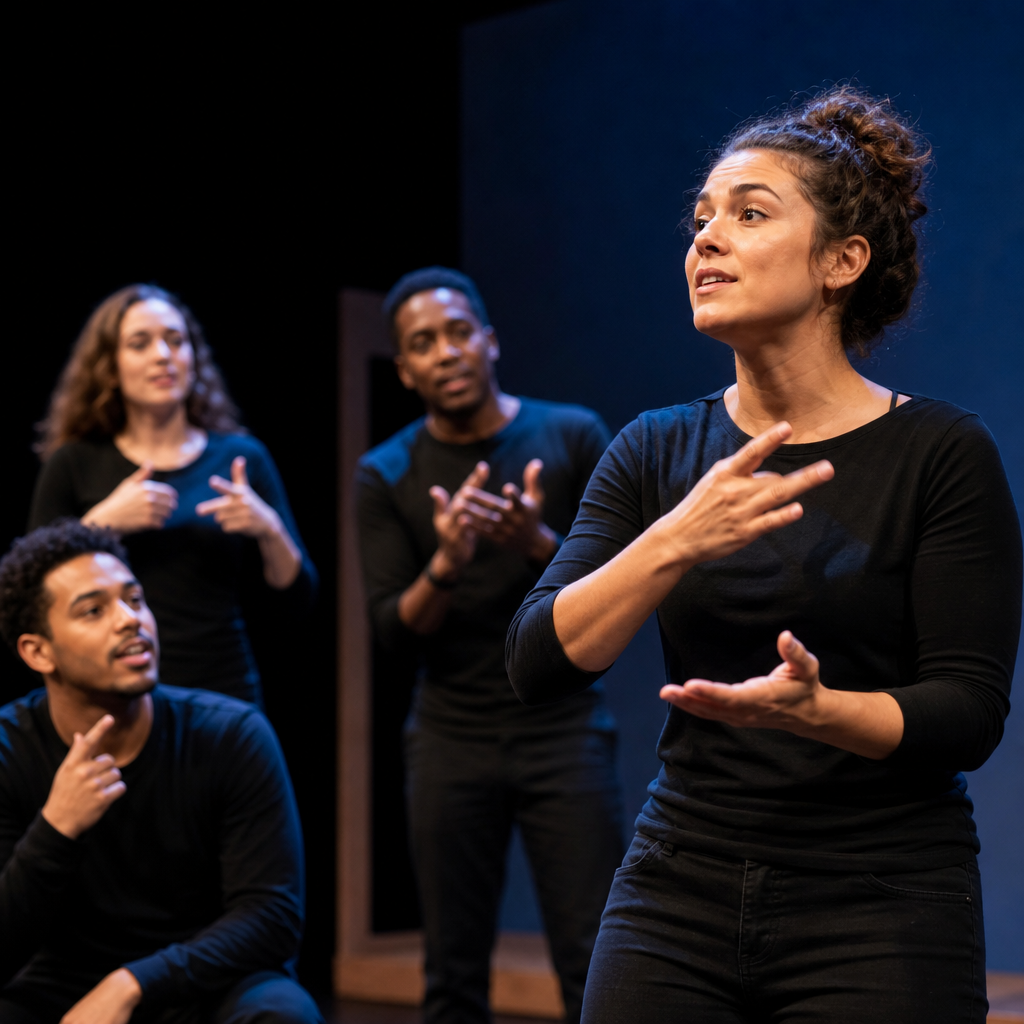
Visual communication shapes behavior far beyond language. At Deaf events, lighting matters, sightlines matter, and interruptions work differently than they often do in spoken conversation. Humor may rely on facial expression, role shift, mimicry, and timing that are best understood in sign. Applause may be given visually through raised, rotating hands. Art often emphasizes movement, embodiment, and collective memory. These patterns are not incidental. They are evidence that culture grows from the communication environment people actually live in. When hearing institutions fail to provide access, Deaf communities often create their own parallel spaces, from schools and churches to theater companies, advocacy groups, and social media channels.
The strongest hub pages on Deaf culture also answer a central question directly: is Deaf culture the same everywhere? No. Deaf communities worldwide share values such as language pride, visual accessibility, and resistance to marginalization, but they differ in language, social hierarchy, educational history, and public recognition. In some countries, national sign language has legal recognition and interpreter services are relatively established. In others, Deaf people still face severe barriers in schooling, healthcare, court access, and employment. Those conditions shape culture as much as language does.
Language, Identity, and Why There Is No Universal Sign Language
Sign languages are complete natural languages with their own phonology, morphology, syntax, discourse patterns, and regional variation. Linguists have demonstrated this for decades, and organizations such as the World Federation of the Deaf continue to emphasize that language rights are central to equality. American Sign Language is historically linked to French Sign Language, while British Sign Language developed separately and is not mutually intelligible with ASL. That fact alone surprises many hearing readers. Even countries sharing a spoken language may use very different sign languages, and a single country may have dialects, village sign languages, or contact varieties shaped by schooling and migration.
Identity follows language, but not mechanically. Some Deaf people prioritize national Deaf identity tied to a local sign language. Others feel strongest attachment to a transnational Deaf world built through international gatherings, sports competitions, and online video communication. International Sign can sometimes help across borders, but it is not a native language for most users and should not be mistaken for a universal system. It works best as a flexible contact variety in conferences or mixed-language settings. Anyone researching what is Deaf culture should understand that language difference is one of the main reasons Deaf culture around the world is plural rather than singular.
Education strongly affects identity formation. Where Deaf children meet signing peers and adult role models early, cultural transmission is stronger. Where oral-only education dominates and sign language is discouraged, many deaf children grow up isolated from both full language access and community belonging. I have repeatedly seen adults describe the same turning point: the first time they entered a Deaf-led space and could communicate freely, they experienced not deficit but relief. That shift from being treated as impaired to being recognized as part of a linguistic minority often marks the beginning of cultural identification.
Shared Features and Regional Differences
Across continents, several similarities appear again and again. Deaf communities value direct visual communication, collective problem-solving, shared stories about exclusion and access, and pride in signed languages. Deaf clubs, sports leagues, schools, and cultural festivals frequently serve as anchor institutions. Many communities also share a history of resisting oralism, the educational philosophy that prioritizes speech and lipreading while minimizing or banning sign language. The 1880 Milan Conference, which endorsed oral methods and marginalized sign in many schools, had long global consequences. Its impact is still visible in educational policy, intergenerational language loss, and community activism.
Differences emerge in how each society structures opportunity. In Sweden, sign language recognition and welfare supports have historically improved access, though challenges remain. In the United States, the Americans with Disabilities Act created legal tools for accommodation, yet quality and consistency vary widely. In India, Deaf communities navigate immense linguistic diversity, uneven rural access, and significant interpreter shortages. In many African countries, Deaf organizations have made major progress in advocacy, but resources remain limited and educational inequities are severe. Latin American countries show another mix: some have constitutional or statutory recognition of national sign languages, while implementation lags in schools and public services.
| Region | Common Strengths | Common Challenges |
|---|---|---|
| North America | Strong advocacy groups, established interpreter profession, visible Deaf arts | Uneven school quality, healthcare communication gaps, rural access barriers |
| Europe | Growing legal recognition, robust research, public broadcasting access in some countries | Variation between countries, aging institutions, inconsistent employment inclusion |
| Asia | Large and active Deaf communities, rising digital connection, expanding public awareness | Oralist legacies, limited interpreter supply, major urban-rural disparities |
| Africa | Strong grassroots leadership, community resilience, increasing sign language advocacy | Resource constraints, school access limitations, low policy enforcement |
| Latin America | Vibrant community networks, legal advances in several countries, visible youth activism | Implementation gaps, interpreter shortages, unequal access by class and region |
These examples show why broad claims about the Deaf experience are unreliable. Shared culture exists, but it is filtered through policy, class, geography, gender norms, and colonial language histories. A Deaf person in an urban capital with a strong signing network may have a very different experience from a Deaf person in a rural district where no qualified interpreter is available.
Education, Institutions, and the Role of Community Spaces
Schools have historically been the main engines of Deaf cultural transmission, especially residential schools where students lived, signed, socialized, and built networks that lasted for decades. Many Deaf adults still trace friendships, political awareness, and language fluency back to those environments. At their best, such schools created spaces where Deaf children saw themselves reflected in teachers, coaches, and alumni. At their worst, some schools restricted sign, imposed rigid discipline, or failed academically. The key issue is not nostalgia for any single model. It is whether Deaf children receive full language access, qualified teachers, and contact with Deaf adults who can model successful futures.
Beyond schools, community institutions matter enormously. Deaf clubs once functioned as central hubs for news, marriage networks, sports, activism, and civic life in many countries. Some declined as mainstreaming, digital communication, and urban change altered gathering patterns. Yet the underlying need did not disappear. It moved into nonprofit organizations, university programs, captioned media communities, online video platforms, and international events such as the Deaflympics or world congresses. These institutions preserve memory, mentor youth, and mobilize political action. They also support subcommunities, including Deaf immigrants, LGBTQ+ Deaf people, DeafBlind communities, and signers from racial or ethnic minorities whose experiences may differ from dominant narratives.
Technology has expanded community while creating new tensions. Video relay services, smartphone messaging, and social platforms have made signed communication more immediate across distance. At the same time, technology access is unequal, automatic captions still make serious errors, and devices such as cochlear implants are interpreted differently across families and communities. The central question is not whether technology is good or bad. It is whether technology increases language access, autonomy, and informed choice.
Common Myths, Current Debates, and Why Respect Matters
Several myths continue to distort public understanding. First, Deaf culture is not defined by inability. It is defined by language, community, and shared norms. Second, sign languages are not simplified versions of spoken languages; they are structurally complete. Third, Deaf people do not all lipread well, and lipreading alone is an unreliable communication method because much spoken language is visually ambiguous. Fourth, hearing aids and cochlear implants do not erase the need for communication access or automatically determine identity. Outcomes vary by age of access, support, environment, and individual preference.
Current debates often center on bilingual education, mainstream versus specialized schooling, disability and cultural models, interpreter standards, media access, and the ethics of medical decision-making for children. These are not abstract disputes. They affect whether a child develops language on time, whether a patient understands a diagnosis, whether a worker can participate in meetings, and whether a citizen can engage fully in public life. Respect begins with asking Deaf people what access works for them, recognizing local sign languages, and treating Deaf-led organizations as primary authorities on their own communities.
The most important takeaway is simple. Deaf culture around the world is united by visual language and community, yet shaped by local history and policy in ways that create real differences. If you want to understand what Deaf culture is, start with signed languages, listen to Deaf people, learn the history of education and rights in your region, and support institutions that expand access. That approach replaces stereotypes with knowledge and turns inclusion into something practical. Read further within Deaf Culture & Identity, explore local Deaf organizations, and build habits that make communication genuinely accessible for everyone.
Frequently Asked Questions
1. What is Deaf culture, and why is it considered a culture rather than just a medical condition?
Deaf culture is a shared way of life built around language, community, history, values, social customs, and collective experience. While many hearing people first think about deafness in medical terms, Deaf communities often understand it very differently. In this cultural view, being Deaf is not simply about the absence of hearing. It is about belonging to a community in which signed languages, visual communication, shared traditions, and social identity play a central role. That is why many people use the word Deaf with a capital D when referring to cultural identity rather than only hearing status.
Like other cultures, Deaf culture includes storytelling, humor, art, performance, norms of interaction, and intergenerational knowledge. It also includes a long history of advocacy for language rights, educational access, and social recognition. In many places, Deaf people have created strong institutions such as schools for the Deaf, community organizations, sports clubs, theaters, and social networks that help preserve and transmit culture. These institutions have been essential because Deaf people have often had to build spaces where signed language and Deaf ways of interacting are fully respected.
Another reason Deaf culture is considered a culture is that it is grounded in language. Signed languages are complete natural languages with their own grammar, structure, and expressive power. They are not universal, and they are not simplified versions of spoken languages. Just as language shapes worldview in any community, signed languages shape Deaf cultural life, identity, and belonging. For many Deaf people, cultural recognition matters because it shifts the conversation away from deficiency and toward community, autonomy, and pride.
2. Are Deaf cultures around the world basically the same, or do they differ from country to country?
Deaf cultures around the world share important common threads, but they are not all the same. Across many countries, Deaf communities often value visual communication, direct access to information, strong community ties, storytelling traditions, and respect for signed languages. Many also share common experiences, such as navigating hearing-majority systems, advocating for interpreters and accessibility, and pushing back against the idea that deafness must be defined only as something to be fixed. These shared experiences create a sense of international connection among Deaf people, especially at global events, online spaces, and cross-border advocacy efforts.
At the same time, Deaf culture is deeply shaped by local conditions. Each country may have its own signed language, educational history, legal framework, and public attitudes toward disability and minority languages. For example, some nations have officially recognized their national sign language, while others still do not grant it equal status. In some places, residential schools for the Deaf helped create strong cultural networks and community continuity. In others, oralist education or limited access to Deaf-centered institutions disrupted language transmission and cultural development. These differences can significantly affect how Deaf identity is formed and expressed.
Local customs also matter. Humor, politeness norms, family expectations, religion, social class, and the relationship between urban and rural communities all influence how Deaf culture develops in a specific region. Even the availability of interpreters, captioning, Deaf media, and government support can shape everyday life. So while there are broad similarities that connect Deaf communities globally, it is more accurate to think of Deaf culture as both international and local: a network of related cultural experiences rather than one single uniform culture.
3. Why are sign languages so important in understanding Deaf culture worldwide?
Sign languages are central to Deaf culture because they are much more than communication tools. They are the foundation of social life, identity, knowledge-sharing, and cultural expression in many Deaf communities. Through sign language, people exchange stories, jokes, values, personal histories, and community memory. This is how culture lives and grows. A signed language allows Deaf people to communicate directly and fully without constantly adapting to hearing-centered expectations, which is one reason language access is so closely tied to dignity and self-determination.
It is also important to understand that there is no single universal sign language. American Sign Language, British Sign Language, French Sign Language, Japanese Sign Language, Kenyan Sign Language, and many others are distinct languages with their own grammar, vocabulary, and cultural context. Some countries even have multiple signed languages or regional variation within one language. This linguistic diversity helps explain why Deaf cultures differ from place to place. Language carries local history, identity, and ways of seeing the world, so differences in signed language naturally contribute to differences in culture.
Sign languages also matter because their status often reflects the social position of Deaf people in a given country. When a sign language is recognized in law, taught in schools, used in media, and respected in public life, Deaf culture usually has more room to flourish. When sign language is discouraged or excluded, cultural transmission becomes harder. Debates over language in education, interpretation, and public policy are therefore never just technical issues. They are deeply connected to whether Deaf communities can sustain their culture on their own terms.
4. How do education, technology, and community institutions shape Deaf culture in different parts of the world?
Education has historically been one of the strongest forces shaping Deaf culture. In many countries, schools for the Deaf were not only academic institutions but also cultural centers where children met other Deaf people, learned sign language, formed lifelong friendships, and developed a sense of identity. These schools often played a major role in preserving sign languages and creating shared community traditions. However, educational systems vary widely. In some places, bilingual approaches that include sign language support both learning and cultural development. In others, oral-only approaches or limited sign access have reduced opportunities for Deaf students to connect with Deaf peers and role models.
Technology has changed Deaf life globally, but its effects are not identical everywhere. Video calling, captioning, social media, messaging apps, remote interpreting, and online Deaf content have expanded communication and made it easier for Deaf people to build networks beyond local communities. Technology can reduce isolation, increase access to news and education, and strengthen transnational connections among Deaf people. At the same time, access to technology is uneven. Reliable internet, affordable devices, quality captioning, and sign language-inclusive digital spaces are more available in some regions than others, so the cultural impact of technology depends heavily on infrastructure and policy.
Community institutions remain essential even in the digital age. Deaf clubs, advocacy groups, arts organizations, sports associations, and cultural events create spaces where Deaf people can gather, lead, and define community priorities. These institutions often preserve history, support young people, and provide a base for political organizing. Where such institutions are strong, Deaf culture tends to be more visible and resilient. Where they are underfunded or absent, Deaf people may have fewer opportunities to experience culture collectively. Taken together, education, technology, and institutions help determine whether Deaf culture is marginalized, thriving, fragmented, or transforming in a particular society.
5. How do Deaf people around the world define identity on their own terms?
Deaf identity is not one-size-fits-all, and many Deaf people define it in ways that reflect culture, language, family background, and personal experience rather than hearing status alone. For some, identity is strongly tied to participation in a Deaf community and use of a signed language. For others, identity may be shaped by growing up in a hearing family, attending mainstream schools, receiving late language exposure, using multiple communication methods, or moving between Deaf and hearing spaces. Around the world, Deaf people continue to challenge narrow outside definitions and insist that identity should be self-defined, not imposed by medical professionals, educators, or social stereotypes.
This self-definition often includes rejecting the assumption that Deaf lives must be measured against hearing norms. Many Deaf people describe themselves not as broken versions of hearing people, but as members of a linguistic and cultural minority with their own perspectives and strengths. Visual communication, shared experience, cultural pride, and community belonging can all be central parts of that identity. In some countries, this perspective is closely linked to activism for sign language recognition, inclusive policy, and Deaf leadership in public life.
At the same time, identity can be layered and intersectional. A Deaf person may also identify strongly through nationality, ethnicity, race, religion, gender, or class, and these identities interact with Deaf experience in important ways. A Deaf person in Brazil, India, Nigeria, Sweden, or Mexico may share certain cultural experiences with Deaf people elsewhere, yet still understand Deaf identity through a distinctly local lens. That is one of the most important truths about Deaf culture around the world: it is united by shared themes of language, community, and self-determination, but it is always shaped by the people living it in their own social and cultural context.