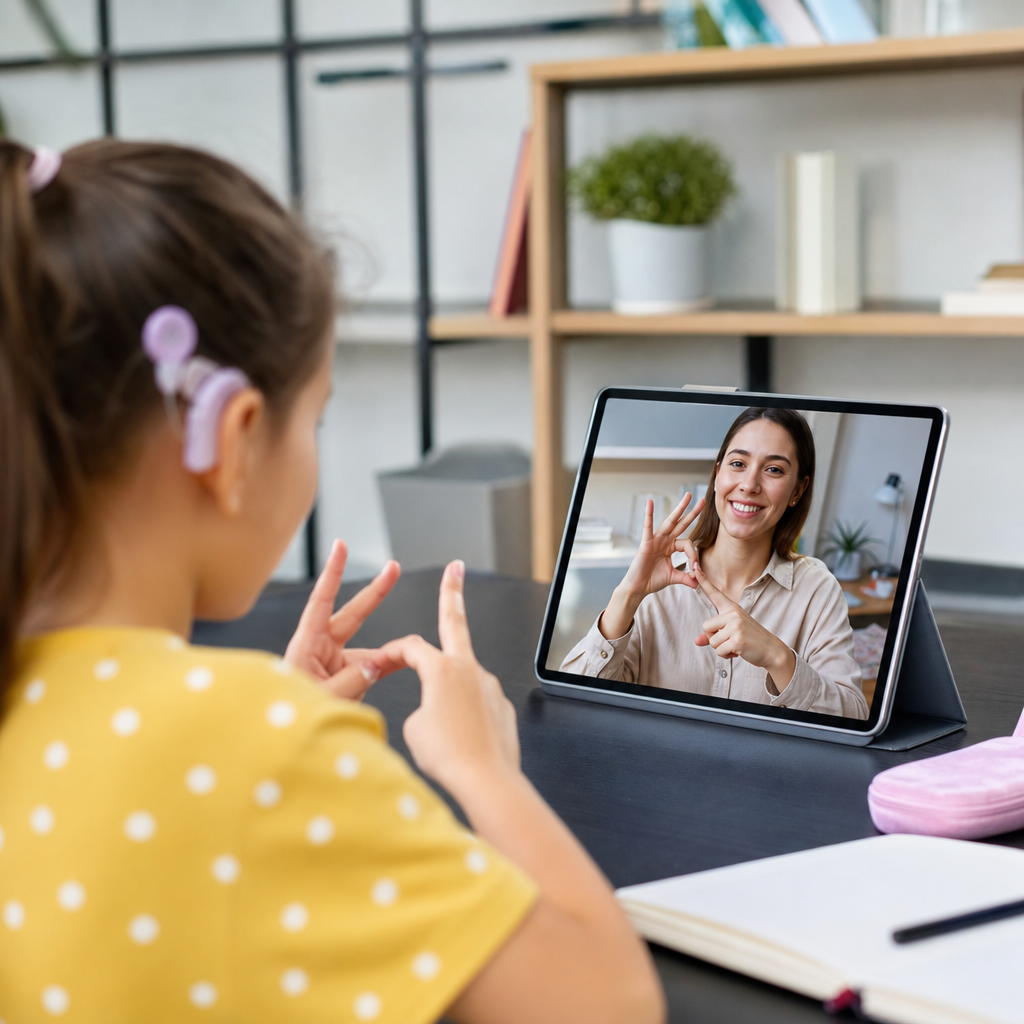
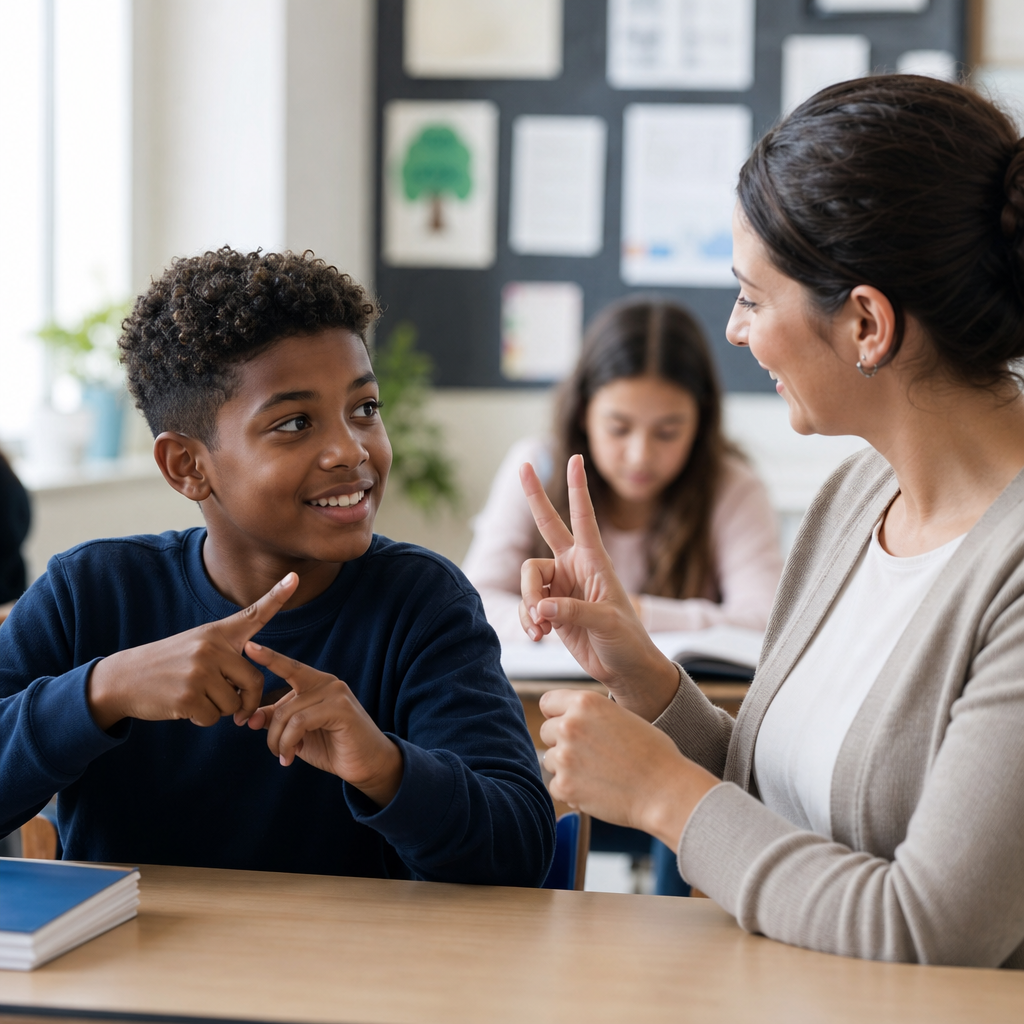
Inclusion shapes every part of a deaf student’s school experience, from access to classroom instruction to friendships, identity development, and long-term academic outcomes. In education, inclusion means more than placing deaf students in general education classrooms; it means designing schools so they can fully participate through accessible communication, appropriate supports, and genuine belonging. Deaf education systems include mainstream programs, co-enrollment models, bilingual settings using sign language and written or spoken language, and specialized schools for the deaf. I have worked with inclusive education planning teams, and the clearest lesson is that placement alone does not determine success. What matters is whether a student can access teaching in real time, communicate with peers and staff, and build language without delay. This topic matters because deaf students often face preventable barriers that hearing students never encounter, and those barriers affect literacy, mental health, graduation pathways, and family trust in schools.
Understanding how inclusion impacts deaf students in schools requires defining several key terms. A deaf student may use sign language, spoken language, cued speech, cochlear implants, hearing aids, or a combination, and communication needs vary widely. Accessibility means instruction is perceivable and usable, including interpreters, captioning, visual supports, acoustic treatment, assistive listening systems, and direct communication with qualified staff. Least restrictive environment, a principle in special education law, does not mean the physically nearest general classroom by default; it means the setting that allows meaningful educational benefit with appropriate supports. Language access is foundational because delayed access to language in early and school years can affect reading, content learning, and social development. Belonging is equally important. A student can be physically included and still socially isolated if conversations move too fast, captions lag, or no one else signs.
When schools get inclusion right, deaf students can thrive academically and socially while participating fully in the life of the school. When schools get it wrong, students may spend years coping, guessing, and masking fatigue rather than learning. Research consistently shows that language-rich environments, qualified staff, and early accessible communication are strong predictors of better outcomes. Families also need clear information because choices about deaf education systems are rarely simple. A mainstream placement may work well for one student and poorly for another; a school for the deaf may offer a strong language community yet require longer travel or fewer local extracurricular options. This hub article explains the major models, the conditions that make inclusion effective, common barriers, and practical ways schools can improve. It also serves as a foundation for deeper topics across deaf education systems, including communication access, individualized education programs, interpreting, assistive technology, literacy instruction, and transition planning.
What inclusion means for deaf students
For deaf students, inclusion is successful only when they have direct, consistent access to communication, instruction, and relationships. In practice, that means being able to follow teacher talk, class discussion, side comments that carry academic meaning, announcements, multimedia, group work, and informal interactions. I have seen schools assume that one accommodation, such as a hearing aid or an interpreter, solves access. It does not. Even excellent interpreters cannot replace direct communication with teachers and peers, and amplification cannot make every classroom acoustically usable. Inclusion is therefore a systems issue, not an individual fix. The school must align language access, staffing, classroom design, instructional methods, and peer culture.
Deaf students are not a single group, and inclusion must reflect that diversity. Some students identify culturally as Deaf and use American Sign Language or another national sign language as their primary language. Others are hard of hearing, rely on spoken language, and need strong acoustic conditions and speech access. Some students are deafblind, have additional disabilities, or are multilingual learners. Effective inclusion starts with a detailed understanding of the student’s receptive and expressive communication, language history, fatigue patterns, and social preferences. A student who appears to be coping may actually be missing large portions of instruction, especially in fast-paced classes, labs, and lunchroom conversations. Schools that assess only grades often miss these hidden access gaps.
There is also an important distinction between integration and inclusion. Integration often means a deaf student is present in an existing system and expected to adapt. Inclusion means the system adapts so the student can participate on equal terms. For example, in an integrated setting, a teacher may continue lecturing while writing on the board and turning away, leaving the student to piece together meaning. In an inclusive setting, the teacher uses visual presentation, pauses for interpretation or caption refresh, faces the class, repeats peer comments, and checks comprehension without singling out the student. Those changes benefit many learners, not only deaf students.
How deaf education systems differ
Deaf education systems generally fall into several models, each with strengths and limitations. Mainstream education places deaf students in general education classrooms, often with supports such as interpreters, note-taking assistance, speech-language services, educational audiology, captioning, and assistive listening technology. This model can support local access and participation with hearing peers, but quality varies dramatically. A co-enrollment model places deaf and hearing students together with teachers and staff who intentionally support both signed and spoken communication. Bilingual-bicultural programs teach through a sign language while developing literacy in the written majority language and often include Deaf adult role models. Specialized schools for the deaf provide a concentrated language environment, peer community, and staff expertise, though they may not be available locally and may differ in academic offerings.
No single model is best for every student. The critical question is whether the placement provides full language access, age-appropriate academic challenge, qualified professionals, and a healthy social environment. I have seen a mainstream placement succeed because the district invested in a teacher of the deaf, trained interpreters, FM or DM systems, captioned materials, and collaborative planning time. I have also seen the same label fail when a student sat through classes with poor acoustics, inexperienced support staff, and no deaf peers. Likewise, schools for the deaf can be transformative for students who need an immersive signing environment, but they are not automatically ideal if a student’s academic or family needs are better served elsewhere. Placement decisions should be revisited as students grow.
| Model | Main strengths | Common risks | Works best when |
|---|---|---|---|
| Mainstream | Local access, broad course choices, daily hearing peer interaction | Isolation, uneven access, staff inexperience | Communication supports are robust and monitored |
| Co-enrollment | Shared community, planned access, flexible communication | Requires significant staffing and coordination | School commits to dual-language or dual-access design |
| Bilingual program | Strong language foundation, Deaf role models, identity support | Limited availability, variable resources by region | Student benefits from sign-rich instruction |
| School for the deaf | Direct communication, deaf peer group, concentrated expertise | Travel demands, fewer local ties, program variation | Student needs immersive access and community |
Families often ask whether inclusion requires mainstreaming. The answer is no. Inclusion is about meaningful participation and access, not a single location. A student can be more fully included in a school for the deaf than in a neighborhood school where communication is partial all day. Conversely, a student can be well included in a mainstream school if supports are timely, direct, and socially integrated. The best deaf education systems keep multiple pathways available and resist one-size-fits-all thinking.
Academic effects of inclusion
Inclusion affects academic progress most directly through language access. If a deaf student misses key explanations, overheard examples, or peer discussion, learning becomes fragmented. This is especially damaging in subjects that build cumulatively, such as phonics, mathematics vocabulary, science procedures, and history lectures. Teachers may misinterpret the resulting gaps as low ability when the underlying issue is inaccessible instruction. In classrooms with strong access, deaf students can perform at high levels, complete advanced coursework, and participate in inquiry-based learning. The difference is not potential; it is access to language, pacing, and feedback.
Literacy development is a central concern in deaf education systems. Deaf students need explicit, systematic instruction in reading and writing, but the route to literacy may differ depending on their language profile. Students who use sign language benefit when teachers explicitly connect sign-based concepts to printed English or another written language. Students who use spoken language need clear auditory access, vocabulary development, and opportunities to repair misunderstandings quickly. Across profiles, visual supports, pre-teaching vocabulary, captioned media, and concept-rich instruction improve comprehension. Universal Design for Learning principles help because they provide multiple means of representation and expression, yet they must be paired with deaf-specific expertise. Generic differentiation is not enough when students are missing the channel of instruction itself.
Assessment is another area where inclusion has a strong impact. Standard classroom tests often assume full incidental access to instruction. If a deaf student was not able to hear peer answers, videos without accurate captions, or oral directions given while the teacher moved around the room, test results can reflect access failure rather than knowledge. Better systems use formative assessment, language sampling, curriculum-based measures, and careful review of whether accommodations match daily instruction. For statewide testing, schools must ensure accommodations are routinely used and legally documented, not added at the last minute. Accurate assessment protects students from both underestimation and inappropriate expectations.
Social, emotional, and identity outcomes
Inclusion has major effects on friendship, self-esteem, and identity. Many deaf adults describe school success not only in terms of grades but in whether they had effortless communication with at least some peers and adults. A deaf student who is always dependent on an interpreter or who misses jokes, side talk, and lunch conversations can feel present but peripheral. That social effort adds cognitive fatigue, and fatigue often looks like withdrawal, irritability, or reduced participation. Schools that ignore this dimension may believe the student is doing fine because behavior is compliant. In reality, the student may be lonely.
Peer access matters as much as teacher access. Simple practices improve interaction: teaching classmates how to take turns, ensuring one speaker at a time, using circles rather than rows for discussion, pausing before speaking so attention can shift, and encouraging basic sign learning where appropriate. I have seen classrooms change dramatically when teachers normalized these habits for everyone. Deaf students then contributed more, hearing peers became more patient communicators, and group work improved. Inclusion works best when the whole class shares responsibility for communication rather than treating access as a private issue between the deaf student and support staff.
Identity development also deserves attention. Deaf students benefit from exposure to Deaf adults, deaf peers, and positive narratives about deafness. Without that exposure, students may internalize the idea that success means appearing as hearing as possible. Inclusive schools should counter that message by recognizing deafness as a linguistic and cultural experience as well as a disability category. This does not diminish the value of technology or speech skills; it broadens the student’s sense of options and belonging. Mental health services should also be accessible in the student’s primary language. Counseling through an interpreter can work in some cases, but direct communication is often better for nuance and trust.
What schools need to make inclusion work
Effective inclusion depends on infrastructure, not goodwill alone. First, schools need qualified personnel: teachers of the deaf, educational audiologists, skilled interpreters, speech-language pathologists familiar with deaf learners, and general educators who understand access strategies. The Council on Education of the Deaf and professional interpreter standards provide useful benchmarks, but titles alone do not guarantee competence. Schools should observe whether supports actually increase participation and learning. Interpreter quality, for example, should be evaluated in educational context, including subject vocabulary, pacing, and the student’s language match.
Second, the physical environment matters. Classroom acoustics should follow recognized standards such as ANSI recommendations for background noise and reverberation in learning spaces. Carpeting, sound-absorbing panels, closed doors, and thoughtful seating improve speech access. Visual access matters too: lighting should allow clear sightlines for signing and lipreading, and teachers should avoid backlighting from windows. Assistive technology can include remote microphone systems, soundfield systems, real-time captioning, captioned video, visual alerting tools, and hearing device checks built into routines. Technology helps, but only if staff know how to use it consistently.
Third, planning and collaboration are essential. Strong teams review data on academic progress, language development, fatigue, attendance, and social inclusion, not just compliance documents. Individualized plans should specify who provides access, in which settings, and how effectiveness will be measured. Transitions between grades, schools, and extracurricular contexts need special attention because supports often break down there. Finally, family partnership is nonnegotiable. Parents and caregivers need understandable information about communication options, legal rights, and realistic tradeoffs across deaf education systems. Trust grows when schools explain decisions clearly and respond quickly when access fails.
Common barriers and how to address them
The most common barrier is assuming that physical presence equals access. Schools may place a deaf student in a general classroom but fail to caption videos, repeat student comments, or provide direct communication opportunities. Another barrier is delayed support. If interpreting, captioning, or device troubleshooting begins weeks into the term, the student starts behind. Staffing shortages are also serious, especially in rural districts. In those cases, schools should not simply lower expectations; they should consider regional cooperatives, telepractice where appropriate, itinerant specialists, and closer collaboration with schools for the deaf.
A second barrier is fragmented responsibility. General educators may assume the interpreter handles everything, while specialists may have little influence on curriculum. Inclusion improves when responsibility is shared and documented. Teachers must own accessible instruction. Administrators must fund training and scheduling. Support staff must be integrated into planning, not treated as add-ons. Schools should also monitor extracurricular access, because belonging often develops in sports, clubs, theater, and informal events. If a student has access only during academic classes, inclusion is incomplete.
The practical path forward is straightforward: evaluate access honestly, build communication-rich environments, and match placement to the student rather than to ideology. Audit classrooms for acoustics, captions, lighting, and teacher communication habits. Review whether the student has deaf peers or Deaf adult mentors. Confirm that assessment and counseling are accessible. Revisit placement when needs change. Inclusion impacts deaf students most positively when schools treat access as a core design principle, not an accommodation afterthought. For families and educators exploring deaf education systems, the goal is not the most convenient model; it is the model that gives the student language, learning, connection, and agency. Use this hub as a starting point, then examine each support area in depth and ask one practical question: can this student truly participate here, every day?
Frequently Asked Questions
What does inclusion really mean for deaf students in schools?
For deaf students, inclusion means far more than being physically placed in a general education classroom. True inclusion is about full access, meaningful participation, and a genuine sense of belonging in every part of school life. That includes classroom instruction, group work, class discussions, extracurricular activities, school events, and informal social interactions with peers and staff. If a deaf student is present in the room but cannot fully follow instruction, communicate easily, or participate naturally, that is not true inclusion.
Effective inclusion requires schools to design learning environments around accessibility from the start. That may involve sign language interpreters, teachers of the deaf, captioning, assistive listening technology, visual supports, acoustically appropriate classrooms, and staff who understand deaf communication needs. It also means recognizing that deaf students are not all the same. Some use American Sign Language, some rely on spoken language, some use both, and some benefit from bilingual or multimodal approaches. Inclusion works best when support is individualized rather than based on assumptions.
Just as important, inclusion also has a social and emotional dimension. Deaf students need opportunities to build friendships, see themselves reflected in the school community, and develop confidence in their identity. When schools treat accessibility as a shared responsibility rather than a special accommodation, deaf students are more likely to feel respected, connected, and capable. In that sense, inclusion is not a single placement decision. It is an ongoing commitment to communication access, equity, and belonging.
How does inclusion affect deaf students academically?
Inclusion can have a major impact on academic outcomes for deaf students, but the effect depends on the quality of access and support provided. When deaf students can fully understand instruction, ask questions in real time, participate in discussions, and receive appropriate language support, they are better positioned to learn grade-level content and meet high expectations. Strong inclusion can improve engagement, increase exposure to rigorous curriculum, and support long-term academic growth.
However, academic inclusion is not automatic simply because a deaf student is in a mainstream setting. If spoken instruction is inaccessible, if interpreters are unavailable or underqualified, if captions are missing, or if teachers do not know how to make lessons visually and linguistically accessible, learning gaps can grow quickly. Deaf students often miss incidental information that hearing students pick up naturally, such as side comments, peer discussion, or verbal transitions. Over time, these missed pieces can affect comprehension, confidence, and performance.
Schools that support academic success for deaf students usually take a proactive approach. They plan for accessible instruction in advance, train educators in deaf awareness and communication strategies, coordinate services consistently, and monitor whether the student is actually accessing the curriculum. They also recognize the importance of language development, whether through sign language, spoken language, or both, because strong language foundations are closely tied to literacy and academic achievement. In other words, inclusion can help deaf students thrive academically, but only when access is complete, intentional, and consistent.
Can deaf students feel socially isolated even in inclusive schools?
Yes, and this is one of the most important realities to understand. A deaf student can be academically present in an inclusive school and still experience social isolation if communication barriers remain during everyday interactions. Much of school belonging is built outside formal instruction: lunch conversations, hallway jokes, team activities, spontaneous group work, and friendships that develop naturally over time. If those moments are not accessible, a student may feel left out even when adults believe they are included.
Social isolation can happen for many reasons. Hearing peers may not know how to communicate with a deaf classmate, classroom conversations may move too quickly for full access, or the student may be the only deaf person in the school. In some cases, support services focus heavily on academics while overlooking peer relationships, identity development, and emotional wellbeing. That can leave deaf students feeling visible as “different” but not fully connected as members of the community.
Schools can reduce this risk by building inclusive culture, not just inclusive placement. That may include teaching classmates basic communication strategies, encouraging direct interaction rather than always communicating through adults, supporting sign language learning, creating visually accessible group activities, and ensuring deaf students have opportunities to connect with other deaf peers and role models. Social inclusion matters because friendships, confidence, and emotional safety are closely linked to learning. A school is not truly inclusive if a deaf student has access to lessons but not to relationships.
What types of school settings best support inclusion for deaf students?
There is no single setting that is best for every deaf student, because inclusion depends on fit, access, and individual needs rather than one universal model. Deaf education can include mainstream classrooms, co-enrollment programs, bilingual settings, resource-based support models, and specialized schools for the deaf. Each option can support inclusion in different ways if it provides strong communication access, appropriate services, and a community where the student can participate fully.
Mainstream programs may work well for some students when supports are strong and staff are experienced. Co-enrollment models, where deaf and hearing students learn together with built-in language access, can create a more naturally inclusive environment. Bilingual settings that value both sign language and written or spoken language may be especially beneficial for students who need strong visual language access and identity support. Schools for the deaf can also be deeply inclusive, even though they are not mainstream, because inclusion is about belonging and full participation, not simply placement among hearing peers. In these settings, deaf students often have direct communication with teachers and classmates, easier access to role models, and a stronger sense of community.
The most supportive setting is the one where the student has full language access, high academic expectations, meaningful peer connection, and services tailored to their strengths and needs. Families and schools should look beyond labels and ask practical questions: Can the student communicate easily here? Can they access instruction in real time? Do they have deaf peers or role models? Are their academic and emotional needs both being met? Inclusion is strongest when schools focus on those outcomes rather than assuming one placement automatically guarantees success.
Why is deaf identity important in conversations about school inclusion?
Deaf identity is important because school inclusion is not only about access to instruction; it is also about how students understand themselves and where they feel they belong. Many deaf students are navigating language, culture, self-advocacy, and social identity at the same time they are managing academic demands. A school environment that supports deaf identity can help students build confidence, resilience, and a stronger sense of self. That foundation often affects participation, motivation, and long-term wellbeing.
When schools treat deafness only as a disability to be accommodated, they may overlook the cultural and linguistic dimensions of being deaf. For many students, deaf identity is connected to sign language, community, shared experiences, and the understanding that being deaf is not simply a limitation but also a distinct way of experiencing the world. Students who never meet deaf adults, never interact with other deaf peers, or rarely see their communication style valued may struggle with belonging or internalize the idea that they must constantly adapt to hearing norms.
Inclusive schools support healthy identity development by validating multiple ways of being deaf. They expose students to deaf role models, respect sign language and other communication preferences, include deaf perspectives in curriculum when possible, and encourage self-advocacy. This helps students understand that access is a right, not a favor, and that their voice matters in educational decisions. When deaf identity is acknowledged and supported, inclusion becomes more complete: students are not just allowed into the school environment, they are recognized as full members of it.