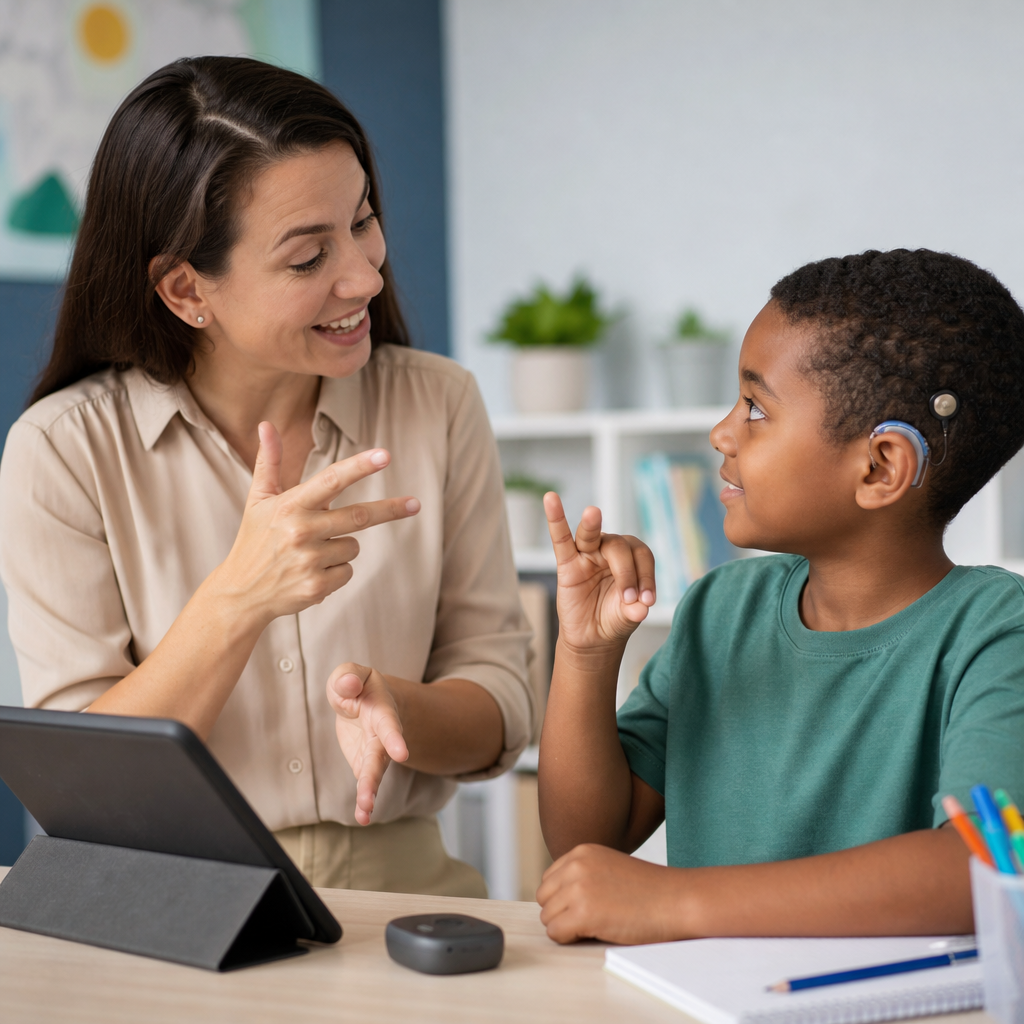
A diagnosis that your child is deaf can feel overwhelming at first, but it also opens a clear path toward communication, learning, and long-term success when families get accurate information early. In this article, “deaf” refers broadly to children who are deaf or hard of hearing, including those with mild, moderate, severe, or profound hearing differences, whether present at birth or identified later. I have worked with families navigating newborn screening results, school meetings, and communication choices, and the pattern is consistent: the earliest weeks matter, but panic does not help. What helps is understanding the diagnosis, confirming hearing levels with qualified professionals, building language access immediately, and connecting with trusted resources for parents. This matters because hearing status affects speech access, classroom participation, social development, safety, and family communication, yet deaf children thrive when they receive language-rich support, appropriate technology when useful, and educational services tailored to their needs. The goal is not simply to react to a medical label. The goal is to make informed decisions that protect your child’s right to communication, identity, and full access to learning from infancy through adolescence.
Start with confirmation, clarity, and a practical first-step plan
If your child is diagnosed as deaf, the first priority is to confirm exactly what the diagnosis means. Families are often told a child “failed the hearing test,” but screening is not the same as diagnosis. Newborn hearing screening identifies possible concern; a pediatric audiologist performs the diagnostic testing that determines degree, type, and configuration of hearing loss. Ask for the exact findings in writing: is the hearing difference sensorineural, conductive, or mixed; unilateral or bilateral; stable or progressive; mild or profound? These details shape the next steps for treatment, communication access, and school planning.
In practice, I advise parents to create a simple care binder or digital folder immediately. Keep audiograms, ENT notes, genetic testing reports if offered, early intervention plans, and contact information for every provider. Request copies after each appointment rather than trying to reconstruct the record later during preschool or special education evaluations. Also ask the audiologist to explain the audiogram in plain language. Parents should know what sounds their child may detect naturally, what speech sounds are likely missed, and how distance and background noise affect access. This knowledge becomes essential when comparing hearing aids, cochlear implant candidacy, captioning supports, or classroom accommodations.
Many families also want to know why the hearing difference occurred. Causes may include genetics, congenital infections such as cytomegalovirus, prematurity, structural differences, or unknown factors. A medical workup can be useful, but it should not delay language exposure. Whether the cause is identified or not, your child needs accessible communication every day.
Build language access from day one
The most important action after a deaf diagnosis is ensuring immediate, consistent access to language. Language access means your child can fully receive communication, not merely be near sound. For some children, spoken language supported by hearing technology will be highly accessible. For others, visual language such as American Sign Language is the most reliable path. For many families, a bilingual approach provides both immediate access and long-term flexibility.
The central principle is straightforward: do not wait to begin language. Research on early childhood development shows that the first years are critical for language growth. Delayed access can affect literacy, learning, and social-emotional development. Parents sometimes worry that introducing sign language will reduce spoken language outcomes. In my experience, and in line with guidance from many deaf education professionals, that fear is often misplaced. A fully accessible language gives children a strong foundation for cognition, bonding, and later academic progress. If speech access through amplification is incomplete, sign language prevents avoidable language deprivation.
Start by learning practical communication strategies for daily routines. Face your child before speaking or signing. Reduce background noise during meals and play. Use gestures, facial expression, pictures, and repetition. Narrate routines consistently: bath time, getting dressed, snack time, bedtime. If you choose sign language, enroll the whole family in classes and practice common phrases every day. If you choose spoken-language therapy, ask how listening goals will be reinforced naturally at home. The best results come when communication is embedded in family life, not limited to appointments.
Understand hearing technology, but keep expectations realistic
Hearing technology can be valuable, but it is not a cure and it does not create equal access in every environment. Depending on the diagnosis, your child may be offered hearing aids, bone conduction devices, cochlear implants, remote microphone systems, or a combination. Each option has benefits, limits, fitting requirements, and maintenance needs. A pediatric audiologist should verify device settings using evidence-based methods such as real-ear measurement for hearing aids and aided testing for functional benefit.
Parents should ask direct questions: What access will this device likely improve? What sounds will still be difficult? How many waking hours should the device be worn? What troubleshooting is needed? What happens in water, during sports, or when the child refuses the device? These questions matter because successful use depends on more than buying equipment. Batteries fail, earmolds whistle, mapping appointments require follow-up, and classroom acoustics remain challenging even with excellent technology.
Cochlear implants deserve especially careful discussion. For some children with severe to profound sensorineural hearing loss, implants can greatly improve access to sound. Outcomes, however, vary based on age at implantation, auditory nerve status, consistent therapy, family involvement, and whether additional disabilities are present. An implant does not eliminate the need for language-rich interaction, educational planning, or visual supports. Families should seek balanced information from implant teams, deaf adults, speech-language professionals, and signing families so they understand both the opportunities and the tradeoffs.
| Support Option | What It Can Help With | Important Limitations | Questions Parents Should Ask |
|---|---|---|---|
| Hearing aids | Amplify sound for children with usable residual hearing | Background noise and distance still reduce speech clarity | How much speech access improves at home and in class? |
| Cochlear implants | Provide access to sound when hearing aids offer limited benefit | Requires surgery, mapping, therapy, and variable outcomes | What realistic listening outcomes are expected for this child? |
| Remote microphone systems | Improve access to the teacher’s voice in noisy classrooms | Do not solve peer discussion or group noise issues alone | How will this be used across classes and activities? |
| Sign language | Provides direct visual access to a complete language | Family and community members must commit to learning it | What local classes, mentors, and deaf community resources exist? |
Use early intervention and school services aggressively
One of the strongest resources for parents is early intervention. In the United States, infants and toddlers with disabilities may receive services under Part C of the Individuals with Disabilities Education Act. These services can include home visits, family coaching, speech-language support, deaf education consultation, and transition planning into preschool. If your child is under three, self-refer immediately if no one has done it for you. Waiting for another specialist to initiate the process wastes valuable time.
Once a child approaches preschool or enters school, services typically shift to an Individualized Education Program under Part B or to accommodations through Section 504, depending on need. Parents should understand the difference. An IEP provides specialized instruction and measurable goals; a 504 plan provides accommodations to ensure access. A deaf child may need interpreter services, captioning, preferential seating, visual alerts, note-taking support, speech therapy, assistive listening devices, or direct instruction from a teacher of the deaf.
I have seen families accept vague promises such as “the teacher will keep an eye on things.” That is not a plan. Ask for written services, documented minutes, and clear responsibility for implementation. If an FM or DM system is recommended, confirm who will train staff, check equipment daily, and monitor benefit. If your child uses sign language, ask whether staff are fluent enough to provide direct access, not just occasional support. Educational access must be measured in practice, not assumed because a child appears attentive.
Connect with deaf adults, parent networks, and trusted organizations
Families make better decisions when they hear from people living the experience, not only from clinicians. Deaf adults can offer perspective on communication, identity, technology, schooling, and self-advocacy that professionals sometimes overlook. Parent networks can also shorten the learning curve by sharing practical advice about therapy providers, state services, captioned media, school districts, and financial assistance.
Look for organizations with established credibility and broad resources. In the United States, many parents begin with the Early Hearing Detection and Intervention program in their state, Hands & Voices, the Alexander Graham Bell Association for families focused on listening and spoken language, the American Society for Deaf Children, and the National Association of the Deaf. For educational guidance, your state school for the deaf and local parent training and information centers can be especially useful. Hospitals may also host family support groups tied to audiology or cochlear implant programs.
Choose resources that give balanced information rather than pushing a single ideology. If every answer sounds absolute, keep looking. Strong guidance explains what tends to work, for whom, and under what conditions. It also respects that families differ in values, access to services, and child profiles.
Support emotional adjustment, identity, and daily family life
A deaf diagnosis affects the whole family, not only the child’s hearing status. Parents may feel grief, confusion, guilt, urgency, or conflict about next steps. Siblings may notice increased appointments and attention. Grandparents may struggle to adapt communication habits. These reactions are normal, and addressing them directly improves outcomes. Children benefit when adults move from fear to confident routine.
Create a home environment where deafness is discussed matter-of-factly, not as a secret or shame. Explain devices, signs, interpreters, and accommodations in age-appropriate language. Celebrate communication milestones of all kinds, whether your child signs a new concept, responds to sound with hearing aids, or successfully asks a teacher for captions. Representation matters too. Books featuring deaf characters, events in the deaf community, and friendships with other deaf children help normalize the experience and support healthy identity development.
Daily logistics also deserve attention. Caption all family media. Learn basic visual safety strategies such as flashing alarms, line of sight during conversation, and touch cues before waking a sleeping child. Teach extended family how to communicate effectively. Progress often comes from these ordinary habits more than from any single appointment.
Plan for the long term: literacy, transitions, and self-advocacy
The best parent resources do more than address the first month after diagnosis. They help families prepare for literacy, middle school, adolescence, and adult independence. Deaf children need explicit access to language-based learning from the earliest years, including vocabulary building, storytelling, print awareness, and later phonological or visual literacy instruction matched to their communication mode. Monitor reading closely. Even bright children can miss incidental language that hearing peers absorb naturally.
As your child grows, shift from parent-led support to self-advocacy training. Teach them to explain what helps: “I need captions,” “Please face me,” “My device is not working,” or “I use an interpreter.” In school meetings, include the child whenever appropriate so accommodations are understood as tools for access, not special favors. Transition planning for college, work, or vocational training should begin well before graduation and may involve disability services offices, vocational rehabilitation, and technology training.
The most effective approach is steady, informed action. Confirm the diagnosis, establish full language access, evaluate technology carefully, use early intervention and school protections, build community, and plan ahead. If your child is diagnosed as deaf, you do not need to solve everything this week, but you do need to start. Gather your records, schedule the right evaluations, connect with experienced families and deaf adults, and choose resources for parents that expand your child’s access to communication and learning every single day.
Frequently Asked Questions
What should I do first if my child has just been diagnosed as deaf or hard of hearing?
The first step is to pause, take a breath, and understand that this diagnosis does not define your child’s future. Many families feel shock, grief, confusion, or urgency in the beginning, especially if the diagnosis follows a newborn hearing screening or a later evaluation after concerns about speech, listening, or school progress. What matters most right away is confirming the diagnosis, understanding your child’s specific hearing levels and communication needs, and building a team that can guide you. That team may include an audiologist, pediatrician, ear, nose, and throat specialist, early intervention provider, speech-language professional, and educators who understand deaf and hard of hearing children.
Ask for clear copies of all hearing test results and have a professional explain them in plain language. Families should understand whether the hearing difference is mild, moderate, severe, or profound; whether it affects one ear or both; and whether it may fluctuate or change over time. It is also important to ask what next steps are recommended, including follow-up testing, medical evaluations, hearing technology, and referral to early intervention services. In many places, early intervention can begin in infancy and is one of the most important tools for helping children build strong communication and learning foundations.
Just as important, begin thinking about communication access immediately. Children need full access to language as early as possible, whether through spoken language, sign language, or a combination of approaches depending on the child and family. Early language exposure supports brain development, bonding, social growth, and later literacy. Parents do not need to have every answer in the first week, but they should not wait to begin learning about available communication options and support services. The most helpful early goal is not to “fix” your child, but to make sure your child can connect, communicate, and thrive.
Will my child be able to learn language, do well in school, and have a successful future?
Yes. Deaf and hard of hearing children can absolutely learn language, succeed academically, build relationships, and go on to full, meaningful adult lives. The key factors are early identification, consistent access to language, appropriate educational support, and families who receive accurate information rather than fear-based messaging. A hearing diagnosis may change the path, but it does not eliminate the destination. Children who are deaf or hard of hearing become readers, writers, athletes, artists, college students, professionals, and leaders in every field.
Language development is the foundation of long-term success. A child needs regular, meaningful access to communication throughout the day, not only during therapy sessions or school hours. For some children, that may include hearing aids, cochlear implants, assistive listening technology, and spoken language support. For others, it may include American Sign Language or another sign language, visual communication strategies, cued language supports, or a bilingual approach. The central question is whether your child is truly receiving accessible language consistently enough to learn, think, socialize, and express needs and ideas. When language is accessible, children are in a much stronger position to develop literacy, self-confidence, and academic skills.
School success also depends on services and accommodations being tailored to your child’s actual needs. This may involve an Individualized Education Program or Section 504 plan, classroom amplification systems, captioning, interpreting services, speech and language support, preferential seating, note-taking help, and teachers who understand how hearing differences affect classroom learning. Families should expect ongoing monitoring, because needs can change as school demands become more complex. With the right access and support, your child’s future should be viewed with optimism, not limitation.
How do I choose the best communication approach for my child and family?
Choosing a communication approach can feel like one of the most emotional parts of this journey, largely because families are often presented with strong opinions from different directions. The most productive way to approach this decision is to focus on your child’s real access to language, your family’s ability to use the approach consistently, and whether your child is making steady communication progress over time. There is no single path that fits every child. Some families pursue spoken language with hearing technology and therapy. Some choose sign language as a primary language. Others use a combined or bilingual approach. What matters is not ideology, but whether your child can fully understand and express language every day.
Ask practical questions as you evaluate options. Can my child access this form of communication reliably at home, in school, and in the community? Are we seeing growth in understanding, vocabulary, interaction, and self-expression? Do we have qualified professionals to support this approach? Are we prepared to learn and use the communication method ourselves so our child is not left doing all the adaptation? If hearing technology is part of the plan, families should also be realistic that technology can be extremely helpful but does not create identical hearing to that of a hearing child. Access can vary by environment, background noise, fatigue, fit of the device, and the child’s unique auditory profile.
Many professionals now encourage families to keep the focus on language richness rather than false either-or choices. If sign language is available, it can provide immediate visual access to communication while spoken language skills are also being developed, when appropriate. The most important thing is to avoid delays in language exposure while waiting to see what may happen later. Revisit the plan regularly, stay open to adjusting it based on your child’s development, and remember that the strongest communication approach is the one that truly gives your child access, connection, and growth.
What medical treatment or hearing technology might be recommended, and how do I know what is right for my child?
The medical and technology recommendations for a deaf or hard of hearing child depend on the cause and degree of hearing difference, the child’s age, and how the child is functioning day to day. Some children may be candidates for hearing aids, bone conduction devices, cochlear implants, or other assistive listening systems. Others may need additional medical evaluation to determine whether the hearing difference is related to genetics, infection, structural differences, or another condition. It is important to understand that these recommendations are individualized. A careful audiologic evaluation and discussion with qualified specialists should guide decisions rather than assumptions or pressure.
If hearing aids are recommended, ask how much access they are expected to provide, how often they should be worn, how they will be monitored, and what goals are realistic. If cochlear implants are being discussed, ask detailed questions about candidacy, timing, surgery, follow-up programming, expected outcomes, therapy commitments, and how progress will be measured. Families should also ask what communication support will be in place before and after technology is introduced. Hearing devices can be valuable tools, but they work best when combined with intentional language exposure, family involvement, and educational support.
It is wise to seek balanced information and, when needed, a second opinion. Parents should feel comfortable asking not only about benefits, but also about limitations, risks, alternatives, maintenance, and the child’s day-to-day experience using the device. Children are not all helped in the same way or to the same extent by the same technology. The right choice is the one that fits your child’s hearing profile, developmental needs, communication access, and family capacity to follow through with ongoing care. Good decision-making in this area is not about rushing; it is about being informed, realistic, and centered on the child’s full development.
How can I support my child emotionally and advocate effectively at home, in school, and in everyday life?
Emotional support begins with the message your child receives from you. Children benefit when parents treat deafness or hearing difference as a meaningful part of who they are, but not as a tragedy. Your child needs to feel safe, loved, understood, and capable. That means building strong communication at home, responding patiently to frustration, and helping your child develop a positive sense of identity. It also means connecting with role models, including deaf and hard of hearing adults and other families who have walked this path. Seeing successful people with similar experiences can be deeply reassuring for both children and parents.
At home, advocacy looks like making communication accessible in ordinary routines. Face your child when speaking or signing, reduce unnecessary background noise when possible, make sure devices are working if your child uses them, and check often for understanding rather than assuming your child “got it.” Read together, tell stories, label emotions, and create frequent opportunities for conversation. In school, effective advocacy means understanding your child’s legal rights, attending meetings prepared, asking how instruction will be made accessible, and requesting data on your child’s actual progress. If your child seems tired, withdrawn, or behind academically, consider whether the issue may be access rather than effort.
As your child grows, advocacy should gradually become self-advocacy. Teach your child to explain what helps, such as facing the speaker, using captions, repeating unclear information, or adjusting seating. Help them understand their own devices, accommodations, and communication preferences. Confidence grows when children can name their needs without shame. Over time, your role shifts from doing all the speaking for your child to helping your child speak up, sign up, and participate fully in the world. That is one of the most powerful long-term goals a parent can have.