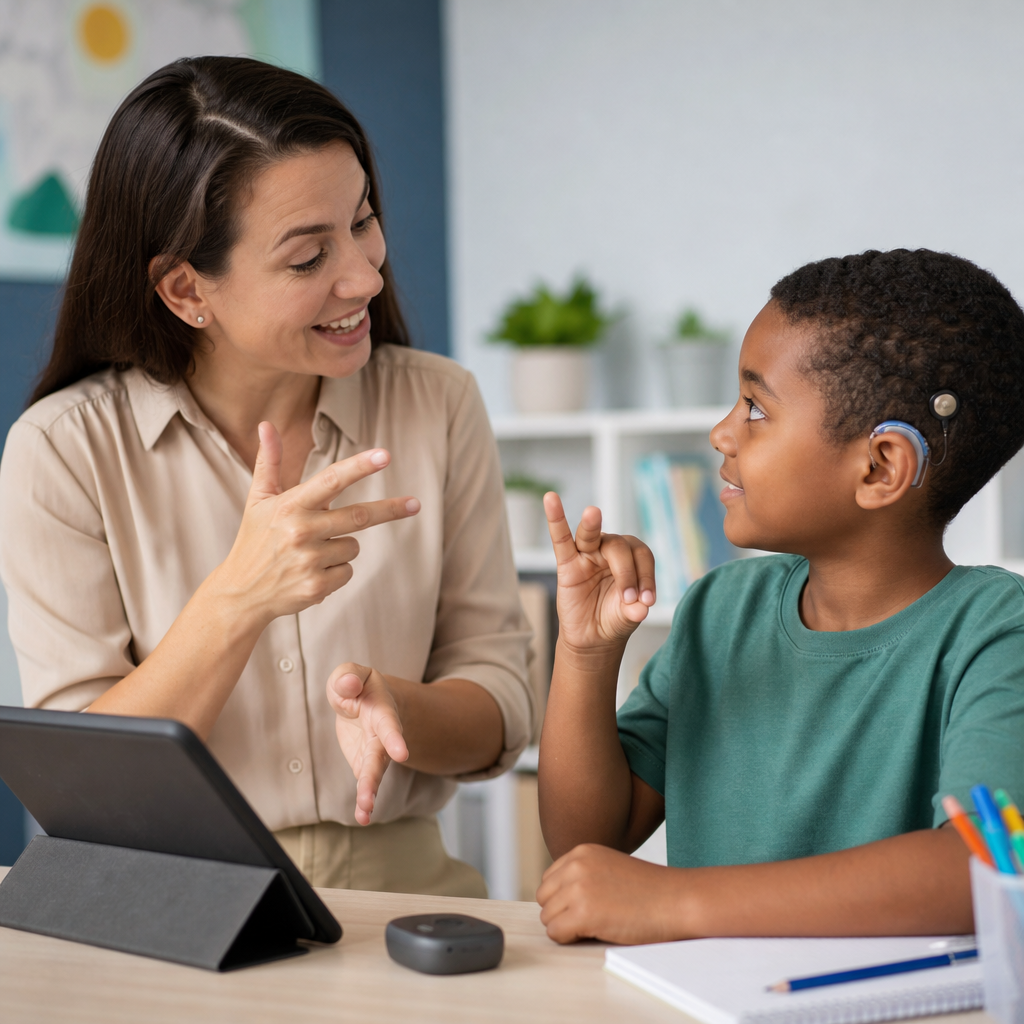

Learning that your child is deaf or hard of hearing can reshape daily routines, expectations, and decisions, but it does not limit your child’s ability to learn, communicate, and thrive. A parent’s guide to raising a deaf child begins with understanding what deafness means, how hearing levels are described, and why early support matters. In practice, parents need clear information on language development, education rights, technology, family communication, and emotional wellbeing. I have worked with families navigating newborn screening results, early intervention meetings, and school planning, and the same pattern appears every time: children do best when parents act early, ask informed questions, and build a strong support network. Deaf can describe profound hearing loss, a cultural identity, or both, while hard of hearing usually refers to partial access to sound. Some children use spoken language, some use sign language, and many use both. There is no single correct path. What matters is consistent access to language from the start. Research from the Centers for Disease Control and Prevention and the Joint Committee on Infant Hearing has long emphasized early identification and intervention because delayed language exposure can affect literacy, social development, and academic progress. This resource hub explains the core decisions parents face and points toward the services, tools, and strategies that make those decisions manageable.
Understanding diagnosis, hearing levels, and next steps
Most families first encounter deafness through newborn hearing screening, a pediatric referral, or concerns about speech milestones. A screening is not a diagnosis. If your baby does not pass, the next step is a diagnostic evaluation with a pediatric audiologist, often using auditory brainstem response and otoacoustic emissions testing. Older children may receive behavioral audiometry, tympanometry, and speech perception testing. Ask for a clear explanation of type and degree of hearing loss: conductive involves the outer or middle ear, sensorineural involves the inner ear or auditory nerve, and mixed combines both. Degree is usually described as mild, moderate, severe, or profound, but the functional impact depends on frequency range, access to speech sounds, and listening environment.
Parents should also understand cause and prognosis. Common causes include genetics, congenital cytomegalovirus, prematurity, meningitis, chronic ear infections, and unknown factors. An otolaryngologist, genetic counselor, and pediatrician may all be part of the assessment. In real family consultations, one of the most useful steps is building a written record: audiograms, device settings, therapy reports, and school documents in one folder. That record helps when care shifts between clinics, therapists, and districts. It also prevents parents from relying on memory during stressful appointments. Ask direct questions: Is the hearing loss stable or progressive? What sounds are accessible with and without devices? What follow-up schedule is recommended? Those answers shape every later decision.
Language access comes first: speech, sign, or both
The most important principle in raising a deaf child is not choosing a label; it is ensuring full, consistent language access. Children need a complete language they can perceive reliably during everyday interaction, not just during therapy sessions. For some families, that means American Sign Language from infancy. For others, it means spoken language supported by hearing technology and intensive auditory-verbal practice. Many families choose a bilingual approach, using sign language and spoken or written English together. The right choice depends on your child’s access to sound, family capacity, educational setting, and the quality of local services.
I advise parents to evaluate language decisions by one standard: can my child understand and express meaning throughout the day, at home and in the community, without guessing? If the answer is inconsistent, expand access. Sign language does not prevent speech development; the evidence does not support that fear. What harms development is language deprivation, when a child cannot fully access communication during the years when the brain is primed for language learning. Spoken language programs can be effective, especially when hearing aids or cochlear implants provide useful auditory access and families receive skilled coaching. But devices do not guarantee understanding in noise, at a distance, or during fatigue. That is why many families value visual language as a stable foundation.
Hearing aids, cochlear implants, and assistive technology
Technology can be transformative, but parents need realistic expectations. Hearing aids amplify sound; they do not restore typical hearing. They require precise fitting using pediatric best practices such as real-ear measurement and frequent adjustments as ears grow. Cochlear implants bypass damaged inner ear structures and stimulate the auditory nerve directly, but outcomes vary based on age at implantation, anatomy, additional disabilities, therapy intensity, and daily wear time. Some children gain strong spoken language; others gain environmental awareness and supplemental listening support. Neither option should be described as a cure.
Parents should ask about assistive listening technology beyond primary devices. Remote microphone or FM systems improve access in classrooms by sending the teacher’s voice directly to the child’s device, reducing the effects of distance and background noise. Captioning, visual alert systems, video relay services, and speech-to-text apps can also support independence. The table below summarizes common tools and where they help most.
| Tool | Primary purpose | Best use case | Limitation parents should know |
|---|---|---|---|
| Hearing aids | Amplify residual hearing | Mild to severe hearing loss with usable auditory access | Performance drops in noise; requires consistent maintenance |
| Cochlear implants | Provide electrical access to sound | Severe to profound sensorineural hearing loss | Requires surgery, mapping, and long-term therapy |
| Remote microphone system | Improves signal-to-noise ratio | Classrooms, cars, playground instruction | Only helps when the speaker uses the microphone correctly |
| Captioning | Provides text access to speech | Videos, online classes, public events | Auto-captions can be inaccurate |
| Visual alerts | Replace sound cues with light or vibration | Doorbells, alarms, baby monitors | Setup costs vary and rental homes may limit installation |
Early intervention, therapy, and everyday learning at home
Early intervention services are often the first structured resource for parents of deaf children. In the United States, infants and toddlers may qualify under Part C of the Individuals with Disabilities Education Act, with services delivered through an Individualized Family Service Plan. These programs can include home visits, parent coaching, speech-language therapy, deaf education support, occupational therapy, and family sign language instruction. The strongest programs teach parents how to build language into feeding, bath time, errands, book sharing, and play, because children learn through repeated meaningful interaction, not isolated drills.
At home, narrate routines visually and verbally, pause for turn-taking, and read daily with accessible books and captions or sign support. If your child uses sign, make sure faces and hands are visible and lighting is good. If your child uses listening devices, reduce background noise during conversation and check equipment every morning. I encourage families to create a simple communication plan for relatives and caregivers: how to get the child’s attention, where to stand, whether to sign, how to use the remote microphone, and what to do if a device stops working. Small adjustments produce major gains when repeated every day.
School options, legal rights, and educational planning
Parents often ask the same practical question: what is the best school setting for a deaf child? The answer depends on communication access, teacher expertise, peer connection, and available supports. Options may include neighborhood public schools, regional programs for deaf and hard of hearing students, charter schools, bilingual programs using American Sign Language and English, or schools for the deaf. A placement is appropriate only if your child can fully access instruction, incidental learning, peer conversation, and extracurricular activities. Sitting in a classroom with hearing peers is not inclusion if the child misses discussion, jokes, directions, and side conversations all day.
Legal protections matter. Under the Individuals with Disabilities Education Act, eligible students may receive an Individualized Education Program. Others may qualify for accommodations under Section 504 of the Rehabilitation Act. Parents should request evaluations that address not just grades but language, listening effort, social participation, interpreter needs, captioning, and classroom acoustics. Useful accommodations include qualified interpreters, note-taking support, preferential seating, captioned media, remote microphone systems, visual schedules, and staff training. If a district suggests that hearing aids or implants alone solve access, ask how it will address noise, distance, rapid discussion, and emergency communication. Good educational planning is specific, measurable, and reviewed regularly.
Family wellbeing, identity, and finding the right parent resources
Raising a deaf child is not only a medical or educational journey; it is also a family identity journey. Parents may feel grief, urgency, confusion, or relief after finally getting answers. Siblings may need guidance on communication and attention shifts. Grandparents may require patient education, especially if they assume deafness automatically limits intelligence or independence. The most helpful parent resources combine practical instruction with community connection. National and local organizations, parent-to-parent mentoring programs, early hearing detection networks, and Deaf community events all reduce isolation and improve decision-making.
Seek resources that show you deaf adults, not only professionals. Deaf adults offer something essential: lived evidence of what successful communication, schooling, work, and family life can look like. They also help parents distinguish between a true barrier and a barrier created by poor access. Reliable resources for parents include your state early intervention program, Hands & Voices, the American Society for Deaf Children, the National Association of the Deaf, Alexander Graham Bell Association for the Deaf and Hard of Hearing, and school district parent centers. Use them to ask concrete questions about communication methods, transition planning, scholarships, camps, mental health referrals, and advocacy training. Build a network before a crisis arrives. Parents who have informed allies make better decisions and recover faster when plans change.
A parent’s guide to raising a deaf child ultimately comes down to one commitment: your child must have full access to language, learning, relationships, and opportunity. Diagnosis matters, but it is only the starting point. The bigger task is building an environment where communication is always available, technology is well supported, education is genuinely accessible, and your child sees deafness as part of a capable identity rather than a problem to hide. Parents do not need to master everything at once. Start with the essentials: confirm the diagnosis with a pediatric audiologist, enroll in early intervention, learn how your child accesses language best, and organize your records. Then expand outward into school planning, assistive technology, and family support.
The strongest outcomes usually come from consistent daily habits instead of dramatic single decisions. Read together, sign together if sign is part of your plan, check devices, caption media, teach relatives how to communicate, and review school access often. Ask professionals to explain recommendations in plain language, and ask deaf adults how those recommendations work in real life. This hub is designed to support that process by giving parents a foundation for every next step in education and learning resources. Use it as your starting point, then explore the linked topics in this section, make a shortlist of local services, and schedule one concrete action this week for your child.
Frequently Asked Questions
What does it mean if my child is deaf or hard of hearing?
Being deaf or hard of hearing means your child has a reduced ability to hear sounds, but it does not define their intelligence, personality, or potential. Hearing levels can range from mild to profound, and children may hear some sounds but not others depending on pitch, volume, and environment. Some children are born deaf, while others experience hearing loss later because of genetics, illness, infection, injury, or unknown causes. Your child may use spoken language, sign language, a combination of both, or other communication supports depending on their needs and your family’s goals.
It is also important to understand that deafness is both a medical and a cultural experience. From a medical perspective, families often learn about hearing tests, audiograms, hearing aids, cochlear implants, speech therapy, and early intervention. From a cultural perspective, many deaf individuals are part of a vibrant Deaf community with its own languages, values, traditions, and identity. As a parent, learning about both perspectives can help you make more informed and respectful decisions.
Most importantly, a deaf child can absolutely learn, form strong relationships, succeed in school, and build a full and meaningful life. The key is not to focus only on what your child may not hear, but on how your child will access language, communication, education, and emotional support consistently from an early age.
Why is early intervention so important for a deaf child?
Early intervention matters because the first few years of life are critical for language development, brain development, social connection, and learning. Deaf and hard of hearing children need full access to language as early as possible, whether that language is spoken, signed, or both. When language access is delayed, children can face challenges in communication, literacy, learning, and emotional expression. Early support helps reduce those risks and gives your child a stronger foundation for long-term development.
Early intervention services may include audiology appointments, hearing technology support, speech and language services, sign language exposure, family education, and developmental monitoring. These services are not just for the child. They are also for parents, siblings, and caregivers who are learning how to communicate effectively and confidently. A strong early intervention team can help you understand your options, answer practical questions, and create a plan that fits your child’s needs and your family’s values.
Getting support early does not mean you need to have every answer right away. It means acting promptly so your child has access to communication and developmental opportunities during a period of rapid growth. Even small steps, such as learning basic signs, creating a quieter listening environment, attending follow-up hearing evaluations, or connecting with experienced professionals and Deaf adults, can make a meaningful difference.
How can I support my deaf child’s language and communication development at home?
Home is where communication habits are built every day, so your role is incredibly important. The most helpful thing you can do is make language accessible, frequent, and meaningful. Talk, sign, read, gesture, label objects, describe routines, and respond to your child’s attempts to communicate. If your child uses hearing aids or cochlear implants, make sure they are worn consistently as recommended and checked regularly so your child has the best possible access to sound. If your family is using sign language, commit to learning and using it daily, not only during structured practice times.
Consistency matters more than perfection. Narrate what you are doing during meals, bath time, play, and errands. Face your child when speaking so they can see your expression and mouth movements if that is helpful. Reduce background noise during conversation. Use visual supports such as pictures, books, schedules, and gestures. Repeat new words and signs often in natural contexts. Most of all, make communication warm and interactive rather than overly corrective. Children learn language best through connection.
Reading together is especially powerful. Shared reading builds vocabulary, attention, comprehension, and emotional bonding. Choose books with clear pictures, point to illustrations, ask questions, and connect the story to your child’s own experiences. If your child signs, include signs while reading. If your child uses spoken language, pause often to check understanding and keep the pace enjoyable. Families who create a communication-rich home environment give their child repeated opportunities to develop language with confidence.
What educational rights does my deaf child have, and how can I advocate at school?
Deaf and hard of hearing children generally have the right to an accessible education and appropriate support services in school. Depending on where you live and your child’s needs, this may include early childhood services, special education support, classroom accommodations, assistive listening technology, speech and language services, interpreters, captioning, note-taking support, or specialized instruction. The goal is not simply placement in a classroom. The goal is meaningful access to teaching, discussion, social interaction, and the full educational experience.
As a parent, advocacy starts with understanding that equal access is essential. A child may appear physically present in class while still missing large amounts of information because of background noise, distance from the teacher, lack of visual access, or fast-paced discussion. Ask specific questions about how your child will access instruction, peer conversations, group work, videos, announcements, and extracurricular activities. Review your child’s educational plan carefully and make sure services are based on actual communication and learning needs, not assumptions.
Strong advocacy also means building a collaborative relationship with the school while staying clear and informed. Keep records of evaluations, recommendations, meeting notes, and progress reports. Observe whether supports are working in daily practice, not just on paper. If something is not effective, request changes. It can also help to connect with parent groups, deaf education specialists, or legal advocacy resources if you need guidance. You do not have to become an expert overnight, but learning your child’s rights and speaking up consistently can have a lasting impact on their academic and social success.
How can I support my deaf child’s emotional wellbeing and sense of identity?
Emotional wellbeing grows when a child feels understood, included, capable, and loved. Deaf children can face frustration, isolation, or low confidence when communication barriers prevent them from fully participating at home, in school, or with peers. One of the best ways to protect emotional health is to make sure your child can communicate easily with the people around them. When children can express needs, ask questions, joke, share feelings, and join family life without constant barriers, they are more likely to feel secure and connected.
Identity matters too. Many deaf children benefit from seeing deafness represented in positive and realistic ways. This may include meeting Deaf adults, learning sign language, attending deaf community events, reading books with deaf characters, or connecting with other deaf and hard of hearing children. These experiences can help your child understand that they are not alone and that deafness is not something to be ashamed of. Exposure to positive role models often builds resilience, self-esteem, and a stronger sense of belonging.
At the same time, pay attention to your child’s emotional cues and create space for honest conversations. Your child may have questions about hearing technology, school differences, friendships, or feeling left out. Listen without rushing to fix every feeling. Validate their experience and work together on practical solutions. If your child seems persistently anxious, withdrawn, angry, or overwhelmed, consider support from a counselor or therapist who understands deaf and hard of hearing children. Emotional support is not separate from communication and education. It is part of helping your child thrive as a whole person.