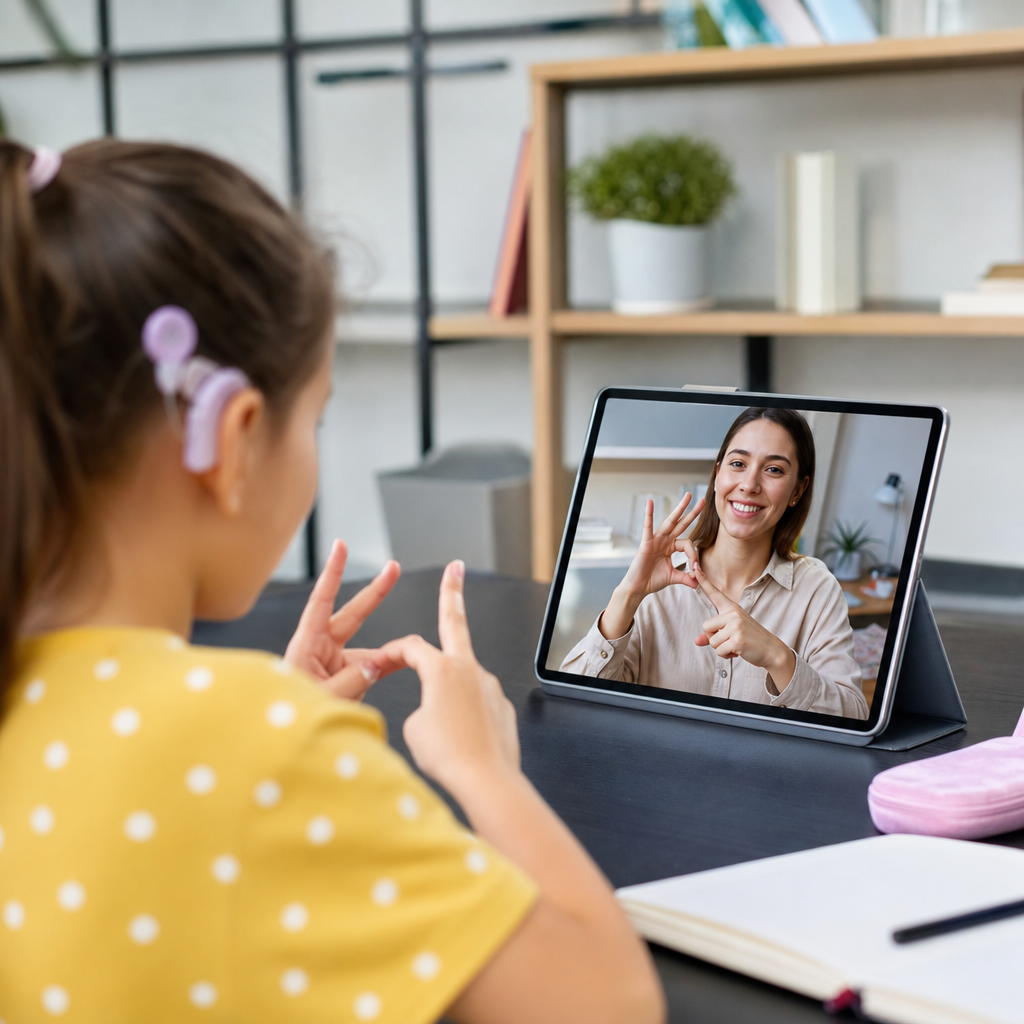

Building an inclusive school environment for deaf students starts with a simple truth: access is not a special favor, but a basic condition for learning. In schools, deaf students include children who are culturally Deaf, hard of hearing, late-deafened, or deaf with additional disabilities. Some use sign language as their primary language, some rely on spoken language, and many use a combination of signing, speech, hearing technology, captioning, and visual supports. Teaching deaf students well therefore means more than making a classroom quieter or speaking more slowly. It requires intentional design across instruction, communication, physical spaces, assessment, technology, family partnerships, and school culture.
I have seen schools make meaningful progress only when they stop treating deaf education as a narrow specialist issue and start viewing it as a whole-school responsibility. A student may have an excellent teacher of the deaf, but still struggle if assemblies lack captions, group work is poorly structured, or staff do not know how to work with interpreters. Inclusion is not achieved by placement alone. A deaf student in a mainstream classroom can still be excluded every day if information arrives late, incompletely, or in inaccessible forms. True inclusion means the student can understand, participate, respond, build relationships, and demonstrate learning on equal terms.
This matters academically, socially, and emotionally. Language access affects reading development, content knowledge, behavior, confidence, and long-term outcomes. Research and practice consistently show that early and consistent access to a full language is critical, whether that language is a signed language, spoken language with strong auditory access, or both. Schools that build accessible systems reduce missed information, lesson fatigue, and social isolation. They also create better learning conditions for many other students, including multilingual learners, students with attention differences, and anyone who benefits from clear visual structure. A strong inclusive model for deaf students improves the quality of teaching for the entire school community.
Because this is a hub article on teaching deaf students, it covers the core elements every school leader, classroom teacher, special educator, and support professional should understand. The practical question is not whether a school values inclusion in theory. The real question is whether a deaf student can walk into any lesson, activity, or event and receive timely, accurate, complete access to language, instruction, and peer interaction. Schools that can answer yes have moved from compliance thinking to educational design.
Start With Language Access and Communication Planning
The foundation of teaching deaf students is language access. Every other support depends on it. Schools should first identify how each student best receives and expresses language. That may include American Sign Language, another national sign language, spoken English, cued speech, total communication, signed supported speech, captioning, note support, or a planned combination. This decision should never be based on staff convenience. It should be based on the student’s language profile, hearing levels, amplification benefit, literacy development, family input, and direct observation across settings.
A good communication plan answers concrete questions. Who signs fluently with the student? When is an interpreter needed? Are live captions available during videos and remote instruction? How will the student access incidental information, such as side comments, safety directions, and transitions? In my experience, schools often plan for formal teacher talk but forget the rest of the day. Deaf students miss the jokes before class, peer debate during group work, and announcements over loudspeakers. Those gaps matter because school belonging is built through many small moments, not just through direct instruction.
Language access must also be immediate. Delayed access is reduced access. If a hearing student hears a teacher’s explanation in real time while a deaf student receives fragmented interpretation or incomplete notes later, the classroom is not inclusive. Staff need protocols for pacing, turn-taking, one speaker at a time, and visual attention cues. Teachers should pause before speaking, face the class, repeat peer comments, and share key vocabulary in advance. These are not cosmetic strategies. They are the mechanics that make comprehension possible.
Design Classrooms That Are Visually Accessible
Deaf students learn in highly visual ways, so the classroom environment should support visual attention rather than compete with it. Seat placement is one of the simplest and most important decisions. The student should be able to see the teacher, board, interpreter if used, and as many classmates as possible without constant neck-turning. U-shaped or horseshoe seating often works better than rows because it allows access to peer discussion. Lighting also matters. Backlighting from bright windows can make faces, signs, and lip patterns harder to read, while dimmed rooms during presentations can cut off access entirely.
Teachers should reduce visual clutter where it interferes with focus and organize information consistently. Write the lesson objective, agenda, new vocabulary, and homework in the same place every day. Use diagrams, worked examples, timelines, and anchor charts to support spoken or signed explanations. When showing videos, captions must be accurate, synchronized, and visible. Auto-generated captions can help in a pinch, but they often mishandle subject vocabulary, names, and accents, so they should be checked before use in core instruction.
Acoustics still matter, even for students who primarily use sign, because many deaf and hard of hearing students use residual hearing, hearing aids, or cochlear implants. Sound-field systems, carpets, acoustic panels, and quieter HVAC equipment can improve signal-to-noise ratio. However, schools should avoid assuming technology solves everything. Hearing devices do not restore typical hearing. Listening through amplification can be cognitively exhausting, especially in noisy classrooms. That is why visual reinforcement, predictable routines, and breaks from sustained listening are essential parts of inclusive teaching.
Use Instructional Methods That Make Content Fully Accessible
Effective teaching for deaf students is explicit, language-rich, and carefully sequenced. Teachers should pre-teach critical vocabulary, explain figurative language directly, and connect new terms to visuals, examples, and prior knowledge. Many deaf students can decode printed words without having fully internalized the academic language behind them, so checking understanding requires more than asking, “Do you get it?” Ask students to explain a concept, sort examples, complete a diagram, or teach a partner. Those tasks reveal whether language and meaning are aligned.
Direct instruction should be paired with structured interaction. Group work can support inclusion, but only when communication roles are planned. I have seen deaf students left out of fast-moving discussions because hearing peers interrupt each other, look down while speaking, or move on before interpretation catches up. Better practice includes assigning a facilitator, using one speaker at a time, sharing notes on a collaborative document, and requiring visible discussion norms. If a class uses think-pair-share, the teacher should build in enough wait time for signed or interpreted exchanges, not just spoken responses.
Reading and writing instruction deserve special attention. Deaf students are a highly diverse literacy group. Some are bilingual in a sign language and written English; others are developing spoken language and print together. Teachers should use explicit morphology instruction, concept mapping, sentence unpacking, and modelled writing. Content-area teachers in science, history, and math cannot assume literacy support belongs only to specialists. Technical vocabulary, passive voice, dense noun phrases, and word problems all create barriers if they are not taught deliberately.
| School Area | Common Barrier | Inclusive Practice |
|---|---|---|
| Whole-class teaching | Teacher talks while writing or facing away | Face students, pause before key points, provide visual agenda |
| Group work | Overlapping speech and missed peer comments | One-speaker rule, assigned facilitator, shared written notes |
| Videos and media | Missing or inaccurate captions | Use checked captions and pre-teach subject terms |
| Assessment | Language load hides content knowledge | Clarify directions, allow accessible presentation formats |
| Assemblies and events | No interpreter or captioning | Book access supports in advance and test sightlines |
Build the Right Support Team Around the Student
Inclusive schools rely on coordinated expertise. The classroom teacher is central, but not sufficient alone. Strong teams may include a teacher of the deaf, educational interpreter, speech-language pathologist, audiologist, special educator, school psychologist, assistive technology lead, and counselor. The exact team depends on the student. What matters is role clarity. For example, interpreters provide access to communication; they do not replace the teacher, manage behavior by default, or decide curriculum. Teachers remain responsible for instruction, relationships, and assessment.
Regular team meetings prevent access problems from becoming chronic. Review classroom pacing, upcoming vocabulary, device issues, fatigue patterns, social concerns, and assessment results. The audiologist or hearing support staff should monitor hearing aids, cochlear implant processors, FM or DM systems, microphones, and classroom acoustics. Daily listening checks and equipment checks are routine best practice, not optional extras. A dead battery or mispaired microphone can quietly remove access for hours if staff are not vigilant.
Professional development is equally important. General educators need practical training in deaf awareness, communication strategies, device basics, and working effectively with interpreters. Support staff need curriculum knowledge, not just disability knowledge. In effective schools, inclusive practice is embedded in induction, coaching, and lesson planning rather than delivered once in an awareness assembly. Staff confidence improves when training is tied to actual lessons, actual students, and observable classroom routines.
Strengthen Social Inclusion, Identity, and Wellbeing
Academic access alone is not enough. Deaf students also need social access. Lunchtimes, sports, clubs, field trips, and corridor interactions often present the biggest inclusion gaps because adults provide less structure there. Schools should teach peers how to communicate respectfully: gain attention visually, face the person, speak one at a time, and include the deaf student directly rather than speaking through an adult. These are small habits, but they change whether a student is treated as a class member or a visitor.
Identity matters too. Some deaf students identify strongly with Deaf culture and sign language communities. Others do not, or are still exploring what deafness means for them. Schools should create space for positive identity development without forcing a single narrative. That can include access to deaf role models, books featuring deaf characters, events led by Deaf adults, and opportunities to learn sign language more broadly across the school. When students see deafness represented as a human difference rather than a deficit, wellbeing improves and stigma decreases.
Counseling and pastoral support should account for communication access and the risk of accumulated isolation. A student who appears quiet may actually be exhausted from constant effort or unsure what they have missed. Staff should watch for signs such as withdrawal, reluctance to join discussions, or overdependence on one adult. Belonging grows when schools make participation predictable, visible, and shared.
Partner With Families and Plan for Assessment, Transitions, and Policy
Families are essential partners in teaching deaf students because they understand the child’s communication history, device use, strengths, and stress points. Productive partnership means more than sending home reports. Schools should discuss how access is working across subjects, what language supports are used consistently, and where breakdowns occur. Interpreters for parent meetings, translated materials, and flexible communication channels all matter. Families should not have to fight repeatedly for the same basic adjustments.
Assessment requires particular care. Deaf students may know the content but be blocked by complex wording, idioms, or inaccessible oral instructions. Fair assessment protects construct validity: a history test should measure historical understanding, not the student’s ability to untangle unnecessary language. That can mean simplifying directions, allowing signed responses where appropriate, using visual prompts, or separating language proficiency from content mastery in analysis. At the same time, schools should maintain high expectations. Access is not dilution.
Transitions need advance planning. Entry to school, movement between year groups, changes of teacher, and preparation for college or employment all require updated access planning. Schools should document what works, not just what services are listed. Policies should cover captioned media, emergency alerts, extracurricular access, procurement of assistive technology, and interpreter booking timelines. When these expectations are written into school systems, inclusion becomes durable rather than dependent on one enthusiastic staff member.
Building an inclusive school environment for deaf students is ultimately about making language, learning, and belonging fully accessible every day. The most effective schools do not rely on isolated accommodations or good intentions. They align communication planning, classroom design, teaching methods, specialist support, peer inclusion, family partnership, and policy so that access is consistent from the first bell to the last activity. That consistency is what allows deaf students to participate confidently, show what they know, and develop strong academic and social identities.
The key takeaway is clear: teaching deaf students successfully is not a mystery, but it does require expertise and deliberate systems. Start with the student’s language needs, then audit every part of school life for barriers that hearing students do not notice. Improve visibility, pacing, captioning, group discussion norms, assessment design, and staff training. Bring families and specialists into regular decision-making. Most importantly, measure inclusion by real participation, not by placement on a timetable.
If your school wants stronger outcomes for deaf learners, begin with one practical step this week: review a typical school day through the eyes of a deaf student and fix the first three access gaps you find. That action will do more for inclusion than any slogan ever could.
Frequently Asked Questions
1. What does an inclusive school environment for deaf students actually look like?
An inclusive school environment for deaf students is one where access is built into every part of the school day, not added afterward as an exception. That means deaf students can fully understand instruction, participate in classroom discussion, access announcements, join social activities, and build relationships with peers and staff without constantly having to fight for basic communication access. Inclusion is not simply placing a deaf student in a general education classroom. It is creating conditions where the student can learn, contribute, and belong.
In practice, this often includes a combination of supports based on the individual student’s language, communication preferences, and educational needs. A student may need sign language interpretation, direct instruction in sign language, real-time captioning, assistive listening systems, visual schedules, note-taking support, preferential seating, quiet acoustic conditions, or teachers who know how to present information clearly and visually. For some students, spoken language and hearing technology are helpful tools. For others, sign language is central to learning and identity. Many students benefit from a flexible mix of approaches.
A truly inclusive environment also respects Deaf culture and avoids treating deafness only as a deficit to be fixed. Deaf students are not all the same. Some are culturally Deaf and identify strongly with the Deaf community. Some are hard of hearing or late-deafened. Some have additional disabilities that affect communication, mobility, or learning. An inclusive school recognizes this diversity and responds with individualized, accessible teaching rather than one-size-fits-all assumptions.
Just as important, inclusion extends beyond academics. Deaf students should be able to participate in assemblies, sports, field trips, lunch conversations, clubs, emergency drills, and informal peer interactions. Schools that do this well train staff, communicate consistently with families, plan access in advance, and create a culture where communication differences are understood and respected. In short, an inclusive school environment is one where deaf students do not merely attend school, but have equal opportunity to thrive in it.
2. How can teachers adapt classroom instruction so deaf students have equal access to learning?
Teachers can make a major difference by designing instruction that is visually accessible, communication-friendly, and predictable. One of the most effective strategies is to present information in multiple ways. Spoken explanations should be supported with written directions, visual examples, captions, slides, graphic organizers, and demonstrations. This benefits deaf students directly and often improves learning for the entire class.
Classroom communication needs to be intentional. Teachers should face the class while speaking, avoid talking while turning to the board, and make sure only one person speaks at a time during discussions. If an interpreter or captioning service is being used, the teacher should pause appropriately, allow processing time, and ensure that the student has time to look between the speaker, the interpreter, visual materials, and classmates. Rapid-fire discussion can easily exclude a deaf student unless the teacher structures turn-taking and restates key comments or questions.
Physical setup matters as well. Good lighting helps students who rely on visual communication, speechreading, or sign language. Seating should allow clear sightlines to the teacher, interpreter, board, and peers. Reducing background noise is especially important for students who use hearing aids, cochlear implants, or FM/DM systems, since noise can make spoken language far harder to understand. Even simple adjustments, such as closing the door, adding soft materials to reduce echo, or moving noisy equipment, can improve access.
Teachers should also preview vocabulary, provide notes or outlines in advance, and check for understanding without putting the student on the spot. Asking “Do you understand?” is usually less effective than asking the student to explain a concept, complete an example, or respond in a way that shows comprehension. In addition, videos should always be captioned, audio materials should have transcripts, and emergency or last-minute changes should be communicated visually as well as verbally.
Most importantly, teachers should collaborate with the student, family, interpreters, deaf educators, speech-language professionals, and support staff. The best instructional adaptations come from understanding how a specific student learns best. Equal access does not always mean identical instruction. It means removing communication barriers so the student can engage fully with the same high expectations, content, and opportunities as everyone else.
3. Why is communication access so important for deaf students beyond academics?
Communication access is foundational because school is not only a place where students receive information; it is also where they build identity, confidence, friendships, and a sense of belonging. When deaf students cannot easily follow classroom conversation, hallway exchanges, jokes at lunch, group work, or extracurricular activities, they are at risk of social isolation even if they are physically present in the same spaces as hearing peers. That kind of exclusion can affect emotional well-being, self-esteem, participation, and long-term engagement with school.
For many deaf students, limited access to everyday communication creates a constant cognitive and social burden. They may spend much of the day trying to fill in missing information, guess what others said, or decide whether it is worth asking for repetition. Over time, that effort can be exhausting. Students may appear distracted, withdrawn, or hesitant to participate when the real issue is not motivation, but inconsistent access.
Communication access also affects safety and independence. Deaf students need full access to instructions during emergencies, transitions, field trips, assemblies, and unstructured settings. They should not be the last to know when plans change or when important information is announced. Inaccessible communication can create serious risks and reinforces the harmful message that the student’s access is optional rather than essential.
There is also a language development dimension. Rich, accessible communication supports vocabulary growth, background knowledge, critical thinking, and social learning. This is especially important for younger children and for students whose language access has been inconsistent earlier in life. When schools prioritize communication access, they are not just helping students “keep up.” They are supporting full cognitive, academic, and social development.
Ultimately, communication access allows deaf students to participate as complete members of the school community. It makes collaboration possible, strengthens peer relationships, supports mental health, and creates the conditions for genuine inclusion. Without communication access, even well-intentioned schools can leave deaf students on the margins. With it, students are better positioned to succeed in every part of school life.
4. What role do peers and school culture play in supporting deaf inclusion?
Peers and overall school culture play a huge role in whether deaf students feel welcomed, understood, and fully included. Even when formal accommodations are in place, a student’s daily experience can still be shaped by whether classmates know how to communicate respectfully, whether teachers model inclusive behavior, and whether the school treats accessibility as normal rather than unusual. Inclusion is strongest when it becomes a shared responsibility instead of something left only to specialists.
Schools can build this culture by teaching students about communication diversity in age-appropriate ways. Hearing peers can learn practical strategies such as facing the person when speaking, taking turns in discussion, not covering their mouths, making sure the deaf student is included in group conversations, and understanding how interpreters or captioning work. This kind of awareness helps prevent misunderstandings and reduces the awkwardness that can come from unfamiliarity. It also encourages empathy without turning the deaf student into a class lesson or burden.
Representation matters too. When schools include books, speakers, staff perspectives, and curriculum content that reflect Deaf people and Deaf culture, they send a message that deafness is part of human diversity, not something outside the norm. Celebrating accessibility and valuing multiple ways of communicating can strengthen the school community for everyone. It helps hearing students see inclusion as a positive, everyday practice rather than a charitable act.
Extracurricular life is another important area. Clubs, sports, performances, and social events should be planned with communication access in mind from the beginning. Deaf students should be able to participate in leadership roles, team activities, and informal peer networks, not just attend as observers. When access is built into these experiences, students have more chances to form authentic friendships and develop confidence.
Strong school culture also depends on adults. Administrators, teachers, counselors, and support staff should model respect, use accessible communication, respond quickly to barriers, and listen to deaf students about what is or is not working. When the whole school treats access as a core value, peers are more likely to do the same. That kind of environment helps deaf students feel not only accommodated, but genuinely included and valued.
5. How can schools work effectively with families to support deaf students?
Effective partnership with families begins with respect for their knowledge, goals, and lived experience. Families often understand a child’s communication strengths, daily challenges, cultural identity, and developmental history in ways that schools cannot fully see from the classroom alone. Schools that build trust with families are better able to create supports that are realistic, consistent, and responsive to the student’s actual needs.
Clear, accessible communication is essential. Schools should not assume that all families receive information in the same way. Some families may prefer meetings with interpreters, written summaries, visual explanations, translated materials, or extra time to discuss service options. Communication should be regular and proactive rather than limited to problems or annual planning meetings. Families need meaningful updates about academic progress, social development, communication access, and any concerns related to participation or well-being.
Schools