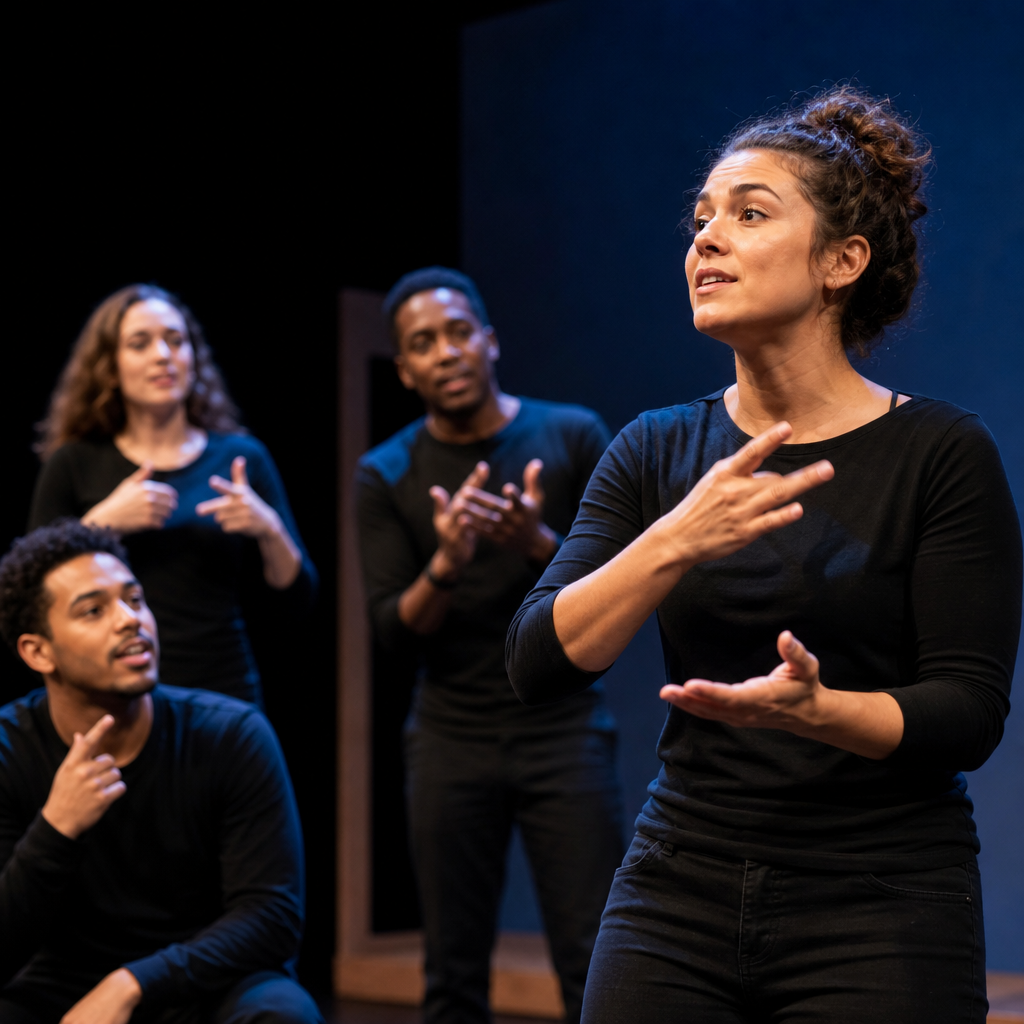
Building meaningful relationships in the Deaf community starts with understanding that community is not defined only by hearing level, but by shared language, cultural values, social norms, and lived experience. In practice, I have seen newcomers assume that friendliness alone is enough, then struggle because they missed the deeper rules that shape trust, belonging, and respect. Deaf community relationships are built through communication access, consistency, and cultural humility. They grow when people learn how Deaf spaces function, why visual communication matters, and how identity, advocacy, and mutual support are woven into everyday social life.
The term Deaf community usually refers to people who share signed languages, collective history, and cultural connection, not simply an audiological condition. That distinction matters. A person can be medically deaf without participating in Deaf culture, while a hearing family member, interpreter, educator, or partner may become a trusted community member through long-term involvement and respectful behavior. Community and social norms include introductions, turn-taking, attention-getting, eye contact, information sharing, event etiquette, and expectations around access. These norms may look different from hearing-majority habits, but they are logical responses to visual language and a long history of exclusion from information.
This topic matters because relationships shape everything else: friendship, dating, mentorship, employment networks, activism, and mental well-being. Research from public health and disability studies consistently shows that social connection improves resilience and reduces isolation. In Deaf life, access is inseparable from connection. If communication is limited, relationships stay shallow. If communication is rich and direct, relationships deepen faster. That is why people who want to build meaningful relationships in the Deaf community must focus not only on good intentions, but on access, accountability, and participation. The strongest connections come from showing up, learning continuously, and respecting the community as a culture rather than treating it as a charity project.
Understand Deaf culture before trying to belong
The first step is to understand that Deaf culture is a linguistic and social culture with its own norms, humor, storytelling traditions, and values. In the United States, American Sign Language is a complete natural language with grammar distinct from English. Other countries have their own signed languages, including British Sign Language, Langue des Signes Française, and Auslan. Treating signing as simplified pantomime is one of the quickest ways to damage credibility. People build stronger relationships when they recognize signed languages as legitimate languages and Deaf identity as a source of pride rather than a problem to be fixed.
History also matters. Many Deaf adults carry personal or inherited memories of oralist education, inaccessible healthcare, workplace discrimination, or exclusion from family conversations. Those experiences influence how trust develops. In my experience, hearing newcomers who understand that context are less likely to take directness personally or misread caution as unfriendliness. They realize why access is discussed openly and why Deaf people may ask practical questions early, such as whether an event will have interpreters, captioning, lighting, or seating arranged for sightlines. Those questions are not demands for special treatment. They are the baseline conditions for full participation.
Belonging is earned through behavior. Attend Deaf-led events, watch how people interact, and follow community cues before trying to lead, teach, or speak for anyone. Local Deaf clubs, advocacy organizations, schools for the Deaf, sports leagues, and arts festivals are often strong entry points. National Association of the Deaf resources, World Federation of the Deaf statements, and local community centers can help people find reputable spaces and understand current issues. Meaningful relationships begin when you approach these spaces as a learner who values the community’s knowledge.
Communicate in ways that create trust
Communication is the center of every relationship in the Deaf community, and trust rises or falls based on access. If you sign, sign clearly, maintain appropriate eye contact, and avoid speaking while looking away. If you are still learning, be honest about your level and keep improving. Fingerspelling, gestures, writing, live captioning apps, and texting can help, but they are supports, not replacements for language learning. I have repeatedly seen relationships deepen when hearing people stop relying on “good enough” communication and commit to genuine fluency over time.
Attention-getting norms are especially important. In visual spaces, people may wave, tap a shoulder lightly, flick a nearby light, or stomp gently on a floor that carries vibration. These are standard and respectful methods when used appropriately. Shouting from another room, covering your mouth, or talking while walking ahead creates exclusion. Good communication also means managing the environment. Bright backlighting, crowded sightlines, and circular seating problems can make conversation exhausting. A considerate host arranges chairs in a circle, ensures faces are visible, and reduces visual obstacles before guests arrive.
Directness is another social norm that hearing people sometimes misinterpret. Many Deaf conversations are efficient and explicit because visual communication benefits from clarity. Asking blunt questions about family, work, hearing status, school background, or where someone learned to sign may function as normal relationship mapping, not intrusion. That does not remove personal boundaries, but it does mean that directness often signals engagement. If something is inaccessible or confusing, say so plainly. Clear repair strategies such as “repeat,” “slow,” “sign again,” or “I missed that” build far more trust than pretending to understand.
Respect the social norms that organize Deaf spaces
Every community has unwritten rules, and Deaf spaces are no different. Introductions often include relational context: where you are from, whether you attended a Deaf school, which organizations you know, and who introduced you. This helps people locate shared networks quickly. Because information access has historically been uneven, community members may exchange news in detail, including updates about jobs, health, leadership changes, or upcoming events. To outsiders this can seem unusually thorough. Within the community, it often serves a practical role: keeping people informed in environments where mainstream channels have not always been accessible or timely.
Leave-taking is another norm that surprises newcomers. In many Deaf gatherings, goodbye is not brief. People often move through multiple conversations before actually leaving, making sure everyone important has been acknowledged. Rushing out without greeting or closing interactions can read as abrupt. Visual conversational turn-taking also differs from hearing norms. Side conversations are harder in signed environments because eyes and hands are already occupied. Interruptions are more visible, and overlapping communication requires coordination. Waiting for a natural pause, keeping signing space clear, and not blocking sightlines show basic respect.
Conflict norms matter too. Small communities can become tightly connected, so gossip, breaches of confidence, and casual disrespect travel quickly. If you make a mistake, own it directly and correct it. Excuses rarely help. In my work around community events, the people who recover best after missteps are those who apologize without defensiveness, ask what would repair the situation, and then change their behavior consistently. Reputation in the Deaf community is often built less by perfection than by reliability.
Build relationships through participation, not performance
Real connection grows through repeated presence. One workshop, one interpreted panel, or one sign language class does not create community membership. Volunteer at Deaf-led events when invited, support Deaf businesses, attend performances by Deaf artists, and participate in advocacy efforts around captioning, education, and employment access. Shared work builds trust faster than symbolic gestures because people can see whether your actions match your claims. Relationships become meaningful when others know how you behave over time, especially when access requires effort or resources.
It is equally important not to perform allyship. Hearing people sometimes center their own learning journey, seek praise for basic accessibility, or dominate conversations that should be led by Deaf voices. That damages relationships because it shifts attention away from the community and onto the helper. A better approach is practical and steady: ask what support is useful, follow directions, do the unglamorous work, and accept correction. In mixed groups, that may mean stepping back so Deaf participants can lead discussion, or using your influence in schools and workplaces to secure interpreters and captioning without making yourself the story.
| Situation | Relationship-building response | What to avoid |
|---|---|---|
| First community event | Introduce yourself briefly, share your connection, and observe communication norms | Assuming instant familiarity or demanding personal education |
| Limited signing ability | Admit your level, use repair strategies, and keep studying regularly | Pretending fluency or relying only on someone else to interpret socially |
| Accessibility problem | Address it directly and help fix lighting, seating, captions, or interpretation | Ignoring barriers to avoid awkwardness |
| Community disagreement | Listen first, ask clarifying questions, and respond without defensiveness | Public arguing, tone policing, or centering hearing comfort |
Participation also includes digital spaces. Group chats, video messages, Deaf creators on social platforms, and online community forums are now major parts of relationship building. They expand access across distance, though they do not replace in-person trust. If you engage online, the same rules apply: do not repost private content without consent, credit Deaf creators, and avoid extracting emotional labor from strangers. Respect online boundaries as carefully as face-to-face ones.
Strengthen family, friendship, and partner relationships
For families, the most important principle is early and full communication access. Decades of language development research show that children thrive when they have consistent access to a natural language from the start. For Deaf children, that often means sign language exposure as early as possible, regardless of technology choices such as hearing aids or cochlear implants. Families build stronger bonds when home communication is direct and shared, not filtered through one bilingual sibling or limited to basic phrases. I have seen family relationships transform when parents stopped treating signing as optional and made it the household norm.
Friendships develop through reciprocity. Do not treat Deaf friends as language tutors, cultural tour guides, or permanent accessibility consultants. Ask about interests beyond deafness. Join in activities where visual access is natural, from coffee meetups and game nights to sports, theater, and mutual aid projects. For hearing friends, simple habits matter: face the person when speaking, include them in group conversations, send details by text, and choose venues with good lighting and manageable noise. Inclusion is rarely about one grand gesture. It is usually the accumulation of small accessible decisions.
In romantic relationships, communication style, identity, and access expectations should be discussed early. Mixed Deaf-hearing relationships can be strong, but they require more than affection. Partners need agreed norms for family gatherings, conflict discussions, phone use, interpreting boundaries, and social plans with Deaf and hearing circles. Deaf-Deaf relationships are not automatically simple either; differences in language background, race, class, education, and views on technology can all matter. Healthy relationships depend on shared respect, not identical experiences.
Recognize diversity within the Deaf community
There is no single Deaf experience. The community includes people who are Deaf, deaf, hard of hearing, deafblind, late-deafened, cochlear implant users, nonusers, signers, and people who are still acquiring language after delayed access. It also includes wide differences in race, ethnicity, class, gender, sexuality, religion, immigration history, and additional disabilities. Any effort to build meaningful relationships must account for this diversity. Assuming that one person speaks for everyone is inaccurate and often harmful.
Intersectionality is not abstract here; it shapes daily life. A Black Deaf professional may navigate bias differently from a white Deaf peer. A deafblind community member may prioritize tactile access and mobility planning that others overlook. An immigrant signer may use a different signed language or translanguaging strategies unfamiliar to local groups. In practical terms, strong relationships are built by asking what access works best, avoiding one-size-fits-all assumptions, and learning how multiple identities influence comfort and belonging. The more specific your awareness becomes, the more trustworthy your relationships become.
Generational differences also affect norms. Older Deaf adults may have school-based networks and club traditions that younger people did not inherit, while younger Deaf people may rely more on digital communities, captions, and multilingual communication. Neither pattern is inherently better. The point is to avoid romanticizing one era or treating newer access practices as less authentic. Communities stay healthy when they make room for evolving tools and identities while honoring the people who preserved the culture under harder conditions.
Common mistakes and how to avoid them
The most common mistake is assuming that intent cancels impact. A person may mean well and still exclude, patronize, or exhaust others. Examples include speaking to an interpreter instead of the Deaf person, saying “never mind” instead of repeating information, touching hands while someone is signing, forcing lipreading, or praising someone as “inspiring” for ordinary tasks. These behaviors signal that Deaf people must adapt to hearing convenience. Relationships improve when people replace those habits with direct communication, patience, and equal regard.
Another mistake is treating the community as monolithic or perpetually available to educate. Learning requires initiative. Take classes from qualified instructors, read Deaf authors, follow Deaf-led organizations, and compensate professionals for their expertise. If conflict arises, avoid defensiveness and do not demand immediate forgiveness. Repair takes time. In many cases, the most respectful response is to listen, correct the problem, and demonstrate change through future behavior. That is how credibility is built in any close community, and especially in one where access failures are routine and memorable.
Building meaningful relationships in the Deaf community ultimately comes down to a clear principle: access is respect made visible. Learn the language used in your local community, understand the history behind social norms, and show your commitment through consistent participation. Trust grows when people can communicate fully, rely on your behavior, and see that you value Deaf culture on its own terms. If you want stronger friendships, better family bonds, or deeper community connection, start by improving access in every interaction and keep showing up.
Frequently Asked Questions
1. What does it really mean to build meaningful relationships in the Deaf community?
Building meaningful relationships in the Deaf community goes far beyond being polite, friendly, or well-intentioned. Meaningful connection is rooted in understanding that the Deaf community is shaped by shared language, cultural identity, social expectations, and lived experience, not simply by a person’s level of hearing. For many people, trust develops when communication is genuinely accessible, when respect is consistent, and when others show a willingness to learn rather than assume they already understand Deaf life.
In practical terms, this means valuing the communication preferences of Deaf individuals, making space for direct and clear interaction, and recognizing that Deaf culture has its own norms around introductions, storytelling, attention-getting, and social bonding. It also means showing up reliably over time. Relationships in the Deaf community often grow through repeated interactions, mutual support, and shared participation in community spaces, events, and conversations. People tend to notice quickly whether someone is merely curious or whether they are truly committed to respectful engagement. Meaningful relationships are built when your actions consistently communicate accessibility, humility, and respect.
2. Is being friendly enough to become accepted in the Deaf community?
Friendliness helps, but by itself it is usually not enough. Many newcomers assume that good intentions and a warm personality will naturally lead to acceptance, but relationships in the Deaf community are often shaped by deeper considerations. A person may be kind and still create distance if they overlook communication access, interrupt signed conversations, rely too heavily on others to adapt, or fail to respect cultural norms. Acceptance is not typically based on surface-level friendliness alone; it is built through behavior that demonstrates awareness, consistency, and cultural respect.
What matters more is whether you are willing to meet people where they are. That may involve learning sign language, maintaining eye contact appropriately during signed communication, ensuring visual access in group settings, and understanding that Deaf people should not have to constantly carry the burden of making communication work. It also involves listening when corrected and adjusting without defensiveness. In many cases, trust grows when people see that you are not trying to “fit in” quickly, but instead are taking the time to understand the community on its own terms. Genuine belonging comes from sustained effort, not instant approval.
3. Why is communication access so important in Deaf community relationships?
Communication access is central because relationships cannot deepen where communication is limited, exhausting, or unequal. In the Deaf community, access is not a convenience or a bonus; it is a basic condition for mutual connection. When communication is fully accessible, people can participate naturally, share humor, express nuance, ask questions, and build trust without constantly compensating for barriers. Without access, even well-meaning interactions can feel isolating, one-sided, or draining.
This is why choices that may seem small to hearing people can have a major impact. Good lighting, clear sightlines, visual attention, turn-taking that supports signed conversation, captioning when appropriate, and a shared commitment to accessible interaction all help create an environment where relationships can grow. Access also communicates respect. It shows that you are not treating Deaf people as an afterthought or expecting them to adapt to hearing-centered norms in every situation. Over time, people tend to remember who made communication easier, more equal, and more human. That memory often becomes the foundation for stronger and more meaningful relationships.
4. How can hearing people respectfully build trust with Deaf individuals and the wider Deaf community?
Hearing people can build trust by approaching the Deaf community with cultural humility, patience, and a real willingness to learn. Cultural humility means recognizing that you do not need to be an expert before engaging, but you do need to respect that Deaf people are the authorities on their own experiences. Trust grows when hearing people ask thoughtful questions, accept feedback gracefully, and avoid centering themselves as helpers, rescuers, or spokespersons. Respectful relationship-building is less about proving you care and more about consistently behaving in ways that make others feel seen, understood, and included.
Learning sign language is often an important part of that process, especially if you want relationships to become deeper and more natural. Even so, language learning should be paired with an understanding of Deaf cultural values and social norms. It helps to attend Deaf events when invited, observe respectfully, support communication access, and take responsibility for your own learning rather than expecting Deaf people to teach you everything. Most importantly, be consistent. Trust often develops through repeated, respectful presence over time. When people see that you are dependable, open to correction, and committed to accessible communication, your relationships are much more likely to become authentic and lasting.
5. What are common mistakes people make when trying to connect with the Deaf community?
One of the most common mistakes is reducing the Deaf community to hearing loss alone. When people focus only on audiological differences, they often miss the cultural, linguistic, and social dimensions that shape identity and belonging. Another frequent mistake is assuming that being nice automatically overcomes barriers. In reality, people may unintentionally create discomfort by speaking for Deaf people, treating sign language as a novelty, expecting praise for basic accessibility efforts, or becoming defensive when corrected. These behaviors can weaken trust, even if the person believes they are being supportive.
Other mistakes include failing to provide communication access, assuming all Deaf people are the same, and trying to rush acceptance instead of letting relationships develop naturally. Some newcomers also enter Deaf spaces without observing community norms or without understanding that these spaces often carry deep importance as places of connection, identity, and relief from constant communication barriers. A better approach is to slow down, learn continuously, and remain teachable. If you make a mistake, acknowledge it, correct it, and move forward respectfully. People generally do not expect perfection, but they do value sincerity, accountability, and effort that leads to real change.