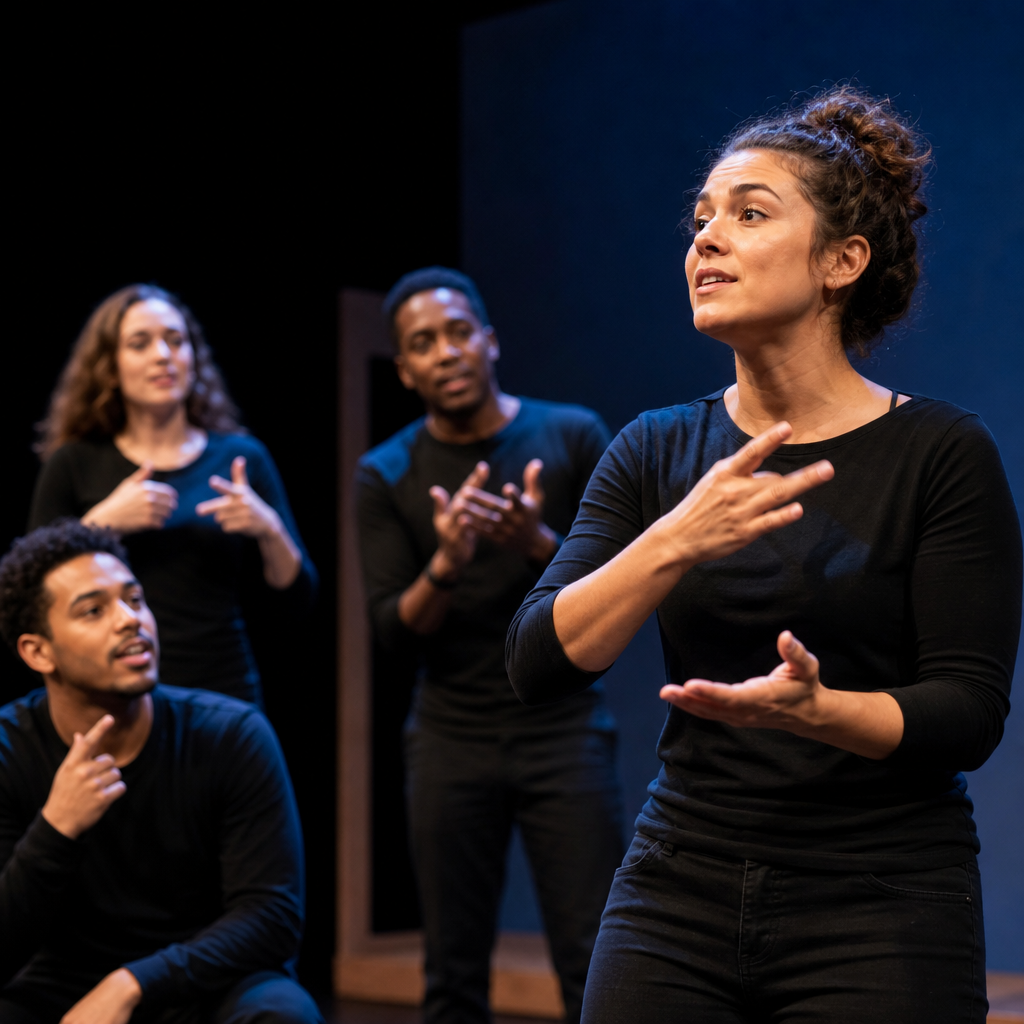
Common social norms that surprise hearing people often make perfect sense once Deaf culture is understood on its own terms rather than measured against hearing expectations. In this hub on Community and Social Norms, the goal is to explain the everyday practices, values, and interaction styles that shape Deaf spaces, friendships, families, schools, and organizations. Deaf culture refers to the shared language, history, customs, and identity developed by Deaf people, especially those who use signed languages such as American Sign Language. Social norms are the unwritten rules that guide behavior: how people greet each other, gain attention, tell stories, manage conflict, host guests, and participate in community life. I have worked in Deaf-led settings long enough to watch hearing newcomers misread directness as rudeness, lingering goodbyes as inefficiency, or visual attention as intrusive, when those same behaviors are actually markers of respect, inclusion, and access.
Understanding these norms matters because communication access is never just about vocabulary. It is about timing, line of sight, turn-taking, lighting, physical layout, shared expectations, and the belief that everyone present deserves full information. Hearing people are often taught that politeness means not staring, not interrupting, keeping voices down, and leaving private matters private. In many Deaf contexts, politeness looks different. You make sure someone can see you before you begin. You wave, tap, or flick lights to include them. You provide context others may have missed. You do not mumble, turn away, or continue talking while walking into another room. These differences affect classrooms, offices, medical visits, family dinners, religious gatherings, and online spaces. Learning them reduces awkwardness, improves access, and prevents the common mistake of treating Deaf behavior as unusual when it is often a practical adaptation to a visual language community.
Attention, eye contact, and the visual rules of conversation
The first norm that surprises many hearing people is how central visual attention is to courtesy. In spoken settings, people can listen while looking away, multitasking, or speaking from another room. In signed interaction, that does not work. If a signer cannot see, the message is gone. That is why eye contact carries more weight in Deaf spaces. Looking at the signer is not aggressive; it is the equivalent of listening. Breaking eye contact repeatedly can signal distraction, boredom, or exclusion. I often tell hearing visitors that in Deaf settings, your eyes function much like your ears do in hearing settings. If your eyes are elsewhere, you are not fully participating.
Getting attention also follows visual and tactile norms that hearing people may initially find startling. A light tap on the shoulder, a wave within the person’s visual field, a stomp on a wooden floor to create vibration, or flashing the room lights briefly are all established methods. None of these are inherently rude. They are efficient ways to create shared attention. In schools for the Deaf and community centers, light flicking is common for announcements. In homes, people may open and close a door, wave through a window, or use video calls instead of voice calls. The principle is simple: access comes first. A hearing person who shouts a Deaf person’s name from behind or starts talking before visual attention is secured is not just being ineffective; they are bypassing the basic courtesy that the conversation requires.
Direct communication is usually respect, not aggression
Another norm that often surprises hearing people is the degree of directness in Deaf communication. In many hearing environments, indirect phrasing softens disagreement: “Maybe consider another option” or “I’m not sure that’s ideal.” Deaf conversations, especially in ASL-centered communities, are often more explicit. Someone may sign that an explanation was unclear, a plan is inefficient, or clothing is stained. That does not automatically imply hostility. It usually reflects a value placed on clarity over ambiguity. Because signed languages are highly visual and because many Deaf people have experienced incomplete access to information, vague hints are less useful than plain statements.
This directness appears in feedback, scheduling, and personal observations. A Deaf colleague may sign, “Meeting moved. Room too dark. Need interpreter closer.” A hearing colleague might hear that as blunt, yet it solves the problem quickly. The same applies to interpersonal matters. If your signing is hard to understand, people may tell you directly. If you blocked the sightline, they may ask you to move immediately. In my experience, hearing newcomers do best when they stop translating every direct comment through hearing politeness norms. The better question is not “Was that soft enough?” but “Was that clear, accurate, and respectful?” Deaf directness can feel intense at first, but it often creates less confusion and less resentment than indirect speech does.
Information sharing, community visibility, and why privacy works differently
Hearing people are often surprised by how quickly news circulates in Deaf communities. Part of this comes from scale. Deaf communities in many regions are relatively small and densely networked through schools, clubs, advocacy groups, sports, churches, and social media. Part also comes from the practical importance of sharing information. For generations, Deaf people were excluded from mainstream channels where hearing people casually picked up local news, workplace updates, family changes, and emergency information. Community networks filled that gap. As a result, asking detailed questions about where someone is from, what school they attended, whether they know a certain family, or why they moved is often a way of locating shared connections and establishing trust.
This does not mean Deaf people lack boundaries. It means privacy and relevance are negotiated differently. Information that hearing people classify as personal may be discussed more openly if it affects access, safety, or community relationships. For example, people may openly explain that an event venue has poor lighting, that an interpreter was unqualified, or that a teacher signs inaccurately. Community accountability matters because poor access has real consequences. At the same time, gossip can still be harmful, and tight networks can feel exposing. That tension is real. The norm to understand is that information sharing often serves inclusion and orientation first. Hearing people who interpret every personal question as nosiness may miss that they are being invited into the map of the community.
Leave-taking is long, relational, and part of belonging
One of the most famous social patterns in Deaf spaces is the extended goodbye. Hearing newcomers often notice that an event seems over, coats are on, and then another thirty minutes pass at the door, in the parking lot, or by the car. This is not poor time management. It reflects the social value of connection in a community where face-to-face access has historically been precious. Signed conversation takes shared sightlines, physical presence, and mutual attention. When people finally gather, they do not rush the ending. Additional information, jokes, updates, and introductions continue until everyone feels genuinely finished.
I have seen hearing staff schedule Deaf events with back-to-back transitions and then wonder why people linger. The answer is that leave-taking is still interaction, not administrative dead time. It is where invitations get extended, context gets clarified, and relationships deepen. In practical terms, if you need to leave a Deaf gathering at a specific time, build in extra minutes. Do not cut off a farewell abruptly by turning away mid-sign or walking while someone is still communicating. Finish the exchange, signal your departure clearly, and understand that saying goodbye thoroughly is often read as warmer and more respectful than making a fast exit.
Shared space, line of sight, and environmental etiquette
Because signed communication depends on visibility, the physical environment carries social meaning. Hearing people may be surprised that room layout, seating choices, background patterns, and lighting can affect whether a gathering feels welcoming. In Deaf spaces, it is common to arrange chairs in a circle or semicircle so everyone can see one another. People avoid standing directly in front of signers, walking through a conversation sightline without acknowledgment, or sitting with a bright window behind them that throws their face into shadow. These are not minor preferences. They are access basics.
Environmental etiquette also includes how people move. If you must pass between two signers, the polite response is usually to move quickly while slightly ducking and, if appropriate, signing “excuse me.” In spoken settings, talking from the kitchen while someone remains in the living room is normal. In a Deaf home, leaving the visual field without pausing the conversation or reestablishing attention elsewhere can be discourteous. Open sightlines make spontaneous inclusion possible. That is why Deaf-friendly spaces often use glass panels, open common areas, good illumination, and visual alert systems. The table below summarizes several norms that hearing people commonly misread.
| Norm | What hearing people may assume | What it usually means in Deaf culture |
|---|---|---|
| Shoulder tap or wave | Too abrupt | Standard way to gain attention accessibly |
| Sustained eye contact | Intense or confrontational | Equivalent of active listening |
| Direct feedback | Rude or overly blunt | Clear, efficient, respectful communication |
| Long goodbyes | Disorganized timing | Relationship building and full closure |
| Detailed personal questions | Nosy behavior | Mapping connections and community context |
| Light flashing or floor stomping | Odd or disruptive | Accessible group attention signal |
Storytelling, openness, and visible emotion
Deaf storytelling can surprise hearing people because it is often expansive, embodied, and visually rich. Signed narratives use space, role shift, facial grammar, timing, and physical detail to create meaning. A story is not simply told; it is shown. In community conversations, people may provide more context than hearing listeners expect because context prevents misunderstanding. They may identify who was present, where everyone stood, what the lighting was like, and how information was conveyed. Those details are not digressions. They are part of the communicative logic of a visual language.
Visible emotion is another feature hearing people sometimes misread. Strong facial expression in signed languages is grammatical as well as emotional. Raised brows, head shifts, mouth movements, and body posture can mark questions, emphasis, contrast, or attitude. A hearing observer who sees animated signing may assume conflict when none exists. The opposite mistake also happens: muted expression can make signing unclear. In my experience, hearing professionals become better communicators once they stop equating visual intensity with interpersonal drama. Within Deaf norms, expressive communication often signals engagement, fluency, and precision.
Status, identity, and the difference between helping and controlling
Hearing people are sometimes startled by how quickly Deaf communities notice whether someone is acting as an ally, a gatekeeper, or a self-appointed helper. Because Deaf people have long dealt with paternalism from schools, service providers, relatives, and employers, independence is a major social value. Offering assistance is not automatically welcomed if it overrides choice. For example, answering on behalf of a Deaf adult, summarizing instead of interpreting fully, or deciding what information is “important enough” to pass along can be deeply disrespectful. Access should increase autonomy, not replace it.
Identity also shapes norms. Not every Deaf person shares the same background, language history, or preferences. Some are native signers from Deaf families; many are not. Some identify strongly with Deaf culture; others move between Deaf and hearing worlds, use cochlear implants, speak, cue, or rely on multiple languages and modalities. Good etiquette begins with observation and adaptation, not assumptions. Still, one principle is consistent across settings: include the Deaf person directly. Face them, not just the interpreter. Ask their preference. Provide full information. Respect the competence that visual communicators bring to managing their own lives.
How hearing people can participate respectfully in Deaf community life
The best way for hearing people to navigate Deaf social norms is to treat access as courtesy and curiosity as responsibility. Learn how to gain attention appropriately. Keep your face visible. Do not speak while looking down, covering your mouth, or leaving the room. If an interpreter is present, pause for turn-taking and let the Deaf person lead the pace. In group settings, avoid side conversations that split visual attention. If you know some sign, use it without making the interaction about your effort. If you do not know sign, be honest and use the communication method preferred by the Deaf person, whether that is ASL, writing, captioning, or another option.
Common social norms that surprise hearing people become easier to understand when you see the underlying pattern: Deaf communities organize interaction around visual access, shared information, mutual recognition, and relational depth. What may look unusual from the outside is often simply efficient, considerate, and culturally grounded. Eye contact means attention. Directness means clarity. Long farewells mean connection. Detailed questions mean orientation. Environmental awareness means inclusion. If you want to build stronger relationships in Deaf spaces, start by noticing these norms, following them consistently, and learning from Deaf people themselves. That effort pays off quickly. It reduces misunderstandings, creates better access, and opens the door to genuine participation in Deaf community life.
Frequently Asked Questions
Why do some Deaf social interactions seem more direct than hearing people expect?
Many hearing people are surprised by how direct communication can feel in Deaf spaces, but this is one of the most practical and respectful norms in Deaf culture. Because sign languages are highly visual and depend on clarity, it is often better to be specific, open, and unambiguous rather than soften a message so much that its meaning becomes unclear. In many Deaf interactions, getting to the point is not considered rude. Instead, it is often seen as efficient, honest, and considerate.
This directness can show up in many everyday ways. A Deaf person may plainly point out that someone missed part of a conversation, signed something unclearly, or behaved in a way that disrupted visual access. They may also ask personal-seeming questions earlier than hearing people expect, especially if the information helps establish context, relationships, or communication needs. In hearing culture, people are often taught to avoid saying things too bluntly in order to appear polite. In Deaf culture, however, visual clarity and shared understanding are often valued over indirect wording.
It is important not to confuse directness with lack of warmth. Deaf communities often combine frank communication with strong social connection, humor, loyalty, and mutual support. What may seem blunt from a hearing perspective often reflects a cultural preference for openness and a desire to prevent misunderstanding. Once hearing people understand that this communication style is rooted in visual language and community values, it usually feels far less surprising and much more logical.
Why is getting someone’s attention in Deaf spaces done so differently?
Attention-getting norms are one of the first things hearing people notice in Deaf environments. In hearing settings, people commonly call a name from across the room or begin speaking while facing away. In Deaf spaces, communication must begin with visual attention, so communities have developed clear and widely understood ways to get someone’s notice. These may include a light tap on the shoulder, a wave within the person’s visual field, flashing a light, stomping on the floor to create vibration, or asking another person in the sightline to relay attention.
To hearing people unfamiliar with Deaf norms, some of these methods can seem abrupt or exaggerated. In reality, they are practical solutions shaped by the needs of visual communication. A shoulder tap is usually not intrusive in this context; it is simply the equivalent of calling someone’s name. Likewise, waving is not necessarily dramatic. It is often just the fastest and most respectful way to establish a visual connection before beginning a conversation.
These norms also reflect a larger cultural value: access comes first. In Deaf spaces, it is considered respectful to make sure everyone can see, follow, and participate. That is why people may pause conversations until someone is looking, reposition themselves for better sightlines, or physically adjust the environment, such as moving chairs into a circle. What surprises hearing people is often just the visual version of ordinary conversational courtesy.
Why do Deaf people often share detailed background information when meeting someone new?
Hearing people are sometimes surprised by how quickly introductions in Deaf communities can become detailed. A conversation may move beyond names into questions about where someone went to school, whether they are Deaf, hard of hearing, or hearing, what sign language they use, whether they have Deaf family members, or who they know in common. To an outsider, this can seem unusually personal at first. Within Deaf culture, however, this kind of background-sharing helps establish identity, connection, and communication context.
Deaf communities have historically been tightly connected through schools, organizations, social networks, advocacy work, and shared experiences with language access. Because the community can be socially interconnected, people often look for relationship links early in a conversation. Asking where someone learned to sign or which Deaf school they attended is not just small talk. It can reveal language background, regional signing influences, cultural familiarity, and mutual contacts. These details help people understand how best to communicate and how the other person may relate to Deaf experiences.
This practice also reflects the importance of trust and belonging. In communities shaped by shared language and shared barriers in the wider hearing world, identifying common ground matters. Hearing people may be used to slower, more private introductions, but in Deaf culture, exchanging this context can be a normal and friendly way of locating each other socially. Rather than seeing it as intrusive, it is more accurate to understand it as relationship-mapping within a close cultural and linguistic community.
Why is visual accessibility treated as a social norm, not just an accommodation?
One of the biggest surprises for hearing people is that visual accessibility in Deaf culture is not viewed as an extra courtesy added on when convenient. It is a basic expectation that shapes how people gather, communicate, and show respect. In hearing environments, communication often continues regardless of whether everyone can fully access it. In Deaf spaces, people are much more likely to adjust the room, lighting, seating, pace, and turn-taking so everyone can see what is happening.
This can include simple but meaningful behaviors: not talking while looking away, avoiding covering the face while signing, making sure lighting is good, arranging chairs in a circle, pausing if someone is not visually included, and ensuring that group conversations do not overlap in ways that become unreadable. It may also include informing someone about what just happened if they looked away, repeating signed information for someone who missed it, or making sure an interpreter, if present, is positioned for clear access. These behaviors are not treated as special favors. They are normal parts of considerate interaction.
The reason this matters so deeply is that access affects participation, dignity, and belonging. When communication is visual, exclusion can happen instantly if people ignore sightlines or proceed without shared attention. Deaf culture responds by making inclusion visible and active. For hearing people, this can be eye-opening because it reveals how often hearing norms assume effortless access through sound. In Deaf communities, accessibility is woven into social etiquette itself, and that is one reason Deaf spaces often feel intentionally inclusive to those who understand the culture.
Why can leave-taking in Deaf gatherings seem much longer than hearing people expect?
Many hearing people notice that saying goodbye at a Deaf gathering can take a long time. Someone may appear ready to leave, then continue signing with several people at the door, across the room, or even in the parking area. While this may seem humorous or inefficient from a hearing perspective, it is a well-recognized social pattern in many Deaf communities and makes sense within a culture that highly values connection, shared information, and visual conversation.
Part of the reason is practical. When people have visual access to one another, it is easy for one farewell to lead into one more update, one more clarification, or one more social exchange. Group communication also often requires more deliberate attention and turn-taking, so multiple goodbyes can unfold in layers rather than ending all at once. In addition, Deaf social networks are often close-knit, and gatherings may be important opportunities to connect in a world where full language access is not guaranteed everywhere. Leaving without properly acknowledging people can feel abrupt or impersonal.
Long goodbyes also reflect the value placed on presence and relationship. In many Deaf spaces, social interaction is not treated as background noise; it is a fully engaged visual and communal activity. That means transitions into and out of conversation are often more explicit and relationally meaningful. Hearing people who understand this usually stop seeing the extended goodbye as odd and start recognizing it as a sign of community warmth, attentiveness, and cultural continuity.