Building strong family connections with deaf children starts with one practical truth: closeness grows through shared communication, predictable support, and genuine inclusion at home. In families with a deaf or hard of hearing child, connection is not created by love alone. It is built through daily choices about language access, routines, school support, emotional safety, and community. Parents often encounter new terms quickly, including deaf, hard of hearing, hearing loss, sign language, amplification, early intervention, individualized education program, and communication modality. These terms matter because they shape how a child learns, relates, and participates. When families understand them in plain language, they can make better decisions without feeling overwhelmed by systems or jargon.
In my work with families navigating education and communication planning, the most connected households are rarely the ones with perfect circumstances. They are the ones that make communication visible, consistent, and shared by everyone. A deaf child should not be the only person adapting. Siblings, parents, grandparents, and caregivers all need tools to participate fully. This is why resources for parents are so important within education and learning resources. Parents are often coordinating medical appointments, school meetings, language development, assistive technology, and social experiences all at once. Without a central guide, important supports stay fragmented. A strong hub helps families see how early language, educational advocacy, home routines, and community belonging fit together into one coherent plan.
Research consistently shows that accessible early language exposure is tied to better academic, cognitive, and social outcomes. The National Association of the Deaf, the American Speech-Language-Hearing Association, the Centers for Disease Control and Prevention Early Hearing Detection and Intervention programs, and state early intervention systems all emphasize timely identification and language access. But research only becomes useful when it changes everyday life. Parents need to know which resources help first, what questions to ask, how to support literacy, and how to strengthen family relationships while making decisions. This article serves as a parent resource hub for building strong family connections with deaf children, connecting communication choices, school supports, practical tools, and trusted organizations into one roadmap families can use now.
Start with communication access at home
The foundation of family connection is communication access. A deaf child cannot fully bond through conversations they only partly receive. That sounds obvious, yet many families unintentionally create constant gaps through talking from another room, speaking without eye contact, poor lighting, or relying on one communication method that not everyone uses consistently. Communication access means the child can understand and participate during meals, car rides, routines, discipline, jokes, and spontaneous family moments. It is not limited to formal lessons. It is the ordinary pace of family life made accessible.
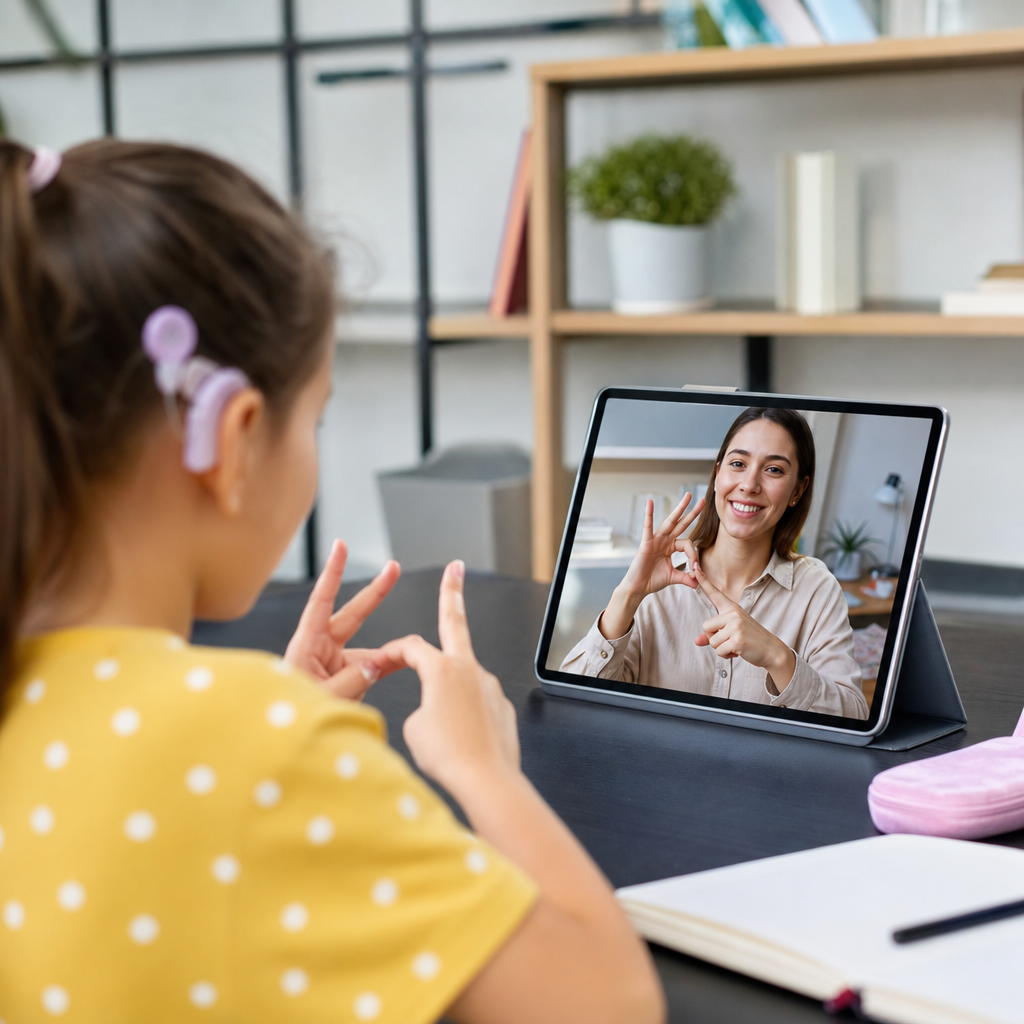
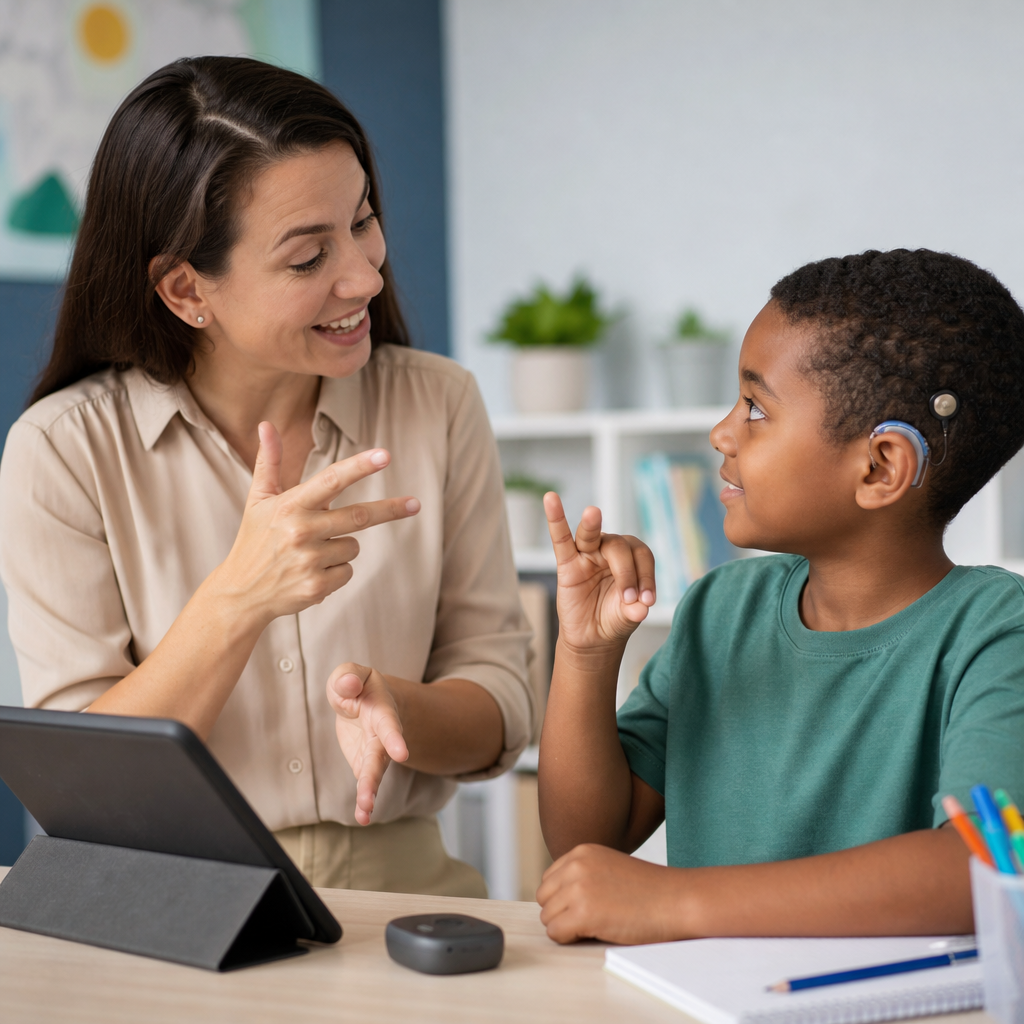
Parents usually begin by choosing or combining communication approaches such as a signed language, spoken language with hearing technology, cued systems, or total communication. There is no single universal fit. The right approach is the one that gives the child reliable language access and can be sustained by the family. In practice, the strongest outcomes come when parents commit to learning the chosen system well enough to use it naturally every day. If your child uses American Sign Language, the whole household benefits from taking classes and practicing during real routines. If your child uses hearing aids or cochlear implants, families still need excellent listening environments, clear turn-taking, and visual support because technology does not restore hearing to typical levels.
Simple home changes make a measurable difference. Sit where faces are visible. Reduce background noise from televisions and appliances during conversation. Pause before speaking so the child can look up. Repeat comments made by others at the table. Add captions on every screen. Use visual schedules, labeled storage, and written reminders. Grandparents and babysitters should learn core signs or agreed communication strategies instead of waiting for the child to compensate. These practices reduce fatigue and frustration, which in turn improves behavior, participation, and trust.
Choose parent resources that build language, not confusion
Many parents are flooded with advice from audiologists, teachers of the deaf, speech-language pathologists, pediatricians, online groups, and extended family. Helpful resources for parents do three things: they are evidence based, specific to your child’s communication needs, and practical enough to use at home. Start with state early intervention programs for infants and toddlers, because they coordinate developmental services during the years when language growth is fastest. Ask whether providers have direct experience with deaf education, family coaching, and bilingual language development if sign and spoken language are both being considered.
For structured learning, families often benefit from deaf mentor programs, parent-infant programs, sign language courses, auditory-verbal or listening and spoken language support where appropriate, and parent training from recognized organizations. The Laurent Clerc National Deaf Education Center, Hands & Voices, state schools for the deaf, Alexander Graham Bell Association resources, local chapters of the Hearing Loss Association of America, and family-to-family networks can all be useful depending on your goals. The key is to match the resource to the child’s actual needs, not to generic promises. A three-year-old learning first language needs different support from a ten-year-old struggling with reading comprehension or self-advocacy at school.
Parents should also evaluate resources with healthy skepticism. Beware of any source that frames one pathway as morally superior, dismisses the need for full language access, or assumes a device alone solves communication. Ask direct questions: What outcomes are measured? How will progress be tracked? What happens if the child is not accessing language well? Which adults on the team can model successful deaf identity, fluent signing, or strong use of hearing technology in real life? Good parent resources reduce uncertainty by giving families observable benchmarks and realistic next steps.
Support education through early intervention and school planning
Family connection and education are closely linked because school experiences shape confidence, language, and stress at home. When a deaf child struggles all day to follow instruction, that strain often appears later as withdrawal, exhaustion, or behavior challenges. Parents need to understand the education system early. For children from birth to age three in the United States, services usually begin under early intervention. After that, support may continue through preschool special education and then through either an Individualized Education Program under the Individuals with Disabilities Education Act or a Section 504 plan, depending on need.
Strong parent advocacy starts with documentation. Keep audiology reports, speech and language evaluations, teacher notes, service logs, device settings, and examples of schoolwork in one place. During meetings, ask how access will be ensured in real classrooms, not just on paper. A deaf child may need preferential seating, visual alerts, captioned media, direct instruction from a teacher of the deaf, sign language interpreting, notetaking support, remote microphone systems, or acoustic modifications. In many mainstream settings, a child appears present but misses side comments, peer discussion, and rapid transitions. Families should ask how incidental learning and social access will be addressed, because those gaps affect belonging as much as academics.
Parents also need to think beyond compliance toward fit. A placement can meet minimum legal standards and still leave a child isolated. I have seen students with excellent test scores feel disconnected because lunch, sports, and group work remained inaccessible. School planning should include extracurricular participation, friendships, identity development, and opportunities to interact with other deaf children and adults. Education works best when access supports both learning and relationships.
Use practical tools and routines that keep everyone included
Parents often ask which daily tools matter most. The answer is the tools that turn access into habit. Families do not need a perfectly specialized home; they need consistent systems that make communication easy to sustain. Start with routines that repeat every day, because those routines create language volume and emotional security. Morning check-ins, shared meals, homework review, bedtime reading, and weekly planning meetings are ideal places to build communication.
| Family need | Practical resource | How it strengthens connection |
|---|---|---|
| Following conversation | Good lighting, face visibility, turn-taking rules | Reduces missed information and frustration |
| Understanding media | Closed captions and transcripts | Lets the child share shows, lessons, and jokes equally |
| Waking and safety | Visual alarms, vibrating alerts, smart doorbell signals | Builds independence without relying on others |
| School communication | Shared calendar, homework board, messaging app | Keeps parents and child aligned on expectations |
| Language growth | Picture books, sign practice cards, labeled objects | Expands vocabulary during normal routines |
| Device management | Battery station, drying kit, listening check routine | Prevents avoidable breakdowns that disrupt the day |
These tools work because they reduce cognitive load. The child spends less energy compensating and more energy participating. Families should also teach siblings how to get attention appropriately, wait for eye contact, and include a deaf brother or sister in fast-moving play. Inclusion at home is learned through repetition. When everyone follows the same communication habits, the deaf child stops being the family member who is always catching up.
Build emotional connection, identity, and confidence
Parents sometimes focus so heavily on services and school access that emotional connection becomes secondary. In reality, it is central. Deaf children need the same things hearing children need: to feel listened to, competent, funny, safe, and fully known. They also need adults who understand that repeated communication barriers can look like inattention, anxiety, or irritability. A child who misses half the conversation may withdraw not because they are shy, but because participation feels risky and exhausting.
Emotional connection improves when parents name experiences clearly. Say what is happening: “The room is noisy, so let’s move somewhere easier to talk.” “You missed part of that joke; I’ll explain it.” “It makes sense that group conversations are tiring.” This validates the child without framing deafness as a problem to hide. Families should also create opportunities to meet deaf peers and adults. Positive identity is easier to build when children see successful people who share their experience, whether through local events, camps, deaf schools, signing story times, sports, or online communities moderated by reputable organizations.
Confidence also comes from self-advocacy. Even young children can learn to request captions, ask someone to face them, explain their device, or say they did not catch what was said. Parents should model this language and celebrate its use. Over time, a child who can advocate effectively is less dependent, less isolated, and more resilient across classrooms, friendships, and future workplaces.
Create a long-term support network for the whole family
No family should have to figure this out alone. Strong connections with deaf children are easier to maintain when parents have their own network of support and credible information. Build a team that may include an audiologist, teacher of the deaf, speech-language pathologist, early intervention specialist, sign language instructor, pediatrician, mental health professional if needed, and experienced parent mentors. The point is not to collect experts. The point is to ensure that communication, education, and emotional wellbeing are addressed together rather than in isolation.
Parent support groups are especially valuable because they translate professional advice into lived reality. A veteran parent can tell you which questions matter at an IEP meeting, how to normalize hearing technology routines, where to find deaf-friendly camps, or how to explain communication expectations to relatives. Community organizations often provide workshops on literacy, technology, transition planning, and rights under disability law. As children grow, the family’s resource needs shift from early language and preschool access to reading, social belonging, extracurricular inclusion, adolescence, and planning for college or work. A parent hub should reflect that full journey.
The most effective families review their support system regularly. If a service is not improving access, replace it. If relatives want to help, give them specific tasks such as learning signs, attending school meetings, or managing caption settings during family events. If your child is thriving academically but feels alone socially, invest in peer connections. Resources for parents are not just lists of organizations. They are decision tools that help families keep connection at the center while adapting to each new stage.
Building strong family connections with deaf children is not about reaching a perfect model family. It is about making sure your child can participate fully in the life already happening around them. Communication access comes first, because without it every other effort is weakened. From there, parents need reliable resources, informed school planning, practical home systems, emotional attunement, and a support network that grows with the child. When these pieces work together, deaf children are more likely to develop strong language, better self-advocacy, deeper trust in their family, and a clearer sense of belonging.
The main benefit of this approach is simple: connection stops being accidental and becomes intentional. Instead of hoping your child catches enough to stay included, you create an environment where inclusion is built into routines, conversations, learning, and relationships. That shift helps parents make better educational decisions, reduces daily frustration, and supports healthier development across childhood. It also strengthens the entire family, because clear communication and shared participation benefit siblings, caregivers, and extended relatives as much as the child at the center.
Use this hub as a starting point for your next steps. Review your home communication habits, identify one school support to strengthen, choose one trusted parent resource, and involve the whole family in the plan. Small changes, applied consistently, create the strongest bonds.
Frequently Asked Questions
How can families build strong connections with a deaf child at home?
Strong family connection begins with full, consistent communication access. A deaf or hard of hearing child should not have to guess what is happening, fill in missing information, or work harder than everyone else just to be included in daily family life. Families build trust when they make communication visible, predictable, and shared. That can mean learning and using sign language, improving listening environments, facing the child when speaking, reducing background noise, using captions, repeating important information, and making sure conversations at the dinner table, in the car, and during routines are accessible.
Connection also grows through ordinary moments. Reading together, cooking, playing games, telling stories, doing bedtime routines, and talking about feelings all help a child feel known and included. For many families, the biggest change is shifting from occasional accommodation to daily inclusion. Instead of only interpreting the “important” parts, families can make the entire home environment more accessible. When everyone participates in communication, the child learns that they belong fully, not just when it is convenient. That sense of belonging is one of the strongest foundations for healthy family relationships.
What is the best communication approach for a family with a deaf or hard of hearing child?
There is no single best approach for every family, but there is one clear standard: the best communication approach is the one that gives the child complete, reliable access to language and relationships. Some families use sign language as the primary language at home. Others use spoken language supported by hearing technology, visual cues, and therapy. Many families use a bilingual or multimodal approach that includes sign language, spoken language, fingerspelling, gestures, captions, and assistive devices. The right choice depends on the child’s hearing levels, access to sound, developmental needs, educational setting, and family goals.
What matters most is not choosing the approach that sounds ideal on paper, but choosing one the family will actually use consistently and effectively. A child cannot build strong language or strong emotional bonds through inconsistent access. If parents are told to “wait and see” while communication remains limited, family connection can suffer. Early, rich language exposure matters. Sign language can be especially valuable because it offers direct visual access and supports attachment, expression, and shared understanding from an early age. Families should work with qualified professionals, ask clear questions, monitor whether the child truly understands and participates, and be willing to adjust if the current approach is not providing full access.
How can parents support a deaf child’s emotional well-being and sense of belonging?
Emotional well-being grows when a child feels understood, respected, and included. Deaf children, like all children, need safe ways to express frustration, joy, fear, pride, and disappointment. That becomes much easier when the family shares a communication system the child can use fluently. Parents can support emotional health by making time for open conversations, labeling feelings clearly, checking for understanding, and encouraging the child to talk about experiences at school, with friends, and in the community. When a child can describe what happened and how it felt, parents are better able to respond with guidance and comfort.
Belonging also depends on identity. Many deaf and hard of hearing children benefit from meeting deaf adults, connecting with other deaf children, and learning that deafness is not just a medical issue but also a lived experience and, for many, a cultural identity. These connections can reduce isolation and increase confidence. At home, parents can reinforce belonging by celebrating the child’s communication style, advocating for access without apology, and making sure siblings and extended family know how to include the child naturally. When the child sees that their needs are taken seriously and their identity is welcomed, family relationships become more secure and resilient.
What role do school support and routines play in strengthening family relationships?
School support and home routines have a major influence on family connection because they shape how secure, understood, and successful a child feels each day. If a deaf child spends the school day missing information, struggling to follow instruction, or feeling socially left out, that stress often shows up at home. Families may notice fatigue, withdrawal, irritability, or reluctance to talk about school. Strong educational support can reduce that strain. Parents can help by understanding the child’s accommodations, staying in contact with teachers, checking that interpreters or assistive technology are working properly, and making sure classroom access includes both academic instruction and peer interaction.
Predictable home routines are just as important. Routines create stability, reduce confusion, and make communication easier because the child knows what to expect. Visual schedules, clear transitions, consistent homework habits, regular mealtimes, and accessible family discussions all support connection. Routines also create repeated opportunities for success and togetherness. For example, a nightly check-in about the day, a shared reading routine with sign or captioned books, or a weekly family activity can become reliable touchpoints for closeness. When school support and home routines work together, the child experiences family life as a source of calm, understanding, and encouragement.
How can extended family members and the wider community better include a deaf child?
Inclusion improves when relatives and community members understand that access is everyone’s responsibility, not the child’s burden. Grandparents, cousins, babysitters, family friends, coaches, and faith or community leaders can all help by learning basic signs if the child uses sign language, speaking clearly while facing the child, using captions, gaining the child’s attention before speaking, and making sure group conversations are not happening too fast to follow. Small changes make a big difference. A holiday gathering becomes more welcoming when people pause for turn-taking, include visual communication, and avoid talking from another room or with their backs turned.
It also helps when the wider community sees the child as a full participant rather than someone on the sidelines. That means inviting them into games, conversations, celebrations, and responsibilities, while providing the access needed to make participation real. Families can support this by modeling inclusive communication and by explaining practical strategies in a confident, straightforward way. Over time, inclusion becomes easier when others move beyond sympathy and develop actual communication habits. The goal is not perfection from every relative or community member on day one. The goal is steady progress toward a family and social environment where the deaf child is fully seen, fully informed, and fully involved.