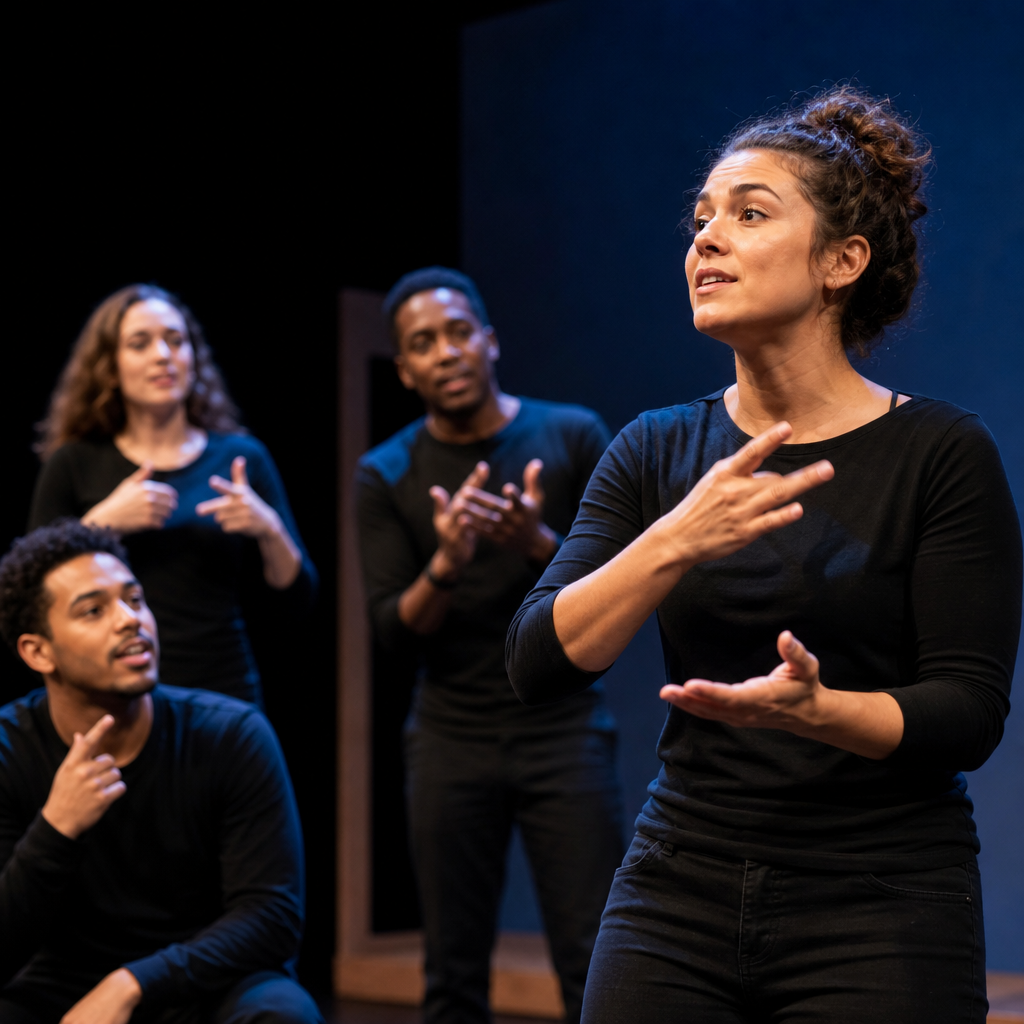

Developing deaf identity is rarely a single moment of realization; it is an ongoing process shaped by language access, family dynamics, education, community belonging, and the way society defines hearing loss. Deaf identity refers to how a deaf or hard of hearing person understands themselves in relation to deafness, Deaf culture, spoken and signed languages, disability, and pride. For some, identity centers on Deaf culture and sign language. For others, it includes medical technology, speech, lipreading, mainstream education, or multiple communities at once. The challenge is not that deaf identity is weak or confusing by nature. The challenge is that most deaf people must build identity inside systems designed by hearing people.
That matters because identity affects mental health, educational outcomes, self-advocacy, and social connection. In practice, I have seen deaf adults describe the same pattern repeatedly: when children receive full language access, role models, and a clear sense that deafness is not a personal defect, they tend to develop confidence earlier. When language is delayed, communication is restricted, or deafness is framed only as a problem to fix, identity formation becomes harder. Research in deaf education and developmental psychology supports this observation. Early accessible language is linked to stronger cognitive development, better literacy foundations, and healthier social-emotional growth. Identity grows from those foundations.
A useful starting distinction is between lowercase deaf, often used to describe audiological status, and uppercase Deaf, which commonly refers to cultural affiliation with the Deaf community, especially signed language users. Not everyone uses these labels the same way, and many people identify as hard of hearing, deafblind, late-deafened, oral deaf, bicultural, or multilingual. Some move between identities over time. A child with cochlear implants may feel aligned with hearing peers in one setting and strongly connected to Deaf culture in another. A late-deafened adult may grieve hearing loss while also finding belonging in signing spaces. Identity is layered, not fixed.
This article explores the main challenges in developing deaf identity and the reasons those challenges persist. It also serves as a hub for Deaf identity and pride by outlining the questions people ask most: What shapes deaf identity? Why do some deaf children feel isolated? How do family choices, school placement, assistive technology, and social attitudes influence pride? The core answer is direct. Deaf identity develops best when deaf people have language, access, agency, and community. When any of those are limited, identity formation becomes more difficult, slower, and more conflicted.
Language access is the foundation of deaf identity
The biggest challenge in developing deaf identity is delayed or incomplete language access. Around 90 percent of deaf children are born to hearing parents, many of whom have little prior exposure to deafness or sign language. Families are often pushed quickly toward medical appointments, audiograms, and intervention plans, but not always toward a full discussion of visual language access. When a child cannot fully access family conversation, bedtime stories, discipline, jokes, or casual daily talk, the result is more than missed words. It is missed belonging.
Language deprivation has long-term consequences. It can affect executive function, emotional regulation, academic learning, and relationship building. In plain terms, children who do not receive an accessible first language early may struggle to understand themselves and others. That makes identity work much harder. By contrast, children with early exposure to a natural sign language such as American Sign Language often show clearer self-expression and stronger ties to community. Sign language does not block spoken language development. For many families, a bilingual approach creates the broadest access and the strongest identity base.
Another common challenge is the pressure to treat speech as the only valid communication goal. Speech therapy, auditory-verbal approaches, hearing aids, and cochlear implants can be useful tools, but they do not remove the need for accessible communication in every setting. I have worked with families who believed technology would make a child function like a hearing child, only to discover that noisy classrooms, fatigue, and inconsistent sound access still created barriers. When adults frame every gap as personal failure instead of access failure, the child may internalize shame. That shame often becomes an identity obstacle later.
Family attitudes can support pride or create conflict
Family is usually a deaf child’s first social world, so family attitudes have enormous influence. Supportive families learn to sign, connect with deaf adults, provide visual access at home, and speak about deafness without pity. In those homes, deaf children often understand early that they are different without being lesser. Unsupportive families may avoid sign language, overemphasize normalizing goals, or discuss the child as a burden in medical terms. Even when intentions are loving, the message can become clear: acceptance depends on performing hearingness.
This conflict appears in ordinary moments. If everyone laughs at dinner and no one interprets the joke, the child learns exclusion before they know the word. If parents make all decisions without involving the child, the child learns that deafness reduces agency. If relatives praise a deaf child only when they speak clearly, they teach that voice earns approval while signing does not. Over years, these signals shape identity deeply. Many deaf adults later describe feeling like guests in their own families until communication improved.
Families also face real pressures. Medical professionals may emphasize devices and therapies while giving little information about Deaf mentors, sign language classes, or bilingual education. Rural families may have limited services. Parents may grieve, feel overwhelmed, or fear making the wrong choice. The best outcomes usually come when families are offered balanced guidance: use technology if it helps, but do not gamble a child’s identity on uncertain auditory access alone. Build communication that works now. Pride grows from being understood consistently, not from chasing an ideal of sameness.
School placement shapes belonging and self-concept
Education is another major site of identity formation. Deaf students may attend mainstream schools, schools for the deaf, special programs, or mixed placements over time. Each option has benefits and tradeoffs. Mainstream settings can increase access to local peers and academic offerings, but they often create social isolation if interpreting, captioning, and teacher awareness are weak. Schools for the deaf can provide direct communication, cultural transmission, and deaf role models, yet not every region has one nearby, and some families worry about distance from home.
The most important question is not simply where a deaf student is placed, but whether the environment offers full participation. A child who sits in a regular classroom with an interpreter but never joins side conversations, group work, or lunchroom banter may be physically included and socially excluded. I have seen students with excellent grades still report intense loneliness because access ended when formal instruction stopped. Identity suffers when a student is treated as an accommodation plan rather than as a whole person who needs peer connection.
| Educational setting | Potential strengths | Common identity challenges |
|---|---|---|
| Mainstream school | Local access, broad curriculum, neighborhood peers | Isolation, dependence on interpreters, few deaf role models |
| School for the deaf | Direct communication, cultural belonging, visual learning norms | Geographic distance, limited local availability, transition to hearing spaces |
| Mixed or regional program | Some deaf peers, specialized services, flexible placement | Inconsistent quality, fragmented community, uneven language models |
Peer relationships matter as much as academics. Deaf children need to meet other deaf people with different communication styles, careers, races, and life paths. Without that exposure, many grow up believing there is only one acceptable way to be deaf. Rich school environments challenge that idea. They show students that deaf lawyers, teachers, artists, scientists, interpreters, and parents exist, and that success does not require erasing deafness.
Social stigma and medical narratives complicate identity
Another challenge in developing deaf identity is the dominance of deficit-based narratives. In many societies, deafness is described first as loss, impairment, or limitation. Those terms have clinical uses, but when they become the only story, they narrow identity. Children notice quickly whether adults speak about deafness with respect or with sorrow. If every appointment focuses on what the child cannot hear, the child may conclude that their body is a problem before they have the language to resist that conclusion.
Technology adds nuance. Hearing aids, bone conduction devices, FM systems, remote microphones, captioning apps, and cochlear implants can improve access significantly. They can also become loaded symbols in identity debates. Some people wrongly assume that using implants means rejecting Deaf culture, while others wrongly assume that embracing Deaf pride requires rejecting all technology. In reality, many deaf people use devices pragmatically and still identify strongly with Deaf community and signed language. The challenge is not the tool itself. The challenge is when others turn the tool into an identity test.
Media representation also influences self-concept. When deaf characters are absent, infantilized, or portrayed only through tragedy, children lack mirrors. Better representation has improved this somewhat, especially with deaf actors, signed performances, and public figures discussing access rights. Still, representation without structural access is not enough. Pride grows when people are seen accurately and included materially, through captions, interpreters, visual alerts, equal education, and employment pathways.
Intersectionality makes deaf identity more complex
No deaf person develops identity through deafness alone. Race, ethnicity, gender, class, nationality, religion, immigration status, and additional disabilities all shape how belonging is experienced. A Black Deaf student may navigate both anti-Black racism and audism. A deaf immigrant may be learning a new signed language while also dealing with documentation barriers. A deafblind person may connect differently to language, mobility, and community spaces than a sighted deaf peer. These are not side issues; they are central to identity development.
Intersectional realities can create double exclusion. Some deaf people feel marginalized in hearing communities because of communication barriers and marginalized in Deaf spaces because of racism, class bias, oral communication style, or disability stigma. Hard of hearing people may feel not fully accepted by hearing groups or Deaf groups. Late-deafened adults may struggle to relate to people who signed from birth, while also feeling misunderstood by hearing friends who expect them to “adjust” quietly. Identity challenges intensify when communities demand purity instead of allowing layered belonging.
This is why broad deaf identity and pride work must include many experiences, not only one cultural narrative. Effective community spaces acknowledge spoken language users, signers, implant users, nonusers, multilingual families, and people who move across categories. Pride is strongest when it does not require denial of complexity.
Community connection turns identity into pride
Deaf identity becomes more stable when people meet others who share language, lived experience, and practical knowledge. Community connection can happen through Deaf clubs, advocacy groups, schools, sports, theater, online networks, summer camps, and mentorship programs. What matters is not symbolic inclusion but repeated contact with people who model confidence and access strategies. A deaf teenager who meets successful deaf adults often stops imagining adulthood as damage control and starts seeing it as possibility.
Mentorship is especially powerful. New parents benefit from deaf adult mentors who can answer everyday questions with credibility: How will my child make friends? What communication works at home? What should I expect from school meetings? Deaf youth benefit from mentors who can discuss interpreters, disclosure at work, college accommodations under the ADA, captioning standards, and self-advocacy. These conversations convert abstract pride into practical identity skills.
Building pride does not mean denying difficulty. Many deaf people face fatigue from constant communication management, inaccessible public services, emergency information gaps, and employment bias. But pride reframes the issue accurately. The problem is not being deaf. The problem is barriers. Once that distinction is understood, identity shifts from self-blame to self-respect, and from isolation to collective action.
The challenges in developing deaf identity are real, but they are not inevitable or permanent. Strong identity grows from early language access, informed family support, meaningful school inclusion, nuanced views of technology, and contact with diverse deaf communities. When deaf children and adults can communicate fully, see themselves reflected in others, and participate without apology, pride has room to develop. If you are supporting this journey, start with one practical step today: improve access, learn from deaf people directly, and make belonging visible in everyday life.
Frequently Asked Questions
What makes developing deaf identity challenging for many people?
Developing deaf identity can be challenging because it is not a one-time decision or a fixed label. It often evolves over many years as a person moves through different environments, relationships, and communication experiences. A deaf or hard of hearing person may receive very different messages about deafness from family members, schools, doctors, peers, and the broader public. Some are encouraged to see deafness primarily as a medical condition that should be treated or minimized, while others are introduced to Deaf culture as a source of language, community, and pride. These competing viewpoints can create confusion, especially in childhood and adolescence, when identity is still forming.
Language access is one of the biggest factors. When a child has full access to communication, whether through sign language, spoken language supports, or both, they are more likely to build confidence and self-understanding. When access is limited, identity development can become more difficult because the person may struggle to connect with family, classmates, or the Deaf community. Social experiences also matter. Feeling isolated, misunderstood, or pressured to “fit” into hearing expectations can delay or complicate the process of developing a strong sense of self. For many people, the challenge is not deafness itself, but navigating a world that often misunderstands what deafness means.
How do family dynamics influence the development of deaf identity?
Family dynamics play a major role because the family is usually the first place where a child learns what deafness means. If a family responds with openness, curiosity, and a commitment to communication, the child is more likely to develop a healthy and secure identity. This can include learning sign language, using visual communication strategies, seeking out deaf role models, and treating deafness as a meaningful part of the child’s life rather than as something shameful or limiting. In these settings, a child often learns that they belong and that their experiences are valid.
However, family dynamics can also create barriers. Many deaf children are born to hearing parents who may have little prior knowledge of deafness or Deaf culture. Parents may receive early guidance focused heavily on medical treatment, speech development, or “normalization,” without equal exposure to sign language or deaf-led perspectives. If communication at home remains limited, the child may experience frustration, emotional distance, or a sense of exclusion within their own family. Even in loving homes, a lack of shared language can affect self-esteem and belonging. Over time, these experiences can shape whether a person feels connected to Deaf culture, hearing culture, both, or neither. The most supportive families are not those with perfect knowledge from the start, but those willing to listen, adapt, and make communication fully accessible.
What role do education and language access play in shaping deaf identity?
Education and language access are central to deaf identity because identity grows through communication, learning, and social participation. A student who has full access to classroom instruction, peer interaction, and extracurricular life is better positioned to develop confidence and a clear sense of self. Access may come through sign language, interpreters, captioning, assistive technology, speech supports, or a bilingual approach that values both signed and spoken or written language. When communication is accessible, deaf and hard of hearing students are more likely to engage deeply with ideas, build relationships, and see themselves as capable members of a larger community.
Problems arise when educational settings focus only on placement rather than true access. A deaf student in a mainstream school may appear included on paper but still feel socially isolated if classmates do not know how to communicate with them or if support services are inconsistent. In some cases, students are discouraged from signing or are not given enough exposure to Deaf history and culture, which can limit their ability to understand deafness beyond a clinical framework. On the other hand, schools or programs with strong deaf-centered environments can provide not only language access but also cultural affirmation, peer connection, and role models. These experiences often help students see that deaf identity can be rich, diverse, and empowering rather than something defined only by limitation or difference.
Can someone identify with both Deaf culture and hearing culture?
Yes, many people identify with both Deaf culture and hearing culture, and this is an important part of understanding deaf identity realistically. Identity does not have to be all-or-nothing. Some deaf or hard of hearing people use sign language and feel strongly connected to Deaf community values, while also using spoken language, participating in hearing spaces, or benefiting from technology such as hearing aids or cochlear implants. Others move between worlds depending on the setting, the people around them, and their communication preferences. This does not make their identity less authentic. It reflects the complexity of real life.
For many individuals, a bicultural or fluid identity develops because they have meaningful ties to both communities. They may come from hearing families, attend mainstream schools, and later discover Deaf community spaces where they feel deeply understood. Or they may grow up in deaf-centered environments but work, study, or socialize often in hearing settings. The challenge is that society sometimes pressures people to choose one side, as though being culturally Deaf, oral, signing, hard of hearing, or technologically assisted are mutually exclusive categories. In reality, deaf identity can include multiple influences at once. What matters most is whether the person has the freedom, language access, and support to define themselves on their own terms.
How can society better support healthy deaf identity development?
Society can better support healthy deaf identity development by shifting away from narrow ideas about deafness and toward a broader understanding of access, culture, and self-determination. One of the most important steps is ensuring early and consistent language access. Children need rich communication from the beginning, and families should be given balanced information that includes sign language, deaf-led resources, educational options, and the social-emotional importance of belonging. Support should not be framed as forcing a child toward one identity path, but as creating the conditions for strong development, confidence, and connection.
Schools, healthcare providers, and community institutions also have a responsibility to do better. This means treating deaf and hard of hearing people as experts in their own experiences, improving interpreter and captioning access, including Deaf professionals in decision-making, and teaching the public that deafness is not simply a deficit. Representation matters as well. When deaf children and adults see a wide range of deaf lives reflected in media, leadership, education, and everyday public life, they gain more space to imagine who they can be. Healthy deaf identity develops best in environments where communication is accessible, difference is respected, and people are not pressured to prove their worth by conforming to hearing norms.