Classroom accessibility for deaf and hard of hearing students starts with one practical goal: make instruction visible, predictable, and fully available without forcing students to work harder than their hearing peers just to access the lesson. In schools, “deaf students” can include children who identify as Deaf and use sign language as a primary language, students with partial hearing who use spoken language, learners with cochlear implants or hearing aids, and students with additional disabilities that affect communication. “Accessibility” means more than seating a student near the front. It includes communication access, acoustics, captioning, visual supports, classroom routines, assessment design, and inclusive participation across lectures, discussions, labs, assemblies, and digital learning tools.
I have seen well intentioned classrooms fail because access was treated as an accommodation added at the margins instead of a design principle built into daily teaching. A student may appear attentive yet miss side comments, rapid peer discussion, or instructions given while the teacher writes on the board. Another may receive an interpreter but still lose key content because videos are uncaptioned, vocabulary is introduced without preteaching, or lights are dimmed during slides. These are not small gaps. Over a school day, missed fragments compound into weaker comprehension, slower participation, social isolation, and preventable fatigue.
Teaching deaf students well matters academically, legally, and ethically. In many countries, schools are required to provide effective communication access under disability and education law. Just as important, access affects literacy growth, language development, behavior, confidence, and belonging. This hub article explains the core classroom accessibility tips educators need, from room setup and communication methods to interpreters, technology, assessments, and family partnership. It is designed as a foundation page for the broader topic of teaching deaf students, so each section answers a practical question teachers commonly ask and points toward the instructional decisions that make the biggest difference.
A useful starting point is this: there is no single deaf student profile. Some students prefer American Sign Language or another national sign language. Some rely on spoken English supported by amplification. Some switch across modes depending on task, fatigue, background noise, or who is speaking. Many have strong visual learning strategies; some do not. The best educators avoid assumptions and confirm access needs directly through the student, family, interpreter, teacher of the deaf, audiologist, and individualized plan. Accessibility works when the classroom is organized so critical information is consistently available in more than one form.
Understand communication access before planning instruction
The first responsibility is to determine how the student receives language most effectively. That may be direct sign communication, interpreted instruction, spoken language with hearing technology, cued speech, real time captioning, or a combination. Review the student’s IEP or equivalent plan, but do not stop there. In practice, access changes by context. A student who follows whole group instruction with hearing aids may still struggle during science labs, cooperative learning, or physical education because distance, movement, and competing noise reduce speech clarity. Teachers who ask, “How will this student access this exact activity?” prevent problems before they occur.
Clear communication routines help immediately. Face the class when speaking. Do not talk while turning to write on the board. Pause before changing topics. Repeat peer comments before responding to them. Display essential directions in writing. Preteach technical vocabulary, names, and unfamiliar place words, especially in subjects like history and biology where one missed term can break comprehension. These habits support all learners, but for deaf students they are basic access features, not optional teaching extras.
Design the physical environment for sightlines, lighting, and sound
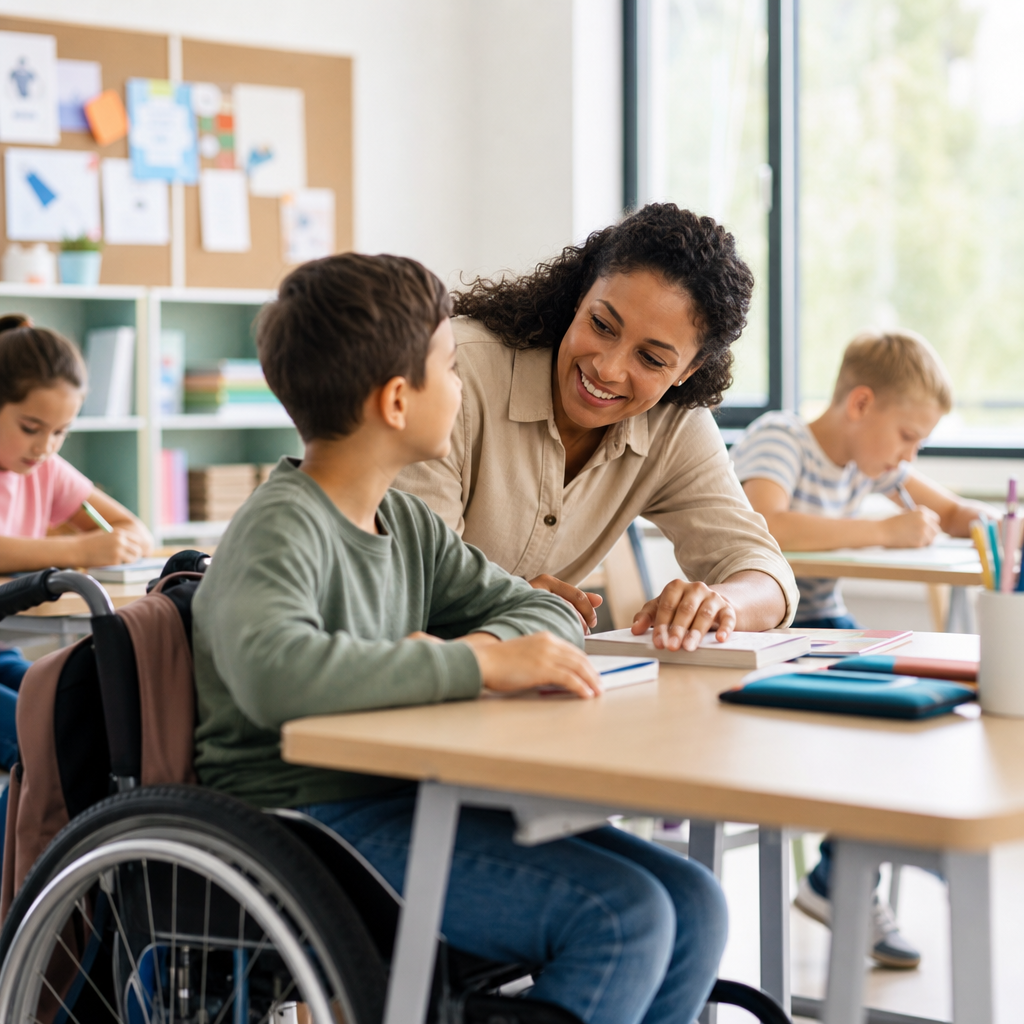
Seating and room arrangement directly affect comprehension. For signed or interpreted communication, the student needs an unobstructed line of sight to the teacher, interpreter, board, and classmates. U shaped or horseshoe seating often improves visibility during discussion because students can see who is talking. For spoken access, reduce distance from the main speaker and minimize competing noise from fans, hallways, projectors, scraping chairs, and group clusters. Sound fields, carpets, acoustic panels, and felt pads on chair legs can improve signal to noise ratio, a major predictor of understanding for students using hearing technology.
Lighting is equally important. Keep the speaker’s face well lit and avoid standing in front of bright windows that create backlighting. If an interpreter is present, place the interpreter near the teacher or display so the student does not have to choose between watching language input and watching instructional content. When showing videos or slides, do not darken the room so much that faces disappear. I have seen students lose entire explanations because a room became visually inaccessible during media use. Good access often depends on these ordinary environmental choices.
Use interpreters, captioning, and technology correctly
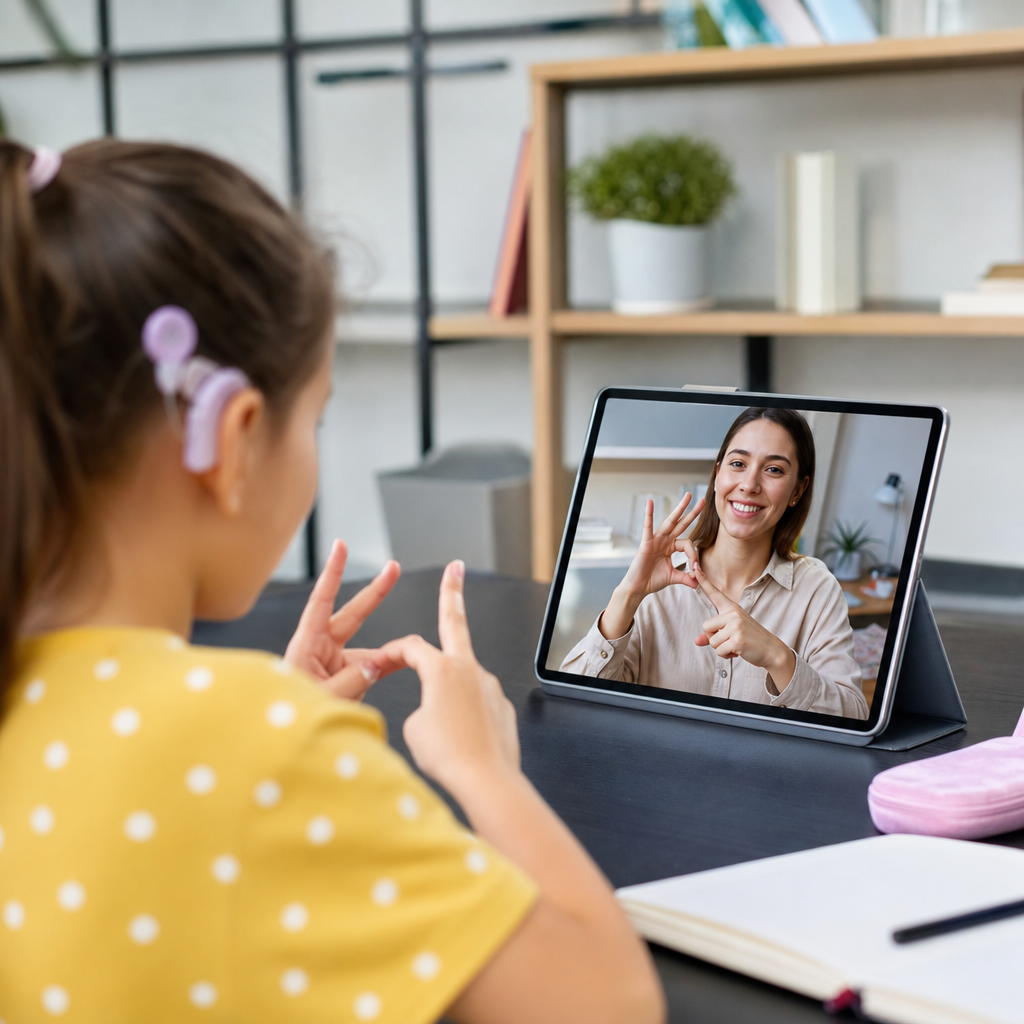
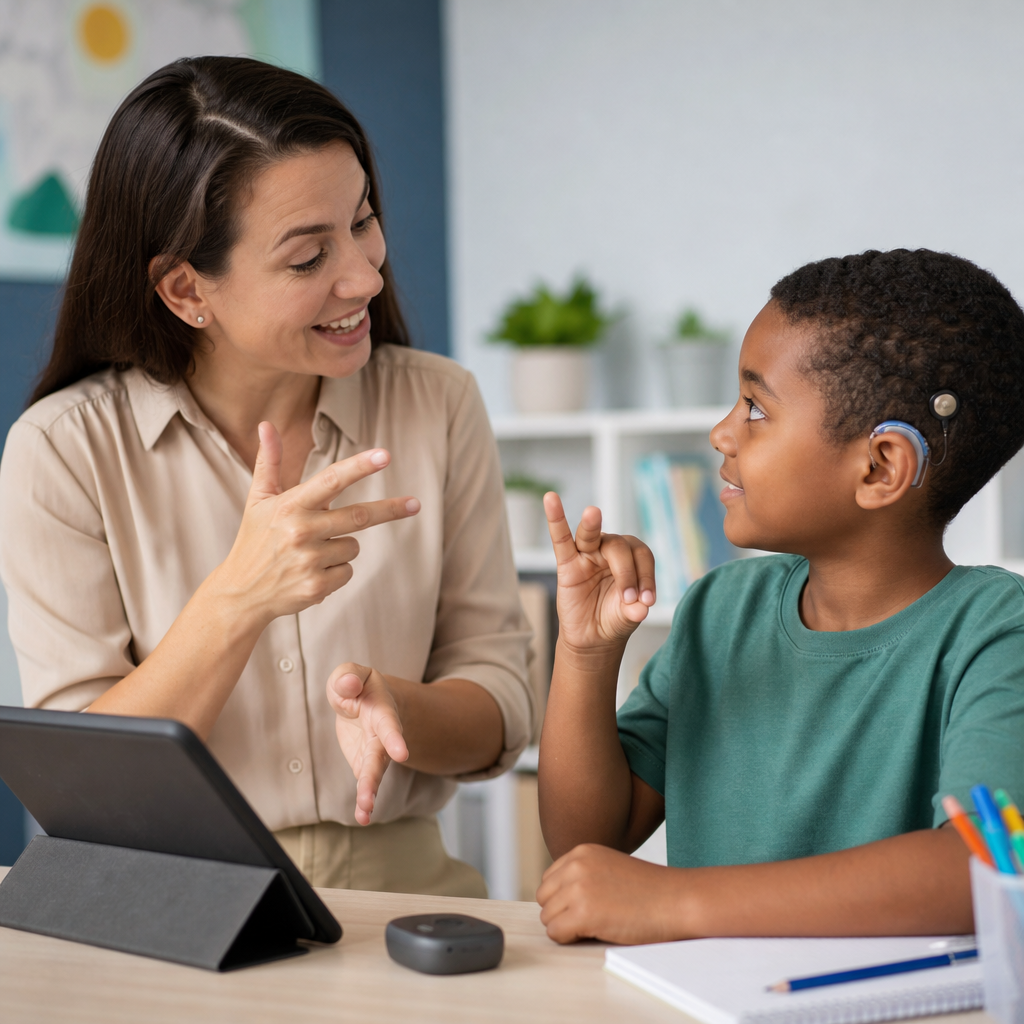
Support services only work when educators understand their role. An interpreter provides access to classroom communication; the interpreter is not the teacher, disciplinarian, tutor, or substitute parent contact. Speak to the student, not to the interpreter. Share lesson plans, slides, readings, and specialized vocabulary in advance so interpretation can be accurate, especially in math, chemistry, and literature where precision matters. Build brief pauses into lessons because interpreted communication carries a small time lag. If you ask a question and move on too fast, the deaf student may never have a fair chance to respond.
Captioning is essential for videos, clips, and multimedia. Auto captions from YouTube or meeting platforms can help, but they are not consistently accurate enough for instruction, especially with names, jargon, or accented speech. Review captions before class or provide a transcript. For some students, Communication Access Realtime Translation, commonly called CART, gives better access during fast lectures or large events. Assistive listening systems such as FM or DM technology can transmit a teacher’s voice directly to hearing aids or cochlear implants, but they do not solve everything. They amplify the intended signal; they do not restore normal hearing, remove reverberation, or replace visual supports.
| Classroom situation | Best access support | Why it works |
|---|---|---|
| Whole group lecture | Interpreter, CART, or FM/DM system plus written key points | Provides direct language access and reduces loss from distance or pace |
| Video or film clip | Accurate captions and transcript | Makes dialogue, sound cues, and terminology fully available |
| Class discussion | Turn taking rules and repeated comments | Prevents missed contributions when speakers change quickly |
| Lab or hands on task | Written steps, visual demo, and pause points | Students can look at instructions without missing spoken explanation |
| Assembly or field trip | Advance seating, interpreter or captioning, and agenda preview | Extends access beyond the regular classroom |
Teach through visual structure and explicit language
Accessible teaching for deaf students is usually highly organized teaching. Start lessons with visible objectives, agenda, and success criteria. Provide notes, outlines, or guided organizers before instruction so the student can focus on meaning instead of chasing missing fragments. Use modeling generously. In writing instruction, show an exemplar and annotate why it works. In mathematics, solve one problem while thinking aloud and displaying each step. In science, demonstrate procedures before students begin. Visual structure lowers cognitive load and increases independent participation.
Language demands also need explicit attention. Deaf students may have uneven exposure to incidental language, idioms, morphology, and background knowledge because they cannot casually overhear the environment in the same way hearing students do. That does not indicate lower intelligence; it reflects access patterns. Teachers should explain figurative phrases, connect new vocabulary to known concepts, and check for understanding without putting the student on the spot. Closed questions like “Do you get it?” are weak. Better checks include asking students to sequence steps, summarize the idea, match terms to visuals, or explain a concept in their preferred language mode.
Make discussion, group work, and participation genuinely inclusive
Many classrooms become least accessible during the moments they call “interactive.” Open discussion can collapse into overlapping talk, side comments, laughter without explanation, and rapid topic shifts. To include deaf students, establish clear turn taking norms: one speaker at a time, hands raised or visible signals, and short pauses between speakers. Identify who is speaking before the comment begins if the student cannot easily scan the room. During group work, assign roles, provide written task steps, and make sure peers understand how to communicate effectively. Accessibility is a shared classroom norm, not a private burden for the deaf student.
Social participation matters as much as academic access. Deaf students are at higher risk of isolation when conversation moves quickly or when classmates are unsure how to interact. Teachers can reduce this by normalizing communication strategies, pairing students thoughtfully, and teaching peers practical habits such as facing the person they are addressing, keeping hands away from the mouth, and ensuring one conversation happens at a time. In my experience, students adapt quickly when expectations are direct and framed as respectful communication for everyone.
Assess fairly and plan with specialists and families
Assessment should measure the intended skill, not hidden hearing demands. If directions are given orally, provide them in writing. If a test includes listening tasks, ask whether listening is the actual standard being assessed or an unnecessary barrier. For classroom quizzes, check that wording is plain and that unfamiliar idioms do not distort the construct. Extended time may help in some cases, especially when a student is processing interpreted information or reading captions, but time alone is not the main solution. The stronger approach is to remove avoidable access barriers before the assessment begins.
Effective teaching of deaf students is collaborative. Work closely with teachers of the deaf, speech language pathologists, educational audiologists, interpreters, note takers, and families. Each sees a different part of the access picture. An audiologist may flag that a hearing aid setting is optimized for quiet speech but not group noise. A family may explain that the student is exhausted after long listening days and needs visual materials in advance. The student may tell you that captioned videos are easier than live lecture, or that an interpreter placement change would improve access instantly. The best classroom accessibility plans are updated from this real feedback, not copied forward unchanged each term.
Classroom accessibility tips for educators are most effective when they become routine: plan for visibility, provide language in more than one form, control noise, caption media, structure interaction, and verify understanding often. Teaching deaf students comprehensively does not mean using every support all the time. It means matching supports to communication needs and the demands of each learning task. When access is built in, students spend less energy decoding the classroom and more energy reading, reasoning, discussing, and creating.
As a hub for the wider topic of teaching deaf students, this guide highlights the essential priorities that connect every subtopic: communication access, inclusive pedagogy, assistive technology, assessment, and partnership. The central benefit is straightforward. Accessible classrooms improve learning because they remove preventable barriers before they become academic gaps. Review your next lesson with fresh eyes: what must be heard, what can be seen, and what should be available in both forms? Start there, adjust deliberately, and your classroom will be stronger for every student.
Frequently Asked Questions
1. What does an accessible classroom look like for deaf and hard of hearing students?
An accessible classroom for deaf and hard of hearing students is one where instruction is easy to see, easy to follow, and consistently available in more than one format. In practice, that means students should not have to depend on catching every spoken word in order to learn. Teachers can support this by making directions visible on the board or screen, providing written agendas, using captions on videos, and sharing key vocabulary and lesson goals before instruction begins. When information is presented both visually and verbally, students are far more likely to stay oriented and participate fully.
Accessibility also includes the physical setup of the room. Seating should allow a clear line of sight to the teacher, interpreter if one is present, classmates during discussion, and any visual materials being used. Good lighting matters because it helps students see facial expressions, signs, and mouth movements. Teachers should avoid speaking while facing away from the class, such as when writing on the board, because that can make instruction much harder to access. Minimizing background noise and being thoughtful about classroom acoustics can also help students who use residual hearing, hearing aids, or cochlear implants.
Just as important, an accessible classroom is predictable. Routines, transitions, and expectations should be clearly taught and consistently reinforced. If a class frequently changes activities without visual cues or gives fast verbal reminders only once, deaf and hard of hearing students may miss critical information. Accessibility is not a single accommodation; it is a teaching approach that anticipates diverse communication needs and removes unnecessary barriers before they affect learning.
2. How can teachers make daily instruction more accessible without redesigning every lesson?
Teachers do not need to rebuild their entire curriculum to improve accessibility. Some of the most effective changes are simple, repeatable habits built into everyday instruction. Start by posting the daily schedule, lesson objective, and step-by-step directions in a visible place. When introducing a task, say it, show it, and if possible provide it in writing. This reduces reliance on listening alone and gives students a reference point if they miss part of an explanation.
Another strong strategy is to pause intentionally between instructions, discussion, and transitions. Deaf and hard of hearing students may be tracking an interpreter, reading captions, watching the teacher, and looking at slides or notes. That is a lot of visual attention shifting. Giving students a few extra seconds to process information and refocus can make a major difference. It also helps to avoid talking while students are expected to look down and read, complete a worksheet, or watch a demonstration in another part of the room.
Teachers can also improve access by previewing vocabulary, using visuals alongside new concepts, and checking for understanding in direct ways. Instead of asking, “Does everyone get it?” ask students to restate directions, point to the next step, or show their response in writing. This reveals whether access was successful. Consistency is key. When teachers regularly pair spoken instruction with visual support, maintain clear routines, and communicate expectations ahead of time, accessibility becomes part of normal teaching rather than a separate add-on.
3. What are the best communication practices when working with deaf and hard of hearing students?
The best communication practices begin with understanding that deaf and hard of hearing students are not all the same. Some students use American Sign Language or another sign language as their primary language, some rely mainly on spoken language, some use hearing technology, and some use a combination of communication methods depending on the situation. Because of that, teachers should learn each student’s preferred communication approach and coordinate closely with families, specialists, and support staff.
In day-to-day interactions, face the student when speaking, keep your mouth visible, and avoid speaking while turning away, covering your face, or moving around excessively. Use natural speech rather than exaggerated lip movements, which can actually make understanding harder. If an interpreter is present, continue speaking directly to the student, not to the interpreter. The interpreter is there to facilitate communication, but the relationship remains between teacher and student. It is also helpful to establish discussion norms in the classroom, such as one speaker at a time, raising hands before speaking, and repeating or summarizing peer comments when needed.
Written follow-up can strengthen communication significantly. Important announcements, assignment changes, homework expectations, and schedule adjustments should be provided visually, not delivered only by speech. If a misunderstanding happens, rephrase rather than simply repeating the same sentence louder. Communication access is about clarity, not volume. The most effective teachers create a classroom culture where students can ask for repetition, clarification, or visual support without feeling singled out. That respectful flexibility helps students engage with confidence.
4. How should educators use interpreters, captions, and assistive technology effectively in the classroom?
Interpreters, captions, and assistive technology are valuable tools, but they work best when teachers plan with them in mind instead of treating them as last-minute supports. If a student uses an interpreter, the teacher should share lesson materials in advance whenever possible. Vocabulary lists, slide decks, readings, and specialized terminology allow interpreters to prepare and provide more accurate access. During instruction, teachers should speak at a manageable pace, pause during transitions between speakers or materials, and recognize that students cannot watch an interpreter, a video, and a busy slide at the exact same moment without losing information.
Captions should be used on all classroom videos and multimedia whenever available, and teachers should verify that those captions are accurate. Auto-generated captions can be helpful, but they are not always reliable enough for academic content, especially when technical vocabulary is involved. For live instruction, schools may use speech-to-text services, FM or DM systems, sound field systems, or other hearing assistive technology depending on the student’s needs. Teachers should learn the basics of the equipment they use, including how to wear microphones properly, how to check that devices are functioning, and who to contact if something stops working.
The most important principle is that technology should increase access, not shift responsibility onto the student. A student should not have to spend class time troubleshooting audio, reminding adults to turn on equipment, or trying to piece together missing information from faulty captions. Teachers who coordinate with support staff, test materials ahead of time, and build in visual backups create a far more reliable learning environment. These supports are most effective when they are integrated into regular instruction and treated as essential parts of access.
5. How can teachers support participation, inclusion, and academic success for deaf and hard of hearing students?
Supporting participation starts with recognizing that access and inclusion are closely connected. A student cannot fully join class discussions, collaborative work, or spontaneous learning moments if they are only receiving partial information. Teachers can improve participation by structuring discussions carefully: identify who is speaking, establish turn-taking routines, and repeat or summarize student comments before building on them. In small-group work, it helps to assign clear roles, provide written task directions, and make sure students are seated in ways that support visual communication.
Inclusion also depends on expectations. Deaf and hard of hearing students should be held to high academic standards while receiving the accommodations and instructional supports needed to meet them. That may include extended processing time in some activities, pre-teaching content vocabulary, visual models, written summaries, and explicit opportunities to ask questions. Teachers should avoid assuming that a student understood everything just because they appeared attentive. Regular comprehension checks and opportunities for feedback are essential. Students with additional disabilities may need even more individualized planning, so collaboration with special educators, speech-language professionals, audiologists, and families is especially important.
Finally, teachers can support long-term success by building a classroom culture that normalizes accessibility. Explain communication norms to the whole class, encourage respect for different ways of listening and responding, and address barriers early rather than waiting for problems to grow. When students see accessibility as a standard part of good teaching, not as a special exception, everyone benefits. The goal is not simply to help deaf and hard of hearing students keep up; it is to make sure they have equal access to learning, relationships, and opportunities to contribute their ideas in every part of classroom life.