
Common misconceptions about Deaf communication shape how people interact, how media tells stories, and how institutions design services. In practice, these misconceptions do real harm: they reduce access, flatten cultural identity, and encourage hearing people to assume they understand Deaf lives after seeing only a few familiar tropes. When I have worked on accessibility reviews and media guidance, the same myths appear repeatedly, from the idea that all Deaf people lip-read to the belief that sign language is universal. Correcting those errors requires more than polite awareness. It requires understanding Deaf communication as a broad set of linguistic, cultural, visual, and technological practices. In this article, Deaf refers to a cultural and linguistic identity in many contexts, while deaf can describe an audiological condition; usage varies by person and community. Communication includes signed languages, spoken language, writing, captioning, visual signals, interpreters, tactile methods, and digital tools. This matters because representation influences policy, education, healthcare, employment, and everyday respect.
Why stereotypes about Deaf communication persist
Misrepresentation survives because hearing-led systems often treat Deaf communication as a deficit problem instead of a language access issue. Film and television have long favored dramatic narratives centered on isolation, miraculous cures, or inspirational perseverance. Those stories are easy to market, but they distort ordinary reality. In news coverage, Deaf people are frequently quoted through a hearing relative, teacher, or interpreter rather than framed as primary experts in their own lives. In schools, many hearing adults still learn only basic disability etiquette and little about signed languages, Deaf history, or communication rights. As a result, assumptions become social defaults.
Another reason stereotypes persist is that hearing people overestimate how transparent communication is. If they can exchange a few written notes with a Deaf person, they may conclude that access barriers are minor. If they watch a viral signing video, they may assume all signs are self-explanatory. Neither conclusion holds up in real settings like classrooms, legal consultations, emergency broadcasts, or medical appointments. Language proficiency, timing, visual clarity, interpretation quality, and context all matter. Deaf communication is highly effective when environments support it, but those environments do not appear automatically. They must be designed.
Misconception: all Deaf people communicate the same way
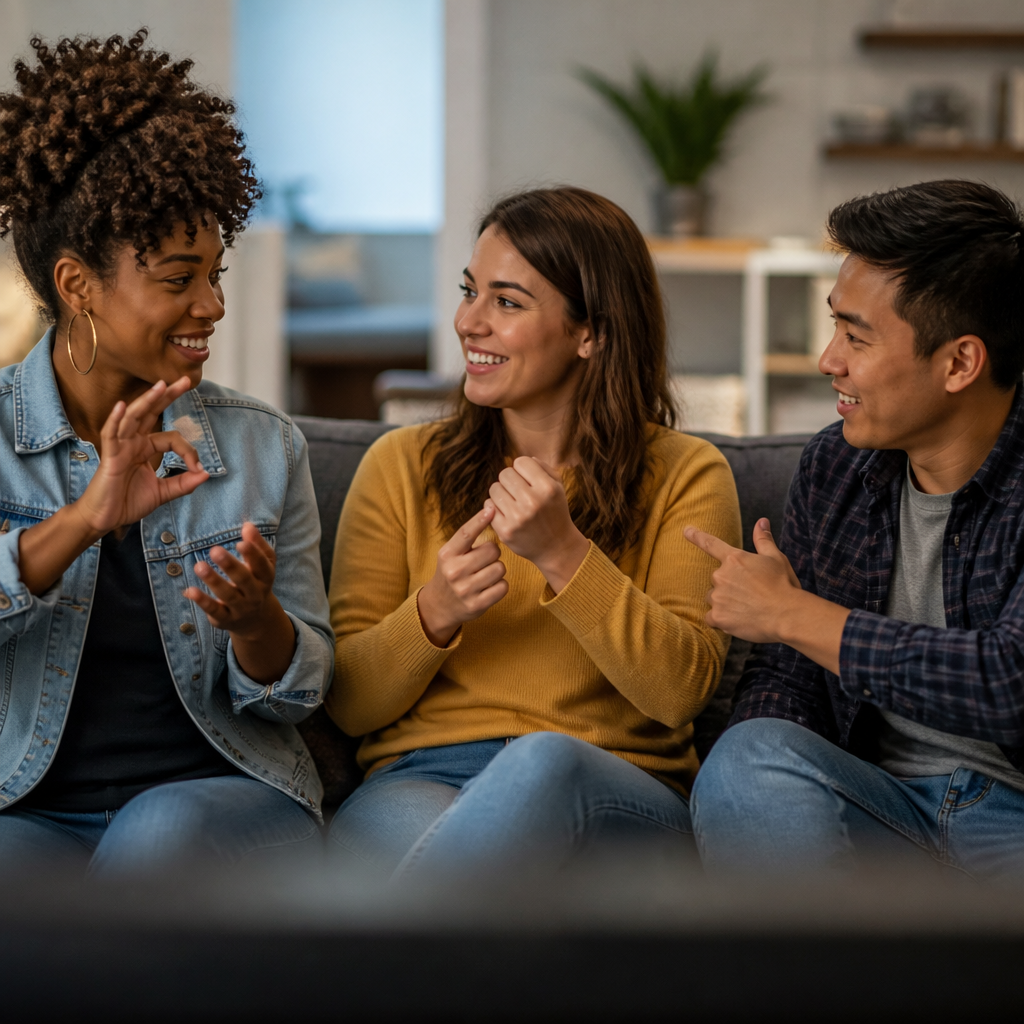
The most common stereotype is that Deaf people form one uniform communication group. In reality, Deaf communities are diverse. Some people use a national sign language such as American Sign Language, British Sign Language, or Langue des Signes Française. Some are bilingual in signed and written languages. Some speak and sign. Some rely mainly on captioning, text, or relay services. Others use tactile signing, close-vision signing, cued speech, or home signs developed within families. Communication choices are shaped by early language access, education, family background, additional disabilities, geography, and personal preference.
Assuming one method fits everyone leads directly to exclusion. I have seen organizations book an interpreter and believe access is complete, only to learn that the attendee requested live captioning because their strongest language was written English, not a sign language. In another case, a video campaign added captions but used rapid cuts that made visual signing unreadable for Deaf viewers who signed fluently. The lesson is simple: accessibility begins by asking the individual what works, not by applying a single canned solution. Effective communication is person-specific, and respectful planning starts there.
Misconception: sign language is universal
Many hearing people believe there is one global sign language understood by all Deaf people. That is false. Signed languages are natural languages with their own grammar, lexicon, regional variation, and history. American Sign Language and British Sign Language are not mutually intelligible, even though both countries primarily use English in writing and speech. ASL historically has strong links to French Sign Language, while BSL belongs to a different language family. Within each language, regional dialects, age-based variation, and community conventions also exist, just as they do in spoken languages.
This misconception causes practical problems in travel, media, and education. A multinational brand may create one signing ad and assume it works everywhere, when local Deaf audiences find it linguistically awkward or incomprehensible. International conferences sometimes underestimate the need for multiple interpreters because organizers think signing crosses borders automatically. Even the concept often called International Sign is not a universal native language; it functions more like a flexible contact system used in specific international contexts by some signers with varying skill levels. Treating all signed communication as interchangeable erases linguistic reality and weakens access planning.
Misconception: lip-reading is enough
Lip-reading, more accurately called speechreading, is often portrayed as a complete solution. It is not. Only part of spoken English is visually distinguishable on the lips, and many sounds look identical. Facial hair, accents, lighting, speed, masks, and background distraction make comprehension harder. Even highly skilled speechreaders miss information, especially in group discussions or technical conversations. Research and practitioner experience consistently show that speechreading is effortful and incomplete. Depending on it alone places the burden on the Deaf person to constantly fill gaps from context.
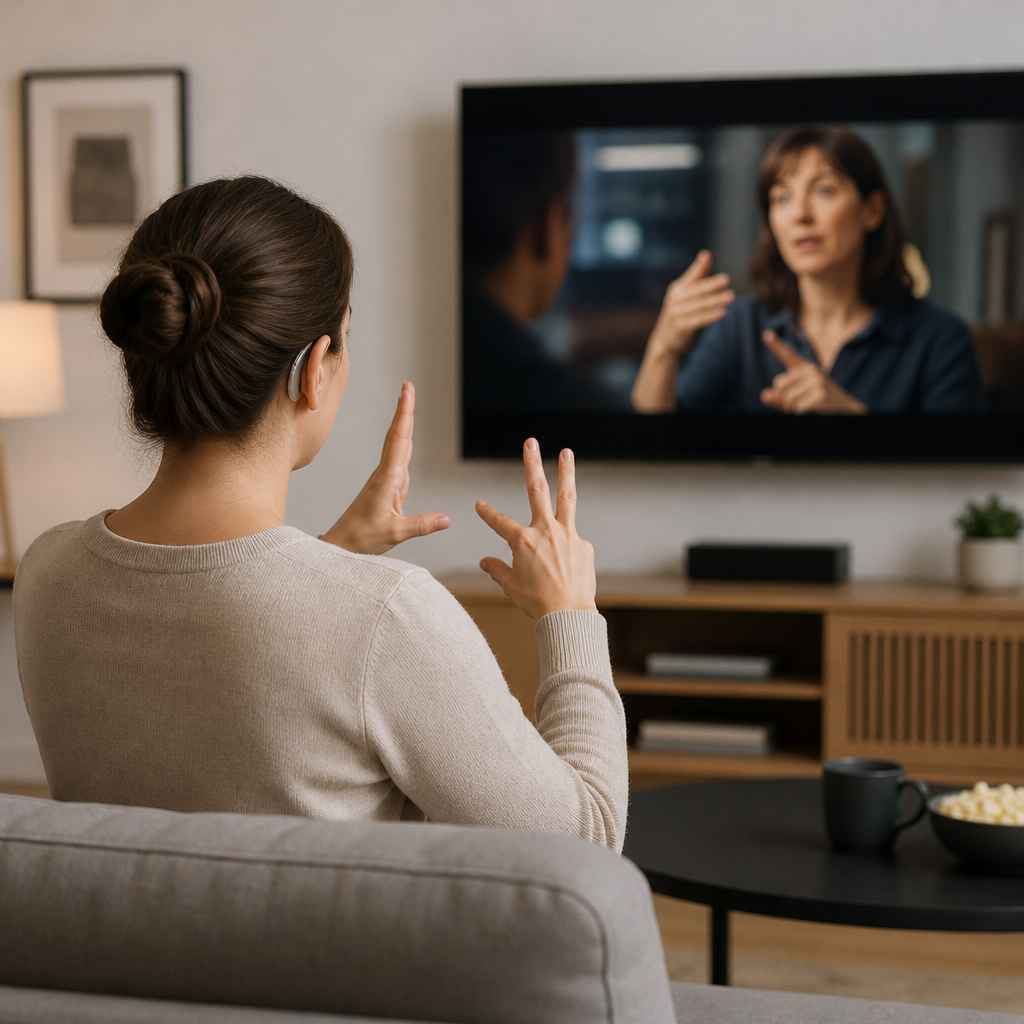
Media representations make this myth worse by showing Deaf characters effortlessly understanding every spoken line in perfect conditions. Real life is not staged. In meetings, people turn away while talking, interrupt one another, cover their mouths, or speak from another room. In healthcare settings, one misunderstood medication instruction can have serious consequences. Better practice includes qualified interpreters when requested, accurate real-time captioning, clear turn-taking, and written follow-up. Speechreading can support communication for some people, but presenting it as a sufficient replacement for language access is inaccurate and risky.
Misconception: interpreters simply translate word for word
Another damaging stereotype is that interpreters act like neutral machines converting each word directly into signs. Qualified sign language interpreters do far more complex work. They interpret meaning across languages with different grammar, information structure, cultural references, and visual-spatial features. They manage timing, register, role boundaries, and turn-taking while preserving intent as accurately as possible. Professional standards, including codes of conduct used by interpreter associations, emphasize competence, confidentiality, and impartiality, but impartiality does not mean invisibility or robotic literalism. Effective interpretation requires judgment.
This matters especially in legal, educational, and medical environments. A doctor may use dense terminology that needs conceptually accurate interpretation, not a clumsy word-for-sign substitution. A courtroom exchange may require consecutive interpretation to ensure precision. A classroom may need collaboration between teacher and interpreter so visual attention can shift appropriately between slides, demonstrations, and signed input. Poor media portrayals often reduce interpreters to side characters or comic devices, ignoring their professional skill and the Deaf person’s agency. The better framing is that interpreters are language access professionals, not props and not substitutes for direct respect.
Misconception: technology has solved Deaf communication barriers
Captions, speech-to-text apps, hearing devices, video relay services, and messaging platforms have transformed access, but they have not solved everything. Auto-captions still struggle with names, specialized vocabulary, overlapping speakers, and accented speech. I routinely see event organizers trust platform captions without checking accuracy, then discover key points were garbled. Hearing aids and cochlear implants help many people, yet outcomes vary widely and do not restore typical hearing. Device benefit depends on fitting, environment, auditory history, rehabilitation, and individual goals. Technology can expand options, but it does not erase the need for communication planning.
| Tool or method | What it does well | Main limitation | Best use case |
|---|---|---|---|
| Live human captioning | High accuracy for meetings and events | Requires scheduling and budget | Lectures, webinars, public forums |
| Auto-captions | Fast and inexpensive | Errors with jargon and overlapping speech | Informal content with review |
| Sign language interpreter | Direct language access for signers | Must match language and context | Interactive appointments and discussions |
| Video relay service | Enables phone communication through interpreters | Depends on connectivity and availability | Remote calls and customer service |
The stereotype that technology fixes access often lets institutions avoid human responsibility. A university may upload captioned videos but fail to provide interpreters for labs. A newsroom may add subtitles while still excluding Deaf consultants from editorial decisions about representation. A workplace may approve chat tools yet run important discussions by phone. Strong access strategy combines tools with policies, testing, and user feedback. The question is not whether technology exists. The question is whether the chosen technology matches the person, task, and setting accurately enough to support full participation.
Misconception: Deaf communication is only about hearing loss
Reducing Deaf communication to a medical condition misses its social and cultural dimensions. For many people, signed language is not a backup system used because sound is absent; it is a primary language tied to community, humor, storytelling, identity, and shared norms. Deaf communication often prioritizes visual attention, explicit turn-taking, spatial referencing, and information about environment and access. These are not deficiencies. They are features of a visually organized language ecology. When institutions ignore that, they frame normal Deaf practices as inconvenient differences rather than valid communication standards.
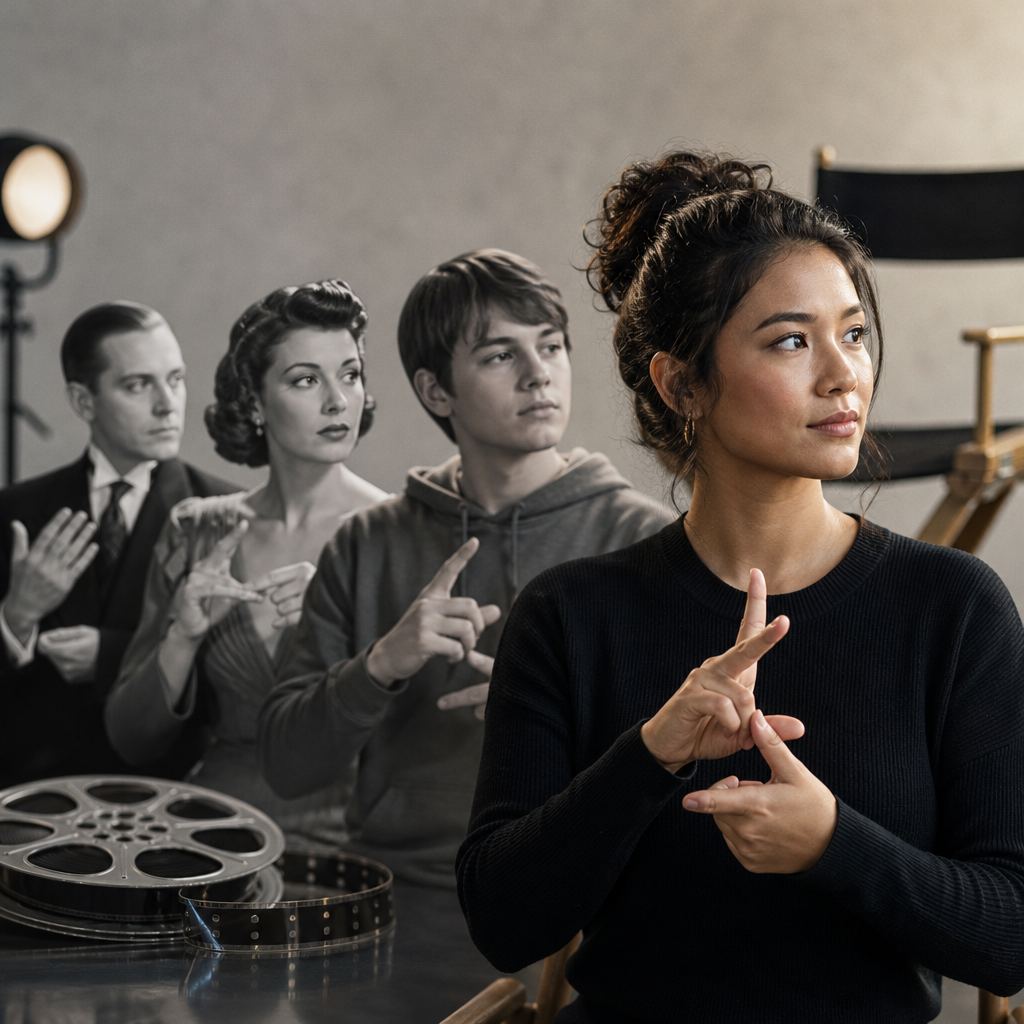
This misconception also drives stereotyped media plots. Deaf characters are too often written as symbols of silence, dependence, tragedy, or superhuman resilience. Those narratives sideline ordinary competence: parenting, arguing, flirting, working, teaching, and making choices. They also encourage hearing audiences to focus on whether a person can speak instead of whether the environment is accessible. Better representation shows communication as relational. If a Deaf employee misses a joke at a noisy team dinner, the problem is not that Deafness ruined social life. The problem is that the group chose a setting and format that excluded one member.
How better representation improves awareness and access
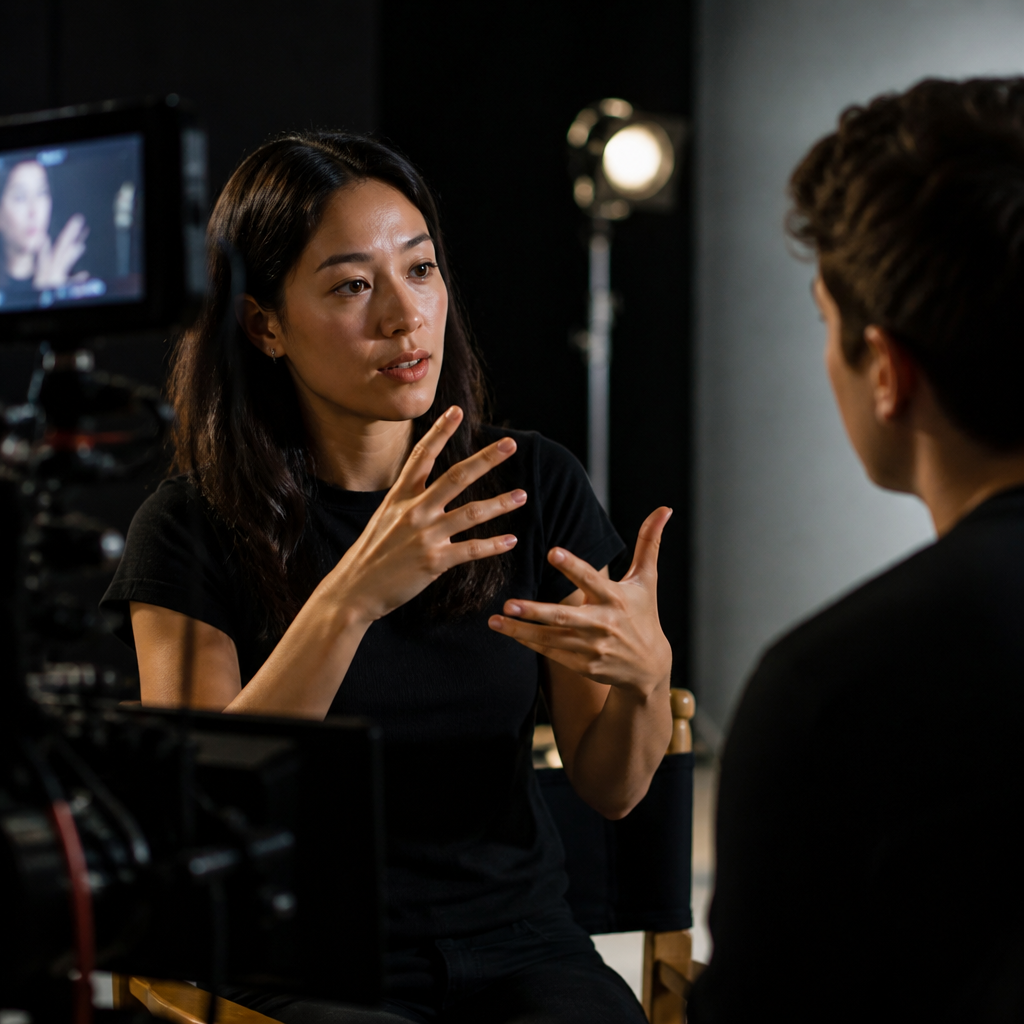
Accurate representation changes behavior when it moves beyond symbolism. In media, that means hiring Deaf actors for Deaf roles, using Deaf consultants in development, and treating signed dialogue as language rather than visual decoration. Productions that collaborate with native signers catch errors in fluency, pacing, camera framing, and cultural detail that hearing-led teams regularly miss. In public communication, better representation means featuring Deaf professionals, parents, artists, scientists, and advocates as sources with direct expertise. It also means captioning and signing content in ways that are readable, not merely performative.
For organizations building awareness, the strongest hub strategy is to connect stereotypes to real decisions. Link misconceptions about lip-reading to healthcare communication policies. Link myths about universal sign language to localization of public campaigns. Link assumptions about technology to procurement, event design, and digital accessibility standards such as WCAG guidance on captions and media alternatives. Link media stereotypes to employment bias and classroom expectations. This integrated approach helps readers see that representation is not a side issue. It shapes whether Deaf people are understood, believed, included, and accurately portrayed across society.
Common misconceptions about Deaf communication are not harmless misunderstandings. They influence how stories are told, which accommodations are offered, and whether Deaf people are treated as full language users with agency and expertise. The clearest themes are consistent: Deaf people do not all communicate the same way, sign language is not universal, lip-reading is limited, interpreters are skilled professionals, technology helps but does not solve everything, and communication is cultural as well as functional. When these facts are ignored, stereotypes fill the gap and access suffers.
As a hub for misrepresentation and stereotypes, this topic should guide readers toward a better standard: ask rather than assume, localize rather than generalize, and design access with Deaf people instead of for them. Better awareness leads to better media, stronger policy, and more respectful daily interactions. Review your organization’s content, events, and communication practices with these misconceptions in mind, then make one concrete improvement now: consult Deaf people directly before deciding what access looks like.
Frequently Asked Questions
Do all Deaf people use sign language, and is there just one universal sign language?
No. One of the most persistent misconceptions about Deaf communication is that all Deaf people communicate in the same way, or that there is a single universal sign language used around the world. In reality, Deaf people use a wide range of communication methods depending on personal preference, education, family background, community ties, age of language exposure, and access to services. Some Deaf people use a national sign language such as American Sign Language, British Sign Language, or Auslan. Others may use spoken language, cued speech, sign-supported systems, written communication, tactile signing, or a combination of methods.
It is also important to understand that sign languages are full natural languages with their own grammar, structure, idioms, and cultural context. They are not simply hand versions of spoken languages. American Sign Language, for example, is distinct from English, and British Sign Language is different from both. Assuming that all signing is the same can lead to poor interpretation services, inaccessible education, and frustrating interactions where hearing people think any signer will automatically understand any other signer.
A better approach is to ask what communication method a person prefers rather than making assumptions. That small shift respects Deaf people as individuals and helps avoid the flattening effect that often comes from stereotypes. It also reminds institutions, employers, schools, and media creators that accessibility is not one-size-fits-all. Effective communication starts with recognizing linguistic and cultural diversity within Deaf communities, not treating Deaf people as a single uniform group.
Can most Deaf people lip-read well enough to follow everyday conversation without support?
No, and this belief causes significant communication barriers. Lip-reading, sometimes called speechreading, is often portrayed in films and television as a near-magical skill that allows Deaf people to understand almost everything being said. In real life, lip-reading is difficult, tiring, and often incomplete. Many speech sounds look the same on the lips, facial hair can obscure visibility, lighting affects clarity, accents change mouth patterns, and people frequently turn away, cover their mouths, or speak too quickly. Even skilled lip-readers may only catch part of what is being said, then have to fill in the rest from context.
This matters because hearing people often rely on the lip-reading myth to avoid providing real access. They may refuse interpreters, neglect captions, skip written follow-up, or continue speaking from another room while assuming the Deaf person can keep up. The result is not convenience; it is exclusion. A Deaf person may miss key details in a medical appointment, workplace meeting, classroom discussion, or public announcement, even if they appear to be following along. Surface-level participation is not the same as full access.
The more accurate and respectful assumption is that lip-reading may help some people in some situations, but it is not a substitute for accessible communication. If you want to communicate effectively, face the person, speak clearly without exaggerating, reduce background noise where possible, and be ready to use the person’s preferred method, whether that means signing, writing, captioning, or bringing in a qualified interpreter. The point is not to test how much a Deaf person can decode; it is to make sure communication is genuinely shared.
Is deafness mainly a medical problem, or is there also a cultural and linguistic side to Deaf identity?
Reducing deafness to a medical condition is another major misconception. Hearing loss can certainly have medical dimensions, and many Deaf and hard of hearing people interact with healthcare systems, technology, and rehabilitation services. But that is only part of the picture. For many people, being Deaf is also a cultural and linguistic identity connected to shared language, community experience, social norms, history, and collective advocacy. Treating Deaf people only as patients to be fixed ignores the richness of Deaf culture and the legitimacy of sign languages as complete languages.
This misconception has practical consequences. When policymakers, educators, or service providers see deafness only through a deficit model, they often design systems around correction rather than access. They may prioritize speech over language, delay sign exposure for children, overlook Deaf-led expertise, or frame accommodations as charity instead of rights. In media, this same mindset shows up in stories that focus narrowly on tragedy, inspiration, or cure, rather than portraying Deaf people as whole individuals with varied lives, relationships, professions, and opinions.
A more accurate understanding makes room for both realities: some Deaf people engage strongly with Deaf culture, some do not, and many move across multiple worlds. There is no single Deaf experience. What matters is recognizing that communication access is not just about managing impairment. It is also about respecting language rights, cultural identity, and self-determination. When hearing people and institutions understand that, they tend to make better decisions about education, interpretation, representation, and inclusion.
Do hearing aids, cochlear implants, or other technology eliminate communication barriers for Deaf people?
No. Assistive technology can be helpful, life-changing, or central for some people, but it does not erase the need for access or guarantee effortless communication. Hearing aids amplify sound, but amplification is not the same as clarity. Cochlear implants can provide access to sound in ways that are meaningful for many users, but outcomes vary widely depending on age of implantation, hearing history, support, environment, and individual experience. Even with advanced technology, crowded rooms, poor acoustics, overlapping speakers, masks, distance, fatigue, and unfamiliar vocabulary can still make communication difficult.
The misconception becomes harmful when institutions use technology as an excuse to withdraw accommodations. A workplace may assume an employee with hearing aids no longer needs captioning. A school may presume a student with an implant does not need interpreting or note-taking support. A healthcare provider may avoid arranging communication access because they assume the device solves the issue. These assumptions place the burden back on the Deaf person and ignore the fact that access needs are situational, not theoretical.
Technology should be understood as a tool, not a universal cure and not a substitute for inclusion. The most effective approach is to ask what support works best in a given setting. That may include captions, interpreters, visual alerts, written summaries, one-speaker-at-a-time discussion, or seating arrangements that improve visibility. Respectful communication does not begin by deciding what should be enough for a Deaf person; it begins by listening to what actually enables full participation.
Is it appropriate to assume one Deaf person can speak for all Deaf people or that a little exposure to Deaf stories means you understand Deaf communication?
No, and this is one of the subtler misconceptions because it often presents itself as empathy. Hearing people may watch a few documentaries, know one Deaf person, take an introductory sign class, or work briefly on an accessibility project and then assume they broadly understand Deaf lives and communication. But Deaf communities are diverse across language use, race, class, disability, education, geography, religion, family structure, and personal identity. One person’s experience with school, technology, communication access, or Deaf culture cannot represent everyone else’s.
This assumption shapes media, policy, and everyday interaction in damaging ways. Journalists may repeat familiar tropes because they rely on limited sources. Organizations may create services based on the preferences of one individual rather than consulting widely. Hearing people may overestimate their signing ability or assume they know what is respectful without asking. In each case, the result is the same: Deaf people are talked about in broad categories while their actual needs and perspectives are overlooked. Stereotypes become easier to repeat because they are simpler than reality.
A more responsible approach is to treat Deaf communication as something that requires humility, not confidence based on minimal exposure. Ask questions. Consult Deaf people directly, especially those with lived experience relevant to the context. In professional settings, involve qualified Deaf advisors, interpreters, and accessibility specialists instead of relying on assumptions. In personal settings, stay flexible and curious. Understanding improves when hearing people stop looking for a single definitive Deaf narrative and start recognizing variation, expertise, and the importance of access designed with Deaf people rather than for them.