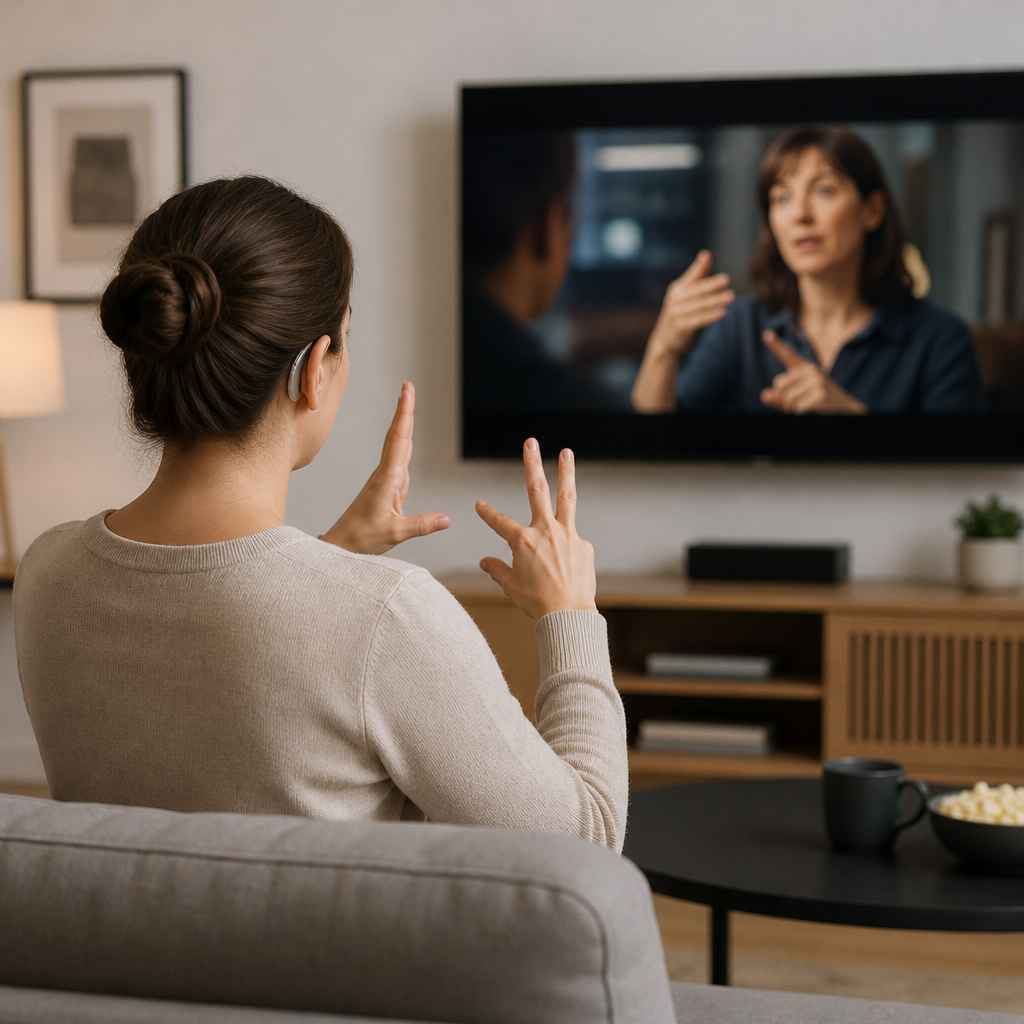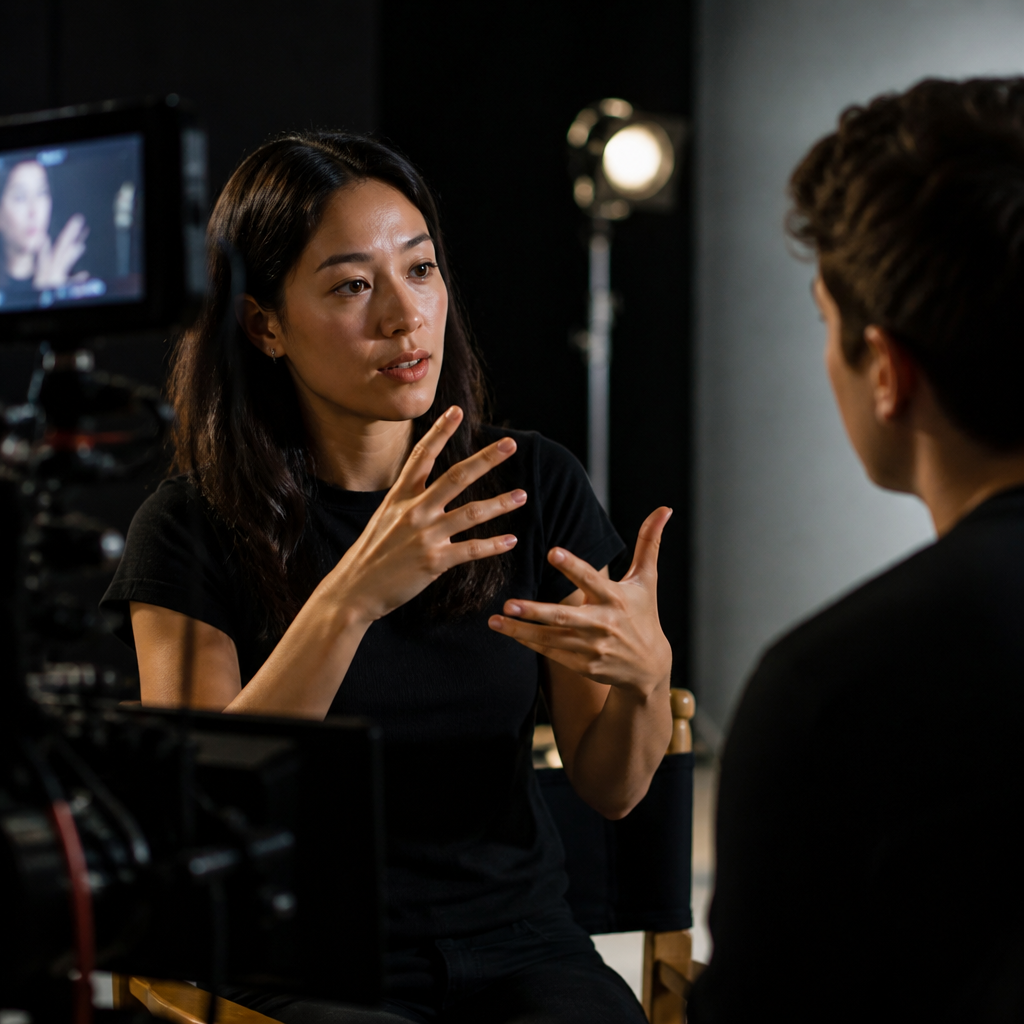
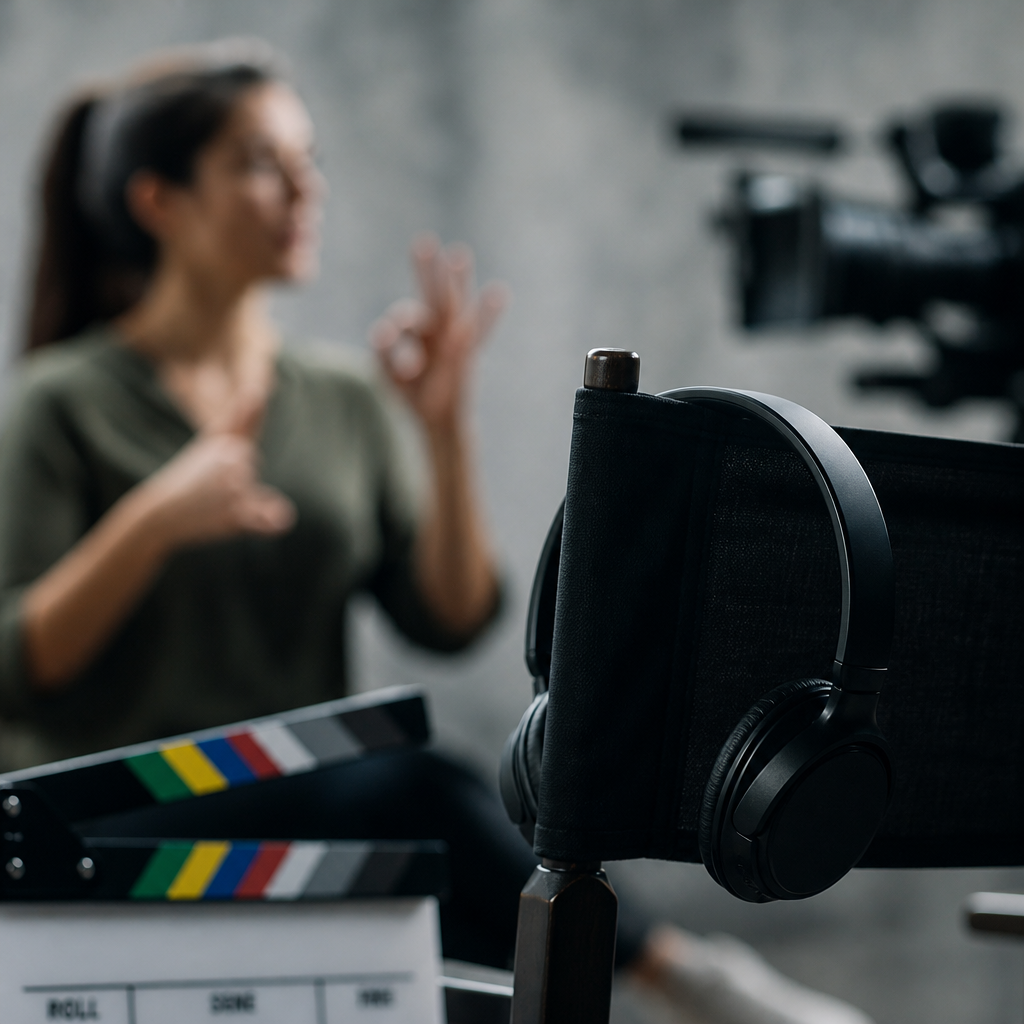
Hollywood has immense power to shape what hearing audiences believe about Deaf people, yet it repeatedly turns Deaf lives into symbols, plot devices, or inspirational lessons instead of portraying them as full human experiences. In media criticism, misrepresentation means recurring portrayals that flatten a group into inaccurate patterns, while stereotypes are the shorthand images that replace reality with familiar myths. When the subject is Deaf representation, those myths often include the tragic victim, the miracle cure patient, the isolated savant, the angry outsider, or the saintly teacher of resilience. I have worked with accessibility reviews and media analysis long enough to see the pattern clearly: when one inaccurate film becomes popular, ten later scripts borrow its shortcuts. That matters because screen stories influence casting, school expectations, workplace bias, healthcare interactions, and even family decisions about language and identity. A drama may look fictional, but its emotional framing often becomes social truth for viewers who have never met a Deaf adult.
Getting Deaf stories wrong is not just a matter of taste or political sensitivity. It affects whether audiences understand sign languages as complete natural languages, whether deafness is treated only as a deficit, and whether Deaf culture is seen as a living community rather than an individual medical problem. The distinction matters. lowercase deaf usually describes the audiological condition of not hearing, while uppercase Deaf often refers to cultural identity connected to sign language, shared norms, institutions, and history. Many people move across both meanings, and no single label fits everyone, but Hollywood usually ignores that nuance. Instead, scripts collapse a wide spectrum of identities into one emotionally convenient character arc. The result is storytelling that feels meaningful to hearing viewers while miseducating them about communication, family life, education, technology, and autonomy. This hub explains the most common forms of misrepresentation and stereotypes in Deaf media portrayals, why those patterns keep recurring, and what accurate representation looks like in practice.
The most common stereotypes in Deaf stories
The fastest way to understand Hollywood’s problem is to identify the stock roles Deaf characters are asked to play. The first is the pity narrative, where deafness is framed as an unbearable loss and every scene is designed to make hearing viewers feel sorrow. In these stories, silence is exaggerated, social life disappears, and the character’s inner world becomes defined almost entirely by deprivation. The second is the cure narrative, where a cochlear implant, surgery, speech breakthrough, or hearing device functions as the emotional climax. Real technology can be useful and life changing, but Hollywood often presents it as the restoration of normal humanity, which sends the message that Deaf existence is incomplete until corrected. The third is the inspirational narrative, where the Deaf character exists mainly to teach patience, gratitude, or perseverance to hearing characters. This is representation as moral decoration, not characterization.
Another common stereotype is the communication miracle. A Deaf character who has had little access to language somehow lip reads nearly everything, speaks with unrealistically polished diction, or understands conversations under impossible conditions such as darkness, distance, masks, or overlapping voices. Lip reading, more accurately called speechreading, is partial and context dependent. Even skilled speechreaders miss a great deal because many sounds look alike on the lips. When films ignore this, they create false expectations that follow Deaf people into courtrooms, classrooms, and hospitals. Then there is the isolated genius or damaged loner trope: the Deaf character is either unusually pure and perceptive or psychologically hardened by exclusion. Both erase ordinary complexity. Deaf people can be funny, petty, ambitious, bored, romantic, mediocre, brilliant, irresponsible, competent, and everything else people are. Hollywood often denies them that range because stereotypes are easier to script than actual lives.
Why these portrayals keep happening
Most bad Deaf representation begins long before casting. It starts at the script stage, where writers rely on secondhand assumptions instead of consulting Deaf readers, interpreters, educators, historians, or community advocates. If the room is dominated by hearing people, deafness is often imagined from the outside as silence plus struggle. That perspective naturally pushes stories toward loss, cure, or inspiration because those are the frames hearing culture already understands. Producers then reward what feels emotionally legible to broad audiences, especially if the story can be summarized in a sentimental trailer. In my experience reviewing scripts, a single note such as “raise the stakes by making her choose between the implant and her identity” can expose how narrow the creative lens is. The industry still treats Deaf identity as a dramatic issue to resolve rather than a social reality to depict accurately.
Another reason is structural. Hollywood routinely undervalues Deaf talent behind the camera. When Deaf writers, directors, consultants, dialect coaches for sign language, and editors are absent, small errors accumulate into major distortions. Signed conversations get cut too quickly, camera framing excludes the hands, captions are treated as optional, and characters use sign in grammatically implausible ways because no one with authority stopped the production. Even well meaning projects make these mistakes. Awards culture also plays a role. Performances that display visible hardship, intense effortful speech, or bodily struggle are often read as serious acting, while culturally grounded Deaf normalcy is seen as less dramatic. That bias nudges filmmakers toward stories where deafness is performed as suffering. Add the industry habit of casting hearing actors in Deaf roles, and authenticity declines further. A hearing actor can memorize signs, but they often cannot reproduce the rhythm, gaze behavior, timing, or embodied fluency that native or experienced signers bring naturally.
What Hollywood usually gets wrong in communication
Communication is where many films fail most obviously. Sign languages are not manual versions of spoken English. American Sign Language, British Sign Language, and other national sign languages have their own grammar, word order, discourse markers, and spatial structures. Yet scripts often treat signing as direct translation, creating dialogue that sounds like spoken English with hands attached. That error matters because language structure carries culture, humor, intimacy, and status. I have seen scenes praised as moving that were immediately identifiable to Deaf viewers as linguistically unnatural. Camera choices compound the problem. If the shot cuts away during a signed sentence, blocks the signer’s hands, or prioritizes reaction shots over the actual language, the film is effectively telling audiences that Deaf communication is secondary. In reality, the signing is the scene, not an accessory to it.
Films also misunderstand access. A family dinner with multiple people talking at once, a police stop at night, a classroom lecture delivered while writing on a board, or a hospital consultation through masks are all communication environments with known barriers. Accurate stories show strategies: visual attention cues, seating choices, interpreters, captioning, note apps, turn taking, clear lighting, and direct address. Inaccurate stories skip these details and then blame misunderstanding on the Deaf character’s limitations. The same distortion appears with technology. Hearing aids and cochlear implants do not create perfect hearing, and outcomes vary by age of access, audiological profile, auditory training, environment, and personal preference. Captions are not a luxury; they are a baseline access tool, though quality matters because auto captions can introduce dangerous errors. When films flatten these realities, they teach audiences to underestimate the work Deaf people do and overestimate how easy accommodation should be.
Patterns of misrepresentation and better alternatives
| Pattern | How it appears on screen | Why it is misleading | Better alternative |
|---|---|---|---|
| Pity framing | Music, dialogue, and reactions present deafness as tragedy | Centers hearing grief, not Deaf experience | Show ordinary routines, competence, and varied emotions |
| Cure climax | Device or surgery resolves identity and conflict | Implies Deaf life is broken until fixed | Show technology as one tool with tradeoffs and choice |
| Miracle lip reading | Character understands nearly every spoken line | Creates impossible expectations in real life | Depict partial access and practical communication strategies |
| Token signer | One Deaf role stands in for an entire community | Erases diversity of race, class, language, and opinion | Include multiple Deaf characters with distinct viewpoints |
| Hearing savior | Hearing teacher or relative unlocks Deaf person’s world | Strips Deaf agency and community knowledge | Let Deaf characters lead decisions and teach each other |
These patterns persist because they are efficient shortcuts, but they are not harmless. Pity framing teaches viewers to approach Deaf people with sympathy before respect. Cure climaxes imply that choosing sign language, Deaf schools, or Deaf community ties is evidence of denial rather than a legitimate cultural preference. Miracle lip reading encourages institutions to skip interpreters because they assume understanding is close enough. Token representation turns one character into a burdened ambassador who must be admirable at all times. Hearing savior plots are especially corrosive because they tell audiences that Deaf people become legible only when translated, reformed, or emotionally validated by hearing authority. Better stories do not avoid struggle; they place struggle where it belongs, in inaccessible systems, family miscommunication, policy failures, and social prejudice.
Who gets erased inside Deaf representation
One of the biggest problems with mainstream portrayals is that they narrow Deaf identity to a single profile, usually white, young, conventionally attractive, and connected to a hearing family whose emotional journey dominates the script. That leaves little room for Deaf people of color, DeafBlind people, late deafened adults, elders, immigrants, queer and trans Deaf communities, or people who use different combinations of sign, speech, captioning, and technology. It also sidelines class. Access is shaped by money, geography, and institutions. A child in a major city may have a bilingual program, Deaf mentors, and pediatric audiology support, while another child may have none of those. Those differences affect language development, education, and identity formation. When films ignore them, they replace social reality with generic adversity.
Education is another area of erasure. The long history of oralism, mainstreaming, residential Deaf schools, language deprivation, and disability law has shaped countless lives, yet most films barely touch it. That omission is serious because early language access is foundational. Research and clinical guidance have repeatedly shown that children need accessible language from the start; delayed access can harm cognitive, academic, and social development. A truthful Deaf story therefore cannot treat language as a decorative trait added in adolescence or after a dramatic epiphany. It should ask practical questions: who signed with the child, who resisted signing, what school model was used, what services were available, and how did those choices shape identity? Those details may sound specific, but they are exactly what make representation credible. Without them, the character becomes a symbol detached from how Deaf lives are actually built.
What accurate Deaf storytelling looks like
Accurate storytelling starts with Deaf people having real authority, not ceremonial consultation. That means Deaf writers in the room, Deaf actors in Deaf roles, Deaf crew advising sign language continuity, and enough production time to stage visual language correctly. It also means understanding that authenticity is visible on screen. Native or fluent signers use space, eye gaze, facial grammar, classifier constructions, and timing in ways that cannot be faked convincingly under pressure. Beyond language, better stories give Deaf characters goals unrelated to deafness. A lawyer fighting a case, a teenager hiding a bad grade, a chef opening a restaurant, or a parent negotiating custody can all be Deaf without the plot collapsing into diagnosis. Deafness should shape experience, but it should not be the only engine of personhood.
Accurate stories also show friction honestly. Access can fail. Families can disagree about implants, schooling, or signing. Interpreters can be excellent or inadequate. Captions can help while still missing tone. A Deaf person can love technology and still value Deaf culture. Another can speak well and still prefer signing. Nuance is the point. The best representation does not replace one rigid template with another “correct” script. It broadens the range until Deaf characters can be complicated, flawed, ordinary, and specific. For editors, critics, and viewers, the practical test is simple: does the story treat Deaf characters as authorities on their own lives, and does it depict communication, culture, and access with enough precision that a Deaf audience would recognize truth instead of approximation? If not, the film is probably recycling old errors.
Hollywood gets Deaf stories wrong when it mistakes hearing assumptions for universal truth, and that mistake shows up in stereotypes, distorted communication, erased diversity, and plots that value hearing comfort over Deaf reality. The core problems are consistent: pity instead of respect, cure instead of choice, symbolism instead of character, and access errors treated as personal tragedy. Better representation is not mysterious. It requires Deaf leadership, accurate language use, informed production practices, and stories that locate conflict in the world as it is rather than in the mere fact of being Deaf. When filmmakers make those changes, audiences get richer drama and a truer understanding of human experience.
As the hub for misrepresentation and stereotypes within media, representation, and awareness, this topic should guide how you evaluate every related film, series, review, or classroom discussion. Ask who created the story, who had authority on set, what assumptions the plot makes about language and technology, and whether Deaf characters possess agency beyond educating hearing people. Those questions reveal almost everything. Use them the next time you watch a supposedly inclusive production, and you will quickly see whether it expands public understanding or repeats the same old myths.
Frequently Asked Questions
Why do so many Hollywood portrayals of Deaf people feel inaccurate or incomplete?
Many Hollywood portrayals feel inaccurate because they are built around hearing assumptions rather than Deaf lived experience. Instead of treating Deaf characters as fully developed people with culture, language, humor, conflict, relationships, and agency, films and television often reduce them to a function within a hearing-centered story. A Deaf character may exist to inspire a hearing protagonist, symbolize isolation, create emotional tension, or serve as a lesson about perseverance. That approach flattens real lives into narrative devices.
Another major problem is that misrepresentation is rarely just one bad scene. It usually comes from repeated patterns. When audiences repeatedly see Deaf characters portrayed as tragic, broken, magical, childlike, unusually dependent, or defined entirely by communication barriers, those patterns begin to substitute for reality. Viewers who have little or no direct contact with Deaf people may assume these images are accurate simply because they are familiar. That is how stereotypes work: they replace complexity with shorthand.
Inaccurate portrayals also happen when productions fail to include Deaf writers, consultants, actors, coaches, and creatives early enough in the process. If Deaf expertise is brought in late, or only used to “check” signs after the story is already built, the deeper assumptions often remain untouched. The result may look respectful on the surface while still reinforcing hearing misconceptions underneath. Authentic representation is not just about whether sign language appears on screen. It is about whether Deaf people are presented as complete human beings whose lives are not defined solely by hearing loss.
What are the most common stereotypes Hollywood uses in Deaf stories?
Some of the most persistent stereotypes are the tragic Deaf person, the inspirational overcomer, the helpless dependent, and the “silent” figure whose purpose is to symbolize loneliness or emotional distance. These portrayals are familiar because they are dramatically convenient, but they are deeply misleading. They frame Deafness as a problem to be fixed, endured, or transcended rather than as part of a rich human identity that can include community, language, pride, and ordinary everyday life.
Another common stereotype is the idea that Deaf people are cut off from the world until a hearing person “reaches” them. This often shows up in plots where the emotional center belongs to a hearing parent, teacher, partner, or rescuer, while the Deaf character becomes the object of discovery. In those stories, Deaf people are not allowed full interiority. Their experiences are interpreted for the audience through hearing feelings, hearing conflict, and hearing growth. That keeps Deaf characters on the margins of their own narratives.
Hollywood also frequently confuses Deafness with silence, passivity, or lack of intelligence. Characters may be portrayed as unusually naive, socially isolated, or unable to participate meaningfully in complex conversations, even though real Deaf communities communicate in rich and dynamic ways. In some cases, signing is treated like a visual prop rather than a language with grammar, rhythm, and cultural context. These stereotypes matter because they teach audiences to see Deaf people through distortion rather than reality, and those assumptions can shape attitudes far beyond the screen.
Why is it a problem when Deaf characters are used mainly as inspirational lessons for hearing audiences?
It becomes a problem when inspiration replaces personhood. A Deaf character who exists mainly to teach hearing audiences about gratitude, resilience, patience, or empathy is not being represented as a whole individual. They are being turned into a moral tool. This kind of storytelling may appear positive because it avoids openly hostile portrayals, but it still centers hearing emotional needs over Deaf reality. The audience is encouraged to feel moved by the character rather than understand the character.
These “inspirational” narratives often strip away the everyday complexity that makes people real. Real Deaf lives include joy, boredom, ambition, anger, friendship, work, romance, conflict, humor, and cultural belonging. When a story narrows all of that into a simple message like “look how bravely this person overcomes adversity,” it reinforces the idea that Deaf existence is exceptional mainly because it is difficult. That framework keeps hearing audiences in a position of observer and judge rather than encouraging them to recognize Deaf people as peers.
There is also a practical consequence to this pattern. Inspirational framing can make structural barriers disappear. Instead of examining inaccessible schools, poor captioning, limited interpreting access, employment discrimination, or the erasure of sign languages, the story personalizes everything into individual courage. That shifts attention away from the systems that create exclusion in the first place. A more honest and respectful portrayal would allow Deaf characters to be flawed, funny, ordinary, complicated, and self-directed—not just uplifting symbols for someone else’s emotional journey.
How does authentic Deaf representation improve storytelling?
Authentic Deaf representation improves storytelling because it adds specificity, credibility, and emotional truth. Stories become stronger when characters feel like real people shaped by real communities instead of generic symbols. A Deaf character written with care will have a point of view, preferences, contradictions, relationships, and a way of moving through the world that is not interchangeable with anyone else’s. That kind of depth does not limit storytelling; it expands it.
Authenticity also creates better dramatic possibilities. When filmmakers understand Deaf culture and signed languages as living systems rather than as obstacles, they can tell richer stories about family dynamics, identity, communication, belonging, and power. Tension does not have to come only from “can this Deaf person survive in a hearing world?” It can come from generational differences, conflicting values, romantic misunderstandings, professional ambition, or the politics of access. In other words, Deaf characters can participate in the full range of human storytelling rather than being trapped in a narrow set of issue-driven plots.
Just as importantly, authentic representation builds trust with audiences. Deaf viewers can recognize when a story understands their experience and when it only imitates it from the outside. Hearing viewers benefit too, because they are exposed to a more accurate and nuanced perspective. In the long run, better representation raises the quality of the work itself. It moves a film or series beyond cliché and toward something more memorable, more responsible, and more human.
What should Hollywood do differently to portray Deaf stories more responsibly?
Hollywood needs to begin by shifting who has creative authority. Responsible representation is not only about casting a Deaf actor in a Deaf role, although that matters greatly. It also means involving Deaf writers, directors, producers, consultants, dialect and sign coaches, editors, and other creatives from the earliest stages of development. When Deaf people help shape the premise, character arcs, dialogue, visual language, and cultural context, the story is far less likely to fall back on old hearing-centered myths.
Studios and creators should also move beyond the idea that every Deaf story must revolve around suffering, cure, or inspiration. Deaf characters deserve genres and narratives as broad as anyone else’s: comedy, romance, thriller, workplace drama, family story, historical epic, coming-of-age tale, and more. They should be allowed to be central without being reduced to examples. Their Deafness may be important, but it should not be treated as the only meaningful fact about them.
Finally, Hollywood should treat accessibility and cultural accuracy as part of craft, not as optional add-ons. That includes thoughtful use of captions, realistic communication dynamics, respect for signed languages, and attention to the diversity within Deaf communities themselves. Deaf people are not a monolith; experiences vary across race, class, gender, nationality, education, and family background. The most responsible portrayals understand that complexity. When Hollywood commits to that level of care, it not only avoids harmful stereotypes but also creates better, more original, and more lasting stories.