
Common misconceptions about Deaf culture often begin with one false assumption: that deafness is only a medical condition. In practice, Deaf culture is a living social world shaped by language, shared history, values, humor, art, and community norms. When I have worked on accessibility and inclusion projects, this distinction has always mattered, because teams that treat Deaf people only as patients miss what Deaf communities themselves consistently emphasize: identity, not deficiency, is central. Understanding what Deaf culture is helps families, educators, employers, healthcare providers, and policymakers make better decisions, communicate more respectfully, and avoid common mistakes that cause exclusion.
Deaf culture refers to the customs, values, communication practices, and collective experiences of people who identify with Deaf communities, especially those connected through signed languages such as American Sign Language, British Sign Language, or Langue des Signes Française. The term Deaf, often capitalized, usually signals cultural identity rather than audiological status alone. By contrast, deaf with a lowercase d may refer simply to hearing level. Not every deaf or hard of hearing person identifies as culturally Deaf, and that nuance is important. Identity can be influenced by family background, education, language access, country, technology use, and community ties.
This topic matters because misconceptions shape real outcomes. They affect whether a child gets early language access, whether a workplace provides direct communication instead of awkward workarounds, and whether public institutions understand that accessibility means more than handing someone a printed note. It also matters because Deaf culture is often discussed by outsiders in incomplete ways. A useful hub article must answer foundational questions clearly: What is Deaf culture? Is there one Deaf culture or many? Are all Deaf people the same? How do sign languages, schools, history, and technology influence identity? Clearing up these questions creates a stronger base for deeper reading across Deaf culture and identity topics.
Deaf culture is not defined by hearing loss alone
The most persistent misconception is that Deaf culture is simply a side effect of not hearing. It is not. Deaf culture exists because people build communities around shared language and lived experience. Signed languages are full natural languages with grammar, regional variation, idioms, and storytelling traditions. In the United States, ASL is not signed English. It has its own syntax, use of space, nonmanual markers, and discourse patterns. Similar distinctions exist elsewhere. Assuming all sign systems are universal or simplified versions of spoken language is inaccurate and leads to poor education and weak interpreting standards.
Cultural belonging usually grows through participation. Deaf schools, community organizations, sports leagues, theater groups, advocacy networks, online spaces, and intergenerational relationships all help transmit norms and values. In many communities, direct communication is valued, visual attention is structured deliberately, and shared knowledge includes practical strategies for navigating a hearing-majority world. These are cultural practices, not symptoms. A person can be profoundly deaf and have little connection to Deaf culture, while another person with residual hearing may be deeply involved in Deaf community life. The deciding factor is not an audiogram alone but language, identification, and social participation.
There is also no single global Deaf culture. There are overlapping Deaf cultures shaped by national sign languages, race, ethnicity, class, education, religion, and local history. Deaf Black communities in the United States, for example, developed distinct signing traditions influenced by segregated schooling. Rural signing communities, urban associations, and international Deaf spaces can all operate differently. Treating Deaf culture as monolithic erases real diversity. The better approach is to understand Deaf culture as a broad cultural category with local forms, shared patterns, and important internal variation.
Deafness is not inherently a tragedy
Another common misconception is that Deaf people primarily experience life through loss. That view reflects a medical lens, which focuses on diagnosis, intervention, and rehabilitation. Medical care has a place, especially when people want hearing technology or related support, but it does not define the full human experience of being Deaf. Many Deaf adults describe their lives not as tragic but as rich, complete, and connected. The main barriers they report are often social: inaccessible classrooms, poor interpreting, caption failures, hiring bias, and low expectations from hearing institutions.
This distinction appears clearly in education research. Children need early exposure to a fully accessible language for healthy cognitive and social development. For Deaf children, delayed language access can be more harmful than the hearing level itself. That is why many experts in deaf education and language development stress the importance of early sign language access, whether or not a family also pursues speech therapy, cochlear implantation, or hearing aids. The central issue is not choosing identity over opportunity. It is ensuring that a child can acquire language reliably during critical developmental years.
Framing deafness only as something to be fixed can unintentionally justify exclusion. I have seen organizations celebrate assistive devices while neglecting caption accuracy, interpreter quality, or meeting design. Technology can help many people, but accessibility still requires systemic change. A hearing aid does not make a noisy conference room accessible. A cochlear implant does not eliminate the need for visual communication in every context. Deaf culture developed partly because Deaf people created environments where communication is natural rather than compensatory, and that is a powerful corrective to deficit-based thinking.
Sign language is central, but identity is more complex than language alone
People often hear that sign language is at the heart of Deaf culture and assume that language alone decides membership. Language is foundational, but identity is more layered. Some culturally Deaf people are native signers from Deaf families. Others discover sign language later after mainstream schooling or after years of isolation. Some hard of hearing people move between spoken and signed spaces fluidly. Some Deaf people use cochlear implants and still identify strongly with Deaf community life. Others prefer spoken communication and may not engage much with Deaf organizations. These realities do not weaken Deaf culture; they show how identity works in real communities.
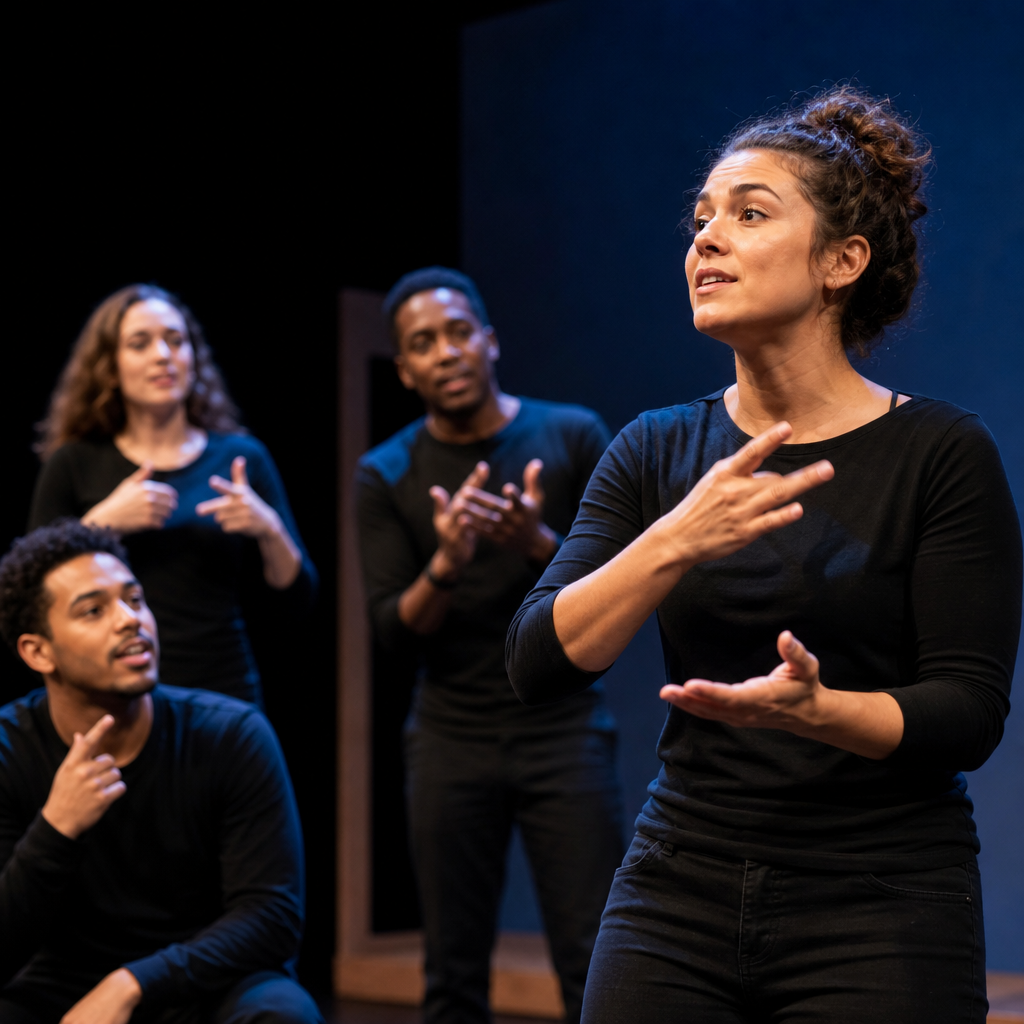
Still, sign language deserves special emphasis because it carries history, humor, and social norms in ways translation often misses. Skilled signers convey tone through facial expression, body shift, timing, and spatial structure. Storytelling traditions in Deaf communities are highly visual, often using role shift, classifiers, and vivid depiction. Deaf art, poetry, and performance frequently rely on visual rhythm and bilingual wordplay between signed and written languages. If someone asks what is Deaf culture in practical terms, one direct answer is this: it is the culture that grows where signed language is used as a primary means of belonging and expression.
Families and schools sometimes worry that signing will prevent spoken language development. Evidence does not support the claim that sign exposure harms communication outcomes. In fact, accessible early language tends to strengthen development by reducing deprivation and supporting cognition, attachment, and learning. Bilingual approaches can be demanding because they require trained professionals and consistent support, but the core principle is simple: children do better when they can fully access language. That is one reason many Deaf adults advocate so strongly for sign language rights and qualified teachers of the deaf.
Technology does not replace culture or access
Modern hearing technology has transformed many lives, yet another misconception is that devices make Deaf culture obsolete. Hearing aids, cochlear implants, remote microphones, captioning apps, and video relay services are tools, not replacements for community. Their effectiveness depends on context, training, cost, maintenance, and individual preference. A cochlear implant may improve access to sound, but outcomes vary widely based on age of implantation, auditory environment, therapy access, and additional disabilities. Even highly successful users still encounter situations where speech is hard to follow, especially in noise, group conversation, or fast-moving public settings.
The idea that technology eliminates the need for sign language is especially misleading. In real-world settings, many Deaf and hard of hearing people use multimodal communication: signing, speech, texting, captioning, interpreters, visual alerts, and written follow-up. Effective accessibility is rarely one-size-fits-all. The strongest organizations ask the person directly what works best, then plan accordingly. That practical mindset matters more than assumptions based on a device. In my experience, inclusion improves fastest when teams stop treating technology as a complete solution and start treating communication as a design responsibility.
| Misconception | More accurate understanding | Real-world implication |
|---|---|---|
| All Deaf people lip-read well | Speechreading is difficult, incomplete, and highly context-dependent | Meetings need captions, interpreters, and clear turn-taking |
| Cochlear implants restore normal hearing | They provide access to sound, but outcomes vary and listening effort can remain high | Schools and employers must still provide accommodations |
| Sign language is universal | Sign languages differ by country and region, with distinct grammar | Qualified language-specific interpreters are essential |
| Writing notes is always enough | Written communication may be slow, limited, or unsuitable for complex discussions | Healthcare, legal, and educational settings need robust access plans |
The broader lesson is that assistive tools and cultural identity are not opposites. Many Deaf people use technology pragmatically while remaining committed to Deaf values, signed language, and community. The mistake is assuming that better equipment automatically removes barriers created by institutions. It does not.
Deaf culture includes norms, values, and history that outsiders often miss
If people know only one fact about Deaf culture, it is often that Deaf people use sign language. That is true but incomplete. Every culture also includes rules for attention, politeness, information sharing, humor, and social trust. In Deaf spaces, visual access is a basic social expectation. People wave, tap a shoulder lightly, flick lights, or use sightlines strategically to get attention. Side conversations are managed differently because visual focus is shared. Long greetings and detailed goodbyes are common in many Deaf gatherings because relationship maintenance is part of community life.
Directness is another important norm. Many hearing people misread Deaf communication as blunt when it is simply efficient and transparent. In signed conversation, clarity often matters more than softening language with indirect phrasing. That does not mean Deaf communities lack courtesy; it means courtesy may be expressed through attention, inclusion, and specificity rather than through the verbal hedging common in hearing settings. Misreading these norms can create unnecessary friction at work or school.
History also matters. Deaf culture has been shaped by battles over education, language suppression, civil rights, and self-determination. A landmark example is the 1988 Deaf President Now movement at Gallaudet University, where students demanded Deaf leadership and exposed paternalism in Deaf institutions. Earlier history includes the long shadow of oralism, especially after the 1880 Milan Conference, where educators endorsed speech-focused methods and marginalized sign language in many schools. Those decisions affected generations. Knowing this history explains why language rights, interpreter quality, and Deaf-led leadership remain central concerns today.
Respect starts with communication choices and community leadership
One more misconception is that inclusion means deciding for Deaf people what support they should receive. Respect begins by asking, not assuming. Some people want an ASL interpreter. Others prefer real-time captioning, a signed meeting with no voice, or written summaries after discussion. In healthcare and legal settings, using qualified professionals is critical. Family members should not be used as interpreters for informed consent, diagnosis, or confidential matters except in true emergencies. Accuracy, privacy, and autonomy depend on it.
For organizations building better practice, the hub idea is simple: understand Deaf culture before designing policy. Train staff on visual communication basics. Book interpreters early. Use accurate captions, not only automated drafts. Share agendas in advance. Face the room while speaking. Reduce backlighting. Build emergency alerts that are visual as well as audible. Most importantly, include Deaf professionals in leadership, planning, and evaluation. Nothing improves cultural competence faster than shifting from service delivery to shared decision-making.
Common misconceptions about Deaf culture disappear when people replace stereotypes with direct knowledge. Deaf culture is not a medical footnote, a rejection of technology, or a single uniform identity. It is a complex network of languages, histories, values, and communities built around visual communication and shared experience. Understanding what Deaf culture is helps parents support language access early, helps schools choose stronger educational models, and helps employers and institutions design communication that actually works.
The key takeaway is practical as well as cultural: Deaf people are experts in their own access needs, and Deaf communities have developed proven ways of creating connection, clarity, and belonging. When you recognize the difference between hearing status and cultural identity, many persistent myths fall away. Use this article as your starting point for the broader Deaf Culture & Identity topic, then continue with deeper resources on sign language, Deaf history, education, accessibility, and community life. Better understanding begins with listening visually and learning directly from Deaf voices.
Frequently Asked Questions
1. Is deafness only a medical condition, or is there more to Deaf culture than hearing loss?
One of the most common misconceptions is that deafness should be understood only through a medical lens. While hearing loss can absolutely be discussed in clinical terms, Deaf culture is not defined solely by audiograms, diagnoses, or treatments. It is a cultural and social experience built around shared language, community, history, traditions, values, and identity. Many Deaf people do not see themselves as “broken” or in need of fixing. Instead, they see themselves as members of a cultural and linguistic minority with their own ways of communicating, connecting, and participating in the world.
This distinction matters because a purely medical view often frames deafness as a problem to solve. Deaf culture, by contrast, centers belonging and lived experience. It includes rich visual languages such as American Sign Language and other national sign languages, longstanding community institutions, storytelling traditions, humor, art, and collective advocacy. When people overlook this cultural dimension, they tend to assume Deaf people are defined by limitation. In reality, many Deaf individuals are defined far more by community, language, and identity than by the absence of hearing.
2. Are all deaf people the same, or is the Deaf community diverse?
The Deaf community is highly diverse, and it is inaccurate to treat all deaf people as a single, uniform group. People who are Deaf or hard of hearing vary widely in communication style, educational background, family experience, ethnicity, race, nationality, religion, age, technology use, and cultural identification. Some people are born deaf, while others become deaf later in life. Some use sign language as a primary language, while others rely more on spoken language, lip-reading, written communication, or a combination of methods.
There is also an important difference between “deaf” and “Deaf” in many contexts. Lowercase “deaf” is often used to describe the audiological condition of not hearing, while uppercase “Deaf” can refer to people who identify with Deaf culture and community. Not every deaf person identifies as culturally Deaf, and not every hard of hearing person has the same relationship to Deaf spaces. Understanding this diversity helps avoid oversimplified assumptions and leads to more respectful, accurate conversations. The best approach is to recognize individual preference and ask rather than presume.
3. Do all Deaf people read lips, speak the same way, or communicate in one universal sign language?
No, and this is one of the most persistent myths. Lip-reading, for example, is far less complete and reliable than many hearing people assume. Only part of spoken language is visible on the lips, and many sounds look identical when spoken. Even highly skilled lip-readers can miss significant portions of a conversation, especially in group settings, poor lighting, or fast-paced discussions. Assuming that a Deaf person can “just read lips” often places an unfair burden on them and ignores the effort involved.
It is also incorrect to assume there is one universal sign language. Sign languages are full, complex natural languages, and they differ from country to country and region to region. American Sign Language is not the same as British Sign Language, and neither is the same as other sign languages used around the world. In addition, communication preferences vary by person. Some Deaf people sign, some speak, some do both, and some use interpreters, captioning, text-based tools, or assistive technologies. Effective communication starts with asking what works best for the individual rather than relying on stereotypes.
4. Is Deaf culture separate from mainstream society, or does it have its own values and community norms?
Deaf culture is very much part of society, but it also has its own established norms, values, and social practices. Like any cultural community, it has shared expectations about communication, politeness, attention-getting, storytelling, humor, and collective support. For example, in many Deaf spaces, direct visual communication is valued, as is making sure everyone has access to the conversation. Practices that may seem unusual to hearing people—such as tapping someone on the shoulder, waving to get attention, or adjusting seating for sightlines—are often standard and respectful within Deaf environments.
Community also plays an especially important role. Because access barriers are common in hearing-centered environments, Deaf networks, schools, events, organizations, and social spaces have historically been vital places for connection and mutual understanding. Deaf culture includes pride, resilience, creativity, and a strong appreciation for visual expression. Recognizing these norms does not mean treating Deaf people as separate from the broader world; it means understanding that they participate in society while also maintaining a distinct cultural identity that deserves respect, visibility, and inclusion.
5. Does supporting Deaf people mean trying to make them more like hearing people?
Not necessarily. A major misconception is that inclusion means helping Deaf people adapt to hearing norms as much as possible. In practice, real inclusion is about access, respect, and equity—not forcing assimilation. That can mean providing qualified sign language interpreters, accurate captioning, visual alerts, clear written communication, and meeting formats designed with accessibility in mind. It also means understanding that the goal is not always to minimize Deaf difference, but to remove barriers so Deaf people can participate fully on their own terms.
This mindset shift is essential in schools, workplaces, healthcare settings, public services, and community life. When institutions treat Deaf people only as patients or problems to be accommodated after the fact, they often miss the larger issue: Deaf people are experts in their own experiences and should be included in decisions that affect them. Respectful support begins with listening to Deaf voices, valuing Deaf culture, and recognizing that identity is not the same as deficiency. The most effective and inclusive environments do not ask Deaf people to become more hearing; they create conditions where Deaf people can communicate, contribute, and belong without compromise.