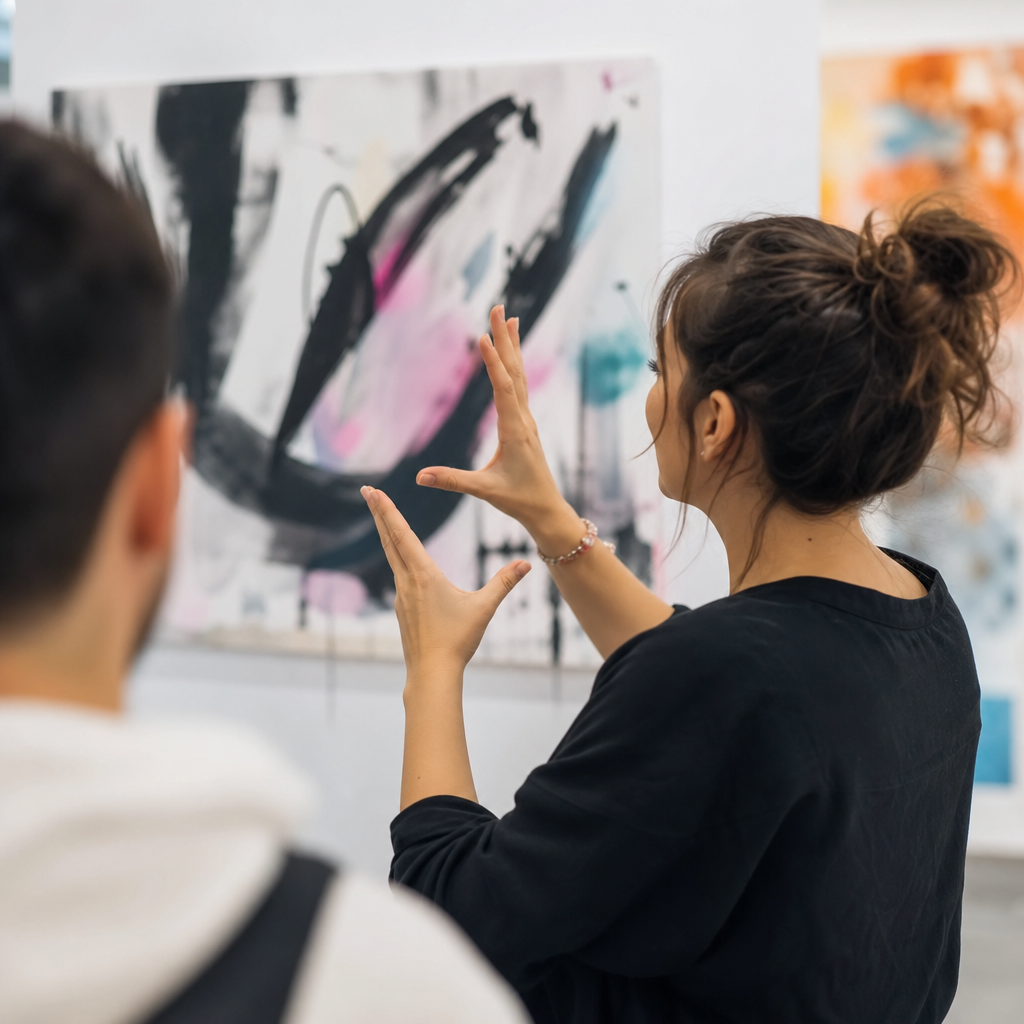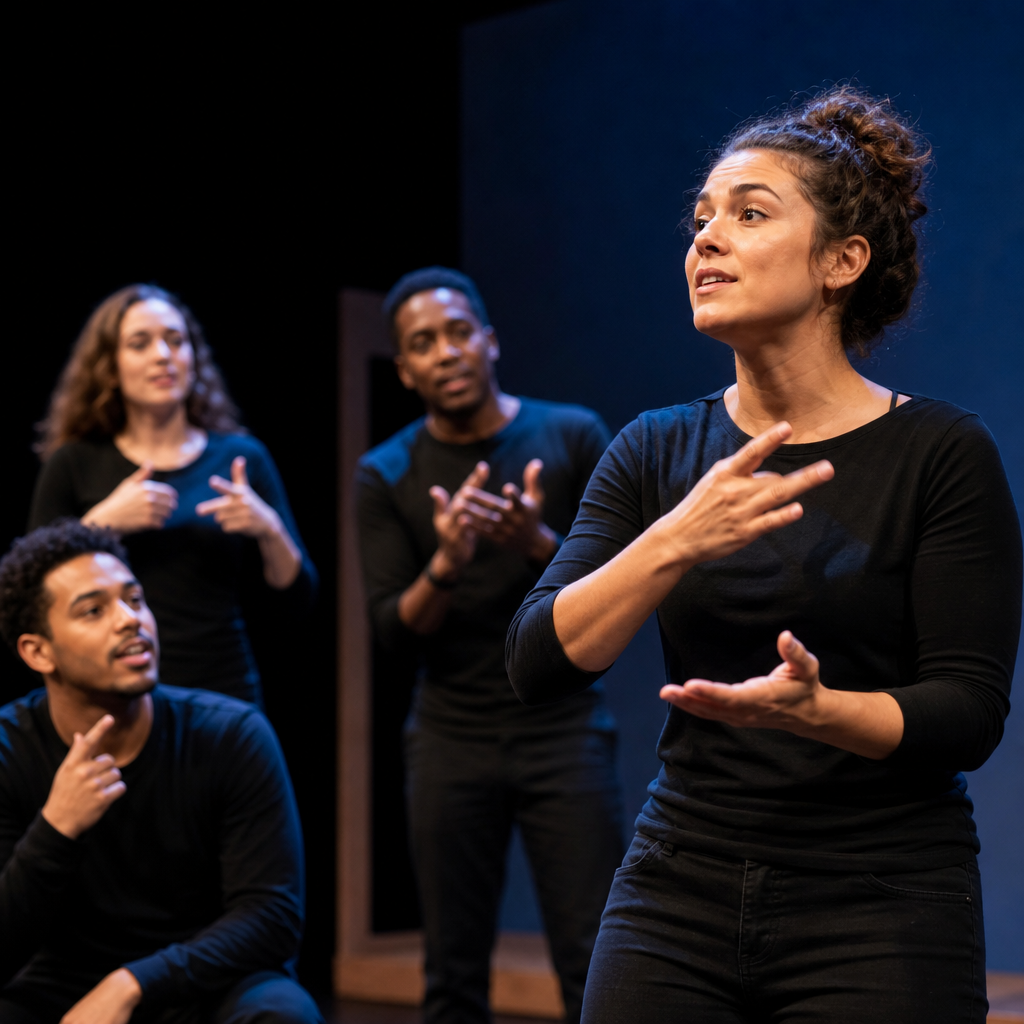

Deaf culture differs from hearing culture in language, social norms, identity, and the way community is built around shared visual communication. At its core, Deaf culture refers to the traditions, values, history, art, and social practices of people who identify with Deaf communities, especially those centered on signed languages such as American Sign Language, British Sign Language, or Langue des Signes Française. Hearing culture, by contrast, is organized mainly around spoken language, sound-based cues, and assumptions that hearing is the default way people connect, learn, and participate. Understanding that difference matters because many public conversations still treat deafness only as a medical condition, when in practice it can also be a cultural and linguistic identity with its own norms, institutions, and sources of pride.
In my work explaining accessibility and language access, I have seen the same confusion appear repeatedly: people ask whether Deaf culture is simply about not hearing. It is not. A person can be deaf audiologically without identifying as culturally Deaf, and someone may be born into a hearing family yet become deeply rooted in Deaf community life through sign language, Deaf schools, clubs, sports, advocacy, and friendships. The capitalized term Deaf usually signals cultural affiliation, while lowercase deaf often refers to hearing status. That distinction is useful, though not every person uses labels the same way. Identity is shaped by family background, communication choices, education, local community, and experiences with inclusion or exclusion.
For readers asking, “What is Deaf culture?” the shortest accurate answer is this: Deaf culture is a shared way of life built around visual language and collective experience. It includes norms about eye contact, turn-taking, storytelling, introductions, humor, directness, hospitality, and information sharing. It also includes hard-won political history, from fighting oralist education to protecting signed languages and securing interpreting rights. Hearing culture often moves through sound without noticing it: doorbells, names called from another room, public announcements, podcasts, small talk in the dark, or conversations while looking away. Deaf culture adapts the environment differently, making communication visible, intentional, and accessible.
This hub article explains those differences comprehensively. It covers language, values, education, identity, technology, etiquette, and common misconceptions, so readers can understand Deaf culture as a complete social world rather than a checklist of accommodations. It also helps parents, educators, employers, and allies understand why simple awareness is not enough; respectful participation requires learning how Deaf people organize communication and community on their own terms.
Language Is the Foundation of Deaf Culture
The clearest difference between Deaf culture and hearing culture is language. Deaf communities are built around signed languages, which are full natural languages with their own grammar, syntax, morphology, and discourse patterns. American Sign Language is not signed English. It has a different sentence structure, uses spatial grammar, and marks meaning through handshape, movement, palm orientation, location, facial expression, and body position. The same is true of other signed languages worldwide. Hearing culture usually treats speech as primary and writing as a secondary support. Deaf culture often treats visual language as primary and written spoken language as a second language for many signers.
This difference changes daily life. In a hearing setting, someone may begin speaking before everyone is looking. In a Deaf setting, gaining visual attention comes first, through a wave, a light flicker, a tap on the shoulder, or a stomp that vibrates the floor. Group conversations are structured so people can see who is signing. Good lighting matters. Sightlines matter. Interruptions are managed visually. Because signed languages carry rich information through the face and body, looking away during conversation can be as rude as plugging your ears in a spoken exchange. These are not minor habits; they are core features of how communication works.
Language also anchors identity. Research and community experience consistently show that early access to a fully accessible language is critical for cognitive development, literacy, and social belonging. The World Health Organization and many language development specialists emphasize that children need accessible language from the start. For deaf children, that often means sign exposure as early as possible, whether or not families also choose hearing technology, speech therapy, or spoken-language instruction. When hearing culture insists on speech alone, children can lose valuable years of language access. Deaf culture, by contrast, begins from a simple principle: language must be accessible now, not later.
Values, Norms, and Social Etiquette
Deaf culture and hearing culture often differ less in morality than in communication expectations. Deaf norms are shaped by the practical realities of visual communication and tight community networks. Introductions tend to be fuller. People may ask where you learned to sign, whether you know certain schools or friends, and how you are connected to the community. To outsiders this can feel unusually direct, but within Deaf spaces it is a normal way to establish shared context and trust. Hearing culture often relies on lighter small talk and assumes background details can remain unstated.
Directness is another major difference. In many Deaf contexts, being visually clear and explicit is valued more than being delicately indirect. If an interpreter is blocked, someone may simply say so. If lighting is poor, people address it immediately. If a signer’s message is unclear, clarification happens openly. Hearing people sometimes misread this as bluntness, when it is usually a practical style built around making information visible and reducing ambiguity. I have seen meetings improve instantly when hearing participants stop interpreting direct communication as confrontation and start treating it as efficient, respectful clarity.
Information sharing is also important. Historically, Deaf people were excluded from incidental information that hearing people absorb casually from radio, hallway talk, or overheard announcements. As a result, Deaf communities often place a high value on making sure everyone knows what is happening. News circulates through schools, clubs, churches, social media, and personal networks. This is one reason Deaf events can feel unusually interconnected. In hearing culture, constant updates may look excessive. In Deaf culture, they help close an access gap created by mainstream systems that were not designed visually.
Identity, Community, and the Meaning of Belonging
Deaf culture is not defined solely by audiology. It is defined by belonging. Many culturally Deaf people see themselves as members of a linguistic minority rather than as broken versions of hearing people. That perspective changes everything from education policy to family decisions to workplace accommodation. Pride in Deaf identity often grows through exposure to other Deaf adults, signed storytelling, Deaf history, and role models who demonstrate that a full life does not depend on hearing. Hearing culture frequently frames deafness through limitation. Deaf culture frames it through connection, adaptation, and shared experience.
Community institutions have historically sustained that identity. Deaf schools, residential programs, Deaf clubs, state associations, sports leagues, theater groups, and advocacy organizations created spaces where sign language and Deaf norms were centered rather than tolerated. In the United States, Gallaudet University remains a landmark institution because it provides higher education in a signing environment and symbolizes Deaf leadership. The 1988 Deaf President Now movement is especially important because it showed the political power of a community demanding representation, language respect, and self-determination. Similar movements in other countries have linked signed-language recognition to civil rights and educational access.
Not every deaf person feels at home in the same way, and that nuance matters. Some people use spoken language and hearing devices comfortably and do not identify as culturally Deaf. Others move between Deaf and hearing worlds every day. Late-deafened adults, hard of hearing people, DeafBlind people, cochlear implant users, and children of Deaf adults may all relate differently to the term. A strong hub article must make room for that diversity. Deaf culture is real and distinct, but it is not monolithic.
Education, Access, and Why Systems Often Clash
Few areas show the difference between Deaf culture and hearing culture more clearly than education. Hearing systems have long favored oralism, the approach that emphasizes speech and lipreading while discouraging or banning sign language. Historically, this led to language deprivation for many children because lipreading is incomplete and speech access varies widely. Modern research and classroom practice show that accessible language supports learning best. Bilingual-bicultural models, which pair a signed language with the surrounding written or spoken language, give many deaf students stronger tools for literacy, academic content, and identity development.
Families often face intense pressure to make quick decisions after a child is identified as deaf. In hearing-centered systems, professionals may focus first on audiograms, devices, and speech outcomes. Those tools can be valuable, but they do not replace a language-rich environment. The most successful family outcomes I have seen come when parents meet Deaf adults early, learn sign language, and treat communication as a relationship rather than a rehabilitation project. That shift reduces isolation at home and gives children immediate access to affection, discipline, stories, jokes, and everyday conversation.
| Area | Common Hearing-Culture Assumption | Deaf-Culture Perspective |
|---|---|---|
| Language | Speech is the normal baseline | Accessible visual language must come first |
| Attention | Calling out a name is sufficient | Visual or tactile attention-getting is standard |
| Education | Speaking ability defines success | Full language access defines success |
| Identity | Deafness is mainly a deficit | Deafness can be a cultural and linguistic identity |
| Access | Captions or notes are optional extras | Interpreting, captions, and visual design are essential |
Workplaces and public services reflect the same clash. Hearing culture often treats accessibility as an accommodation added after planning. Deaf culture expects communication access to be built in from the start. That means qualified sign language interpreters, accurate real-time captioning, visual emergency alerts, clear sightlines in meetings, and policies that do not force employees to improvise access on their own. Under laws such as the Americans with Disabilities Act in the United States and similar protections elsewhere, institutions are obligated to provide effective communication. The phrase effective communication is important because token solutions are not enough.
Technology, Media, and Representation
Technology has narrowed some gaps between Deaf and hearing cultures, but it has not erased cultural differences. Video calling, texting, captions, relay services, and social media have dramatically improved communication and community-building. For signed-language users, the spread of smartphones was transformative because video made natural language exchange portable. At the same time, technology can be misunderstood in hearing culture as a cure-all. A cochlear implant, hearing aid, or speech-to-text app may help some individuals substantially, but none of these tools makes Deaf culture disappear, and none works equally well in every environment.
Representation in media also shapes public understanding. For decades, hearing actors, deficit-based plots, and inspirational stereotypes dominated portrayals of deafness. More recent work has improved visibility, especially when Deaf actors, consultants, and creators lead the storytelling. Films and series that include signed language, Deaf family dynamics, and communication politics show audiences that Deaf culture is not a side note. Still, representation can slip into simplification if it treats one signing character as universal. Real communities include class, race, regional, and educational differences, and signed languages themselves vary by country and local usage.
One practical takeaway is that access and culture are linked. Captions help, but captions alone do not equal inclusion. An interpreted event may still fail if lighting is poor or if the interpreter lacks subject knowledge. A video platform may support communication, but not everyone signs the same language. Effective inclusion comes from asking specific questions: What language does this person use? What communication mode works best in this setting? Is the access provider qualified? Are visual conditions adequate? Hearing culture often asks whether something was provided. Deaf culture asks whether communication truly worked.
Common Misconceptions and How to Avoid Them
The biggest misconception is that Deaf culture exists only because hearing is absent. In reality, it exists because language, history, and community are present. Another common mistake is assuming all deaf people lipread. Most spoken language is not visible on the lips, and even skilled lipreaders miss substantial information, especially in groups or poor lighting. People also assume sign language is universal, when it is not. ASL and BSL are different languages. Signed Exact English is not the same as ASL. These distinctions matter because they affect education, interpreting, and identity.
A related misconception is that supporting sign language means rejecting technology or spoken language. Many Deaf people use multiple tools and navigate multiple worlds. The key issue is not purity; it is access. If a child has implants and signs fluently, that can be a strong outcome. If an adult prefers speech in one context and sign in another, that is normal. Problems arise when hearing culture treats one method as morally superior and ignores what the individual can fully access. Respect begins with listening to Deaf people themselves, not assuming a single correct path.
Understanding how Deaf culture differs from hearing culture leads to better decisions in families, schools, workplaces, healthcare, and public life. The central lesson is straightforward: deafness is not only an audiological fact but also, for many people, a cultural and linguistic identity rooted in visual communication. When sign language, Deaf norms, and community knowledge are respected, access improves and relationships become more equal. If you are building resources under Deaf Culture and Identity, use this page as your starting point, then keep learning from Deaf-led organizations, Deaf educators, and Deaf creators so your next action is informed, specific, and genuinely inclusive.
Frequently Asked Questions
1. What is Deaf culture, and how is it different from hearing culture?
Deaf culture is a shared way of life built around visual communication, community connection, and common experiences among Deaf people, especially those who use signed languages such as American Sign Language (ASL), British Sign Language (BSL), or Langue des Signes Française (LSF). It includes values, traditions, humor, storytelling, art, social norms, and a strong sense of cultural identity. Rather than seeing deafness only as a medical condition or a loss of hearing, Deaf culture often views it as a distinct human experience with its own language and community.
Hearing culture, by contrast, is largely organized around spoken communication and sound. Many everyday interactions in hearing environments assume that people communicate by speaking, listening, and interpreting vocal tone. Deaf culture differs because it centers visual attention, facial expression, body language, eye contact, and spatial awareness as key parts of communication. This difference shapes everything from conversation styles to education, social gatherings, and identity. In short, the biggest distinction is that Deaf culture is not simply about the absence of sound; it is about the presence of a rich, language-based, community-centered culture.
2. Why is sign language so central to Deaf culture?
Sign language is central to Deaf culture because it is more than a communication tool; it is the foundation of cultural life, shared identity, and community belonging. Signed languages are complete natural languages with their own grammar, syntax, history, and regional variation. They are not universal, and they are not just visual versions of spoken languages. For many Deaf people, sign language is the most direct, expressive, and culturally meaningful way to communicate.
Within Deaf communities, sign language supports storytelling, humor, emotional expression, social bonding, and the passing down of traditions from one generation to the next. It also shapes the way people gather and interact. For example, clear sightlines, visual introductions, expressive facial cues, and physical ways of getting attention all become normal parts of communication. Because language is deeply tied to identity, signed languages often serve as a symbol of pride and resilience, especially given the long history of Deaf people advocating for linguistic recognition and equal access. That is why sign language is not just important in Deaf culture; it is one of its defining pillars.
3. How do social norms in Deaf culture differ from those in hearing culture?
Social norms in Deaf culture often reflect the needs and strengths of a visually oriented community. Eye contact, facial expression, and clear visibility are especially important. In signed conversations, looking away too often can seem dismissive because it interrupts communication in a way that is similar to covering your ears during a spoken conversation. Physical methods of getting attention, such as tapping someone lightly on the shoulder, waving, or flicking lights in a room, are generally considered normal and polite in Deaf settings.
Conversation patterns can also differ. Deaf social interaction is often described as more visually direct and sometimes more informationally open than hearing interaction. It can be common to share details that hearing people might consider unusually personal, such as where someone went to school, whether they know certain community members, or what access needs they have. These questions often help establish connection within a relatively close-knit community rather than invade privacy. Group settings may also be arranged so everyone can see one another easily, and turn-taking depends on visual awareness rather than sound cues. These norms are not better or worse than those in hearing culture, but they reflect a different communication environment and a different cultural logic.
4. Is Deafness viewed the same way in Deaf culture as it is in hearing culture?
Not always. One of the most important differences between Deaf culture and hearing culture is the way deafness itself is understood. In many hearing-centered settings, deafness is often approached through a medical lens, meaning it is treated primarily as a condition to diagnose, manage, or correct. This perspective tends to focus on hearing loss, speech development, technology, or rehabilitation.
In Deaf culture, however, many people view being Deaf through a cultural and linguistic lens rather than a deficit-based one. From this perspective, being Deaf is not simply about what someone cannot hear; it is about belonging to a language community with its own history, customs, and identity. This is why many culturally Deaf people take pride in the term “Deaf,” often capitalized to refer to cultural identity rather than audiological status alone. That said, experiences vary widely. Some deaf or hard of hearing individuals identify strongly with Deaf culture, while others identify more with hearing culture, both, or neither. The key point is that Deaf culture recognizes Deaf people as members of a minority language community, not just as individuals defined by hearing ability.
5. How is community built in Deaf culture?
Community in Deaf culture is often built through shared language, shared experiences, and strong social networks. Because many Deaf people are born into hearing families, they may not inherit Deaf culture at home in the same way children often inherit hearing culture. Instead, cultural connection is frequently developed through schools for the Deaf, Deaf clubs, advocacy groups, interpreted events, social gatherings, online communities, and introductions through other Deaf people. These spaces create opportunities for language access, belonging, mentorship, and cultural continuity.
Shared experiences also play a major role in community formation. Many Deaf people relate to one another through common experiences of navigating a hearing world, advocating for access, and finding spaces where communication is effortless and fully inclusive. Community life may include Deaf art, theater, poetry, storytelling, sports, activism, and celebrations of Deaf history and signed languages. This sense of belonging is one reason Deaf culture remains so strong across generations. Even though Deaf people are geographically dispersed, the cultural bond created through visual language and collective experience helps build a vibrant and enduring community that is distinct from mainstream hearing culture.