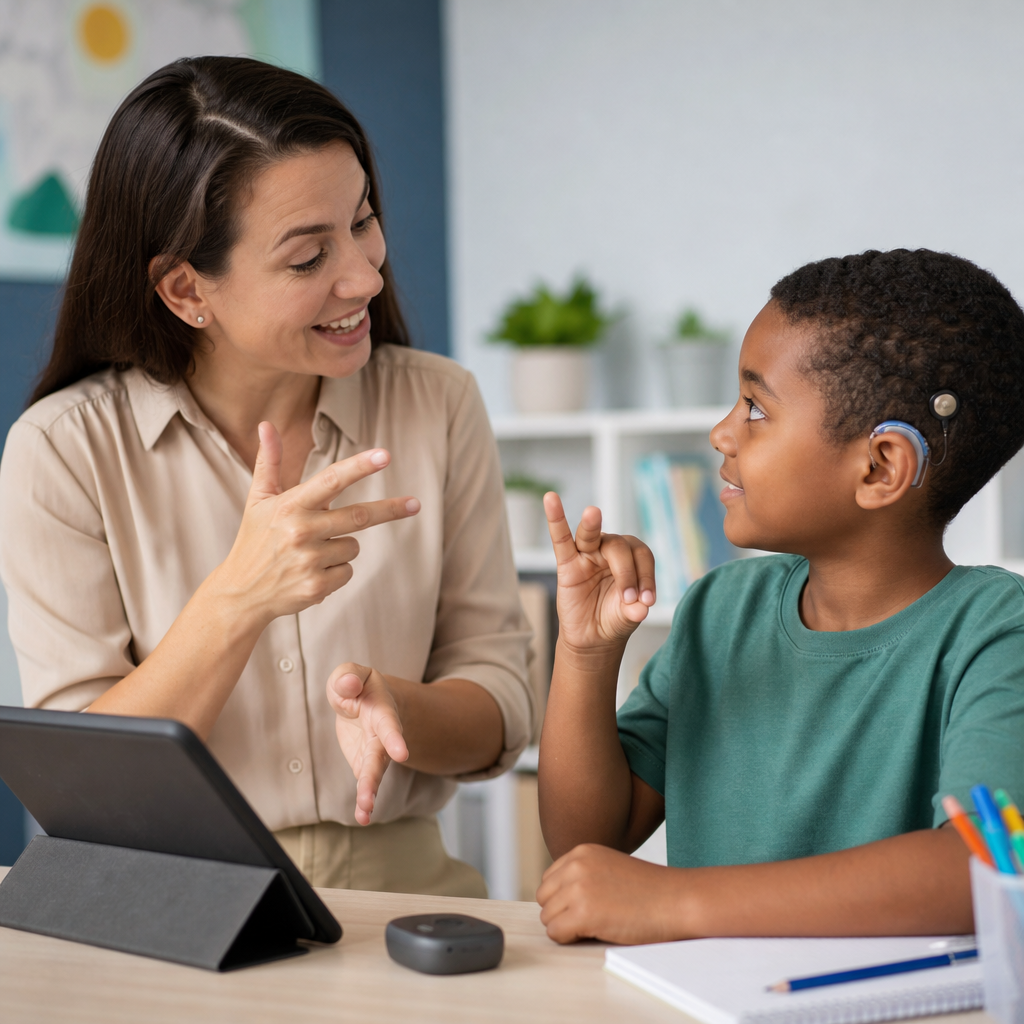

Communication tips for parents of deaf children begin with one essential truth: strong connection matters more than perfect technique. When a child is deaf or hard of hearing, communication includes spoken language, sign language, visual cues, assistive technology, routines, and the family’s willingness to adapt together. Parents often arrive here with urgent questions: How do I communicate better today? Which methods work at home and at school? What resources for parents are actually useful? After years of working with families, teachers of the deaf, speech-language pathologists, and interpreters, I have seen the same pattern repeatedly. Children thrive when adults make communication accessible, consistent, and emotionally safe. This article is a hub for resources for parents under education and learning resources, covering practical strategies, school supports, language choices, technology, and ways to build confidence over time.
Key terms matter. “Deaf” may describe identity, hearing level, or both, while “hard of hearing” usually refers to partial hearing access. “Accessible communication” means the child can fully receive and express meaning, not merely sit near speech. “Language access” includes early, complete exposure to a language the child can perceive, whether signed, spoken with support, or both. Research from the Joint Committee on Infant Hearing and language development studies consistently shows that early access to language is foundational for literacy, learning, social development, and mental health. That is why communication tips for parents of deaf children are not small parenting tricks. They affect attachment, behavior, educational outcomes, and self-esteem. Families do not need to know everything immediately, but they do need a plan that gives the child reliable access to language every day.
Start with full language access at home
The first priority is making sure your child can understand and participate from morning to bedtime. In practical terms, that means reducing guesswork. Face your child before speaking or signing. Get attention gently with a wave, light touch, or visual signal before you begin. Keep lighting on your face, lower background noise when possible, and avoid talking while walking away or covering your mouth. Narrate routines in accessible ways: bath time, meals, getting dressed, grocery trips, and bedtime stories all become language lessons when the child can clearly receive them. If your child uses sign, sign consistently. If your child uses spoken language supported by hearing technology, check devices daily and speak at a natural pace without exaggeration. If your family is using both speech and sign, be deliberate and steady rather than inconsistent.
I often advise parents to think in terms of communication uptime. How many hours each day does your child truly have access to meaningful language? A child who misses family jokes, instructions shouted from another room, or quick conversations in the car is missing more than words. They are missing social learning. Build visual communication into the household. Use calendars, picture schedules, labels, captioned media, and shared family routines. Repeat important information in more than one form. For example, if dinner plans change, do not rely on one quick spoken sentence. Say it face to face, sign it if relevant, and point to the updated plan on a whiteboard. This reduces frustration and teaches that communication is a shared responsibility, not solely the child’s burden.
Choose communication methods based on access, not ideology
Parents are often pushed toward debates instead of solutions. The better question is simple: What gives this child the most complete, least delayed access to language and learning? Some families choose American Sign Language as a primary language. Others pursue listening and spoken language with hearing aids or cochlear implants. Many use a bilingual or multimodal approach that combines sign, spoken language, print, gestures, and technology. There is no single answer that fits every child, because hearing levels, additional disabilities, family language background, age at identification, and school options all vary. What matters is that the chosen approach produces real understanding, not hope alone.
Parents should ask measurable questions. Does my child understand new vocabulary without constant drilling? Can my child follow group conversation? Can they tell stories, ask questions, repair misunderstandings, and join play? If not, access may be incomplete. Children can appear compliant while missing large amounts of language. This is one reason many specialists emphasize visual supports even when a child uses amplification. Sign language does not prevent learning spoken language; for many children, it protects early language development while speech skills are still emerging. Likewise, hearing technology can be helpful, but it does not restore typical hearing. Strong parent decision-making is grounded in observation, progress data, and professional guidance from qualified audiologists, deaf educators, and language specialists.
Build a communication-rich routine with school and support teams
Home progress accelerates when parents coordinate closely with professionals. Ask your child’s team for concrete goals, not vague updates. Good goals sound like this: “Will answer who, what, and where questions in signed or spoken sentences,” or “Will independently request clarification when communication breaks down.” Request examples of how to practice those goals during daily routines. A teacher of the deaf may suggest pre-teaching vocabulary before a science unit. A speech-language pathologist may recommend auditory training games or turn-taking prompts. An educational interpreter may explain how to position your child for better visual access in class. These details matter because communication is not a single skill. It includes attention, comprehension, language structure, pragmatics, and self-advocacy.
Parents should also understand school supports. In many education systems, deaf children may have an Individualized Education Program or a Section 504 plan, depending on needs. Services can include interpreting, captioning, assistive listening systems such as FM or DM systems, note-taking support, speech-language therapy, audiology services, and consultation from a teacher of the deaf. Ask whether classroom videos are captioned, whether the child can see all speakers during discussion, and how emergency announcements are made accessible. These are not extras. They are basic access requirements. When families treat meetings as collaborative planning sessions rather than one-time paperwork events, communication support becomes far more effective across settings.
| Resource for Parents | What It Helps With | Practical Example |
|---|---|---|
| Teacher of the Deaf | Language goals, classroom access, family coaching | Shows parents how to pre-teach school vocabulary before a unit on weather |
| Pediatric Audiologist | Hearing tests, device fitting, troubleshooting | Checks whether hearing aids are programmed correctly as hearing needs change |
| Speech-Language Pathologist | Speech, listening, expressive and receptive language | Builds turn-taking and question-answer routines during play |
| Sign Language Classes | Family fluency and daily communication | Parents learn food, feelings, and routine signs to use every day |
| Parent-to-Parent Networks | Emotional support and lived advice | A veteran parent explains school accommodations that actually worked |
| Captioning and Alert Technology | Access to media, safety, and independence | Uses captioned videos and visual doorbell alerts at home |
Use technology carefully and realistically
Technology can improve access, but it works best when adults understand both its strengths and its limits. Hearing aids amplify sound, and cochlear implants provide access to sound through electrical stimulation of the auditory nerve, but neither device guarantees clear understanding in noise, at distance, or during rapid group conversation. Parents should learn daily listening checks, battery routines, microphone care, and signs of device malfunction. If a child suddenly seems inattentive, the problem may be a dead battery, moisture issue, poor mapping, or classroom acoustics rather than behavior. Remote microphone systems often make a dramatic difference in school because they send the teacher’s voice directly to the child’s device, improving signal-to-noise ratio.
Captioning is another major support. Turn captions on for family viewing, but also verify quality. Auto-generated captions can introduce errors, especially with names and technical vocabulary. For schoolwork, ask for accurate captions and transcripts whenever possible. Video relay services, speech-to-text apps, visual alert systems, and vibrating alarms can increase independence for older children. At the same time, parents should not assume technology replaces direct communication. A child still needs adults who pause, face them, clarify meaning, and confirm understanding. The most successful families I have worked with treat devices and apps as tools inside a broader communication system, not as complete solutions by themselves.
Support emotional communication, identity, and self-advocacy
Communication is not only about directions, homework, and pronunciation. Deaf children need language for feelings, conflict, belonging, and identity. Parents should teach words and signs for emotions early: frustrated, proud, confused, nervous, left out, excited, overwhelmed. When a misunderstanding happens, model repair calmly. Say or sign, “I missed that. Tell me again,” or “You look upset. Show me what happened.” This teaches that communication breakdowns are normal and fixable. It also reduces the risk that the child internalizes failure during fast-moving conversations they cannot fully access.
Identity support matters just as much. Many deaf children benefit from meeting deaf adults and peers who communicate confidently and live full professional lives. These role models show that deafness is not simply a problem to fix. It is an experience that may involve culture, community, language, and pride. Parents do not need to have all the answers to support this. They can attend deaf community events, read books by deaf authors, follow deaf educators, and seek programs where children interact with other deaf students. Self-advocacy should begin early as well. A young child can learn to ask for captions, request repetition, move to better lighting, or say that a device is not working. Those skills directly improve classroom participation and long-term independence.
Find high-value resources for parents and avoid common mistakes
Because this page serves as a hub for resources for parents, focus on sources that improve day-to-day communication and educational planning. High-value resources include state early hearing detection and intervention programs, Hands & Voices, the Alexander Graham Bell Association, National Deaf Center materials, local deaf schools, family sign classes, pediatric audiology clinics, and early intervention providers with deaf education expertise. For school-age children, ask about captioning guidance, literacy supports, executive functioning resources, transition planning, and accommodations for testing. Families often need different resources at different stages: diagnosis, early language development, preschool entry, elementary literacy, adolescence, and college or career planning.
Avoid several common mistakes. First, do not wait for speech to emerge before giving rich language access. Delayed accessible language is costly. Second, do not assume quiet compliance means comprehension. Check understanding often by asking the child to explain, show, or retell. Third, do not rely on one professional opinion when major decisions are involved. Strong planning usually includes input from audiology, deaf education, speech-language pathology, and experienced parents. Fourth, do not separate communication goals from family life. The best gains happen in ordinary moments repeated thousands of times. If you want better conversation skills, build them into breakfast, shopping, chores, and play. Finally, remember that communication success is measured by connection, understanding, and participation, not by whether the child looks typical to others.
Parents of deaf children do not need perfection. They need a consistent, informed approach that gives their child full access to language, learning, and relationships. The most effective communication tips for parents of deaf children are practical: face your child, secure attention first, use visual supports, monitor hearing technology, learn the communication mode your child can truly access, and coordinate closely with school and therapy teams. Strong resources for parents make this easier by turning uncertainty into action. They help families choose tools, understand rights, practice language at home, and support identity along with academics.
If you remember one principle, make it this: accessible communication is the foundation for everything else. Literacy, behavior, confidence, friendships, and school success all grow from it. Use this hub as your starting point for education and learning resources, then build a support network that includes qualified professionals, other parents, and deaf role models. Review your child’s access often, adjust when needed, and keep communication visible, direct, and warm every day. Start with one change today, whether that is turning on captions, enrolling in sign classes, requesting school accommodations, or creating a more visual family routine. Small changes made consistently can transform how your child learns and belongs.
Frequently Asked Questions
What is the most important communication tip for parents of deaf children?
The most important tip is to focus on connection before perfection. Parents do not need to master every communication method immediately to build a strong relationship with a deaf or hard of hearing child. What matters most is creating consistent, meaningful interaction every day. That means getting your child’s attention before speaking or signing, facing them directly, using clear facial expressions, and making communication a shared family priority. Children learn best when communication feels natural, responsive, and emotionally safe.
For many families, this starts with slowing down and becoming more visual. Use gestures, signs, pictures, written words, and routines alongside speech if that supports understanding. Repeat key ideas, check for comprehension, and stay patient when misunderstandings happen. If your child uses hearing aids, cochlear implants, or other assistive technology, make sure those tools are working properly, but remember that technology supports communication rather than replacing human connection. A warm, engaged parent who adapts consistently is often the biggest factor in a child’s language growth and confidence.
Should parents use sign language, spoken language, or both at home?
Many families ask this question early, and the most helpful answer is that the best approach is the one that gives your child the fullest possible access to language. For some children, that includes sign language. For others, it may include spoken language supported by devices, speech therapy, visual supports, and listening practice. In many homes, a combination of methods works well because it reduces barriers and gives the child more than one pathway to understanding and expression.
Using both sign language and spoken language does not confuse children. In fact, access to a complete visual language can support bonding, reduce frustration, and encourage stronger language development overall. Parents should work with qualified professionals, such as audiologists, speech-language pathologists, teachers of the deaf, and early intervention specialists, while also paying close attention to their child’s day-to-day success. If a child is missing information during conversation, struggling to follow family routines, or showing signs of communication fatigue, that is a sign to expand support rather than limit it. The goal is not to choose a method based on ideology alone, but to build a rich communication environment where the child can understand, participate, and thrive.
How can parents improve everyday communication with a deaf child at home?
Everyday communication improves when parents make the home environment more visually accessible and intentionally interactive. Start by making sure your child can see you before you begin communicating. Move into their line of sight, gently tap a shoulder if appropriate, wave, or use a visual signal to gain attention. Keep rooms well lit, reduce unnecessary background noise when possible, and avoid speaking while turning away or moving to another room. These small adjustments can dramatically improve understanding.
It also helps to build communication into routines. During meals, bath time, errands, play, and bedtime, narrate what is happening using the communication methods your child understands best. Label objects, describe actions, ask simple questions, and pause long enough for your child to respond. Use facial expressions and body language to reinforce meaning. Reading together is especially valuable because it supports vocabulary, shared attention, and emotional connection. Parents can point to pictures, sign key words, act out ideas, and revisit favorite books often. The more consistent and interactive the routine, the more language opportunities a child receives throughout the day.
Just as important, make room for your child to lead conversations. Follow their interests, respond to their attempts to communicate, and celebrate effort rather than correcting every mistake. Communication grows when children feel heard. A home where parents are flexible, observant, and willing to adapt creates a stronger foundation than one focused only on drills or perfect performance.
What communication strategies help deaf children succeed at school and in social settings?
Success at school and with peers depends on communication access, not just effort from the child. Parents can help by making sure teachers, caregivers, and school staff understand how the child communicates best. That may include spoken language, sign language, captioning, note support, assistive listening systems, visual schedules, preferential seating, or one-on-one clarification when needed. The goal is to reduce missed information in classrooms, group activities, and informal interactions such as lunch or recess.
Parents should ask practical questions: Can my child clearly see the teacher’s face? Are videos captioned? Is there support during group discussions when multiple people speak at once? Are instructions also given visually? Does staff know how to check for understanding without putting the child on the spot? These details matter because deaf and hard of hearing children often miss incidental learning that hearing children absorb automatically. Strong school communication plans should be proactive rather than reactive.
Social communication deserves equal attention. Children benefit when adults teach peers simple inclusive habits, such as facing the child when speaking, taking turns, and using visual signals. Role-playing common situations at home can help a child practice asking for repetition, clarification, or a better position in the room. As children get older, self-advocacy becomes a major skill. Parents can support this by helping them understand their own communication needs and giving them language, spoken or signed, to express those needs confidently.
What resources are most useful for parents of deaf or hard of hearing children?
The most useful resources are the ones that improve both communication access and parent confidence. Early intervention programs are often one of the best starting points because they connect families with specialists who understand language development, hearing technology, and family-centered support. Audiologists can help parents understand hearing levels and equipment, while speech-language pathologists, teachers of the deaf, and sign language instructors can offer practical strategies tailored to the child’s needs. These professionals are most helpful when they treat parents as active partners rather than passive observers.
Parent-to-parent support is also extremely valuable. Families often gain reassurance, realistic advice, and emotional support from connecting with other parents raising deaf or hard of hearing children. Deaf adults can be especially important resources because they bring lived experience, cultural insight, and practical guidance about communication, identity, and long-term success. In addition, many families benefit from books, visual learning tools, captioned media, sign language classes, and reputable nonprofit organizations focused on deaf education and advocacy.
When choosing resources, look for those that are accessible, evidence-informed, and respectful of the child’s full communication needs. Be cautious about advice that promises a single perfect solution or pressures families to ignore tools that clearly help the child understand and participate. The strongest resource plan usually includes professional guidance, community support, and a willingness to adjust over time as the child grows. Parents do not need to figure everything out at once. They need trustworthy support, practical strategies, and a communication approach that keeps the child connected to family, learning, and everyday life.