
Deafness can be understood in two very different ways: as a medical condition centered on hearing loss, or as a cultural identity rooted in language, community, and shared experience. That distinction shapes education, healthcare, family decisions, public policy, and everyday interactions. In my work reviewing accessibility policies and community resources, I have repeatedly seen confusion arise from one simple issue: many people use the words deaf and Deaf as if they mean the same thing. They do not. Understanding the difference is essential for anyone learning about Deaf culture and identity.
Lowercase deaf usually refers to the audiological condition of not hearing, or having significant hearing loss. Uppercase Deaf usually refers to people who identify with Deaf culture, participate in Deaf community life, and often use a signed language such as American Sign Language, British Sign Language, or another national sign language as a primary language. A person can be audiologically deaf without identifying as culturally Deaf. Likewise, many hard of hearing people participate deeply in Deaf culture. Identity is not determined only by an audiogram.
The medical perspective on deafness generally focuses on diagnosis, severity, intervention, and functional limitations. It asks questions such as: How much hearing is present? What caused the hearing loss? Would hearing aids, cochlear implants, speech therapy, or surgery improve access? This approach can be valuable, especially for identifying health conditions, providing assistive technology, and preventing avoidable complications. Yet on its own, it often treats deafness as a problem to be fixed rather than a human variation with its own language and social world.
The cultural perspective starts from a different place. It understands deafness not primarily as a deficit, but as a distinct way of being in the world. Communication is visual, not inferior. Shared norms, humor, history, storytelling traditions, art, and political advocacy matter. In this view, barriers are created less by deafness itself than by inaccessible environments, exclusionary institutions, and assumptions that speech and hearing are the only normal forms of communication. This shift from impairment to identity changes what inclusion looks like.
This matters because families, teachers, clinicians, employers, and policymakers often make life-shaping decisions based on the lens they choose. A child who is approached only through a medical framework may receive devices and therapy but little exposure to sign language or Deaf adults. A child exposed to Deaf culture early often gains language access, role models, and a stronger foundation for identity development. The goal of this article is to explain cultural versus medical perspectives on deafness clearly, with special attention to Deaf vs deaf, so readers can navigate this topic with accuracy and respect.
What Deaf vs deaf Means in Practice
Deaf with a capital D refers to a cultural and linguistic identity. It generally includes people who see themselves as members of a community with shared values, social norms, and history. In the United States, that often means connection to American Sign Language, Deaf schools, Deaf clubs, advocacy organizations, and visual communication practices. Someone may be born into a multigenerational Deaf family or may discover Deaf identity later through school, interpreters, events, or community networks. The central point is affiliation, not simply hearing level.
deaf with a lowercase d refers more narrowly to the physical condition of hearing loss. It is descriptive rather than cultural. A person may be medically deaf but grow up in a hearing family, use spoken language, rely on hearing technology, and never participate in Deaf community life. Some prefer identity-first language such as Deaf person or deaf person, while others prefer person with hearing loss. Preferences vary by region, generation, education, and personal history. The most respectful approach is to follow how individuals describe themselves.
The distinction is not rigid. Many people move between categories over time or resist the labels entirely. Some identify as deaf and Deaf. Some are hard of hearing and culturally Deaf. Some cochlear implant users are fully part of Deaf culture, while others orient strongly toward hearing norms. In practice, Big D and little d are useful because they clarify that audiology and identity are related but not identical. That clarity reduces misunderstanding in education, healthcare, and workplace accommodation conversations.
The Medical Perspective on Deafness
The medical model treats deafness primarily as a sensory impairment. Clinicians classify hearing loss by degree, type, and onset. Degree may be mild, moderate, severe, or profound. Type may be conductive, sensorineural, or mixed. Onset may be congenital, progressive, sudden, or acquired through illness, injury, noise exposure, ototoxic medication, or aging. These distinctions are important because they guide treatment decisions. Newborn hearing screening, for example, helps identify infants early so families can begin making language and access plans during a critical developmental window.
Within this framework, interventions are designed to improve hearing access or spoken communication. Common options include hearing aids, cochlear implants, bone-anchored systems, captioning tools, and speech-language therapy. None of these are inherently negative. They can expand access, increase safety in certain environments, and help some people participate more easily in spoken interactions. I have seen families benefit enormously from prompt audiological care, especially when medical providers explain both the capabilities and limitations of technology honestly rather than promising a cure.
The limitation of the medical perspective is that it often centers normalization. Success may be measured by how closely a deaf person approximates hearing behavior: speech intelligibility, auditory response, mainstream classroom placement, or reduced dependence on interpreters. That can undervalue signed language and visual communication. Research in language development has consistently shown that accessible language exposure in early childhood is essential. When professionals advise families to delay sign language in hopes of maximizing speech outcomes, the risk is not merely cultural loss; it can be language deprivation.
The Cultural Perspective on Deafness
The cultural perspective understands Deaf people as a linguistic minority rather than as broken hearing people. Signed languages are complete natural languages with their own grammar, syntax, morphology, and discourse patterns. American Sign Language is not signed English. British Sign Language is not the same as ASL. These distinctions matter because language is the core of cultural transmission. Through sign, Deaf children and adults share stories, teach norms, debate politics, create poetry, and maintain continuity across generations.
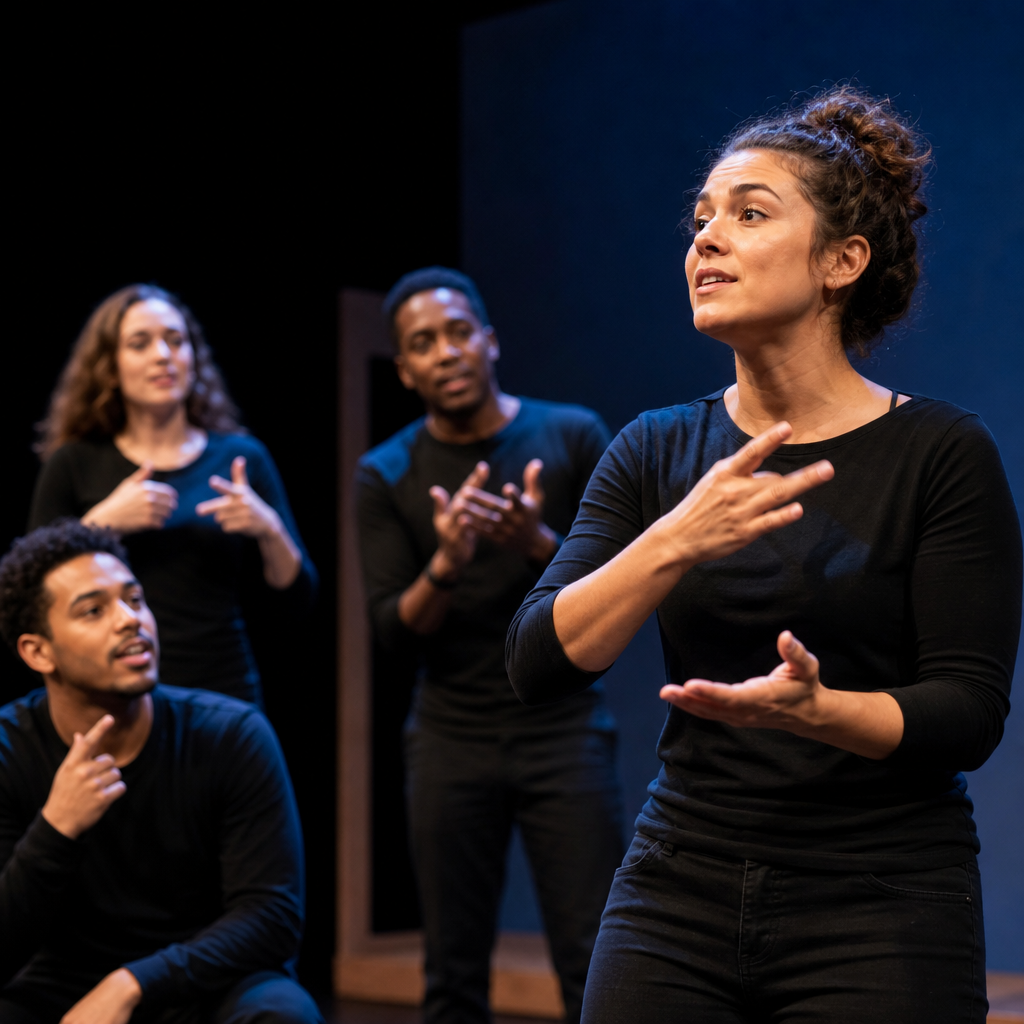
Deaf culture includes more than language. It encompasses visual ways of gaining attention, norms around eye contact, turn-taking in signed conversations, name signs, storytelling conventions, and community institutions. Historically, Deaf schools have been important cultural centers, especially before broad digital connectivity. Organizations such as the National Association of the Deaf in the United States have played major roles in civil rights advocacy, interpreter standards, media access, and public education. Deaf theater, film, and visual art also express a perspective shaped by signed experience.
This view does not deny that some deaf people need medical care or technology. It argues that hearing loss alone should not define personhood. A cochlear implant may be useful, but it does not erase Deaf identity. Spoken language may be one communication mode, but it should not displace sign where sign provides fuller access. The most effective cultural approach is not anti-medicine; it is anti-reduction. It insists that language, belonging, and self-determination are as important as decibels, devices, and clinical outcomes.
Why the Difference Matters for Children, Families, and Schools
Most deaf children are born to hearing parents, which means many families enter this subject with no prior knowledge of Deaf culture. The information they receive in the first weeks and months matters enormously. If guidance comes only from audiology and otolaryngology, parents may hear a problem-focused narrative built around intervention timelines, device candidacy, and speech milestones. Those issues matter, but when sign language, Deaf mentors, and bilingual education are missing from the discussion, families may not realize that a rich visual language pathway exists.
Schools also reflect the model they adopt. A strictly medical orientation may prioritize speech therapy, auditory training, and classroom integration without ensuring direct language access. A cultural or bilingual orientation is more likely to support sign language fluency, interpreters, Deaf educators, and curriculum that includes Deaf history. In practice, the strongest educational outcomes tend to come from environments where communication is fully accessible every day, not from settings that simply place a deaf child near hearing peers. Access must be linguistic, social, and academic.
| Area | Medical Perspective | Cultural Perspective |
|---|---|---|
| Primary focus | Diagnosis, treatment, functional hearing | Language, identity, community belonging |
| Key question | How can hearing be improved? | How can access and participation be ensured? |
| Success measure | Auditory and speech outcomes | Full communication and self-determination |
| Role of sign language | Sometimes secondary or optional | Often central and valued |
| Main risk if used alone | Language deprivation and cultural isolation | Underestimating individual medical needs |
For families, the best path is usually informed pluralism: learn the audiology, understand the technology, and build direct relationships with Deaf adults early. Meeting Deaf mentors changes the conversation because abstract fears are replaced by lived examples of successful children, professionals, artists, and parents. Parents then stop asking only, Can my child hear more? and begin asking, Does my child have full language access, identity support, and a community where they are fully understood?
Technology, Cochlear Implants, and the Source of Ongoing Debate
No discussion of cultural versus medical perspectives on deafness is complete without addressing hearing technology, especially cochlear implants. A cochlear implant is not a restored ear. It is an implanted device that converts sound into electrical signals delivered to the auditory nerve. Outcomes vary widely depending on age at implantation, anatomy, additional disabilities, therapy access, family support, and consistent device use. Some users develop strong spoken language skills. Others gain environmental sound awareness but still rely heavily on sign language and visual supports.
The controversy arises when technology is presented as a replacement for Deaf identity rather than as one possible tool. In community conversations I have followed, the most damaging cases are not those where families choose implants, but those where professionals imply that sign language will interfere with progress or that identification with Deaf culture signals failure. Evidence does not support framing sign exposure as harmful. On the contrary, accessible bilingual development can protect language growth when technological outcomes are uneven or delayed.
Adults who receive implants also have diverse experiences. Some welcome the change and remain culturally Deaf. Others find the sensory adjustment exhausting, especially in noisy settings where implants do not produce effortless listening. This is why simplistic narratives fail. Technology can be beneficial and still insufficient. Deaf culture can be central and still coexist with medical care. The key is autonomy. Deaf people and families deserve complete information, realistic expectations, and the freedom to choose communication paths without stigma from either side.
Identity, Inclusion, and Respectful Communication
Understanding Deaf vs deaf should change how institutions communicate. In healthcare, providers should ask about preferred language, interpreter needs, and communication methods rather than assuming lipreading or speech is adequate. In workplaces, access may require qualified sign language interpreters, real-time captioning, visual alerts, meeting agendas shared in advance, and managers trained to face employees when speaking. In higher education, compliance alone is not enough; effective access must support equal participation in discussion, networking, and informal learning.
Respectful communication also means avoiding deficit-based assumptions. Deaf people are not universally poor readers, unable to drive, or incapable of phone communication. Video relay services, captioned telephones, messaging platforms, and accessible conferencing have changed daily life significantly. At the same time, not all digital tools are equally usable. Auto-captions often fail on names, technical vocabulary, and accented speech. Qualified interpreters remain essential in legal, medical, and educational settings where precision matters. True inclusion depends on matching the accommodation to the context.
For readers exploring this subtopic as part of Deaf culture and identity, the hub idea is simple. Big D Deaf points to culture, language, and community. little d deaf points to hearing status. Neither label fully explains a person on its own. Real understanding comes from asking how someone communicates, how they identify, what access they need, and what experiences shaped them. If you want to engage this topic responsibly, learn from Deaf voices, support language access, and treat identity as something people define for themselves.
The clearest takeaway is that cultural and medical perspectives on deafness answer different questions, and both can matter when used appropriately. The medical view helps diagnose causes, manage health issues, and evaluate tools such as hearing aids or cochlear implants. The cultural view explains why signed languages, Deaf community networks, and identity formation are not optional extras but central parts of many deaf people’s lives. Problems begin when one perspective tries to erase the other, especially when a clinical framework is treated as the only legitimate lens.
Deaf vs deaf is therefore more than a capitalization rule. It is a reminder that hearing level does not determine belonging, language, or worldview. A person may be medically deaf and not culturally Deaf, culturally Deaf and use advanced hearing technology, or move between identities over time. Families, educators, employers, and clinicians make better decisions when they understand that distinction. Children thrive when they have full language access, realistic support, and exposure to adults who show that deaf lives can be complete, connected, and ambitious.
If you are building knowledge in the Deaf culture and identity space, use this article as your starting point. From here, explore signed languages, Deaf education, assistive technology, interpreter access, and Deaf history through sources created with Deaf communities, not just about them. The more accurately you understand these perspectives, the better your decisions and interactions will be. Start by reviewing your assumptions, learning the terminology, and making access part of every conversation.
Frequently Asked Questions
What is the difference between deaf and Deaf?
The difference usually comes down to whether the conversation is about hearing status or cultural identity. Lowercase deaf generally refers to the physical condition of having little or no hearing, or to a broad range of hearing loss. Uppercase Deaf, by contrast, often refers to people who identify with Deaf culture, participate in Deaf community life, and may use a signed language such as American Sign Language as a primary language. In other words, one term is often medical or audiological, while the other is cultural and social.
This distinction matters because not every deaf person identifies as Deaf, and not every person with hearing loss relates to deafness in the same way. Some people see hearing loss mainly as a disability that requires treatment or accommodation. Others see it as part of a minority language-and-culture experience rather than something that needs to be “fixed.” Many people move between these perspectives depending on family background, education, communication access, or life stage. Using the right term shows respect and helps avoid flattening a very diverse set of experiences into a single definition.
What is the medical perspective on deafness?
The medical perspective generally understands deafness as a condition involving reduced hearing function. Within this framework, hearing is measured, classified, and treated using clinical tools such as hearing tests, audiograms, hearing aids, cochlear implants, speech therapy, and other interventions designed to improve auditory access. Healthcare providers often focus on causes, severity, diagnosis, and treatment options, especially in infancy and early childhood when families are making decisions about communication, schooling, and technology.
This perspective can be extremely valuable. It supports newborn hearing screening, early intervention, access to assistive technology, and legal accommodations in healthcare and education. It can also help identify related medical issues and reduce barriers in daily life. At the same time, critics point out that a strictly medical model can frame deafness only as loss, deficit, or impairment. When that happens, it may overlook the fact that many deaf people live full, connected lives through sign language, visual communication, and participation in Deaf community. The medical perspective is useful, but it is incomplete if it ignores identity, language, and culture.
What is the cultural perspective on deafness?
The cultural perspective views Deaf people not simply as individuals with hearing loss, but as members of a linguistic and cultural community. From this viewpoint, Deafness is tied to shared language, social norms, history, values, storytelling traditions, and collective experience. Sign languages are central here. They are not simplified gestures or substitutes for spoken language; they are complete natural languages with their own grammar, structure, and regional variation. For many Deaf people, access to sign language is not just a convenience but a core part of identity and belonging.
This perspective shifts the focus from “What is wrong with hearing?” to “How does society create or remove barriers?” It emphasizes communication access, representation, and respect for Deaf ways of being. It also challenges assumptions that spoken language and hearing should always be the default goals. In practice, the cultural perspective influences education, interpreting access, media accessibility, community spaces, and family choices. It reminds hearing people and institutions that deafness is not only a clinical issue; for many, it is also a source of pride, connection, and cultural continuity.
Why does the distinction between cultural and medical perspectives matter in real life?
It matters because the perspective people adopt directly affects decisions and policies. In education, a strictly medical approach may prioritize speech training and auditory development, sometimes at the expense of early sign language access. A cultural approach is more likely to support bilingual environments, Deaf role models, and the idea that language access should come first, regardless of whether it is spoken, signed, or both. In healthcare, the difference can affect whether providers treat deafness only as a diagnosis or also consider communication rights, informed consent, interpreter access, and cultural competence.
The distinction also shapes family experiences. Parents of a deaf child may be told very different things depending on who is advising them. Some guidance centers almost entirely on devices and therapies. Other guidance includes Deaf mentors, sign language learning, and community connection. Public policy is influenced as well, from captioning laws and interpreter services to school placement and disability protections. On an everyday level, this distinction changes how people interact. If deafness is seen only as a limitation, expectations may be lower and interactions more paternalistic. If it is understood as both a difference and, for many, a cultural identity, communication tends to become more respectful, inclusive, and accurate.
Can someone embrace both the medical and cultural perspectives on deafness?
Yes, and many people do. These perspectives are often presented as opposites, but real lives are usually more nuanced. A person can use hearing aids or a cochlear implant, attend audiology appointments, and still strongly identify with Deaf culture. Someone else may not identify culturally as Deaf but still value sign language and Deaf community connections. Families may pursue medical care while also making sure a child has full access to sign language and Deaf role models. The key point is that treatment decisions and cultural identity are not always mutually exclusive.
Recognizing both perspectives can lead to better outcomes because it allows people to address practical needs without dismissing identity and community. The most balanced approach is often one that protects communication access, respects self-identification, and avoids assuming that there is only one “right” way to live as a deaf person. Listening to deaf and Deaf individuals themselves is essential. Their experiences show that deafness can involve healthcare, technology, language, belonging, and personal choice all at once. A thoughtful understanding leaves room for that complexity rather than forcing everyone into a single model.