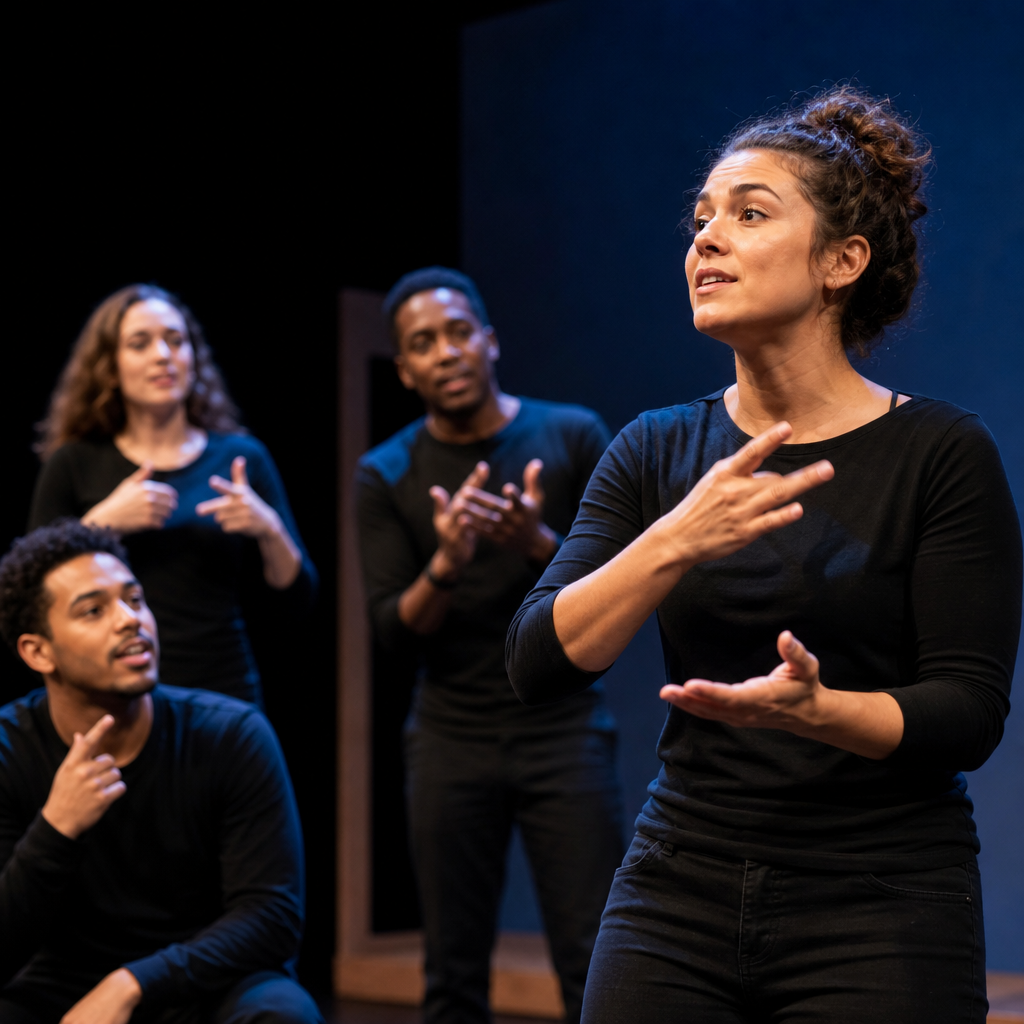

Why the “D” matters in Deaf identity becomes clear the moment you see how one letter can describe not just hearing status, but language, community, history, and belonging. In discussions of Deaf culture and identity, the contrast between Deaf and deaf, often called Big D and little d, is one of the most important distinctions to understand. It shapes how people describe themselves, how schools and services approach communication, and how families interpret deafness in everyday life. I have worked with Deaf-led organizations, interpreters, and accessibility teams long enough to know that misuse of the term is rarely a minor grammar issue. It can signal whether someone recognizes Deaf people as a linguistic and cultural minority or sees deafness only as a medical condition. That difference affects education, policy, employment, and personal dignity. For readers exploring Deaf culture and identity, this article serves as a hub: it defines core terms, explains the social meaning behind capitalization, and shows where the distinctions overlap, blur, or create tension. Most importantly, it answers a basic question directly: the capital D matters because identity is about more than audiology.
What Deaf and deaf mean
At the simplest level, deaf with a lowercase d usually refers to the audiological condition of having little or no hearing. It describes hearing level, not necessarily language use, values, or community affiliation. A person may be born deaf, become deaf later in life, use hearing aids or cochlear implants, communicate primarily through speech, and have little connection to Deaf social networks. Deaf with an uppercase D usually refers to people who identify with Deaf culture, participate in Deaf community life, and often use a signed language such as American Sign Language, British Sign Language, or another national sign language. In practice, many Deaf people are also audiologically deaf, but the capital letter marks cultural identity, not just hearing status.
This distinction emerged because deafness cannot be explained fully by medicine. Audiograms can measure decibels, frequency loss, and speech perception, but they cannot measure shared stories, signed humor, collective memory, or the experience of moving through a hearing-majority world with visual language. In my experience, professionals who understand only the hearing-loss model tend to miss why Deaf schools, interpreters, visual access, and sign language rights matter so deeply. They may think inclusion means helping deaf people fit hearing norms. Deaf communities have long argued something different: access should support people as they are, including their language and culture.
Not every person fits neatly into either category. Some people describe themselves as deaf, Deaf, hard of hearing, late-deafened, DeafBlind, or culturally hearing but linguistically signed. Some move between identities over time. A child raised orally may later discover sign language and embrace Deaf community. A Deaf person with cochlear implants may remain strongly culturally Deaf. Capitalization is a guide to self-identification, not a rigid test imposed from outside.
Why capitalization carries cultural weight
The capital D matters because capitalization marks the difference between pathology and peoplehood. When a community uses language, traditions, norms, art, and institutions across generations, identity is not just an individual medical fact. It becomes collective culture. That is why many scholars and advocates describe Deaf people as a cultural and linguistic minority. Sign languages have their own grammar, syntax, regional variation, and poetic forms. Deaf clubs, athletic associations, theater groups, schools, and political organizations have helped preserve that identity despite long periods of exclusion.
Capitalization also functions as a correction to history. For centuries, deaf people were commonly described through deficit-focused terms such as deaf and dumb, hearing impaired, or mute, labels that often ignored sign language competence and reinforced low expectations. The modern use of Deaf asserts that deaf people are not failed hearing people. They are members of a community with a visual language and a legitimate way of being in the world. That does not mean every person rejects medical support or audiological care. It means hearing status alone does not define human worth or social identity.
In practical terms, one letter can change the meaning of a sentence. Saying “She is deaf” may simply describe hearing level. Saying “She is Deaf” may imply community ties, signed language use, and cultural alignment. In education, healthcare, and workplace communication, this difference matters because assumptions drive decisions. If staff assume all deaf patients lipread well, they may fail to provide interpreters. If teachers assume spoken-language training is enough, they may neglect direct language access in sign.
How Deaf identity develops in real life
Deaf identity is rarely formed by vocabulary alone. It usually develops through access, relationships, and recognition. Most deaf children are born to hearing parents, many of whom have no prior exposure to sign language or Deaf community life. Families often encounter audiologists and medical professionals first, so the earliest framing may emphasize hearing technology, speech therapy, and intervention timelines. Those supports can be useful, but if sign language and Deaf mentors are absent, children may grow up without models who show them deafness can include pride, fluency, and community.
When I have seen identity develop positively, several factors tend to appear together: early accessible language, contact with other deaf and Deaf people, family willingness to learn sign, and schooling that supports direct communication rather than constant dependence on accommodation. A child who attends events with Deaf adults, sees sign language used naturally, and meets successful Deaf professionals has a very different foundation from a child who is treated as isolated from any peer group. Identity forms through mirrors. People need to see themselves reflected in others.
Adolescence often intensifies these questions. Teenagers may ask whether they belong more in hearing spaces, Deaf spaces, or both. A student mainstreamed in a hearing school may feel socially exhausted from lipreading and self-advocacy, then discover relief and humor at a Deaf camp or signing event. Another may value spoken communication and identify as deaf without engaging culturally. Neither path should be forced. The key point is that identity becomes stronger when people can choose from informed experience rather than from limited exposure.
Common identity patterns and what they usually mean
Although every person’s story is unique, some identity patterns appear often enough to be useful. The terms below are starting points, not labels to assign carelessly. People may use them differently depending on country, age, and community norms.
| Term | Typical meaning | Common example |
|---|---|---|
| deaf | Audiological description of significant hearing loss without necessarily implying cultural affiliation | An adult who lost hearing later in life and communicates mainly through speech |
| Deaf | Cultural and linguistic identity connected to sign language and Deaf community | An ASL user active in Deaf events, advocacy, and social networks |
| hard of hearing | Partial hearing loss, often with spoken-language access aided by devices or listening strategies | A student using hearing aids and captioning in class |
| late-deafened | Person who became deaf after acquiring spoken language | A professional adapting to hearing loss in midlife |
| DeafBlind | Combined hearing and vision loss, with distinct communication and access needs | A community member using tactile sign and intervenor support |
These categories help explain experience, but they do not rank authenticity. A hard of hearing person may be deeply involved in Deaf spaces. A late-deafened adult may become a fluent signer. A culturally Deaf person may use spoken language, implants, hearing aids, or all three. Identity is shaped by access, affiliation, and choice, not purity tests.
Language, education, and community connections
Language is the strongest predictor of why the capital D matters. Deaf identity is inseparable from sign language in many communities because language is the route into culture. American Sign Language, for example, is not signed English. It has distinct grammar, spatial structure, nonmanual markers, classifiers, and discourse patterns. The same is true of other sign languages worldwide. When children gain early access to a natural signed language, they are more likely to develop full communication, social confidence, and cultural literacy. Research across language development consistently shows that accessible early language exposure is essential for cognitive and social growth.
Education has been one of the main battlegrounds in this history. Residential Deaf schools often served as cultural centers where children learned sign language, met peers, and developed shared identity. Mainstreaming increased access to local schools, but outcomes have been mixed. Some students thrive with interpreters, captioning, and strong support. Others experience chronic isolation as the only deaf student in class, with limited incidental learning and social participation. The issue is not simply placement. It is whether the child has direct, consistent language access and a pathway into community.
Community institutions reinforce that pathway. Deaf clubs, sports leagues, social media spaces, theater, advocacy groups, and alumni networks all help transform hearing status into cultural belonging. Events such as Deaf expos, signed performances, and local gatherings allow people to exchange information visually and quickly, without the communication strain common in hearing-dominant settings. That ease is often what hearing observers miss. Deaf identity is not built only around exclusion. It is also built around the joy of effortless communication.
Misunderstandings, debates, and respectful usage
A common misunderstanding is that Deaf is always preferred and deaf is outdated or offensive. That is not accurate. Lowercase deaf remains a useful descriptive term, especially in audiology, public health, and individual self-identification. The problem comes when outsiders choose terms without listening to the person or when institutions collapse every deaf experience into a single story. Another misunderstanding is that culturally Deaf people reject technology. Many do not. Deaf people may use cochlear implants, hearing aids, captions, vibrotactile alerts, relay services, and speech while still identifying strongly with Deaf community. Technology does not erase culture.
There are also real debates within Deaf communities. Some people worry that broadening Deaf identity too far can dilute the importance of sign language and shared cultural practices. Others argue that identity should remain flexible enough to include people with varied communication methods, racial backgrounds, disabilities, and educational histories. I have seen the most productive conversations focus on access and respect rather than gatekeeping. Does the environment support visual communication? Are Deaf people leading decisions that affect them? Are families given balanced information about both technology and sign language? Those questions matter more than simplistic binaries.
Respectful usage starts with self-identification. If someone writes Deaf, use Deaf. If they prefer deaf, hard of hearing, or another term, follow that lead. In general writing, use lowercase when referring broadly to hearing status and uppercase when referring to culture, community, or identity. Avoid outdated deficit terms unless quoting historical material with explanation. And remember that no article, style guide, or institution should override how a person names their own experience.
Why this distinction matters beyond terminology
The Deaf versus deaf distinction matters because words shape systems. In healthcare, it influences whether providers treat communication access as optional convenience or essential care. In schools, it affects whether deaf children are expected to adapt alone or are given direct language access and Deaf role models. In employment, it shapes whether accommodations stop at amplification or include interpreters, captions, visual alerts, and inclusive meeting design. In families, it can determine whether a child grows up seeing deafness as damage to hide or identity to understand.
The larger benefit of understanding Big D and little d is precision with empathy. You can recognize hearing loss as a real physical condition while also recognizing Deaf identity as a cultural reality. You can support hearing technology without assuming it replaces sign language. You can value mainstream inclusion while acknowledging that community-specific spaces remain necessary. This is the practical lesson at the center of Deaf culture and identity: one letter signals a whole framework for how society sees deaf people and how deaf people see themselves. If you work in education, healthcare, media, policy, or simply want to communicate respectfully, start by asking, learning, and using the right term. That is a small action with lasting impact.
Frequently Asked Questions
What is the difference between “Deaf” with a capital D and “deaf” with a lowercase d?
The difference is about far more than spelling. In many conversations about hearing loss and identity, lowercase deaf usually refers to the audiological condition of not hearing, or having significant hearing loss. It describes hearing status. Capitalized Deaf, by contrast, often refers to a cultural and linguistic identity. A Deaf person may identify with Deaf community life, use a signed language such as American Sign Language, value shared traditions and history, and see deafness not simply as a medical condition but as part of who they are.
That distinction matters because two people with similar hearing levels may understand themselves in very different ways. One person may think of deafness mainly through hearing aids, cochlear implants, spoken language, and medical services. Another may see Deaf identity through sign language, Deaf schools, Deaf social spaces, and intergenerational community ties. Neither experience should be reduced to a stereotype. The key point is that Big D and little d signal different frameworks: one cultural, one audiological. Understanding that difference helps people speak more accurately and respectfully about identity, communication, and belonging.
Why does the capital “D” matter so much in Deaf identity?
The capital “D” matters because it recognizes that identity is not defined by hearing level alone. For many people, being Deaf is connected to a rich cultural world that includes language, shared values, collective history, social norms, storytelling traditions, advocacy, and pride. The capital letter signals membership or connection to that world. It tells readers and listeners that the conversation is about community and culture, not only about hearing loss as a diagnosis.
This distinction also pushes back against the idea that deafness should always be viewed through a deficit-based lens. In a strictly medical model, the focus tends to be on what a person cannot hear and how to fix or manage that difference. In a Deaf cultural framework, the emphasis shifts toward access, communication, identity, and the lived experience of a minority language community. That is why the “D” carries so much meaning. It acknowledges that many Deaf people do not see themselves as broken or incomplete. Instead, they see themselves as part of a culture with its own norms, heritage, and strengths. Using the capital letter appropriately shows awareness of that reality and respect for how people define themselves.
Can someone be deaf without identifying as Deaf?
Yes. Many people are audiologically deaf or hard of hearing but do not identify as culturally Deaf. A person may grow up in a hearing family, attend mainstream schools, communicate primarily through spoken language, and have little or no connection to Deaf community spaces. In that case, they may describe themselves as deaf, hard of hearing, or simply as a person with hearing loss rather than as Deaf. Their identity may be shaped more by medical, educational, or family experiences than by participation in Deaf culture.
Identity is personal, and it can also change over time. Some people who were raised without exposure to sign language or Deaf community later discover Deaf spaces and begin identifying as Deaf. Others may feel connected to both worlds and use terms that reflect that complexity. Still others may avoid labels altogether. The most important practice is not to assume that hearing status automatically determines cultural identity. Asking people how they identify, what language they use, and what communication access they prefer is much more respectful and accurate than relying on assumptions based on audiograms or appearances.
How does the Deaf vs. deaf distinction affect schools, services, and family decisions?
This distinction has real-world consequences because it shapes how adults and children are supported. In schools, for example, treating a student only as deaf in the medical sense may lead educators to focus narrowly on amplification, speech training, or classroom accommodations. Those supports may be useful, but they are not the whole picture. If a student is also understood as potentially Deaf in the cultural and linguistic sense, then access to sign language, Deaf role models, Deaf peers, and culturally informed teaching becomes much more important. That broader view can influence placement decisions, educational philosophy, and how success is defined.
Services are affected in similar ways. Healthcare providers, interpreters, social workers, and government agencies all make better decisions when they understand that communication access is not one-size-fits-all. Some people want interpreters and direct signed communication. Others prefer captioning, spoken communication, or assistive technology. Families also benefit from understanding the distinction early. Parents who learn about Deaf culture alongside medical information are better positioned to make informed choices about language exposure, schooling, social development, and identity. Rather than seeing deafness only as a problem to solve, families can begin to see multiple pathways for a child to thrive. That shift often leads to more inclusive, better-informed decisions.
What is the most respectful way to talk about Deaf identity?
The most respectful approach is to follow the language people use for themselves. If someone identifies as Deaf, use Deaf. If they prefer deaf, hard of hearing, late-deafened, hearing impaired, or another term, respect that choice. Identity language can be deeply personal and tied to culture, politics, disability perspectives, family background, and lived experience. There is no single label that fits everyone, so listening matters more than assuming.
It also helps to speak in ways that reflect knowledge of Deaf culture and communication access. Avoid reducing people to a medical condition or treating deafness as something that automatically needs correction. Instead, recognize that signed languages are full languages, Deaf communities have longstanding histories and traditions, and access is a basic matter of inclusion rather than a special favor. In practice, respectful communication means using accurate terminology, asking about preferences when needed, and staying open to correction. A thoughtful use of the capital “D” is one small but meaningful way to show that you understand the difference between hearing status and cultural identity.