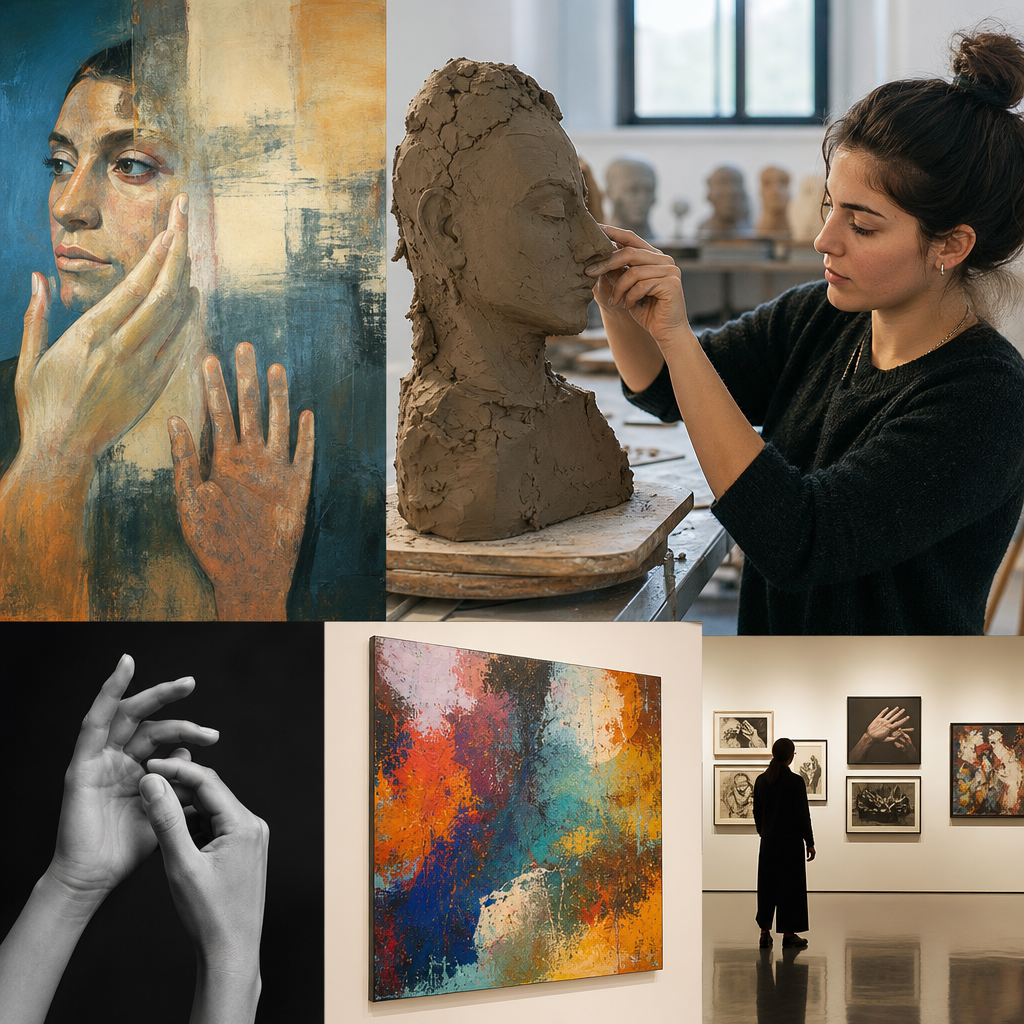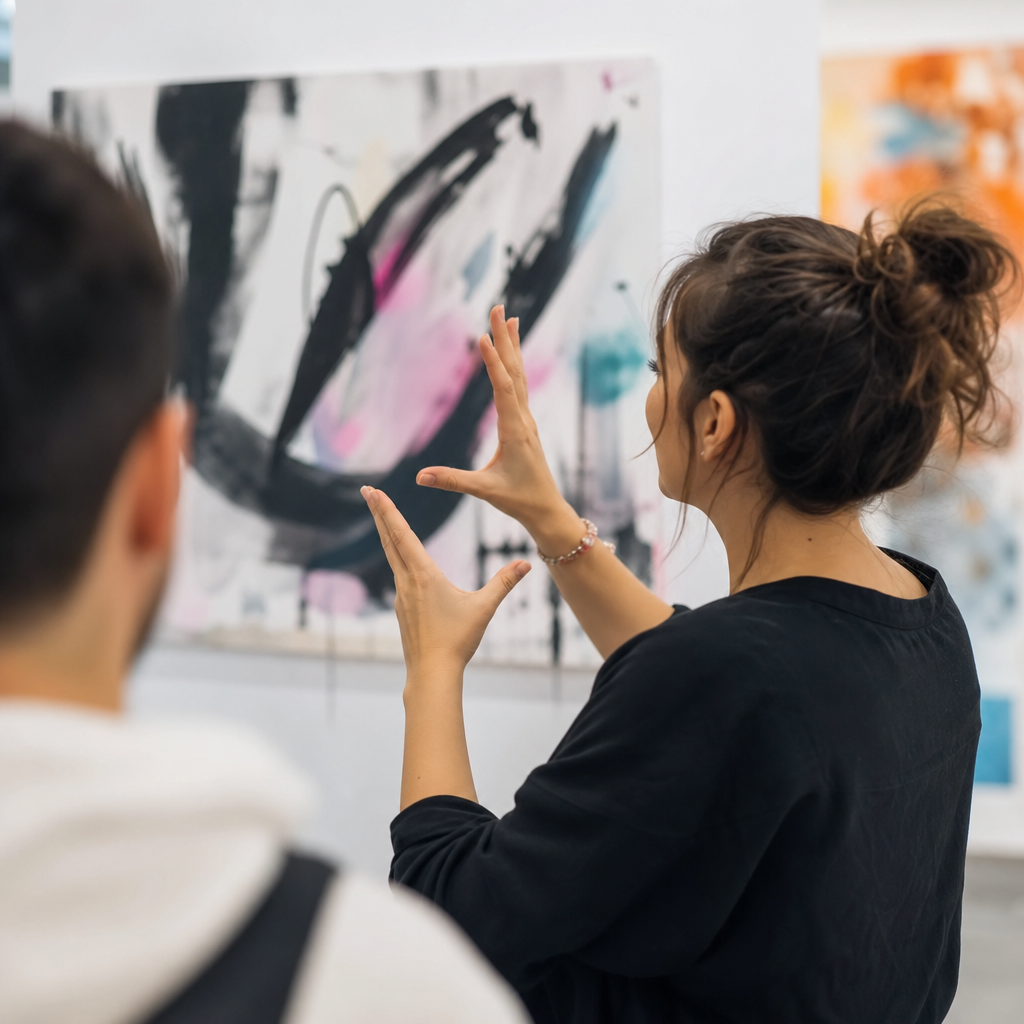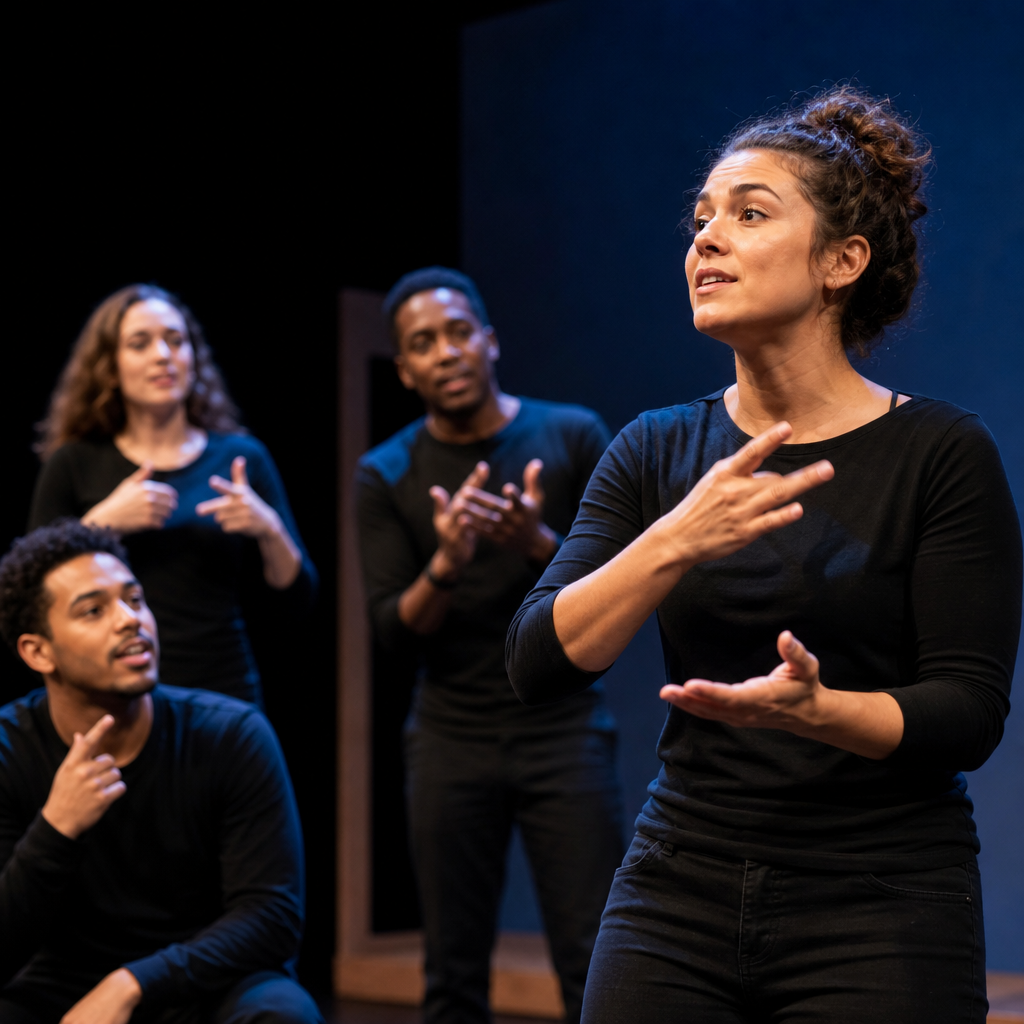
Exploring bicultural identity in Deaf individuals starts with a simple reality: many Deaf people move between two cultural worlds every day. One world is Deaf culture, shaped by signed languages, visual communication norms, shared history, and collective pride. The other is the hearing-majority world, organized around spoken language, auditory access, and institutions that were usually not designed by Deaf people. Bicultural identity describes the ability to understand, value, and participate in both worlds without reducing either one to a temporary stage, a medical condition, or a communication problem.
In practice, bicultural identity is central to Deaf identity and pride. It influences language choices at home and school, how a person introduces themselves, which communities they feel accountable to, and how they interpret access, inclusion, and belonging. I have worked with Deaf-led programs, interpreter-mediated environments, and mixed Deaf-hearing teams, and the pattern is consistent: identity becomes stronger when Deaf people can access language early, meet other Deaf adults, and see Deafness framed as culture rather than deficit. When those conditions are missing, identity formation often becomes harder, slower, and more emotionally demanding.
Key terms matter here. Deaf with a capital D usually refers to cultural affiliation, especially connection to Deaf community and signed language. deaf with a lowercase d is often used for the audiological condition of hearing loss, though many individuals use the terms fluidly or reject strict labels altogether. Bicultural does not always mean equally involved in both Deaf and hearing spaces, and it does not require perfect fluency in every context. It means a person can navigate more than one cultural system and build a coherent sense of self across them. That can include Deaf people who sign, Deaf people who speak, DeafBlind people using tactile sign, late-deafened adults, cochlear implant users, and children of hearing parents developing identity over time.
This topic matters because identity affects education, mental health, leadership, family relationships, employment, and community continuity. Research across Deaf studies, bilingual education, and psychology has repeatedly shown that language access and positive cultural affiliation support better outcomes. When Deaf children are denied accessible language or kept isolated from Deaf peers, the cost is not only academic. It can weaken self-esteem, delay social development, and create the sense that success requires distancing oneself from Deaf people. A strong bicultural identity offers a different model: participate broadly, advocate clearly, and remain rooted in Deaf pride.
What bicultural identity means for Deaf individuals
Bicultural identity in Deaf individuals is the integration of two sets of norms, values, and communication practices into one stable self-concept. In the Deaf community, communication is typically direct, visually oriented, and highly attentive to shared access. In hearing settings, interaction often assumes background sound, turn-taking through voice, and informal access to spoken information. A bicultural Deaf person learns not just two languages or communication modes, but two social logics. They know when eye contact is essential, when an interpreter changes group dynamics, when captions are enough, and when only direct signed communication will provide full inclusion.
That integration is not automatic. Most Deaf children are born to hearing parents, and many families have little prior exposure to signed language or Deaf culture. Early life may therefore center on hearing norms, medical appointments, speech goals, and assistive technology decisions before the child ever meets Deaf adults. Later, a school for the Deaf, a signing mentor, a college Deaf club, or online community may introduce an entirely different understanding of Deafness. I have seen adults describe this moment as relief rather than discovery: for the first time, they are not being fixed, accommodated after the fact, or asked to perform hearingness. They are simply with people who communicate in ways that make immediate sense.
Bicultural identity does not erase tension. Some Deaf people feel pressure from hearing institutions to assimilate and from parts of the Deaf community to prove cultural legitimacy. Those pressures can intensify around speech use, cochlear implants, mainstream education, race, class, and additional disabilities. Healthy bicultural identity is not about satisfying gatekeepers. It is about developing agency, language confidence, and a grounded understanding that Deaf life can be culturally rich, professionally ambitious, and fully human on its own terms.
How Deaf identity develops across childhood, school, and adulthood
Deaf identity usually develops through stages rather than a single turning point. In early childhood, the decisive factor is access to language. Children who receive fluent signed language from infancy generally build communication, attachment, and self-expression more securely. That foundation supports later literacy and social learning. By contrast, language deprivation in the first years can affect cognition, behavior, and emotional regulation. The issue is not Deafness itself; it is inaccessible communication. This distinction is fundamental and too often misunderstood in public discussion.
School experiences then shape identity further. In mainstream settings, Deaf students may gain exposure to hearing peers but still feel socially peripheral if interpretation, captioning, teacher training, and peer awareness are weak. In strong bilingual environments, students often see Deaf adults as teachers, administrators, coaches, and role models. That visibility matters. It tells young people that Deaf adulthood includes expertise, authority, humor, romance, conflict, and ordinary success. In schools for the Deaf, students also learn community norms, storytelling traditions, visual alerting practices, and collective history, including activism around language rights and education.
Adulthood frequently deepens bicultural identity because work, relationships, and independent living demand more deliberate choices. A Deaf professional may use interpreters in meetings, sign directly with Deaf colleagues, text for quick coordination, and advocate for captions in training videos. A parent may decide how to raise hearing or Deaf children across languages. A college student may revisit childhood experiences and reinterpret them through Deaf studies, disability law, or community mentorship. Identity becomes less about labels and more about consistent self-definition in varied environments.
One useful way to understand this development is to look at the conditions that support it.
| Factor | How it shapes identity | Real-world example |
|---|---|---|
| Early signed language access | Builds communication, attachment, and confidence | A Deaf child with signing parents enters school ready to learn, not still waiting for language |
| Deaf role models | Shows Deaf adulthood as competent and desirable | A student meets Deaf teachers, lawyers, and artists and sees multiple futures |
| Accessible education | Reduces isolation and supports participation | Classes include qualified interpreters, captions, and teachers trained in Deaf learning needs |
| Family acceptance | Strengthens pride and emotional security | Hearing parents learn sign language and include their child in all conversations |
| Community connection | Creates belonging and shared history | A teenager joins Deaf sports, theater, or online signing groups and forms lasting friendships |
Language, access, and the foundation of Deaf pride
Language is the foundation of Deaf identity and pride because culture cannot be separated from communication. Signed languages such as American Sign Language, British Sign Language, and many others are complete natural languages with grammar, discourse conventions, and regional variation. They are not simplified versions of spoken languages, and they are not mere support tools. When Deaf people have direct access to a signed language, they gain more than vocabulary. They gain humor, argument, nuance, memory, and the ability to participate fully in community life.
Deaf pride grows when access is direct rather than conditional. Captions, hearing aids, cochlear implants, relay services, and interpreters can all be important, but they serve different functions and have limits. An interpreter may provide access in a meeting, yet still leave the Deaf person one step removed from side conversations. Captions support video content, but quality varies widely and errors can distort meaning. Hearing technology may help some users in some settings, but it does not erase listening fatigue, group noise problems, or the cultural importance of sign. In my experience, Deaf people thrive when systems stop treating one tool as the entire solution.
This is why many Deaf adults push for bilingual approaches rather than either-or debates. They want signed language respected as primary access, while also building literacy, speech skills if useful, and fluency in the wider society’s communication systems. Pride is not opposition to technology or to hearing people. Pride is the refusal to let access depend on constant adaptation by the Deaf person alone. It is the expectation that schools, employers, healthcare providers, and public institutions will meet clear standards for communication equity.
Community, history, and the social roots of belonging
Bicultural identity becomes sustainable when it is connected to community and history. Deaf culture is not only about communication preference; it is also about shared memory. That includes the rise of Deaf schools, the long struggle against oralist education, the recognition of signed languages by linguists, and landmark activism such as the 1988 Deaf President Now movement at Gallaudet University. Events like that mattered because they made Deaf leadership visible and forced institutions to acknowledge that representation is not symbolic. It changes decisions, priorities, and who gets heard.
Belonging also develops through everyday community life. Deaf clubs, sports leagues, theater groups, social media spaces, conferences, and family gatherings create places where communication is effortless and identity is not under scrutiny. In those spaces, Deaf individuals learn norms that hearing observers may miss: waving instead of calling out, using lights to get attention, maintaining visual lines, valuing detailed storytelling, and treating access as a shared responsibility. These practices are not minor habits. They are cultural knowledge, and they shape how people feel safe, respected, and fully present.
For Deaf people who are also members of racial, linguistic, queer, immigrant, or disabled communities, bicultural identity may actually be multicultural. That does not dilute Deaf identity; it makes it more accurate. Black Deaf, Latino Deaf, Indigenous Deaf, Asian Deaf, DeafBlind, and LGBTQ+ Deaf individuals often navigate overlapping systems of visibility and exclusion. The strongest identity work acknowledges those intersections and avoids presenting Deaf experience as culturally uniform.
Common challenges and how institutions can respond better
The biggest challenge to healthy bicultural identity is not Deafness. It is chronic inaccessibility. When families do not learn to communicate, children may grow up physically included but conversationally excluded. When schools provide minimal support, students spend energy decoding access instead of learning content. When employers rely on ad hoc accommodations, Deaf staff are forced into repetitive self-advocacy. These conditions create exhaustion and can make both Deaf and hearing spaces feel conditional.
Institutions can respond better through specific, measurable practices. Families should be offered early intervention that includes signed language, Deaf mentors, and balanced information rather than speech-only pressure. Schools should use qualified interpreters, captioned media, visual alert systems, and staff training on Deaf-centered pedagogy. Employers should budget for access in advance, normalize interpreters and live captions, and ensure Deaf employees are included in informal communication where decisions often begin. Healthcare systems should never rely on family members as interpreters for clinical discussions, because accuracy, privacy, and informed consent require professional communication access.
There is also a cultural change that must happen. Too many hearing institutions praise resilience while leaving barriers intact. Real inclusion means Deaf people are not admired for coping with preventable exclusion. They are respected as experts on their own access needs, language preferences, and cultural realities. That shift strengthens identity because it replaces charity with equity and token representation with participation.
Exploring bicultural identity in Deaf individuals ultimately reveals that Deaf identity and pride are built through language, access, community, and self-definition. A strong bicultural identity allows Deaf people to move through hearing-majority spaces without surrendering Deaf culture, and to engage Deaf community without apologizing for complexity. It supports better mental health, stronger educational outcomes, clearer advocacy, and a more honest understanding of what inclusion requires.
The main lesson is straightforward. Deaf people do best when they have early accessible language, meaningful contact with Deaf adults, and institutions willing to treat communication access as a basic condition of participation. Pride is not a slogan. It grows from daily experiences of being understood, represented, and valued. Bicultural identity gives many Deaf individuals the framework to hold those experiences together and build a life that is both rooted and expansive.
If you are building resources under Deaf Culture and Identity, use this page as the starting point: center signed language, highlight Deaf-led perspectives, and examine how family, school, work, and history shape belonging. Then go deeper into each branch of Deaf identity and pride with the same standard of clarity, specificity, and respect.
Frequently Asked Questions
What does bicultural identity mean for Deaf individuals?
Bicultural identity in Deaf individuals refers to the ability to understand, value, and participate in both Deaf culture and the hearing-majority world. For many Deaf people, this is not an abstract idea but a daily lived experience. Deaf culture is often centered around signed languages, visual communication, shared social norms, community history, and a strong sense of belonging. The hearing world, by contrast, is typically structured around spoken language, sound-based access, and institutions that may not naturally account for Deaf ways of communicating. A bicultural Deaf person may feel connected to both spaces, while also recognizing that each has different expectations, rules, and forms of communication.
This identity is not the same for everyone. Some Deaf individuals are raised in Deaf families and are immersed in signed language and Deaf cultural values from an early age. Others grow up in hearing families and encounter Deaf culture later through school, friendships, advocacy groups, or community events. Because of these differences, bicultural identity can develop gradually and unevenly. It often includes learning how to navigate hearing-centered environments such as workplaces, schools, healthcare systems, and public services, while also maintaining a meaningful connection to Deaf community life. Rather than being “split” between two worlds, many bicultural Deaf individuals develop a complex, adaptable identity that allows them to move between settings with awareness, skill, and cultural insight.
How do Deaf individuals navigate both Deaf culture and the hearing world?
Navigating both Deaf culture and the hearing world usually requires flexibility, cultural awareness, and strong communication strategies. In Deaf spaces, communication may rely on sign language, visual attention, direct eye contact, shared norms around turn-taking, and an understanding of Deaf social values. In hearing-majority spaces, Deaf individuals may use interpreters, captioning, speechreading, written communication, assistive technology, or spoken language, depending on their preferences and access needs. Moving between these environments often means adjusting not only communication methods, but also expectations about participation, inclusion, and social interaction.
This navigation can be empowering, but it can also be demanding. Many Deaf people become highly skilled at reading context and deciding what tools or approaches will work best in a given situation. For example, a Deaf professional may participate in a meeting through an interpreter, advocate for accessible materials in advance, and then socialize comfortably in sign with Deaf peers later in the day. At the same time, this constant adaptation can create pressure, especially when institutions place the burden of access entirely on the Deaf individual. Bicultural competence should not be mistaken for effortless assimilation. It often reflects resilience, problem-solving, and a deep understanding of how to function in systems that were not always built with Deaf people in mind.
Why is Deaf culture important in the development of bicultural identity?
Deaf culture plays a central role in the development of bicultural identity because it provides language, community, history, and a framework for self-understanding. For many Deaf individuals, exposure to Deaf culture can be transformative. It offers access to signed language as a natural and fully expressive mode of communication, as well as a sense of belonging that may be difficult to find in hearing-centered environments. Within Deaf culture, Deafness is often understood not merely as a medical condition, but as a cultural and linguistic identity connected to shared experiences, traditions, and values.
This cultural grounding can strengthen confidence and reduce feelings of isolation. When Deaf individuals see others who communicate like they do, share similar life experiences, and take pride in Deaf identity, it can reshape how they understand themselves and their place in the world. That foundation often makes bicultural navigation healthier and more sustainable. Instead of relating to the hearing world from a position of deficit, a Deaf person with strong cultural grounding may approach it from a position of self-knowledge and agency. In this way, Deaf culture does not compete with bicultural identity; it often makes bicultural identity possible by giving Deaf individuals a stable base from which to engage other communities.
What challenges can Deaf individuals face when developing a bicultural identity?
Developing a bicultural identity can involve significant personal and social challenges. One common difficulty is limited early access to language and community. Many Deaf children are born into hearing families who may have little prior exposure to Deafness, sign language, or Deaf culture. If signed language is delayed or discouraged, the child may grow up without full access to either Deaf cultural life or smooth participation in hearing environments. This can affect communication, identity formation, confidence, and social belonging. Later in life, the individual may have to actively seek out the cultural knowledge and relationships that others gained earlier.
Another challenge is the pressure to conform to hearing norms. Deaf individuals may be expected to adapt continuously to spoken-language systems without equivalent effort from schools, employers, or institutions to provide real accessibility. This can lead to fatigue, frustration, and a sense of being misunderstood. At the same time, some Deaf people may feel questioned or judged by others about whether they are “Deaf enough” or “hearing enough,” especially if they use multiple communication methods, have varied educational backgrounds, or move frequently between communities. These tensions can make identity development emotionally complex. Even so, many Deaf individuals build strong bicultural identities by finding supportive communities, gaining language access, and developing the confidence to define their own experience on their own terms.
How can families, educators, and communities support bicultural identity in Deaf individuals?
Support begins with full respect for Deaf people as linguistic and cultural individuals, not simply as people who need to be “fixed” or made to fit hearing norms. Families can play a major role by learning sign language early, ensuring rich communication at home, and connecting Deaf children with Deaf adults, peers, and community spaces. Early exposure to signed language and positive Deaf role models can help children build both strong communication skills and a healthy sense of identity. Families do not need to choose between supporting Deaf culture and preparing a child for the wider world; in fact, the most effective support usually includes both.
Educators and community institutions also have important responsibilities. Schools can support bicultural identity by valuing signed languages, teaching Deaf history and culture, providing accessible instruction, and creating environments where Deaf students can interact meaningfully with both Deaf and hearing peers. Workplaces, healthcare providers, and public organizations can contribute by offering interpreters, captioning, visual access, and policies shaped by Deaf inclusion rather than after-the-fact accommodation. Most importantly, support should be guided by Deaf voices themselves. When Deaf individuals are listened to as experts in their own lives, bicultural identity is more likely to be recognized as a strength: a rich, adaptive way of living across cultures rather than a problem to overcome.