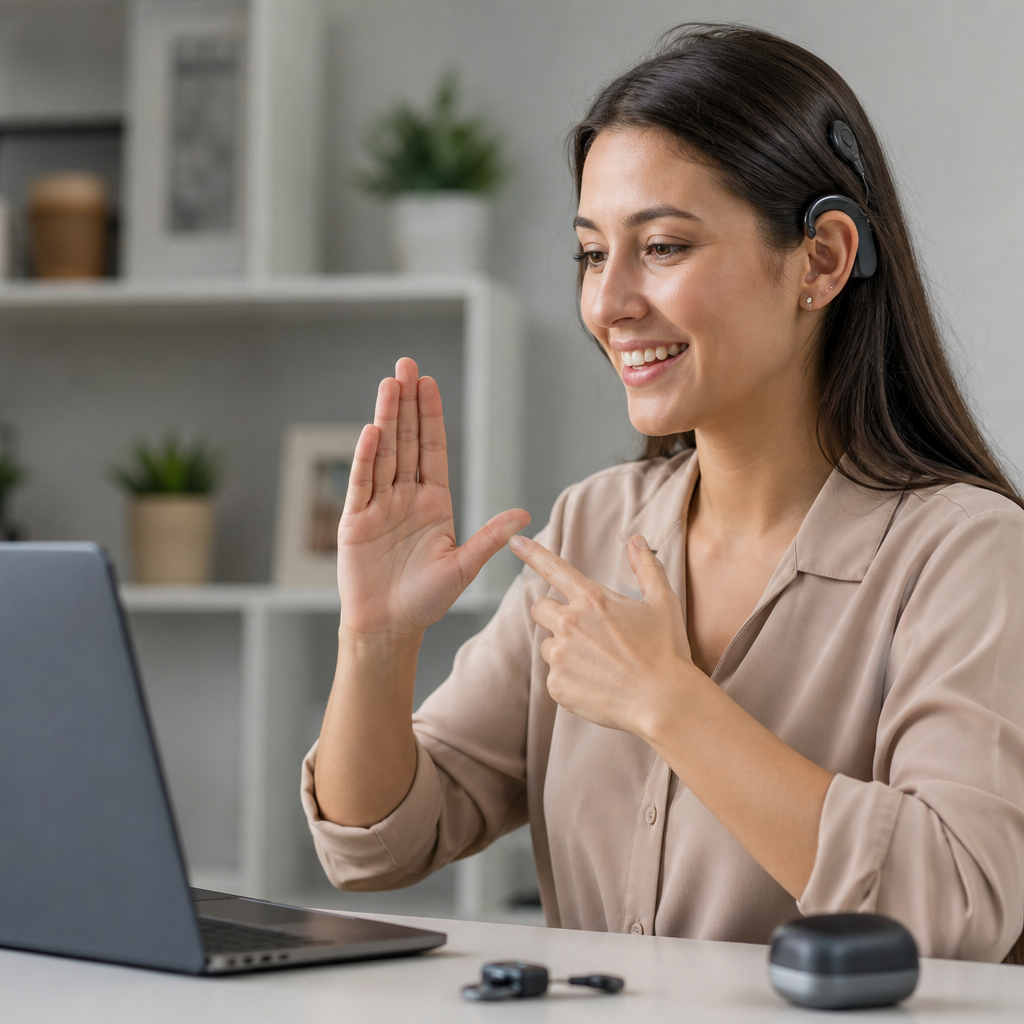

Captioning accessibility helps businesses make spoken content understandable to Deaf and hard of hearing people, support viewers in sound-sensitive environments, and improve comprehension for anyone processing information better through text. In practice, captioning accessibility means providing accurate, synchronized on-screen text for dialogue, relevant sound cues, speaker changes, and sometimes translations, across videos, webinars, meetings, social clips, live events, kiosks, and training platforms. It overlaps with transcription, but the two are not identical: a transcript is a text record of speech, while captions are time-coded and designed to match media playback. After helping organizations audit video libraries, procurement policies, and live event workflows, I have seen one pattern repeatedly: companies treat captioning as a last-minute production task when it should be a core accessibility and communications standard.
For businesses, this topic matters for legal compliance, customer reach, employee inclusion, brand credibility, and search visibility. In the United States, the Americans with Disabilities Act, Section 504, Section 508, and, in some situations, FCC rules shape expectations around accessible media, while global companies also need to consider EN 301 549, the Equality Act, and the Web Content Accessibility Guidelines, especially Success Criterion 1.2 on time-based media. Good captioning reduces friction in onboarding, e-learning, customer support, social marketing, and internal communications. It also boosts retention because viewers often watch muted content on mobile devices. A strong captioning and transcription strategy therefore serves accessibility, usability, and discoverability at the same time, making this subtopic a practical hub for every business building more inclusive digital communication.
What captioning accessibility includes
Businesses often ask a basic question first: what counts as accessible captioning? The answer is broader than adding auto-generated subtitles to a video file. Accessible captions should be accurate, complete, synchronized with speech, and placed so they do not block critical visual information. They should identify speakers when that is not obvious, include meaningful non-speech audio such as laughter, applause, alarms, music cues, and note important background sounds when they affect understanding. Open captions are burned into video and always visible; closed captions can be turned on or off by the viewer. Subtitles usually translate dialogue for people who can hear the audio but do not understand the language, while captions are built for access to spoken and audio context.
For a business hub page on captioning and transcription tools, it helps to map the full ecosystem. Recorded video captioning covers product demos, marketing videos, webinars, courses, investor updates, and support tutorials. Live captioning includes town halls, conferences, webinars, meetings, and streaming events. Transcription tools convert speech to text for notes, archives, search, and content repurposing. Speech recognition software, caption editing platforms, media players, conferencing tools, and accessibility testing tools all fit into the workflow. If a company publishes multimedia at scale, the operational question is not whether captions are needed; it is how to set quality standards, choose tools, assign ownership, and maintain consistency across channels.
Why businesses should prioritize captions now
Captions are not a niche accommodation. More than five percent of the world’s population experiences disabling hearing loss according to the World Health Organization, and many more people live with mild or situational hearing challenges. In day-to-day business settings, viewers rely on captions because they are in open offices, airports, waiting rooms, factory floors, classrooms, or homes with sleeping children nearby. Employees with auditory processing differences, people learning a second language, and customers trying to absorb technical terminology all benefit. In user research sessions I have run, captioned tutorials consistently produced fewer replay actions because users could confirm terminology visually instead of rewinding repeatedly.
There is also a measurable business case. Captions increase completion rates on video, improve comprehension, and create text assets that support indexing, translation, and reuse in blogs, FAQs, knowledge bases, and sales enablement materials. Customer support teams can turn transcribed call themes into searchable documentation. Human resources teams can caption benefits explainers and compliance training for consistent access. Sales and marketing teams can post muted autoplay social clips that still communicate the message clearly. When executives understand that captions improve both inclusion and content performance, budget conversations become easier because the return is spread across legal risk reduction, engagement, productivity, and content operations.
Core quality standards for effective captions
Not all captions are equal, and poor captions can exclude people almost as effectively as having none. Businesses should define quality standards before choosing any tool. Accuracy is the first requirement. Industry practice often targets at least 99 percent accuracy for professional recorded captions, especially for medical, legal, financial, safety, and technical content where terminology matters. Timing is the second requirement: captions must appear when speech occurs and stay on screen long enough to be read. Completeness is third: edited summaries are not captions if they omit essential wording. Readability matters too, including line length, segmentation, punctuation, capitalization, and contrast.
Standards from WCAG and broadcasting practice provide a useful baseline, but implementation details matter. Proper speaker identification avoids confusion in panel discussions. Sound cues such as [door slams] or [music fades] should be included when they affect meaning or emotional context. Jargon should be checked against brand glossaries and product naming conventions. If automatic speech recognition renders “SAML” as “sample” or “PCI DSS” as unrelated words, the content can become misleading or noncompliant. Teams should also distinguish between acceptable latency in live captions and the much higher precision expected in recorded media. The right benchmark depends on use case, but every benchmark should be explicit.
Choosing captioning and transcription tools
Tool selection should start with content type, turnaround time, required accuracy, and integration needs. For recorded media, businesses commonly use platforms such as 3Play Media, Rev, Verbit, SyncWords, or Adobe Premiere Pro workflows paired with human review. For meetings and webinars, Zoom, Microsoft Teams, Google Meet, and Webex offer built-in live captions and transcript features, but their output quality varies with audio conditions, accents, cross-talk, and domain-specific vocabulary. For enterprise video hosting, Kaltura, Panopto, Brightcove, Vimeo, and YouTube each support captions differently, with varying metadata, editing, and player controls.
The central decision is usually machine-only, human-only, or hybrid. Machine transcription is fast and inexpensive, making it useful for drafts, internal notes, large backlogs, or low-risk content. Human captioning delivers stronger results for branded, public, regulated, multilingual, and high-stakes material. Hybrid workflows use automatic speech recognition to generate a first pass, then route files to editors who correct terminology, punctuation, sound cues, and timing. In most organizations I have advised, hybrid becomes the most practical model because it balances cost and quality while fitting existing production cycles.
| Use case | Best-fit approach | Why it works |
|---|---|---|
| Public marketing video | Hybrid or human-reviewed captions | Protects brand voice, catches names, slogans, and product terms |
| Internal meeting archive | Machine transcript with limited cleanup | Fast access for search and note review at lower cost |
| Compliance or safety training | Human-reviewed captions | Accuracy reduces legal and operational risk |
| Live webinar or event | Built-in live captions or CART, depending on stakes | Balances latency, budget, and audience needs |
| Social media clips | Open captions with editorial review | Ensures message is visible on mute and readable on mobile |
Building an accessible captioning workflow
A reliable captioning program depends less on any single vendor and more on process discipline. Start by inventorying media: websites, learning systems, support centers, intranets, social channels, event platforms, and digital signage. Then classify content by audience, risk, and volume. Public-facing videos, onboarding modules, and executive announcements usually belong in the highest-priority tier. Next, document a workflow covering script preparation, recording standards, automated transcription, editing, quality assurance, publishing, and periodic review. Assign ownership across marketing, learning and development, IT, procurement, legal, and accessibility leads so requests do not disappear between teams.
Audio quality is one of the cheapest ways to improve caption quality. Use good microphones, reduce background noise, capture separate speaker channels when possible, and coach presenters to avoid talking over each other. Maintain approved terminology lists for product names, acronyms, employee names, and industry vocabulary. For recurring webinars, preload glossaries into supported tools or share them with caption vendors. Build caption checks into publishing workflows just as you would link checks or brand approval. If your CMS or video platform supports required fields, make caption status visible before publication. Organizations that operationalize these steps avoid the common cycle of emergency fixes after complaints.
Supporting live events, meetings, and hybrid work
Live communication is where many businesses still fall short. Built-in captions in meeting platforms have improved significantly, but they are not interchangeable with Communication Access Realtime Translation, often called CART. CART uses trained captioners who listen and produce near-real-time text, generally with higher accuracy for fast speakers, technical terms, and multi-speaker sessions. For routine internal meetings, automatic captions may be sufficient when participants can also use chat, agendas, and follow-up notes. For board meetings, legal briefings, conferences, earnings calls, or events where accessibility requests have been made, professional live captioning is usually the safer standard.
Hybrid events require extra planning because the in-room and remote experiences differ. Captions may need to appear on the webcast player, the presentation screen, and room displays simultaneously. Presenters should repeat audience questions into microphones so remote attendees and captioners can capture them. If interpreters are also involved, stage layouts must prevent visual conflicts between slides, captions, and signed communication. After the event, preserve transcripts and corrected caption files as part of the archive. That archive can feed post-event summaries, searchable knowledge bases, and future training assets, extending the value of a one-time accessibility investment.
Compliance, testing, and continuous improvement
Compliance should be approached as a sustained program, not a one-off remediation project. Businesses need a policy that defines when captions are required, what quality threshold applies, who approves exceptions, and how quickly requested accommodations are fulfilled. Procurement language should require vendors to support caption files such as SRT, VTT, or SCC where appropriate, expose caption controls in players, and avoid locking accessibility behind unsupported interfaces. Testing should include desktop and mobile playback, keyboard navigation, contrast, overlapping controls, and behavior across browsers and apps. Captions that exist but cannot be activated reliably still create barriers.
Measurement closes the loop. Track caption coverage across content libraries, average turnaround time, cost by content type, editing time, live caption latency, and user complaints or support tickets. Review error patterns to identify root causes such as poor audio capture, missing glossaries, or weak vendor performance. Include disabled employees and Deaf or hard of hearing users in testing, because lived experience surfaces issues that checklists miss. As your subtopic hub expands, connect related resources on caption file formats, transcription software, meeting accessibility, video platform selection, and vendor evaluation. The benefit is cumulative: each article answers a narrower question while this hub anchors the full business strategy for captioning accessibility.
Businesses improve captioning accessibility when they stop treating captions as optional decoration and start treating them as essential infrastructure for communication. The fundamentals are clear: understand the difference between captions and transcripts, apply quality standards for accuracy and timing, choose tools based on risk and use case, and build workflows that make accessible publishing the default. Recorded media needs dependable review, live events need planning, and every platform in the stack needs testing. When these pieces are in place, captioning supports compliance, customer experience, employee inclusion, and better content performance at the same time.
The strongest programs are practical, documented, and measurable. They use automatic tools where speed matters, human review where precision matters, and governance everywhere. They also recognize that accessibility is not solved by software alone; it depends on procurement, production habits, content ownership, and feedback from people who rely on captions every day. If your business publishes video, hosts webinars, records meetings, or delivers digital training, start with an audit of your current content and tools, set a captioning standard, and make this hub the starting point for a broader accessibility roadmap.
Frequently Asked Questions
What does captioning accessibility mean for businesses?
Captioning accessibility means making spoken content understandable and usable through clear, accurate on-screen text. For businesses, this goes far beyond simply adding words to a video. Accessible captions should reflect dialogue accurately, stay synchronized with speech, identify speaker changes when needed, and include relevant non-speech information such as laughter, applause, music cues, alarms, or other sounds that affect meaning. This helps Deaf and hard of hearing audiences fully access the content, while also supporting people watching in quiet offices, public spaces, noisy environments, or situations where audio cannot be used.
In a business setting, captioning accessibility should be applied consistently across all customer-facing and internal communication channels. That includes marketing videos, product demos, webinars, training modules, virtual meetings, social media clips, live events, kiosks, and educational materials. When captions are done well, they improve comprehension, reduce misunderstandings, and create a more inclusive experience for a wider audience. They also signal that the business values accessibility as part of its communication standards rather than as an afterthought.
Why should businesses invest in better captioning instead of relying only on automatic captions?
Automatic captions can be a helpful starting point, but on their own they often fall short of accessibility expectations. Speech recognition tools may misidentify industry-specific terminology, brand names, accents, fast speech, multiple speakers, or background noise. They also frequently miss punctuation, speaker distinctions, and important sound cues. In business content, even small errors can create confusion, weaken credibility, and prevent viewers from understanding key information such as instructions, policies, product features, or legal messaging.
Investing in better captioning means prioritizing quality control. That may involve human review, editing workflows, style guidelines, and platform testing to make sure captions display correctly across devices. Accurate captions improve accessibility for Deaf and hard of hearing users, but they also benefit a much broader audience by making content easier to follow and retain. For businesses, this can lead to better engagement, stronger training outcomes, clearer customer communication, and a more professional brand presentation. In short, automatic captions are useful, but accessible captioning requires accuracy, context, and consistency.
What are the key elements of high-quality accessible captions?
High-quality accessible captions share several essential characteristics. First, they are accurate. The text should closely match what is said without introducing misleading errors or omitting important information. Second, they are synchronized, meaning the captions appear and disappear at the right time so viewers can follow the content naturally. Third, they are complete enough to preserve meaning, including relevant sound information such as phone ringing, audience reaction, music changes, or environmental sounds when those details matter to the experience or message.
Good captions also account for readability. They should be broken into logical phrases, use clear punctuation, and remain on screen long enough to be read comfortably. When multiple people are speaking, captions should indicate speaker changes in a way that reduces confusion. Businesses should also consider formatting and platform compatibility so captions work across websites, video players, social media channels, webinars, and live-streaming tools. If content is multilingual or serves diverse audiences, translated captions or subtitles may also be part of an effective accessibility strategy. Altogether, quality captions are not just technically present—they are understandable, usable, and thoughtfully designed for real viewers.
Where should businesses prioritize captioning accessibility first?
Businesses should start with the content that has the greatest reach, highest business value, or most significant accessibility impact. For many organizations, that means prioritizing public-facing videos such as website explainers, product demonstrations, customer support content, advertisements, social media videos, and webinar recordings. These assets often shape first impressions and are widely consumed across different environments, making accessible captions especially important. Internal materials should also be high on the list, particularly employee training videos, onboarding programs, compliance modules, executive announcements, and recurring virtual meetings.
A practical way to prioritize is to audit content by frequency of use, audience size, legal or operational importance, and current accessibility gaps. For example, a training platform used daily by employees may need immediate attention, while older archived content can be addressed in phases. Live events and meetings may require real-time captioning solutions, while pre-recorded content can follow a review-and-edit workflow. Businesses that take a structured approach can improve accessibility faster and more efficiently, rather than trying to caption everything at once without a plan. The goal is to build a sustainable process that covers both immediate needs and long-term consistency.
How can businesses build a long-term captioning accessibility strategy?
A strong long-term strategy starts with treating captioning as a standard part of content production, not a separate step added only when someone requests it. Businesses should create clear internal policies that define when captions are required, what quality standards must be met, who is responsible for reviewing them, and how captions will be delivered across platforms. This often includes selecting reliable tools or service providers, training teams on accessibility requirements, and building caption review into production timelines for video, webinars, live streams, and digital communications.
It is also important to monitor performance and improve over time. Businesses can review error rates, gather user feedback, test captions across devices, and update workflows as content formats evolve. Teams should pay attention to accessibility in both external communications and internal operations, since employees, customers, partners, and event attendees may all depend on captions. Organizations that approach captioning strategically often see benefits beyond compliance or accommodation: stronger audience engagement, better content comprehension, broader reach, and a more inclusive brand reputation. A long-term strategy works best when accessibility is built into culture, process, and technology from the start.