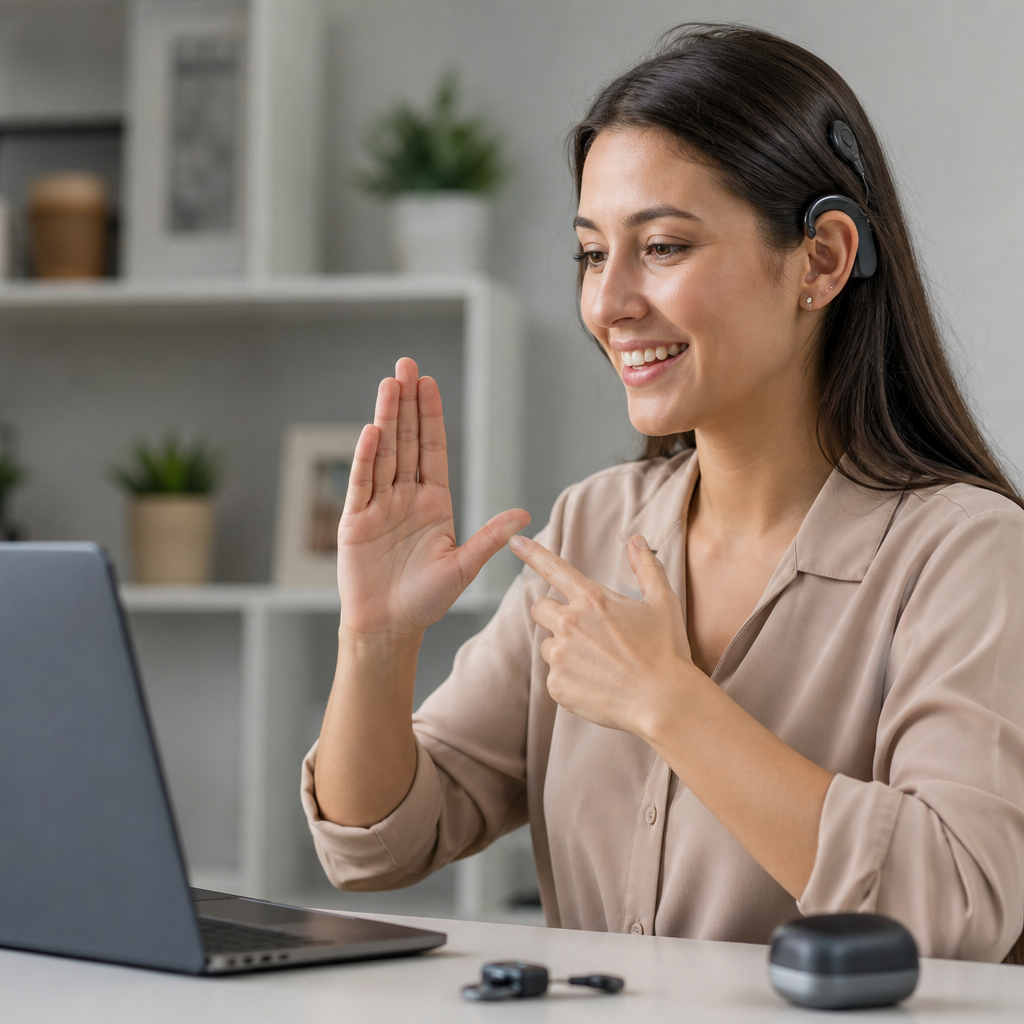
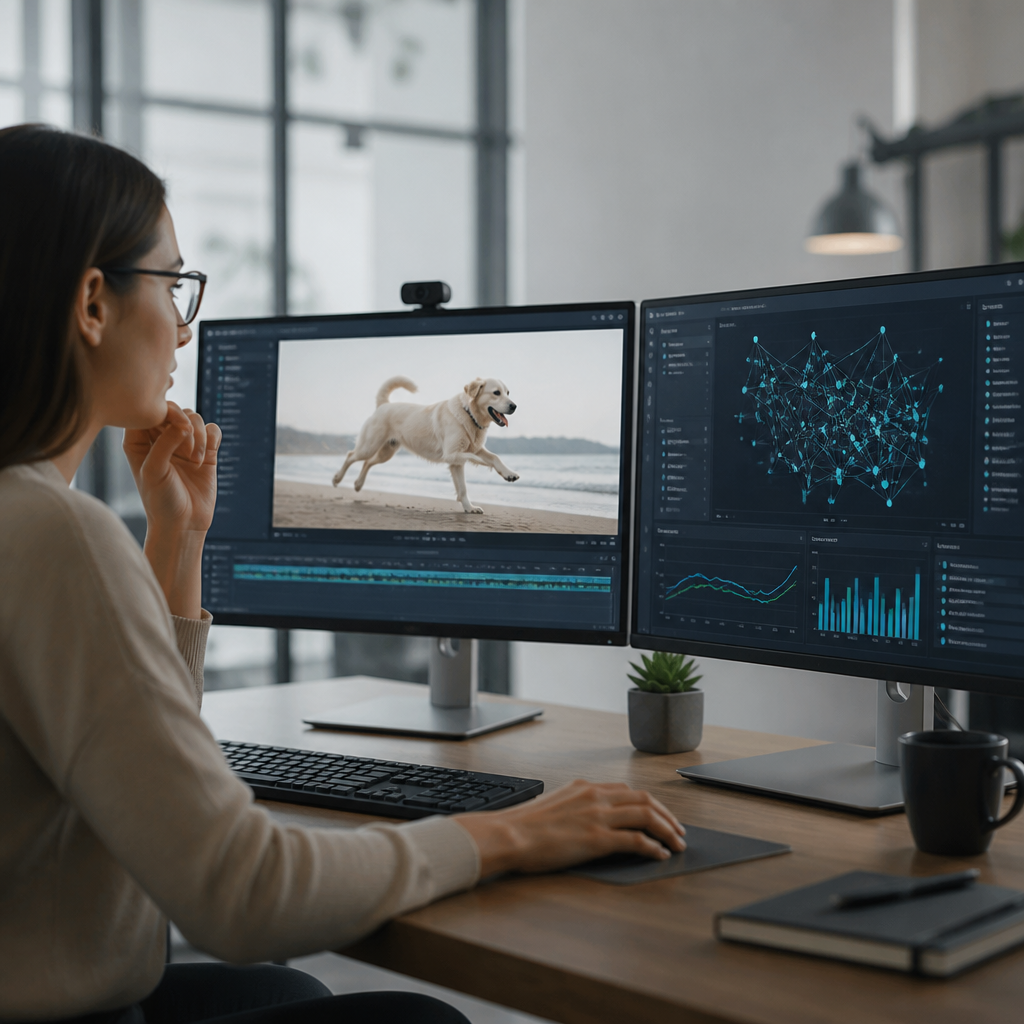
Machine learning is improving caption accuracy by turning speech recognition from a rigid rule-based process into an adaptive system that learns from vast amounts of real audio, text, and context. In accessibility work, caption accuracy means more than getting most words roughly right. It includes correct punctuation, speaker changes, timing, line breaks, domain-specific vocabulary, and reliable handling of accents, background noise, and fast conversational speech. For Deaf and hard of hearing viewers, those details determine whether a meeting, lecture, livestream, or emergency announcement is understandable or frustrating. I have worked with captioning teams that measured not only word error rate, but also latency, readability, and usability in real viewing conditions, and the lesson was consistent: small technical gains can create major access gains. This matters because captions now sit at the center of digital communication, from classrooms and telehealth visits to corporate webinars, streaming media, public service video, and workplace collaboration platforms. As the broader field of AI and the future of accessibility evolves, machine learning has become the engine behind better automatic captions, smarter editing tools, multilingual support, and more personalized communication access. Understanding how that improvement happens helps organizations choose better tools, set realistic expectations, and build inclusive systems that work in the real world.
How modern speech recognition raises caption accuracy
The biggest improvement comes from automatic speech recognition systems trained on large, diverse datasets. Older caption engines depended heavily on hand-built acoustic models, pronunciation dictionaries, and limited language rules. Modern systems use deep neural networks, transformer architectures, and self-supervised learning to model speech patterns directly from audio at scale. In practical terms, that means the software recognizes a wider range of speaking styles and predicts likely words using both sound and context. If a presenter says “assistive technology compliance audit,” a strong model uses neighboring words to resolve ambiguous sounds that might otherwise be transcribed incorrectly. This is why newer engines from providers such as Google, Microsoft, AWS, and specialized accessibility platforms generally perform better than earlier generations in lectures, meetings, and media workflows.
Accuracy is usually discussed through word error rate, but caption quality depends on more than that single metric. A system may correctly catch individual words while still failing to produce readable captions if punctuation is missing or lines break awkwardly. Machine learning improves these layers too. Separate models can restore commas and periods, identify sentence boundaries, detect disfluencies such as repeated filler words, and segment captions into readable chunks. In newsroom and live event settings, I have seen punctuation restoration alone make automatic captions feel dramatically more professional and easier to follow. Good captioning systems increasingly combine acoustic modeling, language modeling, diarization, punctuation, and formatting into one workflow, reducing the need for extensive manual cleanup.
Why context, customization, and language models matter
One reason machine learning improves caption accuracy so effectively is that it handles context at multiple levels. Caption engines no longer evaluate each sound in isolation. They examine the sequence of words, the probable topic, and in some cases even the user’s custom vocabulary. In healthcare, legal, higher education, and technical industries, terminology can ruin otherwise strong captions. Terms such as “ototoxicity,” “habeas corpus,” “neurodivergent,” or “Kubernetes” are often missed by generic engines. Many tools now allow custom phrase hints, dynamic vocabularies, or domain adaptation. When these features are configured well, accuracy jumps because the system knows what terms are likely to appear.
Large language models also influence caption quality, especially after the initial speech-to-text pass. They can help normalize capitalization, infer punctuation, and resolve probable transcript errors based on surrounding meaning. Used carefully, this can improve readability. Used carelessly, it can introduce hallucinated words that were never spoken. That tradeoff is critical. For accessibility, faithfulness to the source matters as much as fluency. The best systems apply constrained language modeling, confidence scoring, and human review policies for sensitive use cases. In my experience, captions for a product demo can tolerate more automated cleanup than captions for a legal deposition or medical consultation, where preserving exact wording is essential.
Where machine learning still struggles and why human oversight remains important
Machine learning has improved caption accuracy substantially, but it has not eliminated hard cases. Overlapping speakers remain one of the most persistent problems. In a fast Zoom discussion or panel event, even strong models can merge voices, drop short interjections, or assign text to the wrong speaker. Background noise, crosstalk, poor microphones, reverberant rooms, and unstable internet audio also degrade results. Accents are another area that requires careful discussion. Performance has improved because training data is broader than it used to be, but not all accents are represented equally, and underrepresented speakers still face higher error rates. This is not a minor technical footnote; it is an accessibility equity issue.
Speaker diarization, the process of determining who spoke when, has become better through machine learning embeddings and clustering methods, yet mistakes still happen in group settings. The same applies to non-speech sounds. Captions should not only render dialogue; they should also identify meaningful audio such as laughter, alarms, applause, music cues, or “door slams.” Models can classify many of these events, but they need tuning to avoid cluttering captions with unnecessary labels. Human oversight remains necessary whenever accuracy has legal, educational, or safety consequences. The most reliable workflows today pair automation with trained editors, CART professionals, or quality assurance review, especially for live events, compliance-driven environments, and archived media intended for broad public use.
How live captioning differs from prerecorded captioning
Live captioning and prerecorded captioning involve different technical tradeoffs, and machine learning improves each in distinct ways. In prerecorded media, systems can process audio with more time, run multiple passes, use stronger language models, and synchronize captions carefully to the final edit. That usually produces higher accuracy. Streaming platforms and video management systems often let teams upload a file, generate automatic captions, then edit them inside a caption editor before publishing. In this workflow, machine learning does the heavy lifting, while humans refine timing, speaker labels, and terminology.
Live captioning is harder because speed matters alongside accuracy. A caption that appears ten seconds late may be technically correct but functionally unusable in a classroom, webinar, or public meeting. Modern streaming caption systems reduce latency through low-lag decoding, chunked audio processing, and endpoint detection that decides when a phrase is likely complete. The challenge is balancing delay against readability. Very low latency can produce choppy, constantly revising text. Slightly higher latency can improve sentence stability and punctuation. Accessibility teams should evaluate both factors rather than chasing a single performance number.
| Captioning scenario | Main machine learning advantage | Typical challenge | Best practice |
|---|---|---|---|
| Prerecorded training video | High accuracy through multi-pass transcription | Technical terminology and speaker labels | Edit autogenerated captions before publishing |
| Live webinar | Low-latency speech recognition | Fast speech and unstable audio | Use quality microphones and monitor delay |
| Classroom lecture | Custom vocabulary for course terms | Questions from the audience | Add phrase hints and repeat audience questions |
| Medical consultation | Domain-adapted language modeling | Need for exact wording and privacy | Combine secure tools with human review |
Key technologies shaping AI and the future of accessibility
Captioning is now part of a broader accessibility technology stack. Machine learning supports automatic translation, voice isolation, noise suppression, assistive note generation, searchable transcripts, and meeting summaries. For Deaf users, this matters because access is rarely limited to one feature. A student may need accurate live captions during class, a searchable transcript for review, and translated subtitles for multilingual content. A remote employee may rely on platform captions during meetings, then use transcript search to confirm action items. Tools in Microsoft Teams, Google Meet, Zoom, YouTube, and specialized accessibility vendors increasingly package these capabilities together, making captions one layer in a wider communication access system.
Another major development is multilingual captioning. Neural machine translation has improved subtitle generation across languages, but direct automatic translation should be treated carefully in high-stakes contexts. If the source captions contain errors, the translated captions amplify them. Even with strong translation models, idioms, dialect, and culture-specific references can be mishandled. The practical lesson is simple: strong source captions create better downstream accessibility. Emerging models are also improving speech enhancement by separating voices from noise, and some devices now perform portions of the captioning pipeline on-device for privacy and lower latency. That architecture can be especially useful in healthcare, education, and workplace settings where data handling requirements are strict.
How to evaluate caption tools for real accessibility outcomes
Choosing a caption solution requires more than asking whether it uses AI. Organizations should test with representative audio and realistic users. Start with plain questions: How accurate are the captions for your actual speakers, topics, and environments? How quickly do live captions appear? Can the tool identify speakers? Does it support custom vocabulary? How easy is it to correct errors? Does it export standard formats such as SRT, VTT, or TTML? Does it integrate with your video platform, learning management system, or conferencing software? These operational details determine whether a promising demo translates into meaningful access.
Quality assessment should combine quantitative and qualitative measures. Word error rate is useful, but also review punctuation, synchronization, readability, non-speech cues, and user satisfaction. The FCC quality principles for captions, along with WCAG requirements around prerecorded and live synchronized media, provide a practical standards baseline. In procurement reviews I have run, we also tested edge cases: multiple speakers, masks, accented English, lecture halls, call-center audio, and industry jargon. Results varied widely between tools that looked similar on paper. The best outcomes usually came from systems paired with good audio practices, vocabulary setup, and a defined review process. Technology matters, but deployment discipline matters too.
What organizations can do next to improve caption accuracy
Improving caption accuracy starts before any algorithm processes sound. Better microphones, quieter rooms, stable audio routing, and consistent speaker technique can raise results immediately. Encourage presenters to use headsets or close microphones, avoid talking over one another, and share glossaries in advance for technical events. Turn on custom dictionaries where available. For prerecorded media, budget time for editing automatic captions instead of publishing raw output. For live high-stakes events, consider professional live captioners or hybrid workflows that blend human expertise with machine assistance.
The larger lesson in AI and the future of accessibility is that machine learning works best when organizations treat captions as essential communication infrastructure, not an afterthought. Modern models have undeniably improved speech recognition, punctuation, timing, terminology handling, and multilingual support. They have also made captioning available at a scale and price point that was impossible for many teams just a few years ago. Yet the most inclusive results still come from intentional implementation: selecting the right tool, testing it with real users, monitoring quality, and correcting weaknesses through human review and better audio design. If you manage video, meetings, education, or digital services, audit your current caption workflow and upgrade the parts that create avoidable errors. Better captions mean better access, and better access improves communication for everyone.
Frequently Asked Questions
How does machine learning improve caption accuracy compared with older captioning methods?
Machine learning improves caption accuracy by replacing rigid, hand-built speech recognition rules with systems that learn from massive collections of real-world audio, transcripts, and language patterns. Older approaches often depended on limited dictionaries, fixed pronunciation rules, and narrow assumptions about how people speak. That made them more likely to struggle when speakers talked quickly, used industry-specific terms, spoke with regional or international accents, or appeared in noisy environments. Machine learning models, especially modern automatic speech recognition systems, perform better because they can detect patterns across countless examples and continuously refine how they interpret speech.
In practice, that means captions are better at recognizing not just individual words, but also the relationships between words, likely sentence structure, and context within a conversation. If a speaker says a term that sounds similar to another word, a machine learning system can use surrounding language to choose the more probable option. These systems are also better at adapting to natural speech, including false starts, overlapping dialogue, varied pacing, and casual phrasing. As a result, caption quality improves in ways that matter to viewers: fewer word substitutions, more accurate punctuation, better speaker identification, more readable timing, and stronger performance in challenging audio conditions. For accessibility, that shift is significant because users need captions that communicate meaning clearly, not captions that simply approximate the sounds being spoken.
What does “caption accuracy” really include beyond getting the words mostly right?
Caption accuracy is much broader than word recognition alone. A caption can contain most of the spoken words and still fail the viewer if it is poorly timed, confusingly formatted, or missing important context. High-quality captions must present speech in a way that is readable, synchronized, and faithful to what is being said. That includes correct punctuation, sensible line breaks, accurate speaker changes, and timing that matches the pace of the audio. It also includes non-speech information when relevant, such as meaningful sound cues, laughter, music changes, or audible events that contribute to understanding.
Machine learning helps support these layers of accuracy by identifying patterns in spoken language and improving how captions are segmented and displayed. For example, better language modeling can help determine where one sentence ends and another begins, which improves punctuation and readability. Speaker diarization models can distinguish between different speakers, making conversations easier to follow. Timing models can align text more precisely with audio, which is especially important in fast dialogue or educational content where viewers must connect what they see and hear in real time. For Deaf and hard of hearing viewers, these details are not cosmetic. They directly affect comprehension, reduce cognitive strain, and make content more genuinely accessible.
Can machine learning handle accents, background noise, and fast conversational speech more effectively?
Yes, one of the biggest advantages of machine learning is its ability to improve performance under the kinds of conditions that commonly reduce caption quality. Human speech is highly variable. People have different accents, vocal tones, speaking speeds, and pronunciation habits. Real audio also includes background noise, echo, crosstalk, and inconsistent microphone quality. Traditional rule-based systems were often brittle in these situations because they lacked enough flexibility to interpret speech outside a narrow expected range. Machine learning systems are generally stronger because they are trained on diverse datasets that expose them to many kinds of voices and listening conditions.
That said, success depends heavily on the quality and diversity of the training data. A system trained on broad, representative audio samples is more likely to recognize regional speech patterns, multilingual influences, and informal conversational rhythm. Noise-robust models can learn to separate speech from surrounding sounds, while advanced acoustic modeling can better track words spoken rapidly or with reduced articulation. Some systems also use context-aware language models to infer likely words when the signal is partially obscured. Even so, no system is perfect. Heavy background noise, multiple speakers talking at once, highly specialized terminology, or underrepresented accents can still create errors. Machine learning does not eliminate these challenges, but it has substantially improved how often captioning systems can manage them with usable, readable results.
Why is domain-specific vocabulary such an important part of caption accuracy?
Domain-specific vocabulary matters because many captioning errors happen when a system encounters terms that are uncommon in everyday speech but essential to the meaning of the content. In a medical lecture, legal proceeding, engineering presentation, financial report, or software tutorial, a single specialized term can carry critical information. If that term is misrecognized, the caption may become misleading, confusing, or unusable. A general-purpose speech model might correctly identify common conversational language while still failing on product names, acronyms, technical jargon, brand terminology, or proper nouns that viewers need in order to follow the content accurately.
Machine learning improves this area by allowing models to be adapted, fine-tuned, or supplemented with domain-aware language resources. When systems are exposed to industry-specific transcripts and vocabulary, they become better at predicting specialized terms in the right context. For example, in healthcare content, a trained model may be more likely to recognize medication names or anatomical terminology. In media production, it may better identify character names, show titles, or recurring branded phrases. This matters for accessibility because viewers should not have to guess at key terms or reconstruct meaning from flawed captions. The more effectively a machine learning system handles specialized language, the more reliable and inclusive the final viewing experience becomes.
Does machine learning mean captions no longer need human review?
No, machine learning has dramatically improved caption accuracy, but it has not eliminated the need for human oversight in many important cases. Automated systems are excellent at speed, scale, and continuous improvement, which makes them valuable for live events, large media libraries, and workflows that need fast turnaround. However, accessibility-quality captions often require a level of precision and judgment that still benefits from human review. Nuance, humor, sarcasm, overlapping speakers, cultural references, and ambiguous audio can all create situations where a human editor is better equipped to make the right decision.
Human reviewers also help ensure that captions meet quality standards beyond raw transcription. They can correct punctuation for readability, refine line breaks, verify speaker labels, confirm specialized terminology, and check that timing supports comprehension. In accessibility-focused work, this quality control is especially important because small errors can have an outsized effect on understanding. The strongest captioning workflows often combine machine learning with human expertise: the system handles the first pass efficiently, and a trained editor improves clarity, consistency, and compliance. Rather than replacing people entirely, machine learning is most effective when it serves as a powerful tool that helps professionals produce faster, more accurate, and more accessible captions.