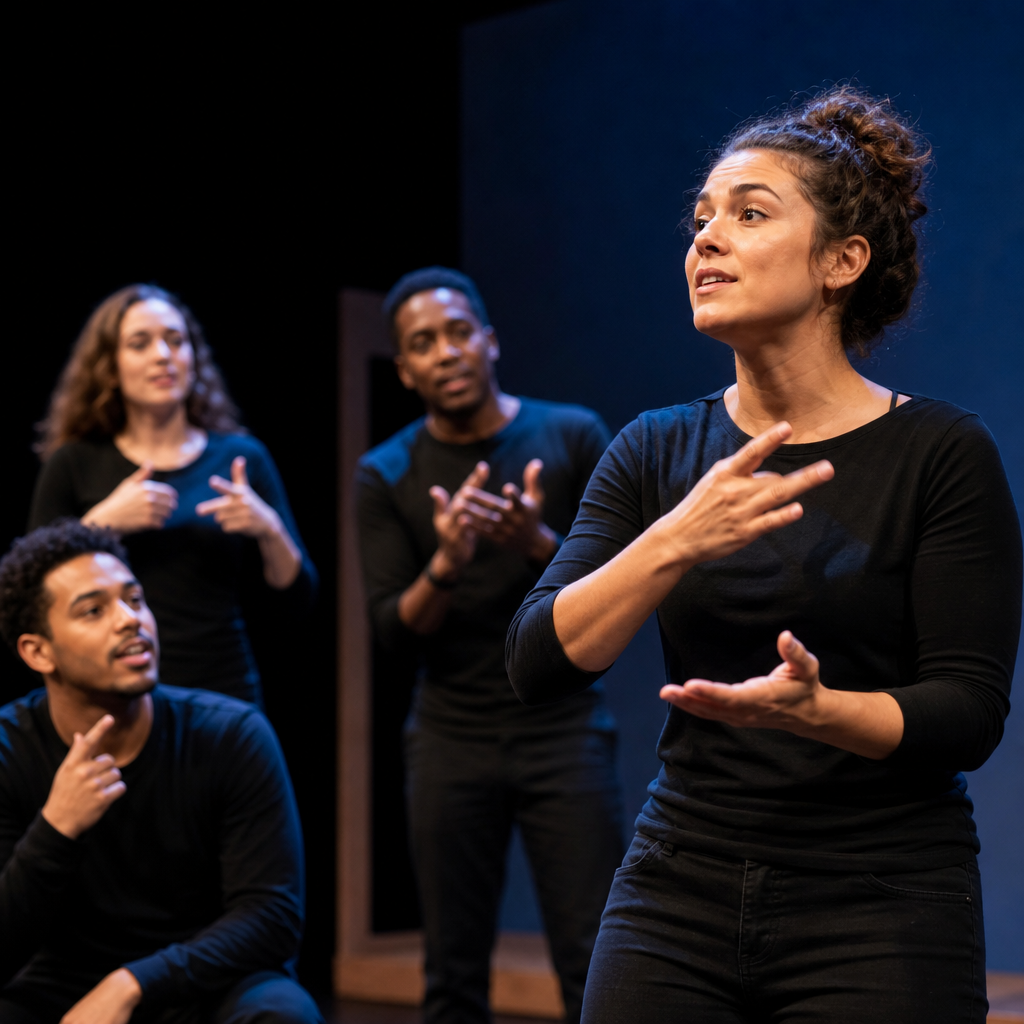

Choosing between Deaf and deaf is not a grammar trick. It is a personal, cultural, political, and social decision shaped by language, community, hearing status, family history, education, and daily experience. In Deaf Culture and Identity discussions, the phrase Deaf vs deaf, sometimes called Big D vs little d, helps explain how people describe themselves in relation to hearing loss and Deaf culture. The lowercase word usually refers to the audiological condition of not hearing fully. The uppercase word usually refers to belonging to a distinct cultural and linguistic community, often centered on sign language. In practice, many people move between these labels, reject both, or use several terms depending on context. I have seen this firsthand in community settings, schools, interpreter training programs, and advocacy work: identity language carries real consequences for belonging, access, and respect.
This matters because labels influence how people are treated in education, healthcare, workplaces, and families. A doctor may focus only on hearing thresholds, while a Deaf adult may prioritize access to signed communication, interpreters, and community connection. Parents of a newly identified deaf child often encounter conflicting advice from audiologists, speech therapists, teachers of the deaf, and Deaf mentors. Searchers asking what is the difference between Deaf and deaf usually want a direct answer, but they also need context: identity is rarely fixed. Understanding the distinction helps avoid harmful assumptions, improves communication, and supports informed choices. This article serves as a hub for the subtopic by explaining the definitions, origins, social meaning, common pathways into each identity, and the respectful language practices that support Deaf culture and identity in real life.
What Deaf and deaf mean in everyday use
The simplest answer is this: deaf with a lowercase d usually describes hearing level, while Deaf with an uppercase D usually describes cultural identity. Lowercase deaf is commonly used in medical, educational, and legal contexts to indicate significant hearing loss, whether from birth or later in life. Uppercase Deaf points to participation in a community with shared norms, values, history, and language, especially a signed language such as American Sign Language, British Sign Language, or Auslan. A person can be audiologically deaf without identifying as culturally Deaf. A person can also become strongly connected to Deaf culture later in life after years of oral education or limited signing access.
That distinction sounds clean on paper, but real lives are more layered. Some people say they are Deaf because they sign, attend Deaf events, and see deafness as a human difference rather than a defect. Others say they are deaf because they were raised in hearing families, use spoken language, or do not feel tied to Deaf institutions. Some prefer hard of hearing, late-deafened, deafblind, DeafDisabled, or hearing impaired, though that last term is often disliked because it frames the person through deficit. There is no single authority assigning these labels. Identity emerges through interaction, self-understanding, and access to community.
Where the Big D and little d distinction came from
The Big D and little d distinction developed as scholars, educators, and community leaders needed language to separate audiology from culture. In the late twentieth century, Deaf studies and sociolinguistics increasingly recognized signed languages as full natural languages with grammar, regional variation, and literary traditions. Researchers such as Carol Padden helped formalize the idea that Deaf people are not only individuals with hearing loss but members of a linguistic minority. That framework challenged older medical models that treated deafness mainly as a condition to fix through amplification, speech training, or normalization.
Historical context matters. For generations, many deaf children were educated in oralist programs that discouraged or banned signing. The 1880 Milan Conference is frequently cited because delegates endorsed oral education and pushed sign language out of many schools, with long-term effects worldwide. In contrast, Deaf clubs, residential schools, sports associations, churches, theater groups, and advocacy organizations preserved language and community life. So when people choose Deaf with a capital D, they often align themselves with that history of resistance, pride, and collective identity. The capitalization is small on the page, but it signals a major shift in worldview.
How people choose an identity label
People choose between Deaf and deaf through a mix of personal history and social opportunity. Family background is one of the strongest influences. About 90 percent of deaf children are born to hearing parents, according to widely cited public health and education data. Many of those children have limited early exposure to fluent sign language unless families intentionally seek it out. By contrast, deaf children born to Deaf parents often gain immediate language access, cultural knowledge, and a clear model of Deaf identity from infancy. Those early experiences shape whether a person later feels at home with Deaf, deaf, both, or neither.
Education also plays a major role. A student at a residential school for the Deaf may encounter peers, adult role models, sports traditions, and signed storytelling that make Deaf identity feel natural. A student mainstreamed alone in a hearing school may excel academically yet feel socially isolated, interpreting their deafness primarily as a communication barrier. Technology influences identity too. Hearing aids, cochlear implants, captioning, and remote interpreting can expand options, but they do not determine culture by themselves. I have worked with implant users who identify strongly as Deaf and non-signers who identify as deaf; devices support communication, not identity destiny.
| Influence | Often linked with Deaf identity | Often linked with deaf identity |
|---|---|---|
| Primary language | Signed language used daily at home, school, or community events | Spoken language used most of the time, sometimes with amplification |
| Family environment | Deaf relatives or hearing family committed to signing and Deaf community contact | Hearing family with limited exposure to Deaf community |
| Education | Residential school, bilingual program, strong Deaf role models | Mainstream oral program, little peer contact with other deaf students |
| View of deafness | Cultural and linguistic difference | Primarily medical or functional condition |
| Community ties | Regular participation in Deaf events, networks, advocacy, arts, or sports | Few or occasional ties to Deaf spaces |
Language, community, and belonging
Signed language is often the strongest marker of Deaf identity, but it is not a purity test. In the United States, American Sign Language is central to many Deaf spaces because it carries shared humor, norms of eye contact, turn-taking conventions, narrative styles, and cultural memory. Similar patterns exist with other national sign languages. Fluency gives access not only to information but to belonging. It lets people participate without constant fatigue from lipreading, delayed processing, or incomplete access. That is why many Deaf adults describe their first sustained contact with sign language as life changing.
Still, not every culturally Deaf person is fully fluent, and not every fluent signer identifies as Deaf. Some late learners enter the community as adults after discovering that spoken-only communication never gave them equal access. Others are deaf immigrants navigating a new national sign language while already carrying another deaf identity from home. Some hearing children of Deaf adults, often called CODAs, may be culturally immersed and fluent signers but are not themselves deaf. Community belonging therefore includes language, yes, but also shared values, participation, respect, and recognition from others.
Identity is not binary
One of the biggest mistakes in discussions of Deaf vs deaf is treating the choice as fixed and mutually exclusive. Many people use both words in different settings. Someone may describe themselves as deaf in a medical appointment because the clinician needs to understand hearing level, then identify as Deaf at a community gathering where language and culture are the point. Others write deaf/Deaf, Deaf and hard of hearing, or simply signing deaf person. Identity can change over time as communication access, friendships, politics, or family relationships change.
Late-deafened adults are a clear example. A person who loses hearing in midlife may initially relate to deafness through audiology, employment accommodation, and grief. If they later learn sign language and build ties in Deaf spaces, they may adopt Deaf identity, partially or fully. The reverse also happens: some people raised in Deaf schools later live mainly in hearing environments and use deaf more often. Intersectional identities matter as well. Race, ethnicity, disability, religion, sexuality, and nationality shape how safe and welcome a person feels in different spaces. No serious discussion of Deaf culture and identity should flatten those realities.
Common misconceptions about Deaf and deaf
A common misconception is that uppercase Deaf is more correct or more proud than lowercase deaf. That is not true. For some people, Deaf is empowering because it affirms language and community. For others, deaf is accurate because it describes their hearing status without claiming cultural membership they do not feel. Another misconception is that cochlear implant users cannot be Deaf. In practice, many implanted people sign, attend Deaf events, and identify as Deaf. Technology does not cancel culture. The real issue is whether communication access and community connection are present.
Another misunderstanding is that lowercase deaf means a person dislikes sign language or looks down on Deaf culture. Sometimes that is true, but often it is not. A person may use deaf because they were never given access to signing, because they are still exploring identity, or because regional norms differ. There is also confusion between deaf and hard of hearing. Hard of hearing usually refers to partial hearing and often different communication experiences, but boundaries vary. Finally, many hearing people assume capitalization can be assigned from the outside. It cannot. Self-identification should lead, while respectful questions can clarify when needed.
How institutions shape identity choices
Identity is personal, but institutions strongly influence the options available. Healthcare systems often start from an audiogram, measured in decibels across frequencies, and then recommend hearing aids, implants, speech therapy, or monitoring. Those services can be valuable, yet they may overlook cultural and linguistic access. Education systems are equally influential. The Individuals with Disabilities Education Act in the United States requires access, but implementation varies widely. Some schools provide interpreters, captioning, Deaf educators, and bilingual programming. Others place students in classrooms where they must work far harder than hearing peers just to follow discussion.
Workplaces and public services matter too. The Americans with Disabilities Act requires reasonable accommodations, such as interpreters, captioning, or relay access, but compliance is uneven. When institutions provide effective communication, people have more freedom to choose identity on their own terms rather than under pressure to pass as hearing. When institutions fail, individuals may distance themselves from Deaf identity to avoid stigma, or seek Deaf community because hearing spaces remain inaccessible. In other words, the Deaf vs deaf question is never just internal. It is shaped by whether society treats deaf people as problems to manage or citizens entitled to language access.
Respectful language and best practices
If you are unsure which term to use, ask the person and follow their lead. That is the most reliable rule. In writing, use Deaf when discussing culture, community, history, or sign-language-based identity. Use deaf when discussing hearing level in a general or audiological sense, unless the individual or group clearly prefers otherwise. Avoid correcting people’s self-description. Avoid assuming that speech ability, implant use, or residual hearing tells you anything definitive about identity. And avoid outdated framing that treats deafness only as loss, tragedy, or inspiration material for hearing audiences.
For parents, educators, clinicians, and employers, the practical takeaway is simple: provide full communication access first. Offer interpreters, captions, visual alerts, bilingual resources, and contact with Deaf adults. Families of deaf children benefit from meeting a range of role models, including signing Deaf professionals, oral deaf adults, and hard of hearing people who can describe different paths honestly. When access and information improve, identity choices become healthier and less defensive. If you are building content across Deaf Culture and Identity topics, link this hub to pages on ASL, Deaf schools, oralism, cochlear implants, hard of hearing identity, and deaf etiquette so readers can go deeper.
The difference between Deaf and deaf is straightforward in definition but complex in lived experience. Lowercase deaf usually refers to hearing status. Uppercase Deaf usually refers to cultural and linguistic identity connected to a signing community. People choose between them through family history, education, language access, technology, social belonging, and institutional treatment. Many use both terms, and many identities sit outside the simple binary. The most accurate approach is to understand the distinction, then listen to how individuals name themselves.
That understanding has practical value. It improves communication with patients, students, coworkers, clients, and family members. It also prevents a common mistake: assuming that hearing level alone explains a person’s needs or worldview. In reality, access, language, and community often matter just as much as audiology. If you work in education, healthcare, HR, or public service, this distinction will make you more effective. If you are exploring your own identity or supporting a deaf child, it can open better questions and better choices.
The main benefit of learning Deaf vs deaf is respect grounded in accuracy. You stop speaking about people only in medical terms and start seeing the full cultural and human context. Use this hub as your starting point, then continue into related topics on Deaf culture, sign language, schools, technology, and accessibility to build a fuller understanding.
Frequently Asked Questions
What is the difference between Deaf and deaf?
The difference between Deaf and deaf is not just about capitalization. In most discussions of Deaf culture and identity, lowercase deaf usually refers to the audiological condition of not hearing fully, while uppercase Deaf often refers to a cultural and linguistic identity connected to the Deaf community. A person who describes themselves as deaf may be talking primarily about hearing status. A person who describes themselves as Deaf may be signaling connection to shared experiences, signed language, community traditions, social networks, and a distinct cultural worldview.
That said, these definitions are not rigid rules. Real life is much more nuanced. Some people move between identities over time. Some use both terms depending on context. Others reject the distinction entirely. For example, a person may be medically deaf but not identify with Deaf culture because they were raised in a hearing environment and never had access to sign language or Deaf community spaces. Another person may strongly identify as Deaf because sign language, community belonging, and cultural pride are central parts of life. The key point is that the choice reflects identity, not just hearing level.
Why do some people prefer the uppercase word Deaf?
Many people prefer Deaf because it recognizes that they are part of a cultural and linguistic minority, not simply people with hearing loss. In this sense, Deaf identity can include shared history, signed languages such as ASL or other national sign languages, community institutions, schools, advocacy traditions, and values shaped by visual communication. Using the uppercase form can be a way to affirm pride, belonging, and resistance to the idea that deafness must always be framed as a deficit or medical problem.
For some, choosing Deaf is also political. It can reflect the belief that access, language rights, and cultural recognition matter as much as audiological facts. A person may use Deaf to say, in effect, “I am part of a community with its own language and culture.” This can be especially important in conversations about Deaf education, interpreters, communication access, and representation. Still, not every person with hearing loss relates to that identity, and not every Deaf person uses the term in exactly the same way. The preference is personal, even when it is grounded in community experience.
Why do some people choose the lowercase word deaf instead?
Some people choose deaf because it feels more accurate to their own experience. They may see their condition primarily in audiological or practical terms rather than as a cultural identity. For example, a person may have significant hearing loss but communicate mostly through spoken language, use hearing technology, and have little or no connection to Deaf community life. In that situation, lowercase deaf may feel like the most honest and comfortable description.
There are also people who grew up in hearing families, attended mainstream schools, or did not gain access to sign language until later in life. They may not feel that the uppercase form reflects their background. Others may avoid labels tied to cultural expectations because identity is complex and deeply personal. Choosing deaf does not mean someone lacks pride or is “less valid.” It simply means their self-description is shaped by different experiences, priorities, and relationships. Respecting that choice is just as important as respecting someone who identifies as Deaf.
What factors influence how someone chooses between Deaf and deaf?
Many factors can influence this choice, which is why there is no one-size-fits-all answer. Language is often a major factor. People who use sign language as a primary language or who are deeply involved in signing communities may be more likely to identify as Deaf. Community connection matters too. Participation in Deaf organizations, friendships, schools for Deaf students, Deaf events, and cultural traditions can all shape identity in meaningful ways.
Family history, education, and hearing status also play important roles. Someone raised by Deaf family members may understand themselves differently from someone who grew up as the only deaf person in a hearing household. Educational setting can be significant as well, especially if it affected language access and social belonging. Personal politics, attitudes toward disability, experiences with exclusion or acceptance, use of cochlear implants or hearing aids, and comfort with different forms of communication may all contribute. Identity can also change over time. A person might identify as deaf in one stage of life and later embrace Deaf identity after finding community and language access. The most accurate approach is to let individuals define themselves.
How should you refer to someone if you are unsure whether they prefer Deaf or deaf?
If you are unsure, the best approach is simple: ask respectfully and follow the person’s preference. Identity language should never be assumed based only on hearing level, speech ability, or whether someone signs. A brief, polite question such as “How do you prefer to identify?” can prevent misunderstanding and shows respect for personal experience. If asking is not possible, use neutral and accurate language until you know more, and avoid correcting someone’s self-identification.
It is also helpful to remember that these terms carry personal, cultural, and sometimes political meaning. Using the right word is not about being overly formal; it is about acknowledging how people understand themselves. In writing, especially in articles about Deaf culture and identity, it is good practice to explain the distinction clearly and note that individual preferences vary. The most respectful rule is to center lived experience: people get to name themselves, and others should honor that choice.