
Understanding identity labels in the Deaf community starts with a distinction that looks small on the page but carries deep cultural meaning in real life. The terms Deaf and deaf are often written with a capital D or a lowercase d to show different relationships to hearing loss, language, community, and culture. In everyday conversation, people may use these labels loosely, but within Deaf studies, community organizations, and lived experience, the distinction matters. Big D Deaf usually refers to people who identify with Deaf culture, value signed language, and participate in a shared community with its own norms, history, and institutions. Little d deaf usually refers to the audiological condition of not hearing fully, without necessarily claiming cultural membership. This difference is not about worth, legitimacy, or degree of hearing loss. It is about identity, affiliation, and how a person understands their place in the world.
I have worked with Deaf educators, interpreters, late-deafened adults, hard of hearing professionals, and hearing family members, and one lesson appears again and again: identity labels are tools, not tests. People use them to describe themselves, find community, explain communication preferences, and push back against assumptions. A child born to Deaf signing parents may grow up proudly Deaf from the beginning. An adult who loses hearing later in life may first identify as deaf, then join a signing community and eventually embrace Deaf identity. Another person may reject both labels and prefer hard of hearing, late-deafened, signing deaf, oral deaf, or a more specific cultural identity such as Black Deaf, DeafBlind, or DeafDisabled. Understanding these labels helps families, schools, employers, healthcare providers, and interpreters communicate respectfully and avoid flattening complex lives into medical categories alone.
This topic matters because identity affects access, education, mental health, and belonging. When professionals assume every deaf person wants spoken-language rehabilitation, they may ignore a person’s cultural and linguistic priorities. When institutions treat Deaf people only through a disability lens, they often miss the importance of sign language access, peer networks, and cultural continuity. In contrast, when people understand the difference between audiology and culture, they make better decisions about schooling, interpreting, workplace accommodations, and family communication. This article provides a practical hub for understanding Deaf vs deaf, including origins of the labels, common misconceptions, identity pathways, and respectful language choices that support real inclusion.
What Big D Deaf and little d deaf mean
The clearest definition is this: little d deaf describes hearing status, while Big D Deaf describes cultural identity. A person who is deaf in the lowercase sense has a significant hearing loss according to audiological measures, yet may not participate in Deaf community life or use sign language as a primary language. A person who is Deaf in the uppercase sense identifies with a cultural-linguistic minority grounded in visual communication, especially signed languages such as American Sign Language in the United States or British Sign Language in the United Kingdom. Deaf identity is shaped by language, community ties, social norms, institutions, history, and pride.
These categories overlap, but they are not identical. Many Deaf people are also audiologically deaf, but not all deaf people are culturally Deaf. Hearing children of Deaf adults, often called CODAs, may be deeply connected to Deaf culture without being deaf themselves. Likewise, some people with profound hearing loss prefer spoken language, do not sign, and do not identify as Deaf. In my experience, confusion often begins when people treat capital letters as a severity scale. They are not. The distinction does not measure how much someone hears. It signals how someone identifies and where they locate community.
Where the distinction came from
The Deaf/deaf distinction became widely discussed through Deaf studies and advocacy, especially in the late twentieth century. Scholars including Carol Padden helped articulate the idea of Deaf people as a cultural and linguistic group rather than only a medical population. This framing was significant because hearing institutions had long defined deafness through pathology, loss, and correction. By emphasizing Deaf culture, scholars and community leaders shifted attention toward shared language, social practices, and collective identity. That shift influenced education, legal advocacy, interpreting standards, and public understanding.
Historical context matters. For generations, many Deaf children were sent to residential schools where they met other signing children and formed durable social networks. Even when oralist policies tried to suppress signing, Deaf communities preserved language and cultural norms through clubs, sports leagues, churches, theater, and advocacy organizations such as the National Association of the Deaf. Those institutions gave people a foundation for identifying as Deaf in a positive sense. The label did not emerge as a stylistic preference. It emerged because Deaf people needed language to describe themselves on their own terms.
Language is usually the strongest marker of Deaf identity
In practice, signed language is often the most important indicator of Deaf cultural identity. For many Deaf people, sign language is not an accommodation for a deficit. It is a complete natural language with its own grammar, discourse patterns, and expressive range. Research in linguistics has established this clearly for decades. American Sign Language, for example, is not signed English. It has its own syntax, morphology, and rhetorical conventions. That linguistic independence is one reason Deaf communities describe themselves as cultural-linguistic minorities.
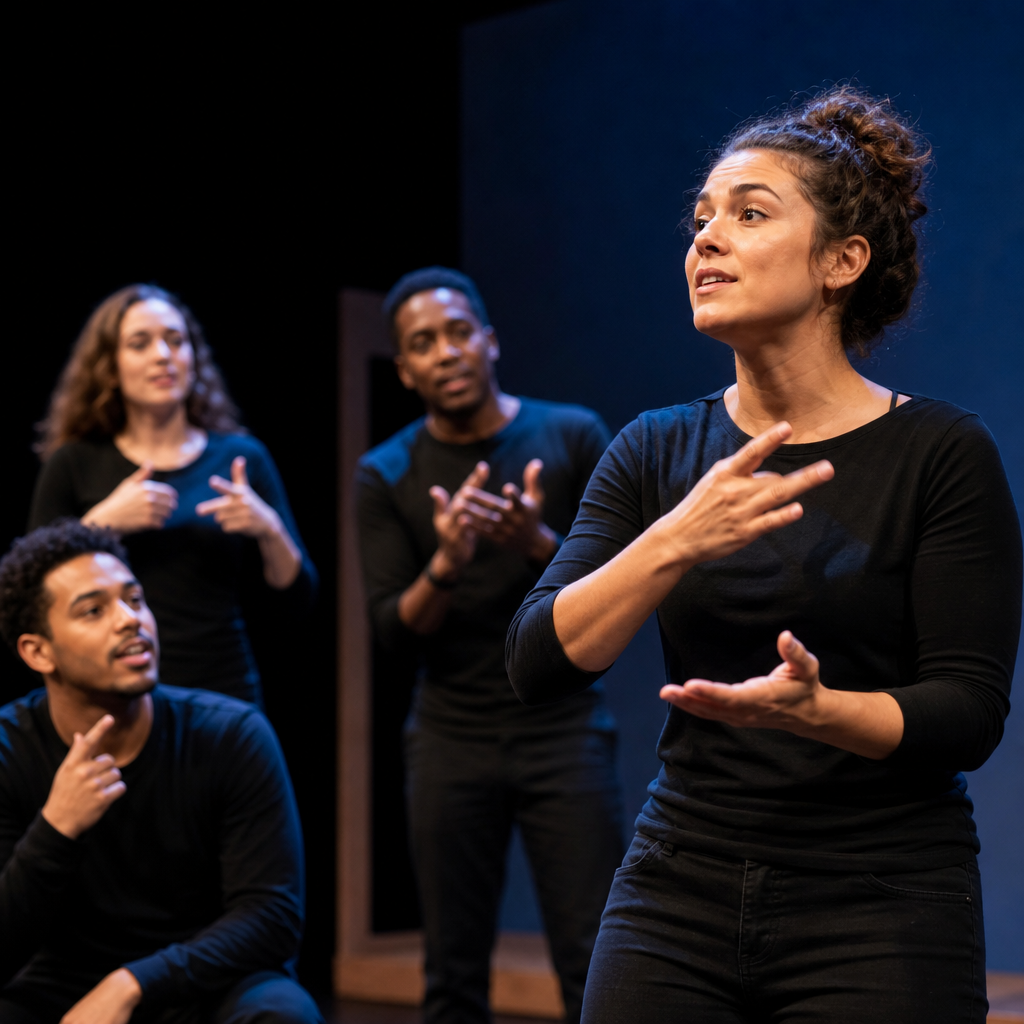
Language also shapes thought, humor, storytelling, and belonging. In Deaf spaces, visual attention norms, turn-taking, name signs, direct communication, and shared stories all reinforce identity. I have seen newcomers feel the difference immediately when they enter a signing event for the first time: conversation moves across the room, people wave to gain attention, lights may flicker instead of voices calling out, and social energy is organized visually. A person may be audiologically deaf for years and still feel outside Deaf culture until they gain access to sign language and community. That is why language access in early childhood is a central issue, not a side topic.
Identity pathways are personal and often non-linear
No single life story defines Deaf or deaf identity. Some people are born into Deaf families and inherit culture naturally, much like any child raised within a language community. Others are born to hearing parents, which is far more common, and may not meet Deaf adults or learn sign language until school age, college, or later. Some people move between labels over time. A teenager with cochlear implants may identify as hard of hearing in one setting, deaf in medical paperwork, and Deaf after joining a campus sign language community. None of those shifts are unusual.
Identity can also be shaped by education. Mainstream schooling may leave a deaf student isolated if access is poor, while a bilingual program with Deaf teachers can foster cultural pride. Family attitudes matter too. Parents who treat deafness only as a condition to fix may unintentionally limit a child’s connection to peers and role models. Parents who provide both technology and sign language often give children more options, not fewer. The core point is that labels emerge from lived experience. They cannot be assigned accurately from an audiogram alone.
Common labels and what they usually signal
Many readers ask which term is correct. The honest answer is that the correct term is the one a person uses for themselves. Still, common labels do carry typical meanings, and understanding them reduces mistakes. The table below summarizes broad patterns. Individual preferences always come first.
| Label | Usual meaning | Common context |
|---|---|---|
| Deaf | Cultural identity linked to signed language and community | Deaf schools, advocacy, cultural events |
| deaf | Audiological hearing loss without implied cultural affiliation | Medical, educational, or general description |
| Hard of hearing | Partial hearing loss; may use speech, hearing tech, sign, or all three | Workplace access, healthcare, self-description |
| Late-deafened | Hearing loss acquired after spoken language development | Adult identity transition, rehabilitation, support groups |
| DeafBlind | Combined hearing and vision loss with distinct access needs and community | Interpreting, tactile communication, advocacy |
These labels are descriptive, not hierarchical. For example, hard of hearing is not “less authentic” than Deaf, and Deaf is not simply “more severe” than deaf. Each term points to different experiences of communication, access, and belonging. The safest practice is to ask, mirror the person’s language, and avoid correcting self-identification.
Misconceptions that cause the most harm
The first major misconception is that every deaf person wants to be culturally Deaf, or should. Identity is voluntary and relational. Some people do not feel at home in Deaf spaces, especially if they lack signing fluency or had negative school experiences. Others may belong strongly to Deaf culture while also participating comfortably in hearing spaces. The second misconception is that technology erases Deaf identity. Hearing aids, cochlear implants, captioning apps, and remote interpreting services can expand access, but they do not determine culture. Plenty of Deaf people use technology and remain fully Deaf in identity and community participation.
A third misconception is that Deaf culture rejects speech or hearing people. In reality, Deaf communities are diverse and practical. Many Deaf adults speechread, speak, sign, text, use interpreters, and switch strategies depending on context. What they typically reject is the assumption that spoken language should be the default standard of competence or social value. A final misconception is that one label applies everywhere. Identity is contextual. On legal forms, a person may choose deaf or hard of hearing because that is the available category. In community life, the same person may prefer Deaf. Context changes wording, but not necessarily self-understanding.
Why this distinction matters in schools, work, and healthcare
In education, misunderstanding identity can lead to poor placement and weaker language outcomes. A child who is viewed only through audiology may receive devices and speech therapy yet miss fluent language models, accessible classrooms, and Deaf mentors. Decades of research on language deprivation show the cost of delayed access to a fully accessible first language. Schools that understand Deaf identity are more likely to support bilingual approaches, qualified interpreters, direct instruction by Deaf professionals, and peer connection. Those factors improve both academic and social development.
In workplaces and healthcare settings, identity informs practical access choices. A Deaf employee may prefer certified sign language interpreters for meetings, while a late-deafened manager may rely more on real-time captioning, hearing assistive technology, and written follow-up. A hospital that assumes all deaf patients can speechread will fail many of them; speechreading is limited, tiring, and inaccurate in clinical conditions. Providers should ask about preferred communication, confirm understanding, and comply with access laws and professional standards. Respecting identity labels is not cosmetic politeness. It often leads directly to better outcomes.
How to speak respectfully about Deaf and deaf identity
Start by using the person’s own term. If you do not know, ask a simple question such as, “How do you identify?” or “What communication access works best for you?” Avoid treating Deaf as a euphemism for deafness or assuming that capitalization is always visible in speech. In spoken settings, it may help to say “culturally Deaf” when clarity matters. Do not say hearing impaired unless a person uses it for themselves. Many people consider that phrase outdated because it centers deficit rather than identity or access.
It also helps to separate identity from assumptions about ability. Being Deaf does not tell you whether someone can drive, read English fluently, use a phone, enjoy music, or prefer an interpreter over captions. Ask instead of guessing. If you create content, forms, or policies, include multiple identity and communication options. In my work, the most effective organizations train staff to ask two questions every time: what name or identity term do you prefer, and how should we communicate with you today? Those questions prevent many avoidable mistakes.
The big takeaway for families, allies, and institutions
Understanding Deaf vs deaf is really about understanding that hearing status and identity are not the same thing. Lowercase deaf refers mainly to audiology. Uppercase Deaf refers mainly to culture, language, and community. Some people fit clearly into one category, many move between them, and others use different labels entirely. The right response is not to police terms but to learn what each label signals and why it matters in real situations. When families grasp this early, children gain broader access to language, role models, and confidence. When schools and employers grasp it, services become more accurate and respectful.
The strongest practical lesson is simple: let people name themselves, then support the communication and community choices that follow from that identity. That means valuing signed languages, recognizing Deaf culture as more than a medical issue, and understanding that technology and identity can coexist. It also means accepting nuance. No article can assign a label for someone else. What it can do is give you a framework for listening better and acting with more precision. Use this page as your starting point, revisit your assumptions, and build interactions that respect both deafness as a hearing status and Deaf identity as a lived culture.
Frequently Asked Questions
What is the difference between Deaf with a capital D and deaf with a lowercase d?
The difference between Deaf and deaf is not just a matter of spelling. It points to two related but distinct ways people may understand hearing loss, identity, and belonging. In general, deaf with a lowercase d refers to the audiological condition of having little or no hearing. It describes hearing status in a medical or physical sense. A person who is deaf may or may not use sign language, may or may not participate in Deaf community life, and may or may not see hearing loss as part of a broader cultural identity.
By contrast, Deaf with a capital D usually refers to a cultural and linguistic identity. A Deaf person often identifies with the Deaf community, values sign language as a primary means of communication, and shares experiences, traditions, and social networks rooted in Deaf culture. In this sense, Deaf is similar to other cultural labels because it signals connection, not merely a diagnosis.
That said, identity is personal and not every individual uses these labels in the same way. Some people move between them over time, some prefer one strongly, and others reject both or use additional terms that fit their experience more accurately. The key point is that the capital D often signals cultural affiliation, while the lowercase d usually describes hearing level without assuming any specific cultural connection.
Why does capitalization matter so much in the Deaf community?
Capitalization matters because it reflects meaning that goes far beyond grammar. In the context of the Deaf community, the uppercase D recognizes that many people do not view themselves primarily through a medical lens. Instead, they understand themselves as members of a language-based and culture-based community with its own history, values, norms, and social traditions. Writing Deaf with a capital D acknowledges that identity.
For many people, this distinction is important because hearing loss has often been framed by outside institutions as a problem to be fixed. The capitalized form pushes back against that idea by emphasizing culture over deficiency. It says that being Deaf is not simply about what someone cannot hear; it is also about how they communicate, how they connect with others, and how they experience the world.
Capitalization also helps avoid flattening very different experiences into one category. Two people may both have significant hearing loss, but one may be deeply involved in Deaf culture and use sign language daily, while the other may identify more closely with the hearing world and use spoken language or assistive devices as their main tools. Using the right capitalization shows awareness of those differences and demonstrates respect for how people define themselves.
Can someone be deaf without identifying as Deaf?
Yes. Many people are deaf in the audiological sense but do not identify as Deaf culturally. This can happen for many reasons. Some people grow up in hearing families with little exposure to sign language or Deaf community life. Others are late-deafened, meaning they lose hearing later in life after being raised in a hearing environment. Some prefer spoken communication, rely on hearing aids or cochlear implants, or simply feel that cultural labels like Deaf do not describe their experience.
Identity is shaped by far more than hearing level alone. Family background, education, access to sign language, location, age of hearing loss, and personal preference can all influence whether someone feels connected to Deaf culture. A person may have profound hearing loss and still not use the capital D because they do not participate in Deaf cultural spaces or do not see that label as their own. That does not make their experience less valid.
It is also important to remember that identity can change. Someone who once identified only as deaf may later become involved in sign language communities and begin identifying as Deaf. Others may continue to use lowercase deaf throughout their lives. The most respectful approach is to avoid assumptions and pay attention to the language people choose for themselves.
Are there other identity labels used in the Deaf community besides Deaf and deaf?
Yes. Deaf and deaf are important terms, but they are not the only identity labels people use. Some individuals describe themselves as hard of hearing, especially if they have partial hearing or move between hearing and Deaf spaces. Others may identify as late-deafened, which often describes people who lost hearing after language development and may have a different relationship to sign language and Deaf culture than those who were deaf from birth or early childhood.
There are also more specific or intersectional terms. For example, some people use labels that reflect both cultural and hearing identities, such as DeafBlind or identities connected to race, ethnicity, gender, or national Deaf communities. In academic and community settings, you may also encounter terms like signing deaf, oral deaf, or references to people who are culturally Deaf. These labels can help describe communication style, social affiliation, or lived experience, though not everyone embraces them.
Because identity language continues to evolve, the best practice is to treat labels as self-descriptions rather than categories imposed from the outside. What sounds accurate in one setting may feel incomplete or outdated in another. Asking politely, listening carefully, and following the person’s preference is usually more helpful than trying to force a single universal definition.
How should I talk about identity labels in the Deaf community respectfully?
The most respectful way to talk about identity labels in the Deaf community is to start with accuracy, humility, and openness. Use Deaf when referring to cultural identity and deaf when referring to hearing status, but recognize that individuals may define themselves differently. If you are writing about a specific person, organization, or community, check how they describe themselves and mirror that language. If you are unsure, asking is often better than assuming.
It also helps to avoid language that treats deafness only as a deficit or tragedy. While some people do experience hearing loss in medical or practical terms, many within the Deaf community see it as part of a rich cultural experience rather than something purely negative. Respectful communication means making room for that perspective. Terms that center personhood, language access, and identity are generally more appropriate than language that frames people solely by limitation.
Finally, remember that no single label can capture every deaf or Deaf person’s experience. The community is diverse, and people differ by age, communication preferences, family background, education, technology use, and cultural connection. A respectful approach is not just about choosing the right capital letter. It is about recognizing that identity is personal, meaningful, and shaped by lived experience.