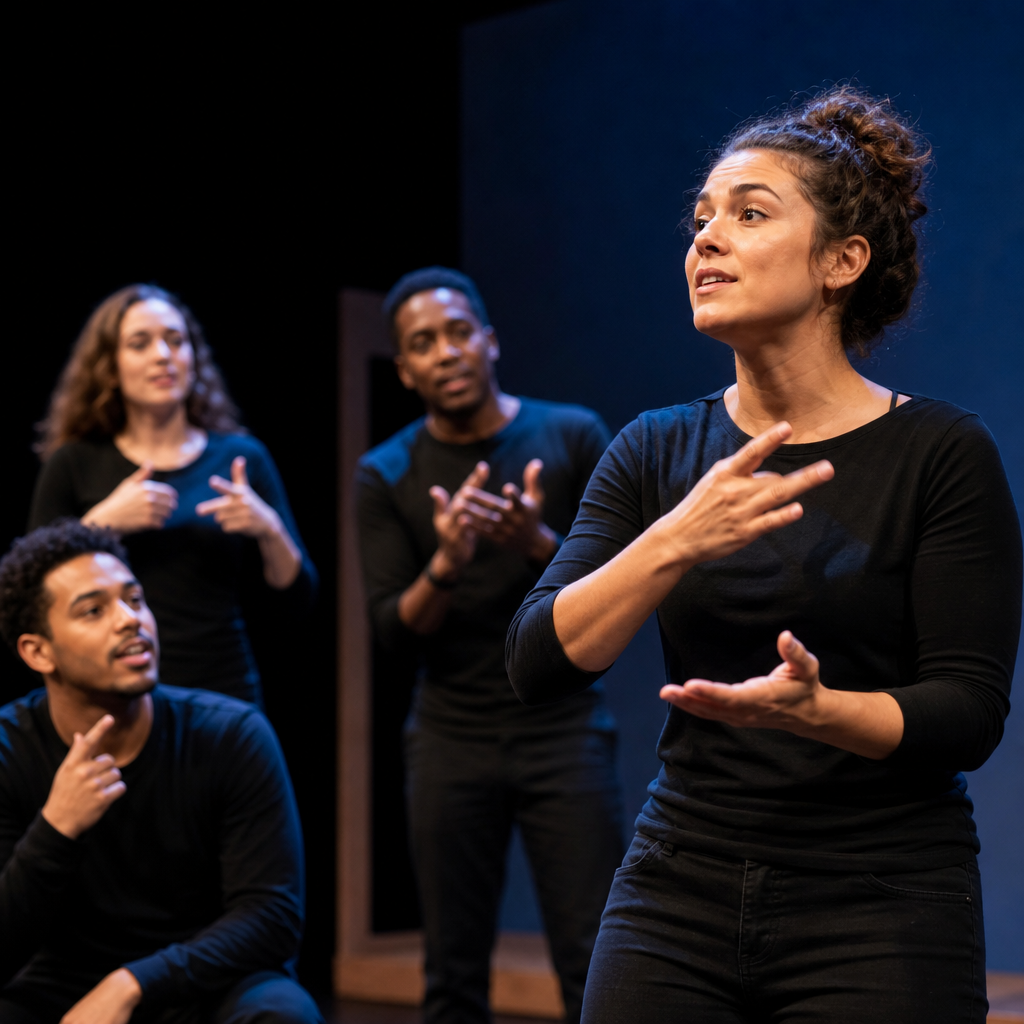

Deaf vs deaf describes more than hearing levels; it marks a difference between cultural identity and audiological condition. In practice, the capitalized word Deaf usually refers to people who identify with a distinct linguistic and cultural community centered on sign language, shared history, and collective norms. The lowercase word deaf usually refers to the physical state of not hearing, or hearing below typical levels, without automatically implying cultural affiliation. This distinction matters because many misunderstandings about disability, language, education, and identity start with the assumption that all deaf people relate to hearing loss in the same way. They do not.
I have worked with deaf and Deaf clients, educators, interpreters, and families long enough to see how often one letter changes the entire conversation. A parent may ask whether a newly diagnosed child is deaf, when the more useful question is whether that child will also have access to Deaf community, sign language, and Deaf role models. An employer may focus on hearing aids or captions, while overlooking that a Deaf employee may prefer communication in American Sign Language and expect direct visual access in meetings. A clinician may document decibel thresholds accurately but still miss the person’s identity, preferences, and social world.
To understand Deaf vs deaf clearly, start with two key terms. Audiological deafness refers to a hearing status measured through tools such as pure-tone audiometry, speech recognition testing, and tympanometry. Cultural Deafness refers to membership or identification with a community that values signed language, visual communication, and a shared historical experience shaped by schools for the Deaf, advocacy, and intergenerational transmission of culture. These categories can overlap, but they are not interchangeable. Some people are audiologically deaf and culturally Deaf. Some are deaf but do not sign, do not participate in Deaf spaces, or prefer hearing-world norms. Some are hard of hearing, late-deafened, or hearing, yet deeply involved in Deaf community through family, work, or language.
This distinction matters in education, healthcare, workplaces, media, and family life. It affects which communication access services are appropriate, how people describe themselves, and how institutions should respond. It also shapes belonging. Many Deaf adults describe discovering Deaf community not as finding a service, but as finding a language and home. That is why this topic sits at the center of Deaf Culture and Identity. If you understand the difference between Deaf and deaf, you are better prepared to discuss sign language, accessibility, Deaf schools, cochlear implants, inclusive hiring, and respectful terminology without flattening people into one category.
Big D and little d: the basic distinction
The simplest way to answer the question is this: big D Deaf usually points to culture, while little d deaf usually points to hearing status. A Deaf person may use a sign language as a primary language, participate in Deaf social networks, value visual communication norms, and see deafness not only as a medical condition but as part of a cultural minority identity. A deaf person may have significant hearing loss yet identify mainly through spoken language, mainstream hearing institutions, or disability frameworks rather than Deaf culture.
That summary is useful, but real life is more layered. Identity is self-determined, and not everyone uses these labels in the same way. In the United States, many Deaf people center American Sign Language, often called ASL, but in the United Kingdom, Deaf identity may center British Sign Language, or BSL. In France, it may center Langue des Signes Française. The capital D does not mean one universal global culture. It signals connection to a local or national Deaf community built around signed language, social practices, and shared experience.
Lowercase deaf is often used in medical, legal, or educational contexts because those systems classify hearing levels, not cultural identity. An audiologist may note that a patient is deaf in one ear or profoundly deaf bilaterally. That description can be technically correct and still tell you nothing about the person’s preferred language, school background, communication needs, or identity. I have seen intake forms that ask only whether someone is deaf or hard of hearing. Better forms ask what language the person uses, whether they want an interpreter, and how they prefer to communicate.
How Deaf identity is formed
Deaf identity usually grows through language access, social connection, and shared experience rather than through hearing level alone. Many Deaf adults first develop a strong cultural identity after meeting other signing people, attending a school for the Deaf, joining Deaf organizations, or participating in Deaf events where communication is direct and fully accessible. In those environments, visual attention norms, turn-taking, storytelling styles, humor, and values are learned socially. The result is not just accommodation. It is culture.
Language is central. Research over decades has shown that early accessible language exposure is foundational for cognitive, academic, and social development. For many Deaf people, a signed language provides that complete access. This is one reason the distinction between Deaf and deaf matters so much in childhood. A child can be identified as deaf on an audiogram, yet whether that child grows up culturally Deaf often depends on exposure to sign language, Deaf adults, and environments where visual communication is normalized instead of treated as a fallback.
Family background also shapes identity. Roughly 90 to 95 percent of deaf children are born to hearing parents, while a smaller share are born to Deaf parents. Children of Deaf adults often gain sign language naturally at home and may enter Deaf community from birth. By contrast, many deaf children in hearing families experience delayed access to fluent communication, especially if professionals frame spoken-language development as the only priority. In my experience, identity often strengthens when families stop treating Deaf culture and spoken language as opposites and start building bilingual, bicultural access where possible.
Why some deaf people do not identify as Deaf
Not every deaf person identifies as Deaf, and that is neither unusual nor inherently negative. Some people lose hearing later in life and continue to identify primarily with hearing culture. Others communicate mainly through speech, use hearing technology effectively, and may have little contact with Deaf community. Some had mainstream schooling without sign language, so their reference points are disability law, audiology, and oral communication rather than cultural belonging. In these cases, lowercase deaf may feel accurate because it describes hearing status without claiming a community connection the person does not feel.
There are also practical and emotional reasons for different identity choices. A person raised in a hearing family may not encounter Deaf spaces until adulthood. Another may have inconsistent signing skills and feel caught between worlds. Someone with cochlear implants may be viewed by outsiders as hearing enough for hearing spaces but still encounter access barriers there. The key point is that identity develops through lived experience, not through a formula based on decibels. Respect starts by asking people how they describe themselves and what communication they want.
At the same time, institutions should not assume that a person who speaks well or uses hearing devices does not need Deaf-aware access. Speech ability is not a proxy for listening ease, and listening fatigue is real. I have worked with professionals who could present confidently in speech and still missed large portions of group discussion without captions or interpretation. Lowercase deaf can describe hearing status, but it should never be used to erase access needs or simplify a person’s social reality.
Common identity terms and how they differ
Because this page is a hub for Deaf Culture and Identity, it helps to map nearby terms that readers often confuse with Deaf vs deaf. Hard of hearing usually refers to people with mild to severe hearing loss who may rely on spoken language, hearing aids, or mixed communication strategies. Late-deafened often describes people who lost hearing after acquiring spoken language. DeafBlind refers to combined vision and hearing loss, with wide variation in communication methods and identity. Hearing refers to people without significant hearing loss, but hearing family members of Deaf people may still be culturally connected through language and community.
One older phrase, hearing impaired, appears in clinical and legal writing, but many people dislike it because it frames identity mainly through deficit. Deaf and hard of hearing are generally more accepted, though preferences vary. Person-first and identity-first language also vary by individual and context. Some prefer deaf person, others person who is deaf, and many culturally identify as Deaf person. The right choice depends on self-identification, audience, and purpose.
| Term | Primary meaning | Typical focus | Example |
|---|---|---|---|
| Deaf | Cultural and linguistic identity | Community, sign language, shared norms | A Deaf teacher who uses ASL and attended a Deaf school |
| deaf | Audiological hearing status | Hearing level, access needs, medical documentation | A deaf patient noted as profoundly deaf on an audiogram |
| hard of hearing | Partial hearing loss | Mixed access methods, often spoken language | An employee who uses hearing aids and captions |
| late-deafened | Hearing lost after language acquisition | Adjustment, communication transition | An adult who became deaf after illness |
Education, language, and the stakes for children
The Deaf vs deaf distinction becomes especially important in education. Schools often begin with disability categories because they must determine services under laws such as the Individuals with Disabilities Education Act in the United States. That process can secure supports, but it can also narrow the conversation to hearing thresholds, speech goals, and devices. A fuller approach asks whether the child has complete access to language, peers, curriculum, and identity development. That is where Deaf cultural perspectives change outcomes.
Historically, Deaf education has included intense debates between oral approaches and sign-based approaches. The 1880 Milan Conference, which promoted oralism and marginalized sign languages in many schools, had long-lasting effects. Modern research and Deaf advocacy have pushed back strongly against the idea that speech should replace sign. Children need accessible language early. For many, signed language offers the clearest path to that access, whether the child also uses speech, hearing aids, or cochlear implants. Bilingual-bicultural models, where a sign language and a written or spoken majority language are both taught, often reflect this more balanced understanding.
In practical terms, parents deciding between programs should ask concrete questions. Are there fluent signing adults on staff? Do deaf children interact with Deaf peers daily? Are interpreters qualified? Is literacy taught through accessible language, not guesswork? Does the program support family sign learning? These questions move beyond the narrow label of deaf and toward the broader developmental needs often emphasized in Deaf spaces.
Workplace, healthcare, and everyday respect
In adult life, misunderstanding Deaf vs deaf creates avoidable barriers. In workplaces, a manager may offer amplified headsets to a Deaf employee who actually needs an ASL interpreter for trainings, live captions for meetings, and visual alert systems. In healthcare, clinicians may assume writing notes is enough, even when informed consent requires nuanced discussion in the patient’s strongest language. Federal disability law can require effective communication, but compliance alone does not guarantee understanding. Matching services to identity and language preference is what works.
Respectful practice starts with direct questions and no assumptions. Ask how the person identifies. Ask what language they use. Ask whether they prefer an interpreter, captioning, speechreading support, or a combination. Face the person, ensure lighting is good, reduce background noise when relevant, and share information visually. For Deaf community events, include Deaf-led planning instead of adding access at the last minute. For customer service, train staff that not all deaf or Deaf people communicate the same way.
Media representation matters too. When television or film treats every deaf character as inspirational, isolated, or waiting to be fixed, audiences absorb a distorted view. Better representation shows diversity: Deaf professionals, deaf elders, Deaf families, late-deafened adults, cochlear implant users, and signers with different racial, linguistic, and national backgrounds. The most accurate stories show identity as lived, complex, and shaped by community as much as by hearing level.
How to use the terms correctly
If you are writing or speaking professionally, use Deaf when referring to cultural identity and deaf when referring to hearing status, unless a person or organization specifies otherwise. Capitalize related phrases such as Deaf community, Deaf culture, and Deaf school when they indicate that cultural meaning. Do not capitalize deafness automatically when discussing audiology. If you do not know someone’s preference, ask or use broader wording such as deaf and hard of hearing people until clarified.
Avoid treating the distinction as a strict hierarchy. Deaf is not more authentic than deaf, and deaf is not less complete than Deaf. They answer different questions. One asks, what is this person’s relationship to a cultural and linguistic community? The other asks, what is this person’s hearing status? A person may answer both questions at once. Another may reject both labels in favor of hard of hearing, signing deaf, oral deaf, or a national or ethnic identity that feels more central.
The most useful habit is precision. In my own work, communication improved whenever teams stopped using generic labels and started documenting language, access method, and self-identification separately. That simple shift prevented mismatched services, awkward assumptions, and preventable exclusion.
Understanding Deaf vs deaf gives you a more accurate way to talk about hearing, language, and identity. Deaf usually signals cultural belonging rooted in signed language and shared community, while deaf usually describes hearing status without assuming that cultural connection. The difference matters because it affects education decisions, workplace access, healthcare communication, media representation, and everyday respect. It also reminds us that no audiogram can tell you who a person is, what language feels natural, or where they belong.
For anyone exploring Deaf Culture and Identity, this distinction is the starting point, not the finish line. From here, the next useful questions are about sign languages, Deaf schools, oralism, cochlear implants, interpreters, Deaf history, and the diversity within Deaf communities themselves. Approach each topic with the same discipline: ask what the person prefers, separate medical facts from cultural assumptions, and treat language access as fundamental rather than optional.
If you create content, teach, hire, provide care, or support a deaf child, apply this difference in your next decision. Use the right term, ask better questions, and build communication around the person in front of you.
Frequently Asked Questions
What is the main difference between Deaf and deaf?
The main difference is that Deaf with a capital D usually refers to a cultural and linguistic identity, while deaf with a lowercase d usually refers to a person’s hearing level or audiological condition. In other words, lowercase deaf describes the physical fact that someone does not hear, or hears below typical levels. Capitalized Deaf, by contrast, often signals membership in or connection to a community with its own shared history, values, traditions, and commonly the use of sign language.
This distinction matters because hearing status and cultural identity are not always the same thing. A person can be medically deaf but not identify as part of the Deaf community. Likewise, someone may strongly identify as Deaf because they participate in Deaf culture, use sign language, and see deafness as a meaningful identity rather than simply a medical condition. The capital letter is not a grammatical flourish; it often communicates belonging, perspective, and lived experience.
Why is Deaf capitalized in some situations?
Deaf is capitalized when it refers to a specific cultural group, much like the names of other communities or identities are capitalized. In this usage, the term points to more than hearing loss. It includes shared language, especially sign language, shared social norms, community institutions, traditions, advocacy, and a long collective history. Capitalization helps distinguish that cultural meaning from the purely descriptive meaning of lowercase deaf.
Using the capital D can also reflect how many people within the community see themselves: not as people defined only by a lack of hearing, but as members of a rich cultural and linguistic minority. For that reason, capitalization can carry respect and precision. It tells readers that the discussion is about identity and culture, not solely audiology. However, individual preferences vary, so when referring to a specific person, the most accurate and respectful choice is often the term that person uses for themselves.
Can someone be deaf without identifying as Deaf?
Yes. Many people are deaf in the audiological sense but do not identify as Deaf culturally. For example, a person may lose hearing later in life, communicate primarily through spoken language, and not participate in Deaf community life. In that case, lowercase deaf may describe their hearing status accurately, while capitalized Deaf may not reflect their identity.
This is one reason the distinction is important. Hearing level alone does not determine cultural affiliation. Some deaf individuals are raised in hearing families, use hearing technology, prefer spoken communication, or simply do not feel connected to Deaf cultural spaces. Others may move over time toward a Deaf identity as they learn sign language and engage with the community. Identity can be personal, fluid, and shaped by family background, education, communication style, and social experience.
Is being Deaf only about using sign language?
No. Sign language is often central to Deaf culture, but being Deaf is not defined by sign language alone. Deaf identity usually involves a broader sense of belonging to a community with shared experiences, cultural norms, history, and social connections. Sign language is a key part of that for many people because it supports communication, storytelling, education, and cultural continuity, but identity is rarely reducible to a single trait.
At the same time, sign language is highly significant because language is one of the strongest markers of cultural community. In many Deaf communities, sign language is not viewed as a substitute for spoken language; it is a full language in its own right and a major source of pride and cultural expression. Still, people’s relationships to language and identity can differ. Some identify as Deaf and sign fluently, some are learning, and some may relate to Deaf culture in more complex ways depending on their background and access to language.
What is the most respectful way to use Deaf and deaf in writing?
The most respectful approach is to use deaf when referring to hearing status in a general or medical sense, and Deaf when referring to cultural identity, community, or linguistic affiliation. This keeps the distinction clear and avoids treating all deaf people as though they share the same experiences, values, or identity. It also shows that you understand the difference between a physical condition and a cultural belonging.
When writing about a specific individual or group, follow their stated preference whenever possible. Some people may identify as Deaf, some as deaf, some as hard of hearing, and some may use other identity terms entirely. Context matters as well. In educational, journalistic, and healthcare writing, being precise with capitalization can improve both accuracy and respect. If you are unsure, neutral phrasing and person-specific language are often the safest choices. Above all, the goal is not just correctness in style, but recognition that identity and experience are more nuanced than hearing level alone.