Major legal cases affecting deaf rights have done more than settle disputes; they have defined how schools teach, how employers accommodate, how hospitals communicate, and how news and public media include deaf people in civic life. In this subtopic hub on news and current events, deaf rights refers to the legal protections that ensure deaf and hard of hearing people can access education, employment, government services, health care, transportation, emergency information, and public culture on equal terms. The core legal foundations are the Americans with Disabilities Act, Section 504 of the Rehabilitation Act, the Individuals with Disabilities Education Act, the Twenty-First Century Communications and Video Accessibility Act, and constitutional principles of equal protection and due process. I have worked with accessibility policies and case summaries long enough to see a consistent pattern: each major case starts with one denied service, but the ruling often reshapes systems far beyond the original plaintiff. That is why these cases matter within media, representation, and awareness. News coverage influences public understanding, and court decisions often determine whether deaf people can receive breaking news through captions, follow political events through interpreters, or participate in public debate without barriers.
Understanding major legal cases also helps readers make sense of current events. When a school district is sued for failing to provide a qualified interpreter, the issue is not only special education; it is also whether a deaf student can access assemblies, theater programs, sports coverage, and student media. When streaming platforms face captioning claims, the dispute affects entertainment, public information, and cultural representation. When hospitals are challenged over interpreter access, the case raises life-and-death questions about informed consent and emergency communication. This hub article maps the most influential legal cases, explains what each changed in plain terms, and shows how they connect to the broader news landscape. It is designed to orient readers to the foundational disputes, the legal standards courts use, and the unresolved questions still driving litigation, regulation, and public attention today.
Education cases that shaped deaf access
Education litigation has been central to deaf rights because school access determines language development, literacy, employment prospects, and long-term civic participation. One landmark case is Board of Education v. Rowley decided by the United States Supreme Court in 1982. Amy Rowley, a deaf student, performed well in school, but her parents argued she needed a sign language interpreter to have equal access in the classroom. The Court held that the Individuals with Disabilities Education Act did not require schools to maximize a student’s potential; it required access to specialized instruction and related services sufficient to provide educational benefit. In practical terms, Rowley set a floor, not a ceiling. For deaf students, that standard often made it harder to demand the full communication access needed for classroom discussion, incidental learning, and social inclusion. Schools regularly cited Rowley to defend limited supports, even where students were technically progressing but still missing substantial information.
The meaning of educational benefit changed decades later in Endrew F. v. Douglas County School District in 2017. Although not a deaf-specific case, it directly affects deaf students because the Supreme Court rejected the idea that minimal progress is enough. The Court said an individualized education program must be reasonably calculated to enable a child to make progress appropriate in light of the child’s circumstances. That stronger standard gives families more leverage when arguing for qualified interpreters, real-time captioning, assistive listening systems, cued language transliterators, or placement decisions tied to language access. In my experience reviewing school accommodation plans, Endrew F. changed the tone of disputes. Districts became less comfortable relying on bare compliance and more aware that communication access has to support meaningful academic advancement, not simple physical presence in a classroom.
Another major education case is K.M. v. Tustin Unified School District, a Ninth Circuit decision from 2013. The students involved had individualized education programs under federal special education law, but they also sought Communication Access Realtime Translation under the ADA. The court held that compliance with special education obligations does not automatically satisfy the ADA. That distinction matters enormously. A deaf student may receive some services under education law yet still be denied equal communication access under broader disability discrimination law. The case pushed schools and colleges to evaluate effective communication more seriously, especially in lectures, extracurricular events, and digitally delivered instruction where captions and transcripts are often essential.
Employment and public service decisions under disability law
Employment cases define whether deaf adults can build stable careers without being screened out by inaccessible workplace systems. The controlling law in many disputes is the ADA, especially Title I for employment and Title II for state and local government services. A foundational Supreme Court decision is US Airways, Inc. v. Barnett from 2002. The case was not about deafness specifically, but it clarified how reasonable accommodation works when an employee requests a change that conflicts with an employer’s established policy. Courts now routinely analyze deaf accommodation claims through that framework: interpreters for meetings, videophones, captioned training modules, text-based emergency alerts, and modified communication protocols can all be reasonable unless they impose undue hardship. The key lesson is that an employer must engage in an individualized assessment rather than reject accommodations reflexively.
Deaf workers have also relied on Equal Employment Opportunity Commission enforcement actions against major employers. Cases involving retailers, manufacturers, hospitals, and logistics firms have addressed failures to provide interpreters during orientation, disciplinary meetings, safety briefings, and promotion interviews. These settlements rarely become Supreme Court precedent, but they shape practice because they produce consent decrees, policy revisions, manager training, and monetary relief. In current events reporting, these cases matter because they reveal where discrimination still occurs: not just in hiring, but in the everyday flow of workplace information. When safety instructions are spoken over a loudspeaker without text backup, a deaf employee is placed at greater risk. When video training lacks captions, the barrier is both legal and operational.
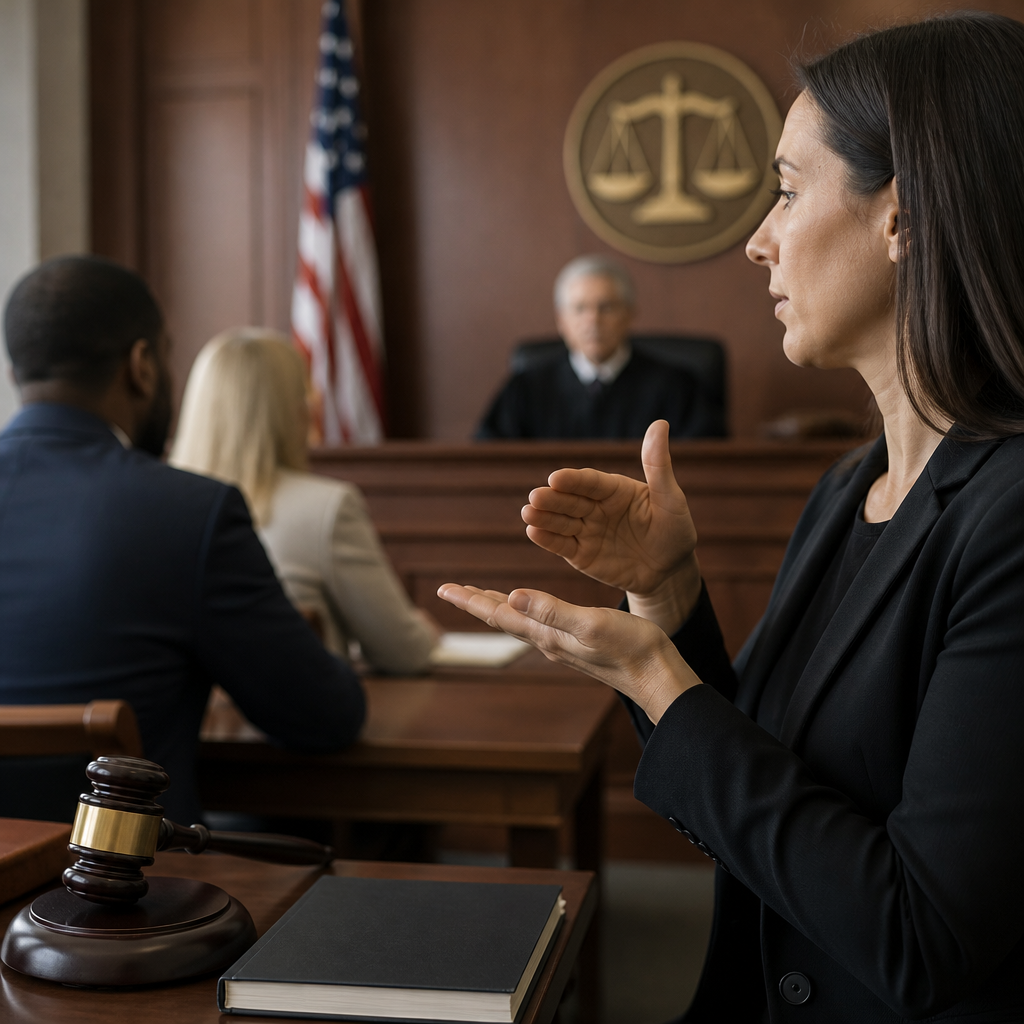
Government service cases are equally important. State courts and federal district courts have repeatedly held that police departments, courts, prisons, and public agencies must provide effective communication, often through qualified interpreters rather than ad hoc note writing. The legal question usually turns on whether the communication was as effective as communication with hearing people in the same situation. In arrest settings, court appearances, probation meetings, and emergency shelter intake, delays or substitutes can cause serious harm. Recent lawsuits after natural disasters and pandemic briefings have reinforced that public entities must plan ahead for accessible emergency communication. These cases belong at the center of news and current events because they directly affect how deaf residents receive public warnings, understand legal obligations, and participate in civic institutions.
Media, technology, and captioning cases that changed public access
For a hub under media, representation, and awareness, captioning and digital access cases are indispensable. The most cited modern case is National Association of the Deaf v. Netflix, filed in federal court in Massachusetts and resolved in 2012. Netflix argued that a streaming video service was not a place of public accommodation under Title III of the ADA. The court rejected that narrow reading and allowed the case to proceed, leading to a settlement requiring broad captioning coverage. The importance of the case cannot be overstated. It helped move disability law into the streaming era and signaled that online media access is not optional simply because the platform lacks a physical storefront.
| Case | Year | Main Issue | Why It Mattered |
|---|---|---|---|
| Board of Education v. Rowley | 1982 | Interpreter access in school | Set the early standard for educational benefit under federal special education law |
| K.M. v. Tustin Unified School District | 2013 | ADA duties beyond IEP compliance | Confirmed schools may owe more than what special education documents provide |
| NAD v. Netflix | 2012 | Captioning for streaming content | Extended accessibility expectations into online media distribution |
| Robles v. Domino’s Pizza | 2019 | Digital accessibility under the ADA | Reinforced that online barriers can trigger disability discrimination claims |
Another influential decision is Robles v. Domino’s Pizza from the Ninth Circuit in 2019. The plaintiff was blind, not deaf, but the ruling has broad significance for deaf users because it confirmed that websites and apps connected to public-facing businesses can fall within the ADA when digital barriers block access to goods and services. That reasoning supports claims involving missing captions, inaccessible video players, and customer service systems that rely only on voice calls. The case is frequently cited in digital accessibility disputes because it rejects the idea that civil rights protections stop at the browser window.
The Twenty-First Century Communications and Video Accessibility Act also transformed litigation and compliance expectations around modern communications. It expanded captioning obligations for video programming delivered over the internet when it previously aired on television with captions, and it increased accessibility requirements for advanced communications services. Federal Communications Commission enforcement, while administrative rather than purely judicial, has been as consequential as court decisions. Broadcasters, cable networks, and streaming distributors have had to improve caption quality, timeliness, completeness, and placement. In current events, this matters whenever live news captions lag badly, obscure speakers, or fail during emergencies. Access is not just about whether captions exist; it is about whether they are accurate enough to convey urgent information.
Health care, hospitals, and emergency communication cases
Health care litigation has shown how quickly communication barriers can become patient safety failures. Cases against hospitals under the ADA and Section 504 often center on whether providers supplied qualified interpreters for diagnosis, consent discussions, treatment decisions, discharge instructions, and mental health evaluations. Hospitals have repeatedly argued that written notes, lip reading, or family members are sufficient. Courts and the Department of Justice have consistently recognized the limits of those substitutes. Medical language is specialized, stress impairs comprehension, masks reduce visual cues, and relatives cannot be expected to interpret accurately or neutrally during sensitive conversations.
A notable example is the long-running enforcement history involving hospitals and medical systems that failed to provide sign language interpreters despite repeated requests. These matters often end in settlement agreements requiring on-site or video remote interpreting policies, staff training, complaint tracking, and periodic audits. Video remote interpreting can be effective, but only when bandwidth is stable, screens are visible, and clinicians know how to use the system. I have seen institutions buy compliant technology on paper and still fail patients because no one tested camera placement in emergency rooms or trauma bays. That operational gap is exactly why legal cases remain necessary: they convert abstract rights into concrete procedures.
Emergency communication cases gained visibility during hurricanes, wildfires, the COVID-19 pandemic, and mass casualty events. Deaf plaintiffs have challenged inaccessible press conferences, uncaptioned livestreams, and evacuation systems that relied on audio alerts. Several jurisdictions responded by adding on-camera interpreters, multilingual text alerts, accessible websites, and social media captioning protocols. These cases demonstrate a principle that applies across current events reporting: public information must be accessible at the same time it is delivered to everyone else. Delayed access during a fast-moving emergency is not equal access. Courts and regulators increasingly recognize that timeliness is part of effectiveness, not a bonus feature.
What these cases mean for current events, journalism, and public awareness
The through line across these major legal cases is that deaf rights are never confined to one setting. A captioning dispute is also a journalism issue. An interpreter case at a city briefing is also a democracy issue. A school access ruling affects whether future adults can participate fully in media, politics, and work. For reporters covering deaf news and current events, the most important questions are straightforward: What law applies, what communication barrier occurred, what remedy was requested, and did the decision change policy beyond the plaintiff’s own situation? Cases with durable impact usually force institutions to adopt systemwide fixes, not one-time exceptions.
Readers should also recognize the limits of litigation. Court wins can be narrow, fact-specific, and slow. Compliance varies, especially where agencies lack training or budgets. Technology helps but does not replace planning. Automatic captions have improved, yet they still struggle with names, accents, technical terms, and live cross-talk. Video remote interpreting expands coverage but can fail in low-connectivity settings. The law requires effective communication, not the cheapest available approximation. That distinction remains central in nearly every modern deaf rights case.
As this hub article shows, major legal cases affecting deaf rights have built the framework for accessible education, fair employment, responsive health care, inclusive media, and reliable emergency communication. Start with Rowley, Endrew F., K.M. v. Tustin, and NAD v. Netflix, then follow current enforcement actions and regulatory updates to see how the law keeps evolving. If you cover this beat, advocate in this space, or simply want clearer news context, use these cases as your baseline and keep tracking the next decisions that turn access from promise into practice.
Frequently Asked Questions
What kinds of legal cases have had the biggest impact on deaf rights?
The most influential legal cases affecting deaf rights usually involve access to education, employment, health care, public services, and communication in civic life. In education, major disputes have focused on whether deaf and hard of hearing students are receiving meaningful access to instruction, qualified support services, interpreters, captioning, assistive technology, and appropriate placement decisions under disability and education laws. These cases have shaped how schools and colleges think about equal opportunity, not just physical enrollment. They have helped define whether a student can truly participate in classroom discussion, extracurricular activities, testing, and school communication.
In employment, landmark cases have clarified what employers must do to provide reasonable accommodations, such as interpreters for meetings and training, captioned video content, text-based communication options, visual alert systems, or modified communication practices. These disputes often turn on whether an employer made a good-faith effort to remove communication barriers and whether the requested accommodation was necessary and reasonable. Court decisions in this area have reinforced that equal employment access means more than simply hiring a deaf employee; it means ensuring that person can fully perform the job and participate in workplace culture.
Health care and public service cases have been especially important because they address moments when communication failures can cause serious harm. Litigation involving hospitals, clinics, law enforcement agencies, and government offices has helped establish that written notes or family members are not always effective substitutes for qualified interpreters or other appropriate auxiliary aids. These decisions have pushed institutions to take communication access seriously and to assess what is effective in the specific situation. Together, these categories of cases have built the modern framework of deaf rights by moving the law from abstract equality toward practical, real-world accessibility.
How have court cases changed communication access in schools and universities?
Court cases have played a major role in changing how schools, colleges, and universities serve deaf and hard of hearing students. One of the most important legal principles to emerge is that access must be effective, not merely offered in a minimal or symbolic way. That means a school cannot simply point to general disability support and assume it has met its obligations. If a student cannot follow lectures, discussions, announcements, videos, or one-on-one academic advising, then the institution may not be providing equal educational opportunity, even if the student is officially enrolled.
These cases have influenced decisions about sign language interpreters, real-time captioning, note-taking support, assistive listening systems, captioned media, and communication access during extracurricular programs and campus events. Legal disputes have also highlighted the importance of individualized assessment. What works for one student may not work for another. Some students rely on American Sign Language interpreters, others need CART services, captioning, preferential seating, or a combination of tools. Courts and enforcement agencies have repeatedly emphasized that schools must consider the student’s actual communication needs rather than defaulting to the cheapest or easiest option.
Another major effect of litigation has been to expand the idea of access beyond the classroom itself. Universities, for example, may be required to make admissions events, orientation, housing communication, internships, athletics, disciplinary hearings, and public lectures accessible. In K-12 settings, cases have helped define parental rights, individualized education planning, and the school district’s duty to provide a program that offers meaningful educational benefit. Overall, these legal developments have made it clearer that deaf students are entitled to participate fully in academic and campus life, not just occupy a seat in the room.
Why are employment-related cases so important to deaf rights law?
Employment cases matter because work is one of the central areas where legal rights become tangible in daily life. For deaf and hard of hearing people, equal employment opportunity depends heavily on communication access. Cases brought under disability discrimination laws have helped establish that employers may need to provide accommodations that allow a worker to understand instructions, join meetings, participate in training, respond to emergencies, and communicate with supervisors, coworkers, and customers. Without those protections, exclusion can happen even when a person is fully qualified for the job.
Many influential disputes have addressed whether an employer properly engaged in the interactive process to identify an effective accommodation. Courts and agencies often look at whether the employer listened to the employee, explored available options, and chose a solution that actually addressed the communication barrier. Interpreters, captioning, video relay access, text messaging, email-based workflows, visual alarms, and adapted interview procedures have all been part of these cases. The legal message has been consistent: access should be practical and tied to the essential functions of the job, not reduced to assumptions about what deaf workers can or cannot do.
These cases also matter because they push back against stereotypes. Deaf employees have historically faced biased beliefs that communication barriers are automatically too burdensome or that safety concerns justify broad exclusion. Employment litigation has helped narrow those arguments by requiring individualized assessment and evidence rather than generalized fear. As a result, legal decisions in this area have improved hiring practices, workplace inclusion, advancement opportunities, and accountability. They have reinforced the principle that deaf people should have equal access not only to employment itself but also to professional growth, leadership, and economic independence.
How have major legal cases affected deaf patients in hospitals and health care settings?
Legal cases involving hospitals and medical providers have had a profound effect on deaf rights because health care depends on clear, accurate, and timely communication. Courts and enforcement actions have repeatedly addressed situations in which deaf patients were denied interpreters, asked to rely on relatives, given only handwritten notes, or expected to navigate complex medical conversations without adequate support. These disputes have helped establish that effective communication is a legal obligation, not an optional courtesy. In medical settings, communication affects consent, diagnosis, treatment decisions, medication instructions, discharge planning, and patient safety.
One of the most important lessons from these cases is that the right accommodation depends on the context. A simple written exchange may be enough for a very limited interaction, but it may be completely inadequate during emergency room intake, surgery discussions, psychiatric care, labor and delivery, or end-of-life decisions. Courts have recognized that hospitals must assess the nature, length, complexity, and importance of the communication. They also examine whether the provider considered the patient’s preferred method of communication and whether delays in providing access effectively denied equal care.
These legal outcomes have had broader systemic effects as well. Hospitals and clinics increasingly adopt policies on interpreter availability, video remote interpreting, staff training, documentation practices, and patient intake procedures because prior cases made clear that ad hoc communication can create legal and medical risk. The larger significance is that deaf patients are not asking for special treatment; they are asserting the right to understand and be understood in moments that may be life-changing or life-threatening. Major health care cases have made that right far more visible and enforceable.
What do these legal cases mean for media access, emergency information, and public life today?
Major legal cases affecting deaf rights have expanded the understanding that accessibility is essential to democratic participation. Access to news, public media, government announcements, and emergency information is not just a convenience; it is a civic necessity. Cases involving captioning, public broadcasts, governmental communication, and access to public programs have helped establish that deaf and hard of hearing people must be able to receive timely and accurate information about elections, public health, weather emergencies, transportation disruptions, and other events that shape community life.
In practical terms, these cases have increased pressure on institutions to provide captioning, interpreters, visual alerts, accessible livestreams, and other communication tools across both traditional and digital platforms. They have also highlighted that accessibility failures are often most dangerous during crises. If emergency press conferences, evacuation orders, or public safety announcements are not accessible, deaf people can be excluded from information that others receive immediately. Legal action in this area has pushed agencies and broadcasters to plan ahead rather than improvise after a complaint arises.
More broadly, these cases confirm that deaf rights are deeply connected to inclusion in public culture. Access to media, town halls, community events, museums, transportation systems, and online public services shapes whether a person can engage fully in society. The legal developments in these areas send a clear message: equal access must extend beyond isolated services and into the everyday flow of public life. Today, when people discuss major legal cases affecting deaf rights, they are really talking about a larger transformation in how law recognizes communication access as a basic part of citizenship, dignity, and equal participation.