Recent breakthroughs in accessibility technology are reshaping how people with disabilities work, learn, travel, communicate, and participate in public life. Accessibility technology includes hardware, software, design standards, and assistive systems that remove barriers for people who are blind, Deaf or hard of hearing, neurodivergent, mobility impaired, or living with speech, cognitive, or sensory differences. In the accessibility field, a breakthrough is not just a clever prototype. It is a practical advance that improves independence, lowers friction, and scales across real environments such as schools, hospitals, transit networks, streaming platforms, government websites, and workplaces.
This matters now because the pace of change has accelerated. Large language models, on-device AI, computer vision, low-latency captioning, haptic interfaces, brain-computer research, and stricter digital accessibility enforcement are converging at the same time. In my work reviewing accessible media workflows and testing consumer tools with disabled users, the pattern is clear: progress is no longer limited to niche assistive products. Mainstream platforms such as iOS, Android, Windows, Zoom, YouTube, and Microsoft 365 now ship accessibility features that would have seemed specialized only a few years ago. At the same time, disability advocates continue pushing for better implementation, because a feature is only useful when it is accurate, affordable, and available where people actually live.
As a hub for news and current events in media, representation, and awareness, this article maps the most important developments, explains what they do in plain terms, and highlights where momentum is strongest. It also identifies the gaps that still define the agenda for journalists, product teams, educators, and public institutions.
AI-powered communication tools are moving from novelty to daily utility
The most visible breakthroughs are in communication access. Automatic speech recognition has improved enough that live captioning is now expected in video meetings, livestreams, lectures, and public events. Platforms including Zoom, Google Meet, Microsoft Teams, and YouTube provide automatic captions, while services such as Verbit, 3Play Media, and Rev combine automation with human review for higher-stakes settings. Accuracy still drops with strong accents, crosstalk, technical jargon, or noisy rooms, but the baseline has changed. A meeting without captions now feels outdated because millions of users rely on them, including Deaf and hard of hearing people, second-language speakers, and viewers in sound-sensitive environments.
A related shift is happening in speech generation and translation. Personal voice tools from Apple and voice banking products from companies such as Acapela and ElevenLabs are giving people with degenerative speech conditions more natural options for preserving identity. Instead of generic robotic output, newer systems can create a voice model that sounds closer to the user’s cadence and emotional tone. For someone with ALS, that is not cosmetic. It affects dignity, social confidence, and continuity of self.
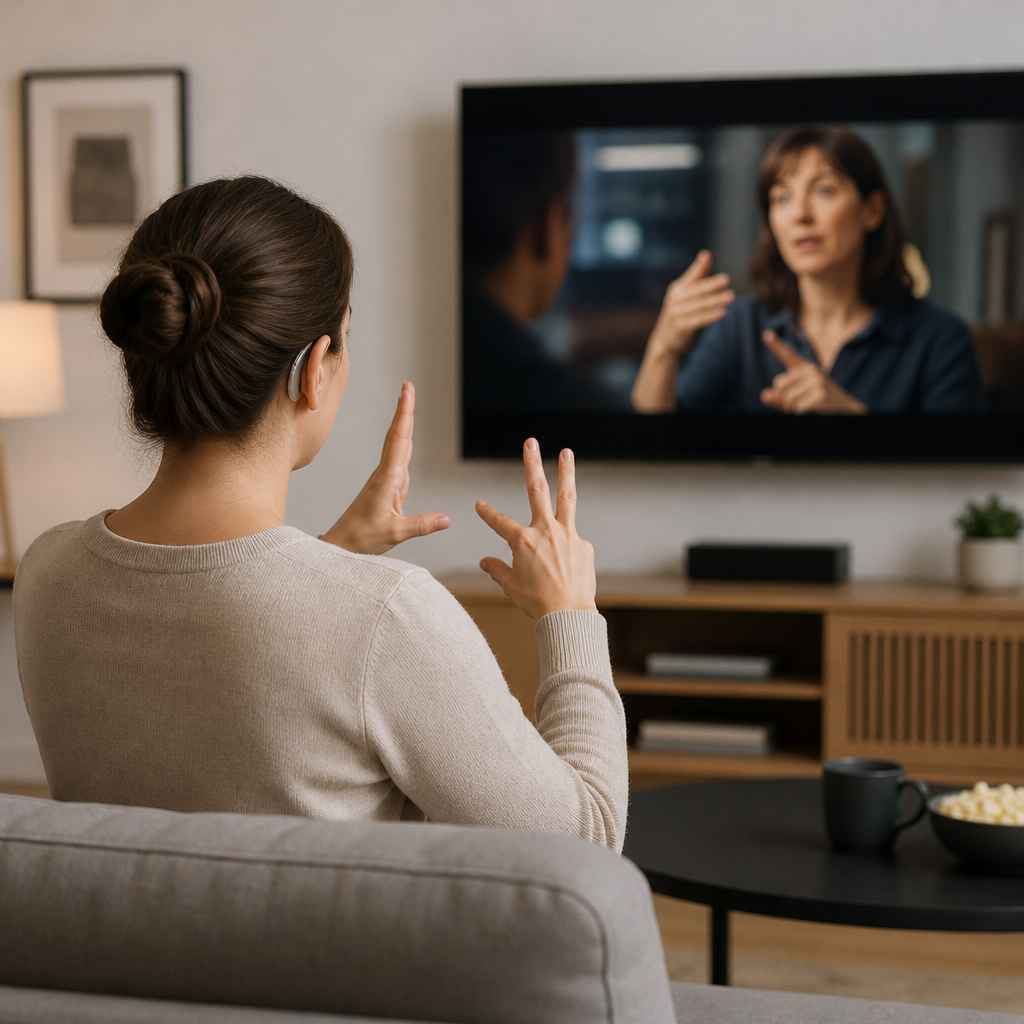
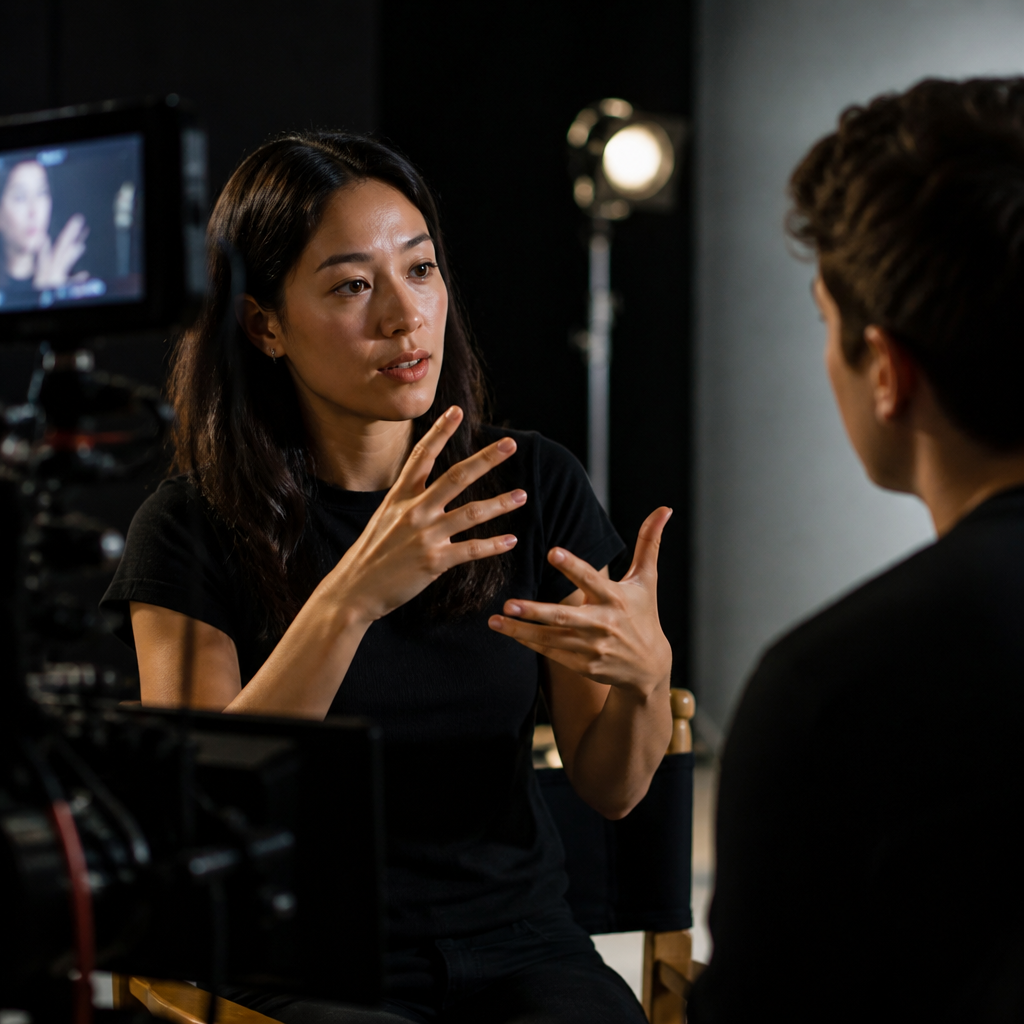
Sign language technology is also advancing, though it requires careful scrutiny. Researchers and startups are building sign recognition systems using computer vision, and some media companies are testing signing avatars. These tools may help with basic navigation or repetitive information, but they are not substitutes for professional interpreters or native-signing presenters. Sign languages have grammar, regional variation, and cultural context that current models often flatten. The breakthrough here is less about replacing humans and more about expanding access points when no interpreter is available.
Vision access is improving through computer vision, scene understanding, and wearable devices
For blind and low-vision users, recent gains in image understanding have been substantial. Apps such as Be My Eyes, Seeing AI, Envision AI, and Google Lookout can now identify objects, read short text, describe scenes, detect currency, and help sort mail or groceries. The leap came when multimodal AI systems became better at combining image analysis with conversational prompting. A user can ask, “Which can is the tomato soup?” or “Does this shirt have thin stripes or a solid color?” and receive a much more useful response than a generic label.
Be My Eyes’ integration of advanced image description illustrates the point. Earlier assistive vision tools often returned sparse outputs like “indoor scene” or “person holding object.” Newer systems can explain relative position, visible text, color contrast, and likely purpose. That richer context matters in everyday tasks, from finding the correct platform sign in a train station to checking whether a document was signed on the right line.
Wearables are improving as well. Meta’s Ray-Ban smart glasses, while not designed solely as assistive tech, have become useful for hands-free photo capture, audio feedback, and voice-driven queries in motion. In specialist devices, OrCam continues to refine text reading and facial recognition functions, and eSight remains significant for users who benefit from magnification rather than full nonvisual interaction. The important trend is convergence: mainstream wearables are starting to inherit assistive use cases, which can reduce stigma and broaden adoption.
Still, reliability and privacy remain central concerns. Computer vision can misread medication labels, miss a curb edge, or misidentify a person. Any article on accessibility technology should say this plainly: these tools are aids, not guarantees. They work best when paired with strong orientation and mobility skills, accessible infrastructure, and transparent product design.
Accessible media production is becoming more sophisticated and more visible
In media and entertainment, breakthroughs are not limited to user devices. Production workflows themselves are changing. Audio description has improved in both scale and quality as streamers and broadcasters invest more in localization pipelines, script timing, and narrator direction. Netflix, Disney+, Apple TV+, Amazon Prime Video, and the BBC have all expanded described content, though coverage still varies by region and title. Better description is not simply “more words.” It is the craft of conveying action, tone, costume, setting, and visual irony without talking over essential dialogue.
Captioning standards are also rising. Editors now pay more attention to speaker identification, sound cues, line breaks, reading speed, and subtitle placement. This is important because poor captions can distort meaning just as badly as missing captions. I have seen accessibility audits where auto-captions were technically present but functionally unusable because proper nouns, jokes, and timing were consistently wrong. The recent breakthrough is the maturation of hybrid workflows: AI produces a first pass, then trained editors clean the file to meet broadcast or educational quality standards.
Representation has improved alongside technical access. More productions are consulting disabled creators during development, not only after release. That shift affects everything from how wheelchair users are framed on screen to whether visual gags receive meaningful description. It also strengthens awareness reporting, because journalists covering accessibility can now point to both technological inclusion and cultural inclusion as connected issues.
| Area | Recent advance | Practical effect |
|---|---|---|
| Live events | Low-latency AI captioning with human correction | Faster, more accurate access for meetings and broadcasts |
| Streaming video | Expanded audio description catalogs | More blind and low-vision viewers can follow plots independently |
| Social media | Auto-captioning and alt-text prompts | Creators publish more accessible posts by default |
| Gaming | Menu narration, remappable controls, subtitle customization | Broader participation across sensory and mobility needs |
| Newsrooms | Integrated accessibility checks in CMS workflows | Fewer inaccessible articles, graphics, and video embeds |
Mobility and physical access technologies are expanding beyond traditional assistive devices
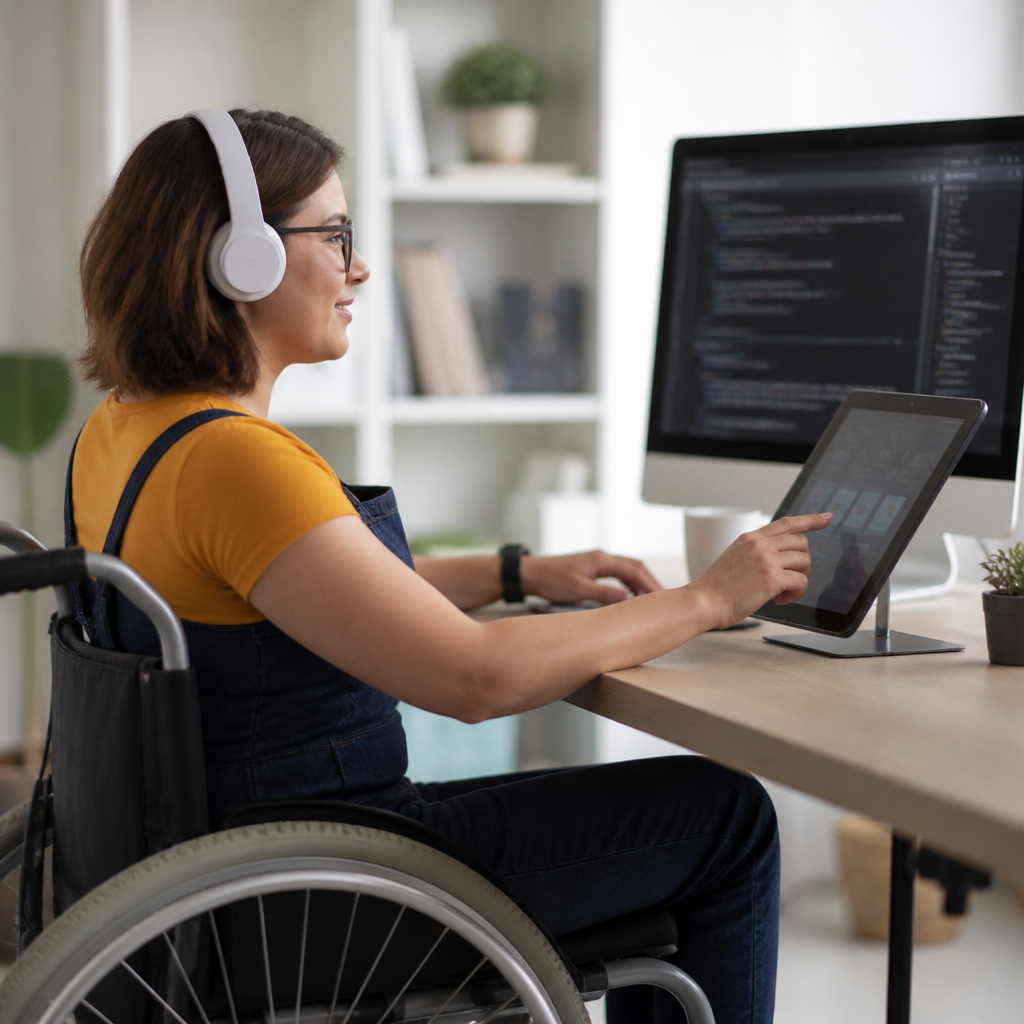
Mobility technology is advancing on several fronts at once. Power wheelchairs are becoming smarter through better obstacle detection, suspension, seating customization, and connectivity. Smart home integration allows users to open doors, control lights, and adjust temperature from mounted interfaces or voice assistants. For people with limited dexterity, these are not convenience features. They directly reduce dependence on caregivers for routine environmental control.
Exoskeletons and robotic rehabilitation systems are another active area. Companies such as Ekso Bionics and ReWalk have shown how powered gait assistance can support therapy and, in some cases, limited personal mobility. These systems are expensive and not universally appropriate, but they have shifted the conversation from laboratory demonstration to regulated clinical use. At the same time, lighter robotic gloves and hand-assist devices are helping stroke survivors and people with neuromuscular conditions perform grasping tasks with more consistency.
Navigation access is changing too. Indoor wayfinding remains difficult because GPS is unreliable inside buildings, yet new beacon systems, computer vision mapping, and smartphone-based spatial guidance are improving navigation in airports, hospitals, and campuses. GoodMaps and similar platforms are notable examples. The breakthrough is not merely knowing a user’s location. It is delivering turn-by-turn guidance that aligns with accessible routes, elevator locations, and barrier information in real time.
Transportation systems are also incorporating better passenger information, boarding alerts, tactile interfaces, and app-based assistance requests. Progress is uneven, especially across smaller transit agencies, but the direction is clear: physical accessibility increasingly depends on digital infrastructure as much as ramps and lifts.
Digital accessibility is being driven by regulation, design systems, and better testing practices
One of the biggest current events in accessibility is legal and institutional enforcement. The Web Content Accessibility Guidelines remain the foundational reference for digital design, and public agencies are under growing pressure to meet modern standards. In the United States, the Department of Justice has reinforced expectations for accessible state and local government websites. In Europe, the European Accessibility Act is pushing companies to address accessibility in e-commerce, banking, transport, and digital products. These policy moves matter because they turn accessibility from a discretionary feature into an operational requirement.
In practice, the strongest organizations now treat accessibility as a design system issue, not a last-minute audit. They build component libraries with keyboard support, visible focus states, semantic structure, color contrast compliance, screen reader labels, error prevention, and predictable interaction patterns. Teams use tools such as axe DevTools, WAVE, NVDA, JAWS, VoiceOver, TalkBack, and manual keyboard testing to catch failures early. Automated scanners are useful, but they cannot judge whether alternative text is meaningful, whether a modal traps focus correctly in every state, or whether a transcript actually reflects the spoken content.
The other important trend is procurement pressure. Universities, broadcasters, and enterprise buyers increasingly ask vendors for accessibility conformance reports based on the Voluntary Product Accessibility Template. That creates market incentives. When purchasing teams reject inaccessible software, product roadmaps change faster than they do through public criticism alone.
What still limits progress and what to watch next
Despite real breakthroughs, the field still faces stubborn limits. Cost remains a barrier, especially for specialized hardware and advanced hearing, mobility, or vision systems. Geographic inequality is another problem; a feature available in a flagship market may not ship with the same language support, repair network, or legal protections elsewhere. Accuracy gaps persist for underrepresented accents, dialects, skin tones, sign variations, and complex disability combinations. News coverage often celebrates launches without following up on these uneven outcomes.
There is also a recurring risk of solutionism. Companies sometimes frame AI as if it can compensate for inaccessible buildings, poor caption editing, weak disability hiring, or inadequate public funding. It cannot. Technology works best when paired with inclusive policy, universal design, accessible procurement, and direct input from disabled people throughout research, testing, and governance.
Looking ahead, watch for advances in real-time multimodal assistance, hearing technologies with better speech-in-noise performance, more customizable haptics, accessible gaming hardware, and wider use of personal AI agents that can summarize interfaces or simplify complex text. Also watch standards work around interoperability, privacy, and transparency. If a tool describes images, transcribes speech, or guides physical movement, users need to know its limits, data practices, and failure modes before trusting it.
The central lesson from recent breakthroughs in accessibility technology is simple: the best innovations do not treat disabled people as edge cases. They treat access as a core quality measure. That is why the most meaningful progress is appearing in mainstream media platforms, operating systems, communication tools, navigation services, and public digital services, not only in specialist equipment. When accessibility is integrated early, more people can participate without asking for exceptions.
For anyone covering news and current events in this space, the right lens is both practical and critical. Ask what problem the technology solves, who it works for, where it fails, how it is tested, and whether disabled users shaped it from the start. Use this hub as a foundation, then follow the linked subtopics across media, representation, product design, policy, and culture. The breakthroughs are real, but their value depends on implementation. Keep watching, keep testing, and keep raising the standard for accessible technology everywhere.
Frequently Asked Questions
What counts as a real breakthrough in accessibility technology?
A real breakthrough in accessibility technology is more than a promising demo or a clever feature shown in a lab. In practice, it means a tool, platform, or design approach that measurably reduces barriers for disabled people in everyday life. That includes solutions that are reliable, affordable, scalable, and usable in real-world environments such as schools, workplaces, public transit systems, healthcare settings, websites, and consumer devices. A breakthrough should improve independence, accuracy, speed, safety, communication, or participation in a meaningful way.
For example, an accessibility innovation becomes a breakthrough when it moves from niche experimentation into broad, practical impact. AI-generated captions are a good case: early captioning tools often struggled with accuracy, speaker changes, accents, and technical vocabulary. Newer systems are far more effective in live meetings, classrooms, and video content, making communication more accessible for Deaf and hard of hearing users. Similarly, screen readers have existed for years, but advances in device integration, image recognition, and app compatibility have made them much more capable for blind and low-vision users.
Another important measure is whether disabled people themselves find the technology helpful, empowering, and respectful. Accessibility is not only about functionality; it is also about dignity, autonomy, and inclusion. If a tool is technically impressive but difficult to use, too expensive, or built without input from the communities it claims to serve, it may not qualify as a true breakthrough. The strongest advances are usually developed through inclusive design, user testing, and ongoing collaboration with people who rely on accessibility features every day.
Which recent accessibility technologies are having the biggest real-world impact?
Several recent developments are standing out because they are already changing how people work, learn, travel, and communicate. One of the most visible is the rapid improvement in AI-powered speech recognition and real-time captioning. These systems now support live meetings, virtual classrooms, customer service interactions, and public events with much better speed and accuracy than earlier tools. For Deaf and hard of hearing users, that can mean more equal participation in conversations that once moved too quickly to follow.
Another major area is computer vision and object recognition for blind and low-vision users. Modern smartphones and wearable tools can identify text, describe images, read signs, detect products, recognize currency, and provide scene context with growing sophistication. These features are especially impactful because they are increasingly available on mainstream devices rather than requiring specialized, expensive equipment. That lowers adoption barriers and allows more people to access assistance discreetly and conveniently.
Mobility and physical access technologies are also advancing in meaningful ways. Powered wheelchairs are gaining smarter navigation features, prosthetics are becoming more responsive and customizable, and smart home integrations are helping users control lights, doors, appliances, and communication systems through voice, switches, eye gaze, or alternative input methods. In digital spaces, accessibility breakthroughs are showing up in better voice control, adaptive interfaces, predictive text for speech disabilities, and more robust support for keyboard-only navigation.
Perhaps most importantly, the biggest impact often comes from combinations of technologies rather than a single invention. A student might rely on live captions, text-to-speech, accessible learning software, and customizable sensory settings all at once. A traveler might use navigation assistance, image description, and haptic alerts together. The most important breakthroughs today are the ones becoming integrated into daily life across platforms, not isolated tools used by only a small audience.
How is artificial intelligence changing accessibility technology?
Artificial intelligence is reshaping accessibility by making assistive tools faster, more adaptive, and more widely available. AI can process speech, images, text, movement, and behavioral patterns in ways that support communication and access in real time. This is especially useful in situations where human assistance may be limited, delayed, or unavailable. Recent progress in machine learning has improved automatic captioning, voice assistants, image descriptions, predictive typing, reading support, and personalized user interfaces.
For blind and low-vision users, AI can help describe photos, identify objects, detect text in the environment, and summarize visual content on websites or apps. For Deaf and hard of hearing users, AI can improve live transcription and translation. For people with mobility impairments, AI-driven voice control and intent prediction can reduce the number of physical actions required to operate devices. For neurodivergent users or people with cognitive disabilities, AI can support simplification, reminders, scheduling, reading assistance, and reduced sensory overload through interface customization.
That said, AI is not automatically accessible or equitable. It can introduce new risks if systems are trained on limited data, perform poorly across accents or disabilities, or make assumptions that do not reflect real user needs. A voice system that cannot understand dysarthric speech, for instance, may exclude people it should be helping. Likewise, image description tools can miss context or generate inaccurate information, which may create confusion rather than access. That is why human-centered testing, transparency, and error handling are so important in accessibility applications.
The best way to understand AI’s role is to see it as an enabling layer, not a magic fix. It can dramatically extend what accessibility technology can do, but its value depends on thoughtful design, user control, privacy protections, and compatibility with established accessibility standards. When implemented responsibly, AI has the potential to make digital and physical environments more responsive to a much wider range of human needs.
Are these breakthroughs making mainstream technology more inclusive, or are they still mostly specialized tools?
One of the most encouraging shifts in recent years is that accessibility breakthroughs are increasingly appearing in mainstream technology rather than remaining isolated in specialty products. Major operating systems, smartphones, web platforms, video conferencing tools, and productivity apps now include features such as screen reading, voice control, real-time captions, magnification, contrast adjustments, switch access, eye tracking support, and customizable interaction settings. This mainstreaming matters because it reduces cost, stigma, and friction for users who need access features every day.
Mainstream inclusion also changes expectations for product design. Accessibility is becoming less of an optional add-on and more of a baseline requirement. When device manufacturers and software companies build accessibility into their core products, users can often get started immediately without purchasing extra hardware or relying on complex third-party workarounds. That is a major improvement for employment, education, and public participation, where compatibility and ease of use can determine whether someone is fully included or left out.
At the same time, specialized tools still play a critical role. Many people have highly specific needs that are not fully addressed by general consumer products. Advanced augmentative and alternative communication devices, specialized braille displays, precision mobility controls, accessible gaming hardware, and tailored learning technologies remain essential. In many cases, the most effective setup combines mainstream platforms with specialized assistive technology.
So the answer is both: accessibility is becoming more embedded in mainstream products, and that is a very positive development, but specialized innovation is still necessary. True inclusion depends on interoperability, affordability, and flexibility. The strongest ecosystem is one where mainstream technology handles a wide range of needs by default while also supporting deeper customization for people whose access requirements are more complex.
What should organizations, schools, and public agencies do to keep up with accessibility technology breakthroughs?
They should start by treating accessibility as a strategic priority rather than a compliance checkbox. New technologies can create major opportunities, but organizations only benefit when they build accessibility into purchasing, design, training, and service delivery. That means evaluating digital tools for screen reader compatibility, caption support, keyboard navigation, color contrast, cognitive usability, mobile accessibility, and interoperability with assistive devices before adoption, not after problems appear.
It is also essential to involve disabled people directly in decision-making. The most effective accessibility strategies come from listening to employees, students, customers, and community members with lived experience. Their feedback helps identify practical barriers that technical checklists may miss. A school choosing classroom software, for example, should consider whether it works well with text-to-speech, live captioning, alternative input methods, and sensory customization. A transit agency evaluating navigation tools should test them with blind travelers, wheelchair users, and neurodivergent passengers in actual travel conditions.
Training is another major factor. Even excellent accessibility features often go underused because staff do not know they exist or do not understand how to activate and support them. Teachers, IT teams, HR departments, customer service staff, designers, and procurement officers all need baseline accessibility awareness. Organizations should also monitor evolving standards such as WCAG, platform accessibility guidance, and disability rights regulations that shape digital and physical access expectations.
Finally, they should focus on long-term accessibility maturity rather than chasing trends. Not every new tool will be transformative, and not every AI feature will be reliable enough for critical use. The smartest approach is to invest in accessible infrastructure, inclusive procurement, regular user testing, and continuous improvement. Breakthroughs in accessibility technology create the greatest value when institutions are ready to adopt them thoughtfully, responsibly, and in partnership with the people they are meant to serve.