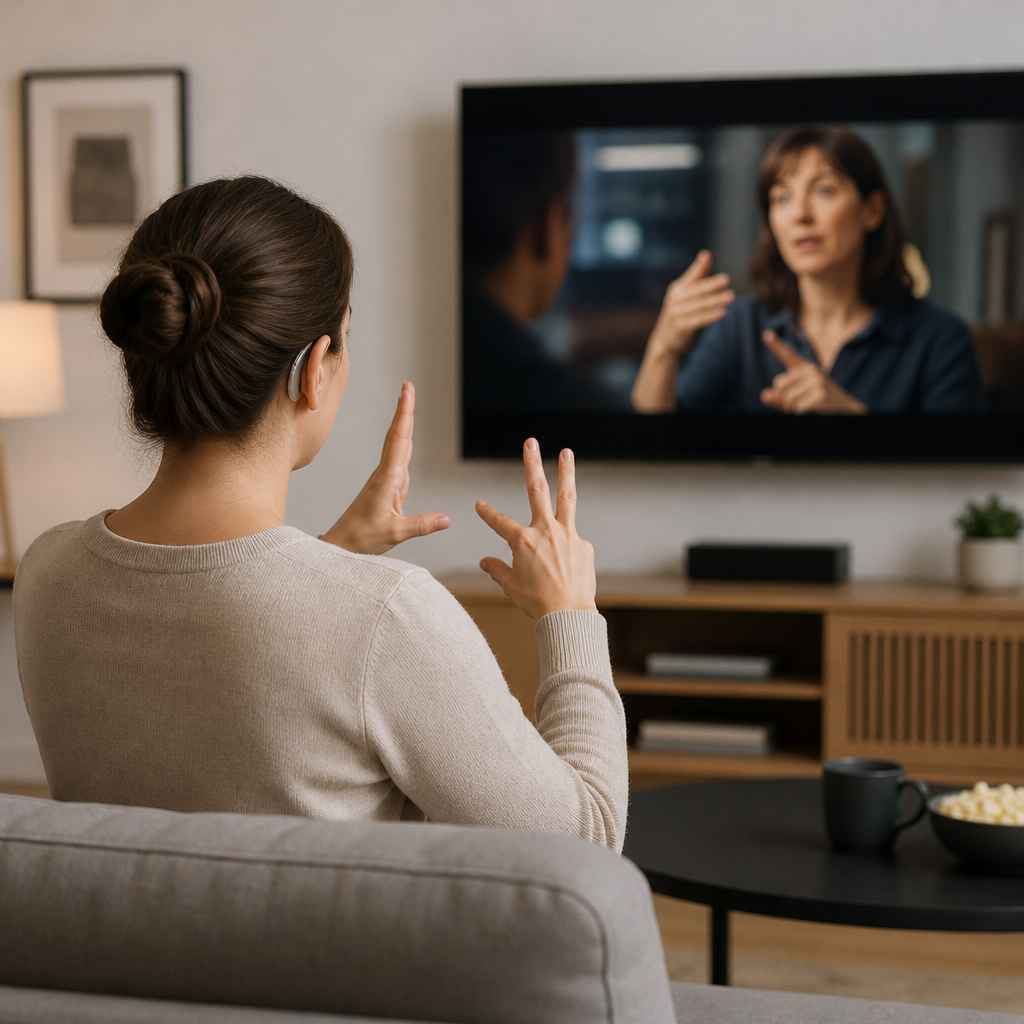

Misrepresentation of Deaf people in media, education, public policy, and everyday conversation does more than create awkward moments; it shapes opportunity, safety, and belonging. In this article, Deaf refers broadly to people who are culturally Deaf, hard of hearing, late-deafened, DeafBlind, or otherwise connected to Deaf experience, while misrepresentation means inaccurate, incomplete, or stereotyped portrayals that flatten real lives into simplistic narratives. I have worked on accessibility reviews, caption audits, and communication planning with Deaf advocates, and one lesson is constant: when hearing institutions define Deaf experience without Deaf leadership, harmful assumptions spread quickly. Those assumptions influence which stories get funded, which services are considered necessary, and which barriers are dismissed as personal limitations rather than access failures. Understanding the impact of misrepresentation matters because representation is not a cosmetic issue. It affects employment decisions, interpreter quality, classroom inclusion, emergency communication, health literacy, and mental well-being. A community that is repeatedly depicted as broken, dependent, inspirational on demand, or universally the same is pushed to fight the same misconceptions over and over. This hub article explains the most common forms of misrepresentation and stereotypes, why they persist, how they affect daily life, and what better practice looks like across media, workplaces, schools, healthcare settings, and public life.
What misrepresentation looks like in practice
Misrepresentation of the Deaf community usually begins with a narrow script. Deaf characters are often written as isolated, tragic, miraculous lip readers, or silent symbols for hearing characters to learn empathy. In real life, Deaf people have varied communication preferences, identities, and levels of access. Some use American Sign Language, British Sign Language, or other national sign languages. Some use spoken language, cochlear implants, hearing aids, captioning, tactile communication, cued speech, or combinations of methods depending on context. Treating Deafness as a single experience erases cultural and linguistic diversity. It also ignores a basic fact recognized by disability and language access professionals: many barriers associated with Deafness are socially produced. A meeting without captions, a clinic without an interpreter, or a video without a transcript creates disablement that would not exist if access had been planned from the start. Another frequent distortion is the assumption that good intentions cancel bad outcomes. A campaign may claim to raise awareness while centering hearing saviors, excluding Deaf creators, or using inaccurate signing. The result is still harmful because audiences absorb the wrong lesson. Misrepresentation is not only about offensive imagery. It includes missing context, token casting, inaccessible formats, and policy language that frames Deaf people as problems to be solved instead of citizens with rights, expertise, and agency.
How stereotypes take hold and why they persist
Stereotypes about Deaf people survive because they are repeated across systems, not because they are true. Entertainment media often compresses complex lives into familiar tropes, and news coverage frequently appears only during conflict, medical innovation, or feel-good human interest stories. Schools may teach little about Deaf history beyond Helen Keller or cochlear implant debates, leaving out Deaf schools, sign language linguistics, the 1880 Milan Conference, and civil rights organizing such as the Deaf President Now movement at Gallaudet University in 1988. When audiences never see Deaf professionals, parents, artists, scientists, or political leaders presented as ordinary and competent, stereotypes fill the gap. Technology myths add another layer. Many hearing people assume captions, hearing aids, speech-to-text apps, and video relay services have solved access. In practice, automated captions can misstate names, medical terms, and safety instructions; hearing devices do not restore typical hearing; and relay or remote interpreting quality depends on bandwidth, lighting, platform design, and provider skill. I have seen organizations point to one accessibility tool and conclude the issue is handled, even when Deaf participants still cannot follow side conversations, rapid turn-taking, or poor audio. Stereotypes persist because they are convenient for institutions. If the public believes Deaf people simply need to try harder to lip read, then employers, schools, and broadcasters feel less pressure to provide structural access.
Common stereotypes and their real-world consequences
The most damaging stereotypes are predictable, and each one produces practical harm. The table below shows how these myths travel from culture into daily systems.
| Stereotype | Why it is inaccurate | Real-world consequence |
|---|---|---|
| Deaf people can read lips easily | Even skilled speechreaders typically catch only part of spoken content because many sounds look identical on the lips | Employers and teachers skip interpreters or captions, causing lost information and exclusion |
| All Deaf people want to be cured | Many Deaf people view Deafness as identity and language community, not only a medical condition | Policies center correction instead of access, culture, and informed choice |
| Sign language is universal | ASL, BSL, Auslan, LSF, and other sign languages are distinct natural languages with their own grammar | Organizations hire unqualified signers or assume any signing is acceptable |
| Technology has solved accessibility | Auto-captions, devices, and apps are useful but uneven, context dependent, and often inaccurate | Institutions underinvest in human interpretation, editing, and inclusive design |
| Deaf people are inspirational by default | Ordinary daily life is not a motivational lesson for hearing audiences | People are patronized, tokenized, and denied full emotional complexity |
These stereotypes affect social treatment as well. A Deaf customer may be spoken about rather than spoken to. A patient may have family members used as ad hoc interpreters despite serious privacy and accuracy risks. A student may be praised for perseverance while denied direct instruction in an accessible language. This is why misrepresentation should be understood as a pipeline issue. A false image in culture often becomes a flawed decision in practice.
The effect on identity, mental health, and community belonging
Repeated misrepresentation creates an exhausting pressure to self-explain. Many Deaf people spend years correcting the same assumptions about intelligence, communication ability, parenting, and independence. That labor has psychological costs. Research across disability communities consistently shows that stigma, social exclusion, and communication barriers can contribute to stress, anxiety, and lower well-being, especially when people are denied autonomy in decisions that affect them. For Deaf children, the stakes are especially high. Early access to a fully accessible language is critical for cognitive, academic, and social development. When families are told only a deficit-based story and are discouraged from learning sign language, children can experience language deprivation, a problem documented by clinicians, educators, and Deaf scholars. Language deprivation is not an abstract concept; it can affect literacy, executive functioning, emotional regulation, and long-term educational attainment. Misrepresentation also shapes identity formation. If the only public stories suggest Deaf life is lonely, limited, or in need of rescue, young people may struggle to imagine a future in which Deaf identity is a source of community and strength. By contrast, accurate representation that includes Deaf joy, conflict, work, humor, and leadership expands what seems possible. In projects I have reviewed, the biggest improvement often came not from adding one Deaf character, but from letting Deaf people be multidimensional and central rather than symbolic.
Damage in media, education, healthcare, and work
The impact of misrepresentation becomes clearest when specific systems are examined. In media, Deaf roles have historically been underwritten, undercast, or filtered through hearing perspectives. Progress exists, including stronger visibility for Deaf actors and creators, but isolated success does not erase a broader pattern. In education, misconceptions can lead schools to overvalue speech conformity and undervalue direct language access. Students may sit through classes with poor acoustics, inconsistent captioning, or untrained aides instead of qualified interpreters and bilingual support. In healthcare, communication errors can become safety issues. The National Association of the Deaf and disability rights advocates have repeatedly documented cases involving inadequate interpreters, reliance on notes for complex consultations, and inaccessible consent processes. In workplaces, misrepresentation appears in hiring assumptions that Deaf employees cannot manage phones, lead teams, or serve customers, even though text platforms, relay services, captioned meetings, and communication planning make these tasks entirely workable. The problem is rarely Deaf capability; it is the imagination of the institution. Public agencies can also fail badly during emergencies. Weather alerts, press briefings, and evacuation instructions that are not captioned clearly or interpreted accurately create preventable risk. When representation has trained decision-makers to think of accessibility as optional or niche, basic public communication fails the people who need it most.
Why accurate representation requires Deaf leadership
Accurate representation improves when Deaf people hold decision-making power, not just consult after the fact. That principle applies across journalism, television, film, classrooms, nonprofit campaigns, product teams, and government communications. Deaf leadership changes both content and process. It affects which stories are considered newsworthy, whether sign language is treated as language rather than visual decoration, how captions are timed and edited, and whether access is budgeted from the beginning. It also corrects a common hearing mistake: assuming the most visible Deaf person available can speak for everyone. Strong practice means seeking diverse Deaf perspectives across race, gender, age, class, geography, and communication background. A Black Deaf woman, a rural hard-of-hearing senior, and a DeafBlind university student may share some concerns and differ sharply on others. This nuance is a strength, not a complication. In my experience, projects become more accurate when organizations ask practical questions early: Who has authority over language choices? Which sign language is appropriate? Are interpreters certified and briefed? Are captions edited for meaning, speaker identification, and sound context? Is the Deaf participant being asked to perform education for free? These are not cosmetic details. They determine whether representation respects the community or extracts from it. Better representation starts with paying Deaf experts, sharing editorial control, and treating access as core infrastructure rather than postproduction repair.
How organizations can reduce harm and build better awareness
Organizations that want to address misrepresentation should focus on standards, not slogans. First, audit current content and operations. Review websites, videos, training materials, press releases, and event practices for recurring stereotypes, inaccessible formats, and language that frames Deaf people only through loss. Second, establish procurement standards for interpreters, caption vendors, and accessibility platforms. Quality matters. CART captioning, edited closed captions, and qualified sign language interpreters serve different needs, and none should be treated as interchangeable. Third, create editorial guidelines that avoid inspiration tropes, pity narratives, and miracle framing. Fourth, hire Deaf staff, board members, advisors, and creators with real authority over decisions and budget. Fifth, measure outcomes. Track whether Deaf participants report understanding meetings, whether video completion improves with accurate captions, and whether policy documents are available in accessible formats. The most effective awareness work is specific. A streaming platform can commission Deaf writers and improve caption QA. A hospital can build interpreter scheduling into patient flow and train staff on legal obligations. A school district can support bilingual Deaf education and family sign language learning. A newsroom can ask whether a Deaf source is being used only to personalize a hearing-led story. Better awareness is not a campaign theme. It is a pattern of operational choices that replaces stereotype with access, tokenism with partnership, and assumption with evidence.
Misrepresentation harms the Deaf community because it distorts reality at the exact points where reality matters most: language, rights, safety, education, work, and identity. When Deaf people are portrayed as tragic, universally curable, effortlessly lip-reading, or inspirational on demand, the public learns the wrong lessons and institutions make the wrong decisions. The cost appears in missed information, limited opportunity, policy failure, and daily disrespect. The solution is not simply more visibility. It is better visibility grounded in Deaf leadership, accurate language, qualified access providers, and a willingness to replace old narratives with lived truth. This subtopic matters within media, representation, and awareness because stereotypes rarely stay on screens or in headlines. They move into classrooms, clinics, workplaces, and homes. If you publish content, manage programs, teach, hire, or advocate, review how Deaf people are currently represented in your materials and processes, then make one concrete improvement this month with Deaf experts at the center.
Frequently Asked Questions
Why does misrepresentation of Deaf people matter so much?
Misrepresentation matters because it does not stay on the screen, in a classroom, or in a policy memo. It shapes how people are treated in real life. When Deaf people are portrayed as helpless, broken, inspirational props, or all the same, those ideas influence hiring decisions, classroom expectations, medical interactions, customer service, and even emergency response. A stereotype may seem small to the person repeating it, but over time it can limit access, reduce trust, and normalize exclusion. It can also pressure Deaf people to constantly explain themselves, correct assumptions, or prove their competence in spaces that were not designed with them in mind.
The impact is especially serious because Deaf experience is diverse. Some people identify strongly with Deaf culture and signed languages, some are hard of hearing, some are late-deafened, some are DeafBlind, and many move across multiple communication methods and communities. When media and institutions flatten that range into a single story, they erase important realities. That erasure affects whether people receive appropriate accommodations, whether children see themselves reflected accurately, and whether hearing audiences understand access as a civil right rather than a special favor. In that sense, misrepresentation is not just offensive; it can directly affect opportunity, safety, and belonging.
How does media misrepresentation affect the Deaf community in everyday life?
Media has enormous power because it often provides the first and most repeated impression hearing people receive about Deaf lives. If television, film, news coverage, and social media consistently portray Deaf people as isolated, dependent, medically defined, or magically able to overcome every barrier through personal determination alone, those narratives become social shortcuts. Employers may assume a Deaf applicant will be too difficult to accommodate. Teachers may lower expectations or misunderstand language development. Strangers may speak to interpreters instead of directly to Deaf people, or assume that one communication method fits everyone.
Misrepresentation in media also affects Deaf viewers themselves. Accurate representation can validate identity, expand imagination, and reduce the exhaustion of invisibility. Inaccurate representation can do the opposite, especially for children and young adults who are still developing a sense of self. If the only stories available present Deafness as tragedy or as a one-dimensional symbol of perseverance, people may struggle to see the full complexity, humor, leadership, creativity, and everyday ordinariness of Deaf life. Better media representation means casting Deaf actors in Deaf roles, involving Deaf writers and consultants, respecting signed languages as complete languages, and telling stories in which Deaf people are fully human rather than reduced to a lesson for hearing audiences.
What are common stereotypes or misunderstandings about Deaf people that cause harm?
One of the most common and harmful misunderstandings is the belief that all Deaf people communicate the same way. In reality, communication varies widely. Some people use sign language, some use spoken language, some use both, some rely on captioning, some use tactile signing, and some prefer written communication depending on the setting. Assuming there is one “correct” or universal Deaf experience often leads to poor access decisions and frustrating interactions. Another common stereotype is that Deaf people are less capable, less independent, or less intelligent. That assumption is not just false; it can affect educational placement, employment advancement, and whether people are treated with respect in everyday situations.
Other damaging stereotypes include the idea that Deaf people are inspirational simply for existing, that hearing technology automatically “fixes” access, or that the real burden lies in Deafness rather than in inaccessible systems. There is also a persistent tendency to center hearing comfort, such as praising institutions for minimal accommodations while ignoring whether those accommodations actually work. For DeafBlind people and late-deafened people, misunderstanding can be even deeper, with outsiders often failing to recognize distinct access needs and identities. These stereotypes are harmful because they turn real people into assumptions, and assumptions often become barriers. Replacing them requires listening to Deaf people directly, respecting individual preferences, and understanding access as an ongoing practice rather than a one-time gesture.
How can misrepresentation in education and public policy affect long-term outcomes?
In education, misrepresentation can shape expectations from the very beginning. If Deaf students are viewed through a deficit lens, schools may focus narrowly on what the student cannot do instead of building language-rich, accessible, high-expectation learning environments. That can influence placement decisions, interpreter quality, captioning access, participation in extracurricular activities, and whether families receive balanced information about Deaf culture, signed languages, and available supports. When educators misunderstand Deaf students as a single category, they may miss critical differences in language background, additional disabilities, technology use, or cultural identity. The result can be academic underachievement that reflects system failure rather than student ability.
In public policy, misrepresentation can produce rules that look inclusive on paper but fail in practice. Policies developed without meaningful Deaf input may overlook communication access in healthcare, legal settings, transportation, emergency alerts, housing, employment, and digital services. For example, a policy might assume that written English alone is enough, that automated captions are always accurate, or that one accommodation can serve everyone. These gaps are not abstract. They can lead to missed medical information, legal misunderstanding, job loss, social exclusion, and serious safety risks during emergencies. Long-term outcomes improve when policymakers include Deaf people at every stage, gather feedback from across the community, and evaluate access based on real usability rather than symbolic compliance.
What can media professionals, educators, employers, and the public do to reduce harm and represent Deaf people more accurately?
The most important step is to involve Deaf people directly, early, and meaningfully. Accurate representation cannot come from assumption alone. Media professionals should hire Deaf actors, writers, consultants, interpreters, and accessibility specialists, and they should be willing to change scripts, framing, and production methods based on that expertise. Educators should create classrooms where access is planned from the start, not added only after a problem appears. That includes qualified interpreters when needed, reliable captioning, visual access, flexible communication methods, and an understanding that language access is foundational to learning. Employers should treat accessibility as part of professional infrastructure, not as an inconvenience, and should communicate directly with Deaf employees or applicants about what works best.
For the public, better representation begins with better habits. Avoid treating Deaf people as curiosities, inspirational objects, or spokespersons for an entire community. Do not assume that speaking louder solves communication barriers. Ask respectfully about communication preferences, maintain eye contact, use available access tools properly, and be open to correction without becoming defensive. Just as importantly, challenge inaccurate portrayals when you see them. Support stories created by Deaf people. Recognize that accessibility is not only about ramps and devices; it also includes language, information, participation, and dignity. When institutions and individuals move beyond stereotypes and toward informed, collaborative access, representation becomes more accurate, and daily life becomes more equitable for the Deaf community.